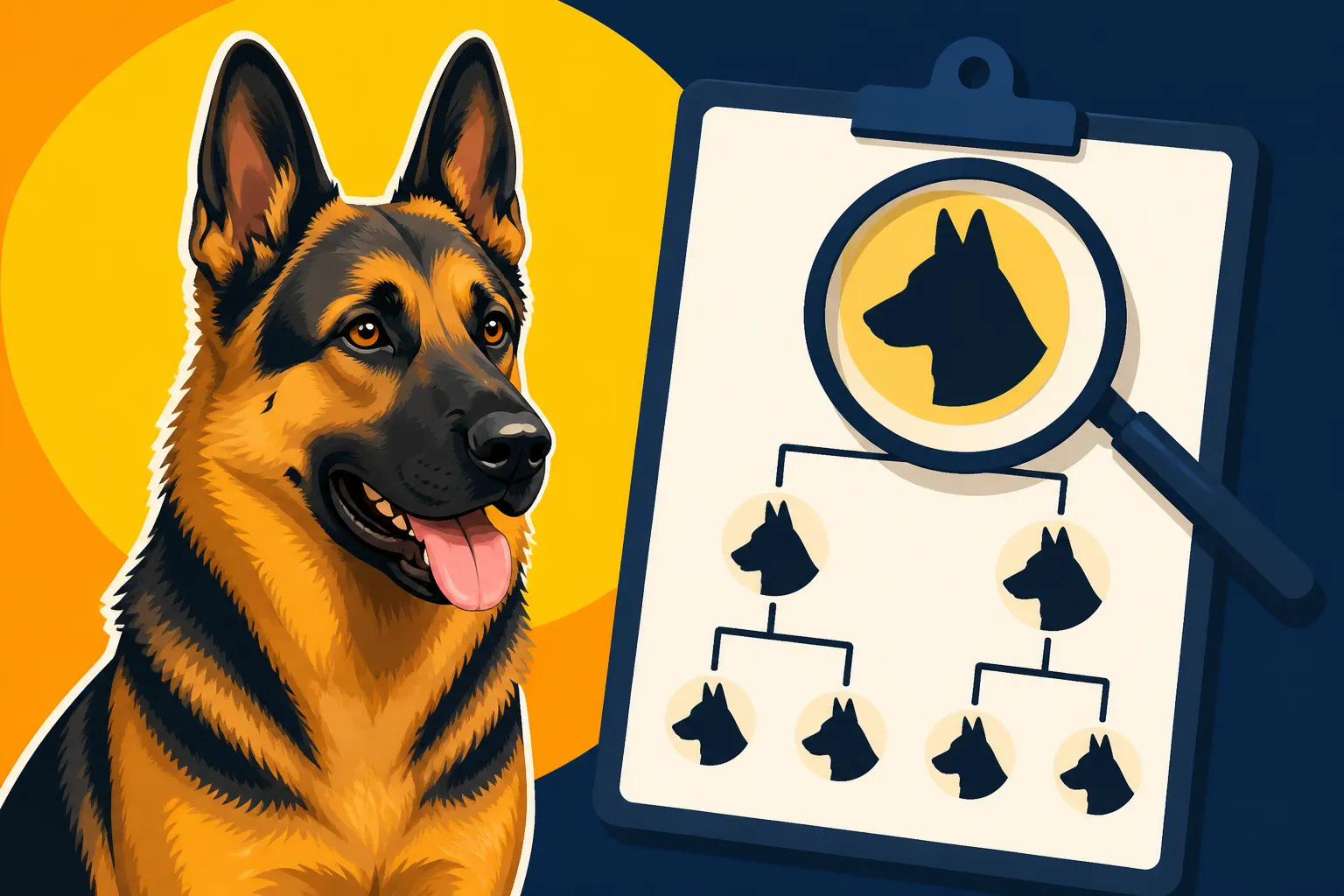
How to Read a German Shepherd Pedigree
Bringing a German Shepherd into your life is an incredible journey, but the process of choosing the right puppy or adult dog can feel overwhelming, especially when you encounter terms like "pedigree." It's easy to look at a dense document filled with names, numbers, and acronyms and feel completely lost, wondering if you're missing crucial information about your potential new family member's health, temperament, or lineage. This guide aims to demystify the German Shepherd pedigree, walking you through exactly how to read and understand this vital document so you can make an informed decision with confidence.
What is a German Shepherd Pedigree and Why It Matters?
A German Shepherd pedigree is far more than just a piece of paper listing names; it's a detailed family tree, a genetic blueprint, and a historical record all rolled into one. It outlines a dog's ancestry, typically spanning three to five generations, providing insight into the dog's parents, grandparents, and great-grandparents. Each entry on this chart can hold clues about temperament, health predispositions, genetic diversity, and even potential longevity. For anyone serious about understanding the German Shepherd they are considering, knowing how to interpret this document is absolutely essential. It’s your window into the future of your dog's health and behavior.
Beyond the Paper: The True Value of a Pedigree
While the physical document itself might seem archaic in our digital age, the information it contains is anything but. The true value lies in the story it tells about the dog's lineage. It helps responsible breeders demonstrate their commitment to the breed standard, health, and temperament. For you, the prospective owner, it offers a level of transparency that's crucial when investing in a breed known for certain genetic predispositions. For instance, knowing that several generations of a dog's ancestors have achieved specific health clearances can offer significant peace of mind, potentially reducing future vet bills and heartbreaking diagnoses. This is where organizations like Healthy Paws pet insurance can become a valuable tool, offering coverage that supports responsible ownership, but having a solid foundation from a good pedigree helps even more.
The pedigree is a reflection of a breeder's ethics and goals. A breeder focused on producing sound, healthy dogs with excellent temperaments will invest heavily in understanding and documenting the pedigrees of their breeding stock. They won't just hand you a piece of paper; they'll walk you through it, explaining each title and health certification, and discussing the traits of the individual dogs listed. This level of dedication is what separates a reputable breeder from someone just looking to make a quick sale. Without a clear understanding of a pedigree, you're essentially buying a "black box" where health and behavioral traits are unknown.
Common Misconceptions About Pedigrees
Many people mistakenly believe that a pedigree simply means a dog is "purebred." While a purebred dog will indeed have a pedigree, the document's significance goes much deeper than just confirming breed identity. A pedigree doesn't automatically guarantee a perfect dog, nor does it mean the dog will be free of all health issues or possess a flawless temperament. What it does offer is a record of known information. If health testing was performed on ancestors, those results should be listed. If ancestors excelled in specific working or conformation events, those achievements are noted. The absence of such information can be just as telling as its presence.
Another common misconception is that all pedigrees are equally reliable. The truth is, the trustworthiness of a pedigree depends heavily on the source and the accuracy of the records. Pedigrees from national kennel clubs like the American Kennel Club (AKC) in the U.S. or the Verband für das Deutsche Hundewesen (VDH) in Germany are generally considered more reliable because they maintain rigorous record-keeping standards. However, even within these systems, it’s vital to understand what the various codes and abbreviations mean, rather than just assuming they all signify perfection. Understanding German Shepherd Genetic Health Testing is key to truly leveraging a pedigree.
Deciphering the Pedigree Chart: Generations and Key Information
When you first look at a German Shepherd pedigree, it can seem like a jumble of names, dates, and codes. However, once you understand the basic structure, it becomes much easier to navigate. Most pedigrees are laid out in a tree-like format, with the dog in question at the far left, followed by its parents, then grandparents, and so on. Typically, you’ll see at least three generations, sometimes up to five. Each entry represents an individual dog and comes with a wealth of information that, when properly interpreted, paints a comprehensive picture of the dog's lineage.
Tracing the Family Tree: Ancestors and Relationships
The most fundamental aspect of a pedigree is tracing the ancestral lines. The dog you are interested in (the "proband") will be on the far left. To its right, you'll see its dam (mother) and sire (father). Moving further right, the dam's parents (maternal grandparents) and the sire's parents (paternal grandparents) will be listed. This pattern continues for subsequent generations. The names of the dogs are usually prominent, often followed by various titles and registration numbers. Look for consistency in these names; sometimes a dog's call name might differ from its registered name, but the official name should be consistent across records.
Beyond just names, pay attention to the dates of birth and death, if available. This can give you an idea of the longevity within the lines, which is a significant factor for breeds like the German Shepherd that are prone to certain age-related health issues. Longevity can be an indicator of robust health, assuming the deaths weren't due to accidents. If you notice a pattern of dogs dying young from unexplained causes, it might warrant further inquiry. Exploring resources like German Shepherd Lifespan: How Long They Live can give you a general benchmark to compare against the pedigree's information.
Decoding Registration Numbers and Breeder Information
Every registered purebred German Shepherd will have a unique registration number issued by a kennel club. In the United States, this is often an AKC registration number. In Germany, it would be an SV (Verein für Deutsche Schäferhunde) or VDH number. These numbers are crucial because they allow you to independently verify the dog's identity and often access additional information through the respective kennel club's database. This independent verification is a cornerstone of responsible breeding and ownership. Don't hesitate to ask the breeder for these numbers so you can cross-reference them.
Alongside the dog's name and registration number, you might see the name of the kennel or breeder who bred that specific ancestor. This is important for understanding the breeding program's history. Recognizing well-known or respected kennels within a pedigree can be a positive sign, as it often indicates a sustained commitment to quality. Conversely, seeing a pedigree with many unknown or inconsistent breeder names might suggest a less structured or less reputable breeding background. This information helps you evaluate the breeder's transparency, a key component of How to Find a Reputable German Shepherd Breeder.
Understanding Health Certifications and Testing Entries
This is perhaps the most critical section of any German Shepherd pedigree. Given the breed's propensity for certain hereditary conditions, such as hip and elbow dysplasia, a good pedigree will clearly list the health clearances of the ancestors. You'll often see acronyms like "OFA" (Orthopedic Foundation for Animals) or "PennHIP" for hip and elbow evaluations, followed by specific grades (e.g., "OFA Excellent Hips," "PennHIP DI"). In German pedigrees, you might see "HD frei" (hip free) or "ED normal" (elbow normal), sometimes with a "Z" stamp for breeding suitability.
| Certification Body | Acronym/Notation | What It Tests For | Grading System Examples |
|---|---|---|---|
| OFA (USA) | OFA | Hips & Elbows | Hips: Excellent, Good, Fair, Borderline, Mild, Moderate, Severe |
| Elbows: Normal, Grade I, II, III | |||
| PennHIP (USA) | PennHIP DI | Hip Laxity | Distraction Index (DI) from 0 to 1, lower is better. Breed average often provided. |
| SV/VDH (Germany) | HD | Hips | A (Excellent), B (Good), C (Fair) |
| ED | Elbows | Normal, Slight, Moderate, Severe | |
| DM | Degenerative Myelopathy | Clear, Carrier, At Risk | |
| Embark/Paw Print | DM, vWD, EPI, etc. | Various Genetic Diseases | Clear, Carrier, Affected |
Beyond hips and elbows, modern pedigrees and accompanying health documents should also include information on genetic tests for conditions like Degenerative Myelopathy in German Shepherds (DM), Von Willebrand Disease (vWD), and Exocrine Pancreatic Insufficiency (EPI). These will often be listed with results like "DM Clear," "DM Carrier," or "DM At Risk." A responsible breeder will not only have this information but will also be able to explain what each result means for the health of the offspring. Pay close attention to these health certifications, as they are a primary indicator of a breeder's commitment to improving the breed's health. You can learn more about the specifics of these tests in our article OFA vs PennHIP Hip Scoring Explained.
Understanding the Health Clearances and Titles
Beyond just knowing what health certifications are, it's crucial to understand their significance and the various types of titles that might appear on a German Shepherd pedigree. These titles aren't just for bragging rights; they provide tangible proof of a dog's genetic health, trainability, and adherence to breed standards. They tell a story about the dog's physical and mental soundness.
Navigating OFA, PennHIP, and Other Health Designations
The mention of "OFA" or "PennHIP" on a pedigree is a huge green flag, indicating that the breeder is actively screening for orthopedic issues. OFA grades hips as Excellent, Good, Fair, Borderline, Mild, Moderate, or Severe. Only dogs with Excellent, Good, or Fair ratings are recommended for breeding. For elbows, OFA certifies them as Normal, or grades them as Grade I, II, or III if dysplasia is present, with only "Normal" dogs being suitable for breeding. PennHIP provides a distraction index (DI) score, which measures hip laxity. A lower DI score indicates tighter hips and less susceptibility to hip dysplasia. Most reputable breeders aim for dogs with a DI score significantly better than the breed average. Understanding these specific ratings is paramount when considering a puppy, as German Shepherd Hip Dysplasia Explained is one of the most common and expensive health problems for the breed.
In Germany, the SV (Schäferhund Verein) has its own strict health screening protocols. Hips are graded as "A" (excellent), "B" (good), or "C" (fair), with "A" and "B" being the most desirable for breeding. Elbows are typically graded as "normal," "fast normal" (almost normal), or "noch zugelassen" (still permissible), with "normal" being the ideal. Additionally, the SV often requires a "Zuchtbewertung" (breeding evaluation) which includes a temperament test and physical examination for breeding suitability. These are often indicated by a "KKL" rating (Körklasse, or Breed Survey Class) on the pedigree. Seeing these comprehensive German health certifications indicates a very high standard of breeding.
Interpreting Conformation and Working Titles
Titles on a pedigree tell you about a dog's achievements and inherent abilities. Conformation titles, like "CH" (Champion) from the AKC or "VA" (Excellent Select) from the SV, indicate that a dog has been judged to meet or exceed the breed standard in appearance and structure. These dogs have been evaluated by expert judges against the ideal German Shepherd blueprint. A string of champions in a pedigree suggests consistency in conformation, which is desirable for the overall health and functionality of the dog, beyond just looks.
Working titles, however, are where German Shepherds truly shine. These dogs were originally bred as herding and working dogs, and titles like "BH" (Begleithund/traffic-safe companion dog), "IPO" (International Prüfungsordnung, now often referred to as IGP, which stands for International Gebrauchshund Pruefung or International Working Dog Test), "SchH" (Schutzhund), and "FH" (Fährtenhund/tracking dog) are incredibly significant. These indicate that the ancestors possessed the intelligence, temperament, and drive necessary to perform complex tasks, often under pressure. For example, an IPO3 title means the dog has successfully completed demanding tests in tracking, obedience, and protection work, proving its courage, trainability, and stable nerves. A pedigree filled with working titles suggests a strong, confident, and intelligent temperament, which is often what German Shepherd owners seek. This information provides insight into the dog's inherent abilities and potential for training, aligning with topics like German Shepherd Obedience Training Basics.
Recognizing International Pedigree Notations
German Shepherds have a strong international presence, and their pedigrees often reflect this global lineage. You might encounter specific abbreviations that denote country of origin or specific club affiliations. For example, a German pedigree from the SV will have specific markings and stamps. Dogs from Czech or East German (DDR) lines might have different formats or additional designations related to their specific breeding programs, which often emphasized working ability and soundness for military or police work. Understanding these subtle differences can help you appreciate the specific characteristics that a particular line might bring to the table.
For instance, you might see "KKL1" or "KKL2" on a German pedigree. KKL1 means the dog has been "recommended for breeding," having passed a stringent breed survey (Körmeister) for conformation, temperament, and bite. KKL2 means "suitable for breeding" but might have a minor fault. Dogs with no KKL rating, despite having titles, are not considered suitable for breeding by the SV. These detailed notations go far beyond simple purebred status and offer a truly comprehensive look at the genetic quality behind your potential German Shepherd puppy.
Identifying Common Pedigree Red Flags and Green Lights
When you're evaluating a German Shepherd pedigree, it's not just about what's there, but also about what's missing and what patterns emerge. Recognizing red flags can help you steer clear of potentially problematic situations, while green lights confirm that you're looking at a well-bred dog from a responsible program. This part of the process requires careful attention and a willingness to ask probing questions.
Warning Signs: What to Be Wary Of
One of the biggest red flags on a pedigree is the absence of health clearances for key ancestors, especially parents and grandparents. If a breeder provides a pedigree but cannot show you corresponding OFA or PennHIP certificates, or doesn't mention DM status for the breeding pair, that's a serious concern. It suggests they either haven't done the testing, or they're trying to hide unfavorable results. Similarly, a pedigree where dogs have "unacceptable" health ratings (e.g., OFA Hips Mild/Moderate/Severe, or high PennHIP DI scores) should make you think twice. While pet insurance options like Healthy Paws can help manage unexpected veterinary costs, starting with a dog from lines with known health issues can significantly increase those risks.
Another warning sign is a pedigree that shows very little genetic diversity. While line breeding (mating related dogs to intensify desirable traits) can be a legitimate tool for responsible breeders, excessive inbreeding (e.g., close relatives appearing multiple times in the first few generations) can lead to a higher risk of genetic defects and weaker immune systems. A quick glance should show a variety of distinct dogs in the ancestral tree. Also, be wary of pedigrees that are simply photocopies of other documents, or hand-written, without official kennel club stamps or verifiable numbers. This lack of professionalism can indicate a "backyard breeder" who isn't investing in proper documentation or breeding practices.
Positive Indicators: What to Look For
On the flip side, several elements on a pedigree signal responsible breeding. A pedigree that clearly lists verifiable health certifications (OFA, PennHIP, SV) for all parents and grandparents, with excellent results, is a huge green light. This demonstrates a consistent commitment to producing healthy dogs. Look for multiple generations of dogs with titles, especially working titles like IPO/IGP, BH, or FH. These indicate strong temperament, trainability, and a sound working drive, which are hallmark traits of the German Shepherd. A dog with a good pedigree is more likely to thrive on a high-quality diet, perhaps from a brand like Ollie, that supports their active lifestyle and genetic predispositions.
Furthermore, a pedigree that shows longevity in the ancestral lines – dogs living to 10, 12, or even 14+ years – is a very positive sign, suggesting a robust genetic foundation. Diversity in names, even with some controlled line breeding, indicates a breeder is strategically selecting dogs for specific traits rather than simply breeding convenience. A truly excellent pedigree tells a coherent story of health, temperament, and ability across generations, reflecting a breeder's dedication to the breed's future. For more details on what makes a dog healthy, consider reading Signs of a Healthy German Shepherd.
The Role of a Reputable Breeder in Pedigree Transparency
Ultimately, the pedigree is a tool, and its utility is maximized when paired with a transparent and knowledgeable breeder. A reputable breeder won't just hand you a pedigree; they'll sit down with you and explain every single entry. They'll talk about the strengths and weaknesses of each ancestor, their health history, and their temperament. They should be able to provide copies of all health certificates and genetic test results for the parents and often for earlier generations too. They understand that you want to verify the information.
They should also be prepared to discuss why they chose a particular pairing, what traits they were hoping to achieve, and how their breeding program aligns with the breed standard. If you're looking to acquire German Shepherd supplies, perhaps from an online retailer like Chewy, a breeder might even recommend specific brands of food or supplements that they've found beneficial for their lines, often based on insights from their dogs' pedigrees and health histories. A breeder who is evasive, unwilling to share documentation, or cannot explain the pedigree in detail is a significant red flag, regardless of how impressive the document might look on its surface. Always prioritize breeders who are open, honest, and truly passionate about their dogs and the breed. For additional questions to ask a breeder, our guide Questions to Ask a German Shepherd Breeder can be a helpful resource.
Disclaimer
The information provided in this article is for educational and informational purposes only and does not constitute veterinary advice. Always consult with a qualified veterinarian or canine professional for any health concerns or before making any decisions about your German Shepherd's care or training.