Working Line vs Show Line German Shepherd
Working line and show line German Shepherds have distinct histories, physical traits, temperaments, and specific needs for owners.

Working line and show line German Shepherds have distinct histories, physical traits, temperaments, and specific needs for owners.

German Shepherd history, physical traits, intelligence, and temperament shape this intelligent working dog breed developed for herding and protection.

German Shepherd nutrition requires specific protein levels, joint support, and digestible ingredients to manage sensitivities and high energy demands.

German Shepherd nutrition requirements, life stages, protein needs, and health concerns guide owners in selecting the best daily diet.

German Shepherd puppy training details vital socialization strategies, developmental stages, and basic obedience commands for new dog owners.

German Shepherd training requires consistent boundaries, early socialization, and positive reinforcement to manage energy and protective instincts.

German Shepherd puppy prices typically range from $1,500 to $5,000 based on lineage, breeder reputation, health testing, and geographic location.

Financial planning for German Shepherd ownership covers breeder and rescue prices, initial supplies, veterinary care, and recurring monthly food expenses.

German Shepherd lifespan typically ranges from seven to ten years, influenced by genetics, nutrition, veterinary care, and preventive health management.

German Shepherd health problems include hip and elbow dysplasia, degenerative myelopathy, bloat, panosteitis, and cauda equina syndrome.

German Shepherd puppy ear development involves distinct stages from birth to seven months, influenced by genetics, nutrition, teething, and growth spurts.

German Shepherd growth timelines, physical maturity stages, and influencing factors reveal when puppies reach their adult size and weight.

German Shepherd adult weight variations across working and show lines explain typical pound ranges for males and females.
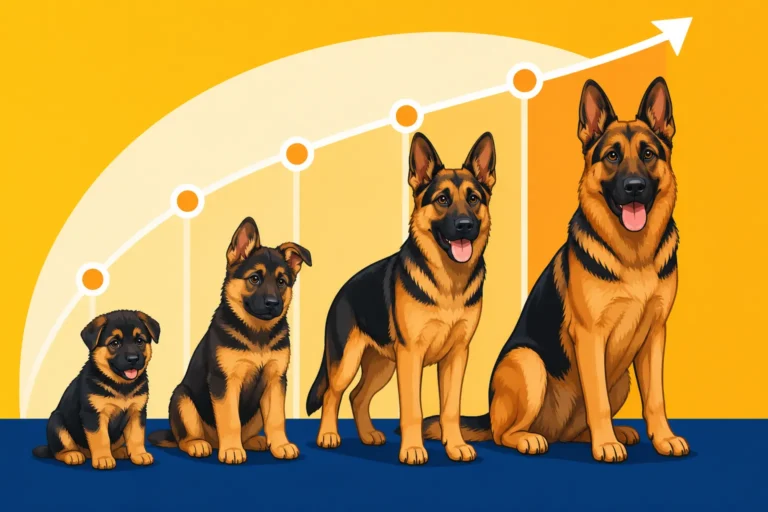
German Shepherd growth milestones and weight charts explain what to expect by age, covering genetics, nutrition, and exercise.

Male German Shepherds typically reach sixty-five to ninety pounds, whereas female counterparts generally weigh between fifty and seventy pounds.

German Shepherd size comparisons explain the official breed standard limits, oversized dog health risks, and how growth affects joint health.

German Shepherd and King Shepherd differences include distinct histories, massive size variations, temperament traits, and specific health concerns.

Panda German Shepherds are purebred dogs carrying a piebald gene mutation that creates distinct tri-color markings and white spotting.

White German Shepherds share identical genetics and temperaments with other colored dogs, despite historical kennel club rules and common myths.

Solid black German Shepherds are not genetically rare, but they are less common due to recessive gene inheritance and breeder preferences.