How to Crate Train a German Shepherd Puppy Fast
Bringing a German Shepherd puppy home is an exciting adventure, but it often comes with the classic puppy struggles: house training accidents, destructive chewing, and those adorable but persistent pleas for attention when you need a moment. Crate training can feel daunting, especially with a breed as intelligent and strong-willed as a German Shepherd. However, a well-executed plan can make the process smooth and fast, establishing a safe haven for your pup and peace of mind for you. This guide will walk you through everything you need to know to successfully crate train your German Shepherd puppy with effective, proven methods.
Understanding Why Crate Training is Essential for Your German Shepherd Puppy
Let's be real, the idea of putting your beloved puppy in a "cage" can feel a little uncomfortable for some owners at first. But when we talk about crate training for German Shepherds, we're not talking about punishment or confinement. We're talking about providing a secure, comfortable space that taps into their natural instincts and helps you manage their development effectively. It's truly one of the most powerful tools in your training arsenal.
Building a Safe Den and Promoting Independence
German Shepherds, like their wolf ancestors, have a natural denning instinct. In the wild, a den is a safe, secure place to sleep, raise young, and retreat from danger. When properly introduced, a dog crate becomes this modern-day den for your German Shepherd puppy. It’s their private bedroom, a place where they can feel secure and relax without constant supervision.
This sense of security is incredibly important for preventing or mitigating separation anxiety, which can be a real challenge for a breed as devoted and intelligent as a German Shepherd. By teaching your puppy that their crate is a calm, comforting space where they can be alone and safe, you're actually fostering their independence. They learn that being separate from you for periods of time is okay and even pleasant. This isn't about isolating them; it's about giving them a personal retreat that helps them cope with being alone, reducing the chances of destructive behaviors driven by anxiety later on.
Managing Potty Training and Preventing Destructive Behavior
One of the biggest headaches for new German Shepherd puppy owners is house training, and this is where the crate truly shines. Dogs are naturally clean animals and generally won't want to soil their sleeping area. This innate aversion is what makes the crate an invaluable tool for teaching bladder and bowel control. When your puppy is in their appropriately sized crate, they are less likely to have an accident, making it easier for you to predict and manage their potty breaks outside.
Think of it this way: a puppy who has free run of the house might find a hidden corner to relieve themselves without you even noticing until it's too late. In a crate, they learn to hold it, strengthening their muscles and understanding the routine. This structured approach helps prevent accidents and builds a consistent potty schedule, which is crucial for a fast and successful house training journey. For more detailed guidance, consider our article on German Shepherd Potty Training: Step-by-Step.
Beyond potty training, German Shepherd puppies are notorious chewers, especially during their teething phase and when bored. Their powerful jaws can make short work of furniture legs, shoes, and anything else within reach. The crate provides a safe space where your puppy can't get into trouble when you can't actively supervise them. Instead of destroying your favorite armchair, they can safely chew on their designated chew toys within the confines of their den. This prevents bad habits from forming and protects your belongings, which is a win-win for everyone involved!
Choosing the Right Crate for Your Growing German Shepherd
Selecting the perfect crate is not just about aesthetics; it's about providing a functional and comfortable space that meets the specific needs of your German Shepherd puppy. A poorly chosen crate can hinder your training efforts, so let's get this right from the start.
Size Matters: Goldilocks Zone for Comfort and Safety
When it comes to crate size, you're looking for the "Goldilocks Zone"—not too big, not too small, but just right. For a German Shepherd puppy, this means a crate that is large enough for them to stand up, turn around comfortably, and lie down in a natural position, but not so large that they can designate a "bathroom corner" separate from their sleeping area. This is a critical factor for successful potty training. If the crate is too big, your puppy might soil one end and sleep in the other, defeating the purpose of using their natural cleanliness instinct.
Since German Shepherds grow quite rapidly, investing in an adult-sized crate with a divider is often the most economical and practical choice. A divider allows you to adjust the internal space as your puppy grows, ensuring the crate is always the appropriate size. As your puppy matures, you can expand the space until they have access to the full crate. For an adult German Shepherd, a crate typically measuring around 42 to 48 inches long, 28 to 30 inches wide, and 30 to 32 inches high is usually ideal. Brands like Midwest or Frisco offer various sizes and often include dividers.
Crate Types: Wire, Plastic, and Soft-Sided Options
There are several types of crates available, each with its own advantages and disadvantages. For a German Shepherd puppy, durability and ventilation are key considerations.
- Wire Crates: These are generally the most popular and recommended for German Shepherds. They offer excellent ventilation, allowing for good airflow, and provide a clear view for your puppy, reducing feelings of isolation. Their sturdy metal construction is also highly durable, standing up well to a German Shepherd's chewing power and strength. Many wire crates come with a removable plastic tray for easy cleaning and a divider, which, as discussed, is invaluable for puppy training. You can find a wide variety of durable wire crates on platforms like Amazon, making it easy to compare options and read reviews.
- Plastic Crates (Airline Approved): These crates offer a more den-like, enclosed feel, which some dogs prefer. They are also excellent for travel, as many are airline-approved. However, ventilation can be less robust than wire crates, and they are typically heavier and bulkier, making them less convenient for daily rearranging. While sturdy, a determined German Shepherd might still be able to chew on the plastic edges if not properly introduced and made comfortable.
- Soft-Sided Crates: These lightweight, portable crates are great for travel or temporary use with calm, non-chewing dogs. However, they are absolutely not suitable for a German Shepherd puppy. Their fabric construction offers no protection against chewing or escape attempts, and your puppy would likely shred it in minutes, potentially ingesting harmful material. Avoid these entirely for initial crate training.
For most German Shepherd puppy owners, a robust wire crate with a divider will be the best choice to withstand their growing size and energy. Place a soft, washable bed or blanket inside for comfort, and never forget a sturdy, appropriate chew toy to keep them occupied and happy.
Step-by-Step Guide to Fast Crate Training Your German Shepherd Puppy
"Fast" crate training doesn't mean rushing or being harsh; it means being consistent, positive, and structured from day one. German Shepherds thrive on routine and clear expectations, so let's leverage that intelligence.
Making the Crate a Positive Place: Lures and Treats
The absolute golden rule of crate training is to never use the crate as punishment. It must always be associated with positive experiences. Start by placing the crate in a central area of your home where your family spends time, like the living room, so your puppy doesn't feel isolated.
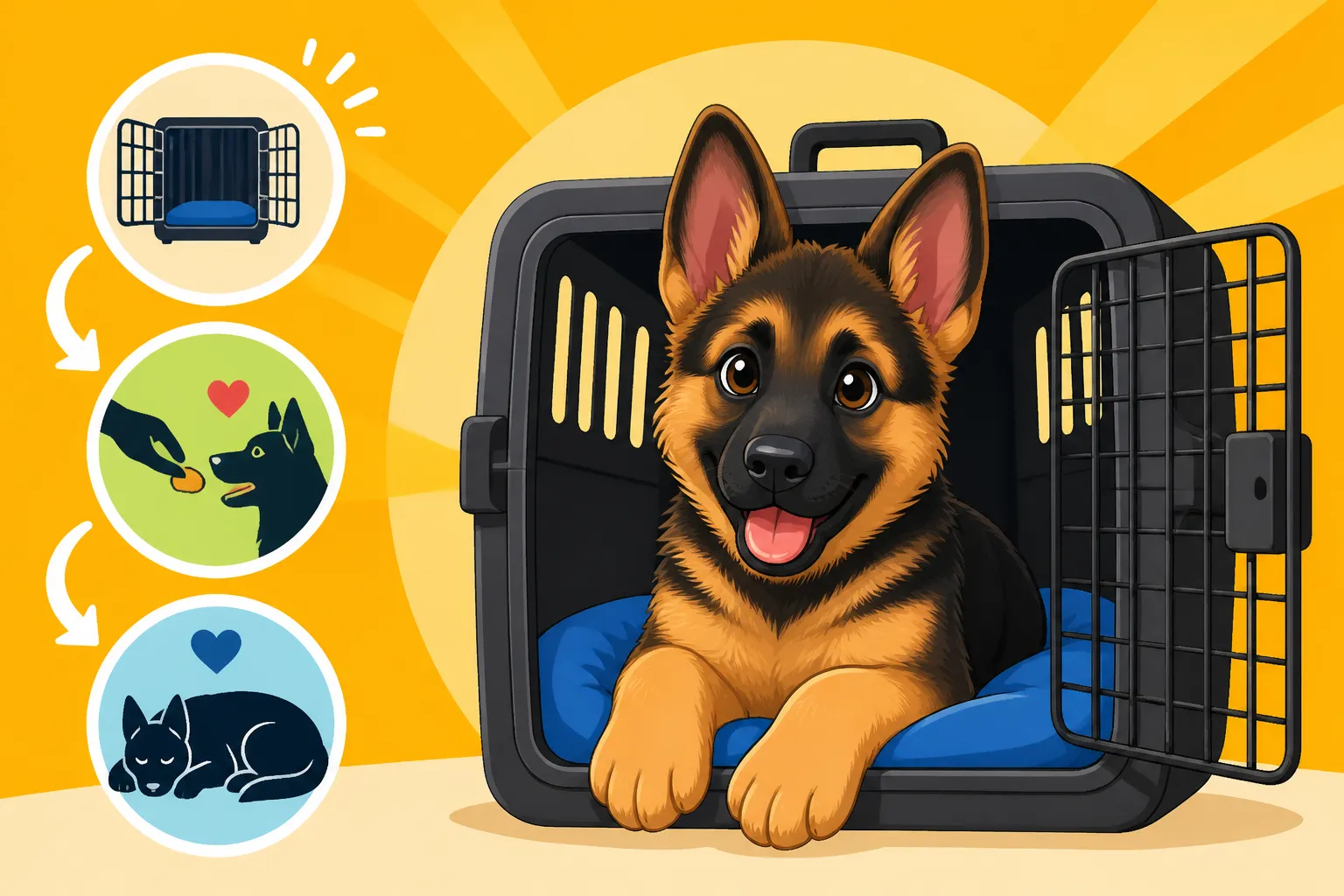
Begin by simply leaving the crate door open and letting your puppy explore it at their own pace. Toss some high-value treats, like small pieces of cooked chicken or cheese, and a favorite toy inside. Don't force them in. Just let curiosity lead the way. You can also place their food bowl just inside the door, gradually moving it further back until they're happily eating their meals entirely inside the crate. This builds a strong positive association with food, which is a powerful motivator for German Shepherds.
Make the crate comfortable. A soft, washable bed or a favorite blanket will encourage them to lie down and relax. You can also spray a calming pheromone spray, like Adaptil, on the bedding to help them feel more at ease. The goal is to make the crate feel like a cozy, inviting den where good things happen.
Gradual Introduction: Short Stays and Increasing Time
Once your German Shepherd puppy willingly goes into the crate for treats or to eat, you can start with short, controlled stays.
- Door Closed for Seconds: Lure your puppy into the crate with a treat. As they go in and eat the treat, gently close the door for just a few seconds, then open it and praise them enthusiastically, giving another treat. Repeat this several times a day.
- Door Closed for Minutes: Gradually increase the time the door stays closed. Start with 30 seconds, then a minute, then two minutes. Always praise and reward when you open the door. If your puppy starts to fuss, open the door before they get into a full-blown tantrum. The key is to release them when they are quiet and calm, reinforcing that calmness leads to freedom.
- Short Absences: Once your puppy is comfortable with a few minutes in the crate while you are in the room, try stepping out of sight for a minute or two. Go into another room, then return. Again, release them only when they are quiet. Slowly increase the duration of your absences. This teaches them that you always come back.
- Longer Stays: Work up to longer periods, such as 30 minutes, an hour, and eventually 2-3 hours during the day. Always make sure they've had a potty break and some exercise before crating them for longer periods. A good rule of thumb for puppies is that they can typically hold their bladder for one hour per month of age (e.g., a 3-month-old puppy can manage about 3 hours). Remember, consistency is crucial for building a solid routine. This is where a detailed German Shepherd Puppy Training Guide can be very helpful.
Dealing with Whining and Barking: Consistency is Key
This is often the hardest part for new puppy owners, but it’s critical for fast crate training. When your German Shepherd puppy starts whining or barking in the crate, your natural instinct might be to rush over and comfort them. However, giving in to these sounds teaches your puppy that fussing will get them attention and release.
The general rule is to ignore whining and barking in the crate. Wait for a lull in the noise, even if it's just a few seconds of quiet, before you approach the crate or let them out. This reinforces that quiet behavior, not noise, is what gets your attention. If you are certain your puppy needs to go potty (based on their age and last potty break), then take them out immediately to their designated potty spot. Don't engage in play or lavish attention; it's strictly business. Once they've done their business, bring them straight back to the crate. If they didn't go potty, put them back in the crate and try again in 10-15 minutes.
It's going to be tough, especially the first few nights. But remember why you're doing this: for their safety, your sanity, and their long-term well-being. A German Shepherd pup's protests can be loud, but consistency here will pay off immensely.
Overnight Crating and Potty Breaks
Nighttime crating is essential for house training and establishing a sleep routine. Place the crate in your bedroom initially, or at least somewhere nearby, so your puppy can hear and smell you. This provides comfort and allows you to hear if they need a potty break.
Establish a consistent bedtime routine. Take your puppy out for a final potty break right before bed, ensuring they've emptied their bladder and bowels. Put them in the crate with a comforting chew toy. For the first few nights, expect some whining. Again, only take them out if you suspect it's a genuine potty need. When they wake up in the night and fuss, take them straight outside. As they get older, they will be able to hold it for longer. A 2-month-old puppy might need to go out every 2-3 hours overnight, while a 4-month-old might last 4-5 hours.
| Puppy Age (Months) | Maximum Crate Time (Day) | Maximum Crate Time (Night) |
|---|---|---|
| 2 | 2-3 hours | 3-4 hours |
| 3 | 3-4 hours | 4-5 hours |
| 4 | 4-5 hours | 5-6 hours |
| 5-6 | 5-6 hours | 6-7 hours |
| 6+ (Adult) | 6-8 hours | 7-8 hours |
Note: These are general guidelines. Individual puppies may vary. Always ensure ample potty breaks, exercise, and mental stimulation outside the crate.
When to Use the Crate: Supervision and Structure
The crate is a tool for structure and safety, not a permanent home. Here are ideal times to use it:
- When you can't supervise: If you're busy with chores, on a work call, or just need a moment of peace, the crate keeps your puppy safe and out of trouble.
- During short absences: When you leave the house for a few hours, the crate ensures your puppy isn't destroying your home or having accidents.
- Nap times: Puppies need a lot of sleep! The crate provides a quiet, undisturbed place for them to nap.
- Quiet time/Decompression: Even when you're home, a short period in the crate can teach your puppy to settle down and relax independently.
- At night: As discussed, nighttime crating is crucial for house training and routine.
Avoid crating your German Shepherd for excessively long periods during the day (more than 4-5 hours for a young puppy, or 8 hours for an adult) without breaks, as this can lead to stress, accidents, and resentment towards the crate. The goal is balance. For understanding their overall needs, check out our guide on German Shepherd Exercise Requirements.
Common Crate Training Challenges and Solutions
Even with the best intentions and a solid plan, you might hit a few bumps in the road. It’s totally normal, and with a German Shepherd’s intelligence, they can be persistent. Here’s how to troubleshoot common issues.
Overcoming Fear or Anxiety Towards the Crate
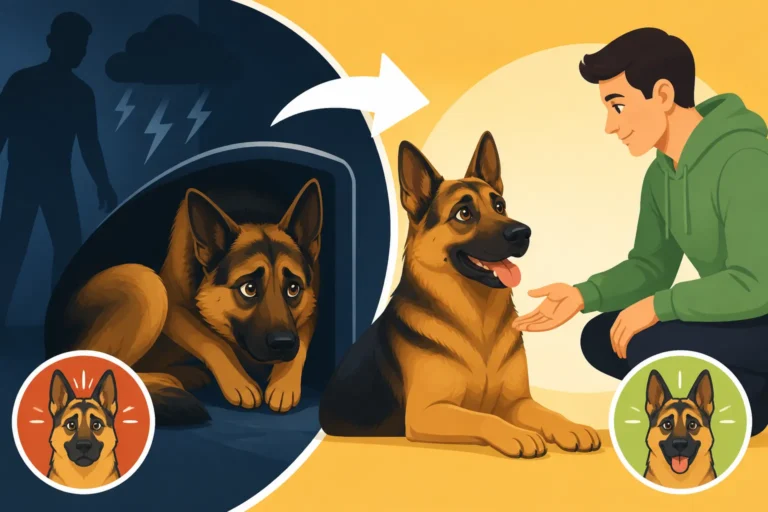
Some puppies, especially those who had negative experiences before coming to you or are just naturally more anxious, might exhibit fear or extreme anxiety towards the crate. They might shake, pant excessively, or try to escape frantically.
If your puppy is truly terrified, you need to slow down the process significantly. Go back to basics:
- Make it a happy place: Instead of even closing the door, spend several days just dropping treats into the crate when your puppy isn't looking, so they "discover" good things inside. Feed all meals inside the crate with the door wide open.
- Play games: Toss a favorite toy into the crate and let them retrieve it. Play "find the treat" games where the treats are hidden inside the crate.
- "Crate Games": Use positive reinforcement training methods, like those advocated by many online puppy programs (such as BAXTER & Bella's online puppy school), which often include specific "crate games" to build positive associations without pressure. These games turn the crate into a fun, rewarding puzzle rather than a confinement.
- Comfort items: Include an old t-shirt or blanket that smells like you, or a safe chew toy that dispenses treats (like a Kong stuffed with peanut butter or wet dog food) to keep them happily occupied. This can help prevent German Shepherd Separation Anxiety Solutions.
- Consult a professional: If the fear is severe and persistent, don't hesitate to consult a certified professional dog trainer or a veterinary behaviorist. They can provide tailored guidance and potentially recommend calming supplements or strategies.
Accidents Inside the Crate: What Went Wrong
If your German Shepherd puppy is having accidents inside the crate, it's frustrating, but it usually points to one of a few common issues:
- Crate is too large: This is the most frequent culprit. As discussed, if the crate is too big, the puppy can eliminate in one corner and sleep in another. Re-evaluate the size and use a divider to make it smaller.
- Held too long: Even the most well-behaved puppy can't hold it forever. You might be leaving them in the crate for too long without a potty break, especially given their age. Review the age-appropriate crating schedule and adjust your routine.
- Not thoroughly cleaned: If there were previous accidents, residual scent might encourage them to go again in the same spot. Clean the crate thoroughly with an enzymatic cleaner designed to eliminate pet odors, not just mask them.
- Underlying medical issue: In rare cases, frequent accidents could indicate a urinary tract infection or other medical problem. If you've addressed the other issues and accidents persist, a vet visit is warranted.
- Stress or anxiety: Extreme stress can also lead to accidents. If your puppy is exhibiting other signs of anxiety (excessive panting, drooling, destructive chewing inside the crate), address the fear component first. For more information on dealing with issues like this, our guide on German Shepherd Behavior Problems and Solutions can provide additional insights.
Escaping Artists: Securing the Crate
German Shepherds are intelligent and often quite strong, and some can become expert escape artists if given the opportunity. If your puppy is managing to break out of their crate, it's a safety concern and needs immediate attention.
- Check the latches: Ensure all latches are securely fastened every single time. A simple oversight can give a smart pup the chance they need. Some wire crates have multiple latch points; use them all.
- Reinforce with clips: For determined escapees, you can add extra security with heavy-duty carabiner clips or zip ties on the door latches or even around the top and bottom edges of the crate door to prevent it from being pried open.
- Heavier gauge wire: If you have a flimsy, lightweight wire crate, your German Shepherd might be able to bend the bars or pop the tray out. Consider upgrading to a heavy-duty, commercial-grade wire crate, which often has thicker gauge wire and more robust construction.
- Anxiety-driven escape attempts: Sometimes, attempts to escape are driven by severe separation anxiety or fear. If your puppy is injuring themselves trying to get out, you need to address the underlying anxiety with professional guidance, rather than just focusing on securing the crate. This might involve counter-conditioning and desensitization exercises, potentially with medication if recommended by a vet.
Crate training your German Shepherd puppy quickly and effectively is a journey that requires patience, consistency, and a whole lot of positive reinforcement. By understanding their natural instincts, choosing the right tools, and following a structured plan, you'll provide your beloved companion with a safe haven and lay a strong foundation for a well-behaved, confident adult dog.
Disclaimer
The information provided in this article is for general informational purposes only and is not a substitute for professional veterinary advice. Always consult with a qualified veterinarian or certified dog trainer for any health concerns or before making any changes to your German Shepherd's diet, exercise, or training regimen.