West German vs East German Shepherd Differences
It can be incredibly confusing when you start researching German Shepherds and keep hearing about "lines" – West German, East German, American, Czech, and so on. Many prospective owners feel overwhelmed trying to decipher what these distinctions actually mean for a dog's temperament, appearance, and overall suitability for their home. This guide aims to demystify the core differences between West German and East German (often referred to as DDR) German Shepherds, helping you understand their unique characteristics and legacies.
Understanding the German Shepherd's Split History
To truly grasp the differences between West German and East German Shepherds, we need to take a quick trip back in time, specifically to the post-World War II era and the division of Germany. This historical context isn't just a fun fact; it profoundly shaped the breeding philosophies and subsequent characteristics of the German Shepherds developed on either side of the Iron Curtain. It's a tale of two distinct paths, driven by different ideals and needs.
The Impact of Post-War Division
After World War II, Germany was divided into East and West, a split that wasn't just geographical but ideological and cultural. This division extended deeply into everything, including dog breeding. In the West, breeders were focused on rebuilding the German Shepherd as a versatile companion, a family protector, and a show-ring star, maintaining connections with international breed clubs. They had access to a wider gene pool and were influenced by global trends in dog shows and breeding. Their goals often involved striking a balance between working ability, appealing aesthetics, and a stable family temperament.
Meanwhile, in the East, under the German Democratic Republic (GDR), or DDR (Deutsche Demokratische Republik), the approach was starkly different. The government largely controlled breeding programs, prioritizing working ability above all else. These dogs were essential for border patrol, military, and police work in a highly controlled state. Aesthetics were secondary; function was paramount. The gene pool was restricted, leading to a unique and highly consistent type of German Shepherd. This rigid state control and isolation from Western breeding trends created a truly distinct line of dogs that developed independently, almost in a vacuum.
Ideals That Shaped the Breed
The ideals of each side fundamentally influenced their respective German Shepherd lines. In West Germany, the emphasis was on producing dogs that could excel in Schutzhund (now IGP, a dog sport that tests tracking, obedience, and protection), maintain excellent conformation according to the breed standard, and integrate well into civilian life. This meant a focus on stable nerves, trainability, and a "look" that was admired in the show ring. Breeders often aimed for a dog that was both a capable worker and a beautiful specimen.
In East Germany, the driving force was purely utility. These dogs needed to be robust, fearless, intelligent, and possess an unwavering drive to work under challenging conditions. They were bred for endurance, strength, and an almost stoic resilience. Health and working temperament were meticulously tracked, often through rigorous performance tests and stringent health clearances, more so than aesthetic conformity. The resulting dogs were known for their powerful build and intense focus, traits bred directly for their demanding roles in state security. This period of separation cemented very different genetic traits and characteristics that persist in the lines we see today.
West German German Shepherds: The Show and Sport Dog
When most people picture a German Shepherd, they're often thinking of a West German line dog, especially those from the "Show Line." These dogs are incredibly popular and for good reason, embodying a balance of striking looks and admirable working capabilities. They've been a staple in both family homes and competitive dog sports for decades.
Physical Characteristics and Conformation
West German Show Line German Shepherds are renowned for their distinct appearance, often characterized by a strong, elegant build and a flowing, harmonious gait. They typically have a more sloped back compared to some other lines, a feature often exaggerated in the show ring. Their angulation, particularly in the rear, is pronounced, contributing to that signature ground-covering trot. These dogs usually carry rich, vibrant pigmentation in their coats, with common colors being black and red, black and tan, and sable. Their heads are strong, expressive, and proportionate to their bodies, and their ears typically stand erect and alert.
The West German breeding programs placed significant emphasis on conformation to the breed standard, aiming for a dog that was not only functional but also visually impressive. This focus on aesthetics, while sometimes debated, has produced many beautiful dogs that excel in the show ring. You might see terms like "West German Show Line" or "West German Working Line," which further define their primary breeding goals. Even the working lines from West Germany, while prioritizing temperament and drive, still adhere closely to the physical standards. When you're looking at a dog from a reputable West German breeder, whether it's for show or work, you're looking at generations of selective breeding aimed at producing a canine athlete with classic German Shepherd beauty.
Temperament and Working Aptitude
The temperament of a West German German Shepherd is typically well-balanced and intelligent. They are known for their strong protective instincts combined with a stable and calm demeanor when not "on duty." These dogs are highly intelligent and eager to please, making them very trainable. They excel in various dog sports such as IGP (formerly Schutzhund), obedience, agility, and tracking. Their drive to work is generally high, but it's often paired with an "off switch" that allows them to relax and be good family companions.
A well-bred West German Shepherd from a reputable breeder should display confidence, courage, and a strong desire for human companionship. They thrive on having a job to do and require consistent training and mental stimulation. Because of their inherent intelligence and sometimes strong will, they need an experienced handler who can provide clear boundaries and consistent leadership. They can be wary of strangers initially but are not typically aggressive without cause. Their versatility makes them excellent candidates for a wide range of roles, from family pets to serious working dogs, provided their needs for exercise and mental engagement are met. Many owners find robust, long-lasting toys on Chewy that can stand up to a German Shepherd's powerful jaws, which are crucial for this line's high play drive. How to Train a German Shepherd will be a vital resource for anyone bringing one of these smart cookies home.
East German (DDR) German Shepherds: The Uncompromising Worker
The East German, or DDR (Deutsche Demokratische Republik), German Shepherd represents a distinct branch of the breed, forged under unique circumstances and bred with an unwavering focus on working ability and robust health. Their story is one of resilience and uncompromising dedication to function.
Physical Characteristics and Build
DDR German Shepherds typically possess a more rugged, robust, and blockier build compared to their West German counterparts. They often have a straighter back, heavier bone structure, and larger heads. Their coats tend to be dense and coarse, often in dark sable, solid black, or bi-color, providing protection against harsh weather. Unlike the often refined angulation seen in some show lines, DDR dogs usually have less dramatic rear angulation, contributing to a powerful, tireless stride built for endurance rather than flashy show gaits. Their physical presence is one of undeniable strength and durability.
The breeding programs in East Germany were geared towards producing dogs capable of strenuous physical work, such as patrolling the Berlin Wall or serving in the military. This meant prioritizing traits like strong nerves, endurance, and physical toughness. Breeders were not concerned with the latest show trends; their focus was on pure, unadulterated working prowess. This led to a very distinct look: a powerhouse dog built for long hours of demanding work. When you see a DDR German Shepherd, you're looking at a dog whose physical attributes scream "working dog" from nose to tail. Many owners choose platforms like Chewy for specialized, high-protein kibble to support their demanding energy levels.
Temperament and Drive for Work
The temperament of a DDR German Shepherd is defined by extreme drive, intensity, and an almost boundless desire to work. These dogs possess incredibly strong nerves, high prey drive, and an exceptional ability to focus on tasks. They are known for their unwavering courage, vigilance, and formidable protective instincts, making them superb candidates for police work, search and rescue, and advanced protection sports. They thrive when given a challenging job and can become frustrated or destructive if their mental and physical needs aren't adequately met.
Due to their intense working drive, DDR German Shepherds are generally not recommended for novice owners. They require an owner who understands advanced dog training, can provide consistent and firm guidance, and is prepared for a dog with high energy and an incessant need for engagement. While loyal and dedicated to their families, they are less likely to be the "go-with-the-flow" type of companion. They excel when challenged and are driven by a deep desire to fulfill their purpose. Their focus is often described as "bulletproof," making them incredibly reliable in stressful situations. Owners of DDR lines often find great success with German Shepherd Obedience Training Basics and then advancing to more specialized tasks.
Key Differences: West German vs. East German Shepherds
Understanding the distinct paths these two lines took can help clarify their differences, but a side-by-side comparison truly highlights how divergent their development became. While both are German Shepherds, their priorities in breeding resulted in noticeably different dogs.
Physical Appearance and Structure
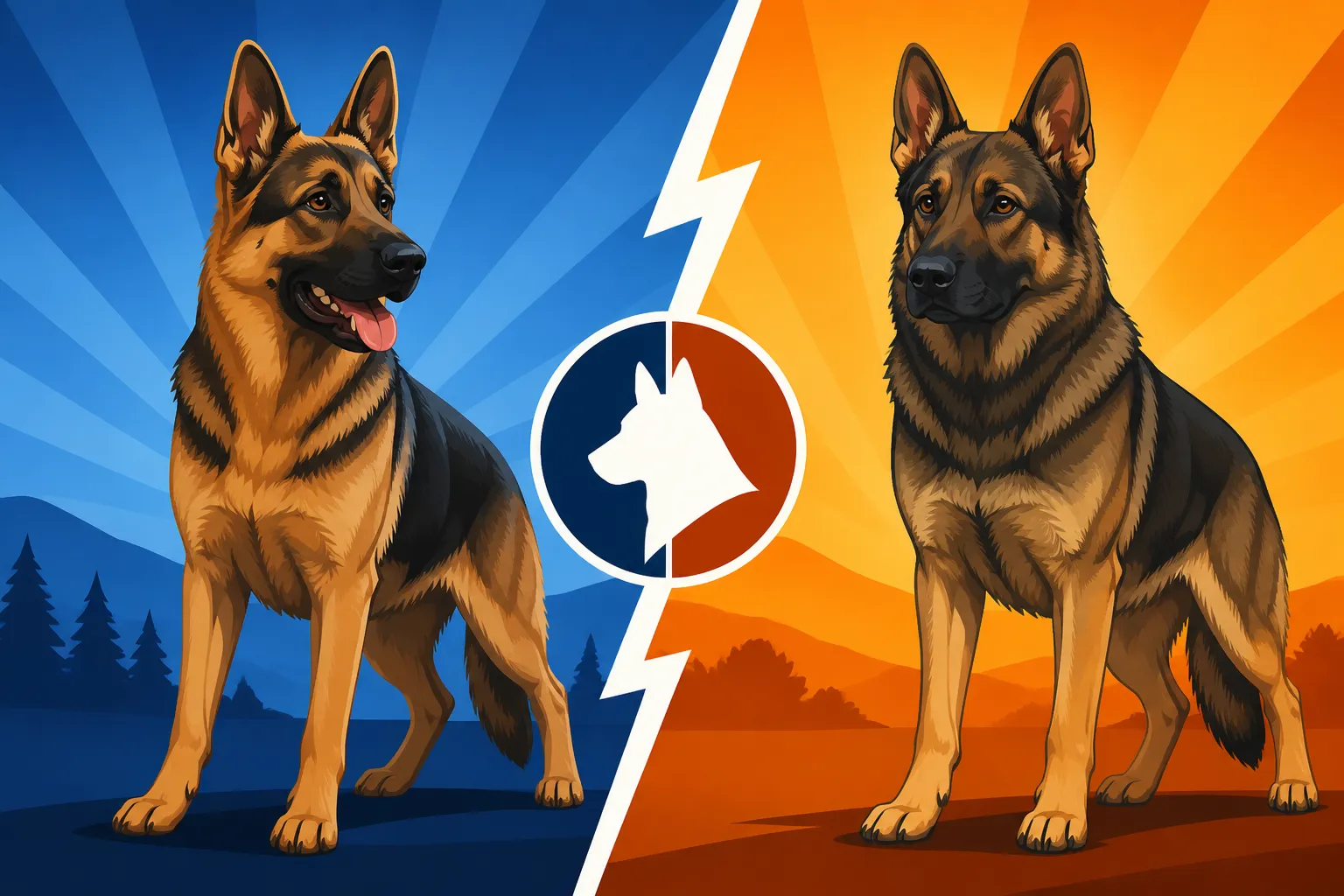
The most immediate differences are often visual. West German Shepherds, especially those from show lines, tend to have a more refined, often athletic and elegant appearance. Think of a dog with sweeping angulation, a characteristic sloped back that can be quite dramatic in some individuals, and a smooth, ground-covering gait. Their coats are typically rich in color, with clear black and red or black and tan patterns. The overall impression is one of grace and powerful movement optimized for a show ring.
DDR German Shepherds, on the other hand, usually present a more rugged, utilitarian look. They often have a straighter back, heavier bone, and a more robust, sometimes blockier head. Their angulation is less pronounced, giving them a more level topline, which is excellent for endurance and sustained physical effort. Coat colors tend to be darker, with many sables, solid blacks, and bi-colors. Their build speaks to durability and power, built for demanding physical tasks rather than beauty contests. It's a fundamental difference in form following function. You can learn more about their overall health in German Shepherd Health Problems Guide.
Temperament and Drives
While both lines are intelligent and trainable, their temperaments and primary drives differ significantly. West German Shepherds are known for a balanced temperament, strong nerves, and a good "off switch." They are highly trainable and eager to please, excelling in obedience and sport work but also adapting well to family life, provided their exercise and mental stimulation needs are met. They typically possess a strong prey drive and protective instincts, but these are generally manageable for experienced owners. They are social but can be reserved with strangers.
DDR German Shepherds possess an even higher intensity and working drive. Their nerves are typically rock-solid, and their focus can be incredible. They often exhibit higher levels of prey drive, defense drive, and territoriality. They thrive on constant mental and physical challenges and can become bored or destructive without an appropriate outlet. These are dogs for dedicated working dog enthusiasts or experienced handlers who can channel their immense energy and intelligence. They are less about being a "pet" and more about being a "partner" in demanding activities. German Shepherd Behavior Problems and Solutions can often stem from unmet needs in high-drive dogs.
Health and Longevity
Both lines of German Shepherds, unfortunately, can be prone to certain genetic health issues common to the breed, such as hip and elbow dysplasia. However, the East German breeding programs, operating under strict government control and focused on utility, often had rigorous health testing and selection processes. Dogs with even minor health issues were often removed from the breeding pool, leading to a reputation for greater overall health and structural soundness. This doesn't mean DDR dogs are immune to health issues, but historical practices emphasized resilience. German Shepherd Genetic Health Testing is crucial for any line.
West German lines, while also conducting health testing, sometimes faced different pressures, including the pursuit of specific aesthetic traits that, in some cases, inadvertently led to compromises in structure or soundness. Reputable West German breeders today are very diligent with health clearances, but the historical breeding trends did sometimes result in differences. It's vital, regardless of the line, to always verify health clearances from both parents and understand the breeder's commitment to producing healthy dogs.
Here's a table summarizing the core distinctions:
| Feature | West German German Shepherd (Show/Sport Line) | East German (DDR) German Shepherd |
|---|---|---|
| Origin | Western Germany, developed with international influences. | East Germany (German Democratic Republic), state-controlled breeding. |
| Primary Focus | Conformation (show ring), sport (IGP), family companion, balanced temperament. | Working ability (border patrol, military), endurance, robust health, intensity. |
| Physical Build | More elegant, pronounced rear angulation, often sloped back, athletic build. | More rugged, heavier bone, often straighter back, blockier head, powerful build. |
| Coat Colors | Often rich black and red, black and tan, sables. Vibrant pigmentation. | Often darker sables, solid black, bi-color. Dense, coarse texture. |
| Temperament | Balanced, intelligent, strong nerves, good "off switch," eager to please, protective. | Intense drive, solid nerves, high prey/defense drive, unwavering focus, vigilant. |
| Energy Level | High, requires mental and physical exercise, but can relax. | Extremely high, requires constant engagement and demanding work. |
| Ideal Owner | Experienced owners, active families, sport enthusiasts. | Highly experienced working dog handlers, serious sport competitors, demanding roles. |
| Health Rep. | Good, but aesthetic trends sometimes influenced structural soundness. Rigorous health testing still crucial. | Strong reputation for structural soundness due to stringent breeding selection. |
Choosing the Right German Shepherd Line for You
Deciding between a West German and an East German German Shepherd isn't just about preference; it's about a deep understanding of what you're truly looking for in a canine companion and whether your lifestyle can meet their specific needs. Both lines are magnificent, but they demand different things from their owners.
Assessing Your Lifestyle and Experience
Before you even start looking at puppies, take a long, honest look at your life. How much time do you realistically have to dedicate to training, exercise, and mental stimulation every single day? If you're looking for a family pet that enjoys daily walks, weekend hikes, and some basic obedience training, a well-bred West German Show Line or even a West German Working Line might be an excellent fit. These dogs typically have a more balanced drive and an "off switch" that allows them to integrate into a busy household. They still require significant commitment, but their adaptability can make them wonderful companions for active families. Are German Shepherds Good Family Dogs is an important question to consider for this decision.
If, however, you're an experienced dog handler, perhaps someone involved in dog sports like IGP, advanced obedience, or even search and rescue, and you thrive on having a canine partner with an intense drive and unwavering focus, a DDR German Shepherd might be precisely what you're seeking. These dogs are truly uncompromising in their work ethic and require an owner who can match that intensity. They need a "job" – whether it's advanced training, Schutzhund, or other high-level activities – to truly flourish. They are not content to be couch potatoes and will often create their own "jobs" if not properly stimulated, which can lead to destructive behaviors or excessive barking.
Breeder Selection and Pedigree Research
Regardless of the line you're leaning towards, finding a reputable breeder is paramount. A good breeder will be transparent about their dogs' lineage, health clearances, and temperament. They should be passionate about the breed and eager to educate you on the specific needs of their line. Don't be shy about asking questions about the parents' health (including German Shepherd Hip Dysplasia Explained and German Shepherd Elbow Dysplasia: Symptoms and Treatment), temperament, and working titles. A great breeder will ask you just as many questions to ensure their puppies go to suitable homes.
For West German lines, you'll often see pedigrees full of dogs with impressive show titles (V, VA ratings) and working titles (SchH, IPO, IGP). For DDR lines, you'll typically find an emphasis on working titles and often fewer, if any, show titles, as their focus was purely on performance. Understanding the parents' strengths and weaknesses is key. Always ask to see proof of health testing for hips, elbows, and genetic diseases common in German Shepherds, such as Degenerative Myelopathy in German Shepherds. A responsible breeder will prioritize the health and temperament of their dogs above all else. How to Find a Reputable German Shepherd Breeder is a critical step in this process.
Ultimately, both West German and East German German Shepherds are incredible animals. Your choice should come down to an honest assessment of your lifestyle, your experience level, and the specific traits you value most in a canine companion.
Disclaimer
This article is for general informational purposes only and does not constitute professional advice. Laws, prices and regulations vary by location and change over time. Consult a qualified professional for guidance on your specific situation.