American vs European German Shepherd Differences
Bringing a German Shepherd into your life is an incredible journey, but if you’ve spent any time researching, you’ve probably quickly realized that not all German Shepherds are created equal. It can be incredibly confusing to sift through terms like "American show line," "West German working," "DDR," and "Czech line" when all you want to know is which type of German Shepherd is right for you. This guide is here to untangle the nuances, breaking down the key differences between American and European German Shepherds so you can make an informed decision that truly fits your lifestyle and expectations.
Understanding the Core Divide: American vs. European German Shepherds
The distinction between American and European German Shepherds isn't just a geographical one; it's a deep-seated philosophical divide in breeding goals that has evolved over decades. Imagine two paths starting from the same origin but diverging significantly over time due to different visions for the breed's future. That's essentially what has happened with these two major lines.
A Tale of Two Breeding Philosophies
At its heart, the German Shepherd breed originated in Germany with a clear purpose: to be a versatile working dog, intelligent, robust, and capable of herding, guarding, and performing various tasks. The German Shepherd's founder, Max von Stephanitz, envisioned a dog that was as physically sound as it was mentally sharp. European breeding programs, particularly in Germany, have largely tried to adhere to this original standard, focusing heavily on working ability, stable temperament, and physical health, often requiring proof of working titles before breeding. They prioritize what the dog can do over purely what it looks like.
On the other side of the Atlantic, American breeding goals began to shift, particularly after World War II. The emphasis gradually moved towards producing dogs primarily for the show ring, where aesthetic appeal and exaggerated features became paramount. While American breeders still value temperament, the intense focus on specific conformational traits sometimes overshadowed the original working dog ethos. This isn't to say American German Shepherds can't work or are unhealthy, but their primary selective pressure came from judging panels looking for a specific "look" that often differed from the German ideal. This fundamental difference in philosophy is the root of most of the distinctions you'll encounter.
The American Show Line German Shepherd
When people refer to an "American German Shepherd," they are most often talking about the American show line. These dogs are specifically bred to excel in the conformation ring, where judges evaluate them based on their adherence to the breed standard, which in the US has diverged significantly from Germany's. They typically boast a very elegant, refined appearance.
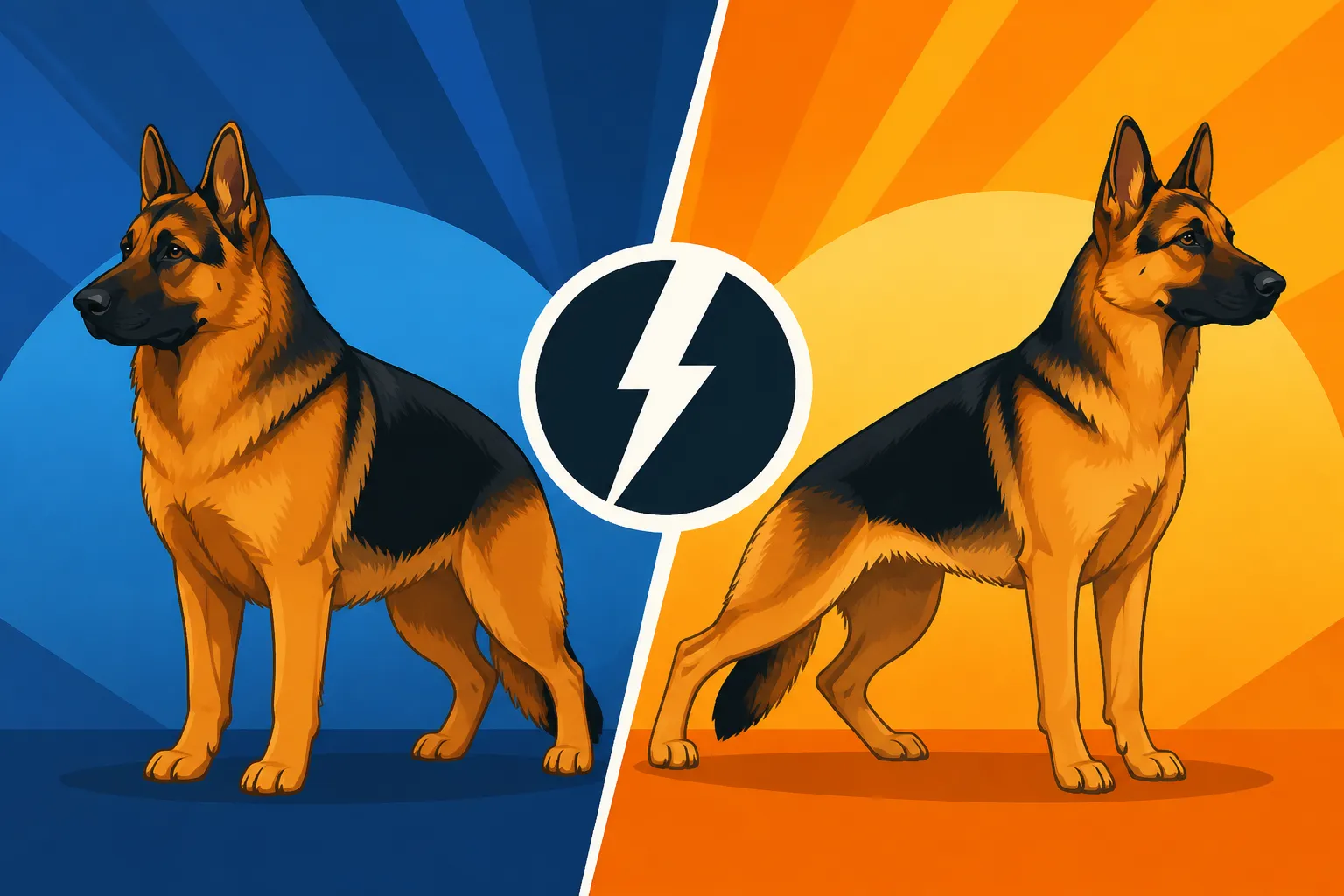
Physically, the American show line is often characterized by a more dramatic slope from the shoulders to the hindquarters, a feature known as a "roach back" or "sloped back." Their rear angulation is often quite extreme, which allows for a very flashy, ground-covering gait in the show ring. Temperamentally, American show lines are generally bred to be calmer and more laid-back than their European counterparts. They tend to be excellent family companions, often more tolerant of novel situations and less intense, making them a popular choice for homes seeking a beautiful, friendly, and somewhat less demanding pet. You might find that these dogs, while still active, have lower overall drive, making them easier to manage in a typical suburban home.
The European German Shepherd
The term "European German Shepherd" is a broad umbrella that actually covers several distinct lines, all generally bred with a much stronger emphasis on working ability, health, and a stable, confident temperament. Within Europe, you have various lines such as the West German Show Line, the West German Working Line, the East German (DDR) Line, and the Czech Line. All of these, however, share a common ancestral philosophy that prioritizes function over exaggerated aesthetics.
European German Shepherds typically have a straighter back, more moderate angulation, and a more robust, powerful build. Their movement is often described as efficient and effortless, designed for endurance rather than a flashy trot. Temperamentally, these dogs possess a much higher drive and intensity. They are bred for courage, intelligence, and a strong work ethic. This means they are often more energetic, require significant mental and physical stimulation, and thrive when given a job to do. They can be wonderful family dogs, but they absolutely demand an experienced owner who understands their needs for structured training, exercise, and consistent leadership. If you're considering one of these dogs, be prepared to invest serious time into activities like German Shepherd Obedience Training Basics, IGP, agility, or advanced tracking.
Physical Distinctions: More Than Just a "Sloped Back"
The most immediately recognizable differences between American and European German Shepherds often lie in their physical appearance. While both are undeniably German Shepherds, a trained eye can spot the distinctions quite easily. These aren't just cosmetic; they stem from the different breeding priorities we just discussed.
Body Structure and Angulation
The "sloped back" is perhaps the most famous physical characteristic associated with the American show line. This refers to the pronounced downward curve of their topline, often starting from the withers and descending steeply to the tail. Coupled with this is often an extreme rear angulation, meaning their hind legs appear heavily bent at the knee (stifle) and hock. This structure allows for a very dynamic, reachy gait in the show ring, covering a lot of ground with each stride. However, critics sometimes argue that this extreme angulation can put undue stress on joints over time.
In contrast, European German Shepherds typically exhibit a much straighter, level topline or a very slight, gradual slope. Their rear angulation is moderate, designed for powerful propulsion and endurance rather than extreme extension. This more balanced structure is believed to be better suited for sustained physical activity and less prone to certain orthopedic issues related to over-angulation. When you see a European GSD move, it's often with an economical, powerful stride that speaks to its working heritage. This emphasis on functional anatomy is a hallmark of Working Line vs Show Line German Shepherd differences.
Coat and Color Variations
While both lines can display a wide array of German Shepherd colors, there are some general tendencies. American show lines often favor richer, more distinct black and tan or black and red pigmentations, with clear, defined markings. Long-coated variations might be seen, though the traditional short double coat is still standard.
European lines, especially working lines like the DDR or Czech, frequently exhibit more "natural" or rustic colors, such as sables (a mix of black and red/tan hairs, giving a grizzled appearance), bi-colors (mostly black with tan points), or solid blacks. The pigment can be very rich and deep. While long coats exist in Europe, they are often seen less frequently in serious working programs where short, weather-resistant double coats are preferred for practical reasons. Regardless of the line, a proper German Shepherd Double Coat Explained is essential for protection and insulation.
Size and Proportions
Generally speaking, both American and European German Shepherds fall within the breed standard for height and weight. However, European working lines, particularly the East German (DDR) and Czech lines, might appear slightly more substantial and blocky in build, with heavier bone structure and broader chests. They give an impression of raw power and ruggedness.
American show lines tend to be more refined in bone structure, giving them a more elegant and sometimes leaner appearance. While they might be just as tall, their overall body mass might be slightly less, or distributed differently, contributing to their showy gait. Always check the specific German Shepherd Size and Weight Guide to understand the breed standard, but also recognize that individual variation within lines is common.
| Feature | American Show Line German Shepherd | European German Shepherd (General) |
|---|---|---|
| Primary Breeding Goal | Conformation for show ring, aesthetics, family companion | Working ability, health, stable temperament, utility |
| Topline | Distinctive sloped back, often significant angulation in hindquarters | Straighter, level topline, moderate angulation |
| Build | More refined bone structure, elegant, often leaner | Robust, powerful, heavier bone, blockier build |
| Movement | Flashy, reachy, ground-covering, designed for show ring | Efficient, powerful, enduring, designed for working |
| Temperament | Generally calmer, more laid-back, adaptable to family life | Higher drive, intense, confident, needs a "job" |
| Exercise Needs | Moderate to high physical and mental stimulation | High to very high physical and mental stimulation |
| Common Colors | Rich black and tan/red, clear markings | Sables, bi-colors, solid black, often richer pigment overall |
| Typical Owner | Families, less experienced owners seeking a companion | Experienced owners, those involved in dog sports/working |
Temperament and Drive: Finding Your Perfect Match
Beyond the physical differences, the temperament and inherent drive are arguably the most critical distinctions between American and European German Shepherds, especially when choosing a dog for your home. This is where breeding philosophies truly manifest in the dog's personality and needs.
The American Temperament
American show line German Shepherds are generally bred to possess a more docile and adaptable temperament. They are often described as being calmer, more relaxed, and less intense than their European counterparts. This makes them excellent candidates for family life, particularly for those who might be first-time German Shepherd owners or who have a less active household. They are typically affectionate with their families and can be quite tolerant of children and other pets, especially with proper German Shepherd Puppy Training Guide and early socialization.
While they still possess the intelligence and loyalty inherent to the breed, their "off switch" is usually much more pronounced. They enjoy playtime and walks, but they are often content to settle down afterwards and relax by their owner's side. This temperament makes them suitable for suburban living where extreme working drive might be a mismatch. They still need mental engagement and training, but the intensity level is often significantly lower. You can find many wonderful toys and enrichment tools on sites like Chewy to keep these dogs happy.
The European Drive
European German Shepherds, especially those from dedicated working lines (like many West German Working, DDR, or Czech lines), are a different kettle of fish entirely. These dogs are specifically bred for their working aptitude, which translates into a much higher drive, intensity, and focus. They often exhibit strong prey drive, protective instincts, and an unwavering desire to work and please their handler. They possess an incredible "on switch" and can maintain focus and energy for extended periods.
This high drive means they require a significant outlet for their energy and intelligence. Simply providing a backyard and a daily walk will not be enough for most European working line German Shepherds. They excel in activities like IGP (formerly Schutzhund), agility, tracking, competitive obedience, and protection work. Without proper engagement, training, and a job to do, these dogs can become bored, frustrated, and potentially destructive or develop behavioral issues. Their natural suspicion of strangers is often more pronounced, requiring extensive How to Socialize a German Shepherd training from a young age. They thrive with experienced owners who understand canine behavior and are committed to consistent training and daily challenges.
Trainability and Exercise Needs
Both American and European German Shepherds are highly intelligent and trainable, but their approaches to training and their overall exercise requirements differ considerably. An American show line GSD will generally pick up basic obedience commands quite readily and enjoy structured training sessions. Their exercise needs are significant for a large breed, usually requiring daily walks, play sessions, and mental enrichment. Think of them as needing a good 60-90 minutes of active engagement daily, plus mental puzzles.
European working lines, due to their intense drive, are often easier to motivate in training for complex tasks. They live for the challenge and possess a relentless desire to succeed. However, this also means their exercise and mental stimulation needs are much higher. We're talking about hours of structured activity, not just casual walks. These dogs thrive on purpose and consistent training, often needing a job that taps into their innate drives. Owners often find themselves investing in professional training or joining dog sports clubs to meet their dog's needs. This is crucial to preventing common German Shepherd Behavior Problems and Solutions stemming from boredom or unfulfilled drive. Considering the high energy, a wide array of durable toys and training equipment from retailers like Chewy will be essential for these dogs.
Health Considerations and Breeding Practices
No matter what line of German Shepherd you choose, health should always be a top priority. German Shepherds, as a breed, are unfortunately prone to certain genetic health issues. However, the different breeding philosophies between American and European lines can influence the emphasis placed on health testing and the prevalence of certain conditions.
Breeding Philosophies and Health Testing
In Germany and many parts of Europe, rigorous health testing and breeding regulations are often mandated by breed clubs like the SV (Verein für Deutsche Schäferhunde), the original German Shepherd Dog club. For a dog to be "breed-surveyed" and approved for breeding, it typically must pass stringent evaluations including:
- Hip and Elbow X-rays: To screen for German Shepherd Hip Dysplasia Explained and elbow dysplasia. These results are graded according to strict standards.
- Working Titles: Often, dogs must earn working titles (e.g., IGP/Schutzhund) demonstrating their intelligence, courage, and trainability.
- Conformation Rating: An evaluation of their physical structure against the breed standard.
- Temperament Test: To ensure a sound, stable temperament.
- DNA Testing: For certain genetic diseases like Degenerative Myelopathy in German Shepherds.
This comprehensive approach aims to produce dogs that are not only structurally sound but also mentally stable and capable workers. Prospective breeders in Europe often prioritize these prerequisites, ensuring that only the healthiest, most stable dogs contribute to the gene pool. This focus on verifiable working ability and comprehensive health screenings means that reputable European breeders adhere to strict standards.
In the United States, while many excellent breeders follow similar protocols, the overall regulatory framework for breeding is less strict. Breeders can choose which health tests they perform, and working titles are not always a prerequisite for breeding show champions. This can lead to a wider variation in the health outcomes of American-bred German Shepherds. When searching for a puppy, regardless of line, understanding German Shepherd Genetic Health Testing is paramount. Always ask a breeder for proof of health clearances, such as OFA or PennHIP certifications for hips and elbows, for both parents.
Common Health Tendencies
Both lines are susceptible to common German Shepherd health issues, including:
- Hip and Elbow Dysplasia: A genetic condition where the hip or elbow joints don't form properly, leading to arthritis and pain. While European lines typically have stricter requirements, it's still present in both.
- Degenerative Myelopathy (DM): A progressive neurological disease affecting the spinal cord, common in older German Shepherds. German Shepherd DM DNA Testing Explained is crucial for breeders to prevent passing this on.
- Bloat (Gastric Dilatation-Volvulus – GDV): A life-threatening condition where the stomach twists. Large, deep-chested breeds like German Shepherds are particularly at risk. Learning How to Prevent Bloat (GDV) in German Shepherds is vital.
- Exocrine Pancreatic Insufficiency (EPI): A condition where the pancreas doesn't produce enough digestive enzymes.
- Allergies: Skin and food allergies can affect German Shepherds of all lines.
While specific health issues don't cleanly divide along American vs. European lines, the breeding philosophy can influence the prevalence and management of these conditions. For instance, European breeders who adhere to strict health testing and functional soundness might inadvertently reduce the risk of severe hip and elbow dysplasia simply by prioritizing functional structure and movement over extreme angulation. Ultimately, the health of your German Shepherd depends more on finding a truly reputable breeder who prioritizes health clearances and genetic diversity than on the specific line alone. Websites like Chewy also offer a variety of specialized diets and supplements that can support joint health or address allergies, often recommended by vets.
Choosing Your German Shepherd: American or European?
Deciding between an American and European German Shepherd truly boils down to your lifestyle, experience level, and what you're looking for in a canine companion. There isn't a "better" or "worse" choice, only a more or less suitable one for you.
Considerations for the American Show Line
An American show line German Shepherd might be the perfect fit if:
- You are a first-time German Shepherd owner or have limited experience with high-drive dogs.
- You are looking for a loyal, affectionate family companion who can adapt well to a moderately active household.
- You appreciate a more elegant, refined aesthetic in your dog's appearance.
- You are prepared for regular exercise and training, but not necessarily intense dog sports or daily "work."
- You desire a dog that is generally more relaxed in various social settings.
These dogs are wonderful pets, but they are still German Shepherds and require consistent training, socialization, and proper care. They will thrive in a home where they are an integral part of the family, receiving attention and gentle guidance. To learn more about whether this type of dog is right for you, consider reading Is a German Shepherd Right for You.
Considerations for the European German Shepherd
A European German Shepherd, especially a working line dog, is best suited for experienced owners who:
- Are committed to providing substantial daily physical exercise and mental stimulation, potentially for several hours a day.
- Are interested in dog sports, working titles, or have a specific "job" in mind for their dog (e.g., protection work, search and rescue, competitive obedience, or IGP).
- Possess strong leadership skills and understand the intricacies of training a high-drive, intelligent breed.
- Prefer a dog with a robust, powerful build and a temperament that is confident, alert, and often more reserved with strangers.
- Value a dog bred primarily for function and health based on rigorous European standards.
Bringing a European working line GSD into your home is a significant commitment. They are not merely pets; they are partners. They demand consistency, structure, and an owner who views training and engagement as an ongoing, essential part of their life. For insights into their unique needs, exploring German Shepherd Exercise Requirements and How to Train a German Shepherd will be incredibly helpful.
Ultimately, whether you choose an American or European German Shepherd, you are getting an intelligent, loyal, and capable companion. The key is to understand the inherent differences that breeding philosophies have created and to be honest with yourself about what you can realistically provide for your dog. Connect with reputable breeders for either line, ask about their breeding goals, health testing, and temperament, and always spend time with the parent dogs if possible. A well-matched German Shepherd, regardless of its origin, will be a truly cherished member of your family. You can find essential supplies for any German Shepherd's needs on a vast selection from a platform like Chewy, from durable crates to high-quality food designed for active breeds.
Disclaimer
This article is for general informational purposes only and does not constitute professional advice. Laws, prices and regulations vary by location and change over time. Consult a qualified professional for guidance on your specific situation.