Best High-Protein Food for a Working German Shepherd
Working German Shepherd diets require quality animal protein, balanced fats, and proper supplements to support daily athletic performance.

Working German Shepherd diets require quality animal protein, balanced fats, and proper supplements to support daily athletic performance.
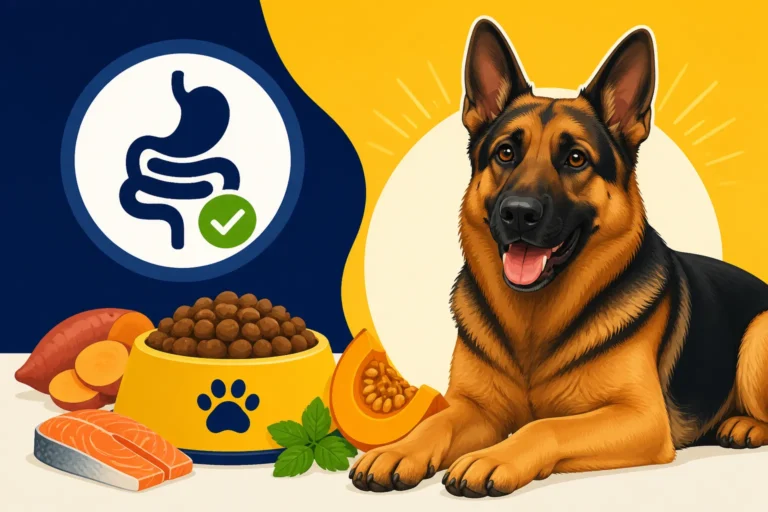
Exocrine Pancreatic Insufficiency in German Shepherds requires enzyme replacement therapy and a diet low in fiber to improve digestion and weight gain.

German Shepherd food allergies cause chronic itching, requiring specialized novel protein, limited ingredient, or hydrolyzed diets for relief.

German Shepherd sensitive stomach care uses digestible ingredients and probiotics to support digestive health and relieve discomfort.

Senior German Shepherd diet changes address metabolic slowdown, joint health, and digestive issues using proper protein and omega-3s.

German Shepherd dietary requirements include high protein, healthy fats, and joint support to maintain muscles, energy, and overall health.

Proper nutrition for a German Shepherd puppy ensures healthy joint development, steady growth, and relief from sensitive stomachs.

German Shepherd puppy nutrition details proper daily food portions, large breed formulas, weight monitoring, and feeding schedules for healthy development.

German Shepherd daily food portions depend on activity level, metabolism, and age, calculated using body condition scoring and caloric needs.

Senior German Shepherd daily caloric needs decrease by twenty to thirty percent due to lower metabolic rates and reduced activity levels.