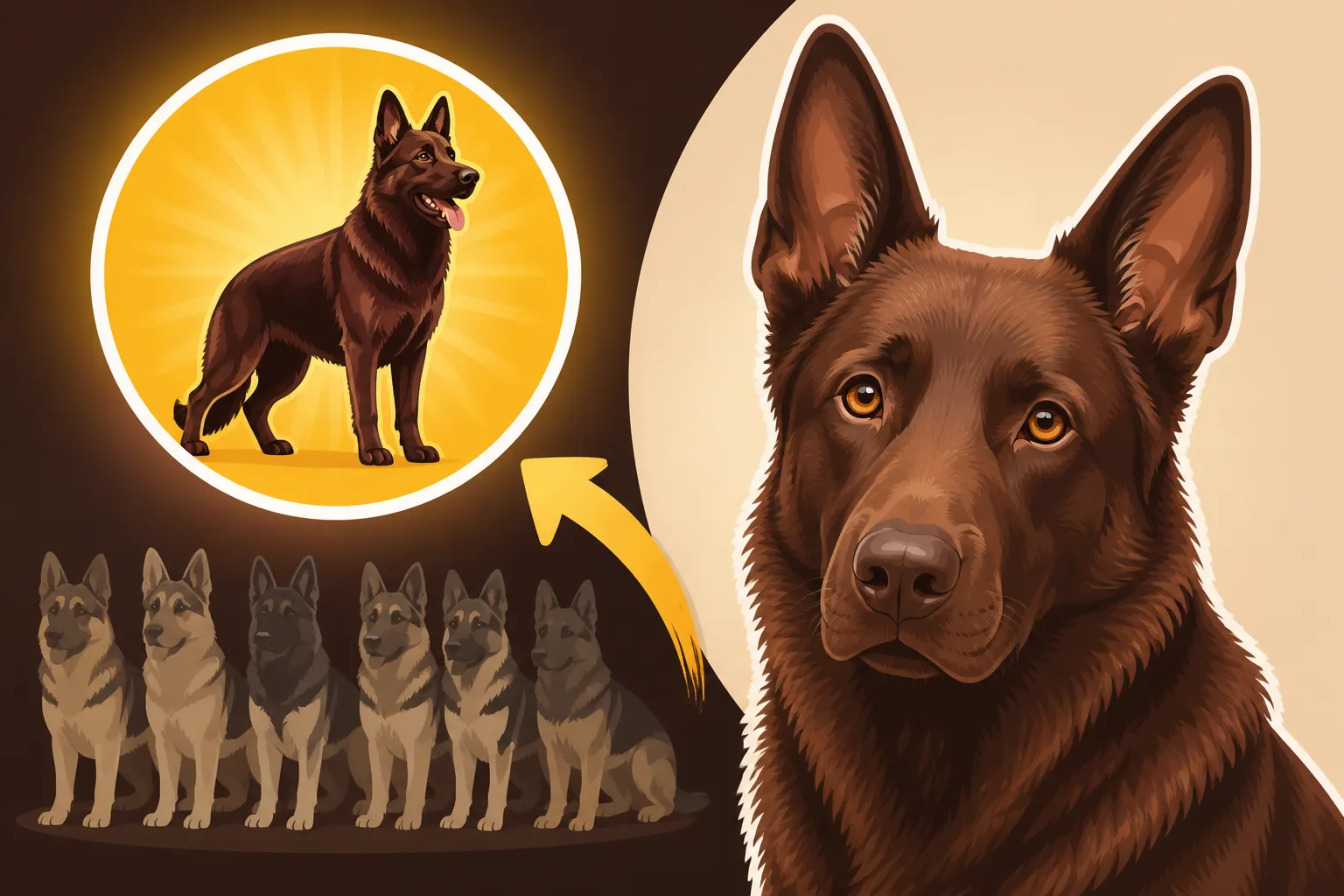
How Rare Is a Liver German Shepherd
It's completely understandable to see a German Shepherd with an unusual coat color and wonder just how unique and sought-after they might be. Many prospective owners fall in love with the distinct look of a liver-colored German Shepherd, which isn't the typical black and tan or sable we often see, leading to questions about their rarity. This guide will dive deep into what makes a liver German Shepherd, exploring the genetics behind this striking hue, and ultimately, whether they are truly rare in the grand scheme of the breed.
Understanding the Liver Coat Color in German Shepherds
When you picture a German Shepherd, chances are you imagine that classic black and tan saddle pattern, or perhaps a striking sable. So, when you encounter a dog with a beautiful, rich reddish-brown or chocolate-colored nose, paw pads, and a coat that matches, it's natural to pause and wonder. This distinct coloration is what we call "liver" in the German Shepherd world. It's not just the coat that's affected; a true liver German Shepherd will have a liver-colored nose, eye rims, and paw pads, rather than the typical black. Their eyes are usually lighter, often amber or light brown, complementing their warm tones.
This isn't a "new" color or a designer trend; the liver gene has always been present within the German Shepherd gene pool. It's simply one of the many genetic possibilities that can manifest, though it's less commonly seen than other colors. The appeal of a liver German Shepherd often lies in its deviation from the norm, offering a unique aesthetic that many find incredibly appealing. They still possess all the hallmark traits of the breed – their intelligence, loyalty, and protective instincts are just as strong as any other color variation. The color of their coat has absolutely no bearing on their temperament or their working abilities.
What Defines a Liver German Shepherd?
A liver German Shepherd isn't just a German Shepherd with a brownish coat. The key identifier is the complete absence of black pigment. Think about it this way: every German Shepherd has two basic pigments, black and red (or yellow/tan). The liver gene, however, modifies the black pigment, turning it into brown. This means that any area that would normally be black on a German Shepherd – the saddle, mask, ears, tail tip, nose, eye rims, and paw pads – will instead appear as a shade of brown, ranging from a lighter reddish-brown to a deep, dark chocolate. The tan points or red parts of their coat might also appear richer or slightly different due to the interaction with the liver pigment.
This total absence of black is crucial. If a dog has a brown coat but still has a black nose, it's not a liver German Shepherd; it's likely a black and tan or sable German Shepherd with a very deep reddish-tan pigment that some might mistakenly perceive as liver. The tell-tale signs are always the non-coat areas like the nose and paw pads. This specific characteristic is what breeders and enthusiasts look for when identifying a true liver coloration. It's a striking look, making these dogs stand out in a crowd of more traditionally colored German Shepherds.
The Genetics Behind the Liver Coat Color
The liver color in German Shepherds, much like in many other dog breeds, is determined by a recessive gene. This means it's not a dominant trait that shows up easily in every generation. Understanding recessive genes is key to grasping why some colors are less common than others. It's like a secret code hidden within the dog's DNA, only revealing itself under specific circumstances. For a German Shepherd to display the liver coloration, they must inherit two copies of this specific recessive gene, one from each parent.
This genetic mechanism explains why you won't see a liver German Shepherd in every litter, even if one parent carries the gene. Both parents must either be liver themselves or be carriers of the liver gene for a liver puppy to potentially appear. This is why responsible breeders who specialize in or are interested in producing certain colors often conduct German Shepherd Genetic Health Testing to identify carriers of various genes, including the liver gene. This knowledge helps them make informed decisions about breeding pairs.
Recessive Gene Explained
Let's break down the "recessive gene" concept a little more. Imagine a gene, let's call it the "B locus" gene, which controls black pigment. There are two main alleles (versions) for this gene: 'B' (dominant black) and 'b' (recessive liver/brown).
- BB: A dog with two dominant 'B' genes will produce black pigment. Their nose, paw pads, etc., will be black.
- Bb: A dog with one dominant 'B' and one recessive 'b' gene will appear black (or black and tan, or sable with black points), because 'B' is dominant. However, they are a carrier of the liver gene. They have the potential to pass the 'b' gene on to their offspring.
- bb: A dog with two recessive 'b' genes will express the liver coloration. All areas that would normally be black will instead be brown. Their nose, paw pads, and eye rims will be liver-colored.
So, for a liver puppy to be born, both parents must contribute a 'b' gene. This means:
- Both parents are liver (bb x bb). All puppies will be liver.
- One parent is liver (bb) and the other is a carrier (Bb). About half the puppies could be liver.
- Both parents are carriers (Bb x Bb). About 25% of the puppies could be liver, while 50% would be carriers and 25% would not carry the gene at all.
This genetic lottery is why liver German Shepherds aren't seen as frequently as their black-pigmented counterparts. It requires a very specific genetic combination. It's fascinating how a tiny piece of DNA can create such a significant visual difference in our beloved dogs!
| Genotype | Phenotype (Appearance) | Can Produce Liver Puppies? (If Mated with 'b' Carrier/Liver) |
|---|---|---|
| BB | Black Pigment (no liver) | No |
| Bb | Black Pigment (carrier) | Yes |
| bb | Liver Pigment | Yes |
Are Liver German Shepherds Truly Rare?
This is the million-dollar question for many enthusiasts! The answer is a bit nuanced: liver German Shepherds are certainly less common than the standard black and tan or sable varieties, but they aren't what most people would consider "rare" in the sense of being incredibly difficult to find or existing in extremely low numbers globally. The term "rare" can be subjective.
They are rarer than, say, a standard black and tan German Shepherd, simply because of the recessive genetic inheritance pattern we just discussed. It requires specific parent pairings to produce a liver puppy. You're not going to walk into every dog park and see a dozen liver German Shepherds. However, compared to truly exotic or newly developed "designer" colors that sometimes pop up in other breeds, liver is a naturally occurring and recognized color within the German Shepherd breed's history.
The rarity often stems from the breed standard. In many German Shepherd breed clubs, the preferred pigment is rich black, and a liver nose is often considered a fault in the show ring. This means breeders focused on conformation shows might actively breed away from the liver gene, further reducing its prevalence in certain lines. However, for pet owners, the color is purely a matter of preference and has no impact on the dog's health or suitability as a companion.
Comparing Liver to Other German Shepherd Colors
To really understand the rarity of a liver German Shepherd, let's put it in context with other colors.
- Black and Tan / Black and Red: These are by far the most common and widely recognized colors. They are the epitome of the German Shepherd Breed Guide image.
- Sable: Also very common, especially in working lines, sable is a pattern where each individual hair has bands of different colors.
- Solid Black: While not as common as black and tan, solid black German Shepherds are fairly well-known and generally accepted without issue.
- Liver: Less common than the above, but definitely not unheard of. Many breeders have produced liver puppies, either intentionally or because they had carrier parents.
- Blue: Blue German Shepherds are also the result of a recessive gene that dilutes black pigment. They are generally considered less common than liver and often less desired by some due to the dilute gene's potential link to certain skin conditions, though this isn't always the case.
- Isabella: This is a very rare dilution of liver, often appearing as a pale, silvery-brown or fawn. It requires both the liver and the blue dilution genes, making it genuinely rare.
- White: White German Shepherds are also the result of a recessive gene, but they are a distinct variety often referred to as a White Shepherd. They are not considered "rare" in their own right, as there are dedicated breeding programs for them.
So, while a liver German Shepherd might not be as common as the classic black and tan, you shouldn't have an impossible time finding one if that's truly what you're looking for. The key is to find a responsible breeder who prioritizes health and temperament above all else, regardless of the coat color. A quick search on reputable German Shepherd listing sites or through breed-specific rescues might surprise you with the number of beautiful liver German Shepherds available. For things like quality dog food and supplies for any GSD, regardless of color, online retailers like Chewy offer a vast selection.
Living with a Liver German Shepherd
Bringing a liver German Shepherd into your home is just like bringing home any other German Shepherd, regardless of their coat color. They come with the same incredible intelligence, loyalty, energy, and need for training and socialization. Their liver coat doesn't grant them special powers or unique health concerns directly related to their color. However, just like all German Shepherds, they are predisposed to certain breed-specific health issues and require dedicated care to thrive.
The real focus should always be on the dog's overall health, temperament, and whether they come from responsible breeding practices. A good breeder will prioritize these factors over specific color traits. Whether your German Shepherd is black and tan, sable, or liver, the fundamentals of care remain the same.
Health and Temperament Considerations
A liver German Shepherd is, first and foremost, a German Shepherd. This means they are prone to many of the same German Shepherd Health Problems Guide that affect the breed as a whole. Concerns like German Shepherd Hip Dysplasia Explained, elbow dysplasia, and degenerative myelopathy are genetic issues that are not linked to coat color. Therefore, it's absolutely crucial to choose a puppy from parents who have undergone thorough health testing, regardless of their coat color. A reputable breeder will always be transparent about these test results.
In terms of temperament, a liver German Shepherd should exhibit the typical German Shepherd Temperament and Personality traits: intelligent, courageous, confident, and eager to please, though they can be reserved with strangers. Their coat color does not dictate their personality. Any behavioral issues would stem from genetics unrelated to color, lack of proper socialization, or inadequate training, not from their beautiful brown hue. Remember, these are intelligent working dogs who thrive on purpose and mental stimulation. Daily exercise, consistent training, and early socialization are vital for a well-adjusted German Shepherd, liver or otherwise. Online resources and pet stores like Chewy can provide excellent training tools and enrichment toys to keep their minds sharp.
Care and Grooming for a Liver Coat
Caring for a liver German Shepherd's coat is no different from caring for any other German Shepherd. They have a dense double coat that sheds year-round, with heavier shedding periods (known as "blowing coat") usually occurring twice a year. Regular grooming is essential to keep their coat healthy, minimize shedding around the house, and prevent matting.
- Brushing: Aim for daily brushing, or at least several times a week, with a good slicker brush and an undercoat rake. This helps remove loose hair and distributes natural oils.
- Bathing: Bathe your German Shepherd only when necessary, typically every 2-3 months or if they get particularly dirty. Over-bathing can strip their coat of essential oils and lead to dry skin. Use a high-quality dog shampoo formulated for their skin and coat.
- Nail Trimming: Regular nail trims are important to prevent discomfort and potential paw problems.
- Ear Cleaning: Check and clean their ears regularly to prevent infections.
The liver coloration itself requires no special grooming techniques. The color is stable and won't fade or change with sun exposure in the way some other dilute colors might. What's most important is a consistent grooming routine that supports the health of their double coat. If you're looking for quality grooming supplies, from brushes to specialized shampoos, a comprehensive pet supply retailer like Chewy is a fantastic place to start your search.
Finding a Liver German Shepherd
If you've fallen in love with the unique look of a liver German Shepherd, the good news is that they are certainly attainable. While you might not find them as readily available as black and tan puppies, a dedicated search can certainly lead you to one.
The most important advice when seeking any German Shepherd, especially one with a specific color trait, is to prioritize finding a responsible and ethical breeder. A reputable breeder will always put the health, temperament, and overall well-being of their dogs first, ensuring they adhere to breed standards for health and conformation, even if the dog doesn't have the typical show ring pigment.
What to Look for in a Breeder
When searching for a liver German Shepherd, these are key considerations for choosing a breeder:
- Health Clearances: Demand to see proof of health clearances for both parent dogs, particularly for hip and elbow dysplasia, as well as German Shepherd DM DNA Testing Explained. A good breeder will readily provide these.
- Transparency: A reputable breeder will be open and honest about their breeding practices, the health history of their lines, and the specific genetics of their dogs. They should be able to explain how the liver color appeared in their litter.
- Temperament: Observe the parent dogs and the puppies. They should be well-socialized, confident, and not overly shy or aggressive. A breeder who focuses on solid temperaments will produce well-adjusted puppies, regardless of color.
- Living Conditions: The puppies should be raised in a clean, stimulating environment, ideally within the breeder's home, where they receive plenty of human interaction.
- Questions for You: A good breeder will also ask you many questions to ensure you are a suitable owner for one of their puppies. This shows they care about the lifetime welfare of their dogs.
- Contracts and Guarantees: Expect a contract that outlines health guarantees, spay/neuter agreements, and what happens if for some reason the dog needs to be rehomed.
Never purchase a puppy from a breeder who won't allow you to meet the parent dogs, doesn't provide health clearances, or pressures you into a quick sale. While a liver German Shepherd might seem special, never let a unique color override the importance of ethical breeding practices. The long-term Cost of Owning a German Shepherd Per Year can be significantly impacted by health issues from poor breeding. For more information, check out How to Find a Reputable German Shepherd Breeder.
Disclaimer
This article is for general informational purposes only and does not constitute professional advice. Laws, prices and regulations vary by location and change over time. Consult a qualified professional for guidance on your specific situation.