Bicolor German Shepherd: What to Know
It can be incredibly confusing when you start researching German Shepherd coat colors. You hear terms like "black and tan," "sable," and "solid black," but then someone mentions a "bicolor" German Shepherd, and suddenly you're wondering if you missed something entirely different! Rest assured, you haven't. This guide is going to clear up all the mystery surrounding the Bicolor German Shepherd, explaining exactly what this striking coat pattern is, how it differs from others, and what you need to know if you're considering bringing one of these beautiful dogs into your life.
What Exactly is a Bicolor German Shepherd?
When you first hear "bicolor," you might think it just means two colors, which a black and tan German Shepherd also has. But the term "bicolor" in the German Shepherd world refers to a very specific, visually distinct pattern that often gets misunderstood. It's not just any two colors; it's a particular distribution that creates a truly unique and imposing appearance.
Defining the Bicolor Pattern
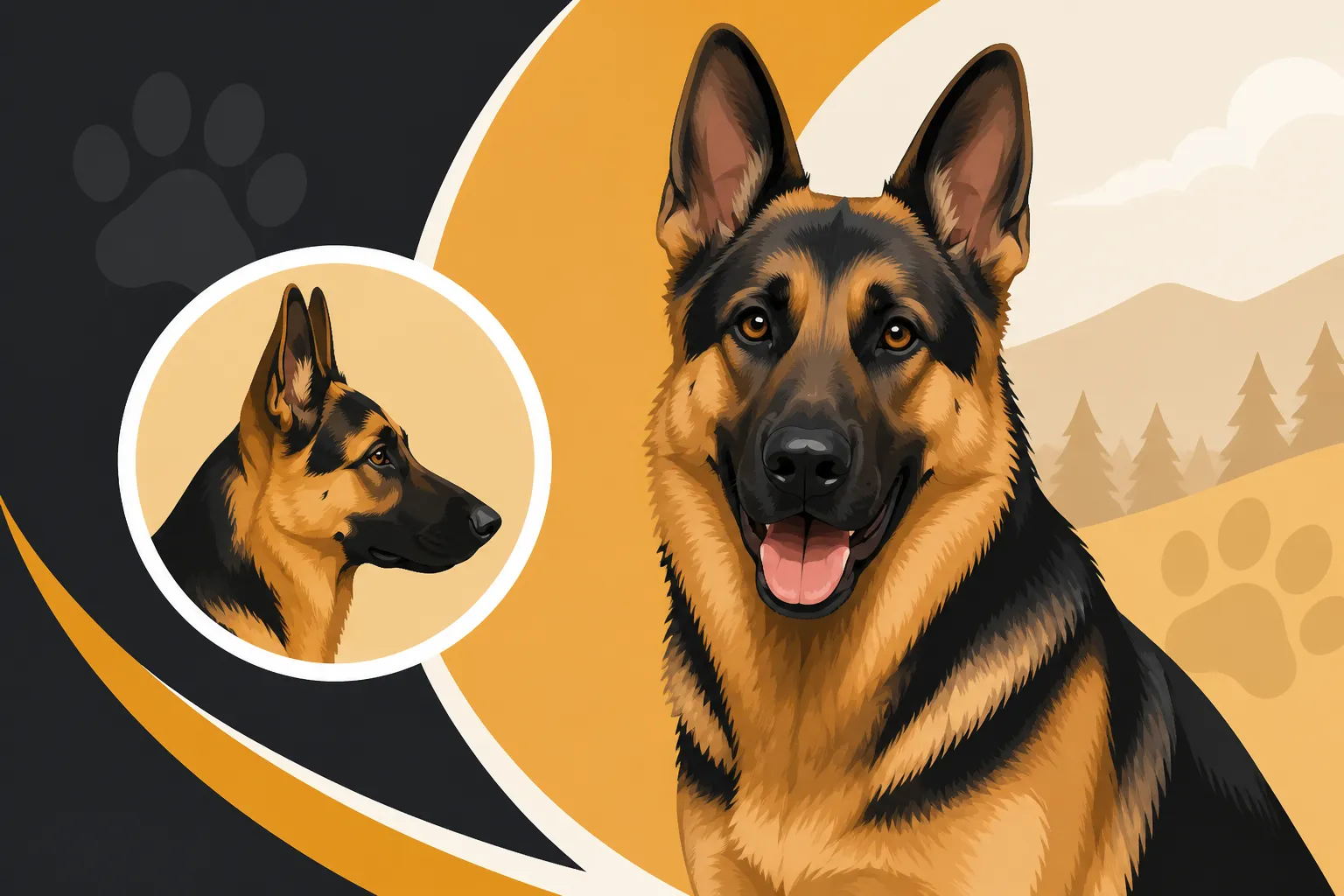
A Bicolor German Shepherd is characterized by a coat that is predominantly black, with tan, cream, or red markings appearing only on specific, limited areas of their body. Think of it less as a "saddle" on a tan dog and more like a "blanket" of black draped over a very dark tan or red base. The vast majority of their torso, back, neck, and sometimes even their head will be a rich, deep black. The lighter markings are usually confined to their legs, paws, chest, and sometimes around the muzzle and eyes.
These markings are often much deeper in color, leaning towards a rich red or deep tan, rather than the paler cream or lighter tan you might see on a standard black and tan GSD. The contrast is usually very sharp, making the black appear even more intense. It’s a powerful look that highlights their musculature and strong build, giving them an almost intimidating presence, especially with their dark eyes.
The Genetics Behind the Bicolor Coat
The stunning bicolor coat isn't just a random occurrence; it's the result of specific genetics at play. In German Shepherds, coat color and pattern are largely determined by a set of genes, with the "A-locus" (agouti gene) being particularly influential.
For a dog to express the bicolor pattern, they typically carry the recessive allele 'a' at the A-locus, which is responsible for solid black. However, in the case of a bicolor, they also carry other genes that allow for the expression of tan points. Essentially, a bicolor German Shepherd is genetically a solid black dog with "tan points" superimposed. This is different from the gene that creates the traditional "saddle" pattern of a black and tan German Shepherd, which usually involves different alleles at the A-locus, allowing for a broader distribution of tan across the body with a distinct black saddle. The genetic combination for a true bicolor results in that minimal, well-defined tan point distribution against a dominant black canvas.
How Does a Bicolor German Shepherd Differ from Other Coat Colors?
Understanding the nuances between German Shepherd coat types can be tricky because some terms are used loosely. However, with the bicolor, the distinction is quite clear once you know what to look for. It's not just a subtle variation; it's a completely different expression of color.
Bicolor vs. Black and Tan
This is where most of the confusion lies, as both patterns involve black and tan. The most significant difference between a Bicolor German Shepherd and a standard black and tan German Shepherd lies in the distribution and proportion of black to tan.
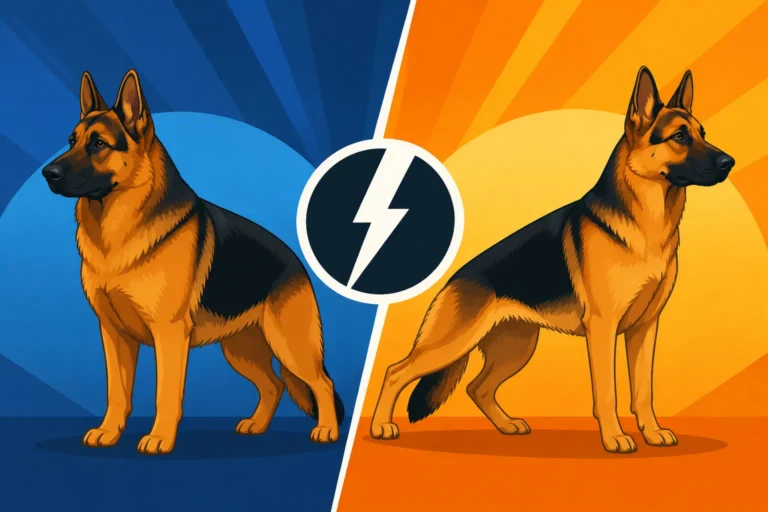
A traditional black and tan German Shepherd typically has a significant "saddle" or "blanket" of black on its back, extending down the sides, but the tan coloration is much more widespread. You'll see tan on their chest, belly, legs, and face, often extending up their flanks and around their neck. The black "saddle" is usually clearly defined and sits atop a largely tan body. The tan can range from a light cream to a rich mahogany.
In contrast, a bicolor German Shepherd is overwhelmingly black. Imagine painting a German Shepherd solid black, then dipping its paws, the very bottom of its legs, a small strip on its chest, and perhaps a small patch around its muzzle in tan paint. The black dominates the entire upper body, sides, and often a good portion of the head, leaving only minimal, distinct tan markings. There is no large "saddle" of black on a tan body; instead, it's a black body with tan "points." This distinction in pattern is crucial for identifying a true bicolor. For a deeper dive into the specific characteristics of different German Shepherd coats, you might want to read our article on German Shepherd Colors and Coat Types.
Bicolor vs. Sable and Solid Black
Now, let's compare the bicolor to two other distinct German Shepherd coat types: sable and solid black.
- Bicolor vs. Sable: Sable German Shepherds are often called "agouti" colored. Their individual hairs are banded with multiple colors, typically shades of black, tan, and sometimes gray. This gives them a rich, multi-dimensional, often grizzled appearance that can change depending on how the light hits their fur. There's no distinct saddle or clear separation of color patches; rather, the colors are blended throughout the coat. A sable puppy might look quite dark but lighten as they mature, or vice versa, displaying a dynamic color that is vastly different from the sharply defined, two-tone look of a bicolor.
- Bicolor vs. Solid Black: Solid black German Shepherds are exactly what they sound like – entirely black, from nose to tail, with no lighter markings whatsoever. They are born black and remain black throughout their lives. This coat color is also genetically recessive. While a bicolor carries the genetic potential for solid black, other genes allow the specific tan points to express themselves. A solid black GSD, therefore, lacks those specific genes for tan point expression, resulting in an unbroken black coat.
Visual Characteristics and Markings
The visual appeal of a Bicolor German Shepherd is truly striking due to the stark contrast. Their predominant black coat is usually a very rich, deep hue, often described as ink-black or jet-black. This dark pigmentation isn't limited to their fur; it typically extends to their nose, paw pads, and often their eye rims, giving them a very intense and focused gaze.
The tan markings are strategically placed and usually quite limited. You'll commonly see them on the:
- Lower Legs and Paws: Like socks, often extending slightly up the forelegs and hind legs.
- Chest: A small patch or stripe on the chest.
- Muzzle and Face: Sometimes small areas around the mouth, chin, or eyebrows, creating "eyebrows" that add to their expressive faces.
- Under the Tail: A small flash of tan underneath the tail.
These tan points are almost always darker and richer than the tan on a black and tan German Shepherd, leaning towards shades of red, mahogany, or dark gold. The overall impression is one of power and elegance, and many enthusiasts seek out this specific color for its dramatic aesthetic.
| Feature | Bicolor German Shepherd | Black and Tan German Shepherd | Solid Black German Shepherd |
|---|---|---|---|
| Primary Color | Predominantly Black | Predominantly Tan/Red with Black Saddle | Solid Black |
| Secondary Color | Tan, Red, or Cream points | Black saddle, tan/red markings | None |
| Distribution | Black body, limited tan on legs, chest, face | Broad tan/red areas, distinct black "saddle" on back | Uniform black across entire body |
| Genetic Basis | Recessive black allele 'a' with tan points | Different alleles at A-locus for saddle pattern | Recessive solid black 'a' allele |
| Appearance | Dramatic contrast, intense black, minimal light | Classic GSD look, balanced black and tan | Striking, uniform dark appearance |
| "Saddle" | No distinct saddle; "blanket" of black | Clear, defined black saddle | N/A |
Temperament, Health, and Care of Bicolor German Shepherds
It's a common misconception that certain coat colors are linked to specific temperaments or health predispositions. While color preferences are valid, it's vital to separate myth from reality, especially when it comes to a powerful and intelligent breed like the German Shepherd.
Is Their Temperament Different?
Let me say this loud and clear: a Bicolor German Shepherd's temperament is absolutely no different from that of any other color German Shepherd. Their coat pattern is purely aesthetic and has no bearing on their personality, intelligence, trainability, or drive. When you're looking for a German Shepherd, whether bicolor or any other color, you should expect the classic German Shepherd traits:
- Intelligence: They are incredibly smart and eager to learn, which is why they excel in so many roles, from police work to therapy dogs.
- Loyalty: They form strong bonds with their families and are fiercely devoted.
- Protectiveness: Their natural guarding instincts mean they will be vigilant and protective of their home and loved ones.
- High Energy: They require significant mental and physical stimulation to be happy and well-behaved. Without it, you might find yourself dealing with destructive behaviors.
- Confidence: A well-bred and well-socialized German Shepherd should be confident and stable.
Any variation in temperament among German Shepherds is due to genetics from their specific lineage, early socialization, and training, not their coat color. If you're looking for a companion, focus on the breeding lines, the temperament of the parents, and the puppy's individual personality, not just the visual appeal of a bicolor coat. Our comprehensive German Shepherd Temperament and Personality guide can offer more insights into what makes these dogs tick.
Health Considerations
Just like temperament, the bicolor coat gene is not linked to any specific health conditions. A Bicolor German Shepherd is susceptible to the same common health problems as any other German Shepherd. This means potential owners need to be acutely aware of breed-specific health concerns, regardless of coat color.
Some of the more prevalent health issues in German Shepherds include:
- German Shepherd Hip Dysplasia Explained and German Shepherd Elbow Dysplasia: Symptoms and Treatment are common orthopedic conditions.
- Degenerative Myelopathy in German Shepherds, a progressive neurological disease.
- German Shepherd Bloat: Signs and Prevention, a life-threatening gastric issue.
- Certain cancers, allergies, and Exocrine Pancreatic Insufficiency (EPI).
The key to a healthy Bicolor German Shepherd is the same as for any other: choose a reputable breeder who performs extensive German Shepherd Genetic Health Testing on their breeding stock, provides proper nutrition, ensures adequate exercise, and offers regular veterinary care. Remember, the journey to How to Keep a German Shepherd Healthy is a lifelong commitment.
Care and Grooming for a Bicolor Coat
Caring for a Bicolor German Shepherd's coat isn't any different from grooming a GSD of another color. They all share the breed's signature double coat, which consists of a dense, soft undercoat for insulation and a coarser, water-resistant outer coat. This magnificent coat, regardless of its color pattern, requires consistent attention.
Expect shedding, and lots of it! German Shepherds are known for being heavy shedders year-round, with two major "blow coat" seasons where they shed even more profusely. Regular brushing, ideally several times a week, is essential to remove loose hair, prevent mats, and distribute natural oils to keep their coat healthy and shiny. During shedding season, daily brushing with a good deshedding tool can make a huge difference.
Bathing should be done as needed, typically every few months or when they get particularly dirty, using a dog-specific shampoo that won't strip their natural oils. Their nails need regular trimming, and their ears should be checked and cleaned periodically to prevent infections. You can find many of these grooming essentials at retailers like Chewy, making it easy to keep your bicolor looking their best.
Finding and Owning a Bicolor German Shepherd
If the striking appearance of a Bicolor German Shepherd has captured your heart, the next step is to understand how to responsibly find one and what life with one entails. It's a significant commitment, and careful preparation is key.
What to Look for in a Breeder
Because the bicolor pattern is so visually appealing, it can sometimes attract less reputable breeders who prioritize color over health and temperament. This is why it's absolutely crucial to do your homework. When seeking a Bicolor German Shepherd, apply the same rigorous standards you would for any German Shepherd.
Here's what to prioritize:
- Health Clearances: Insist on seeing proof of health testing for both parents, including OFA or PennHIP certifications for hips and elbows, and screenings for degenerative myelopathy (DM) and other common GSD ailments. A responsible breeder will be transparent about these.
- Temperament First: Ask about the temperament of the parent dogs. Are they stable, confident, and friendly? A good breeder will prioritize breeding for sound temperament above all else.
- Genetic History: A knowledgeable breeder can explain the genetics behind the bicolor coat, proving they understand their lines. They should be able to show you pedigrees and discuss the health and longevity of the dogs in their lineage.
- Transparency: A reputable breeder will welcome questions, allow you to visit their facility (or conduct thorough virtual tours if distance is a factor), and be genuinely interested in your ability to provide a good home. They'll also typically provide a contract and health guarantee.
Never choose a puppy simply because it has a specific rare color or a low price. The long-term health and behavior of your dog are far more important. Our guide on How to Find a Reputable German Shepherd Breeder offers detailed questions to ask and red flags to watch out for.
Considerations for Potential Owners
Bringing any German Shepherd into your life, bicolor or otherwise, is a huge commitment. These are not "set it and forget it" dogs. They thrive on companionship, structure, and purpose.
- Training and Socialization: German Shepherds require consistent, positive reinforcement training from a young age. Early and ongoing socialization is critical to ensure they grow into well-adjusted adults, especially given their protective instincts. Consider starting with a German Shepherd Puppy Training Guide the moment you bring your new companion home.
- Exercise Needs: These dogs are highly athletic and intelligent. They need daily rigorous exercise, not just a walk around the block. Think long hikes, fetching games, agility, or obedience training sessions. Mental stimulation is just as important as physical exercise; puzzle toys and training exercises are excellent ways to engage their minds. For more on this, check out German Shepherd Exercise Requirements.
- Time Commitment: German Shepherds want to be with their people. They are not dogs that do well being left alone for long periods without interaction. If you have a busy lifestyle that keeps you away from home for extended hours, a German Shepherd might not be the best fit for your family. They flourish when they are an integral part of family life.
- Cost: Beyond the initial purchase price, owning a German Shepherd involves significant ongoing costs for high-quality food (you can find a wide range on Chewy), vet care, training classes, and supplies. Ensure you've budgeted for these long-term expenses.
A Bicolor German Shepherd is a magnificent animal, combining the powerful presence of the breed with a uniquely dramatic coat pattern. By understanding their genetics, prioritizing responsible breeding, and committing to their substantial needs, you can welcome a loyal, intelligent, and truly stunning companion into your home.
Disclaimer
This article is for general informational purposes only and does not constitute professional advice. Laws, prices and regulations vary by location and change over time. Consult a qualified professional for guidance on your specific situation.