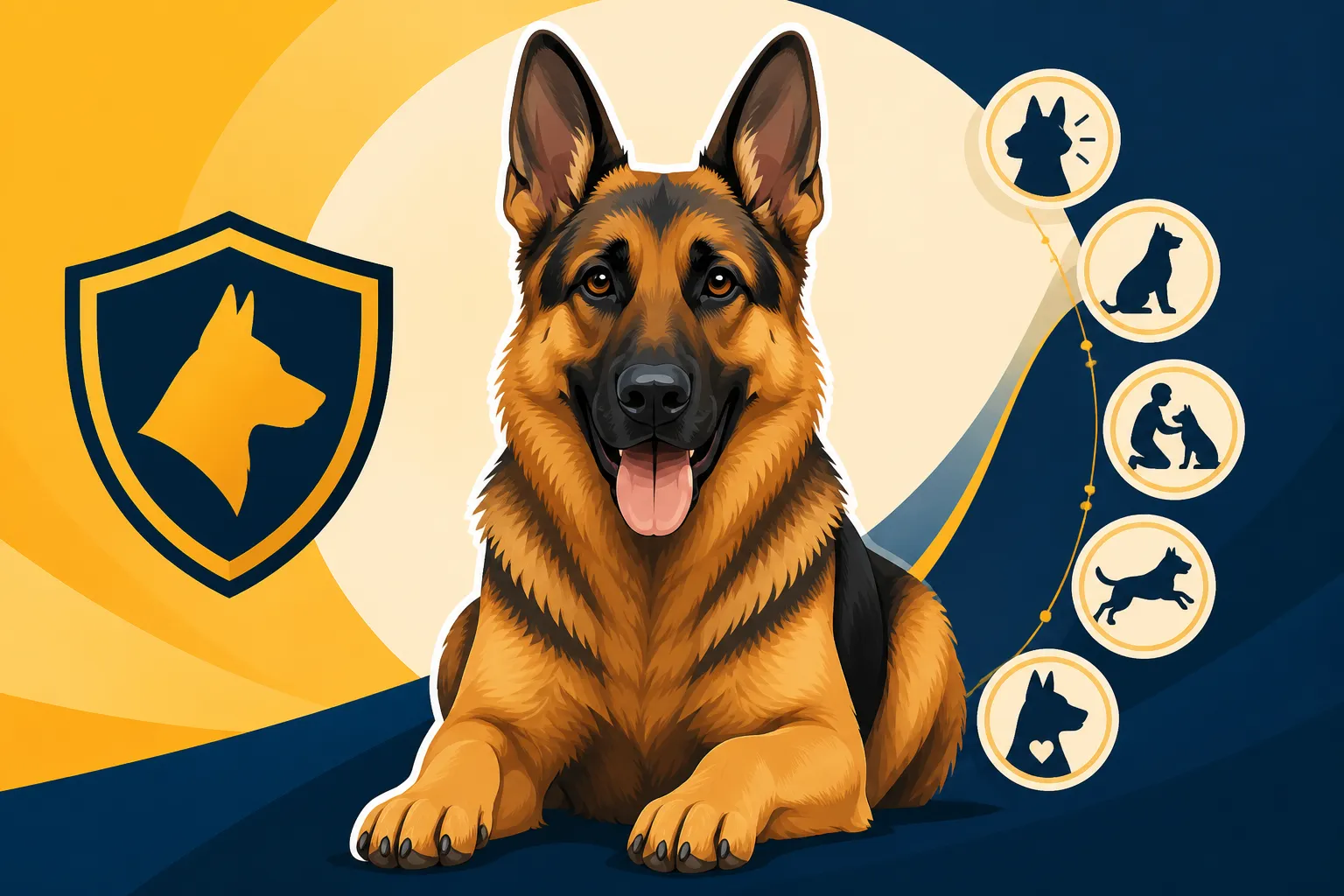
German Shepherd Temperament and Personality
Bringing a German Shepherd into your life is a huge decision, and understanding their unique temperament and personality is absolutely crucial. Many folks are drawn to their noble appearance and impressive intelligence, but then find themselves grappling with behaviors they didn't quite anticipate. It's easy to feel overwhelmed when your dog is displaying traits that don't quite align with the calm, loyal companion you envisioned, leading to frustration and confusion. This comprehensive guide will peel back the layers of the German Shepherd's complex character, helping you understand their core drives, navigate common behavioral quirks, and build a truly harmonious relationship with this magnificent breed.
Understanding the German Shepherd's Core Traits
The German Shepherd is renowned for its imposing presence and sharp intellect, but these traits come with a very specific set of psychological needs. They aren't just large dogs; they're intricate beings with a deep history of working alongside humans, which has indelibly shaped their temperament. Ignoring these foundational characteristics can lead to misunderstandings and, ultimately, behavioral challenges that could have been avoided with better insight.
The Dual Nature: Loyal Companion and Fierce Protector
One of the most defining aspects of the German Shepherd is their intense loyalty and protective instinct. They bond deeply with their families, often forming an almost unbreakable connection with one primary person, but extending their guardianship to the entire household. This isn't just a casual affection; it's a profound sense of duty that stems from their heritage as herding and protection dogs. When you earn their trust, a German Shepherd will dedicate itself to you with an unwavering devotion that few other breeds can match. They are truly "Velcro dogs" for their chosen people, often wanting to be in the same room, observing, and participating in family activities.
However, this deep loyalty comes with a flip side: a natural wariness towards strangers. This isn't aggression for aggression's sake, but rather a cautious, discerning nature that makes them excellent guard dogs. They are designed to assess situations, identify potential threats, and act accordingly. For an unsuspecting owner, this can manifest as aloofness, barking, or even subtle body language that communicates "stay away." It's important to understand that this protective instinct isn't something you can train out of them; instead, you learn to manage and direct it through consistent training and extensive German Shepherd Socialization Checklist. By giving them clear boundaries and helping them understand what is and isn't a threat, you can channel their natural protective drives into appropriate behaviors, ensuring they remain a confident guardian without becoming overly suspicious or reactive.
Intelligence and Trainability: A Double-Edged Sword
German Shepherds consistently rank among the most intelligent dog breeds, a trait that makes them incredibly trainable. They possess a remarkable capacity to learn complex commands, problem-solve, and adapt to various situations. This intellectual prowess is why they excel in roles like police work, search and rescue, service dog tasks, and competitive obedience. They thrive on mental stimulation and enjoy having a "job" to do, which can be anything from sophisticated scent work to simply carrying your groceries. Owners often marvel at how quickly their German Shepherds pick up new tricks and routines, sometimes even seeming to anticipate their next request.
But here's the kicker: their high intelligence is a double-edged sword. A bored German Shepherd is a destructive German Shepherd. If their brilliant minds aren't adequately challenged, they will find their own "work," which often involves behaviors like excessive barking, digging up the yard, or chewing through furniture. Many owners lament that their German Shepherd seems to "outsmart" them, constantly pushing boundaries or devising elaborate schemes to get what they want. This isn't malice; it's just a dog with a powerful brain seeking engagement. Therefore, training isn't just about teaching commands; it's about providing consistent mental exercise. Incorporating puzzle toys from Chewy or engaging in regular training sessions that involve new challenges is vital to keeping their minds sharp and preventing undesirable behaviors. Without this engagement, their intelligence can quickly turn into a source of frustration for both the dog and the owner. For a deeper dive, read our guide on German Shepherd Intelligence and Trainability.
Energy Levels and Exercise Needs: More Than Just a Walk in the Park
These are not couch potato dogs. German Shepherds were bred for stamina, agility, and endurance, spending their days herding sheep or patrolling alongside their human companions. This means they possess a tremendous amount of energy that needs a constructive outlet every single day. Simply letting them out into the backyard for a few minutes isn't going to cut it. They require vigorous physical exercise to truly feel content and balanced. This could include long, brisk walks, runs, hikes, swimming, or active games of fetch. Many German Shepherd owners find that two substantial exercise sessions per day are the bare minimum, often totaling an hour or more of focused activity.
Failing to meet their exercise requirements is a common pitfall that leads to many behavioral problems. An under-exercised German Shepherd will often become restless, anxious, and prone to destructive behaviors indoors. They might pace, whine, or resort to nipping and jumping as a way to burn off pent-up energy. It's not uncommon for owners to describe their GSD as "hyper" or "unruly" when, in reality, the dog is simply starved for appropriate physical activity. Think of it this way: their bodies are built like finely tuned athletes, and without the chance to perform, they experience both physical and mental discomfort. Understanding their true German Shepherd Exercise Requirements is fundamental to their well-being and your household's peace.
Socialization: The Cornerstone of a Well-Adjusted German Shepherd
Proper socialization is perhaps the most critical factor in shaping a German Shepherd's temperament, turning their natural protective instincts into a well-managed confidence rather than fear-based reactivity. Without it, even the most inherently good-natured German Shepherd can develop fear, anxiety, or aggression, making daily life incredibly challenging. It's a continuous process, not a one-time event, and its importance cannot be overstated.
Puppy Socialization: Setting the Foundation
The prime window for socialization in German Shepherd puppies is between 3 and 16 weeks of age. This is a crucial period where their brains are like sponges, soaking up all the experiences around them and forming impressions that will last a lifetime. During this time, it's paramount to expose your puppy to a wide variety of sights, sounds, smells, people, and other animals in a positive and controlled manner. Think about all the things they'll encounter in their adult life: different types of people (kids, adults, people with hats, people with canes), other dogs (small, large, boisterous, calm), various environments (parks, city streets, pet stores), and common noises (traffic, vacuums, thunderstorms). Each exposure should be a positive one, paired with treats, praise, and reassurance.
Skipping or inadequately performing puppy socialization is a common mistake that can have profound long-term consequences. A German Shepherd puppy isolated during this critical period is far more likely to grow into an adult who is fearful, reactive, or aggressive towards new stimuli. They learn that the world outside their familiar home is scary or threatening, and their natural protective instincts can then manifest as fear-aggression. Attending well-run puppy classes is an excellent way to provide structured socialization, allowing your puppy to interact with other vaccinated puppies and various people under expert supervision. This foundational work lays the groundwork for a confident, adaptable adult dog. For detailed steps, check out our guide on German Shepherd Puppy Training Guide.
Adult Socialization: Addressing Past Gaps
Perhaps you adopted an adult German Shepherd, or maybe the puppy socialization wasn't as thorough as it should have been. The good news is that it's never too late to work on socialization, even with an adult dog. However, it requires a different approach, often involving more patience, careful management, and professional guidance. Adult dogs typically have established fears or anxieties, and pushing them too quickly can exacerbate the problem. The goal isn't necessarily to make them love every stranger or dog they meet, but rather to teach them to tolerate new experiences calmly and without reactivity.
This often involves counter-conditioning and desensitization. For example, if your German Shepherd reacts negatively to other dogs on walks, you might start by simply sitting at a distance where they notice other dogs but don't react, rewarding them for calm behavior. Gradually, over weeks or months, you can decrease the distance as they become more comfortable. This process is about changing their emotional response from fear or anxiety to neutrality or even positive anticipation (because other dogs now predict treats!). Consulting with a certified professional dog trainer or behaviorist is highly recommended for adult socialization, especially if there are signs of fear or aggression. They can help you create a tailored plan to address specific triggers and rebuild your dog's confidence in a safe, controlled way.
Introducing Your GSD to Strangers and Other Animals
The process of introducing your German Shepherd to new people and other animals needs to be handled with care and intention. Because of their inherent wariness and protective nature, they aren't typically the type of dog that enthusiastically greets every new face. When meeting new people, it's best to allow your GSD to approach on their own terms, rather than forcing interactions. Instruct visitors to remain calm, avoid direct eye contact initially, and offer a treat if the dog chooses to approach. Over-the-top greetings or attempts to pet a wary German Shepherd can often result in them backing away or showing signs of discomfort. It's about building trust slowly.
Introducing them to other animals, especially other dogs or cats, requires even more careful planning. For multi-dog households, a neutral territory introduction on leash, followed by supervised off-leash play, is often recommended. With cats, a gradual, supervised introduction, allowing the GSD to observe the cat from a distance while rewarding calm behavior, is crucial to prevent the prey drive from kicking in. Remember that their protective instincts can extend to their space and their people, so managing resources like food, toys, and even attention during these introductions is vital to prevent any conflict. Patience, supervision, and positive reinforcement are your best tools in these scenarios, ensuring a smooth transition for everyone involved. For specific guidance on managing multi-pet homes, consider reading German Shepherds with Kids and Other Pets.
Common Behavioral Tendencies and How to Navigate Them
German Shepherds exhibit a range of behaviors rooted in their genetics and historical roles. Understanding these natural tendencies is key to managing them effectively and preventing them from becoming problematic. It’s not about fighting their instincts, but rather understanding them and channeling them appropriately.
Prey Drive: Understanding the Instinct
German Shepherds, like many herding and working breeds, often possess a strong prey drive. This instinctual drive to chase, catch, and sometimes 'kill' (in the sense of a mock hunt) smaller, fast-moving objects or creatures is deeply embedded in their DNA. It's what made them effective at keeping livestock in line and responding to commands in high-stakes situations. You might see this manifest as your German Shepherd fixating on squirrels, rabbits, cats, or even children running and screaming. The sight of a bicycle whizzing by or a jogger can also trigger this chase response, leading to frustrating and potentially dangerous situations on walks.
Managing this prey drive isn't about eliminating it, as that's impossible. Instead, it's about control and redirection. Leash training becomes paramount, ensuring that your German Shepherd can be safely managed in environments where triggers are present. Teaching a rock-solid "leave it" and "come" command is essential. Engaging in activities that satisfy this drive in a safe and appropriate way, such as flirt poles, lure coursing, or even controlled games of fetch, can be incredibly beneficial. For example, a sturdy flirt pole from Chewy can provide an excellent outlet, allowing your dog to chase and "catch" a toy on a string without endangering wildlife or people. If left unchecked, a strong prey drive can lead to a dog that's difficult to control outdoors, constantly straining at the leash, and potentially putting smaller animals or even children at risk. More detailed information can be found in German Shepherd Prey Drive Explained.
Herding Instinct: Why They Nudge and Nip
Another deeply ingrained instinct in German Shepherds is their herding drive. This originates from their ancestral job of gathering and moving sheep. While modern German Shepherds may not be working sheep, this instinct often translates into behaviors aimed at controlling the movement of family members, particularly children, or even other pets. You might notice your GSD nudging people with their nose, gently nipping at heels, or circling family members to keep them "together." They might also try to "herd" children playing in the yard, sometimes to the kids' annoyance or even distress.
These behaviors, while often well-intentioned from the dog's perspective, can be problematic in a household setting. The key is to understand that they are not trying to be aggressive; they are simply acting on an instinct. It's important to teach appropriate boundaries and offer alternative outlets. For instance, if your dog is nipping at heels, redirect that energy to a sturdy chew toy or a game of fetch. Encourage calm, structured play with children rather than uncontrolled running games that might trigger the herding instinct. Training commands like "stay" and "place" can help manage their desire to control movement. For those interested in more formal outlets, activities like herding trials (if available) or agility training can provide a fantastic channel for this innate drive, allowing them to use their natural talents in a constructive way.
Barking and Alertness: More Than Just Noise
German Shepherds are naturally alert and vocal dogs, traits that make them exceptional guardians. They are quick to notice anything unusual in their environment and will typically alert their family with barking. This can range from a few deep barks at the doorbell to more sustained barking at passersby, unfamiliar sounds, or perceived threats outside the window. While this alertness is desirable for security, excessive or nuisance barking can become a significant challenge for owners, especially those in urban or suburban settings.
Understanding why your German Shepherd is barking is the first step in managing it. Are they bored? Anxious? Protecting their territory? Or simply over-stimulated? Often, their barking is a form of communication or an attempt to engage. Teaching a "quiet" command is essential, rewarding them for ceasing barking on cue. Desensitization to common triggers, such as rewarding them for calm behavior when someone walks past the window, can also be effective. Ensuring they get enough physical and mental exercise can often reduce boredom-related barking. It’s also important to differentiate between alert barking and excessive, anxious, or bored barking. A German Shepherd that barks inappropriately for extended periods might be signaling underlying stress or a lack of adequate stimulation. Addressing these root causes, rather than just punishing the barking itself, is critical for long-term success.
Resource Guarding: A Natural, But Manageable Trait
Resource guarding is a natural canine behavior where a dog protects items they perceive as valuable, such as food, toys, sleeping spots, or even people, from being approached or taken by others. In German Shepherds, this trait can be more pronounced due to their protective instincts and territorial nature. It might manifest as stiffening over a toy, growling when approached while eating, or even snapping if someone tries to take their food bowl away. This is a survival instinct, but it can be a dangerous one in a domestic setting if not properly managed.
Early intervention is key to preventing resource guarding from becoming a serious issue. With puppies, regularly practice "trading" high-value items for even better treats, teaching them that human approach means good things happen, not that their possessions will be taken. Handle their food bowl, add treats to it while they are eating, and consistently reward them for calm behavior around their resources. If your German Shepherd is already exhibiting strong resource guarding behaviors, it's crucial to seek professional help from a certified behaviorist. Never punish a dog for growling, as growling is a warning signal; suppressing it can lead to a dog who bites without warning. Instead, work on building trust and changing their emotional response to people approaching their valuable items. Management, such as feeding in a separate, quiet area or providing specific toys when other pets are absent, can also be helpful.
German Shepherds in the Family Setting
Integrating a German Shepherd into a family requires foresight and understanding, especially concerning their interactions with children and other animals. Their natural instincts can be a huge asset in creating a secure household, but they also demand careful management and responsible training to ensure everyone's safety and well-being.
German Shepherds with Children: Building Harmony
When raised properly and thoroughly socialized, German Shepherds can be wonderful family dogs, often displaying a patient and protective nature towards children. They see kids as part of their "flock" to be watched over. Many owners share heartwarming stories of their German Shepherds acting as gentle guardians, tolerating rambunctious play, and even comforting upset children. Their loyalty extends to the youngest members of the family, and they can form incredibly strong bonds. However, it's not an automatic guarantee, and responsible ownership means actively shaping these interactions.
The key to a harmonious relationship between a German Shepherd and children lies in supervision, training, and education for both dog and child. Children need to be taught how to interact respectfully with dogs—no pulling tails, riding on backs, or disturbing them while they are eating or sleeping. Similarly, the German Shepherd needs to be trained to tolerate the often unpredictable movements and noises of children. Early and consistent exposure to well-behaved children, always supervised, is vital during puppyhood. Teaching the dog boundaries, such as not jumping on kids or herding them, is crucial. Without this careful management, their strong herding instinct or protective nature can be misinterpreted, leading to nips or overly zealous "corrections" that are inappropriate. Remember, a German Shepherd’s protective instinct is strong, and they might intervene if they perceive a child is being threatened, even by other family members playing roughly. Clear communication and consistent rules make all the difference.
Living with Other Pets: A Gradual Introduction
Introducing a German Shepherd to other pets, particularly smaller animals, requires careful planning and a slow, controlled approach. Their prey drive and herding instincts can make initial introductions challenging. A German Shepherd might view a smaller dog, cat, or even a guinea pig as something to chase or herd, rather than a housemate. It's not uncommon for owners to report initial tension or even outright chasing when bringing a new pet into the home.
Success hinges on gradual, supervised introductions and consistent positive reinforcement. For other dogs, start with parallel walks in neutral territory, followed by supervised, short sessions in the home, always with leashes on initially. For cats, baby gates can be invaluable, allowing the German Shepherd and cat to see and smell each other without direct physical interaction, rewarding both for calm behavior. Never leave a new German Shepherd unsupervised with existing small pets until you are absolutely certain of their compatibility, and even then, continued supervision is wise. Remember to provide separate spaces for each pet, especially for eating and sleeping, to prevent resource guarding issues. Over time, many German Shepherds can learn to coexist peacefully, even forming affectionate bonds with their non-canine housemates, but it requires diligent management and patience from the owner.
Bonding and Attachment: The Deep Connection
German Shepherds are known for forming incredibly deep and profound attachments with their owners. This isn't just about feeding them and giving them a bed; it's about mutual respect, trust, and shared experiences. They are dogs that crave connection and thrive on being an integral part of their human family. This strong bond is why they are often referred to as "one-person dogs," though they will extend their loyalty to the entire household. This deep attachment is built through consistent positive interactions, daily training, shared activities, and simply spending quality time together.
When a German Shepherd bonds with you, they become your shadow. They will follow you from room to room, often resting at your feet or observing you from a distance. This devotion is incredibly rewarding, but it also means they can be prone to separation anxiety if not properly prepared for alone time. They thrive on routine and knowing their place within the family structure. This bond also contributes to their trainability; they genuinely want to please their trusted leader. The stronger the bond, the more willing they are to cooperate and the more resilient they become in stressful situations. Investing time in building this relationship early on will pay dividends throughout their lives, creating an unbreakable partnership.
Addressing Potential Challenges and Misconceptions
Despite their intelligence and loyalty, German Shepherds can present unique behavioral challenges, often stemming from misunderstandings about their breed-specific needs. It's vital for owners to go beyond surface-level observations and delve into the root causes of these issues, rather than simply labeling their dog as "difficult."
Dispelling the "Aggressive" Myth
One of the most unfortunate and persistent misconceptions about German Shepherds is that they are inherently aggressive. While they possess strong protective instincts and can be formidable when necessary, true aggression is not a desirable trait in a well-bred German Shepherd. Most instances of aggression in GSDs stem from a lack of proper socialization, fear, anxiety, poor breeding, or inadequate training and leadership. A German Shepherd that lunges, growls, or bites out of fear is not an aggressive dog by nature; it's a dog that feels threatened and doesn't have the coping mechanisms to deal with perceived danger.
Responsible breeders meticulously screen for stable temperaments, aiming for confident, self-assured dogs that are watchful but not overtly fearful or reactive. A German Shepherd that is confident and well-socialized will be discerning but not indiscriminately aggressive. If you're experiencing truly aggressive behaviors, it's crucial to seek immediate help from a qualified professional behaviorist. This is not a problem that will resolve itself, and often requires a comprehensive plan to address underlying fears and teach appropriate responses. Understanding that a GSD's defensive behaviors are often rooted in insecurity, rather than malicious intent, is the first step toward rehabilitation. For those struggling, our guide on How to Stop German Shepherd Aggression offers valuable insights.
Managing Anxiety and Reactivity
Given their intelligence and sensitive nature, German Shepherds can be prone to anxiety and reactivity if their needs aren't met or if they have had negative experiences. Anxiety can manifest in various ways, from destructive chewing when left alone (separation anxiety) to excessive barking, pacing, or even self-mutilation. Reactivity often involves an exaggerated response to certain triggers, such as lunging and barking at other dogs, people, or vehicles on walks. This isn't just "being difficult"; it's a dog struggling to cope with its environment.
Managing anxiety and reactivity requires a multi-faceted approach. First, ensure all their basic needs are met: ample physical exercise, consistent mental stimulation, and a stable routine. For separation anxiety, gradually increasing alone time, using calming aids, and creating a safe, comfortable den space can help. For leash reactivity, counter-conditioning and desensitization, as mentioned earlier, are vital. This involves changing their emotional response to triggers by pairing the trigger (at a safe distance) with positive experiences, like high-value treats. Avoid punishment, as this can often increase anxiety and suppress warning signals, potentially leading to more dangerous behaviors. Consulting a veterinary behaviorist or a certified professional dog trainer can provide tailored strategies and, if necessary, discuss medication as part of a comprehensive treatment plan. Our article on German Shepherd Separation Anxiety Solutions provides more in-depth advice.
The Importance of Mental Stimulation
We've touched on this before, but it bears repeating: a German Shepherd needs mental exercise as much as, if not more than, physical exercise. Their intelligent minds require engagement to prevent boredom, anxiety, and destructive behaviors. Many owners find that even after a long walk, their German Shepherd still seems restless or "up to no good." This is often a sign that their brain hasn't had enough of a workout.
Integrating mental stimulation into their daily routine is essential. This can include:
- Training sessions: Short, fun training sessions throughout the day, teaching new commands, tricks, or practicing obedience cues.
- Puzzle toys: Food-dispensing puzzle toys or snuffle mats from Chewy that make them work for their meals or treats.
- Scent work: Hiding treats around the house or yard and encouraging them to use their nose to find them. This is incredibly tiring for dogs.
- Interactive games: Games like "find it" or "which hand" that require them to think.
- Chewing: Providing appropriate, durable chew toys that satisfy their natural urge to chew, which is also mentally engaging.
Without this outlet, their intelligent minds will find their own, often undesirable, ways to stay busy. A German Shepherd who is both physically exercised and mentally stimulated is a calm, content, and well-behaved companion. Conversely, one who is only physically tired but mentally bored will still be prone to mischief and anxiety. For some ideas, check out Best Mental Stimulation for German Shepherds.
Variations in Temperament: Working Lines vs. Show Lines
Not all German Shepherds are created equal, and a significant factor influencing their temperament is whether they come from working lines or show lines. Understanding these distinctions is crucial for prospective owners, as it can profoundly impact their suitability for different lifestyles and family dynamics. This isn't to say one is "better" than the other, but rather that they have different strengths and needs.
The Working Line Personality: Drive and Intensity
Working line German Shepherds are bred primarily for their utility, drive, and performance in tasks such as police work, military service, search and rescue, sport (like IGP/Schutzhund), and protection. Their breeding prioritizes traits like strong nerve, high prey drive, intense focus, exceptional trainability, and an unwavering desire to work. They are often characterized by higher energy levels, a more serious demeanor, and a need for a dedicated "job." These dogs excel when they have a purpose and someone to direct their powerful drives.
Owners of working line German Shepherds will often describe them as "intense" or "always on." They require significant physical exercise and, more importantly, consistent and challenging mental engagement. They thrive in environments where they are given structured tasks and training, and they tend to be less forgiving of inconsistencies in training or lack of leadership. If their needs aren't met, they can easily become bored, destructive, or develop problematic behaviors due to pent-up energy and drive. They are often best suited for experienced dog owners who are committed to ongoing training, participate in dog sports, or have a specific working role for their GSD. For a full comparison, delve into Working Line German Shepherd Explained.
The Show Line Personality: Calmness and Conformity
Show line German Shepherds, particularly those from American lines, are bred with a greater emphasis on conformation to breed standards, aesthetic appearance, and a temperament that performs well in the show ring. While intelligence and trainability are still present, the intensity of drive may be lower compared to working lines. European show lines (especially West German show lines) tend to retain more working aptitude than their American counterparts, often having strong health and temperament requirements for titles before breeding. Generally, show lines aim for a temperament that is calmer, more approachable, and adaptable to a family pet role, while still retaining the breed's signature loyalty and protective instincts.
These German Shepherds often have a more "off switch," making them potentially better suited for families who desire a loyal companion without the extreme intensity of a working line. They still require ample exercise and mental stimulation, but typically less than their working line cousins. They are generally more outwardly friendly and less reserved with strangers, though their protective instincts will still be present. It's important to remember that a "show line" isn't a guarantee of a mellow temperament; individual variation exists, and responsible breeding is key. However, generally speaking, if you're looking for a family companion who is trainable and protective but doesn't necessarily need to be a canine athlete or engaged in advanced dog sports, a well-bred show line GSD might be a better fit.
What This Means for Potential Owners
The distinction between working and show lines is vital because choosing the wrong line for your lifestyle can lead to frustration and an unhappy dog. A busy family looking for a relatively calm companion might find themselves completely overwhelmed by the unrelenting drive of a working line GSD. Conversely, an experienced handler seeking a dog for competitive sport might find a show line GSD lacks the necessary drive and intensity.
When researching German Shepherd puppies, always inquire about the parents' lines, temperament, and health testing. Talk to breeders about their breeding goals and the typical temperament of their puppies. A good breeder will be transparent about their dogs' drives and help you determine which type of German Shepherd is the best match for your experience level, activity preferences, and living situation. Don't base your decision solely on looks; temperament is paramount for a successful, lifelong partnership with this incredible breed. Be honest about your capacity for exercise, training, and mental engagement, and choose a German Shepherd whose temperament aligns with what you can realistically provide.
| Trait | Working Line German Shepherd | Show Line German Shepherd |
|---|---|---|
| Primary Focus | Utility, drive, performance (police, sport, protection) | Conformation, aesthetics, temperament for companion/show ring |
| Energy Level | High to very high, requires substantial physical exercise | Moderate to high, requires regular exercise |
| Trainability | Extremely high, thrives on complex tasks and constant engagement | High, intelligent, learns quickly but may lack extreme drive |
| Drive (Prey/Toy) | Very strong, intense focus, powerful desire to work | Moderate to strong, enjoys play but often less obsessive |
| Temperament | Serious, intense, watchful, confident, sometimes aloof | Generally calmer, more outgoing, stable, watchful |
| Suitability | Experienced owners, dog sports, working roles, active lifestyles | Active families, companions, less intensive sport activities |
| Behavior if Bored | Destructive, anxious, excessive barking, highly restless | Destructive, nuisance barking, can become anxious |
Disclaimer
Please remember that every German Shepherd is an individual, and while breed characteristics provide a general guideline, individual temperament can vary. This guide offers general advice and should not replace professional consultation with a veterinarian or certified dog behaviorist for specific health or behavioral concerns.