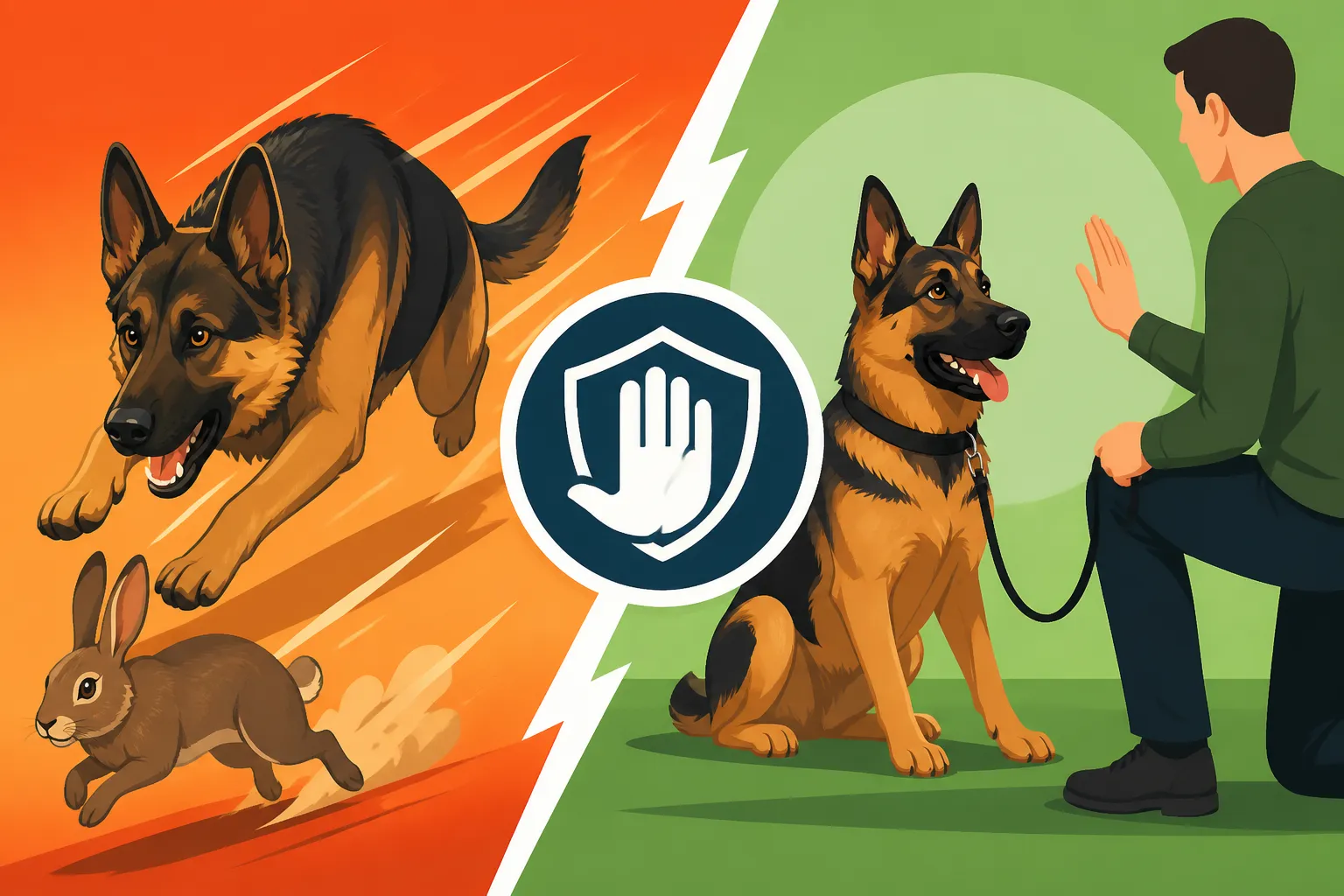
How to Curb German Shepherd Prey Drive
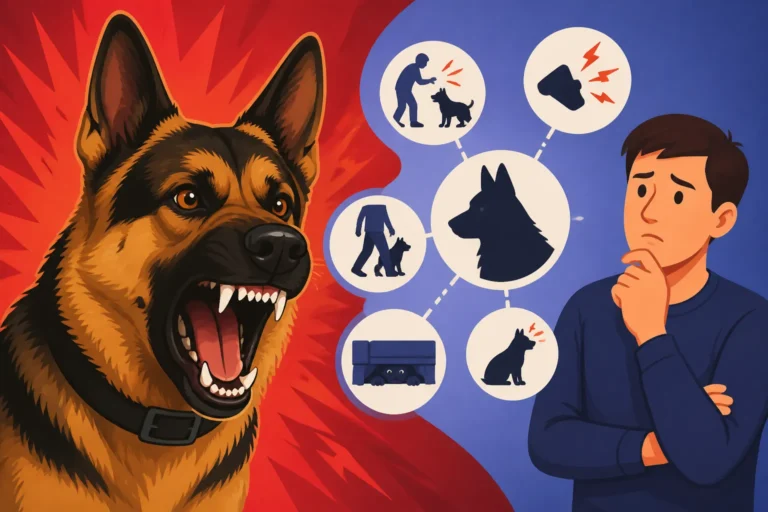
One of the most intense and, let's be honest, sometimes terrifying challenges of owning a German Shepherd is dealing with their innate prey drive. That sudden lunge at a squirrel, the laser focus on a distant jogger, or the frantic chase after a blowing leaf can be not just frustrating, but genuinely dangerous for your beloved companion and others. This comprehensive guide is here to walk you through understanding, managing, and effectively curbing your German Shepherd's prey drive, transforming those nerve-wracking walks into enjoyable outings.
Understanding German Shepherd Prey Drive
It's easy to feel like your German Shepherd is deliberately ignoring you when they suddenly bolt after a rabbit, but it's crucial to remember that prey drive isn't disobedience; it's a powerful, hardwired instinct. German Shepherds were bred for herding and protection, roles that require a strong instinct to chase, capture, and control. This inherent drive manifests differently in each dog, but understanding its roots is the first step toward effective management.
What Exactly is Prey Drive?
Prey drive is a sequence of behaviors that dogs, especially those bred for working roles, exhibit when encountering potential "prey." It's a natural, evolutionary trait that served their wild ancestors in hunting for survival and continues to be an integral part of many modern breeds' genetic makeup. This isn't aggression; it's a natural predatory sequence that includes spotting, stalking, chasing, catching, and sometimes even killing. For most German Shepherds, thankfully, it stops at the chase and maybe a good shake of a toy. They might not be hunting deer in your backyard, but that intense focus on a bicycle, a child running, or a neighborhood cat comes from the same primal place.
Think about it this way: your German Shepherd sees a squirrel. Instead of thinking, "Oh, a squirrel," their brain processes it as "fast-moving object, must pursue!" The thrill of the chase is immensely rewarding for them, reinforcing the behavior every time they get to indulge it. This internal reward system makes it particularly challenging to curb, as the dog is intrinsically motivated by the act itself, far more than by any treat you might offer if not done correctly.
Signs Your German Shepherd Has High Prey Drive
Recognizing the signs of high prey drive is key to anticipating and managing your dog's reactions. It's not always a full-blown chase; often, it starts with subtle cues. You might notice your German Shepherd suddenly freezing, their body language becoming rigid, ears perked forward, and eyes locked onto something in the distance. This is the "orienting" or "stalking" phase.
Other common indicators include:
- Intense focus: Their attention becomes singular, and it can be incredibly difficult to break their gaze or get them to respond to their name.
- Sudden lunging or pulling on the leash: This is the "chase" instinct kicking in, often unexpected and strong enough to yank you off balance.
- Whining or high-pitched barking: This can be a sign of excitement and frustration when they can't get to the perceived prey.
- Obsessive toy play: Dogs with high prey drive often enjoy toys that mimic prey, like squeaky toys they can "kill" or tug toys they can "capture."
- Fixation on moving objects: Cars, bikes, skateboards, joggers, or even children running can trigger the same intense response as a small animal.
- Marking and shaking behavior: When they do "catch" something, like a squeaky toy, they might violently shake it, mimicking how their ancestors would dispatch prey.
It’s important to distinguish high prey drive from fear or aggression. While a dog can be aggressive and have high prey drive, the drive itself is not inherently aggressive. A dog chasing a rabbit is typically not doing so out of malice, but out of instinctual drive. Understanding these differences helps tailor your training approach.
Early Intervention and Puppyhood Strategies
The best time to start managing prey drive is when your German Shepherd is a puppy. Their brains are sponges, and positive experiences during this crucial developmental period can set the stage for a well-adjusted adult dog. Ignoring these early signs only allows the behavior to become more ingrained and harder to modify later on.
Starting Young: Puppy Socialization
Proper socialization is absolutely vital for a German Shepherd puppy, especially one with potential for high prey drive. This doesn't mean letting your puppy freely interact with everything; it means controlled, positive exposure to a wide variety of sights, sounds, smells, people, and other animals. The goal is to teach your puppy that the world is a safe place and that not every moving object is something to be chased.
Expose your puppy to different environments, like bustling parks (from a safe distance initially), quiet neighborhoods, and even busy streets. Let them observe bikes, strollers, joggers, and children playing, all while you keep them calm and reward them for ignoring these stimuli. If you're looking for structured guidance, many online platforms and courses, like those offered by BAXTER & Bella, provide comprehensive puppy socialization plans that can be incredibly helpful. This foundational exposure helps normalize potential triggers before they become overwhelming.
Foundation Obedience for Impulse Control
Building a strong foundation of obedience commands is paramount for managing prey drive. These commands give you a way to communicate with your dog and redirect their focus before their prey drive kicks into high gear.
Key commands to master early on include:
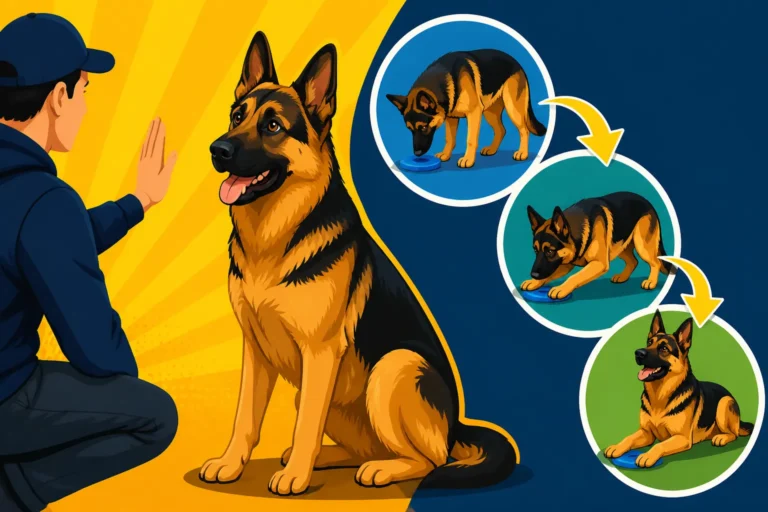
- "Watch Me" or "Focus": This teaches your German Shepherd to make eye contact with you on command, breaking their fixation on environmental distractions. Start in a quiet area and gradually introduce more distractions.
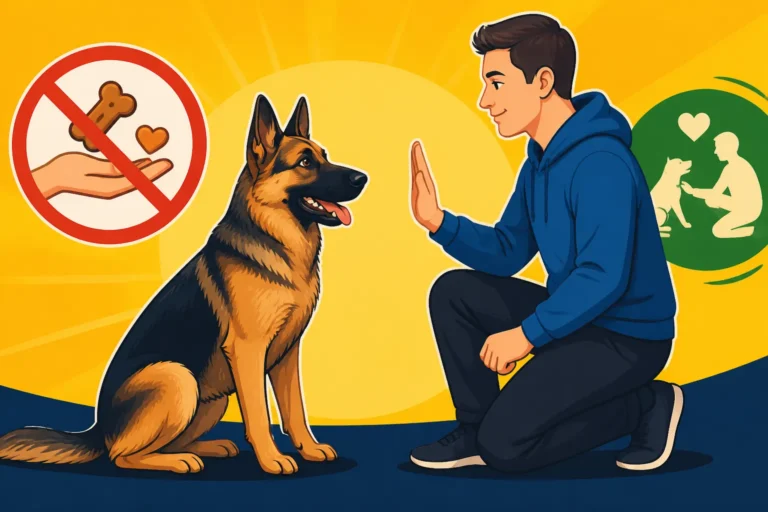
- "Leave It": This is perhaps one of the most important commands. It teaches your dog to disengage from something tempting and turn their attention to you. Practice with low-value items first, then gradually increase the challenge to things like dropped food or even a moving toy.
- "Come" (Recall): A reliable recall is non-negotiable for German Shepherds, particularly those with prey drive. It's your safety net. Practice in safe, enclosed spaces, using high-value treats and making it a fun, rewarding experience every time they return.
- "Stay" or "Wait": These commands help build impulse control, teaching your dog to hold still even when something exciting is happening around them.
The trick is to practice these commands consistently in increasingly distracting environments. Don't wait until a squirrel appears to test your "Leave It." Incorporate these exercises into your daily routine, making them a game. This consistent effort establishes you as the leader and helps your dog learn to defer to your commands even when their instincts are screaming otherwise.
Training Techniques for Managing Prey Drive
Once your German Shepherd has a solid grasp of basic obedience, you can start applying more targeted training techniques to specifically address their prey drive. This is where patience and consistency truly pay off. Remember, you're not trying to eliminate the drive entirely, which is impossible; you're teaching your dog to control it and respond to you instead.
High-Value Rewards and Redirection
When you're dealing with something as intrinsically rewarding as chasing prey, your rewards need to be equally, if not more, enticing. Regular kibble won't cut it when a rabbit is bolting across the field. You need high-value treats – think tiny pieces of cooked chicken, cheese, hot dogs, or even special store-bought training treats.
The strategy here is redirection and counter-conditioning:
- Identify Triggers: Pay close attention to what sets off your dog's prey drive. Is it squirrels, bikes, children running, other dogs?
- Work Below Threshold: Start training at a distance where your dog notices the trigger but doesn't react intensely (i.e., they are below their "threshold"). For example, if a jogger at 10 feet makes them lunge, start at 50 feet.
- Reward for Calmness: The moment your German Shepherd notices a trigger but chooses to look at you, or remains calm, immediately mark that behavior (with a clicker or a verbal "yes!") and deliver a super high-value treat.
- Increase Proximity Gradually: Slowly decrease the distance to the trigger over many sessions, always rewarding your dog for choosing you over the distraction. The goal is to change their emotional response: "Oh, a squirrel! That means chicken from my human!"
This process can be slow, but it gradually re-wires your dog's brain to associate the presence of a "prey" item with positive reinforcement from you, rather than the act of chasing.
Building a Rock-Solid Recall
A reliable recall is your most powerful tool against prey drive. If your German Shepherd takes off, a solid "Come!" can bring them back to safety. This command should be practiced relentlessly and always be associated with extremely positive outcomes.
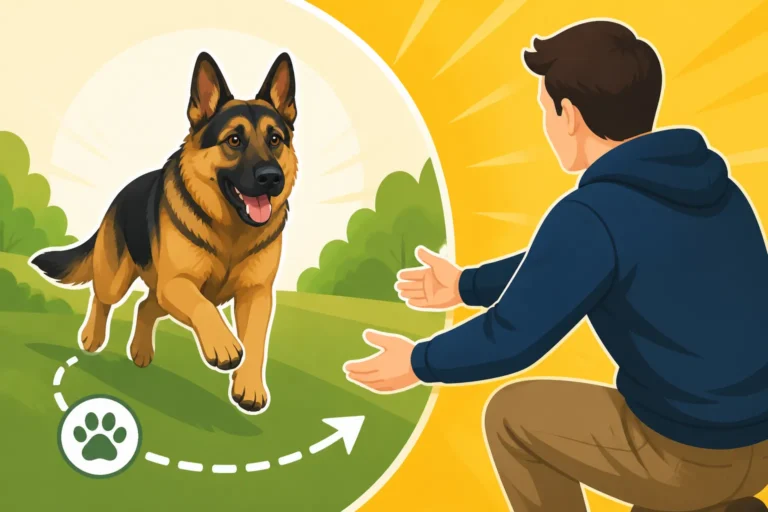
- Start in a distraction-free zone: Practice "Come!" in your living room or a fenced yard. Make it exciting! Get down on their level, use an enthusiastic tone, and reward with a jackpot of treats and praise when they reach you.
- Use a long line: Once your dog has a good recall in a low-distraction environment, move to a long training line (15-30 feet) in a more open, yet still safe, area. This allows you to practice "off-leash" recall with a safety net. If they ignore your command, gently reel them in while repeating "Come!"
- Proofing: Gradually introduce more distractions. Have a friend walk by, bounce a ball, or even simulate a "prey" item moving in the distance (without letting your dog chase it). Each successful recall in a distracting environment should be heavily rewarded.
- Never punish a late recall: If your dog eventually comes back, even after a delay, always reward them. Punishing them when they finally reach you teaches them that coming to you is a bad thing, undermining all your hard work. Remember the post about How to Teach a German Shepherd to Come for more detailed steps.
Leash Training and Equipment
While training aims to modify behavior, proper equipment provides essential control and safety, especially when you're still working on curbing that strong prey drive.
- Front-Clip Harnesses: These harnesses discourage pulling by redirecting your dog's momentum back towards you when they pull. Brands like Easy Walk or Freedom No-Pull Harness are popular choices.
- Head Halters: For very strong pullers or dogs with an extreme prey drive, a head halter (like a Halti or Gentle Leader) can offer superior control by allowing you to steer your dog's head, and thus their body, away from distractions.
- Appropriate Leashes: A sturdy, comfortable 6-foot leash is standard. Avoid retractable leashes, as they offer little control, can injure both you and your dog, and can encourage pulling. For training recall in open, safe areas, a long line (as mentioned above) is indispensable. You can find many robust options on Amazon.
- Muzzles (for safety, not punishment): In some extreme cases, especially if your German Shepherd has a high prey drive and you're worried about them harming smaller animals or becoming a bite risk if frustrated, a well-fitted basket muzzle can be a temporary safety tool during training. This is not for punishment but for prevention and peace of mind while you work on behavior modification.
Consistency in Leash Training with a German Shepherd is key. Teach your dog to walk politely by your side, rewarding loose-leash walking. If they start to pull towards a distraction, immediately stop walking until the leash loosens, then continue.
Management and Safety Measures
Training takes time, and while you're working on those impulse control skills, it's vital to implement robust management strategies to keep your German Shepherd and others safe. This means being proactive and sometimes making tough choices about where and how you exercise your dog.
Environmental Management
Controlling your German Shepherd's environment is about setting them up for success and preventing opportunities for their prey drive to take over.
- Avoid Known Triggers: If you know a certain park is swarming with squirrels at dusk, choose a different walking route or time of day. If your dog reacts intensely to bikes, avoid bike paths until their training is more advanced. It's not about hiding from the world forever, but about strategic avoidance during the learning phase.
- Secure Fencing: If you have a yard, ensure your fencing is secure and high enough to prevent escapes. A German Shepherd with a strong prey drive can easily clear a fence or dig under it if motivated by a rabbit or deer. Regularly inspect for weak spots.
- Supervised Off-Leash Time: Off-leash time should only occur in fully enclosed, secure areas where you have 100% confidence in your dog's recall, even with distractions. Dog parks can be risky for dogs with high prey drive, especially if smaller, fast-moving dogs might trigger their chase instinct. Better options might be private, rented dog fields or large, empty sports complexes during off-hours.
- In-Home Triggers: Even at home, be mindful. If your dog becomes overly fixated on birds outside a window, consider closing the blinds or using window film to reduce visual stimulation. Secure trash cans if they're prone to "hunting" for scraps.
Remember, prevention is always better than correction. Every time your German Shepherd successfully chases something, that behavior is reinforced. By managing their environment, you reduce these opportunities and give your training a chance to work.
Incorporating Mental and Physical Exercise
German Shepherds are intelligent and energetic dogs. If their physical and mental needs aren't met, they will find their own ways to expend that energy, and often, that involves acting on their prey drive. A bored German Shepherd is a destructive or problematic German Shepherd. Providing ample appropriate outlets for their energy can significantly reduce the intensity of their unwanted behaviors.
- Structured Exercise: Beyond just walks, incorporate activities that challenge them. Flirt poles can be excellent for satisfying the chase instinct in a controlled manner. Use a strong, long pole with a lure attached (like a rag or a squeaky toy) and have your dog chase it, but always end the game with them "catching" the lure and then releasing it to you. This mimics the predatory sequence in a safe way. Fetch and tug-of-war are also great, but ensure you teach "drop it" to maintain control.
- Mental Stimulation: German Shepherds thrive on mental challenges. Puzzle toys, snuffle mats, and scent work (like teaching them to find hidden treats) can engage their minds and tire them out more effectively than just physical exercise alone. Consider enrolling in a local obedience class or trying out dog sports like agility, obedience, or nose work. These activities tap into their natural drives and provide a constructive outlet. You can find more ideas in our guide on Best Mental Stimulation for German Shepherds.
- Routine: A consistent routine helps German Shepherds feel secure and reduces anxiety, which can sometimes exacerbate reactivity related to prey drive. Regular feeding times, exercise schedules, and training sessions help them understand what to expect.
A German Shepherd that is well-exercised both physically and mentally is often a calmer, more focused dog, making them more receptive to training and less likely to react impulsively to distractions. For instance, a long, engaging walk in the morning before the neighborhood gets busy can set a positive tone for the entire day, making them less likely to lunge at the first squirrel they see later on.
When to Seek Professional Help
Despite your best efforts, some German Shepherds have such an intensely high prey drive that professional intervention becomes necessary. This is not a sign of failure on your part, but rather an acknowledgment that sometimes a little extra expertise can make all the difference.
- Lack of Progress: If you've been consistently applying training techniques for several weeks or months and aren't seeing significant improvement, it might be time to consult a professional.
- Safety Concerns: If your dog's prey drive is leading to dangerous situations – lunging at cars, trying to bite smaller animals, or pulling you over – immediate professional help is warranted.
- Overwhelm: If you feel overwhelmed, frustrated, or like you're losing control, a professional trainer can provide much-needed support, guidance, and a fresh perspective.
Look for a certified professional dog trainer (CPDT-KA) or a certified behaviorist (CBCC-KA, DVM behaviorist). They can assess your individual dog's temperament, identify specific triggers, and develop a customized training plan that targets their unique needs. They might introduce advanced techniques, different equipment, or help you understand the nuances of your dog's body language. Sometimes, they can even guide you on specific challenges like How to Stop German Shepherd Reactivity. Don't hesitate to reach out; a good trainer can be a game-changer.
| Training Method/Tool | Purpose | Pros | Cons | Best Used For |
|---|---|---|---|---|
| High-Value Treats | Motivation, Redirection, Counter-conditioning | Highly motivating, strengthens positive associations | Can be messy, some dogs get satiated quickly | All training, especially breaking fixation and rewarding calm |
| "Leave It" Command | Impulse Control, Disengagement from Triggers | Teaches dog to ignore temptations | Requires consistent practice, can be hard with high-value prey | Small objects on ground, distant moving objects |
| "Come" (Recall) | Safety, Emergency Control | Prevents escapes, crucial for off-leash safety | Takes extensive proofing, easily undermined by punishment | Off-leash situations, bringing dog back from distraction |
| Front-Clip Harness | Leash Control, Discourages Pulling | Reduces pulling strength, redirects dog's body | Can chafe if ill-fitting, not a training solution on its own | Walking strong pullers, preventing lunges |
| Head Halter | Maximum Leash Control, Head Steering | Excellent control, prevents dog from fixating forward | Some dogs dislike it initially, requires careful introduction | Extreme pullers, dogs that lunge aggressively |
| Long Line (15-30ft) | Safe Off-Leash Practice, Recall Training | Allows freedom with safety, aids in proofing recall | Can get tangled, requires large open space | Practicing recall, controlled exploration in safe areas |
| Flirt Pole | Controlled Prey Drive Outlet | Satisfies chase instinct safely, great physical exercise | Requires handler engagement, not for unsupervised play | Controlled chase, energy release, teaching "drop it" |
| Puzzle Toys | Mental Stimulation, Engagement | Alleviates boredom, encourages problem-solving | Can be destroyed quickly by heavy chewers, needs supervision | Daily mental enrichment, quiet indoor activity |
Disclaimer
The information provided in this article is for general informational purposes only and is not a substitute for professional veterinary advice, diagnosis, or treatment. Always seek the advice of your veterinarian or other qualified animal health provider with any questions you may have regarding a medical condition or treatment for your German Shepherd.