German Shepherd Guarding Behavior Explained
It’s a truly unsettling experience when your beloved German Shepherd, usually so loyal and calm, suddenly shows a flash of teeth or a low growl when you simply walk past their dinner bowl, or when a guest tries to sit on "their" spot on the couch. This guarding behavior, whether it's over food, toys, space, or even you, can feel like a betrayal and quickly turn a comfortable home environment into a minefield of anxiety. You're not alone in facing this; it’s a common, yet often misunderstood, challenge for German Shepherd owners. This comprehensive guide is here to shed light on what guarding behavior truly means for your German Shepherd, why it happens, and most importantly, how you can effectively manage and prevent it to rebuild trust and harmony in your home.
Understanding Guarding Behavior in German Shepherds
When we talk about guarding, it's easy to jump to conclusions about aggression, but it’s a bit more nuanced than that. German Shepherds, by their very nature and historical purpose, possess strong protective instincts. They were bred to guard flocks and later to serve in roles like police and military work, which inherently require a keen sense of territory and a willingness to defend. However, there's a significant difference between a healthy, well-managed protective instinct and an escalating, problematic guarding behavior that causes stress and potential danger in the home.
The Natural Instinct vs. Problematic Behavior
From a purely evolutionary standpoint, guarding is a survival mechanism. A wild canid would protect its valuable resources – food, mates, den – to ensure its continued existence. Our domestic dogs retain echoes of these instincts. In a German Shepherd, these instincts are often amplified due to generations of selective breeding for specific traits. A German Shepherd’s natural inclination to be watchful and protective of its family and property can be a wonderful trait, making them excellent companions and deterrents. They might stand between you and a stranger, or bark at someone approaching the door. This is often an expression of their inherent "guardian" role, deeply ingrained in the German Shepherd Temperament and Personality.
However, this natural instinct crosses into problematic territory when the dog uses aggressive displays—growling, snarling, snapping, or biting—to prevent anyone from approaching or taking a perceived resource. The key difference lies in the intensity, frequency, and appropriateness of the response. A dog that politely moves its toy away from a child, or offers a soft growl when startled, is behaving differently from a dog that lunges and bites when someone nears its chew bone. It’s about control; a dog exhibiting problematic guarding feels it needs to control access to something valuable, and it's willing to escalate aggression to maintain that control.
Types of Guarding: Resource, Territorial, and Protective
Guarding behavior isn't a monolithic issue; it manifests in several distinct ways, though they often share underlying motivations. Understanding these types is the first step in addressing them effectively.
Resource Guarding
This is perhaps the most common form of guarding behavior and often the one owners notice first. Resource guarding is when a dog displays aggressive or threatening behaviors to retain possession of a specific item or resource. This could be anything the dog perceives as valuable:
- Food: Their dinner bowl, a high-value chew, a dropped scrap of food.
- Toys: A favorite squeaky toy, a durable Kong, or even a stick found in the yard.
- Sleeping spots: Their bed, a comfy blanket, or even a spot on the couch.
- Stolen items: Socks, tissues, remote controls – anything they've pilfered and don't want to give back.
A classic scenario might involve your German Shepherd growling if you reach for their food bowl while they're eating. This isn't about being "mean"; it’s about their deep-seated instinct to protect what they consider theirs. Early and consistent training, often outlined in a good German Shepherd Puppy Training Guide, is crucial to address this before it becomes entrenched.
Territorial Guarding
German Shepherds are renowned for their territorial instincts, a trait that makes them formidable guard dogs. Territorial guarding involves a dog displaying aggressive behavior towards people or other animals who enter an area the dog considers its domain. This "territory" could be:
- The home: The entire house, specific rooms, or even just the doorway.
- The yard: The fenced perimeter, a dog house, or a favorite sunbathing spot.
- The car: Especially when traveling with the dog.
You might notice your German Shepherd barking ferociously at the mail carrier or lunging at a neighbor walking past your fence. This behavior often stems from a combination of instinct and learned response. If a dog barks, and the "intruder" (like the mail carrier) leaves, the dog learns that barking works to deter threats, reinforcing the behavior. This type of guarding needs careful management to ensure it doesn't escalate into outright aggression towards friendly visitors or passersby.
Protective Guarding
This type of guarding is deeply tied to the German Shepherd's strong bond with its human family. Protective guarding is when a dog exhibits aggressive behavior to protect its owner or other family members from perceived threats. This doesn't always mean a physical attack; it can start with subtle cues.
- Against strangers: A German Shepherd might body-block a stranger approaching you, growl if someone gets too close during a walk, or snap if someone tries to hug you without prior introduction.
- Against other animals: They might intervene if another dog approaches you too boisterously, or protect a child from another pet.
While many owners appreciate a German Shepherd’s protective nature, it’s vital that the dog learns to discriminate between actual threats and benign interactions. An overly protective dog can become a liability, especially in social situations. This is where clear boundaries and consistent training on How to Socialize a German Shepherd are absolutely paramount. Your German Shepherd should understand that you are in charge of assessing threats, not them.
Why German Shepherds Develop Guarding Behaviors
Understanding the "why" behind your German Shepherd's guarding behavior is crucial for addressing it effectively. It’s rarely about malice and almost always rooted in instinct, learning, and sometimes, underlying fear or anxiety.
Genetic Predisposition and Breed Traits
As we've discussed, German Shepherds were selectively bred for traits that naturally lean towards guarding. Their lineage includes sheepherding dogs who needed to protect their flock from predators and intruders, and later, dogs used in protection work. This means a strong genetic component is at play, making them predisposed to being watchful, alert, and capable of decisive action when they perceive a threat to their territory or family. This isn't a fault; it's a feature of the breed.
However, this genetic predisposition can become a problem if not channeled correctly. A dog with high protective drive, without proper socialization and training, might misinterpret innocent situations as threats. For example, a young German Shepherd with a strong guarding instinct might see a toddler reaching for its toy as a challenge, not an innocent play attempt. Responsible breeders often screen for overly aggressive or timid temperaments, but the inherent drive is still there. Knowing this helps us understand that management isn't about eradicating the instinct, but about teaching the dog appropriate outlets and boundaries.
Lack of Early Socialization and Training
One of the most significant factors contributing to problematic guarding behavior is inadequate early socialization. A German Shepherd puppy needs to be exposed to a wide variety of sights, sounds, people, and other animals in a positive, controlled way during its critical development period (roughly 3 to 16 weeks of age). If a puppy is isolated or only exposed to a limited environment, it can grow up fearful or suspicious of anything unfamiliar.
A lack of socialization can lead to:
- Fear-based guarding: A German Shepherd who hasn't learned that strangers or other dogs are generally harmless might resort to aggressive guarding behaviors out of fear when encountering them. They bark, lunge, or growl to create distance because they're scared, not because they're truly dominant.
- Lack of bite inhibition: Without exposure to other dogs and proper guidance, a puppy might not learn how to moderate its bite. This becomes critical if guarding escalates to snapping.
Similarly, a lack of consistent training can exacerbate guarding. If a German Shepherd isn't taught basic obedience commands or clear boundaries, they will often default to their instincts. If you don't teach your dog to "leave it" or "drop it" from a young age, they will naturally guard a prized possession. The German Shepherd Obedience Training Basics are not just about manners; they are about establishing clear communication and trust, where your dog looks to you for guidance, rather than taking matters into their own paws.
Environmental Factors and Learned Behavior
Dogs are incredibly observant and learn quickly from their environment and the consequences of their actions. Several environmental factors and learned behaviors can contribute to guarding.
Accidental Reinforcement
Sometimes, we inadvertently reinforce guarding behavior without even realizing it. Imagine your German Shepherd growls when someone approaches their food. If the person then backs away, the dog learns, "Aha! Growling works! It makes the 'threat' retreat, and I get to keep my food." Every time this happens, the behavior is reinforced, making it more likely to occur again. This cycle is hard to break once established. This applies to territorial guarding too; if your dog barks at the fence and the person walks away, they're "successful."
Stress, Anxiety, and Insecurity
A German Shepherd who is chronically stressed, anxious, or insecure is more likely to resort to guarding behaviors. This could be due to:
- Inconsistent training: Unclear expectations can make a dog feel insecure about their place in the household hierarchy.
- Punitive training methods: Harsh corrections or punishment can increase a dog's anxiety and lead to a reactive, rather than confident, response to perceived threats. A dog who fears punishment might guard resources even more fiercely, as a desperate attempt to avoid having them taken away.
- Lack of predictable routine: Dogs thrive on routine. Disruptions can cause stress.
- Underlying medical conditions: Pain or discomfort can make a dog irritable and more prone to guarding. Always rule out medical issues with your vet if behavior suddenly changes.
A German Shepherd's perceived need to control resources or territory often stems from a feeling of vulnerability or a lack of trust that their needs will be met without them having to defend them. Addressing these underlying emotional states is a critical part of modifying guarding behavior.
Recognizing the Signs of Problematic Guarding
It's easy to dismiss a subtle growl or a quick stiffening as "just being a dog," but recognizing the early, subtle signs of guarding is crucial. Intervention at these stages is much easier and safer than waiting until the behavior escalates to a bite. German Shepherds are excellent communicators, but we need to learn their language.
Subtle Cues and Escalation Ladder
Dogs rarely bite without warning. They typically follow an "escalation ladder" of behaviors, starting with subtle signs of discomfort and only escalating to snapping or biting if those initial warnings are ignored or ineffective. Learning to spot these early cues can prevent confrontations.
Early Warning Signs
- Stiffening: The dog's body language becomes rigid when someone approaches their resource or territory. Their tail might stop wagging, or their posture becomes tense.
- Hard Stare: Direct eye contact, often described as a "hard stare," without blinking, signaling a challenge or warning.
- Freezing: The dog might stop moving completely, almost holding its breath, as if to say, "Don't come any closer."
- Lip Licking/Yawning: These can be calming signals, but in the context of guarding, they can also indicate stress and discomfort, a precursor to more overt warnings.
- Turning Head/Body Away: A dog might try to avoid interaction by turning its head or body, a polite request for space.
- Low Growl: A soft, guttural sound, often barely audible, that serves as an initial verbal warning.
- Quick Snap/Air Snap: A very quick lunge and snap, often without making contact, designed to warn without harming. This is a serious warning that should never be ignored.
If these early warnings are consistently ignored or punished, the dog may learn that subtle signals are ineffective and skip directly to more intense displays, increasing the risk of a bite. This is why understanding German Shepherd Behavior Problems and Solutions involves keenly observing these subtle cues.
Overt Displays
When the earlier warnings fail or are consistently ignored, a German Shepherd exhibiting problematic guarding will escalate to more overt and unambiguous displays:
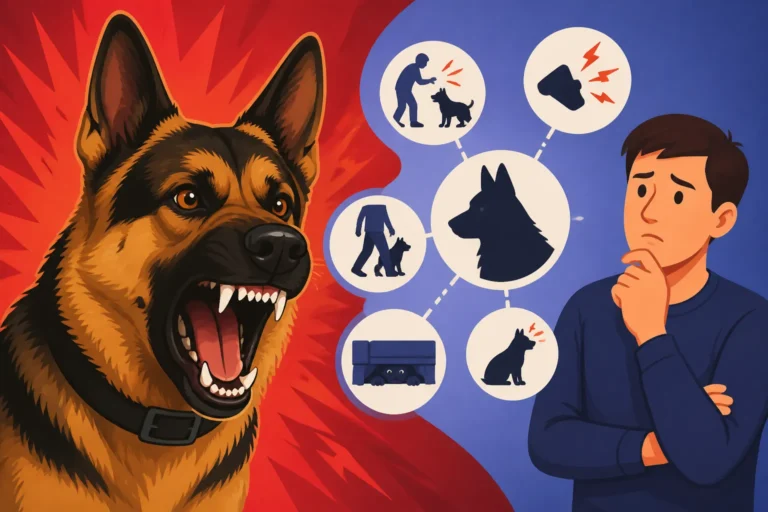
- Loud, Deep Growls: A clear, resonant growl, often accompanied by teeth baring.
- Snarling: Lifting the lips to expose teeth, usually the canines, accompanied by intense vocalization.
- Lunging: A sudden forward movement towards the perceived threat, designed to intimidate and create distance.
- Snapping (with contact): A quick bite that might not break skin, but is a clear warning that the dog is willing to use its teeth.
- Biting: The ultimate escalation, where the dog makes contact and applies pressure, potentially causing injury.
It's important to remember that a German Shepherd who bites is not "bad"; they are a dog who feels they have exhausted all other communication options and are resorting to their last line of defense. The goal is to intervene long before it ever reaches this point.
Triggers and Contextual Clues
Identifying the specific triggers for your German Shepherd's guarding behavior is key to managing it. These triggers can vary widely from dog to dog and between different types of guarding.
Common Triggers for Resource Guarding
- Approach by humans: Someone walking near their food bowl, bed, or toy.
- Attempted removal: Someone reaching to take away a chew or toy.
- High-value items: The more desirable the item (e.g., a raw bone vs. a regular kibble), the stronger the guarding instinct.
- Presence of other animals: In a multi-dog household, guarding can be directed towards other pets.
If you notice your dog stiffening or growling specifically when you try to pick up their favorite tennis ball, that's a clear contextual clue pointing to resource guarding over that particular item.
Common Triggers for Territorial Guarding
- Doorbell/Knocking: The sound of someone at the door.
- Strangers approaching property: Mail carriers, delivery drivers, neighbors walking by.
- Visitors entering the home: Especially if they move quickly or directly towards the dog or family members.
- Unfamiliar vehicles: A new car pulling into the driveway.
A German Shepherd who only barks and lunges when someone is at the front door, but is perfectly calm with people inside the house, is likely exhibiting territorial guarding.
Common Triggers for Protective Guarding
- Strangers approaching owner: Especially if the approach is sudden, direct, or perceived as threatening (even if it's just a friendly greeting).
- Physical contact with owner: Hugs, pats from strangers, or even roughhousing among family members can trigger this.
- Presence of children: Some German Shepherds may guard children fiercely, sometimes even from family members.
Understanding these triggers allows you to predict situations where guarding might occur and implement preventative measures. For example, if your German Shepherd guards its food, you know to keep a safe distance during meal times until you've worked through training protocols.
Managing and Preventing Resource Guarding
Resource guarding can be one of the most frustrating and potentially dangerous forms of guarding because it often involves items we need to interact with daily. The good news is that with consistent, positive reinforcement methods, it's highly manageable and preventable.
Early Intervention and Socialization for Puppies
The best defense against resource guarding is a good offense: proactive training and comprehensive socialization starting from puppyhood.
- Positive Associations: From day one, make sure your German Shepherd puppy associates humans approaching their food or toys with good things, not threats. When they are eating, walk by and drop a even higher-value treat (like a piece of cooked chicken) into their bowl, then calmly walk away. Never reach in and take food away directly, as this teaches them to guard it more fiercely. This teaches them that your approach means gain, not loss. This is part of a holistic German Shepherd Puppy Training Guide.
- Trading Games: Teach your puppy a reliable "drop it" and "leave it" command using high-value treats. Practice trading: offer a fantastic treat in exchange for a toy, then immediately give the toy back. This teaches them that giving up an item results in something better or the return of their item, making you a giver, not a taker.
- Controlled Exposure: Expose your puppy to various people, places, and other friendly, vaccinated dogs in a positive and supervised manner. This builds confidence and reduces the likelihood of fear-based guarding. Programs like those offered by BAXTER & Bella can be incredibly helpful for structured puppy socialization and training from home, ensuring your pup is exposed to diverse stimuli in a positive way.
Training Protocols for Established Resource Guarding
If your adult German Shepherd already exhibits resource guarding, direct confrontation is not the answer. Punishing a growl will only suppress the warning, making a bite more likely without warning. The goal is to change the dog's emotional response to your approach.
The "Exchange" Method
This is a core strategy for resource guarding.
- Identify Triggers: Know what items your dog guards and from whom.
- Establish a Safe Distance: Start far enough away that your dog doesn't react aggressively to your presence while they have the guarded item.
- Positive Reinforcement: While your dog is eating or chewing their guarded item, approach just to the edge of their comfort zone and toss a very high-value treat (something much better than what they have) near them. Then immediately back away. The goal is for them to look up, eat the treat you tossed, and then return to their original item, associating your presence with good things.
- Gradual Reduction of Distance: Over many, many sessions, slowly reduce the distance from which you toss the treat. You're aiming for your dog to anticipate your approach with excitement, not fear.
- Handling the Item: Once your dog is consistently happy with you approaching, you can progress to gently touching the floor near the item, then briefly touching the item, always followed by a high-value treat exchange.
- "Drop It" and "Give" Commands: Once your dog trusts you, practice "drop it" by offering an even better treat for letting go of the item, then returning the item. Similarly, practice "give" by gently taking the item, rewarding, and returning.
Remember, this process takes time, patience, and absolute consistency. Never rush it. For valuable training tools and treats, resources like Amazon offer a vast selection to help with these exercises.
Management Strategies
While training is ongoing, management is key to preventing incidents.
- Separate Feeding: Feed your German Shepherd in a quiet, undisturbed area (like a crate or a separate room) where they can eat in peace.
- Controlled Access to High-Value Items: Only give high-value chews or toys when you can supervise closely, or in their safe space. Pick them up before the dog finishes them, always with a positive trade.
- No Free-Feeding: Stick to scheduled meals to avoid food being left out and becoming a guarded resource.
- Educate Others: Ensure all family members and visitors, especially children, understand the rules: never disturb the dog while it's eating, sleeping, or chewing a high-value item. Teach children how to safely interact with dogs, emphasizing the importance of respecting their space.
Addressing Territorial and Protective Guarding
These types of guarding require a slightly different approach, focusing on clear boundaries, leadership, and desensitization to perceived threats.
Establishing Clear Leadership and Boundaries
A German Shepherd thrives on clear structure and knowing their place within the family unit. If they perceive a vacuum in leadership, they might feel the need to take on the role of primary protector themselves, which can lead to inappropriate territorial or protective behaviors.
- Consistent Rules: Everyone in the household must follow the same rules consistently. For example, if you don't want your dog on the furniture, ensure no one allows it. Inconsistency breeds confusion and can undermine your authority.
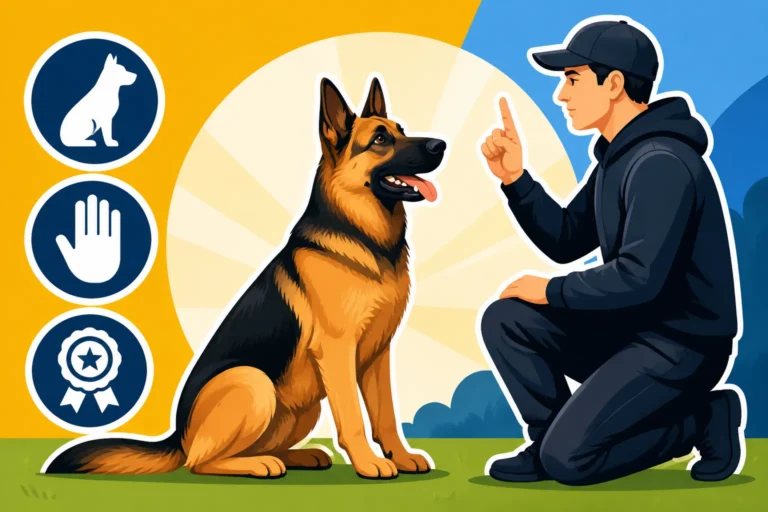
- Basic Obedience and Impulse Control: Regular practice of commands like "sit," "stay," "down," and "place" helps reinforce your leadership and improves your dog's impulse control. A dog that can reliably "stay" on its mat when guests arrive is less likely to rush the door. These skills are fundamental to How to Train a German Shepherd.
- Structured Routine: Dogs feel more secure with a predictable daily routine for feeding, exercise, training, and rest. This predictability reduces anxiety and the perceived need for the dog to be "on guard" all the time.
- Rewarding Calm Behavior: Actively reward your German Shepherd when they are calm and relaxed, especially when potential triggers are present. If a visitor comes to the door and your dog stays calm in its "place" command, lavish them with praise and treats.
Desensitization and Counter-Conditioning for Triggers
This involves gradually exposing your German Shepherd to their triggers in a controlled way, while changing their emotional response from negative (fear, aggression) to positive (calmness, neutrality).
For Territorial Guarding
- Identify Trigger Threshold: Determine the distance at which your German Shepherd reacts to the trigger (e.g., how close a stranger can be to your fence before barking).
- Controlled Exposure: Start at a distance where your dog notices the trigger but does not react. As soon as they see the trigger (e.g., a person walking down the street), immediately reward them with high-value treats and praise.
- Gradual Reduction of Distance: Slowly and over many sessions, reduce the distance to the trigger while continuing to reward calm observation. The goal is to change the association: "Mail carrier = yummy treats," not "Mail carrier = intruder."
- Practice "Go to Place": Train your German Shepherd to go to a designated "place" (a mat or bed) when the doorbell rings or guests arrive. Reward them heavily for staying there calmly.
For Protective Guarding
- Controlled Introductions: When a new person is visiting, ensure they interact calmly with your German Shepherd. Avoid overwhelming the dog. Have the visitor toss treats rather than directly approaching or petting.
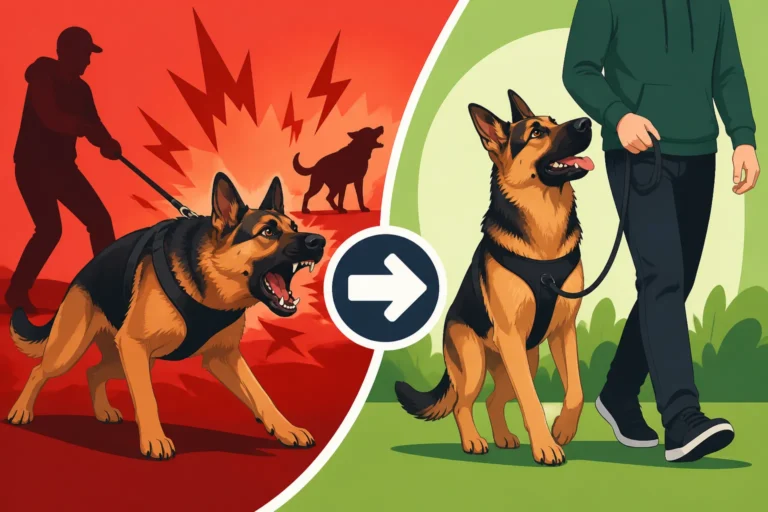
- Neutrality to Approaching Strangers: On walks, if your dog tends to guard you from strangers, practice parallel walking with a calm friend and their dog or just a person at a distance. As the person gets closer, reward your German Shepherd for staying calm and focused on you. The concept is similar to managing German Shepherd Reactivity on Walks.
- Role Reversal: For dogs that guard owners from other family members, have the "guarded" person (the owner) reward the dog for interacting calmly with other family members. Avoid reinforcing the dog when it tries to intervene.
In all cases, a long line (available on Amazon) can be an invaluable tool during desensitization to maintain safety and control, allowing you to create distance quickly if needed.
| Type of Guarding | Primary Triggers | Typical Behavior | Management/Prevention Focus |
|---|---|---|---|
| Resource Guarding | Food, toys, bones, resting spots | Growling, stiffening, snapping when approached or item is handled | Positive exchange, "drop it" training, separate eating areas |
| Territorial Guarding | People/animals entering perceived territory (home, yard, car) | Barking, lunging at fences/windows, aggression towards visitors | Desensitization, "place" command, controlled introductions, clear boundaries |
| Protective Guarding | Perceived threat to owner/family, close proximity of strangers | Body blocking, growling at strangers, snapping when owner is approached | Clear leadership, controlled socialization, reward neutrality, owner control |
When to Seek Professional Help
Dealing with guarding behavior, especially when it involves aggression, can be incredibly stressful and even dangerous. There are times when DIY methods might not be enough, and professional guidance is not just recommended, but essential for the safety of everyone involved.
Recognizing Red Flags
Certain situations should immediately signal that it’s time to call in a professional dog trainer or veterinary behaviorist.
- Biting Incidents: If your German Shepherd has bitten someone, even if it didn't break the skin, this is a serious red flag. Any bite, regardless of severity, indicates a significant breakdown in communication and control, and professional intervention is crucial to prevent future, potentially more severe, incidents.
- Escalating Aggression: If the guarding behavior is becoming more frequent, more intense, or involves a wider range of triggers, it's a sign that the problem is worsening and needs expert help. For example, if your dog used to only growl over a bone but is now snapping over their regular kibble bowl, that's an escalation.
- Fear or Intimidation: If you or other family members feel scared or intimidated by your German Shepherd's behavior, that's a clear indicator that the situation is beyond your current ability to manage. Living in fear of your dog is not healthy for anyone.
- Lack of Progress: If you've been consistently implementing positive training methods for several weeks or months and see no improvement, or if the behavior seems to be getting worse, a professional can offer new strategies or identify underlying issues you might have missed.
- Guarding You from Family Members: While some protective instinct towards strangers is common, guarding one family member from another (e.g., growling at your spouse when they approach you) is highly problematic and needs immediate professional attention. This indicates a severe breakdown in household dynamics and trust.
Finding a Qualified Professional
Not all dog trainers are created equal, especially when dealing with aggression. It's crucial to find someone qualified and experienced in behavior modification, particularly with strong-willed breeds like German Shepherds.
What to Look For:
- Certified Professional Dog Trainer (CPDT-KA): This certification indicates a baseline level of knowledge and experience. However, for aggression, you might need more.
- Certified Behavior Consultant Canine (CBCC-KA): This certification signifies a higher level of expertise in canine behavior problems.
- Veterinary Behaviorist (Dip. ACVB): These are veterinarians who have specialized in animal behavior. They are medical doctors who can diagnose underlying medical conditions that might contribute to aggression and prescribe medication if necessary, in conjunction with behavior modification. This is often the best route for severe or complex cases.
- Positive Reinforcement Focus: Look for trainers who exclusively use positive reinforcement, force-free, and fear-free methods. Avoid anyone who suggests using aversive tools (e.g., prong collars, shock collars) or confrontational techniques (e.g., alpha rolls, leash corrections for growling), as these can exacerbate fear and aggression and damage your bond with your German Shepherd.
- Experience with German Shepherds: Ask about their experience with German Shepherds and guarding behaviors specifically.
- References and Reviews: Ask for client references or check online reviews.
- Observe a Session: A good trainer should allow you to observe a session or offer a consultation without your dog present first.
Resources like the Certification Council for Professional Dog Trainers (CCPDT) or the American College of Veterinary Behaviorists (ACVB) websites can help you find qualified professionals in your area. An investment in professional help is an investment in your German Shepherd's well-being and the safety and peace of mind of your entire family. Remember, seeking help is a sign of responsible pet ownership, not failure. Even if you've already explored How to Stop German Shepherd Aggression on your own, a professional can offer a tailored plan for your unique situation.
Conclusion
Guarding behavior in German Shepherds, whether it's over resources, territory, or people, is a complex issue deeply rooted in their genetics and individual experiences. It's rarely a sign of a "bad" dog, but rather a dog communicating fear, anxiety, or a perceived need to protect. Understanding the nuances of these behaviors, recognizing the early warning signs, and implementing consistent, positive reinforcement training are critical steps toward managing and preventing them.
Remember, early intervention and proper German Shepherd Socialization Checklist are the best preventative measures, especially during puppyhood. For established behaviors, patience, consistency, and a commitment to positive reinforcement will be your most valuable tools. Never hesitate to seek out a qualified professional when you encounter red flags or feel overwhelmed. With the right approach, you can foster a relationship built on trust and respect, allowing your German Shepherd to be the confident, loyal, and well-adjusted companion they were meant to be, without the stress and danger of guarding behaviors.
Disclaimer
Please note that the information provided in this guide is for educational purposes only and is not a substitute for professional veterinary advice or professional dog training. Every dog is an individual, and behavior can be influenced by many factors, including health and past experiences. If you have concerns about your German Shepherd's health or behavior, please consult with a qualified veterinarian or certified professional dog trainer/behaviorist.