German Shepherd Basic Commands Every Owner Should Teach
Bringing a German Shepherd into your home is an incredible adventure, full of joy and companionship, but let's be honest, it can also feel like managing a furry, intelligent, and sometimes very headstrong toddler! Without clear communication and a solid understanding of boundaries, even the most well-meaning German Shepherd can develop frustrating habits, become a safety risk, or simply be overwhelming to live with. This comprehensive guide is here to walk you through the essential basic commands every German Shepherd owner must teach, explaining not just how to do it, but why it's so critical for a harmonious life together.
Why Basic Commands are Non-Negotiable for Your German Shepherd
It’s easy to think of training as just getting your dog to do tricks, but for a breed as intelligent and powerful as the German Shepherd, basic commands are truly the foundation of their well-being and your relationship. These aren't just parlor tricks; they're vital tools for communication, safety, and fostering a deep, trusting bond. Ignoring them can lead to a host of problems, from an unruly dog at the park to a potentially dangerous situation at home.
Building a Stronger Bond and Trust
Think about it: when you can communicate effectively with your German Shepherd, it builds trust. They learn that you are a consistent leader who provides clear expectations and rewards their efforts. This isn't about dominance; it's about mutual respect and understanding. When your dog knows what you want, they feel more secure and less anxious, reducing the likelihood of developing German Shepherd Separation Anxiety Solutions.
Every successful command, every treat given, every praise uttered, strengthens that invisible thread connecting you and your dog. It's like learning a new language together, one word at a time. This bond is especially crucial for German Shepherds, a breed renowned for their loyalty. When they understand and respond to you, they're not just obeying; they're engaging with you, feeling like an important part of the team. This daily interaction through training sessions, even short ones, reinforces their place in your family and their reliance on your guidance.
Ensuring Safety in Everyday Scenarios
This is perhaps the most critical reason for teaching basic commands. A German Shepherd is a large, strong dog, and their actions can have significant consequences. Imagine your German Shepherd bolting towards a busy street, or jumping enthusiastically on a small child, or perhaps even getting into a confrontation with another dog at the local dog park. A reliable "come" can literally be a lifesaver, preventing them from running into traffic or chasing wildlife.
A solid "leave it" can stop them from ingesting something harmful on a walk – think discarded chicken bones or toxic plants. "Stay" is invaluable when you need them to hold still for a moment, whether it's for their own safety (like waiting at a curb) or someone else's (like keeping them calm while a visitor enters your home). These commands aren't just for convenience; they are fundamental safety nets that allow your German Shepherd to navigate the world safely and responsibly, both for themselves and for others around them. Without these foundational commands, you might find yourself constantly anxious about walks or visitors.
Preventing Common Behavior Problems
Many of the behavior issues German Shepherd owners face often stem from a lack of clear communication and structure. A dog that jumps on guests, chews furniture, or barks incessantly might simply be expressing boredom, confusion, or a lack of boundaries. Basic obedience provides that much-needed structure and mental stimulation. For instance, teaching your German Shepherd "down" and "stay" can be an effective way to prevent them from How to Stop German Shepherd Jumping on visitors at the door.
When your German Shepherd understands and respects commands, they're less likely to develop destructive habits. Training sessions provide mental exercise, which is just as important as physical exercise for this intelligent breed. A mentally stimulated dog is a tired and well-behaved dog. Consistent training also establishes you as the reliable leader, which helps prevent resource guarding or other assertive behaviors that can arise when a dog feels they need to make their own rules. A structured environment with clear commands helps channel their high energy and intelligence into positive outlets.
The Essential German Shepherd Basic Commands
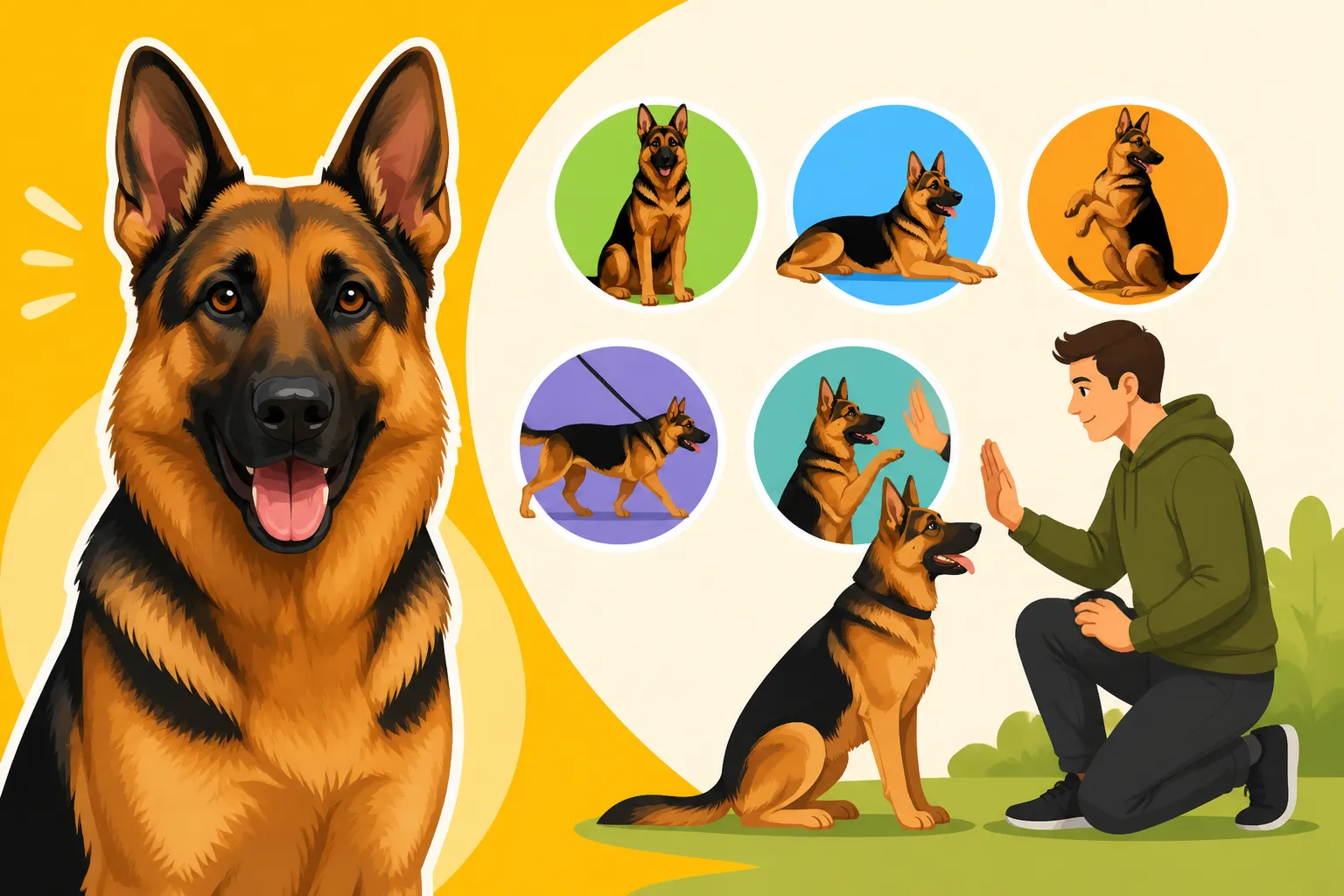
Now that we understand why these commands are so vital, let's dive into the specifics. These are the commands that form the bedrock of a well-behaved German Shepherd.
"Sit"
The "sit" command is often the first thing people teach, and for good reason! It’s simple, natural for dogs, and forms the basis for many other commands. When your German Shepherd sits on cue, they are learning to control their impulses and politely request attention or wait for direction.
To teach "sit," hold a treat near your German Shepherd's nose. Slowly move the treat up and back over their head. As their nose follows the treat, their rear end will naturally lower to the ground. The moment their rear touches, say "Sit!" and immediately reward them with the treat and praise. Repeat this a few times, then start adding the verbal cue before you move the treat. Soon, they'll associate the word with the action. This command is fantastic for greeting people calmly, waiting for their food bowl, or simply settling down when excitement levels get too high. It’s a polite behavior that can replace jumping or demanding attention.
"Stay"
Once your German Shepherd has a solid "sit," "stay" is the natural next step. This command teaches impulse control and patience, which are invaluable for a breed that often wants to be right by your side, if not directly on you. A reliable "stay" means you can open the door without your dog bolting, or have them wait calmly while you unload groceries, or even give them a moment to compose themselves before meeting a new person.
Begin with your German Shepherd in a "sit." Say "Stay!" and take one small step back. If they remain, immediately step back to them and reward. Do not call them to you for the reward initially; you want them to understand that "stay" means staying put until released. Gradually increase your distance and the duration of the "stay." If they break the stay, calmly lead them back to their original spot and start again. Use a release word like "Okay!" or "Free!" to signal that the command is over and they can move. This command will be a game-changer for maintaining control in various situations, from quick errands to managing their excitement around guests.
"Come" (Recall)
Oh, the elusive, yet utterly essential, "come"! A reliable recall is arguably the most important command you can teach your German Shepherd. It's not just about getting them back when you want them; it's about their safety. Imagine your German Shepherd off-leash in a park, suddenly spotting a squirrel near a busy road. Your "come" command must override that prey drive. Mastering this command is crucial for allowing your German Shepherd to enjoy safe off-leash exercise and for preventing them from getting lost or into dangerous situations.
Start teaching "come" in a quiet, distraction-free environment, like your backyard. Get down low, clap your hands, use an excited voice, and say "Come!" When your dog reaches you, throw a party: lavish praise, high-value treats (like small pieces of cooked chicken or cheese), and enthusiastic petting. Make coming to you the most rewarding thing they can do. Gradually introduce mild distractions, always setting them up for success. Never punish your German Shepherd if they eventually come after a delay; always make coming to you a positive experience. Building this foundation of positive association will pay dividends throughout their life. You can read more about How to Teach a German Shepherd to Come in a dedicated guide.
"Down"
The "down" command is more than just a trick; it’s a wonderful way to help your German Shepherd settle, relax, and show submission, which is crucial in high-energy or stressful situations. It's a particularly useful command for a large dog, as it takes them out of the way and signals a calm, respectful posture.
You can teach "down" from a "sit." Hold a treat to your dog's nose, then slowly lower it straight down to the floor between their paws, then drag it slightly forward, away from them. As their body follows the treat, their elbows will hit the ground. The moment they lie down, say "Down!" and reward. Like "sit," once they understand the motion, start adding the verbal cue beforehand. This command is excellent for having them calmly wait during meal prep, settling quietly under a table at a cafe, or just chilling out during family movie night. It's a strong indicator of impulse control and obedience.
"Leave It" / "Drop It"
These two commands, while distinct, often go hand-in-hand and are indispensable for German Shepherds, especially given their curious nature and powerful jaws. "Leave it" tells your dog not to touch an object they're interested in, while "drop it" tells them to release something they already have in their mouth.
For "leave it," place a low-value treat on the floor and cover it with your hand. When your dog tries to get it, say "Leave it." Once they back away or look at you, immediately reward them with a different, higher-value treat from your other hand. Gradually remove your hand, always being ready to cover the treat again. For "drop it," start by trading. Offer your German Shepherd a favorite toy, and when they have it in their mouth, hold a high-value treat to their nose. Say "Drop it!" as they open their mouth to take the treat, then praise and give them the treat. Once they drop the toy, immediately return it or engage in a brief play session, showing them that dropping isn't always losing. Both of these commands are crucial for preventing them from eating harmful items, guarding toys, or chewing on inappropriate objects around the house. They allow you to safely manage items in their environment. Many owners find these invaluable when using interactive toys from Amazon or specialized training tools.
"Heel" / Loose-Leash Walking
Walking your German Shepherd should be an enjoyable experience, not a wrestling match. "Heel" teaches your dog to walk politely by your side, typically with their shoulder aligned with your leg, without pulling on the leash. Even if you don't aim for perfect competition-style heeling, reliable loose-leash walking is paramount. Pulling on the leash can cause discomfort for both you and your dog, lead to reactivity, and even physical injury.
Start in a low-distraction environment. With your dog on your left side (standard for heeling), use a treat to lure them into the correct position. Take a step, say "Heel," and if they stay by your side, immediately reward. The key is to reward frequently in the beginning, especially for staying in position. If they pull ahead, stop walking immediately. Only resume when the leash goes slack. You can also change directions frequently to keep them engaged and focused on you. Consistency is absolutely crucial here. A well-behaved German Shepherd on a leash is a joy to walk and demonstrates respect for your guidance. To delve deeper into this, check out our guide on How to Leash Train a German Shepherd Puppy.
Fundamental Principles for Successful German Shepherd Training
Teaching commands is one thing, but how you teach them makes all the difference, especially with a breed as sensitive and intelligent as the German Shepherd. These principles are your roadmap to success.
Positive Reinforcement is Key
For German Shepherds, and truly for all dogs, positive reinforcement is the most effective and humane training method. This means rewarding desired behaviors with something your dog loves, whether it's high-value treats, enthusiastic praise, a favorite toy, or even a quick game of tug. The idea is to make learning a fun and rewarding experience, increasing the likelihood that your dog will repeat the behavior.
Avoid punishment-based methods, as these can damage your bond, create fear, and often suppress symptoms without addressing the underlying cause. A German Shepherd thrives on clear communication and positive affirmation. When they associate training with good things happening, they become eager participants, not reluctant followers. This approach builds confidence and a desire to please, which are inherent traits in a well-bred German Shepherd. Remember, a wagging tail and bright eyes are far better indicators of learning than a cowering posture. For those looking for structured online guidance, platforms like BAXTER & Bella often emphasize positive reinforcement techniques in their training programs.
Consistency and Patience Are Your Best Friends
Training a German Shepherd, or any dog for that matter, is not a one-and-done event. It requires unwavering consistency and an endless supply of patience. Every member of the household needs to use the same commands, hand signals, and expectations. If one person allows jumping while another corrects it, your German Shepherd will become confused, making it harder for them to learn.
There will be days when your German Shepherd seems to have forgotten everything you've taught them, or when distractions feel insurmountable. This is where patience comes in. Frustration on your part will only hinder the learning process. Celebrate small victories, don't dwell on setbacks, and remember that every dog learns at their own pace. Consistency also means regularly practicing commands in various environments, from the quiet living room to the busy park, slowly generalizing their understanding. This builds reliability over time.
Short, Engaging Training Sessions
German Shepherds are intelligent, but their attention spans, especially as puppies, can be short. Long, repetitive training sessions are counterproductive and can lead to boredom and frustration for both of you. Instead, aim for frequent, short, and highly engaging sessions.
Five to ten minutes, two to three times a day, is often far more effective than one long 30-minute session. Keep it fun! End on a positive note, even if it means asking for an easy command your dog knows perfectly and rewarding them heavily. This leaves them eager for the next session. Mix up the commands, incorporate play, and make sure you're both enjoying the process. Short bursts of focused attention maximize learning and prevent mental fatigue, ensuring your German Shepherd remains enthusiastic about training. This approach is also vital for managing their high energy and fulfilling their need for mental stimulation.
Setting Up Your Training Environment for Success
The environment in which you train plays a significant role in your German Shepherd's ability to learn and generalize commands. It’s not just about what you teach, but where and how you teach it.
Minimizing Distractions
When you first introduce a new command, start in a quiet, familiar environment with minimal distractions. Your living room, a quiet backyard, or a calm hallway are ideal. Here, your German Shepherd can focus solely on you and the task at hand without being overwhelmed by sights, sounds, or smells.
As your German Shepherd gains proficiency, gradually introduce distractions. This is called "proofing" the command. For example, once they "sit" reliably in the living room, try it in the backyard, then near a park bench, then closer to other dogs or people. Each step should be small, setting your dog up for success. If they struggle, go back to a less distracting environment. Trying to teach a new command amidst chaos is like trying to learn a new language in a rock concert – it’s just too much input. A phased approach ensures your German Shepherd truly understands the command, regardless of what's happening around them.
Utilizing the Right Tools and Resources
While you don't need a mountain of gadgets, having the right tools can certainly enhance your German Shepherd training journey. A comfortable, well-fitting flat collar and a sturdy 6-foot leash are basic essentials. A clicker can be an excellent tool for precision training, marking the exact moment your dog performs the desired action.
High-value treats, easily accessible in a treat pouch (you can find great ones on Amazon), are crucial for positive reinforcement. Beyond physical tools, consider the wealth of resources available: online training courses, books, and local obedience classes. For specific behavioral challenges, consulting a certified professional dog trainer or a veterinary behaviorist is always a wise investment. They can provide tailored advice and help you navigate more complex issues. Remember, training is an ongoing journey, and equipping yourself with the right knowledge and aids will make it a more successful and enjoyable experience for both you and your loyal German Shepherd. This is especially true when tackling issues like German Shepherd Puppy Biting: What to Do or more advanced obedience goals.
Essential German Shepherd Commands at a Glance
Here's a quick overview of the essential commands and why they're so powerful for your German Shepherd.
| Command | Core Purpose | Training Tip | Benefit for German Shepherds |
|---|---|---|---|
| Sit | Impulse control, polite greeting, attention | Lure with a treat over the head; reward immediately. | Encourages calm greetings, manages excitement. |
| Stay | Patience, waiting for release, safety | Start with small steps back; use a clear release word. | Prevents bolting, allows for safe temporary containment. |
| Come | Recall, emergency safety, immediate response | Make it a "party" every time; use high-value rewards. | Crucial for off-leash safety, prevents getting lost or hurt. |
| Down | Calmness, settling, submission | Lure treat to floor between paws; reward for elbows down. | Reduces demanding behavior, promotes relaxation in any setting. |
| Leave It | Avoiding forbidden objects, impulse control | Cover an item; reward when dog disengages from it. | Prevents ingestion of harmful items, protects household goods. |
| Drop It | Releasing objects from mouth | Trade with a high-value treat; make dropping rewarding. | Prevents resource guarding, allows safe removal of items. |
| Heel | Polite walking, focus on handler | Reward for walking by your side without pulling; stop if they pull. | Ensures enjoyable walks, prevents leash reactivity. |
Disclaimer
The information provided in this article is for general informational purposes only and is not a substitute for professional veterinary advice, diagnosis, or treatment. Always seek the advice of your veterinarian or other qualified health provider with any questions you may have regarding a medical condition or training approach for your German Shepherd.