German Shepherd Crate Training: Step-by-Step
Bringing a German Shepherd into your home is an incredible experience, but let's be real – it also comes with its fair share of challenges. One of the biggest hurdles many new (and even experienced!) GSD owners face is figuring out how to manage their intelligent, energetic, and sometimes mischievous companion, especially when you can't have eyes on them every second. This guide is dedicated to tackling that head-on, offering a detailed, step-by-step approach to successful German Shepherd crate training, ensuring both you and your furry friend feel secure and confident.
Why Crate Training is Non-Negotiable for German Shepherds
Crate training often gets a bad rap, conjuring images of dogs locked away, but for a German Shepherd, a crate is far from a punishment. When introduced correctly, it becomes their personal sanctuary, a safe den where they can truly relax and feel protected. Given the GSD's protective instincts and strong bond with their family, having a designated "safe space" can actually reduce stress and promote independence. Think of it as their own little room, not a jail cell.
Providing a Secure Den and Preventing Accidents
Imagine being a new puppy or even an adult German Shepherd in a bustling human home. Everything is new, and sometimes overwhelming. A crate offers a calm, enclosed space that mimics the natural den instincts of canines. It’s a place where they can retreat when they’re tired, anxious, or just need a break from the action. For a German Shepherd, who can be prone to overstimulation due to their high intelligence and drive, this designated quiet zone is invaluable.
Beyond emotional comfort, a crate is your best friend when it comes to preventing accidents. German Shepherds, like most dogs, have a natural aversion to soiling their sleeping area. This instinct is incredibly powerful and a cornerstone of effective house training. If your GSD is crated when you can't supervise them, they are far less likely to have an accident on your carpet, saving you the frustration of cleaning up messes and them the stress of being scolded for something they couldn't help. This also helps establish a clear routine: crate time means holding it, outside time means potty breaks. This consistency is key for a breed that thrives on structure.
Curbing Destructive Behaviors and Ensuring Safety
Let's face it, German Shepherds are smart, and a bored German Shepherd is a destructive German Shepherd. They are notorious for finding ways to entertain themselves if left to their own devices, which often involves chewing on furniture, shoes, or even digging at carpets. A crate, when used appropriately, prevents these unwanted behaviors by limiting their access to potential "chew toys" when you're not there to supervise. It's not about stifling their nature; it's about channeling it. When they're in the crate, they can have their safe, appropriate chew toys, like a Kong filled with peanut butter, which occupies their minds and satisfies their natural chewing instincts without costing you a new sofa.
More importantly, it ensures their safety. Consider what could happen if your German Shepherd decides to chew on an electrical cord, ingest a toxic houseplant, or get into cleaning supplies. These scenarios are not only costly but can be life-threatening. The crate acts as a protective bubble, keeping them safe from household hazards when you're unable to provide direct supervision. This is especially vital during their puppy and adolescent phases when their curiosity and chewing drive are at their peak. It’s also an excellent tool for managing their energy, particularly after a good play session, giving them a designated place to settle down.
Streamlining Travel and Vet Visits
Think about how stressful it can be to travel with a dog who isn't comfortable being confined. A German Shepherd who is well-adjusted to their crate will view it as a secure, familiar space, regardless of where it is. This makes trips to the vet, car rides, or even stays at a boarding kennel significantly less stressful for everyone involved. Instead of a new, scary environment, their crate offers a slice of home.
For instance, if your GSD needs to stay overnight at the vet, having them accustomed to a crate can dramatically reduce their anxiety. They're already familiar with the feeling of a confined space, making the adjustment to a clinic kennel much easier. The same goes for car travel. A properly secured crate in the car prevents your dog from becoming a projectile in an accident and keeps them from distracting the driver. It's a critical safety measure that also provides a sense of security for your dog on the road, turning potential chaos into a manageable routine. It truly is a versatile tool that extends beyond the home. For more on managing their routine and overall well-being, take a look at our guide on German Shepherd Puppy Training Guide.
Setting the Stage for Crate Training Success
Before you even think about introducing your German Shepherd to their new den, a little preparation goes a long way. This isn't just about buying a crate; it's about creating an environment where the crate is seen as a positive, comfortable space. Remember, German Shepherds are incredibly perceptive, and they'll pick up on your attitude towards the crate, so a positive mindset from you is paramount.
Choosing the Right Crate and Location
The first, and perhaps most crucial, step is selecting the appropriate crate. For a German Shepherd, this usually means a large or extra-large crate. The general rule is that the crate should be just big enough for your GSD to stand up, turn around, and lie down comfortably. If it’s too large, they might be tempted to use one end as a potty area, which defeats the purpose of house training. If you're starting with a puppy, many crates come with dividers, allowing you to expand the space as they grow. This is a smart investment, as German Shepherd puppies grow rapidly! Our German Shepherd Size and Weight Guide can help you determine the right dimensions.
There are a few types of crates to consider:
- Wire Crates: These are popular because they offer good ventilation and visibility. They're also usually collapsible, making them easy to transport. Many come with a removable tray for easy cleaning. Brands like MidWest Homes for Pets or Frisco offer durable options often found on Amazon.
- Plastic/Airline Crates: These are more den-like, offering greater privacy and often feeling more secure for some dogs. They're also necessary for air travel. They are generally sturdier and less prone to rattling.
- Furniture Crates: These are designed to blend in with your home decor, looking like end tables or other furniture. They can be a good option if you want the crate to be a permanent fixture in your living space, but they tend to be pricier.
Once you have the crate, consider its location. Place it in a high-traffic area of your home initially, like the living room or kitchen, where your German Shepherd spends a lot of time. This helps them feel like they're still part of the family, rather than isolated. As they become more comfortable, you can move the crate to a quieter spot for sleeping, like your bedroom, or even have a second crate there. The goal is for them to associate the crate with comfort and safety, not banishment.
Creating an Inviting and Comfortable Space
A bare metal or plastic crate isn't exactly a five-star hotel. You need to make it as cozy and appealing as possible.
- Comfortable Bedding: A soft, washable mat or bed is essential. Look for durable options that can withstand chewing, especially if you have a puppy or a power chewer. Old towels or blankets can work in a pinch, but a dedicated crate mat offers better support.
- Safe Chew Toys: Always include a few safe, durable chew toys in the crate. These serve several purposes: they provide mental stimulation, help relieve stress, and redirect chewing instincts away from the crate itself. A classic Kong toy, filled with a treat like peanut butter, plain yogurt, or kibble mixed with a bit of wet food and then frozen, can keep your GSD occupied for a good while. This positive association is key. For recommendations on durable toys, check out our guide on Best Puzzle Toys for German Shepherds.
- Water Access (Optional for short periods): For longer durations, a crate-friendly water bowl that attaches to the bars can be useful. However, for initial training and shorter stints, it's often best to remove water to prevent accidents and then offer it immediately after they leave the crate.
Remember, the crate should never be associated with punishment. If your German Shepherd misbehaves, don't use the crate as a "timeout" spot. This will create negative associations and make the training process much harder. Instead, calmly remove them from the situation or redirect their behavior.
Adopting a Positive Mindset and Establishing a Routine
Your attitude is contagious, especially for a smart breed like the German Shepherd. Approach crate training with patience, positivity, and consistency. If you're stressed or anxious about it, your dog will pick up on that and may become fearful of the crate themselves. Think of it as teaching a valuable life skill.
Establishing a routine is paramount. Dogs thrive on predictability, and German Shepherds, with their working breed background, particularly appreciate structure. Decide when your GSD will go into the crate (e.g., during your showers, when you leave the house, overnight) and stick to it. This consistency reinforces the idea that crate time is a normal, expected part of their day.
Before crating, ensure your German Shepherd has had ample opportunity to relieve themselves and has burned off some energy. A tired dog is much more likely to settle quietly in their crate. This might involve a good walk, a vigorous play session in the yard, or some mental stimulation. Our guide on German Shepherd Exercise Requirements offers more insights into their daily activity needs.
The Step-by-Step Crate Training Process
Now that you’ve got everything set up, it’s time to introduce your German Shepherd to their new den. This needs to be a gradual, positive experience, building comfort and confidence one step at a time. Rushing the process will only create negative associations and make your job much harder in the long run.
Introduction and Short, Positive Stays
The very first step is to make the crate a non-threatening, even appealing, object. Don't force your GSD into it.
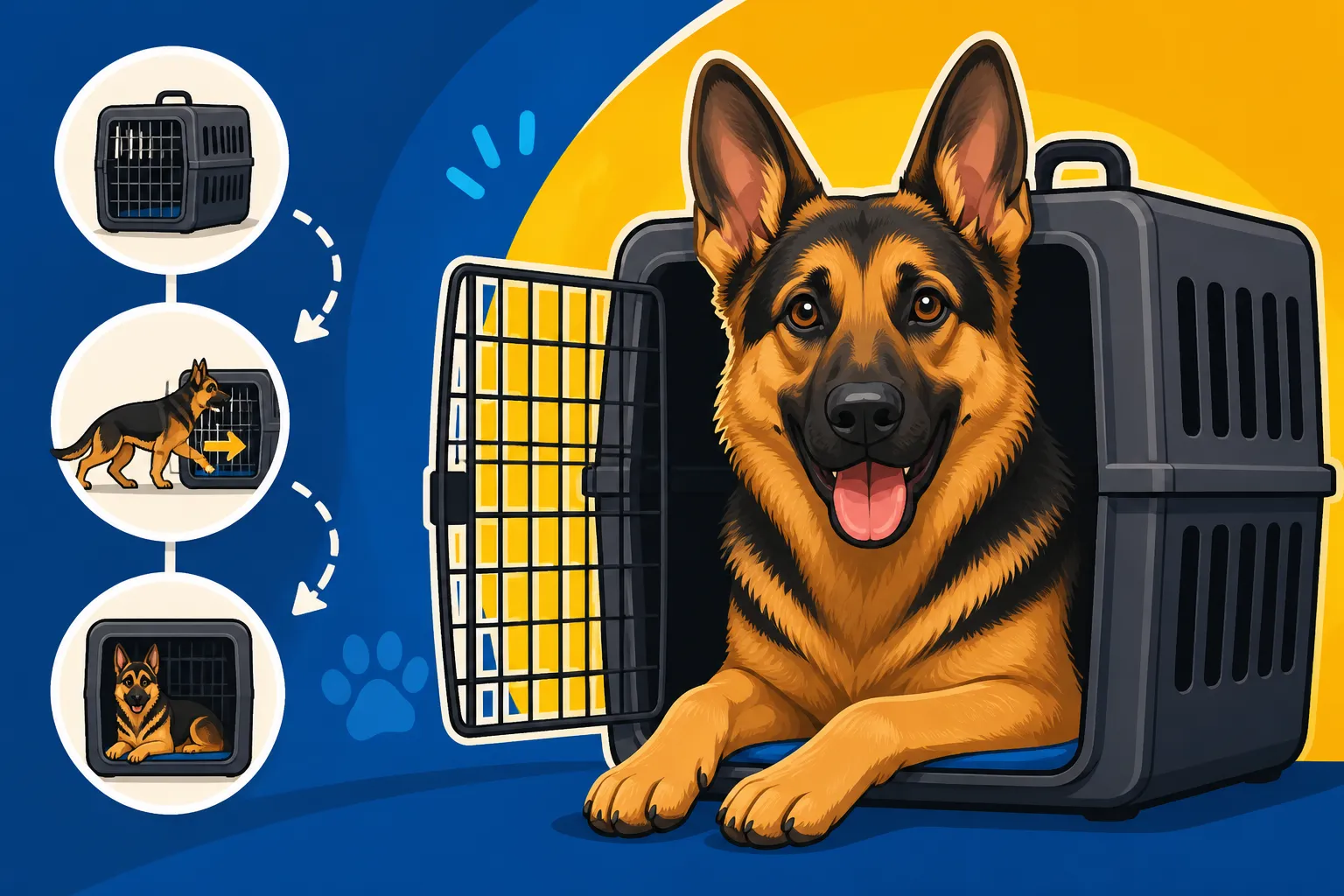
- Introduce the Crate: Place the crate in a central area with the door open and secured so it won't swing shut. Throw some high-value treats (think cooked chicken, cheese, or hot dogs) inside, or a favorite toy. Let your German Shepherd explore it on their own terms. Praise them calmly when they go near it or sniff inside.
- Mealtime Inside: Start feeding your German Shepherd their meals near the crate. If they're comfortable, move the food bowl just inside the crate door. As they become more accepting, gradually move the bowl further back until they're eating their entire meal inside the crate. Keep the door open initially.
- Close the Door Briefly: Once they’re happily eating inside, gently close the door for a few seconds while they're finishing their meal. Open it before they finish. Gradually increase the duration the door stays closed during meals, working up to several minutes after they've finished eating. Stay in the room and keep things calm.
- Short Stays with Treats: When they're comfortable eating in the crate with the door closed for a few minutes, start having them go in for short stays outside of mealtime. Lure them in with a treat or toy. Use a consistent command like "Crate" or "Kennel." Give them a high-value treat as they enter, praise them, and then close the door for a minute or two. Sit quietly next to the crate. If they remain calm, praise them softly, give another treat, and then open the door.
Repeat these short stays multiple times a day, slowly increasing the duration. It’s better to have many short, positive experiences than one long, stressful one. Never let your German Shepherd out if they are whining or barking, as this teaches them that vocalization gets them what they want. Wait for a moment of quiet, then release them. This requires patience, but it's crucial for preventing unwanted behaviors.
Gradually Increasing Duration and Independence
Once your GSD is comfortable with short stays (10-15 minutes) while you're in the room, it's time to build up their independence.
- Leave the Room: After crating your German Shepherd and giving them a treat, leave the room for a few minutes. Come back before they get anxious. As they tolerate this, gradually increase the time you're out of sight. Remember to wait for a moment of quiet before re-entering and releasing them.
- Crate While You're Busy: Integrate crate time into your daily routine. Crate your GSD when you're showering, doing laundry, or working on a computer. This teaches them that crate time isn't just for when you're leaving, but also for when you're simply occupied. Provide them with a durable chew toy or a treat-dispensing puzzle to keep them engaged. This is a great time to introduce products from BAXTER & Bella, which offer online training resources that can reinforce good habits.
- Practice Departure Cues: German Shepherds are smart and can pick up on your "departure cues" (grabbing keys, putting on shoes). Practice these cues randomly throughout the day without actually leaving. Crate your dog for a few minutes, then let them out without a big fuss. This desensitizes them to these actions, making actual departures less anxiety-inducing.
The key here is gradual progression. Don't jump from 15 minutes to an hour. Increase the time in small increments (5-10 minutes at a time) and always end on a positive note.
Overnight Crating and Leaving Them Home Alone
This is often the ultimate goal of crate training – having your German Shepherd comfortably crated through the night or while you're away for a few hours.
- Overnight Crating: Once your German Shepherd is comfortable with longer daytime stays, you can transition to overnight crating. Make sure they've had their final potty break and are tired from the day's activities. Place the crate in your bedroom or a nearby area initially, so they don't feel completely isolated. Give them a special bedtime chew or toy. If they whine, ignore it (unless it's a desperate potty whine). Most puppies and even adult GSDs will learn to settle. As they get used to it, you can gradually move the crate further away if you prefer.
- Leaving Home Alone: This is where the practice of leaving the room really pays off. Before you leave, make sure your German Shepherd has been exercised, had a potty break, and has a safe, engaging toy in their crate. Keep your departures and arrivals low-key. Don't make a big fuss when you leave or return. A simple "Be good, I'll be back" and then walking out the door is sufficient. When you return, wait until they are calm before letting them out. Immediately take them outside for a potty break.
For puppies, remember their bladders are small. An 8-week-old puppy can generally hold it for about 2-3 hours during the day. This time increases by about an hour for each month of age. So, a 4-month-old German Shepherd might handle 4-5 hours. Overnight, they can often hold it for longer due to slower metabolism, but frequent potty breaks are still essential, especially for young pups. If your GSD struggles with being alone, our detailed guide on German Shepherd Separation Anxiety Solutions offers more strategies.
| Crate Training Stage | Duration | Activities | Key Reminders |
|---|---|---|---|
| Introduction | 1-3 days | Door open, treats/toys inside, meals near/in. | Never force, keep it positive. |
| Short Stays | 3-7 days | 1-5 mins, door closed, stay in room. | Praise calm behavior, release during quiet moments. |
| Gradual Increase | 1-2 weeks | 5-30 mins, leaving room for short periods. | Use engaging toys, practice departure cues. |
| Longer Stays | 2-4 weeks | 30 mins – 2-3 hours (daytime), overnight. | Ensure exercise and potty breaks before crating. |
| Maintenance | Ongoing | Regular use, positive reinforcement. | Crate remains a safe, comfortable den. |
This table is a general guideline; adjust based on your individual German Shepherd's progress and temperament.
Troubleshooting Common Crate Training Challenges
Even with the best intentions and a solid plan, you might hit a few bumps in the road. German Shepherds are individuals, and some will take to crate training more easily than others. Don't get discouraged! Persistent, calm, and consistent effort is what truly pays off.
Addressing Whining, Barking, and Howling
This is probably the most common challenge, and it's understandably frustrating. Your German Shepherd might whine, bark, or howl because they're anxious, bored, or simply testing boundaries to see if you'll let them out.
- Rule Out Potty Needs: First, ensure they don't genuinely need to go potty. If you've just taken them out, they've relieved themselves, and you haven't left them in the crate for longer than they can reasonably hold it, then it's likely not a biological need. For young puppies, frequent potty breaks are crucial, and sometimes a middle-of-the-night trip is unavoidable. Our guide on How to Potty Train a German Shepherd Puppy can provide further insights.
- Ignore the Noise: This is the hardest part, but often the most effective. If you let your German Shepherd out when they're making noise, you're inadvertently teaching them that whining and barking are effective strategies to escape the crate. Wait for a lull in the noise – even a second of quiet – before you open the door. This reinforces silence.
- Increase Positive Association: If your GSD is particularly vocal, you might need to go back to basics. Make the crate even more appealing with higher-value treats, more exciting toys, or even a specialized calming dog bed from Amazon. Shorten the duration of crate time and slowly build back up.
- Cover the Crate: For some German Shepherds, covering the crate with a blanket can help. It creates a darker, more den-like environment, reducing visual distractions and sometimes making them feel more secure. Just ensure there's still adequate ventilation.
- Professional Help: If the barking and whining are extreme and persistent, accompanied by other signs of distress like drooling, destructive behavior in the crate, or excessive panting, it might indicate true separation anxiety. In such cases, consulting with a professional dog trainer or a veterinary behaviorist is highly recommended. For strategies to specifically handle vocalizations, check out How to Stop German Shepherd Whining.
Managing Anxiety and Fear of the Crate
Some German Shepherds might develop a genuine fear or anxiety related to the crate. This often happens if they were introduced too quickly, had a negative experience in the crate, or are prone to anxiety in general.
- Restart with Positive Reinforcement: If your GSD shows signs of fear (trembling, panting, refusing to go in), stop forcing them. Go back to square one, or even a step before that. Make the crate a fun place again. Hide treats in it, play games where the crate is part of the fun (e.g., throwing a toy in and letting them retrieve it).
- Avoid Punishment: Absolutely never use the crate for punishment. This will only deepen their fear and mistrust.
- Desensitize and Counter-Condition: This involves gradually exposing your German Shepherd to the crate while simultaneously creating positive associations. For example, sit by the open crate, toss treats inside, and calmly praise them for any positive interaction. Only close the door when they are completely relaxed and happy inside.
- Consider Calming Aids: For anxious dogs, your vet might suggest calming supplements or even short-term anti-anxiety medication to help them through the initial training phase. Natural calming products like Adaptil diffusers can also be helpful.
- Enrichment Toys: Ensure they have plenty of appropriate toys and mental stimulation when they are in the crate. A frozen Kong, a bully stick, or a puzzle toy can keep their mind engaged and prevent boredom-induced anxiety. Our article on Best Mental Stimulation for German Shepherds can offer ideas for keeping their minds active.
Dealing with Potty Accidents in the Crate
Finding an accident in the crate is disheartening, especially when you thought house training was going well.
- Crate Size Check: The most common reason for crate accidents is that the crate is too large. Your German Shepherd might be able to relieve themselves in one corner and still sleep comfortably in another, defeating the purpose of house training. If your crate has a divider, use it to make the space smaller, just enough for them to stand, turn, and lie down.
- More Frequent Potty Breaks: Are you taking them out often enough? German Shepherd puppies, especially, need very frequent potty breaks – every 2-3 hours during the day, and immediately after waking up, eating, or playing. Even adult GSDs need regular breaks. Re-evaluate your potty schedule.
- Clean Thoroughly: If an accident happens, clean the crate thoroughly with an enzymatic cleaner. Regular cleaners might mask the smell for humans, but your German Shepherd can still detect it, potentially encouraging them to use the same spot again.
- Supervision Outside the Crate: When your GSD is out of the crate, they should be supervised 100%. Use a leash indoors, keep them in the same room as you, or use baby gates. If you can't supervise, they should be in their crate. This prevents accidents around the house that could confuse their understanding of appropriate potty areas.
- Dietary Considerations: Sometimes, loose stools or frequent urination can be a sign of a dietary issue or an underlying health problem. If accidents are frequent despite correct crate size and schedule, consult your vet. A German Shepherd with a sensitive stomach might need a specialized diet.
Remember, crate training is a journey, not a sprint. There will be good days and challenging days. By approaching it with patience, positivity, and consistency, you'll provide your German Shepherd with a safe, secure den that benefits both of you for years to come.
Disclaimer
The information provided in this article is for general informational purposes only and is not a substitute for professional veterinary advice. Always consult with a qualified veterinarian or certified professional dog trainer for any health concerns or before making any decisions related to your German Shepherd's health and training.