How to Free-Feed vs Scheduled Feed a German Shepherd
It’s a tale as old as time for German Shepherd owners: you want to ensure your loyal companion is well-fed and thriving, but the question of how to feed them can feel surprisingly complicated. Should you just leave a bowl of kibble out all day, or is a strict meal schedule better? This seemingly simple decision carries significant implications for your German Shepherd’s health, behavior, and even your daily routine. We're going to dive deep into the pros and cons of free-feeding versus scheduled feeding, helping you understand which approach truly aligns with the unique needs of your German Shepherd.
Understanding Your German Shepherd's Unique Nutritional Needs
Before we even talk about when to feed, it's crucial to understand what and why. German Shepherds are magnificent, athletic dogs, and their dietary requirements are not just about filling their belly. They have specific needs that make the "leave food out all day" method less than ideal in many cases.
Why a German Shepherd's Diet Isn't One-Size-Fits-All
Imagine trying to fuel a high-performance sports car with regular unleaded gasoline. It just won't perform optimally, and over time, it could lead to bigger problems. Similarly, a German Shepherd, with its deep chest, high energy, and genetic predispositions, requires a thoughtful approach to nutrition. These dogs are prone to certain health issues, and their diet and feeding habits play a massive role in mitigating those risks. They aren't dainty eaters, but their digestive systems can be quite sensitive.
A proper German Shepherd feeding guide isn't just about calories; it's about the right balance of protein, fats, and carbohydrates, tailored to their age, activity level, and individual health status. For instance, a growing puppy has vastly different needs than a senior dog whose activity has slowed down. Understanding these nuances is the first step in making informed decisions about feeding frequency and method.
Common German Shepherd Health Concerns and Feeding Strategies
German Shepherds are unfortunately predisposed to a handful of health concerns where feeding plays a critical role. One of the most terrifying for any GSD owner is Bloat, or Gastric Dilatation-Volvulus (GDV). This life-threatening condition involves the stomach twisting, trapping gas and food, and it can be fatal if not treated immediately. While the exact causes are complex, rapid eating and consuming large meals can be contributing factors. This alone is a huge reason to consider how you feed your dog.
Beyond bloat, German Shepherds can also be prone to things like German Shepherd hip dysplasia and elbow dysplasia, where maintaining a healthy weight is paramount to minimizing stress on their joints. Obesity can exacerbate these conditions significantly. Furthermore, some German Shepherds can suffer from German Shepherd sensitive stomach solutions, leading to digestive upset, which can be made worse by inconsistent eating habits or leaving food out to spoil. A structured feeding approach can help manage these sensitivities much better than free-feeding.
The Allure and Pitfalls of Free-Feeding Your German Shepherd
For many busy pet parents, the idea of free-feeding sounds like a dream. Just fill up the bowl, and your dog eats when they're hungry, right? It feels convenient and perhaps even more "natural" in a way. But for a German Shepherd, this method often comes with more risks than rewards.
How Free-Feeding Works in Practice
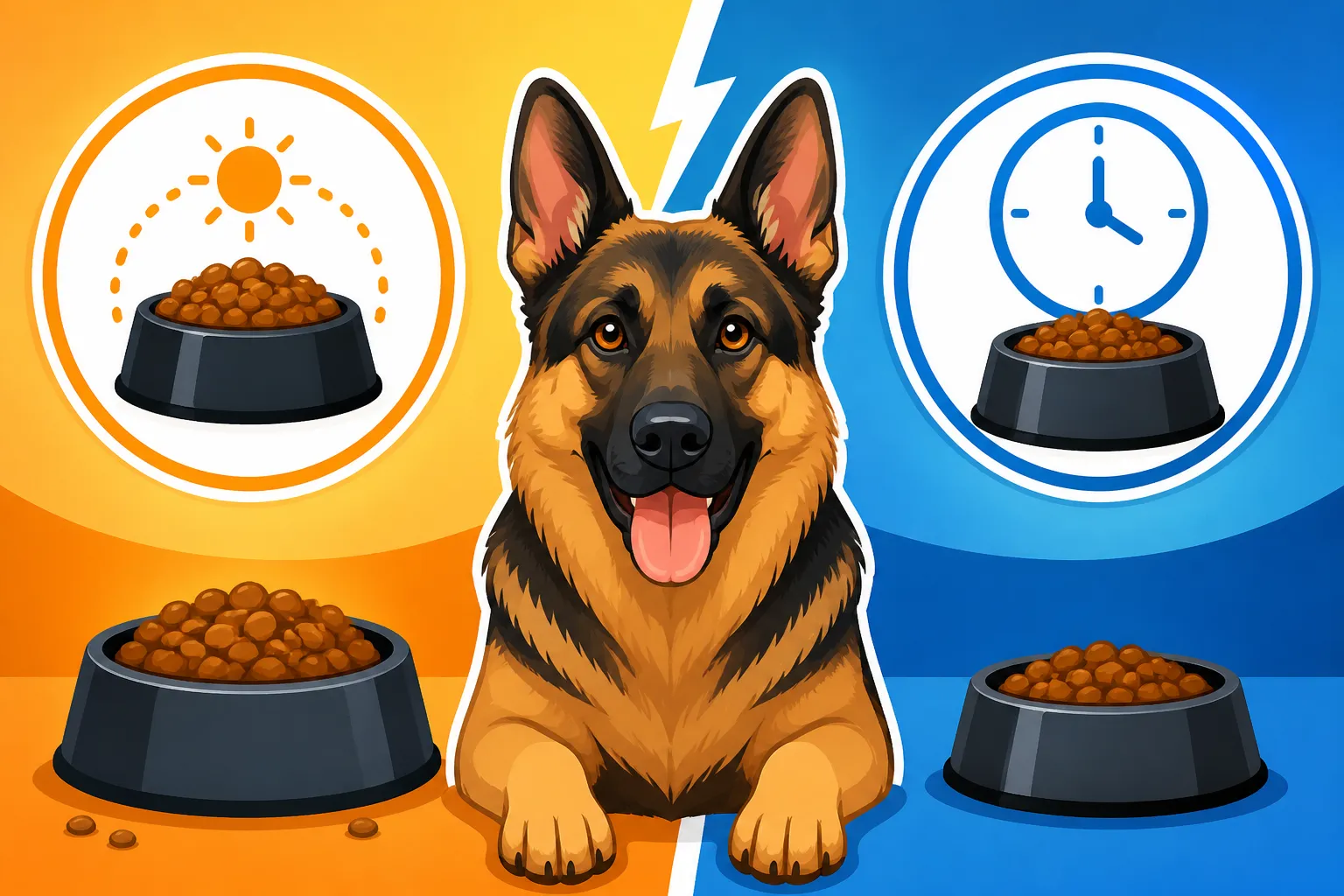
Free-feeding, also known as ad-libitum feeding, means leaving an unlimited or measured amount of food available to your dog at all times. They can graze throughout the day, taking a few bites here and there whenever the mood strikes. For some small, low-energy breeds, this might work out okay, particularly if they are naturally good at self-regulating their food intake.
The practical application usually involves a large bowl that's kept full, or a gravity feeder that automatically dispenses food as the level drops. The biggest perceived benefit is convenience for the owner – no strict schedules, no rushing home for meal times, and theoretically, less stress for the dog since food is always accessible. It seems like a simple solution to the daily feeding conundrum, especially if you have an erratic schedule.
The Hidden Downsides of Leaving Food Out All Day
While the convenience of free-feeding is tempting, it carries a heavy list of drawbacks, especially for a German Shepherd.
- Weight Gain and Obesity: This is, without a doubt, the biggest concern. Most German Shepherds are not naturally good at self-regulating. They're often enthusiastic eaters, and an always-full bowl is an open invitation to overeat. Over time, this leads to unhealthy weight gain, increasing their risk for conditions like German Shepherd arthritis and putting extra strain on their joints. An overweight German Shepherd can suffer significantly in terms of mobility and overall quality of life. Knowing how to tell if a German Shepherd is overweight can become a daily struggle if you can't monitor their food intake.
- Increased Bloat Risk: As mentioned, bloat is a severe danger for deep-chested breeds. While not definitively proven that free-feeding causes bloat, consuming large amounts of food rapidly, which can happen if a dog grazes all day and then decides to gorge, is a known risk factor. Scheduled meals, especially if broken into smaller portions, are a key component of German Shepherd bloat prevention feeding tips.
- Difficulty Monitoring Appetite and Health: A German Shepherd's appetite is a crucial indicator of their health. If your dog suddenly stops eating or eats less, it's often the first sign something is wrong. With free-feeding, it's incredibly hard to notice these subtle changes. "Did he eat less today, or did he just graze at different times?" is a common question, making it tough to catch early signs of illness.
- Poor House Training: If a puppy is free-fed, their digestive system is always active, making it much harder to predict when they'll need to relieve themselves. Scheduled feeding allows for predictable potty breaks, which is vital for effective German Shepherd potty training: step-by-step.
- Food Safety and Pest Issues: Leaving food out all day, especially in humid environments, can lead to it spoiling or attracting pests like ants, mice, or flies. This is not only unsanitary but can also make your dog sick. Even dry kibble can go stale, reducing its palatability and nutritional value.
- Resource Guarding Potential: For multi-dog households, free-feeding can escalate into resource guarding, where one dog becomes possessive over the communal food bowl, leading to stress or fights.
When Free-Feeding Might Actually Work (Rare Cases)
It’s important to acknowledge that there might be extremely rare scenarios where free-feeding could be considered for a German Shepherd, but these are exceptions rather than the rule. Perhaps you have an incredibly picky eater who truly self-regulates and maintains a healthy weight without issue, or a dog with a specific medical condition that requires constant access to small amounts of food, as advised by a veterinarian.
However, even in these cases, vigilant monitoring is essential. You'd need to ensure the food remains fresh, that your dog isn't developing any weight issues, and that there are no other health or behavioral problems emerging. For the vast majority of German Shepherds, especially those who are active, enthusiastic eaters, or prone to weight gain, free-feeding is simply not the recommended approach.
Embracing Scheduled Feeding: A Structured Approach
Scheduled feeding is generally the gold standard for German Shepherds, and for good reason. It provides structure, predictability, and allows you to be much more proactive about your dog's health and well-being.
The Mechanics of Scheduled Feeding
Scheduled feeding involves offering your German Shepherd specific, measured meals at set times throughout the day. For adult German Shepherds, this usually means two meals a day – once in the morning and once in the evening. For puppies, it might be three to four smaller meals initially, gradually reducing as they grow older. For example, a German Shepherd puppy feeding schedule often starts with three meals a day.
Here's how it typically works:
- Determine Meal Quantity: Using a guide like how much to feed a German Shepherd, calculate the appropriate daily amount of food based on their age, weight, activity level, and the specific dog food you're using. Reputable brands like Purina Pro Plan or Royal Canin German Shepherd often have detailed feeding guidelines on their packaging.
- Divide into Portions: Divide that daily amount into the desired number of meals (usually two for adults).
- Set Meal Times: Choose consistent times each day. For example, 7:00 AM and 6:00 PM. Consistency is key for establishing a routine.
- Offer Food for a Limited Time: Put the bowl down for 15-20 minutes. If your dog doesn't eat it all within that time, pick up the bowl. This teaches them that food is available at specific times, and if they don't eat it, it's gone until the next meal. This might seem harsh initially, but it establishes a healthy eating habit.
- Water Always Available: Fresh water should, of course, always be available to your German Shepherd, regardless of their feeding schedule.
The Many Benefits for German Shepherds
The advantages of scheduled feeding for a German Shepherd are numerous and impactful, touching on health, behavior, and your bond with your dog.
- Reduced Bloat Risk: By eating measured portions at a slower pace, German Shepherds are less likely to gorge themselves, significantly reducing the risk of bloat. This is a critical factor for the breed's health.
- Weight Management: Scheduled feeding makes it easy to control portion sizes and monitor calorie intake, preventing overeating and helping maintain a healthy weight. If you notice your dog is gaining weight, you can easily adjust their food quantity. This proactive approach helps prevent German Shepherd weight and obesity risks.
- Easier Health Monitoring: You'll quickly notice if your German Shepherd skips a meal or shows a reduced appetite. This allows for early detection of potential health issues, giving you a head start on seeking veterinary attention if needed.
- Improved House Training: Predictable meal times lead to predictable potty times. About 20-30 minutes after eating, many puppies and even adult dogs will need to go outside, making house training much more effective.
- Enhanced Training and Routine: Meal times become valuable opportunities for training. Your dog learns impulse control ("wait" before eating) and associates you with providing resources, strengthening your bond. The routine itself provides comfort and security for your German Shepherd.
- Better Food Safety: Food isn't left out to spoil or attract pests, ensuring every meal is fresh and hygienic.
- Management of Special Diets: If your German Shepherd needs a specific diet, perhaps due to allergies or EPI, scheduled feeding ensures they get the right food at the right time, and that other dogs in the house don't accidentally consume it. Products found on Chewy or even through specialized subscriptions like Ollie can be easily portioned for scheduled feeding.
Overcoming Initial Challenges with Scheduled Meals
Transitioning a German Shepherd from free-feeding to scheduled meals, or even starting a puppy on a schedule, can come with a few bumps. Your dog might be confused or even resist eating at first.
- Resistance: Some dogs, particularly those used to free-feeding, might initially refuse to eat their meal if they know it will be picked up. Don't fret! A healthy dog will not starve itself. Stick to the schedule. If they miss a meal, they'll likely be hungrier at the next one. This usually resolves within a couple of days.
- Whining or Pacing: Your German Shepherd might whine or pace around meal times as they adjust to the new routine. This is normal. Offer plenty of praise and attention after they eat, and continue with your regular routine.
- Choosing the Right Food: Ensure you're feeding a high-quality, palatable food. Sometimes, a dog's pickiness isn't about the schedule but the food itself. Exploring options for the best dog food for German Shepherds can make a big difference. Many owners have found success with brands easily accessible on platforms like Amazon.
Deciding Which Method is Right for Your Household and Your German Shepherd
Ultimately, the choice comes down to weighing the unique needs of your German Shepherd against your lifestyle, but with a strong lean towards scheduled feeding as the preferred method for this breed.
Factors to Consider When Choosing a Feeding Method
Here's a quick checklist to help you decide:
| Factor | Free-Feeding (Generally Not Recommended for GSDs) | Scheduled Feeding (Recommended for GSDs) |
|---|---|---|
| Health Risks | High risk of obesity, increased bloat risk | Low risk of obesity, reduced bloat risk |
| Appetite Monitoring | Difficult to track changes in appetite | Easy to detect changes, aids in early illness detection |
| Weight Control | Very difficult; leads to overeating | Easy to manage portions and maintain healthy weight |
| House Training | Unpredictable potty breaks, harder to train | Predictable potty breaks, aids in training |
| Behavior | Potential for resource guarding, less structure | Creates routine, opportunities for training, better behavior |
| Food Freshness | Food can go stale or attract pests | Fresh meals, less waste, better hygiene |
| Owner Convenience | Appears convenient, but creates other problems | Requires routine, but offers peace of mind and health benefits |
| Multi-Pet Homes | Challenging; difficult to ensure each dog eats their own food | Easy to feed dogs separately, manage dietary needs |
For German Shepherds, the health and behavioral benefits of scheduled feeding far outweigh the perceived convenience of free-feeding. The risks associated with free-feeding, particularly bloat and obesity, are too significant to ignore.
Transitioning Between Feeding Methods
If you're currently free-feeding your German Shepherd, don't worry – it's never too late to make a change. The transition should be gradual and patient.
- Gradual Reduction: Start by picking up the food bowl for short periods, slowly increasing the duration over a few days.
- Introduce Meal Times: Offer food at two specific times a day (morning and evening) for 15-20 minutes.
- Consistency is Key: Stick to the schedule rigidly. Your dog will learn quickly. Be prepared for a day or two of missed meals, but don't give in and leave the food out.
- Monitor Water Intake: Ensure your dog always has access to fresh water throughout the transition and beyond.
- Consult Your Vet: If you have concerns about your German Shepherd's health or their adjustment, always consult your veterinarian. They can provide personalized advice and ensure there are no underlying medical issues.
Implementing a structured feeding routine is one of the best ways to keep a German Shepherd healthy. It supports their physical well-being, aids in training, and strengthens the bond you share. So, take a deep breath, embrace the routine, and enjoy the many benefits of scheduled meals for your beloved German Shepherd.
Disclaimer
The information provided in this article is for general informational purposes only and is not a substitute for professional veterinary advice. Always consult with a qualified veterinarian for any health concerns or before making any changes to your German Shepherd's diet or feeding routine.