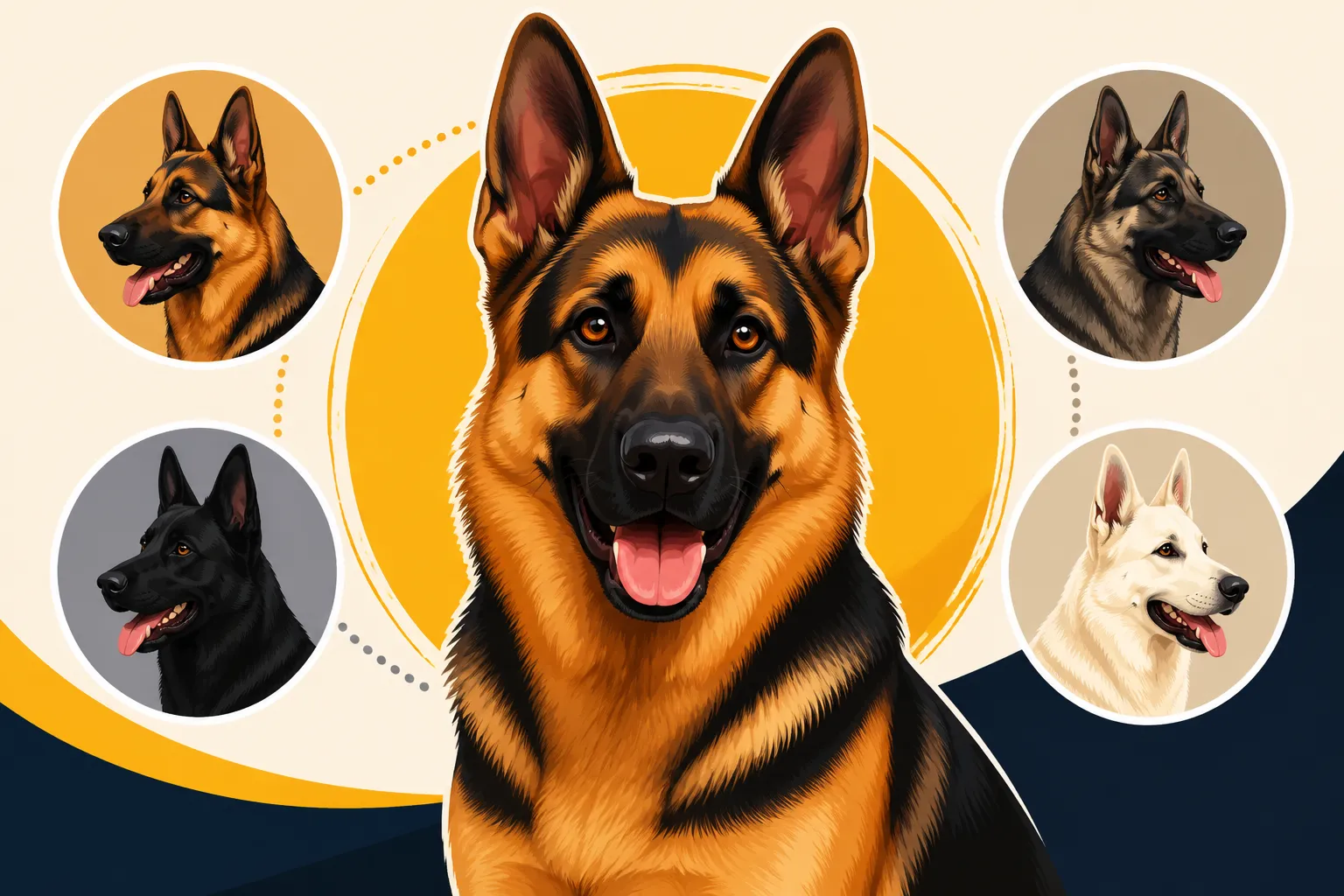
German Shepherd Colors and Coat Types
One of the most exciting, yet sometimes confusing, aspects of welcoming a German Shepherd into your life is discovering the incredible variety of colors and coat types they come in. Many people only picture the classic black and tan, and then get wonderfully surprised, or sometimes even worried, when they see a sable, an all-black, or even a stunning white German Shepherd. This comprehensive guide will unravel the mysteries behind their diverse appearances, helping you understand the genetics, breed standards, and what makes each coat unique, so you can appreciate the full spectrum of this magnificent breed.
Understanding the German Shepherd Double Coat
The German Shepherd's coat is far more than just what meets the eye; it's a sophisticated system designed by nature to protect them from the elements. This breed is renowned for its thick, resilient double coat, a characteristic that is crucial for understanding its grooming needs and overall health. Whether you live in a scorching summer climate or a freezing winter wonderland, this double coat provides essential insulation and protection. Ignoring the intricacies of this coat can lead to skin issues, excessive shedding, and a generally uncomfortable dog.
The Importance of the Undercoat
Beneath the visible top layer of fur lies the German Shepherd's dense, woolly undercoat. This hidden layer is the unsung hero of their thermoregulation system. Its primary job is to provide insulation, keeping your German Shepherd warm in cold weather and helping to regulate their body temperature by trapping cooler air close to the skin in warmer months. Think of it as a natural thermostat, working tirelessly to maintain comfort. Without a healthy undercoat, your dog would be much more susceptible to temperature extremes.
This undercoat also acts as a protective barrier against moisture and debris, preventing rain from soaking directly to the skin and catching dirt before it irritates them. However, this impressive insulation comes with a trade-off: significant shedding. Twice a year, typically in spring and fall, German Shepherds experience what's known as "blowing their coat," where they shed massive amounts of undercoat to prepare for the changing seasons. This is when you'll truly appreciate tools designed for deshedding, which can often be found on platforms like Chewy, making the process much more manageable. Proper maintenance of this undercoat is critical; if it becomes matted, it can hinder air circulation, leading to skin infections and hotspots.
The Role of the Outer Coat
The outer coat, also known as the guard coat, is the German Shepherd's first line of defense against the outside world. Composed of coarser, straighter, and often slightly longer hairs, this layer provides physical protection from external elements. It repels water, prevents thorns and burrs from reaching the skin, and offers a shield against harmful UV rays, minimizing the risk of sunburn. The texture of this outer coat is typically rather stiff and close-lying, which helps to maintain its protective qualities.
Beyond its protective function, the outer coat is responsible for showcasing the German Shepherd's stunning array of colors and patterns. Each individual hair can have multiple bands of color, contributing to the rich depth and variation seen across the breed. This layer is also what gives the German Shepherd its distinctive silhouette and powerful appearance. While the undercoat is about insulation, the outer coat is about durability, protection, and the iconic visual appeal that makes German Shepherds so recognizable. Understanding the interplay between these two layers is fundamental to effective grooming and appreciating the breed's natural design.
Managing the German Shepherd's Famous Shed
Ah, the shedding! If you own a German Shepherd, you know this is a daily reality, not just a seasonal event. Their double coat, while fantastic for protection, means a constant battle against loose fur. Beyond the seasonal "blows" we just talked about, German Shepherds shed year-round, albeit to a lesser extent. This isn't a flaw; it's just how their coat works to stay healthy and functional. Without proper management, you'll find tumbleweeds of fur in every corner of your home, and your clothes will become a furry tribute to your canine companion.
Effective shedding management requires consistency. Regular brushing, ideally several times a week, is paramount. Tools like deshedding rakes and undercoat rakes are your best friends during these times. They help to remove dead undercoat before it has a chance to fall out all over your furniture. Investing in a good quality dog vacuum cleaner can also save your sanity. During the heaviest shedding seasons, daily brushing might be necessary, and you might even consider professional grooming services that specialize in deshedding treatments. It's a commitment, but one that keeps your German Shepherd comfortable and your home a little less hairy. For more in-depth tips, you might find our guide on German Shepherd Shedding: How to Manage It incredibly helpful.
Standard German Shepherd Colors Recognized by Breed Clubs
When you picture a German Shepherd, certain classic color combinations immediately come to mind. These are the "standard" colors, widely recognized and accepted by major breed clubs like the American Kennel Club (AKC) and the Fédération Cynologique Internationale (FCI). These colors don't just happen randomly; they are the result of specific genetic combinations that have been consistently bred for generations, contributing to the breed's iconic image.
Black and Tan: The Classic Look
The black and tan German Shepherd is arguably the most recognizable and iconic color pattern of the breed. This classic combination features a striking saddle-shaped black marking that covers the dog's back, often extending down the sides and onto the tail. The "tan" portions appear on the legs, chest, belly, and often as distinct markings on the face, such as eyebrows and muzzle. The tan can range from a light cream to a deeper, richer red-tan.
What makes the black and tan so appealing is the sharp contrast and defined lines between the two colors, which highlight the German Shepherd's strong musculature and elegant proportions. This pattern is often associated with the traditional German Shepherd look, widely seen in show rings and working lines alike. While the intensity of the tan can vary, the distinct separation between the black saddle and the tan points is a hallmark of this beloved coloration.
Black and Red: A Richer Variation
For those who love the classic black and tan but desire a more vibrant, deep hue, the black and red German Shepherd is a breathtaking variation. Genetically, it's very similar to the black and tan, but the tan pigment is far richer and deeper, often appearing as a fiery mahogany or a dark, almost burnt orange-red. This intense red color gives the dog a particularly striking and regal appearance, often making the black saddle stand out even more.
The black and red pattern follows the same distribution as the black and tan, with the dark saddle on the back and the rich red markings on the legs, chest, and face. This color combination is highly sought after by many enthusiasts for its dramatic flair and luxurious feel. It’s a testament to the diverse beauty within the accepted breed standards, proving that even slight variations can create a completely different aesthetic impact.
Sable: The "Wild" German Shepherd Appearance
Sable German Shepherds possess a truly unique and often described "wild" or "wolf-like" appearance, making them stand out in a crowd. Unlike the distinct blocks of color seen in black and tan or black and red, sable refers to a pattern where each individual hair has multiple bands of color, with a dark tip. This banding creates a dynamic, shaded effect across the dog's body, giving their coat incredible depth and texture. The base color can range from a light silver to a rich red, with black overlaying varying amounts of the coat.
The most common sable colors are grey sable, red sable, and tan sable. A grey sable might have a silver or light tan base with extensive black tipping, giving them a very grizzled, almost ancient look. Red sables will have a reddish base coat with black tips, creating a warm, earthy tone. The distribution of black tipping can vary greatly, from a subtle dusting to a heavy blanket, making each sable German Shepherd truly distinct. This pattern is often prevalent in working lines, valued not just for its beauty but also for its natural camouflage.
Solid Black: Striking and Elegant
A solid black German Shepherd is a truly magnificent sight, possessing an undeniable air of mystery and power. This coat is uniformly black from head to tail, with no discernible tan or red markings. Every single hair on their body is a deep, lustrous black, without any lighter shading or banding. This lack of other colors makes their form incredibly striking and often emphasizes their muscular build and intelligent expression.
To be considered a true solid black, there should be no lighter undercoat visible through the topcoat, although some might have a slightly lighter grey or charcoal undercoat, which is still acceptable within the solid black standard. These dogs are often mistaken for other breeds, but their distinct German Shepherd features—build, head shape, and temperament—are unmistakable. Solid black German Shepherds are recognized by both the AKC and FCI as standard colors, and they are not considered rare or unusual, just a beautiful expression of the breed's genetic diversity.
Less Common but Accepted German Shepherd Colors
While the classic black and tan and solid black might be what first springs to mind, the German Shepherd breed also boasts several other recognized colors that, while less frequently seen, are just as legitimate and captivating. These variations arise from different genetic expressions, offering a broader spectrum of aesthetics within the breed standard. Understanding these colors helps to deepen our appreciation for the breed's natural diversity.
Bi-Color German Shepherds
Bi-color German Shepherds often cause a bit of confusion, as they share similarities with the classic black and tan but with a critical difference: the tan markings are significantly reduced. In a bi-color, the black pigment is far more dominant, covering a much larger portion of the dog's body. They will typically have a large black saddle that extends further down their legs, sides, and often onto their chest, giving them a heavily pigmented black appearance.
The tan (or red) markings on a bi-color are usually restricted to small 'points' such as the lower legs, around the vent, and sometimes minimal facial markings, like a subtle eyebrow flash or a small patch on the muzzle. The overall impression is a dog that appears almost entirely black, with just a hint of lighter color. This heavy black pigmentation is highly valued in many working lines, as it’s often associated with strong pigment in other areas, like eyes and nose. It’s a striking contrast to the more evenly distributed black and tan, giving the bi-color a powerful and imposing presence.
Liver German Shepherds: A Unique Hue
Liver German Shepherds are a truly unique and beautiful sight, easily distinguished by their rich, chocolate-brown pigment. This color is the result of a recessive gene that dilutes black pigment to liver (brown). This means that any part of the coat that would normally be black in a black and tan, black and red, or solid black German Shepherd, turns into a warm, earthy brown. Their nose leather, paw pads, and eye rims will also be liver-colored, rather than the typical black.
The liver coloration can appear in combination with other patterns. For example, you can have a "liver and tan" German Shepherd, where the saddle is liver, and the tan points remain tan, or a "solid liver," which is entirely brown. Sometimes, their eyes can also appear lighter, often amber or gold, rather than the dark brown typically seen. While liver is an accepted color by the AKC, it's considered less common and sometimes misunderstood by the general public. It's important to note that a liver German Shepherd is not unhealthy or "faulty"; it's simply a different genetic expression of color that results in a stunning, less frequently observed hue.
Blue German Shepherds: The Dilution Gene in Action
Blue German Shepherds are another fascinating example of a recessive dilution gene at work. In this case, the gene dilutes black pigment to a soft, steely blue-grey. Just like the liver gene, this dilution affects all black-pigmented areas of the coat, as well as the nose, paw pads, and eye rims, which will appear blue-grey instead of black. A blue German Shepherd can come in patterns like "blue and tan" or "solid blue."
The blue color itself can range from a very light, almost silver-blue to a darker slate grey. When combined with tan markings, the effect is a subdued, smoky appearance that is quite captivating. While beautiful, blue is considered a non-standard color by the AKC and is a disqualifying fault in the show ring, as it’s a dilution of the natural black pigment. However, this does not affect the dog's health or temperament. These German Shepherds are just as intelligent, loyal, and capable as their black-pigmented counterparts. They simply carry a recessive gene that results in this unique, diluted coloration, proving that genetic diversity offers a wide range of beautiful possibilities.
Non-Standard and Disqualifying German Shepherd Colors
While the German Shepherd breed exhibits a remarkable range of colors, not all are considered standard by major breed clubs. Some colors, while visually stunning, are deemed "disqualifying faults" in the show ring due to deviations from the established breed standard. It's crucial to understand that "disqualifying" in a show context does not mean "unhealthy" or "undesirable" as a pet; it simply means they don't conform to the specific aesthetic criteria set by organizations like the AKC.
White German Shepherds: Pure Beauty, Breed Controversy
White German Shepherds are perhaps the most well-known and visually distinct of the non-standard colors. Their entire coat, from guard hairs to undercoat, is a pristine white. However, it's vital to clarify that white German Shepherds are not albinos. Albinism involves a complete lack of pigment, leading to pink eyes and nose. White German Shepherds have dark pigment in their nose, paw pads, and eye rims, and their eyes are typically dark brown, just like any other color German Shepherd. Their white coat is due to a recessive gene that suppresses the expression of other coat colors.
Historically, white German Shepherds were part of the breed's lineage and were originally accepted. However, breed standards changed, and white became a disqualifying fault in the AKC show ring in the 1960s. This decision was largely aesthetic, influenced by the desire for the traditional black and tan or black and red. Despite this, white German Shepherds are incredibly popular as family pets and working dogs, prized for their beauty, intelligence, and often a perceived milder temperament. Many enthusiasts have even established their own breed club, the White Shepherd Club of America, to preserve and promote them, eventually leading to the recognition of the "Berger Blanc Suisse" (White Swiss Shepherd) as a separate breed by the FCI. If you're considering one, our guide on White German Shepherd: What to Know offers more details.
Isabella/Fawn German Shepherds
The Isabella, often also referred to as Fawn, is a truly rare and striking color in German Shepherds, though it is not recognized by mainstream breed clubs. This coloration is a double dilution, meaning it results from both the blue (dilution of black) and liver (dilution of brown) genes being present in a dog. Essentially, it's a diluted liver, creating a very pale, champagne, or fawn-like color across the entire body.
An Isabella German Shepherd will have a very light, almost pinkish or pale brown nose, paw pads, and eye rims, and often very light amber or green eyes. The coat itself will appear as a uniform, diluted light brown or tan. Due to the double recessive nature of the genes required for this color, Isabella German Shepherds are exceptionally rare. While undeniably beautiful and unique, this color is a disqualifying fault in the show ring and is rarely seen in actively breeding lines that adhere strictly to breed standards. Their rarity makes them a subject of fascination, but prospective owners should be aware of their non-standard status.
Panda German Shepherds: A Modern Phenomenon
Panda German Shepherds are a relatively new and highly distinctive color pattern, causing quite a stir in the German Shepherd community. They are characterized by a unique piebald or parti-color pattern, displaying patches of white, black, and tan (or red) on their coat. Unlike traditional white markings that might appear on the chest or paws, the white on a Panda German Shepherd typically covers specific areas like the face, chest, belly, and legs, often in a striking, symmetrical fashion.
This pattern is caused by a dominant piebald gene that occurred spontaneously in a single purebred German Shepherd line in 2000. Unlike other colors, it is not a dilution gene or a recessive trait. The key controversy and discussion around Panda German Shepherds stem from the fact that piebald is not a recognized German Shepherd pattern in any major breed club and is considered a genetic mutation that radically deviates from the breed standard. They are often purebred German Shepherds with full AKC registration, yet their unique coloring makes them disqualifying for conformation shows. Despite the breed club stance, their eye-catching appearance has garnered a dedicated following. To learn more about this intriguing variation, take a look at our article on Panda German Shepherd: What to Know.
Exploring German Shepherd Coat Lengths and Textures
Beyond the fascinating array of colors, German Shepherds also come in different coat lengths and textures, each with its own distinctive appearance and care requirements. While the standard coat is most prevalent, longer coats are also present in the breed, sometimes leading to misconceptions about their purity or health. Understanding these variations helps owners prepare for specific grooming needs and appreciate the genetic diversity within the breed.
Standard/Stock Coat: The Most Common
The standard, or "stock," coat is the most common and traditionally accepted coat type for German Shepherds. It's what you typically see in show rings and working lines. This coat is characterized by its medium length, close-lying guard hairs that are coarse and straight, and a dense, woolly undercoat. The overall impression is one of robustness and functionality, designed to withstand various weather conditions while offering protection against physical abrasions.
The hairs on a stock coat are slightly longer around the neck, behind the ears, and on the back of the legs, forming a subtle "mane" or "feathering." However, these areas never become excessively long or shaggy. This coat type is considered ideal for a working dog, as it provides excellent insulation and weather resistance without hindering movement or collecting excessive debris. While it still requires regular grooming, particularly during shedding seasons, its manageability is one of its key advantages.
Long Coat: The Flowing Mane
Long-coated German Shepherds are a sight to behold, with their flowing, luxurious fur that gives them a distinctly majestic appearance. In this coat type, the guard hairs are significantly longer than those of a stock coat, extending into noticeable feathering on the ears, behind the legs, on the underside of the tail, and often forming a full "mane" around the neck and chest. While the length is considerable, the texture of the outer coat should still be somewhat coarse to retain its protective qualities.
The presence of an undercoat is crucial here. Long-coated German Shepherds can either have a dense undercoat, similar to the stock coat, or they might have a "plush" long coat where the undercoat is somewhat less dense, making the topcoat appear even more voluminous. Traditionally, long coats were considered a fault in the show ring by the AKC, especially if they lacked an undercoat, as it was thought to compromise the dog's weather resistance. However, their popularity as pets has grown immensely, and some breed clubs, particularly in Europe, now recognize them as a distinct variant. Grooming a long-haired German Shepherd requires more dedication to prevent matting and tangles, especially in the longer feathering. If you're interested in this beautiful variant, explore our detailed guide on Long-Haired German Shepherd: Traits, Facts, and Care.
Plush Coat: A Beautiful, Soft Variation
The term "plush coat" is often used to describe a variation of the long coat or sometimes even a very full stock coat, characterized by a noticeably softer, denser, and somewhat longer appearance than the standard stock coat. While not an official coat type recognized as distinct by all major kennel clubs, it's a term commonly used by breeders and owners to describe a German Shepherd with a luxurious, velvety feel to their fur.
A plush-coated German Shepherd typically has a very thick, abundant undercoat, making their fur stand out more from their body. The guard hairs are usually medium-long, but the sheer density of the undercoat gives the impression of a much fuller, softer, and almost pillow-like coat. Unlike the long coat, the plush coat typically doesn't have the extensive feathering on the ears, legs, and tail, though it will be fuller in those areas than a stock coat. This type of coat is stunning to look at and soft to the touch, but its density means it requires consistent brushing to prevent matting, especially during shedding seasons. Owners often appreciate the plush coat for its visual appeal and cuddly texture.
Genetics Behind German Shepherd Coat Colors
Understanding the stunning diversity of German Shepherd coat colors isn't just about appreciation; it's about delving into the fascinating world of canine genetics. Just like us, dogs inherit their traits from their parents, and a handful of specific genes dictate the exact shade, pattern, and distribution of their fur. It's a complex dance of dominant and recessive alleles, and getting a basic grasp of it can demystify why certain colors appear and others don't.
Dominant and Recessive Genes
At the heart of all canine coat color inheritance are dominant and recessive genes. Think of it like a coin toss, but with more options and probabilities. A dominant gene (or allele) will always express itself if present, meaning you only need one copy of it from either parent for that trait to show up. For example, the presence of black pigment is largely dominant. A recessive gene, on the other hand, only expresses itself if two copies are inherited, one from each parent. If a dog inherits one recessive gene and one dominant gene for a particular trait, the dominant gene will "override" the recessive one, and the dog will carry the recessive gene without showing it. These dogs are called "carriers."
This explains why two black and tan German Shepherds can sometimes produce a solid black puppy or a liver puppy. If both parents are carriers for the recessive solid black or liver genes, there's a 25% chance their offspring will inherit two copies of that recessive gene and express the trait. This genetic principle is fundamental to understanding why some colors are common and others are rare, and why breeders often use German Shepherd Genetic Health Testing to understand the genetic makeup of their breeding dogs.
Understanding the Color Loci (A, B, D, E, K)
The intricate patterns and colors we see in German Shepherds are primarily determined by the interaction of several key gene locations, or "loci," each with different alleles (variations of the gene). Here are some of the most influential for German Shepherd colors:
- A Locus (Agouti): This locus is responsible for patterns like sable, black and tan, and bi-color.
- Ay (dominant yellow/sable): Creates the sable pattern.
- at (tan points): Responsible for the black and tan/red pattern.
- a (recessive black): When present in two copies (aa), it can contribute to a solid black dog if other genes allow.
- B Locus (Brown/Liver): This locus determines whether a dog can produce black pigment or if it will be diluted to brown (liver).
- B (dominant black): Allows for black pigment.
- b (recessive brown): If a dog has two copies (bb), all black pigment turns to liver. This affects the nose, paw pads, and eye rims.
- D Locus (Dilution): This locus controls the intensity of pigmentation.
- D (dominant dense pigment): Allows for full expression of color.
- d (recessive dilute): If a dog has two copies (dd), black pigment is diluted to blue/grey, and brown pigment is diluted to Isabella/fawn. This also affects the nose and eye color.
- E Locus (Extension): This locus controls the distribution of black pigment.
- Em (mask): Creates the black mask often seen on German Shepherds.
- E (normal extension): Allows for black pigment.
- e (recessive red): If a dog has two copies (ee), it will be entirely red/yellow, essentially blocking all black pigment from appearing in the coat (though the nose will remain black if no B/D dilution is present). This is what creates an all-red or all-cream German Shepherd, though these are typically not accepted in the breed standard.
- K Locus (Dominant Black): This is a powerful locus, especially for solid colors.
- KB (dominant black): If a dog inherits even one copy, it will be solid black, overriding any patterns from the A locus. This is the primary gene for solid black German Shepherds.
- ky (non-black): Allows for the expression of patterns from the A locus (sable, black & tan).
The combination and interaction of these genes are what produce the vast and beautiful spectrum of German Shepherd colors.
Health Implications of Certain Dilutions
While most German Shepherd colors are purely aesthetic and carry no inherent health risks, it's worth noting that extreme dilutions can sometimes be linked to certain considerations, though these are rare in German Shepherds specifically. For instance, in some breeds, the merle gene (which isn't present in German Shepherds) can be linked to hearing and vision problems when two copies are inherited.
For German Shepherds, colors like liver, blue, and Isabella are simply pigment dilutions due to recessive genes and are generally not associated with significant health issues solely based on color. A blue or liver German Shepherd is typically just as healthy as a black and tan one. The key concern often arises when breeders prioritize rare colors over health, temperament, and structural soundness. A reputable breeder will always prioritize the overall health of their dogs, regardless of color. It's more about the responsible breeding practices than the color itself. Therefore, when choosing a puppy, always prioritize a breeder who performs comprehensive health screenings over one who simply advertises "rare" colored puppies without proper health guarantees. This is crucial for ensuring a long and healthy life for your companion, as highlighted in guides like German Shepherd Health Problems Guide.
Here's a quick summary table of common German Shepherd colors and their status:
| Color/Pattern | Description | AKC/FCI Status | Key Genetic Locus/Gene |
|---|---|---|---|
| Black & Tan | Black saddle, tan points on legs, chest, face. Classic. | Accepted | A Locus (at), K Locus (ky) |
| Black & Red | Black saddle, rich mahogany/red points. Vibrant. | Accepted | A Locus (at), K Locus (ky), modifiers for pigment intensity |
| Sable | Multi-banded hairs (light base, dark tips). Wolf-like. | Accepted | A Locus (Ay), K Locus (ky) |
| Solid Black | Uniformly black from head to tail. Striking. | Accepted | K Locus (KB) or A Locus (aa) in specific combinations |
| Bi-Color | Heavily black with minimal tan points. | Accepted | A Locus (at), K Locus (ky) with strong black modifiers |
| Liver | Black pigment diluted to brown. Brown nose, pads. | Accepted | B Locus (bb) |
| Blue | Black pigment diluted to blue/grey. Blue nose, pads. | Disqualifying | D Locus (dd) |
| White | Pure white coat, but with dark eyes, nose, pads. | Disqualifying | E Locus (ee) or other pigment inhibitors |
| Isabella/Fawn | Double dilution of black and brown, resulting in pale, champagne-like color. Very rare. | Disqualifying | B Locus (bb) + D Locus (dd) |
| Panda | Patches of white, black, and tan. Piebald pattern. | Disqualifying | Dominant piebald gene (uncommon mutation) |
The Impact of Color and Coat Type on Temperament and Health
It's natural to wonder if a German Shepherd's color or coat type might tell you something about their personality or their likelihood of developing certain health issues. This is a common area of concern and misconception, especially when "rare" colors are involved. For the most part, color and coat type are superficial traits, but understanding the nuances can help you make informed decisions and avoid common pitfalls.
Is Color Linked to Temperament?
One of the most persistent myths surrounding German Shepherds is that certain colors are indicative of specific temperaments. For example, some people believe that solid black German Shepherds are inherently more aggressive, or that white German Shepherds are softer and less driven. These beliefs are largely anecdotal and not supported by scientific evidence. A German Shepherd's temperament is primarily shaped by genetics (lines and breeding), early socialization, and training, not the color of their fur.
A well-bred German Shepherd from a reputable breeder, regardless of color, should exhibit the breed's characteristic intelligence, courage, loyalty, and trainability. Individual variations in personality are normal within any litter, but they are not tied to coat color. A calm, stable temperament is a hallmark of the breed, whether it's a black and tan, sable, or solid black dog. Focus on meeting the parents of a puppy, observing the puppy's individual behavior, and inquiring about the breeder's practices rather than making assumptions based on color. Our article on German Shepherd Temperament and Personality dives deeper into what truly shapes a German Shepherd's character.
Coat Type and Grooming Needs
While color doesn't typically affect temperament or health, coat type absolutely impacts grooming needs. All German Shepherds, regardless of coat length, have that famous double coat and shed. However, the intensity and specifics of their grooming routines will vary.
- Standard/Stock Coat: These dogs require regular brushing, typically 2-3 times a week, with daily brushing during their twice-yearly "blow coat" seasons. A good pin brush, slicker brush, and an undercoat rake are essential. Their moderate length makes them relatively easy to maintain, and they are less prone to matting than longer-coated varieties.
- Long Coat and Plush Coat: These majestic coats demand more attention. The longer hairs, especially the feathering, are more susceptible to tangles and mats if not brushed frequently. Daily brushing is often recommended to keep their coat healthy and free of knots, particularly if they enjoy rolling in the dirt or playing in water. Owners of long-coated German Shepherds often invest in specialized detangling sprays and consider professional grooming appointments more frequently to help manage the volume and prevent discomfort. Remember to check online stores like Chewy for a wide range of grooming tools specifically designed for long-haired breeds, which can make your life much easier.
Regardless of coat type, consistent grooming is a wonderful way to bond with your German Shepherd and also allows you to regularly check for skin issues, parasites, or any unusual lumps and bumps.
Common Misconceptions About Rare Colors
There are many myths swirling around the less common or disqualifying German Shepherd colors. One prevalent misconception is that "rare" colors inherently lead to poorer health or weaker temperaments. This is generally untrue. For example, a blue or liver German Shepherd, whose color is due to a simple recessive gene, is not more prone to illness or behavioral issues just because of their hue. Their health and temperament depend entirely on the genetic health of their parents and the quality of their breeding program, just like any other color.
The term "disqualifying" in the context of breed standards often relates to aesthetics rather than function or health. The white German Shepherd, for instance, was disqualified from the AKC show ring purely based on visual preference, not because white dogs were found to be unhealthy or unsound. The only potential health-related concerns with extreme dilution genes, like Isabella, could be related to skin sensitivity or certain types of alopecia in other breeds, but these are not commonly observed problems in German Shepherds with these colors. The biggest "risk" with rare colors is often unscrupulous breeders who prioritize the unique look over ethical breeding practices, potentially leading to dogs with genetic health issues, regardless of color. This underscores the importance of choosing a reputable breeder for any German Shepherd puppy, no matter its coat.
Choosing the Right German Shepherd: Beyond Color
When the time comes to bring a German Shepherd into your family, it’s easy to get captivated by a particular coat color or length. While these aesthetic preferences are certainly valid, it's crucial to remember that a German Shepherd is a living, breathing companion with complex needs. Focusing solely on appearance can lead to overlooking far more important factors that will ultimately determine your dog's happiness and health, and your own satisfaction as an owner.
Prioritizing Health and Temperament
Above all else, the health and temperament of your future German Shepherd should be your top priority. These magnificent dogs are prone to certain genetic health issues, such as hip and elbow dysplasia, degenerative myelopathy, and certain cancers. A responsible breeder will meticulously screen their breeding stock for these conditions, providing health clearances and being transparent about their dogs' lineage. Don't be shy about asking for proof of health testing for the parents of any puppy you consider. This is a non-negotiable step in ensuring you bring home a healthy companion. Our comprehensive German Shepherd Health Problems Guide can help you understand what to look for.
Temperament is equally vital. German Shepherds are intelligent, driven, and loyal, but they require proper socialization and training from a young age. A poorly bred dog, even of the most beautiful color, can develop significant behavioral problems. Look for puppies from parents with stable, confident, and friendly dispositions. The first 8-12 weeks of a puppy's life are critical for development, so observe how the puppies interact with their littermates, their mother, and the breeder. A confident, curious, but not overly aggressive or fearful puppy is generally a good sign. Remember, a stunning coat is temporary; a sound temperament and robust health are lifelong.
Finding a Reputable Breeder
This point cannot be stressed enough: finding a reputable breeder is the single most important decision you'll make when getting a German Shepherd. A good breeder isn't just selling puppies; they are carefully cultivating the breed, prioritizing health, temperament, and adherence to breed standards. They will be passionate, knowledgeable, and genuinely invested in the well-being of their dogs and puppies.
What does a reputable breeder look like?
- They will perform extensive health clearances on both parents (OFA, PennHIP, elbow, DM, etc.) and be able to provide documentation.
- They will have a clean, safe environment for their dogs and puppies.
- They will welcome questions and be eager to educate you about the breed, its needs, and potential challenges.
- They will likely have a waiting list, as ethical breeding takes time and careful planning.
- They will interview you to ensure their puppy is going to a good, suitable home.
- They will provide a health guarantee and a clear contract.
- They will allow you to meet the puppy's mother, and often the father if he is on-site.
- They will provide ongoing support and be a resource for you throughout your dog's life.
- They will not breed for "rare" colors purely for profit, especially if those colors are considered disqualifying faults by mainstream clubs, without transparency about genetic implications.
Avoid breeders who sell puppies to the first person with cash, advertise "rare" colors as their primary selling point without mentioning health, or cannot provide verifiable health clearances for their breeding dogs. For detailed guidance, consult our guide on How to Find a Reputable German Shepherd Breeder.
What to Expect from Your German Shepherd
Regardless of the beautiful coat and color you choose, understanding the core characteristics of the German Shepherd breed is essential for a successful partnership. These are highly intelligent, active dogs that thrive on purpose and engagement. They require:
- Significant Exercise: Daily physical activity, beyond just a walk around the block. Think running, fetch, hiking, or dog sports. Our article on German Shepherd Exercise Requirements offers more insight.
- Mental Stimulation: Their keen minds need challenges. Puzzle toys, training sessions, and learning new commands are crucial.
- Consistent Training and Socialization: German Shepherds are powerful dogs. Early and ongoing training, coupled with exposure to various people, places, and other animals, is paramount for a well-adjusted adult. This is especially true for German Shepherd Puppy Training Guide.
- Strong Bond with Family: They are deeply loyal and protective, forming strong bonds with their human companions. They do best when integrated into family life rather than being left isolated outdoors.
- Shedding: As we’ve discussed, be prepared for regular grooming and dealing with dog hair.
A German Shepherd is a significant commitment, but for those willing to invest the time and effort, they offer unparalleled companionship, loyalty, and joy. Choose wisely, focus on the substance over the superficial, and you'll gain an incredible family member. You can also explore the broader characteristics in our German Shepherd Breed Guide or delve into the Types of German Shepherds Explained to ensure you pick the right line for your lifestyle.
Disclaimer
The information provided in this article is for general informational purposes only and is not a substitute for professional veterinary advice. Always consult with a qualified veterinarian or animal health professional for any health concerns or before making any decisions about your pet's care.