How Smart Are German Shepherds Really
German Shepherd intelligence spans instinctive, adaptive, and working categories, powering their success in police and search rescue roles.
Is this the right one for you?
Origins and temperament, size and coat, what living with one is actually like, and how it compares to the breeds people weigh against it.

German Shepherd intelligence spans instinctive, adaptive, and working categories, powering their success in police and search rescue roles.

German Shepherd protectiveness stems from history and temperament, requiring proper socialization and consistent training to manage behavior safely.

German Shepherd bonding habits involve widespread affection rather than exclusive loyalty to just one single household member.

German Shepherd integration strategies cover natural instincts, socialization methods, routine adjustments, and introduction steps for safe family homes.

German Shepherd and cat coexistence depends on managing strong prey drives, evaluating individual temperaments, and enforcing slow introductions.
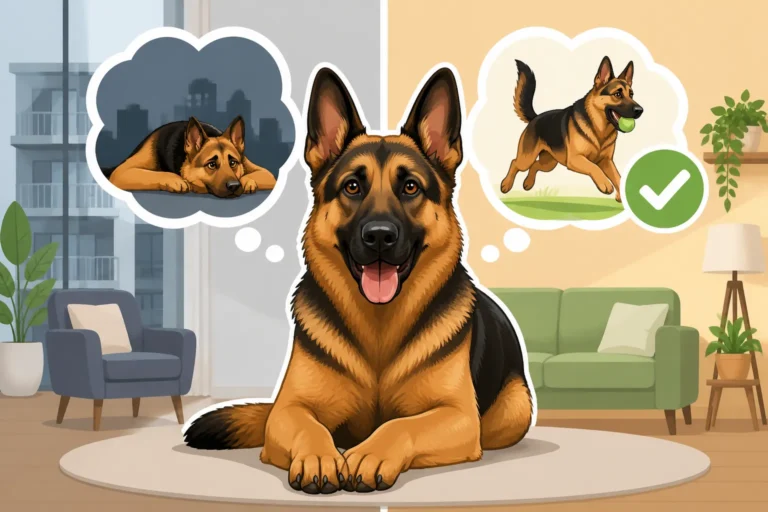
German Shepherd apartment living requires daily physical exercise and mental stimulation to keep large, active dogs happy in small residential spaces.

German Shepherd ownership requires intensive daily exercise, strict training, and early socialization to manage their powerful protective instincts.

German Shepherd and Shiloh Shepherd dogs differ in their physical size, back structure, coat types, history, and overall temperament traits.

German Shepherd and King Shepherd differences include size, history, back structure, coat types, and temperaments for prospective owners.

German Shepherd and Belgian Tervuren comparison details temperaments, physical sizes, specific health concerns, and training requirements for both breeds.