German Shepherd Bite Inhibition: Step-by-Step
If you have ever felt like you brought a furry little alligator into your home rather than a puppy, you are certainly not alone. German Shepherd puppies are notorious for using their razor-sharp needle teeth on hands, ankles, sleeves, and furniture. This guide breaks down the essential step-by-step process of teaching bite inhibition, helping you transform that overwhelming mouthing instinct into a controlled, gentle mouth.
Understanding German Shepherd Mouthing and Bite Inhibition
Bringing a German Shepherd puppy into your life is an incredible experience, but the constant champing at your hands can test even the most patient dog owner. To address this behavior effectively, we first need to understand why it happens and what bite inhibition actually means in a canine context.
Why German Shepherds Mouth So Much
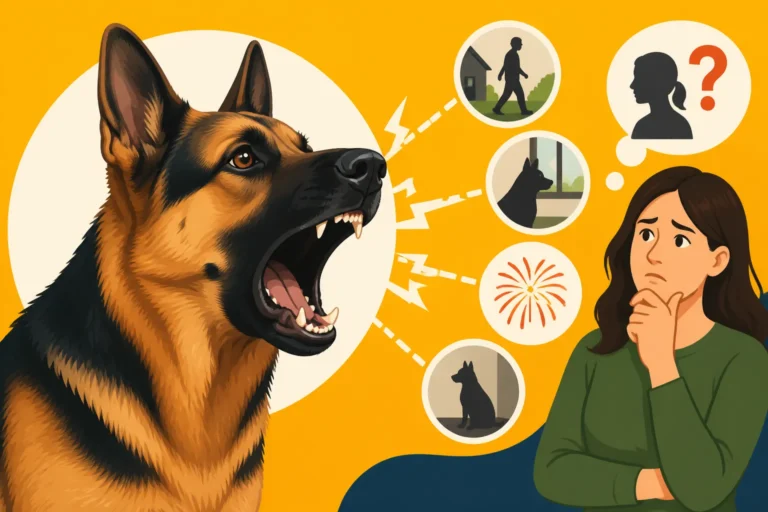
German Shepherds are working dogs bred for herding and protection. From a genetic standpoint, they possess a strong prey drive and an inherent desire to use their mouths to interact with their environment. When combined with the uncomfortable process of puppy teething, your young dog experiences a near-constant urge to chew, nip, and grab onto anything moving.
During early development, puppies learn a great deal through exploratory mouthiness. They do not have hands to grab objects or test textures; they use their jaws. When your puppy bites your sleeve as you walk across the room, they are exercising their natural herding instincts and attempting to engage you in play. Understanding that this behavior stems from development and instinct rather than malice helps set the right mindset for training. You can learn more about general developmental stages in our German Shepherd Puppy Training Guide.
What Is Bite Inhibition and Why Is It Essential
Bite Inhibition refers to a dog’s ability to control the force of their jaw. A dog that has learned strong bite inhibition understands how to use their mouth softly without applying dangerous pressure. The primary goal of early bite inhibition training is not to instantly stop a puppy from putting their mouth on you altogether, but rather to teach them to soften their grip first.
If a puppy is punished severely for simply putting their mouth on human skin, they may suppress the behavior temporarily without ever learning how to regulate their jaw force. If that dog is startled or experiences extreme pain later in life, their instinct may be to snap with full force. A dog that learned proper bite inhibition as a puppy, however, is far more likely to instinctively deliver a soft, non-injurious warning mouth rather than a severe puncture. Once your puppy learns to mouth gently, you can then move on to reducing the overall frequency of mouthing. For broader behavioral guidance, explore How to Stop a German Shepherd from Biting.
Step-by-Step Process to Teach Bite Inhibition
Teaching soft mouth mechanics requires consistency, patience, and realistic expectations. German Shepherds are highly intelligent, but their physical drives mean they need clear feedback to alter their habits. Follow this progressive, step-by-step structure to teach your dog proper jaw restraint.
Phase 1: Softening the Pressure
The first objective is teaching your puppy that human skin is extremely sensitive and that hard pressure immediately ends fun interactions.
- Engage in Calm Play: Sit on the floor with your puppy and engage in low-arousal play using a toy or simple hand interactions.
- Mark High Pressure: The moment your puppy bites down hard enough to cause discomfort, emit a clear, high-pitched “Ouch!” or a firm “Ah-ah!” Keep your tone realistic; it should sound like a puppy littermate expressing pain.
- Become Boring: Instantly go limp. Stop moving your hands and freeze for 5 to 10 seconds. Do not pull your hand away violently, as fast movement triggers your Shepherd’s instinctive chase response.
- Resume Gentle Play: Once your puppy backs off or licks your hand, resume play calmly.
- Repeat Consistently: Repeat this sequence whenever the pressure exceeds an uncomfortable threshold. Over several days, your puppy will realize that hard bites make the fun stop.
If you struggle with persistent nipping during basic interactions, reading up on How to Stop a German Shepherd Puppy from Biting can provide extra insight into managing these early play sessions.
Phase 2: Reducing the Frequency with Redirection and Time-Outs
Once your German Shepherd has softened their jaw pressure and only mouths gently, you can shift your focus toward teaching them that human skin should not be bitten at all.
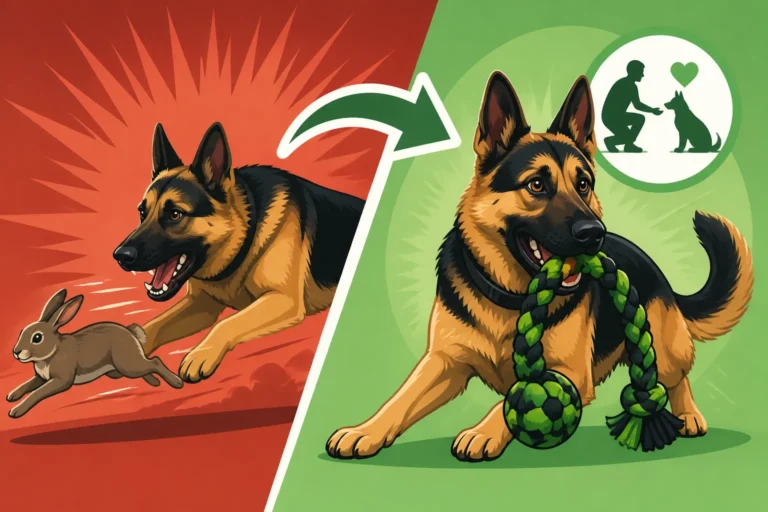
- The Redirection Technique: Always keep an approved chew toy nearby. Whenever your puppy reaches out to mouth your hand or clothes, present the toy immediately. Encourage them to grab the toy instead. If they take the toy, reward them with vocal praise. Browsing options on Amazon for durable rubber toys or textured rope rings can help you keep an ample supply of engaging chew options ready around the house.
- The Reverse Time-Out: If your puppy ignores the toy and continues to target your hands or clothing, implement a reverse time-out. Instead of putting the puppy in a crate, remove yourself from the puppy’s reach. Stand up, cross your arms, turn your back, or step behind a baby gate for 20 to 30 seconds.
- Return and Reset: Return calmly after the brief break. If the puppy approaches quietly, offer praise and a toy. If they immediately rush in to nip again, step out again. This teaches your Shepherd that biting removes their favorite thing in the world: your attention.
Combining these techniques with proper routine structure is crucial. If your dog exhibits extreme restlessness during training, consider reviewing methods on How to Calm a Hyperactive German Shepherd to help keep their nervous system balanced.
Phase 3: Rewarding Gentle Mouth Mechanics
Reinforcing good choices is just as important as setting boundaries for hard biting. You want your Shepherd to actively choose soft behaviors over rough play.
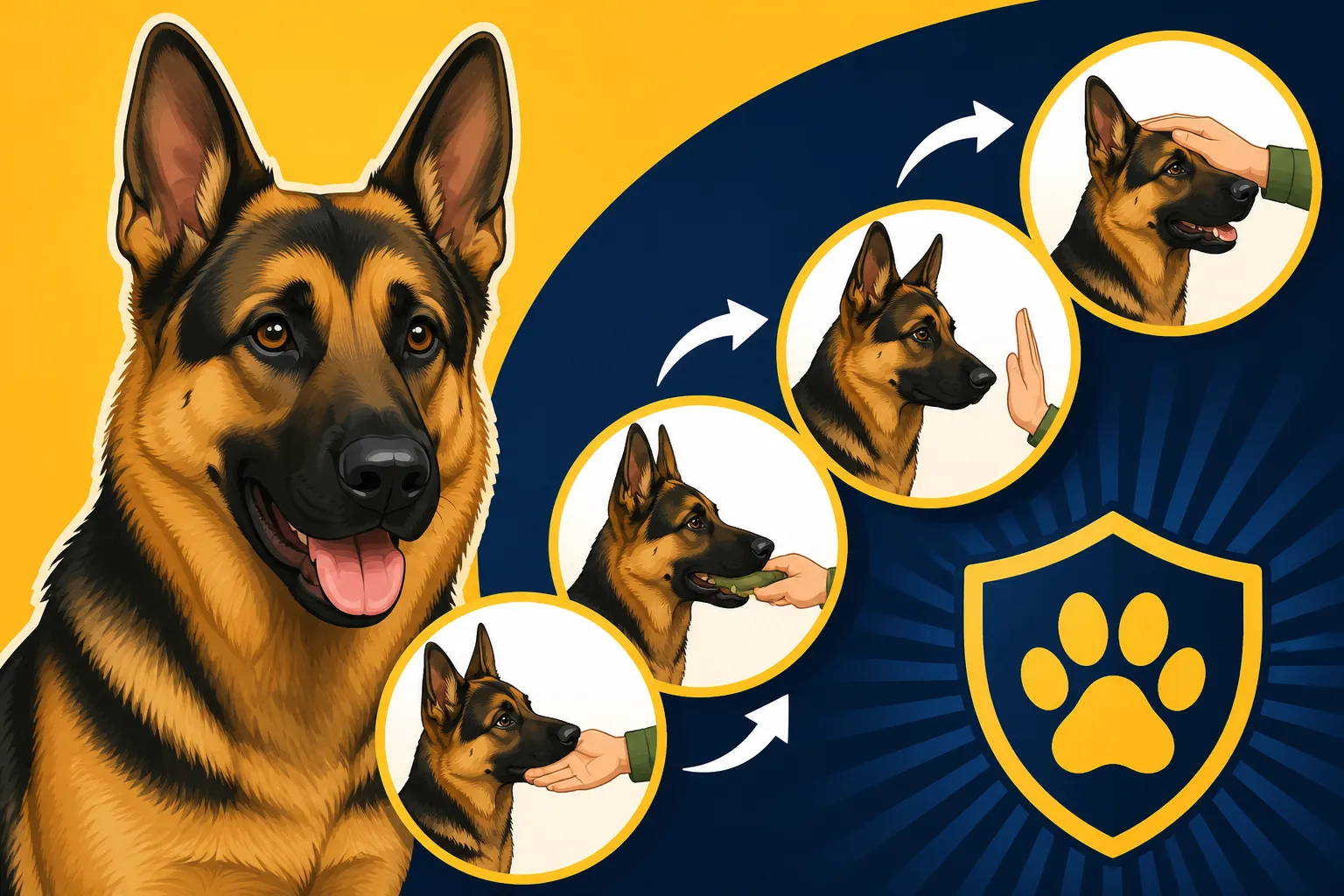
- Reward Licks and Soft Touches: If your puppy touches your skin with a soft mouth or licks your hand instead of biting, mark the behavior with a soft “Yes” and offer a treat.
- Practice “Leave It” and “Drop It”: Introduce basic impulse control commands. Place a treat in your closed fist. Let your puppy sniff and lick your hand. The moment they back off, even for a split second, open your hand and give them the treat. This teaches your puppy that stepping back yields rewards.
- Incorporate Structured Socialization: Puppies learn bite inhibition best from other well-socialized dogs. Adult dogs possess superior body language skills and will quickly teach a young German Shepherd when a bite is too rough. Arranging supervised playdates with vaccinated, calm adult dogs reinforces the lessons you practice at home. Detailed steps on safe puppy exposure are available in German Shepherd Socialization: Step-by-Step.
Troubleshooting Common Mouthiness Challenges
Even with a solid plan, training a German Shepherd puppy comes with hurdles. Over-arousal, tiredness, and physical discomfort can interfere with your puppy’s ability to learn.
Handling Over-Arousal and Overtiredness
When a German Shepherd puppy becomes wild, uncontrollable, and starts biting continuously without listening to redirection, they are almost always overtired or overstimulated. Young puppies need between 18 and 20 hours of sleep per day.
When a puppy’s brain gets overloaded, their impulse control vanishes. When “Zoomies” and intense biting hit, avoid yelling or wrestling. Instead, guide your puppy calmly to their quiet rest area or crate with a chew bone. An enforced nap allows their nervous system to reset. Setting up a consistent daily routine supported by How to Crate Train a German Shepherd makes managing these overtired episodes significantly easier.
Managing Ankle Biting and Clothes Chasing
Because Shepherds are working and herding dogs, ankles, slippers, and swinging pants legs are irresistible targets. Moving feet trigger their natural instinct to chase and grip.
- Freeze Instantly: If your puppy grabs your pants or ankles while you walk, stop moving immediately. Movement feeds the game.
- Redirect Low: Keep a tug toy in your pocket. Drop the toy down to eye level as you walk to redirect their attention away from your shoes and onto the toy.
- Build Focus: Practice walking beside your puppy while rewarding them for looking up at you or carrying a toy in their mouth.
If ankle biting or mouthing seems linked to frustration when left alone, it may be helpful to consult German Shepherd Separation Anxiety Solutions to ensure your dog feels secure in their space.
Equipment, Toys, and Digital Training Resources
Having the right tools simplifies bite inhibition training and prevents unnecessary frustration.
Bite Inhibition Progression & Management Strategies
| Development Stage | Primary Training Objective | Recommended Action & Tools |
|---|---|---|
| 8 – 12 Weeks | Soften jaw force; build trust | High-pitched mark; soft toys; |
| enforce nap schedules | ||
| 12 – 16 Weeks | Reduce mouthing frequency; | Reverse time-outs; durable |
| introduce impulse control | rubber toys from Amazon | |
| 16+ Weeks | Eliminate human skin mouthiness | Structured “Leave It”; online |
| entirely; reinforce obedience | courses via BAXTER & Bella |
Using durable rubber chews, edible dental sticks, and soft plush toys allows you to rotate textures, keeping your puppy engaged. Ordering a selection of varied texture toys on Amazon gives your dog safe outlets for their natural urge to gnaw during the peak teething window.
For owners looking for structured digital support, enrolling in an online dog training program like BAXTER & Bella can provide step-by-step video tutorials, live coaching, and a clear puppy curriculum. Having access to structured modules through BAXTER & Bella ensures that everyone in your household follows identical rules for redirection, time-outs, and reward timing.
Keeping your dog physically satisfied through safe play also reduces excess biting energy. Be sure to select appropriate items outlined in Best Toys for a German Shepherd’s Energy to keep your working dog mentally stimulated without encouraging rough play against your hands.
Teaching bite inhibition takes time, consistency, and plenty of patience. By focusing on softening jaw pressure first, redirecting unwanted biting onto appropriate chew toys, and maintaining strict nap routines, your German Shepherd will grow into a gentle, reliable companion.
Disclaimer
This article is for general informational purposes only and does not constitute professional advice. Laws, prices and regulations vary by location and change over time. Consult a qualified professional for guidance on your specific situation.