German Shepherd Recall Training: Step-by-Step
Oh, the sheer frustration of calling your magnificent German Shepherd, heart in your throat, only to watch them sniff a particularly interesting blade of grass or chase a squirrel like you don't even exist! It's a common, sometimes dangerous, challenge many German Shepherd owners face, and it can really chip away at your confidence when you're out and about. A reliable recall isn't just a party trick; it's a critical safety command that can literally save your dog's life. This comprehensive guide will walk you through a step-by-step process to build a rock-solid recall, transforming those anxiety-inducing moments into confident, joyful interactions with your beloved companion.
Understanding Why Recall is So Challenging for German Shepherds
Let's be real, German Shepherds are brilliant dogs, but that very intelligence, combined with their strong instincts, can make recall a real uphill battle. It's not that they're purposefully disobedient; it's just that the world outside is often a lot more captivating than your voice. Understanding these underlying factors is the first step toward effective training.
Instinctual Drives and Distractions
German Shepherds were bred for a purpose: herding, guarding, and working. These roles require a keen awareness of their surroundings, an independent streak, and often a strong prey drive. When your German Shepherd spots a rabbit darting across a field, or catches the scent of something fascinating, their ancient instincts kick in. That instinctual pull is incredibly powerful, often overriding months of training if the foundation isn't solid. Think about it: a chase offers immediate, self-rewarding gratification for them. Your call of "Fido, come!" just can't compete unless you've systematically taught them that coming to you is even more rewarding. This is why you need to go beyond simply saying the word; you need to create an irresistible magnet. For more on their natural tendencies, you might find our article on German Shepherd Temperament and Personality helpful.
The "Come" Command Misconception
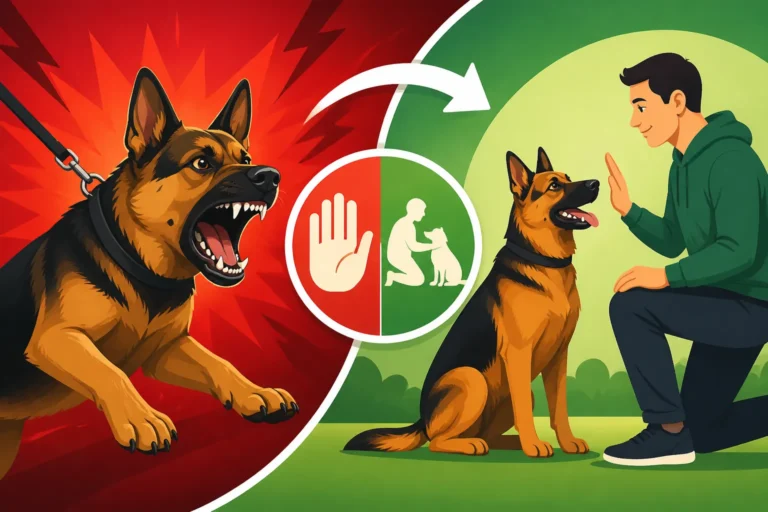
Many owners, without realizing it, accidentally teach their dogs that coming when called isn't always a great deal. Imagine this: you call your German Shepherd, they finally meander over, and then you immediately put them on a leash and go home, or worse, scold them for taking too long. What has your dog learned? "Coming to mom/dad means the fun stops." Or perhaps you only call them when you're frustrated, imbuing the command with a negative emotional charge. The "come" command, or recall, should always be associated with positive reinforcement and joy. It should signify something amazing is about to happen, not the end of playtime or a reprimand. If you're struggling with other behavioral aspects, consider checking out our guide on German Shepherd Behavior Problems and Solutions.
Laying the Foundation for a Rock-Solid Recall
Before you even step foot outside with high expectations, you need to establish a strong, positive foundation for your recall command. This isn't about brute force or endless repetition, but about creating an association so strong that "come" becomes the most exciting word in your German Shepherd's vocabulary.
Starting with the Basics: Positive Association
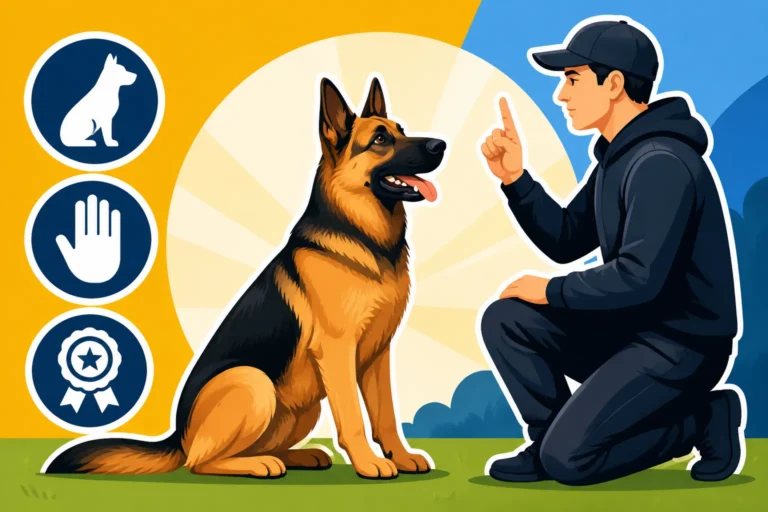
The core of successful recall training is making the act of coming to you an overwhelmingly positive experience. Every single time your German Shepherd responds to your recall cue, they should be greeted with enthusiastic praise, delicious high-value treats (think cooked chicken, cheese, or even hot dogs cut into tiny pieces), and perhaps a short, fun game. This isn't the time for a quick pat on the head; it needs to be a mini-celebration!
Start in a quiet, distraction-free environment, like your living room or a securely fenced yard. When your dog is close by and not actively engaged in something, say your recall cue (e.g., "Fido, Come!"), and immediately offer a treat and praise as they turn towards you or take a step in your direction. The goal is to build an understanding that your voice + recall cue = amazing things. Keep these initial sessions short and upbeat, ending on a high note.
The Right Tools and Environment
Having the right equipment and choosing the right training environment are crucial for setting both you and your German Shepherd up for success. You wouldn't try to build a house with a spoon, right? Same principle applies here.
Essential Gear for Recall Training
- High-Value Treats: As mentioned, these are non-negotiable. What your dog considers "high value" might be different from another, so experiment. Cooked chicken, lean beef, bits of cheese, or even specialized training treats like those from Zuke's or Wellness are often excellent motivators. You can find a wide variety of these on platforms like Amazon.
- Long Line: This is a game-changer. A 15-foot to 30-foot long line (not a retractable leash!) allows your dog to feel a sense of freedom while still giving you control. It's essential for practicing recall in increasing distractions without risking your dog running off. Always attach it to a well-fitting harness, not directly to their collar, to prevent neck injury if they bolt.
- A Secure, Distraction-Free Area: Begin in your home, then move to a securely fenced yard. Avoid public parks or areas with heavy foot traffic, other dogs, or wildlife until your recall is consistently reliable. Remember, you want to gradually introduce distractions, not overwhelm your dog from the start.
Creating the Ideal Training Space
Your home, a quiet backyard, or even a large empty room can be perfect for initial training. The key is to minimize competing stimuli. If your dog is constantly sniffing the ground or watching birds out the window, they won't be focused on you. Gradually, as your German Shepherd progresses, you'll introduce more stimulating environments, but always at a pace they can handle. This ensures success, which builds confidence in both of you.
Introducing the Recall Cue
This is where you formally introduce the command. Consistency is key here. Choose one word or phrase and stick with it. "Come," "Here," or even a specific whistle are all good options, but everyone in the household needs to use the same one.
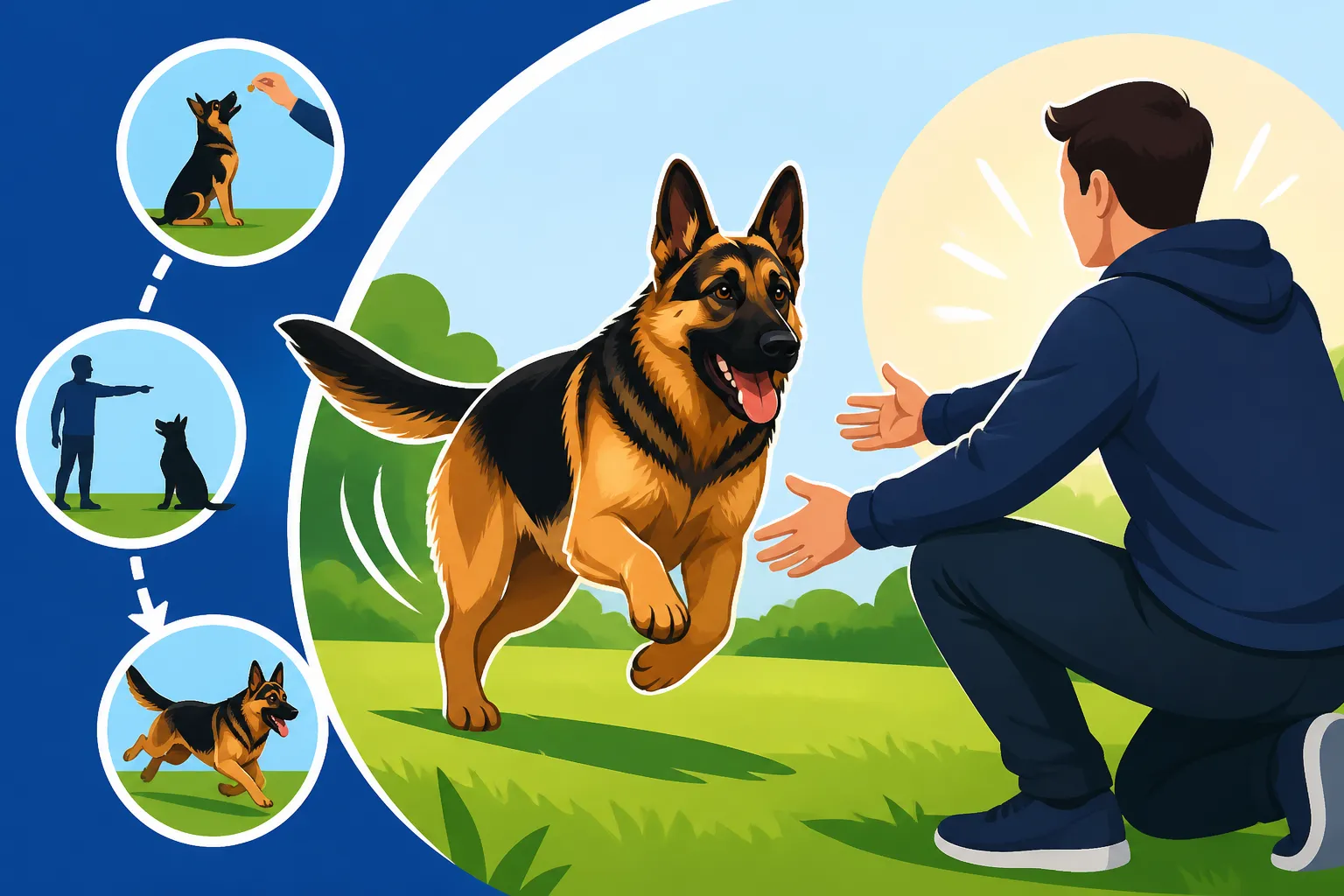
- Lure and Reward: With your dog near you in a quiet space, hold a high-value treat near their nose. Take a step or two back, say your chosen recall cue in an excited, happy voice, and then immediately reward them when they come to you. Shower them with praise as they reach you.
- Make it a Game: Occasionally, when your German Shepherd isn't expecting it, call them for their reward. If they're lying down nearby, casually say "Fido, Come!" and when they stand up and approach, jackpot them with treats and praise. You want them to think, "Wow, good things happen when I go to my human!"
- Repeat, Repeat, Repeat: Practice this many times throughout the day, in short, fun sessions. Avoid drilling it until your dog is bored. Keep it fresh and exciting. The online training programs from BAXTER & Bella are excellent for structured, positive reinforcement techniques that can really help solidify these early stages.
Step-by-Step Recall Training Progression
Building a reliable recall is a journey, not a sprint. It involves systematically increasing distance, duration, and distractions. Resist the urge to rush through these steps; each one builds on the last.
Phase 1: Indoor Practice and Short Distances
Once your German Shepherd consistently responds to "come" in a distraction-free environment, it's time to build distance and duration, still within your controlled space.
- The "Ping-Pong" Game: Get a family member involved. Stand a short distance apart (e.g., 5-10 feet) with your dog in the middle. One person calls the dog, rewards heavily, then the other person calls. This teaches your dog that "come" can be fun and rewarding from different sources and directions. Keep the distances short initially.
- Hide and Seek: This is a fantastic game for recall! Start by hiding in another room, then call your dog. When they find you, it's a huge party with treats and praise. This teaches them to actively seek you out when called. This works wonders for building focus on you.
- Varying Positions: Practice calling your German Shepherd from different positions – when they're lying down, standing, or even playing with a toy. Always make coming to you more rewarding than what they were doing.
Phase 2: Adding Mild Distractions and Distance
Now that your German Shepherd is a recall pro indoors, it’s time to slowly introduce them to the outside world, but with caution and controlled environments.
- Fenced Yard with Long Line: This is where your long line becomes indispensable. Go to your securely fenced yard. Let your German Shepherd explore a bit on the long line. When they are mildly distracted (e.g., sniffing a bush, but not fully engrossed), give your recall cue.
- If they come, reward massively!
- If they hesitate, gently reel them in with the long line while repeating the cue. The moment they start moving towards you, praise them enthusiastically, and reward as soon as they reach you. Never punish them for being brought in by the line; the line is merely a communication tool.
- Introducing Visual Distractions (Controlled): While still on the long line in the yard, have a family member walk by at a distance, or a favorite toy briefly appear. Call your dog when the distraction is present but not overwhelming. This teaches them to override minor distractions for your command. This gradual exposure is crucial for building a strong German Shepherd Obedience Training Basics foundation.
- Consistency is Key: Keep these sessions short (5-10 minutes) but frequent. Success is built on many successful repetitions, not a few perfect ones.
Phase 3: Outdoor and High-Distraction Environments
This is the ultimate test, and it requires utmost patience and a solid foundation from the previous phases. Do not attempt this phase until your German Shepherd's recall is 90%+ reliable in mildly distracting environments.
- Carefully Chosen Public Spaces: Start with less busy public spaces, like a quiet park early in the morning, or a secluded trail. Always, always use the long line. This isn't just for safety; it's a training tool that allows you to enforce the command if your dog ignores you.
- Varying Distractions: Once comfortable in a quiet outdoor space, gradually introduce more distractions:
- Other dogs at a distance: Initially, call your dog when another dog is far away.
- People walking by: Practice calling when strangers are at a distance.
- New smells and sounds: Let your German Shepherd explore, then call them back before they get too fixated.
- Never Set Them Up to Fail: If you see a deer in the distance and you know your German Shepherd has a high prey drive, don't test your recall just yet. Either physically guide them away or keep them on a shorter leash. You want to ensure more successes than failures. When you are ready to tackle advanced scenarios, consistent training for German Shepherd Reactivity on Walks can also enhance recall.
Emergency Recall Training
Sometimes, "come" isn't enough. For truly critical situations, an "emergency recall" is a life-saving command that should be separate, distinct, and only used when absolutely necessary.
- Choose a Unique Cue: This shouldn't be your everyday "come." Use something distinct and urgent, like a specific whistle, "Fido, NOW!" or "Fido, EMERGENCY!"
- Extreme High-Value Reward: The reward for emergency recall must be the most incredible thing your dog has ever experienced. A entire hot dog, a squeaky toy they adore, or a full five minutes of vigorous belly rubs.
- Practice Sparingly: Because of its critical nature, you shouldn't practice emergency recall often. Maybe once every few weeks in a controlled, high-distraction environment. The goal is that when you use it, your dog knows it means drop everything and run to you for the ultimate reward. Never use it for routine situations; it dilutes its power.
Common Recall Mistakes and Troubleshooting
Even with the best intentions, it's easy to fall into common traps that can undermine your German Shepherd's recall. Being aware of these pitfalls can help you avoid them and get back on track.
Calling When You Can't Enforce
This is perhaps the biggest mistake owners make. Every time you call your German Shepherd and they ignore you, you've inadvertently taught them that the command is optional. They learn that they don't have to come. If you're in a situation where you can't physically get to your dog or reel them in with a long line, don't call them. Wait until you can get close, then go and get them. This maintains the integrity of the command. It's better to avoid calling than to call and be ignored. This principle also applies to other commands, like those covered in How to Teach a German Shepherd to Come.
Punishing for Coming Late
Your German Shepherd finally comes to you after a long chase or a prolonged sniffing session. Your first instinct might be to scold them for taking so long. Resist this! If you punish them for coming, even if it was delayed, you teach them that coming to you results in negativity. This creates a strong disincentive for future recalls. Instead, greet them enthusiastically, give them a reward, and praise them as if they arrived instantly. The "punishment" for taking too long is that they missed out on a bit of playtime, not that they're scolded upon arrival. Focus on celebrating the act of returning to you.
Not Making Yourself Exciting Enough
Let's face it, a squirrel darting up a tree or another dog playing fetch is often far more stimulating to a German Shepherd than a human standing still. You need to be the most exciting thing in the environment.
- Change Your Tone: Use a happy, high-pitched voice when you call. Sound like you just won the lottery!
- Body Language: Crouch down, open your arms, and make yourself inviting. Sometimes even running away a few steps can trigger their chase instinct in a positive way.
- Jackpot Rewards: Always have those high-value treats ready. Don't be stingy! For a German Shepherd, a handful of small, tasty treats is often more motivating than a single large biscuit.
- Playtime as a Reward: After they come, don't just give a treat and release. Engage in a short game of tug-of-war, throw a favorite ball, or give them a good scratch behind the ears. Make coming to you part of the fun, not the end of it.
This table summarizes the core progression for recall training, highlighting key aspects at each stage:
| Training Phase | Environment | Key Focus | Tools Used | Common Challenges & Tips |
|---|---|---|---|---|
| Phase 1: Foundation | Indoor, distraction-free | Positive association, clear cue, high rewards | Treats, praise | Lack of motivation – find your dog's highest value treats. Keep sessions short and fun. |
| Phase 2: Building | Fenced yard, mild distractions | Adding distance, overcoming minor distractions | Long line, treats | Over-reliance on line – use it as a guide, not a drag. Reward movement towards you. |
| Phase 3: Real World | Quiet public spaces, varied distractions | Generalization, maintaining focus in new environments | Long line, treats | High distractions – start with very low-level distractions, gradually increase. Don't rush. |
| Emergency Recall | Controlled, high-distraction | Immediate, non-negotiable response for safety | Unique cue, extreme treats | Overuse – save this cue only for true emergencies to maintain its potency. |
Remember, consistency is paramount. Every interaction, every call, every reward contributes to your German Shepherd's understanding of what "come" truly means. This isn't just about training a command; it's about strengthening the bond and communication between you and your incredible German Shepherd. Keep it positive, keep it consistent, and you'll soon have a recall you can be proud of, keeping your furry friend safe and sound.
Disclaimer
This article is for general informational purposes only and does not constitute professional advice. Laws, prices and regulations vary by location and change over time. Consult a qualified professional for guidance on your specific situation.