How to Teach a German Shepherd Recall Reliably
There are few things more frustrating for a German Shepherd owner than calling your beloved dog, watching them glance at you, and then deliberately turning their head to sniff something fascinating in the grass or, worse, bound towards another dog or person. That feeling of your heart dropping, the sudden panic, and the sheer exasperation can make you feel utterly helpless. Getting your German Shepherd to reliably come back to you, especially when surrounded by tempting distractions, isn't just about good manners; it's a critical safety command that could literally save their life. This comprehensive guide will walk you through the proven steps to build an iron-clad recall, ensuring your German Shepherd comes running every single time.
Understanding Why Recall is So Challenging for German Shepherds
Let's be real, German Shepherds are brilliant, but they're also independent, highly intelligent, and often have a strong prey drive. These aren't your average lap dogs; they're bred for work, for thinking, and for making their own decisions. Understanding these inherent traits is the first step to truly tackling recall issues.
The German Shepherd's Natural Drive and Independence
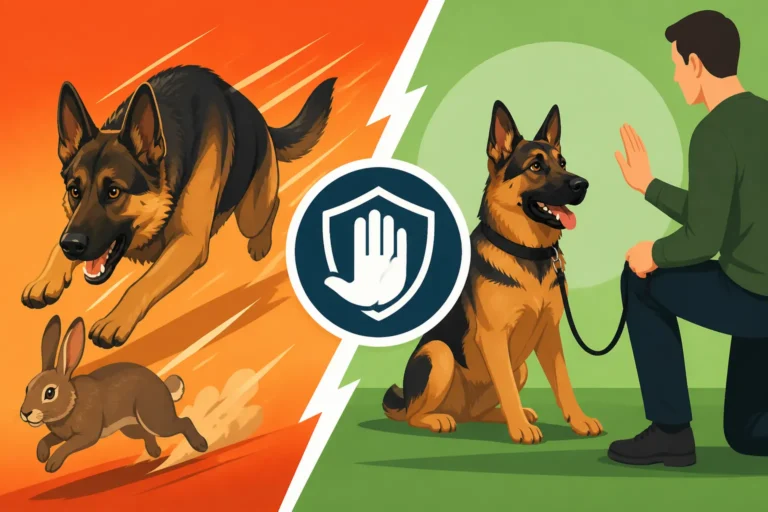
Your German Shepherd isn't trying to be defiant when they ignore your call; they're often just being a German Shepherd. This breed was developed to herd sheep, protect livestock, and serve in demanding roles like police and military work. This means they possess incredible focus, an innate desire to explore, and a powerful sense of smell. When they catch the scent of a rabbit or see a squirrel dart across the park, their instincts kick in, and that little voice calling "COME!" suddenly becomes very, very distant background noise. It's a natural hardwiring, not a personal slight against you.
Think about it from their perspective: they're out in the world, a sensory wonderland of smells, sounds, and sights. A command from you, especially if it's not consistently thrilling or rewarding, can easily be overshadowed by the immediate gratification of chasing a bird or investigating a new scent patch. Their independence means they're capable of making their own choices, and if "exploring" is more rewarding than "coming to you," they'll often choose exploration. This is why building a recall that trumps all other temptations requires a specific, strategic approach, not just repetition.
Common Mistakes Owners Make During Recall Training
Many of us, myself included, have fallen into these traps at some point. It’s easy to do, especially when you’re busy or frustrated. But these common mistakes can severely undermine your German Shepherd's recall and teach them exactly the wrong lessons.
One of the biggest blunders is calling your dog only when you need to end fun. If the only time you call your German Shepherd is to put them on a leash and go home, or to stop them from playing with another dog, they quickly learn that "come" means "fun is over." Why would they want to come to you if it signals the end of their enjoyment? Another frequent error is inconsistency. Using different words ("come," "here," "let's go"), or having various family members use different commands, only confuses your highly intelligent German Shepherd. They thrive on clear, predictable communication.
Perhaps the most damaging mistake is punishing your dog when they do eventually come, especially if it was a slow or reluctant return. If your German Shepherd finally wanders back after a long delay, only to be met with a scolding, a stern tone, or even physical correction, you've just taught them that coming to you is a negative experience. They might associate the command itself with punishment, making them even less likely to respond next time. Recall should always be the most positive interaction they have, regardless of how long it took them to get to you.
The Impact of Distractions
Distractions are the ultimate test of your German Shepherd's recall, and they are usually the primary reason for failure. A quiet backyard is one thing; a bustling park with children, other dogs, cyclists, and tantalizing smells is another entirely. The world is full of novelties that are far more exciting than standing still next to their human.
Consider this scenario: you're at the park, and your German Shepherd, let's call him Rex, is enjoying a good sniff. Suddenly, a group of kids kicks a soccer ball nearby. Rex, being a German Shepherd, has a natural herding instinct and a high play drive. His eyes lock onto the ball, his ears perk up, and his tail starts to wag. You call "Rex, come!" He might hear you, but the visual stimulus of the moving ball and the joyful sounds of the children create a powerful pull. His brain is screaming, "GO PLAY!" while your voice is a faint whisper in comparison.
It’s not just visual or auditory distractions; smells are huge for German Shepherds. A deer scent trail, a discarded hot dog wrapper, or the lingering scent of another dog can be an overwhelming temptation. We often underestimate how powerfully these sensory inputs affect our dogs. For a German Shepherd, ignoring a fresh, exciting scent is like trying to ignore your favorite dessert when it's right in front of you. This is why starting recall training in a low-distraction environment and gradually increasing the difficulty is absolutely crucial for success.
Building the Foundation: Essential Steps for Reliable Recall
Building a rock-solid recall isn't about magic; it's about methodical, consistent training that makes coming to you the most rewarding choice your German Shepherd can make. We start simple and build up from there, step by step.
Starting Indoors with Zero Distractions
This is where the magic begins, in the comfort and predictability of your own home. The goal here is to create an overwhelmingly positive association with your recall command without any competition from the outside world.
Begin by choosing a unique, consistent recall word. "Come" is standard, but you might prefer "here," "touch," or even a specific whistle. Whatever you choose, stick with it. Now, grab some ridiculously high-value treats – not just dry kibble! Think tiny pieces of cooked chicken, cheese, or hot dogs. These are the "jackpots" that will make coming to you an irresistible proposition. You can find a great selection of high-value training treats on Amazon.
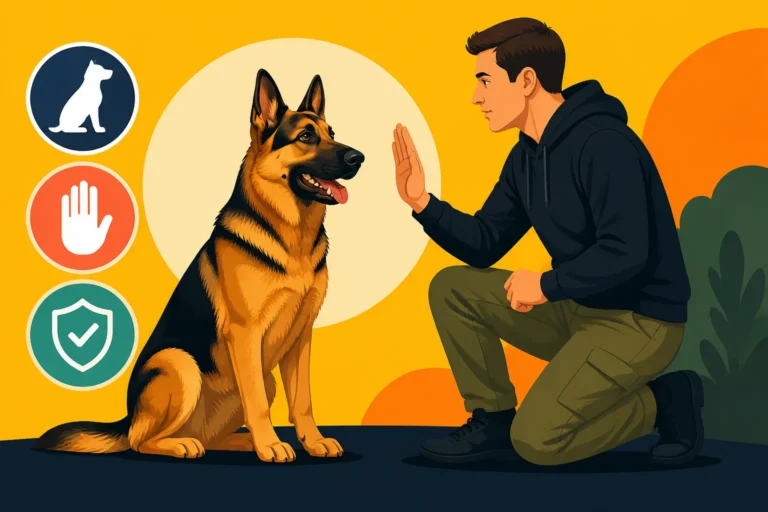
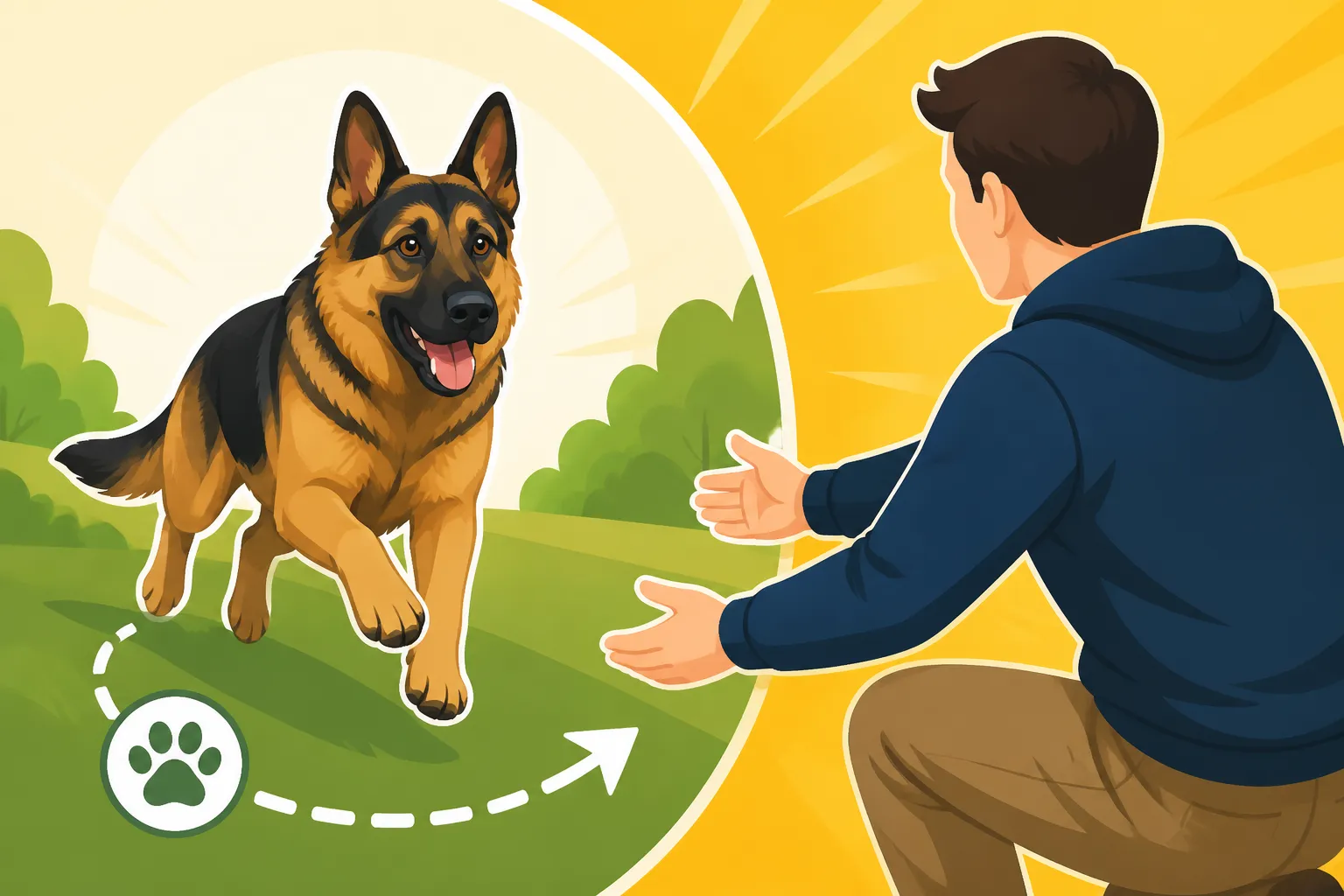
Start in a small, enclosed room with no distractions. Say your German Shepherd's name, then your recall word ("Rex, COME!"), and enthusiastically back away from them. As soon as they take a step towards you, praise them lavishly and give them a jackpot treat. Repeat this many, many times, always making it a fun, joyful experience. Never use a stern voice. The moment they arrive, shower them with praise, affection, and those amazing treats. This isn't just about coming; it's about running to you with excitement. Practice this multiple times a day in short, five-minute sessions. The more positive repetitions, the stronger the association.
Choosing the Right Recall Word and Reward System
The recall word you choose should be distinct and used exclusively for recall. Avoid using it in casual conversation. If you use "come" to invite them onto the couch, and also to call them back from an off-leash adventure, you dilute its meaning. Some trainers advocate for an "emergency recall" word that is only ever used in critical situations and is always followed by the absolute highest value reward possible.
Your reward system needs to be dynamic and exciting. While high-value treats are paramount in the initial stages, don't forget other motivators. Some German Shepherds are incredibly toy-driven. A quick game of tug or fetch after a successful recall can be just as rewarding as a treat. Vary your rewards to keep things interesting. One time it might be chicken, another time a game, sometimes both! The key is to make you the dispenser of all good things.
Remember to deliver the reward immediately upon contact. Delaying the reward even by a few seconds can make it harder for your German Shepherd to connect their action (coming to you) with the positive outcome (the treat or play). Your voice also plays a massive role. A cheerful, excited tone makes coming to you much more appealing than a flat or annoyed tone. If you sound happy, they'll feel happy about coming to you.
The "Ping-Pong" Game and Gradual Introductions
Once your German Shepherd is consistently coming to you indoors, it's time to add a bit more complexity. The "ping-pong" game is excellent for this. You and another person (family member, friend) stand a short distance apart in a low-distraction area, perhaps a fenced yard. Take turns calling your German Shepherd. When one person calls, the other praises and rewards them as they arrive, then the other person calls. This teaches your dog to come when called by anyone and makes the process a continuous, high-energy game.
After mastering the ping-pong game in a secure, distraction-free area, you can slowly introduce mild distractions. This might mean having a toy nearby that they can see but not play with, or practicing when another family member is quietly reading in the room. The key is gradual escalation. Don't jump from your living room to a busy dog park.
A fantastic tool for this stage is a long line. A 30-foot or 50-foot long line, available on Amazon, allows your German Shepherd to have a sense of freedom while still giving you control. Let them wander to the end of the line, then call them. If they hesitate, gently reel them in while continuing your happy recall cue. As soon as they start moving towards you, release tension on the line and praise. This ensures they still get rewarded for choosing to come, even if they needed a little reminder. Never yank them in or use the long line as punishment; it's a safety net and a gentle guide.
Advanced Recall Training: Proofing and Real-World Success
Once you've built a solid foundation, the real work begins: proofing your recall in increasingly challenging environments. This is where your German Shepherd learns that "come" means "come" no matter what exciting thing is happening around them.
Practicing in Varied Environments
Your German Shepherd needs to understand that your recall command is universal, not just something that works in the backyard. This means practicing in a wide array of settings, starting with low-distraction public places and slowly building up.
Begin with a quiet park during off-peak hours, or an empty school field. Always use a long line initially, especially if you're unsure how they'll react. Let your German Shepherd explore on the long line, giving them enough slack to feel some freedom. Every few minutes, call them back, reward them enthusiastically, and then immediately release them to go sniff or explore again. This reinforces the idea that coming to you doesn't mean the fun ends; it just means a quick, rewarding pit stop. Varying locations helps them generalize the command. If you only train at one park, they might only have reliable recall at that park. Make it a point to visit different types of places—empty parking lots, quiet walking trails, even a friend's fenced yard. Each new environment presents unique sights, sounds, and smells, helping to solidify their understanding.
The Importance of a Long Line or Training Leash
A long line is truly your best friend during this phase of training. It’s not just a safety device; it’s an invaluable teaching tool. Without it, you’re either risking your German Shepherd running off or keeping them on a short leash, which defeats the purpose of practicing recall in a freer setting.
I recommend a 20-foot to 50-foot long line made of biothane or nylon. Biothane is great because it doesn't absorb water or odors and is easy to clean, which is a huge plus when training outdoors. Attach it to a well-fitting harness, not directly to their collar, to prevent neck injury if they hit the end of the line abruptly. Allow your German Shepherd to drag the line, giving them the illusion of off-leash freedom. When you call them, if they hesitate, you can gently step on the line or take a few steps to reel them in, providing a subtle, non-punishing reminder that you are serious. As soon as they turn towards you, lighten the pressure and offer enthusiastic praise. This method prevents you from having to chase them (which they might perceive as a fun game!) and keeps both of you safe.
Companies like BAXTER & Bella, known for their comprehensive puppy training programs, also emphasize the use of long lines in their curriculum, understanding their critical role in developing a reliable recall safely and effectively. It’s a tool that bridges the gap between on-leash and off-leash freedom.
Handling Setbacks and Maintaining Consistency
Let's be honest, you're going to have bad days. There will be times when your German Shepherd, despite all your hard work, decides a squirrel is more interesting than your enthusiastic cries. This is where consistency, patience, and a cool head become vital.
If your German Shepherd ignores your recall, do not chase them. Chasing turns it into a game for them, and often they're faster than you are! Instead, calmly walk away from them. Many dogs, especially German Shepherds with their strong bonding instincts, will become concerned when their human leaves and will often follow. When they catch up, calmly re-attach the long line, reward them for returning (even if it was delayed), and go back to a less distracting environment. Never punish a delayed recall; that will only make things worse.
If you encounter repeated failures in a particular environment, it means you've introduced too many distractions too quickly. Scale back. Go to a quieter location or increase the distance from the distraction. Remember, every successful recall builds confidence and strengthens the behavior, while every ignored recall weakens it. Focus on setting your German Shepherd up for success. This might mean starting with a German Shepherd Leash Training: Step-by-Step article to ensure their on-leash behavior is solid before tackling off-leash recall.
Consistency also means everyone in the household uses the same recall command and reward system. If one person lets the dog get away with ignoring the command, it undermines everyone else's efforts. Weekly "recall refreshers" in varied environments, even after your dog has a solid recall, are a great way to maintain their responsiveness.
Emergency Recall: A Separate, Non-Negotiable Command
Beyond your everyday "come," it's highly beneficial to establish an "emergency recall." This is a distinct command, different from your regular recall cue, reserved only for life-threatening situations where you need your German Shepherd to come to you immediately, no questions asked.
The emergency recall should be trained with absolute certainty and the highest possible rewards. It might be a specific whistle, a unique phrase like "Front and Center!", or a series of claps. Whatever you choose, it should never be used casually. Train it in a very controlled environment first, using the most irresistible treats your dog has ever tasted. Practice it rarely, perhaps once a month, ensuring it's always successful and always followed by an epic reward. The idea is that your German Shepherd learns that this specific command means "drop everything, run to my human for the best thing ever," without associating it with the end of fun.
The power of an emergency recall lies in its novelty and its consistent, over-the-top positive reinforcement. It's a safety net for those truly critical moments—when your German Shepherd spots a dangerous animal, is heading towards a busy road, or gets into an unexpected altercation. It’s a command that can literally mean the difference between life and death.
Here's a quick comparison of the two types of recall:
| Feature | Standard Recall ("Come") | Emergency Recall ("Rocket!") |
|---|---|---|
| Purpose | General responsiveness, ending playtime, proximity | Life-saving, immediate response in critical situations |
| Frequency of Use | Regular, daily | Rare, only when absolutely necessary |
| Command | Common word (e.g., "Come", "Here") | Unique word, whistle, or phrase, distinct from other commands |
| Reward | High-value treats, praise, toys, often followed by release | Absolute highest-value treats, prolonged praise, special toys |
| Training | Gradual introduction of distractions, consistent practice | Trained in low distraction, rarely tested in real-life crises |
| Consequence of No Response | Redirect, retry in lower distraction | Immediate physical intervention (long line), re-evaluate training |
Building a reliable recall, both standard and emergency, is one of the most important things you can do for your German Shepherd. It provides them with the freedom to explore safely and gives you the peace of mind knowing they'll always come back to you. Remember that German Shepherd Obedience Training Basics are crucial for building this kind of trust and responsiveness. Consistency, patience, and making yourself the most exciting thing in their world are your keys to success. Also, understanding German Shepherd Behavior Problems and Solutions can often shed light on why certain behaviors, like ignoring recall, might be manifesting. If you have a puppy, check out our German Shepherd Puppy Training Guide for age-appropriate recall exercises. Don't forget that How to Keep a German Shepherd Healthy also includes mental well-being, and a well-trained dog is a happy dog.
Disclaimer
This article is for general informational purposes only and does not constitute professional advice. Laws, prices and regulations vary by location and change over time. Consult a qualified professional for guidance on your specific situation.