German Shepherd Skin Problems and Fixes
It's incredibly frustrating, isn't it, when your magnificent German Shepherd starts itching, licking, or develops a strange rash? You see them uncomfortable, constantly scratching, and you feel helpless, wondering if it's allergies, fleas, or something more serious. Our beloved German Shepherds, with their thick, beautiful double coats, are unfortunately prone to a range of skin issues that can really impact their quality of life. This comprehensive guide is here to walk you through identifying, understanding, and effectively treating the most common skin problems your German Shepherd might face, offering practical fixes and long-term prevention strategies to bring them comfort and relief.
Understanding Common German Shepherd Skin Problems
German Shepherds are undeniably majestic, but their genetics and physical traits, particularly their dense double coat and sometimes sensitive immune systems, can make them more susceptible to certain dermatological challenges. It's not always just a simple itch; often, it's a symptom of a deeper issue that needs careful attention.
Allergic Reactions and Their Triggers
Allergies are, hands down, one of the most frequent culprits behind skin woes in German Shepherds. Just like us, they can react to a whole host of environmental factors, certain foods, or even tiny parasites. The key is understanding that an allergy is an overreaction of the immune system to a normally harmless substance.
When your German Shepherd develops an allergy, their body perceives a particular substance as a threat and launches an immune response. This often manifests as skin irritation, intense itching, and inflammation. Many German Shepherd owners find themselves in a frustrating cycle of trying to pinpoint the exact allergen. Is it the pollen floating in the spring air? A new ingredient in their kibble? Or perhaps something more insidious hiding in their environment? It can truly feel like detective work, and it often requires patience and collaboration with your veterinarian.
- Environmental Allergies (Atopy): These are extremely common in German Shepherds and are often seasonal, much like hay fever in people. Triggers include pollen from trees, grasses, and weeds, as well as dust mites, mold spores, and even certain fabrics or household cleaners. Dogs with atopy tend to itch their paws, ears, armpits, and groin area. You might notice them chewing incessantly on their feet, shaking their heads, or rubbing against furniture. The constant itching can lead to secondary bacterial or yeast infections, making the problem even worse. Living in an area with high allergen counts, like a suburban neighborhood with lots of lawns and gardens, can really exacerbate these issues for sensitive dogs. This is a topic so prevalent that we have an entire discussion on German Shepherd Allergies: Symptoms and Treatment.
- Food Allergies: While less common than environmental allergies, food allergies can still be a significant problem for German Shepherds. Unlike food sensitivities, which cause digestive upset, food allergies trigger an immune response that often affects the skin. Common culprits include proteins like beef, chicken, dairy, wheat, and soy. The symptoms can mirror environmental allergies, presenting as itchy skin, ear infections, and sometimes gastrointestinal issues like vomiting or diarrhea. Identifying a food allergy usually involves an elimination diet, which means feeding a novel protein or hydrolyzed protein diet for several weeks to see if symptoms resolve. It’s a commitment, but often incredibly rewarding if you find the trigger.
- Flea Allergy Dermatitis (FAD): This is perhaps the most common allergy in dogs, including German Shepherds. It's not just about fleas; it's the allergic reaction to flea saliva. A single flea bite can send an allergic German Shepherd into a scratching frenzy for days. The itching is often most severe around the base of the tail, hind legs, and inner thighs. You might notice small red bumps, scabs, and significant hair loss from constant scratching and biting. Even if you don't see fleas, their presence can still trigger a severe reaction in a sensitive dog. Consistent, year-round flea prevention is absolutely critical for dogs prone to FAD, as even a stray flea from the yard can cause misery.
Parasitic Infestations
Beyond allergies, tiny invaders can set up shop on your German Shepherd’s skin, causing immense irritation and a host of skin problems. These external parasites are more than just an annoyance; they can lead to serious skin damage and secondary infections if not addressed promptly.
- Fleas: We just talked about them in the context of allergies, but fleas themselves are also direct causes of skin irritation. These tiny, reddish-brown insects feed on blood and can cause generalized itching, restlessness, and discomfort even in dogs not allergic to their saliva. You might spot them by looking for "flea dirt" (digested blood) on your dog's skin or comb, which looks like tiny black specks that turn reddish-brown when wet. Fleas can quickly multiply in your home, making eradication a multi-step process involving treating both your dog and their environment. Effective flea control products are essential, and we discuss this extensively in German Shepherd Flea and Tick Prevention.
- Ticks: While more known for transmitting diseases, ticks also cause localized skin irritation and can even lead to secondary infections at the bite site. When a tick attaches to your German Shepherd, it burrows its head into the skin to feed. This can cause redness, swelling, and a small lump. If the tick is left for an extended period, the area can become inflamed and itchy. It's crucial to check your German Shepherd thoroughly after walks, especially in wooded or grassy areas, and remove any ticks safely and promptly.
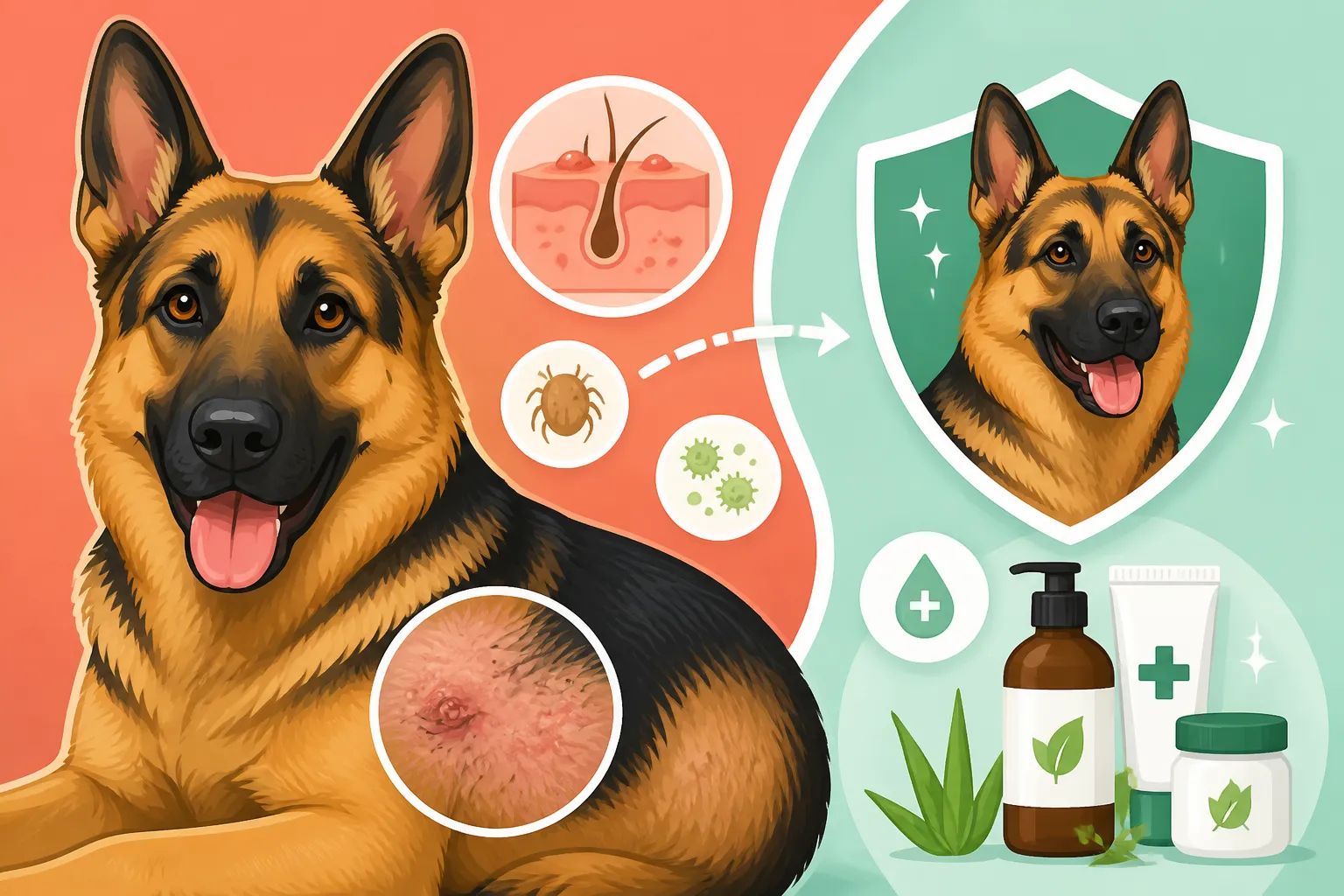
- Mites (Sarcoptic Mange, Demodectic Mange): Mites are microscopic parasites that burrow into the skin or live in hair follicles.
- Sarcoptic Mange (Scabies): This is intensely itchy and highly contagious to other animals and even humans. It causes severe itching, redness, hair loss, and scabs, often starting on the ears, elbows, hocks, and chest, but can spread rapidly. The constant scratching can lead to open sores and secondary infections. It’s a miserable condition for any dog, and German Shepherds are not immune.
- Demodectic Mange (Demodex): This type of mange is usually not itchy unless secondary infections develop. Demodex mites are normally present on most dogs' skin in small numbers, but an immature or immunocompromised dog might experience an overgrowth. It typically appears as patches of hair loss (alopecia), often around the face, eyes, and forelegs. While not always itchy, these bald patches can be quite noticeable and indicate a compromised immune system.
Bacterial and Fungal Infections
Once the skin barrier is compromised by allergies, parasites, or trauma, it becomes a prime target for opportunistic bacteria and fungi. These secondary infections often exacerbate the itching and discomfort, requiring specific treatments to clear them up.
- Bacterial Infections (Pyoderma): Pyoderma literally means "pus in the skin." These infections are almost always secondary to another underlying issue, like allergies, fleas, or hormonal imbalances, which damage the skin's natural protective barrier. Common signs include redness, pustules (pimples), crusts, scabs, hair loss, and a foul odor. Hot spots are a specific, rapidly developing form of acute moist pyoderma, often triggered by excessive licking or chewing in one area. The infection can be superficial, affecting just the surface layers of the skin, or deep, involving hair follicles and deeper tissues, which can be much more serious and painful. Treating the underlying cause is essential, alongside antibiotics for the bacterial infection.
- Fungal Infections (Yeast and Ringworm):
- Yeast Infections (Malassezia Dermatitis): Malassezia pachydermatis is a type of yeast that naturally lives on a dog's skin. However, when the skin's environment changes (e.g., due to allergies, moisture, or immune suppression), the yeast can overgrow, leading to an infection. It commonly affects the ears, paws, skin folds, and armpits. Symptoms include intense itching, redness, greasy skin, and a distinct musty or "yeasty" odor, often likened to corn chips. The skin can also become thickened and hyperpigmented (darkened) over time.
- Ringworm (Dermatophytosis): Despite its name, ringworm is a fungal infection, not a worm. It's highly contagious and can spread to other animals and humans. It typically appears as circular patches of hair loss with red, scaly, and sometimes crusty borders. It often starts on the head, ears, paws, or front legs. Young puppies or immunocompromised German Shepherds are particularly vulnerable. Diagnosis often requires a fungal culture, and treatment can involve topical antifungals, oral medications, and environmental decontamination.
Recognizing the Signs and Symptoms
Catching skin problems early in your German Shepherd can make a world of difference in treatment success and your dog's comfort. They can't tell us what hurts or itches, so it's up to us to be vigilant and understand their non-verbal cues. Observing both visual changes on their skin and subtle shifts in their behavior are crucial.
Visual Cues on the Skin and Coat
Regular grooming and petting sessions are invaluable opportunities to perform a quick skin check on your German Shepherd. Their thick double coat can hide a lot, so you need to be thorough, parting the fur to get a good look at the skin underneath.
- Redness and Rashes: One of the most common and obvious signs of irritation is redness or erythema on the skin. This can manifest as diffuse redness over large areas, particularly the belly, armpits, and groin, or as distinct rashes. Rashes might appear as small red bumps (papules), pus-filled bumps (pustules), or hives (urticaria). These often indicate inflammation, infection, or an allergic reaction. For instance, a German Shepherd suffering from environmental allergies will often have red, inflamed skin, especially between their paw pads or in their ear canals.
- Hair Loss (Alopecia): Patchy or widespread hair loss is a significant indicator of a skin issue. It can occur due to excessive scratching or licking, direct damage to hair follicles from parasites or infections, or underlying hormonal imbalances. If you notice thinning patches, bald spots, or areas where the hair seems brittle and easily pulls out, it's a definite red flag. The pattern of hair loss can sometimes give clues to the cause; for example, hair loss around the tail base often points to fleas, while symmetrical hair loss might suggest hormonal issues.
- Scales, Crusts, and Scabs:
- Scales: These are flakes of dead skin, similar to dandruff, and can indicate dry skin, seborrhea, or a skin infection. You might see them clinging to the hair shafts or flaking off onto their bedding.
- Crusts: These are dried bodily fluids (serum, pus, blood) mixed with dead skin cells. Crusts can form over areas of inflammation, infection, or where your dog has been scratching excessively, breaking the skin.
- Scabs: These are formed when blood or serum dries over a wound or irritated area, protecting the underlying skin as it heals. Excessive scabbing often indicates significant skin trauma or infection.
- Hot Spots (Acute Moist Dermatitis): These are perhaps one of the most alarming and rapidly developing skin issues. A hot spot appears as a red, raw, oozing, painful lesion that seems to pop up overnight. They often occur when a German Shepherd constantly licks, chews, or scratches a localized area, initiating a cycle of irritation, inflammation, and bacterial infection. They are incredibly painful and tend to grow quickly. For a detailed look at treating these painful lesions, check out German Shepherd Hot Spots: Treatment at Home.
- Changes in Skin Pigmentation and Thickness: Over time, chronic inflammation, itching, or infection can lead to the skin becoming thickened (lichenification) and darkened (hyperpigmentation), taking on a leathery appearance. This is often seen in areas of persistent irritation, like the belly or inner thighs, and is a sign of long-standing skin issues.
Behavioral Indicators of Discomfort
Your German Shepherd's behavior is often the first and most obvious clue that something is amiss with their skin. They might not be able to verbalize their discomfort, but their actions speak volumes.
- Excessive Scratching, Licking, and Biting: This is the quintessential sign of itchy skin. While some scratching is normal, constant, prolonged, or aggressive scratching, especially to the point of breaking the skin or causing bald patches, is a clear indication of a problem. Similarly, persistent licking of paws, legs, or any specific body part, or biting at their fur, suggests irritation. This isn't just a nervous habit; it's a desperate attempt to alleviate discomfort.
- Rubbing and Scooting: If your German Shepherd is rubbing their body against furniture, carpets, or walls, or scooting their rear end along the ground, they're likely trying to relieve an itch. Rubbing can indicate generalized itchiness, while scooting is often a sign of anal gland issues or irritation around the tail or hindquarters, which can also be linked to skin allergies or flea bites.
- Restlessness and Agitation: A dog suffering from severe itchiness or pain will often be restless, unable to settle down, and constantly shifting. They might pace, whine, or seem agitated because the discomfort is persistent and overwhelming. You might notice changes in their sleep patterns, with frequent waking due to the itching.
- Self-Mutilation: In severe cases, particularly with intense pain or itchiness, German Shepherds can inflict significant damage to their skin through excessive chewing, licking, and scratching. This can lead to open wounds, secondary infections, and can quickly escalate the problem into an emergency situation. Witnessing your dog cause themselves harm is distressing and indicates an urgent need for veterinary intervention.
Diagnosis: Getting to the Root Cause
When your German Shepherd is suffering from a skin problem, the natural instinct is to try and fix it immediately. However, self-diagnosing can be a slippery slope. Many skin conditions share similar symptoms but require vastly different treatments. That's why professional veterinary diagnosis is not just recommended, it's essential.
The Importance of Veterinary Consultation
You might be tempted to try an over-the-counter cream or a home remedy, especially if you've dealt with minor skin irritations before. However, the complexity of canine dermatology, particularly with breeds like German Shepherds, means that what looks like one thing might actually be another.
- Avoiding Misdiagnosis and Ineffective Treatments: Without a proper diagnosis, you could be treating the wrong problem, prolonging your German Shepherd's discomfort, and potentially making the condition worse. For example, using a steroid cream on a fungal infection can actually suppress the immune system and allow the fungus to thrive. Similarly, if your German Shepherd has a bacterial infection secondary to allergies, simply giving antibiotics without addressing the underlying allergy will only provide temporary relief. A veterinarian has the knowledge and tools to differentiate between similar-looking conditions.
- Identifying Underlying Systemic Issues: Skin problems are often just the tip of the iceberg. They can be outward signs of deeper, systemic health issues such as thyroid imbalances, Cushing's disease, or autoimmune disorders. Your vet can perform a comprehensive examination and necessary tests to rule out these possibilities. Missing an underlying condition means the skin problems will likely recur or worsen over time.
- Cost-Effectiveness in the Long Run: While vet visits and diagnostic tests might seem costly upfront, they can save you money in the long run. Repeatedly buying ineffective over-the-counter products, or dealing with worsening conditions that require more aggressive and expensive treatments, quickly adds up. A correct diagnosis leads to a targeted, effective treatment plan, getting your German Shepherd back to health faster and often more affordably. This is also where having robust pet insurance like Healthy Paws can really make a difference. Many owners worry about the cost of multiple vet visits and diagnostic tests, but with a good insurance plan, you can focus on getting the best care for your furry family member without the added financial stress. They cover accidents, illnesses, cancer, emergency care, and chronic conditions, which unfortunately many German Shepherd skin issues can become.
Diagnostic Procedures and Tests
Once you're at the vet, they will likely perform a series of steps to narrow down the possible causes of your German Shepherd's skin issues. This isn't just guesswork; it's a systematic approach to identifying the specific culprit.
- Physical Examination and History: The vet will start with a thorough physical exam, checking the entire body for lesions, hair loss, inflammation, and parasites. They'll also ask you detailed questions about your German Shepherd's diet, environment, lifestyle, duration of symptoms, previous treatments, and any changes you've observed. This "history" is often one of the most valuable diagnostic tools.
- Skin Scrapes and Hair Plucks: These simple, non-invasive tests are crucial for identifying mites. A small blade is used to gently scrape the surface of the skin (for sarcoptic mites) or deeper into hair follicles (for demodectic mites). Hair samples might also be plucked. These samples are then examined under a microscope for the presence of mites or their eggs.
- Cytology (Tape Prep or Impression Smear): If bacterial or yeast infections are suspected, the vet will perform cytology. This involves pressing a piece of clear tape or a glass slide against the affected skin or a lesion, then staining and examining it under a microscope. This allows them to identify the type of bacteria (e.g., cocci, rods) or yeast (e.g., Malassezia) present, guiding the choice of appropriate medication.
- Fungal Culture (for Ringworm): If ringworm is suspected, hair and skin samples are collected and placed on a special culture medium. This can take several days to weeks to grow, but it provides a definitive diagnosis for fungal infections. A Wood's lamp (UV light) can sometimes make certain ringworm species glow, but it's not foolproof, so a culture is usually needed.
- Allergy Testing: If allergies are strongly suspected, especially after ruling out parasites and infections, your vet might recommend allergy testing.
- Blood Tests (Serology): These tests measure antibodies (IgE) in your dog's blood that are specific to various environmental allergens. While convenient, their accuracy can vary.
- Intradermal Skin Testing: This is often considered the "gold standard" for environmental allergies. Small amounts of common allergens are injected just under the skin, and the vet observes for a localized reaction. This needs to be performed by a veterinary dermatologist.
- Elimination Diet Trials: For suspected food allergies, a strict elimination diet is the most reliable diagnostic method. Your German Shepherd will be fed a novel protein (one they've never eaten before, like duck or venison) and a single carbohydrate source, or a hydrolyzed protein diet (where proteins are broken down so the immune system doesn't recognize them), for 8-12 weeks. During this time, absolutely no other treats, flavored medications, or human food are allowed. If symptoms resolve on the special diet and then recur when the old food is reintroduced, a food allergy is confirmed. This process can be challenging, but the results are invaluable for improving your dog's long-term health.
Effective Treatment Strategies for German Shepherd Skin Issues
Once you've nailed down the diagnosis, the good news is that most German Shepherd skin problems are treatable. The approach will vary significantly depending on the underlying cause, but a combination of medical, dietary, and environmental strategies is often necessary to provide lasting relief.
Medical and Topical Interventions
Veterinarians have a powerful arsenal of medications and topical treatments to combat skin infections, reduce inflammation, and alleviate itching. It's crucial to follow their instructions precisely, even if your dog starts feeling better, to prevent recurrence or resistance.
- Antibiotics: For bacterial skin infections (pyoderma), antibiotics are a primary treatment. These can be administered orally or sometimes topically, depending on the severity and depth of the infection. Common oral antibiotics include cephalexin, clindamycin, and amoxicillin-clavulanate. Topical antibiotics might come in creams, ointments, or medicated shampoos for localized issues. It's vital to complete the full course of antibiotics, even if your German Shepherd's skin looks better, to ensure the infection is completely cleared and to prevent antibiotic resistance.
- Antifungals: If yeast or ringworm infections are diagnosed, antifungal medications will be prescribed. Oral antifungals like ketoconazole, fluconazole, or itraconazole are often used for widespread or severe infections. Topical antifungal creams, sprays, or medicated shampoos containing ingredients like miconazole or chlorhexidine are excellent for localized fungal issues. For ringworm, environmental decontamination is also essential, as spores can linger and cause reinfection.
- Corticosteroids (Steroids): These powerful anti-inflammatory medications are often used to quickly reduce severe itching and inflammation associated with allergic reactions. They can be given orally (e.g., prednisone) or topically (e.g., hydrocortisone sprays or creams). While effective for short-term relief, long-term or high-dose steroid use can have side effects, so vets typically aim to find the lowest effective dose or alternative treatments. They are usually a temporary measure to break the itch-scratch cycle while addressing the root cause.
- Antihistamines: For milder allergic itching, your vet might suggest over-the-counter antihistamines like diphenhydramine (Benadryl) or cetirizine (Zyrtec). However, dogs metabolize these differently than humans, and their effectiveness can vary significantly. Always consult your vet for appropriate dosing and to ensure they won't interact with other medications.
- Immunomodulatory Drugs: For chronic allergic conditions that don't respond well to traditional treatments or where steroids aren't ideal, newer medications like oclacitinib (Apoquel) or cyclosporine (Atopica) can be prescribed. These drugs specifically target the pathways that cause itching and inflammation in allergic dogs. They can be life-changing for dogs with severe atopy, providing long-term relief with fewer side effects than long-term steroid use.
- Medicated Shampoos, Conditioners, and Sprays: Therapeutic bathing is a cornerstone of skin problem management. Shampoos can contain antimicrobial agents (chlorhexidine, benzoyl peroxide), antifungal agents (miconazole, ketoconazole), or anti-itch ingredients (oatmeal, pramoxine). Regular medicated baths can remove allergens, reduce bacterial/yeast populations, and soothe irritated skin. Sprays and mousses can provide targeted relief between baths or for localized areas. For German Shepherds, whose coats can be challenging, proper bathing techniques are crucial, as discussed in How Often to Bathe a German Shepherd.
When it comes to the cost of these medications, especially for chronic conditions, having pet insurance like Healthy Paws can alleviate a lot of financial pressure. Their comprehensive plans often cover prescribed medications for eligible conditions, allowing you to prioritize your German Shepherd's health without constantly worrying about the vet bill.
Dietary Management and Supplements
What goes into your German Shepherd's bowl can have a profound impact on their skin health. Diet plays a critical role, particularly when dealing with allergies, but also in generally supporting a healthy skin barrier.
- Novel Protein Diets: If a food allergy is suspected, an elimination diet using a "novel protein" source (one your German Shepherd has never eaten before, like duck, rabbit, or venison) is essential. The idea is to feed a protein that your dog's immune system hasn't been exposed to and therefore hasn't developed an allergy against. These diets are strictly formulated and must be fed exclusively for an extended period to assess their effectiveness.
- Hydrolyzed Protein Diets: Another option for food allergies is a hydrolyzed protein diet. In these diets, the protein molecules are broken down into such small components that the immune system doesn't recognize them as allergens. This can be a highly effective way to manage food allergies without needing to find an obscure protein source. These therapeutic diets are typically prescription-only and are formulated to be complete and balanced. We delve into choosing the right nutrition in articles like Best Diet for a German Shepherd with Allergies.
- Omega-3 Fatty Acids: These essential fatty acids, particularly EPA and DHA found in fish oil, are powerful natural anti-inflammatories. Supplementing with high-quality omega-3s can help reduce skin inflammation, improve coat quality, and strengthen the skin barrier. They can be particularly beneficial for German Shepherds suffering from environmental allergies, as they can help reduce the severity of allergic reactions over time. Always choose a supplement specifically formulated for dogs and consult your vet for the correct dosage.
- Probiotics: A healthy gut microbiome is increasingly recognized for its connection to overall immune health, which in turn impacts skin health. Probiotic supplements can help maintain a balanced gut flora, potentially reducing systemic inflammation and supporting the immune system, which may benefit dogs with allergic skin conditions.
- Other Skin-Supporting Supplements: Some German Shepherds may benefit from supplements containing ingredients like ceramides, essential fatty acids (linoleic acid), and certain vitamins (e.g., Vitamin E) that help strengthen the skin barrier function. A strong skin barrier is the first line of defense against allergens and pathogens. While not a cure, these can be valuable additions to a comprehensive treatment plan, often alongside supplements recommended for joint health like those found in German Shepherd Joint Health Supplements which sometimes contain ingredients beneficial for skin.
Environmental Control and Hygiene
Managing your German Shepherd's environment and maintaining good hygiene are critical, especially for preventing and controlling allergic skin conditions and parasitic infestations. You can't control everything, but you can certainly minimize exposure to known triggers.
- Regular Bathing: Frequent bathing with appropriate shampoos can be immensely helpful for German Shepherds with skin issues. For environmental allergies, bathing helps to wash away pollen, dust mites, and other allergens that accumulate on their coat, reducing their exposure and alleviating itching. For infections, medicated shampoos are designed to kill bacteria and yeast, while soothing inflamed skin. Always use dog-specific shampoos, as human products can disrupt their skin's pH balance. After bathing, ensure your German Shepherd's thick coat is thoroughly dried to prevent moisture-related skin issues. Proper bathing is part of a larger grooming routine, which we cover in detail in How to Groom a German Shepherd.
- Strict Flea and Tick Control: This is non-negotiable for all German Shepherds, but especially for those prone to skin problems or flea allergy dermatitis. Use veterinary-recommended year-round parasite prevention. This can include oral medications, topical treatments, or collars. Consistent prevention breaks the flea life cycle, protecting your dog from bites and preventing infestations in your home.
- Allergen Reduction in the Home: For German Shepherds with environmental allergies, making some changes around the house can provide significant relief.
- Vacuuming and Cleaning: Regularly vacuum carpets, upholstery, and dog beds with a HEPA filter vacuum to remove dust mites, dander, and pollen. Wash your German Shepherd's bedding weekly in hot water.
- Air Filters: Use high-efficiency particulate air (HEPA) filters in your home's HVAC system or standalone air purifiers to reduce airborne allergens.
- Limiting Outdoor Exposure: During peak pollen seasons, try to limit your German Shepherd's time outdoors, especially in grassy or heavily vegetated areas. Wipe their paws and coat with a damp cloth or hypoallergenic wipe after outdoor excursions to remove clinging allergens.
- Dust Mite Control: Reduce dust-collecting items like heavy curtains and excessive throw rugs. Use dust mite covers on human bedding if your dog sleeps with you.
- Managing Humidity: In some environments, too much humidity can encourage yeast growth, while too little can lead to dry, flaky skin. A humidifier or dehumidifier can help maintain optimal indoor humidity levels for your dog's skin health.
Long-Term Prevention and Maintenance
Once your German Shepherd's skin problem is under control, the focus shifts to preventing recurrence and maintaining their skin health over the long haul. This proactive approach is key, especially for breeds predisposed to chronic conditions.
Proactive Care for Skin Health
Prevention is always better than cure, especially when it comes to the recurring nature of many German Shepherd skin issues. Establishing a consistent routine of preventative care can significantly reduce the likelihood of flare-ups and keep their skin and coat in top condition.
- Consistent Grooming Routine: A regular grooming schedule is essential for German Shepherds. Their dense double coat requires consistent brushing, at least 2-3 times a week, and daily during shedding season. This helps remove loose hair, dander, dirt, and potential allergens, and it distributes natural skin oils, promoting a healthy coat. Regular brushing also allows you to visually inspect their skin for any early signs of trouble. This kind of hands-on care is integral to German Shepherd Coat and Skin Care. Don't forget nail trims and ear cleaning as part of this routine!
- Regular Veterinary Check-ups: Even if your German Shepherd isn't showing obvious signs of skin problems, routine veterinary check-ups (at least once a year, or twice for senior dogs) are vital. Your vet can catch subtle changes, perform preventative screenings, and discuss any emerging concerns. For dogs with a history of skin issues, your vet might recommend more frequent check-ins, especially during challenging seasons or if they are on long-term medication. These visits allow for proactive adjustments to their care plan before minor issues escalate into major problems.
- Appropriate Nutrition and Hydration: A high-quality, balanced diet provides the essential nutrients needed for healthy skin and coat. Look for dog foods that list real meat as the first ingredient and contain beneficial fats like omega-3 and omega-6 fatty acids. Ensuring your German Shepherd has constant access to fresh, clean water is also crucial for overall skin hydration and health. A well-nourished and hydrated body is better equipped to maintain a strong skin barrier and a robust immune system.
- Parasite Prevention Year-Round: As discussed, strict, year-round parasite prevention is non-negotiable. Don't stop flea and tick medications just because it's winter or you haven't seen any bugs. Many parasites can survive in dormant stages or thrive indoors, making consistent prevention paramount.
- Stress Management: Believe it or not, stress can impact a dog's immune system and exacerbate skin conditions. Provide a stable, enriching environment, consistent routines, and plenty of exercise and mental stimulation to help your German Shepherd manage stress. A calm, happy dog is generally a healthier dog.
Managing Chronic Conditions
For some German Shepherds, skin problems, particularly allergies, can become a chronic, lifelong challenge. In these cases, the goal shifts from curing to effectively managing the condition to ensure your dog lives a comfortable, high-quality life. This often involves a multi-modal approach and a strong partnership with your veterinary team.
- Customized Allergy Management Plans: If your German Shepherd has chronic environmental allergies (atopy), your vet will work with you to develop a tailored management plan. This might include:
- Allergen-Specific Immunotherapy (ASIT): After allergy testing, a custom "allergy shot" or oral drops can be formulated for your dog, containing tiny, increasing doses of the specific allergens they react to. Over time, this aims to desensitize their immune system, reducing the severity of their allergic reactions. It's a long-term commitment (often 6-12 months before significant improvement is seen) but can be highly effective.
- Long-Term Medications: Medications like Apoquel or Cytopoint injections can be used safely and effectively long-term to control itching and inflammation with minimal side effects, offering significant relief for chronically itchy dogs.
- Proactive Topical Therapies: Regular use of hypoallergenic or medicated shampoos, conditioners, and topical sprays can help maintain skin health and reduce allergen load even when symptoms are not flaring.
- Consistent Monitoring and Adjustments: Chronic skin conditions require ongoing monitoring. This means you need to be observant of any changes in your German Shepherd's skin or behavior and communicate regularly with your vet. Treatment plans often need to be adjusted based on seasonal changes, disease progression, or the emergence of new symptoms. What works perfectly one month might need tweaking the next. This flexible approach ensures your German Shepherd always receives the most appropriate care.
- Dietary Adherence for Food Allergies: If a food allergy has been identified, strict adherence to the prescribed novel protein or hydrolyzed protein diet is absolutely critical for long-term management. Even tiny amounts of the allergen can trigger a flare-up. This means being diligent about treats, chews, and ensuring nobody else in the household (or visitors) gives your German Shepherd unauthorized food items.
- Considering Pet Insurance for Chronic Care: Managing chronic conditions can be an ongoing financial commitment. Regular vet visits, medications, specialized foods, and potential immunotherapy can add up quickly. This is where pet insurance like Healthy Paws can be a real lifeline. They offer coverage for chronic conditions, helping to ease the financial burden of continuous care, allowing you to focus on your German Shepherd's comfort and well-being without making difficult choices based on cost. For more general advice on maintaining overall health, our guide on How to Keep a German Shepherd Healthy offers a broader perspective.
When to Seek Emergency Vet Care for Skin Problems
While many skin issues in German Shepherds can be managed with routine veterinary care, there are specific situations where a skin problem can escalate rapidly and require immediate emergency attention. Knowing when to make that urgent call to your vet can be life-saving.
Critical Symptoms That Require Immediate Attention
Sometimes, a skin issue is more than just an uncomfortable itch. It can be a sign of a serious, rapidly progressing problem that could indicate systemic illness or profound distress. Don't hesitate if you observe these critical symptoms.
- Severe Swelling, Especially of the Face or Neck: Sudden, pronounced swelling around the face, muzzle, or neck can indicate a severe allergic reaction (anaphylaxis) or an acute inflammatory response. This can quickly compromise breathing, making it a medical emergency. Swelling often accompanies hives or rapid onset redness.
- Rapidly Spreading or Deep, Painful Lesions: If a skin lesion, rash, or "hot spot" appears suddenly and grows at an alarming rate, or if it's exceptionally deep, oozing, and clearly causing your German Shepherd extreme pain, it warrants immediate veterinary assessment. Rapidly progressing infections can quickly become systemic and lead to sepsis if not treated.
- Signs of Systemic Illness Accompanying Skin Issues: A skin problem combined with other concerning symptoms means your dog isn't just dealing with a localized irritation. Look for:
- Lethargy or extreme weakness: Your German Shepherd is unusually tired, sluggish, and not interested in their usual activities.
- Loss of appetite or vomiting/diarrhea: Digestive upset often accompanies systemic illness.
- Fever: Your dog feels unusually hot to the touch, especially their ears and groin, or shivers.
- Difficulty breathing: Labored breathing, coughing, or gasping.
- Collapse or disorientation: These are clear signs of a severe medical crisis.
Any of these accompanying a skin issue elevates it to an emergency.
- Non-Stop, Inconsolable Itching or Self-Mutilation: While persistent itching is a hallmark of skin problems, if your German Shepherd is literally tearing at their skin, unable to stop, and causing severe trauma, it's an emergency. This level of discomfort is unbearable and needs immediate medical intervention to break the cycle and provide relief, often requiring stronger medications than routine cases.
Preparing for a Vet Emergency
If you find yourself in an emergency situation, being prepared can help you and your German Shepherd get the most effective care quickly. Every minute counts.
- Call Ahead to the Emergency Clinic: Always call your regular vet or the nearest emergency veterinary clinic before you head in. This allows them to prepare for your arrival, ensuring staff and equipment are ready. Describe your German Shepherd's symptoms clearly and concisely so they can triage the situation.
- Gather Relevant Information: Even in a rush, try to bring any relevant medical records, a list of current medications (including dosages), and notes on when symptoms started and what you've observed. This information is invaluable to the vet, especially if it's an emergency clinic that doesn't have your German Shepherd's full medical history.
- Keep Your Dog Calm and Safe: Your German Shepherd will likely be stressed and in pain. Handle them gently but securely. If they are prone to biting when in pain, consider a muzzle for your safety and the vet staff's. Drive carefully but quickly. Having a well-stocked pet first-aid kit in your car is also a good practice for general emergencies.
- Understand Potential Costs: Emergency vet care can be expensive, as it often involves after-hours services, advanced diagnostics, and critical care. This is another area where Healthy Paws pet insurance can be an immense relief. Knowing that a significant portion of your emergency vet bills could be covered allows you to focus solely on your German Shepherd's recovery without added financial strain. We have a deeper discussion about the annual costs associated with German Shepherd care, including emergencies, in German Shepherd Vet Costs Per Year.
Common German Shepherd Skin Conditions at a Glance
| Condition | Common Symptoms | Key Characteristics | Initial Actions |
|---|---|---|---|
| Environmental Allergies | Itching (paws, ears, belly), redness, ear infections, chewing at feet, hot spots. | Seasonal or year-round; immune reaction to pollen, dust mites, mold. | Vet visit for diagnosis; anti-itch meds, medicated baths; environmental control. |
| Food Allergies | Itching (often widespread), recurrent ear infections, gastrointestinal upset. | Immune reaction to food proteins; requires elimination diet for diagnosis. | Vet visit; strict elimination diet trial with novel or hydrolyzed protein. |
| Flea Allergy Dermatitis | Intense itching, redness, scabs at tail base, hindquarters; flea dirt visible. | Allergic reaction to flea saliva; even a few bites cause severe reaction. | Vet visit; year-round prescription flea prevention; treat home environment. |
| Bacterial Infection | Redness, pustules, crusts, scabs, foul odor, hair loss, hot spots. | Secondary to underlying issue (allergies, trauma); can be superficial or deep. | Vet visit for diagnosis (cytology); antibiotics (oral/topical), medicated shampoos. |
| Yeast Infection | Itching, greasy skin, musty/yeasty odor, redness, thickened/darkened skin. | Overgrowth of naturally occurring yeast; often secondary to allergies. | Vet visit for diagnosis (cytology); antifungals (oral/topical), medicated shampoos. |
| Sarcoptic Mange | Extreme, relentless itching, redness, scabs, hair loss (ears, elbows, hocks). | Highly contagious mites burrow in skin; very itchy. | Vet visit for diagnosis (skin scrape); prescription miticides. |
| Demodectic Mange | Patches of hair loss (face, eyes, legs), mild/no itch unless secondary infection. | Mites live in hair follicles; usually due to compromised immune system; not contagious. | Vet visit for diagnosis (skin scrape); prescription miticides; address underlying health. |
| Hot Spots | Rapidly appearing red, raw, oozing, painful lesions; localized hair loss. | Acute moist dermatitis; caused by excessive licking/chewing, often from initial itch. | Immediate vet visit; clip hair, clean, dry; topical/oral antibiotics, anti-inflammatories, Elizabethan collar. |
Disclaimer
The information provided in this article is for general informational purposes only and is not a substitute for professional veterinary advice, diagnosis, or treatment. Always seek the advice of your qualified veterinarian with any questions you may have regarding a medical condition or treatment plan for your German Shepherd. Never disregard professional veterinary advice or delay in seeking it because of something you have read here.