German Shepherd Obedience Training: Step-by-Step
It's no secret that German Shepherds are brilliant, athletic, and fiercely loyal dogs. But let's be honest, that sharp intelligence and boundless energy can feel like a double-edged sword when you're trying to establish some manners at home. Many German Shepherd owners find themselves battling everything from leash pulling and exuberant jumping to selective hearing when called. This guide is here to walk you through a step-by-step approach to effective obedience training, helping you channel that incredible potential into a well-behaved, joyful companion.
Laying the Groundwork for German Shepherd Obedience
Before we even dive into specific commands, it's crucial to understand the unique characteristics that make German Shepherds who they are. They're not just any dog; they're a breed known for their working drive, intelligence, and a strong desire to have a job. Ignoring these foundational aspects means you're swimming upstream from the start.
Understanding Your German Shepherd's Mindset
German Shepherds thrive on purpose and structure. They were originally bred for herding and protection, which means they come pre-wired with instincts that drive them to observe, act, and often, take charge. This isn't stubbornness; it's just their nature. They want to please, but they also need clear direction and a confident leader. If you're inconsistent, they'll often step up to fill the leadership void, which can lead to unwanted behaviors. Think of your German Shepherd as a highly capable employee who needs a clear job description and consistent management. Without it, they might start making up their own rules, and those rules might not align with a peaceful household. Understanding their natural prey drive and protective instincts is also key; these aren't flaws, but traits you can learn to manage and even leverage in training. For more insights into their inherent qualities, you might find our article on Understanding German Shepherd Behavior helpful.
Consistency and Patience are Key
I cannot stress this enough: consistency is the bedrock of all successful German Shepherd training. Imagine if your boss changed the rules for your job every other day – you'd be confused, frustrated, and probably less effective. It's the same for your dog. Every member of the household needs to be on the same page regarding commands, expectations, and consequences. If "sit" means one thing to you but another to your partner, your dog will struggle to understand what's being asked. This applies to rules, too. Is jumping on the couch allowed or not? Is begging at the dinner table okay some nights but not others? Your German Shepherd thrives on predictability.
Patience goes hand-in-hand with consistency. German Shepherds are smart, yes, but they're not robots. They won't learn a new command perfectly in one session. There will be frustrating days, regressions, and moments where you feel like you're getting nowhere. Take a deep breath. Remember that your dog is trying their best, and sometimes they just need more time, a different approach, or a simpler breakdown of the task. Keep sessions short, fun, and positive to avoid burnout for both of you.
The Power of Positive Reinforcement
Gone are the days of harsh corrections and dominance theory. Modern, science-based training overwhelmingly supports positive reinforcement, and for a powerful, intelligent breed like the German Shepherd, it's incredibly effective. Positive reinforcement means rewarding desired behaviors, making your dog more likely to repeat them. This could be high-value treats, a favorite toy, enthusiastic praise, or even a quick game of fetch. The key is to find what motivates your individual dog and deliver it immediately after they perform the correct action.
For example, if you're teaching "sit," the moment your dog's rear touches the floor, a treat appears, coupled with a happy "Yes!" or "Good sit!" This creates a clear association: "I sit, I get something awesome!" This method builds trust, strengthens your bond, and makes training a joyful experience, not a chore. You'll likely see faster and more reliable results than with punitive methods, which can often lead to fear, anxiety, and a damaged relationship with your dog. You can find some fantastic training aids, including clickers and various high-value treats, easily on platforms like Amazon.
Essential Basic Commands: A Step-by-Step Guide
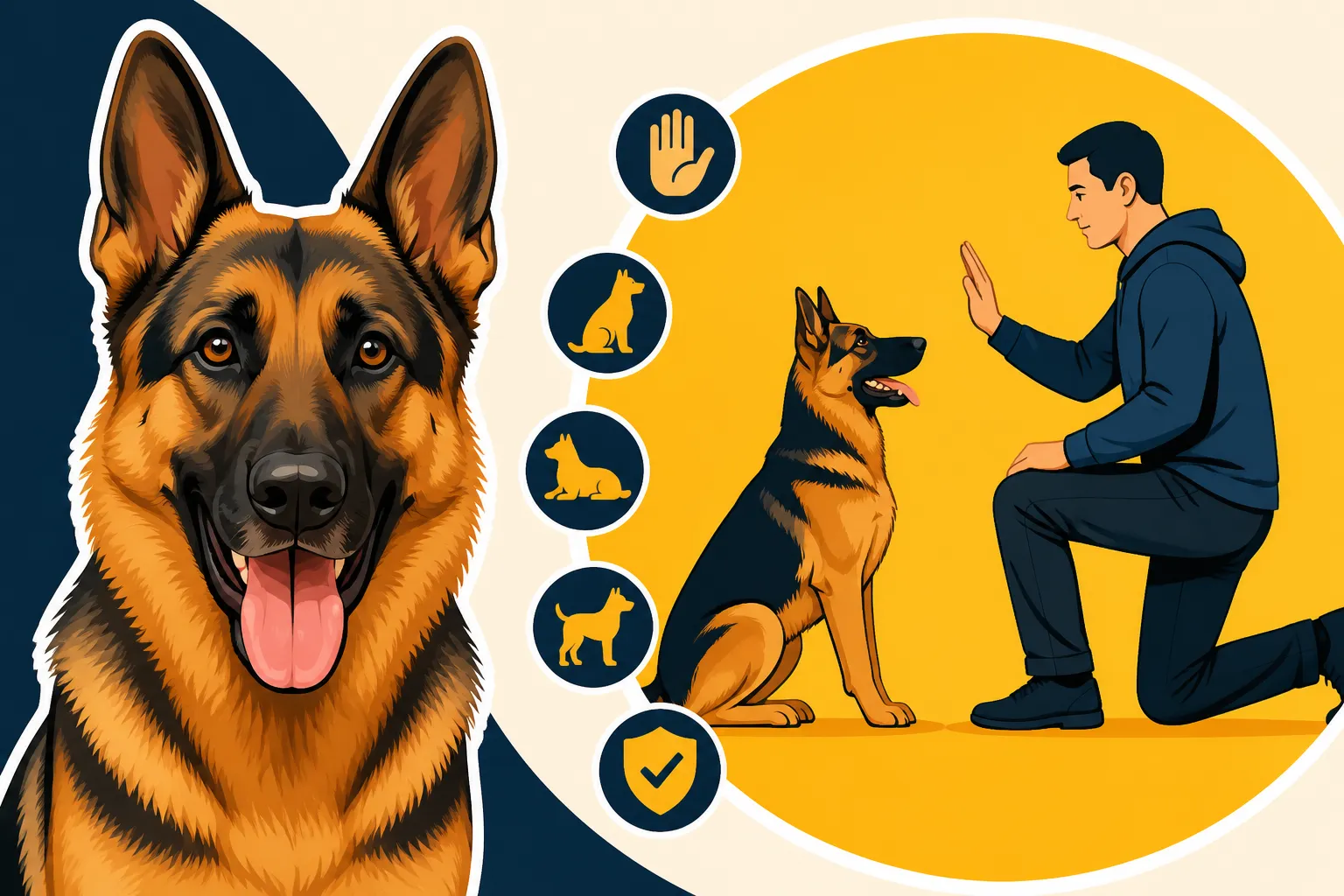
Once you've got the mindset down, it's time to dive into the core commands that form the foundation of any well-behaved German Shepherd. Each command should be taught in short, frequent sessions (5-10 minutes each), focusing on one command at a time until your dog understands the concept.
"Sit" and "Stay"
These are often the first commands dogs learn, and for good reason – they provide immediate control and teach impulse control.
Teaching "Sit":
- Lure: Hold a high-value treat near your German Shepherd's nose.
- Guide: Slowly move the treat in an arc from their nose, over their head, towards their tail. As their nose follows the treat, their rear end will naturally lower into a sit.
- Mark & Reward: The instant their bum touches the ground, say "Yes!" or click (if using a clicker), and give them the treat.
- Add Cue: Once they consistently sit when lured, start saying "Sit!" as their rear begins to go down. Eventually, you'll say "Sit!" before you lure, and they'll understand the verbal cue.
- Practice: Repeat many times in different locations.
Teaching "Stay":
- Prerequisite: Your German Shepherd must be able to "Sit" reliably.
- Initial Stay: Have your dog sit. Say "Stay!" and take one step back.
- Return & Reward: Immediately step back to your dog, reward them with a treat and praise before they break the stay. If they break, simply reset and try again. The key is to reward them before they fail.
- Increase Distance & Duration: Gradually increase the distance you step away and the time you ask them to stay. Always return to them to reward, reinforcing that you release the stay.
- Release Word: Introduce a clear release word like "Okay!" or "Free!" After rewarding for the stay, say your release word and allow them to get up. This teaches them the stay is over.
"Come" (Recall)
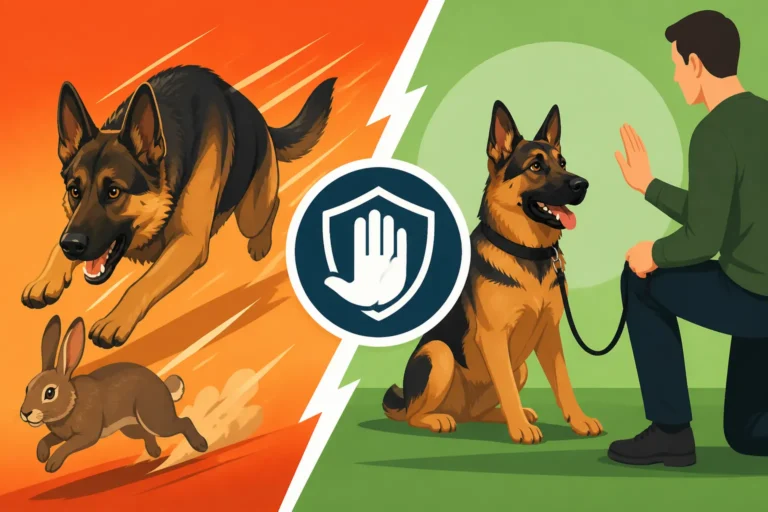
This is arguably the most critical command for any dog, especially an energetic German Shepherd who might be tempted to explore. A reliable "Come!" (or recall) can literally save their life.
- Start in a Low-Distraction Environment: Begin indoors or in a securely fenced yard with no distractions.
- Make it Fun: Get down on their level, use an excited voice, and say their name followed by "Come!" (e.g., "Max, Come!").
- Reward Instantly: The second they reach you, throw a party! Tons of praise, high-value treats, and maybe a quick game with a favorite toy. Make coming to you the best thing ever.
- Practice Short Distances: Start with just a few feet, then gradually increase the distance. Have another person hold your dog, walk away, then call them.
- Use a Long Line: As you move to slightly more distracting environments, use a long training line (15-30 feet) attached to a harness (not just a collar, for safety). This allows you to gently guide them to you if they hesitate and prevents them from practicing ignoring you. Programs like BAXTER & Bella often emphasize the importance of controlled practice with long lines for recall.
- Never Punish Recall: If your dog eventually comes to you, even if it took a while, never scold or punish them. This teaches them that coming to you is bad, making them less likely to return next time.
"Down" and "Leave It"
These commands are excellent for impulse control and calming your German Shepherd in various situations.
Teaching "Down":
- Lure from Sit: Have your German Shepherd in a sit position. Hold a treat at their nose.
- Guide Down: Slowly move the treat straight down towards the floor between their paws, then drag it slightly forward, away from their nose. Their body should follow the treat into a down position.
- Mark & Reward: As soon as their elbows touch the ground, say "Yes!" or click, and give the treat.
- Add Cue: Once consistent, start saying "Down!" as you lure them.
- Repeat: Practice frequently. The "down" position can be very useful for calming an excited dog or asking them to settle in public.
Teaching "Leave It":
- Hold a Low-Value Treat: Hold a low-value treat (something they like but aren't crazy about) in your closed fist.
- Ignore & Reward: Present your fist to your dog. They will likely try to sniff, lick, or paw at it. Wait patiently until they look away or back away from your hand for even a split second. The moment they disengage, say "Yes!" or click, and immediately open your other hand to give them a high-value treat (something much better than what's in your fist).
- Add Cue: Once they reliably look away, start saying "Leave It!" just as you present your fist.
- Increase Difficulty: Gradually move to placing the low-value treat on the floor, then covering it with your hand. Slowly remove your hand, always ready to cover it again if they go for the treat. Only reward the high-value treat from your other hand when they leave it successfully.
- Real-World Application: Eventually, practice with tempting items on walks (e.g., a dropped French fry) or objects in the house. This command is a lifesaver for preventing your German Shepherd from eating something potentially dangerous.
"Heel" and Loose-Leash Walking
Leash manners are a huge topic for German Shepherds, as their strength can make walks a drag if they're pulling. "Heel" is a more formal command for walking right by your side, while loose-leash walking simply means walking without pulling.
Loose-Leash Walking:
- Start in a Quiet Area: Begin with minimal distractions.
- Reward for Slack: Hold your leash comfortably. The moment your German Shepherd walks beside you with a loose leash (no tension), mark and reward them.
- Stop if They Pull: The instant your dog pulls ahead, stop dead in your tracks. Don't move until the leash goes slack again. This teaches them that pulling gets them nowhere.
- Change Direction: If stopping isn't enough, try abruptly changing direction the moment they pull. This keeps them paying attention to you.
- Be Consistent: Every walk, every time. This takes patience, but it's incredibly rewarding when you can enjoy walks together. For more specific advice, check out our guide on How to Do Leash Training with a German Shepherd.
Teaching "Heel":
- Lure to Position: With your German Shepherd on your left side, hold a treat at your left seam.
- Walk & Reward: Take a few steps forward. As long as your dog stays by your side, matching your pace, keep feeding small treats.
- Add "Heel": Start saying "Heel!" as you begin walking, then reward continuously for staying in position.
- Gradual Reduction: Slowly reduce the frequency of treats as they understand, but always reward randomly to keep them engaged.
- Practice Turns: Introduce turns and stops, always rewarding for maintaining position.
| Command | Purpose | Quick Training Tip |
|---|---|---|
| Sit | Basic control, calms excitement | Lure with a treat over the head; reward as soon as the rear touches the floor. |
| Stay | Impulse control, builds patience | Start with short durations and distances; always return to the dog to reward before releasing. |
| Come (Recall) | Safety, emergency command | Make coming to you a huge, exciting party with high-value rewards; practice with a long line in varied environments. |
| Down | Calming, advanced impulse control | Lure from a sit, bringing the treat down between paws and slightly forward; reward when elbows touch the ground. |
| Leave It | Prevents scavenging, protects against danger | Use a lower-value item to practice; reward with a much higher-value treat from your other hand when they disengage from the forbidden item. |
| Loose-Leash | Pleasant walks, prevents pulling | Reward generously for any slack in the leash; stop walking or change direction immediately if tension occurs. |
| Heel | Formal side-by-side walk | Use continuous treats initially, keeping the dog's nose at your left seam; gradually reduce treats as proficiency increases. |
Beyond Basics: Advancing Obedience and Addressing Common Challenges
Once your German Shepherd has a solid grasp of these core commands in a low-distraction environment, it's time to level up. Real-world obedience means your dog listens regardless of what's happening around them.
Integrating Distractions and New Environments
This is where the rubber meets the road. Your German Shepherd might sit perfectly in your living room, but will they do it at a busy park with squirrels and other dogs? Probably not initially, and that's totally normal.
The trick is to introduce distractions gradually.
- Controlled Distractions: Start with very mild distractions. Maybe have a family member walk by slowly while your dog is performing a "stay." Or try practicing "come" in the backyard with a toy rolling nearby (but not too close).
- Gradual Environmental Changes: Move your training sessions to increasingly distracting locations. Start with your quiet backyard, then a slightly busier street, then a local park during off-peak hours, and finally a bustling pet store or dog park.
- "Proofing" Commands: This is the process of practicing commands in different environments, with different people, and at different times of day. The goal is for your German Shepherd to generalize the command, understanding it applies everywhere, not just in your kitchen. Always remember to go back to basics (shorter distances, higher rewards) when introducing a new level of distraction. You can often find online courses, such as those offered by BAXTER & Bella, that provide structured ways to proof commands.
Troubleshooting Common Training Hurdles
Even with the best intentions, you're bound to hit some snags. Here are a few common challenges German Shepherd owners face and how to approach them:
- "Selective Hearing" (Ignoring Commands): If your German Shepherd suddenly acts like they don't know "come" at the park, it's likely not stubbornness, but that the environment is too distracting. Go back to a less distracting area, increase your reward value (think boiled chicken, not kibble!), and gradually work your way up again. Also, ensure you haven't overused the command in a context where they can't succeed, making the word lose its value.
- Excessive Barking: German Shepherds can be vocal. This might stem from boredom, anxiety, guarding instincts, or simply wanting attention. Identify the trigger first. If it's boredom, increase their exercise and mental stimulation, perhaps with puzzle toys easily found on Amazon. If it's guarding, practice desensitization and counter-conditioning. Our guide on How to Stop German Shepherd Excessive Barking offers more specific strategies.
- Leash Reactivity: This manifests as barking, lunging, or growling at other dogs, people, or vehicles while on leash. It's often rooted in fear, frustration, or over-excitement. Management (creating distance from triggers) and counter-conditioning (associating the trigger with something positive, like treats) are key. Avoid direct confrontation or punishing the behavior, as this can worsen the underlying emotion.
- Destructive Chewing: Especially common in puppies and adolescents, this usually points to unmet needs for mental stimulation or appropriate outlets for chewing. Ensure your German Shepherd has plenty of appropriate chew toys, is getting enough exercise, and consider incorporating more mental games. Crate training can also be invaluable for managing unsupervised chewing. You can learn more about this in our article on How to Crate Train a German Shepherd.
The Role of Professional Guidance and Advanced Training
Sometimes, despite your best efforts, you might need an extra hand, and that's perfectly okay. There's no shame in seeking professional help.
- When to Consider a Trainer: If you're struggling with severe behavioral issues (like aggression), feel overwhelmed, or just want to fast-track your training, a certified professional dog trainer can be a game-changer. Look for trainers who use positive reinforcement methods and have experience with German Shepherds. They can offer personalized advice, hands-on demonstrations, and help you identify underlying causes of behavior. For guidance on finding the right expert, read When to Hire a Trainer for a German Shepherd.
- Advanced Training Opportunities: German Shepherds excel in various dog sports and advanced training programs. Once you've mastered basic obedience, consider exploring:
- Obedience Trials: Competitive obedience, like AKC Obedience or Rally Obedience, is a fantastic way to continue honing your German Shepherd's skills.
- Agility: This sport involves navigating obstacle courses, providing immense physical and mental stimulation.
- Schutzhund/IGP: These protection sports are designed specifically for working breeds like German Shepherds, testing their tracking, obedience, and protection skills. This is a very demanding sport and requires serious commitment and professional guidance.
- Therapy or Service Dog Work: With their intelligence and calm demeanor (when properly trained), some German Shepherds can make excellent therapy or service dogs, providing invaluable assistance and comfort to others.
Continuing your German Shepherd's education throughout their life keeps their minds sharp, strengthens your bond, and prevents boredom-related behavioral issues. It's an ongoing journey of learning and discovery for both of you!
Disclaimer
This article is for general informational purposes only and does not constitute professional advice. Laws, prices and regulations vary by location and change over time. Consult a qualified professional for guidance on your specific situation.