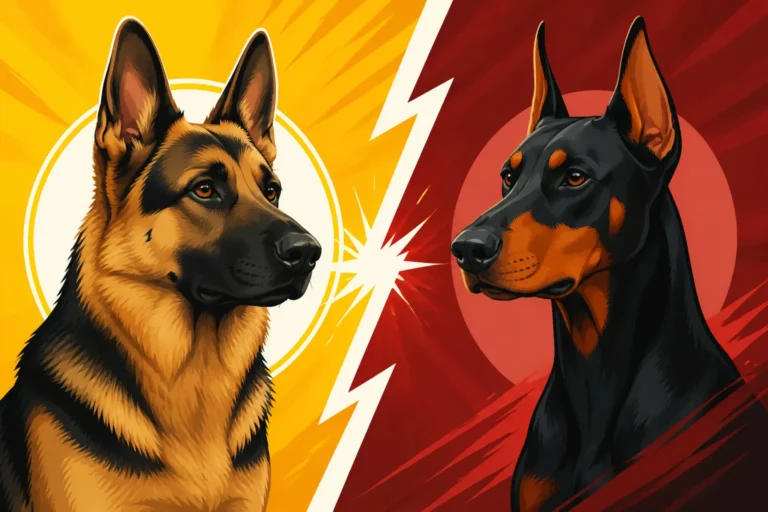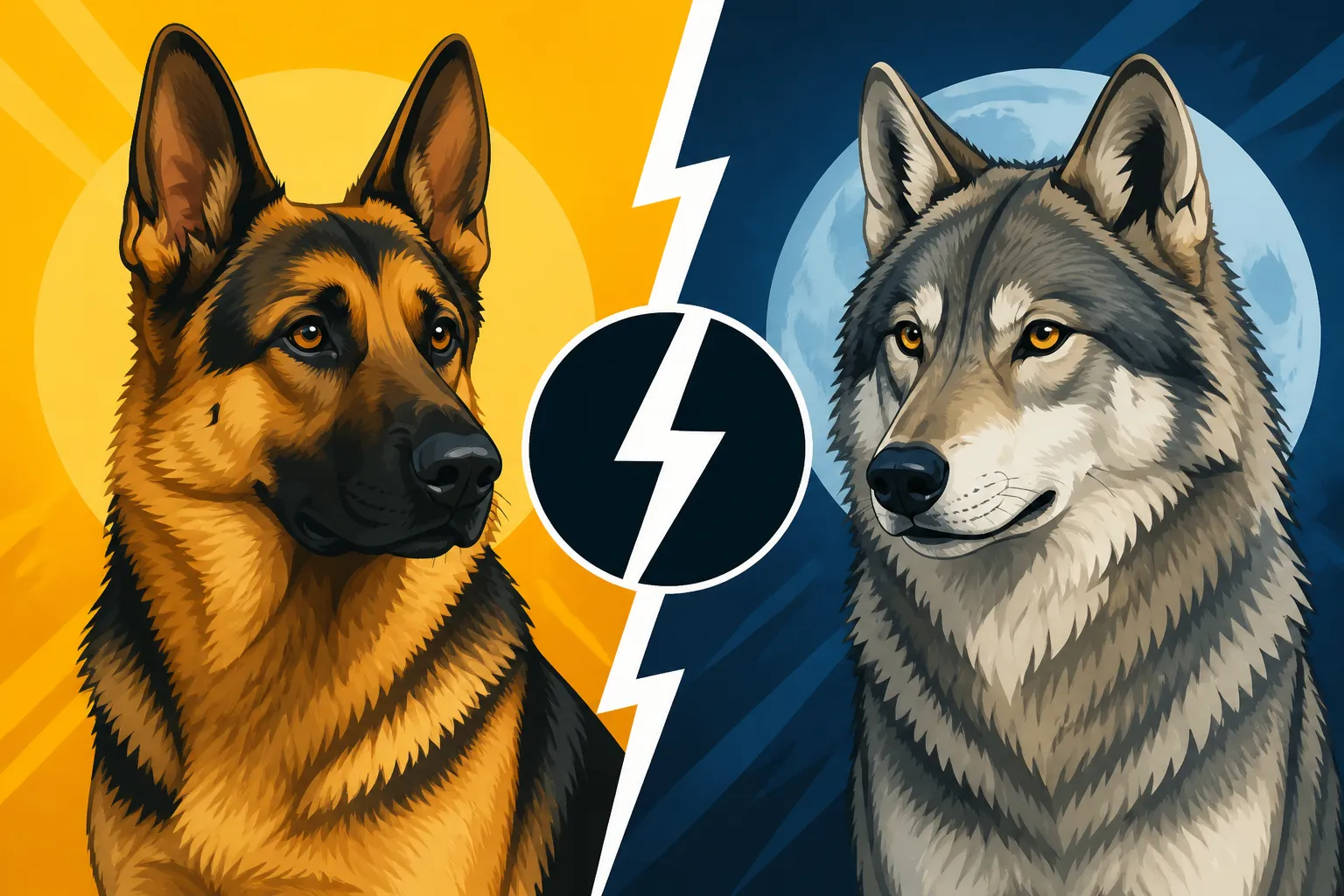
German Shepherd vs Wolf Dog: Key Differences
It's incredibly common for people to look at a majestic German Shepherd and immediately think of a wolf, or to encounter a large, wolf-like dog and assume it's just a "big German Shepherd." This confusion is understandable, but the truth is, a German Shepherd and a wolf dog, or wolf hybrid, are vastly different creatures with distinct needs, temperaments, and legal considerations. This guide aims to clear up those misconceptions, highlighting the key differences that every potential dog owner needs to understand before bringing either into their home.
Understanding the German Shepherd
The German Shepherd is one of the most beloved and recognizable dog breeds in the world, renowned for its intelligence, loyalty, and versatility. But what truly sets them apart from their wild canine relatives, and even from wolf hybrids, is their long history of domestication and selective breeding for specific traits.
Breed Origin and Purpose
The German Shepherd, as we know it today, owes its existence to Captain Max von Stephanitz, who, in the late 19th and early 20th centuries, aimed to create the ultimate German herding dog. He envisioned a dog that was intelligent, strong, noble, and trainable, a true working companion. Von Stephanitz meticulously selected dogs with these traits, focusing on utility and temperament above all else. His goal was not to create a dog that looked like a wolf, but one that possessed the stamina, courage, and mental acuity for demanding tasks.
Over generations, this selective breeding solidified the German Shepherd's character. They were developed to work closely with humans, understanding complex commands and forming deep bonds. This foundation made them exceptional at herding, but also opened doors to roles in military, police, search and rescue, service work, and loyal family companionship. This deliberate domestication process fundamentally shaped their genetic makeup and behavioral predispositions, moving them far from their wild ancestors. If you're curious about their background, our guide on German Shepherd History and Origin dives even deeper.
Key Physical Characteristics
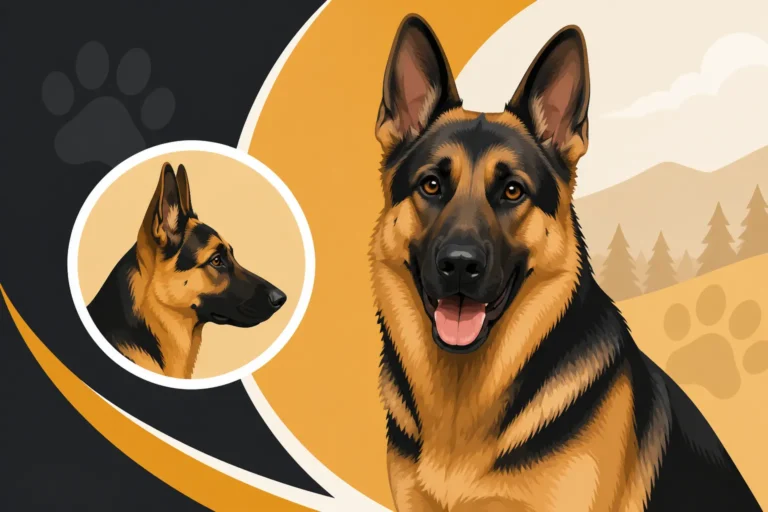
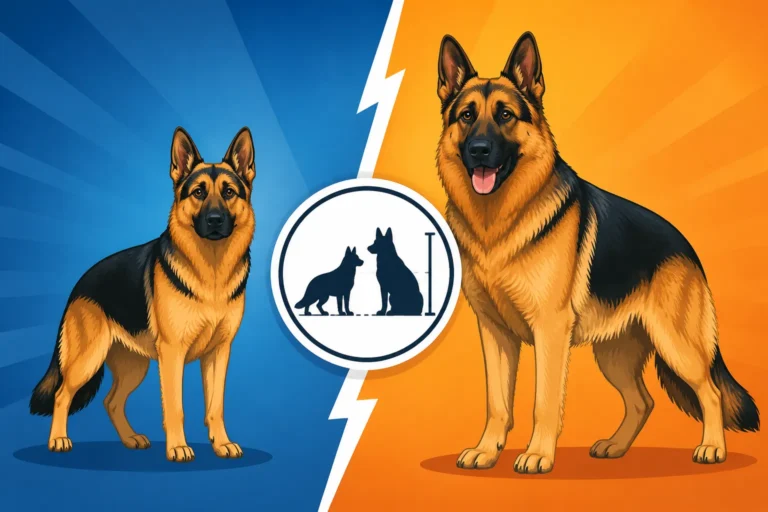
German Shepherds possess a powerful and athletic build, designed for endurance and agility. They typically stand between 22 to 26 inches at the shoulder and weigh anywhere from 50 to 90 pounds, with males generally being larger than females. Their coat is usually a double coat, dense and often coming in classic black and tan, sable, or solid black varieties. You can explore more about German Shepherd Colors and Coat Types in another article.
Their appearance often evokes a wolf-like image due to their upright ears, bushy tail, and sometimes their gait. However, subtle differences are present. German Shepherds have a distinctive sloping back in many show lines, though working lines often exhibit a straighter back. Their facial structure, while strong, is refined and less broad than many wolf hybrids. Their eyes typically convey an intelligent, eager expression, a hallmark of their trainable nature. Understanding German Shepherd Size and Weight Guide can help you differentiate them further.
Temperament and Trainability
This is where the German Shepherd truly shines and starkly contrasts with wolf dogs. German Shepherds are known for their unwavering loyalty, courage, and profound intelligence. They are eager to please their human companions and thrive on having a job to do, whether that's protecting the family, performing tricks, or participating in dog sports. They form strong bonds with their families and can be wonderfully affectionate, though they might be reserved with strangers until properly introduced.
Their high intelligence makes them highly trainable. They excel at learning complex commands and can adapt to various living situations, provided they receive adequate mental and physical stimulation. They need consistent training and socialization from a young age to develop into well-adjusted adults. Without proper guidance, their intelligence and protective instincts can sometimes lead to German Shepherd Behavior Problems and Solutions. This innate drive to cooperate and communicate with humans is a direct result of centuries of domestication and is largely absent in wolf dogs. If you're planning on getting a GSD puppy, our German Shepherd Puppy Training Guide is a great resource.
Unpacking the Wolf Dog (Wolf Hybrid)
When we talk about "wolf dogs," we're generally referring to hybrids—animals with both domestic dog and wolf ancestry. These creatures are not a single breed, and their characteristics can vary wildly depending on their specific genetic makeup. Owning one is a significantly different experience than owning a German Shepherd.
What is a Wolf Dog?
A wolf dog is an animal resulting from the breeding of a domestic dog with a wild wolf (Canis lupus), or the breeding of two existing wolf dogs. The term "hybrid" is key here, as it implies a mix of two distinct species or subspecies. Unlike a purebred German Shepherd, which has been selectively bred for predictable traits over many generations, a wolf dog's traits are a roll of the genetic dice.
These animals are often categorized by their "content" – meaning the estimated percentage of wolf genes they possess. Low-content wolf dogs might have a grandparent or great-grandparent who was a wolf, while high-content wolf dogs might have a wolf parent or grandparent. This percentage isn't always easy to determine visually, and it profoundly impacts their behavior, making ownership incredibly complex and often unpredictable.
Genetic Variability and Appearance
The appearance of a wolf dog can range from looking very much like a domestic dog to being almost indistinguishable from a pure wolf. A low-content wolf dog might resemble a German Shepherd, a Husky, or a Malamute, breeds that share some ancient lineage with wolves and carry certain physical traits like upright ears and thick coats. This is often where the initial confusion with German Shepherds arises.
However, even subtle physical differences can exist. Wolves and high-content wolf dogs often have longer legs, larger feet, a narrower chest, a straight tail (not curled like some Huskies), and distinct facial markings, often with "eyeliner" markings around the eyes. Their eyes might also be amber or yellow, whereas most German Shepherds have darker eyes. The most crucial aspect of this variability is that physical appearance alone is not a reliable indicator of wolf content or, more importantly, temperament. Two wolf dogs from the same litter can display drastically different behaviors depending on which genes they inherited from their domestic and wild ancestors.
Behavioral Complexities
This is the most critical area of divergence. While German Shepherds are predictable, wolf dogs are inherently unpredictable due. They possess a potent blend of instincts from both their domestic and wild heritage. This can result in a challenging and often dangerous combination of behaviors.
Wolves are wild animals driven by survival instincts. They are naturally shy, wary of humans, and have a strong flight instinct when threatened. They form strong pack bonds with other wolves but are not inherently wired to interact with humans in the way a domesticated dog is. When these traits are combined with domestic dog behaviors, it can lead to:
- Extreme Shyness and Fear: Many wolf dogs are intensely fearful of unfamiliar people, places, and sounds. This fear can lead to defensive aggression, making them dangerous in situations that a typical dog would handle with ease.
- Strong Prey Drive: Wolves are hunters, and wolf dogs often retain a powerful prey drive, which can be disastrous for other pets, livestock, or even small children.
- Destructive Tendencies: Wolves are masters of escape and problem-solving in the wild. Wolf dogs often exhibit these traits through extreme digging, chewing, and climbing, making them escape artists that can destroy homes and yards.
- Difficulty with House Training: Wolves are typically den animals, but their elimination habits are different from domestic dogs. House training a wolf dog can be a monumental challenge, far beyond what most German Shepherd owners face with their puppies.
- Lack of Trainability (in the traditional sense): While intelligent, wolf dogs are not motivated by the same desire to please humans as a German Shepherd. They are more independent and often lack the innate drive to obey commands, making traditional obedience training extremely difficult, if not impossible. Their instinct is self-preservation, not partnership.
It's important to understand that these aren't "bad" behaviors; they are wild behaviors. They are behaviors that allow wolves to survive in their natural habitat but are completely incompatible with living in a human household. This unpredictability makes them unsuitable for most homes, especially those with children or other pets.
Core Differences: German Shepherd vs. Wolf Dog
The distinctions between German Shepherds and wolf dogs go far beyond superficial appearance. They represent fundamental differences in biology, behavior, and what it means to coexist with humans.
Domestication and Predictability
The most significant difference lies in their genetic programming and millennia of evolutionary divergence. German Shepherds are domesticated animals. They have undergone thousands of years of selective breeding to live and work alongside humans. Their genetic blueprint includes a desire for human companionship, a capacity for understanding human cues, and a willingness to be trained. This makes their behavior generally predictable within the scope of dog behavior. When a German Shepherd exhibits a behavior, there are often clear motivations and established training techniques to address it, as discussed in German Shepherd Behavior Problems and Solutions.
Wolf dogs, on the other hand, are not fully domesticated. Even low-content hybrids carry an unpredictable mix of wild instincts and domestic traits. This means their behavior is often a chaotic blend, making them far less predictable. They might display a friendly, dog-like demeanor one moment and then revert to primal wolf behaviors the next, especially when startled, stressed, or feeling threatened. Their reactions are often instinct-driven, not human-pleasing. This lack of predictability is what makes them so challenging and potentially dangerous.
| Feature | German Shepherd | Wolf Dog (Wolf Hybrid) |
|---|---|---|
| Domestication | Fully domesticated for thousands of years. | Partial or minimal domestication. Wild instincts strong. |
| Temperament | Loyal, intelligent, trainable, eager to please. | Unpredictable, often fearful, independent, high prey drive. |
| Trainability | Highly trainable, thrives on tasks and cooperation. | Extremely difficult to train, resistant to commands. |
| Social Needs | Bonds strongly with humans, needs companionship. | May tolerate humans, forms primary bonds with other canids. |
| Housing | Can live in homes with appropriate exercise/space. | Requires specialized, escape-proof enclosures, often outdoor. |
| Legality | Legal in all areas. | Often illegal or highly restricted by jurisdiction. |
| Diet | Commercial dog food. | May require specialized raw diet to thrive. |
| Vetting | Standard veterinary care, responds well to handling. | Requires vets experienced with wolf dogs, difficult to handle. |
Legality and Ownership Challenges
Owning a German Shepherd is legal everywhere in the world, with standard regulations applying to all domestic dogs. You can find German Shepherd puppies from reputable breeders, adopt older dogs from rescues, and generally have no issue bringing them into your community.
Wolf dog ownership, however, is a legal minefield. Due to their unpredictable nature and potential for danger, many states, counties, and cities have strict bans or severe restrictions on owning wolf dogs. These laws vary dramatically by location. Some areas might ban them outright, while others might require special permits, extensive insurance, specific containment requirements (like large, secure enclosures that are difficult and expensive to build), or only allow animals below a certain "wolf content." Failing to comply can result in severe penalties, including fines, confiscation of the animal, and even criminal charges. Many shelters or rescues will not accept wolf dogs, making rehoming nearly impossible if an owner can no longer care for one. Even ordering supplies from a place like Chewy might require careful consideration if you have a wolf hybrid, as many common dog items aren't suited to their unique needs.
Care Requirements and Lifestyle Compatibility
A German Shepherd thrives in an active family environment, needing regular exercise, mental stimulation, and consistent training. They are typically well-suited to living indoors with their human companions, sharing family life. Their grooming needs are manageable (though they do shed, especially during "blow coat" season, which you can learn about in German Shepherd Shedding: How to Manage It), and their dietary needs are met by high-quality commercial dog foods. Overall, while a significant commitment, a German Shepherd is compatible with a typical family lifestyle. Our German Shepherd Feeding Guide can give you more insights.
Wolf dogs, on the other hand, have care requirements that are far more akin to wild animals than domestic pets. They rarely thrive in a typical home environment. Their needs include:
- Specialized Enclosures: A standard fenced yard is insufficient. Wolf dogs are notorious escape artists, requiring tall, dig-proof, and climb-proof enclosures, often with a covered top. This alone is a massive, expensive undertaking.
- Dietary Needs: Many wolf dogs struggle on commercial dog kibble and require a raw diet that mimics what they would eat in the wild. This demands significant knowledge, preparation, and expense.
- Veterinary Care: Finding a veterinarian willing and able to treat a wolf dog can be extremely difficult. Their wild instincts make them challenging to handle, and they may react poorly to traditional veterinary settings. Furthermore, standard dog vaccines may not be effective or even safe for wolf dogs, leading to difficult decisions about their health care.
- Socialization: While German Shepherds benefit immensely from early socialization, wolf dogs often remain fearful and wary despite exposure. Their natural inclination is to avoid humans, not embrace them.
- Lifelong Commitment: Because they are so challenging, many wolf dogs end up in sanctuaries or euthanized because their owners were unprepared. The commitment required is beyond what most people can provide.
The vast majority of people are not equipped to provide the appropriate care, environment, or lifestyle for a wolf dog. It's a monumental undertaking that can easily overwhelm even the most experienced animal owner.
Why the Confusion? Common Misconceptions
Given the profound differences, why do so many people confuse German Shepherds with wolf dogs? Several factors contribute to this persistent misconception.
Physical Resemblance and Media Portrayals
It's undeniable that German Shepherds share some visual traits with wolves: their erect ears, long muzzles, powerful builds, and some common coat colors can easily make one think of a wolf. In particular, certain German Shepherd lines, like the Working Line German Shepherd Explained or the Czech Working Line German Shepherd Explained, might have a more rugged, less sloped appearance that can lean into that wolf-like aesthetic. This physical similarity is often superficial but powerful in shaping perception.
Furthermore, popular culture and media often blur the lines. Movies and TV shows might feature "wolf dogs" that are actually well-trained German Shepherds or other domestic breeds, expertly made up to look more wild. This cinematic illusion can perpetuate the idea that wolf dogs are easily managed and behave like typical pets, when in reality, they do not. The majestic, untamed image of a wolf combined with the loyal, intelligent dog persona is a powerful but misleading narrative.
Marketing and Mislabeling
Unfortunately, unscrupulous breeders or individuals may intentionally mislabel wolf dogs as "rare German Shepherd mixes" or other exotic domestic breeds to fetch higher prices. They might downplay the wolf content or misrepresent the animal's potential behavior. This often leads unsuspecting buyers to adopt an animal they are completely unprepared for, with devastating consequences for both the animal and the family.
Conversely, some individuals might acquire a German Shepherd, particularly one with a less common coat color like a Sable German Shepherd: What to Know or a Black German Shepherd: What to Know, and mistakenly believe they have a wolf hybrid due to its appearance or strong personality. While German Shepherds are indeed powerful and sometimes challenging dogs, their behaviors are firmly within the realm of domestic canines and respond to consistent training and structure.
It's essential for anyone considering getting a large, wolf-like dog to do thorough research, demand verifiable genetic testing (like DNA analysis), and meet the parents if possible. A reputable German Shepherd breeder will be transparent about their dogs' lineage and health, often providing results from genetic tests such as those discussed in German Shepherd Genetic Health Testing. They will never market their dogs as "wolf-like" in a way that suggests wild behavior. When shopping for dog supplies or food, reputable retailers like Chewy clearly differentiate between products for domestic dogs and any specialized items that might be suitable for more exotic canids, underscoring the distinction.
Ultimately, while the German Shepherd and the wolf dog might share some distant ancestry and superficial resemblances, their paths diverged millennia ago. One is a loyal, trainable companion, carefully bred to integrate into human society, and the other is a wild animal struggling to exist in a world it was never meant to inhabit as a pet. Understanding this fundamental difference is crucial for the safety and well-being of both the animals and the people who encounter them.
Disclaimer
This article is for general informational purposes only and does not constitute professional advice. Laws, prices and regulations vary by location and change over time. Consult a qualified professional for guidance on your specific situation.