German Shepherd vs Doberman
Choosing between a German Shepherd and a Doberman Pinscher is a big decision that many prospective dog owners grapple with. Both breeds are undeniably striking, intelligent, and possess incredible loyalty, but they come with distinct personalities and needs. It's easy to get caught up in their impressive appearances and reputations, sometimes overlooking the subtle — and not-so-subtle — differences that will truly impact your daily life and their well-being. This guide aims to peel back those layers, helping you understand the nuances of each breed so you can make an informed choice that brings joy and harmony to your home.
First Impressions: A Quick Look at German Shepherd vs. Doberman
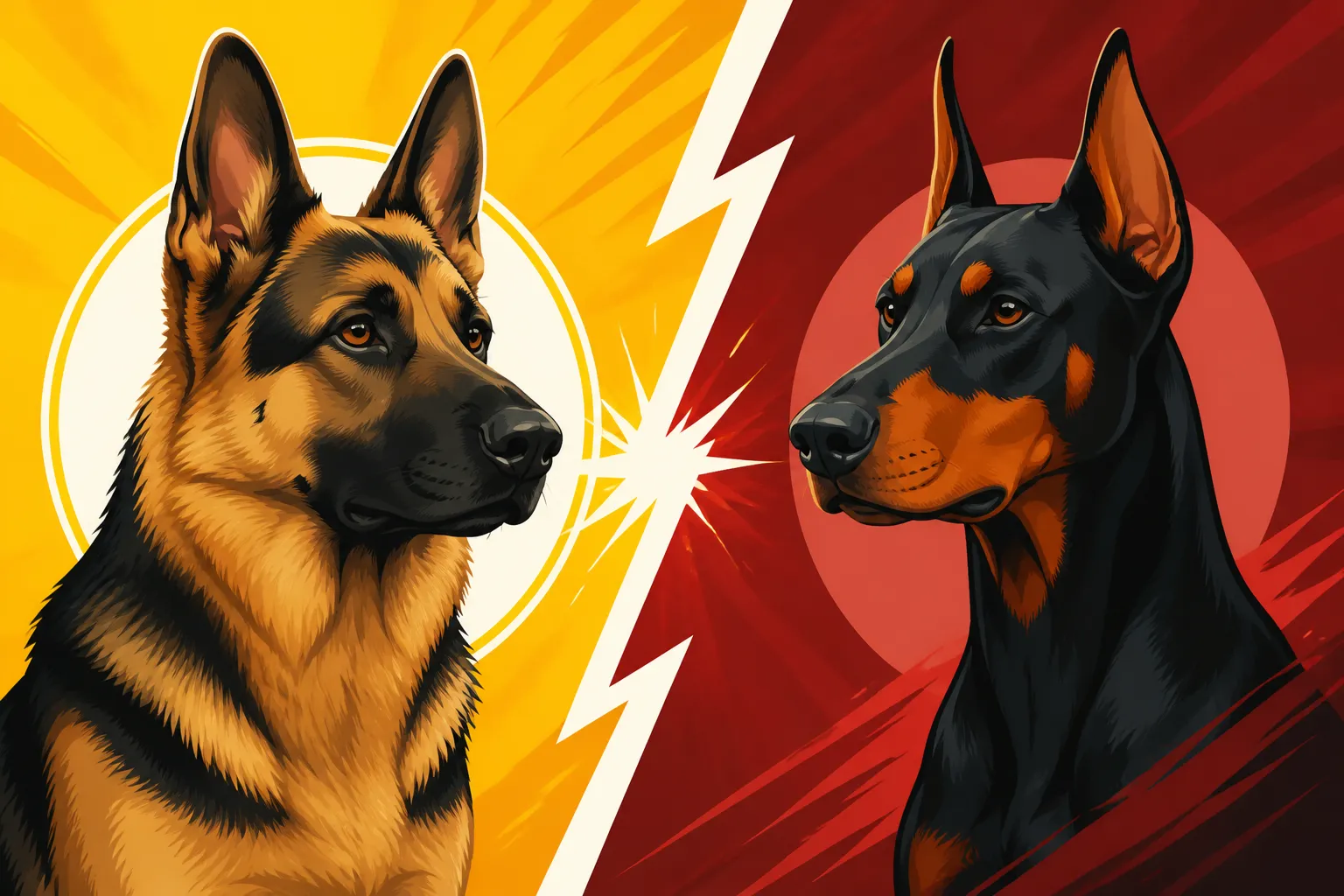
When you first see a German Shepherd and a Doberman Pinscher side-by-side, your immediate thought is likely, "Wow, those are serious dogs!" Both breeds exude confidence, strength, and an unmistakable air of authority. They've both been historically utilized in roles requiring bravery, intelligence, and a protective instinct, which has cemented their image as formidable working dogs. However, beneath this shared powerful aura, their physical characteristics and initial temperamental impressions can differ quite a bit, leading many to jump to conclusions based purely on aesthetics.
Visual Distinctions: More Than Just Color
The most obvious differences often start with their looks. A German Shepherd typically boasts a thick, often bi-color (like black and tan, sable, or black and red) double coat, giving them a rugged, substantial appearance. Their body structure is often described as powerful and agile, with a famously sloped back in many show lines, though working lines tend to have a straighter back. Their ears are naturally erect, giving them an alert, keen expression. When you see a German Shepherd, you envision a sturdy, robust animal, built for endurance and diverse tasks. You can delve deeper into German Shepherd Coat and Skin Care to appreciate their unique fur.
In contrast, the Doberman Pinscher presents a much sleeker, more refined silhouette. Their coat is short, smooth, and typically black and rust, red and rust, or blue and rust. They possess an elegant, muscular build that speaks to speed and agility. Historically, Dobermans were often seen with cropped ears and docked tails, a practice that gives them a very sharp, intimidating profile, although many owners now choose to keep their Doberman's ears and tails natural. A Doberman often looks like a finely tuned athlete, a canine sprinter designed for powerful bursts of speed and protective duty. The difference in their natural coat alone can be a huge factor for potential owners, especially concerning grooming needs, which we'll touch on later.
Temperamental Preconceptions: Beyond the Stern Gaze
Beyond their looks, both breeds carry a certain weight of expectation regarding their temperament. The German Shepherd is widely perceived as the quintessential loyal family protector and working dog, often seen in police and military roles. This perception is largely accurate; they are known for their unwavering devotion to their family and a strong protective drive. They can be reserved with strangers, taking time to assess new situations and people before warming up. This wariness is often misinterpreted as aggression, but it's more often a sign of their inherent caution and intelligence.
Dobermans, on the other hand, frequently carry a sterner reputation, sometimes unfairly labeled as aggressive or aloof. While they are indeed formidable guard dogs with immense courage, their true temperament is often described by their owners as fiercely loyal, affectionate, and even goofy with their immediate family. They are often called "Velcro dogs" because of their tendency to stick close to their people. However, they are also highly sensitive and intelligent, meaning they require consistent, positive training and early socialization to ensure their protective instincts are channeled appropriately. The initial impression of a Doberman is often one of intense focus and readiness, which can be intimidating for those unfamiliar with the breed.
Temperament and Personality: What's Under the Hood?
Understanding the core temperament and personality traits of both German Shepherds and Dobermans is crucial, as this will dictate how well they integrate into your life. Both breeds are incredibly intelligent and capable, but their underlying motivations and responses can vary significantly, requiring different approaches to training, socialization, and daily interaction. They aren't just pretty faces; they are complex beings with deep emotional capacities.
Family Dynamics and Socialization: Who Fits Your Crew?
German Shepherds are renowned for their strong bond with their human families. They are typically good with children they've grown up with, often acting as gentle guardians. However, their natural protective instincts mean they can be reserved or suspicious of strangers. This isn't aggression; it's a natural territoriality that requires careful and consistent socialization from a young age. Without proper exposure to various people, places, and other animals, a German Shepherd can become overly wary, leading to fear-based reactions. Early socialization ensures they develop into well-adjusted, confident adults who know when to be protective and when to relax. If you're looking for guidance, our article on How to Socialize a German Shepherd offers a thorough roadmap.
Dobermans are often described as exceptionally devoted and affectionate with their chosen family members, frequently seeking physical closeness. They can be incredibly playful and loving, often displaying a silly side once they feel truly comfortable. With children in their family, Dobermans can be wonderful companions, though supervision is always key with any large, powerful breed. Like German Shepherds, Dobermans possess a strong protective drive and can be aloof or suspicious of strangers. Their sensitivity means that harsh training methods can be detrimental, leading to fear or aggression. Early, positive, and extensive socialization is paramount for a Doberman to ensure they distinguish between a genuine threat and a friendly visitor. They thrive on being an integral part of family life, rather than being relegated to the backyard.
Training and Intelligence: A Tale of Two Smart Cookies
Both German Shepherds and Dobermans rank among the most intelligent dog breeds, making them highly trainable. This intelligence, however, comes with a caveat: it means they need mental stimulation as much as physical exercise. Without it, they can become bored, destructive, or develop problematic behaviors. This is where many owners find themselves frustrated if they haven't prepared for the intellectual demands of these breeds.
German Shepherds are often seen as more independent thinkers. They excel in a wide array of dog sports and working roles, from obedience and agility to search and rescue, precisely because they can problem-solve and work autonomously. Training a German Shepherd requires consistency, patience, and a clear, fair leader. They respond well to positive reinforcement and are eager to please once they understand what's expected of them. However, their intelligence also means they can quickly learn bad habits if training is inconsistent or lacking. Proper German Shepherd Puppy Training Guide can set a strong foundation.
Dobermans are also incredibly intelligent and highly trainable, often praised for their eagerness to please their handlers. They pick up new commands and routines quickly and thrive on having a job to do. Their sensitivity means they often respond best to positive reinforcement techniques, such as clicker training or reward-based methods. They want to work with you, and a strong bond built on trust and mutual respect is essential. Because they are so attached to their families, they can sometimes struggle with separation anxiety if not properly trained to be independent. For more insights into handling common issues, check out German Shepherd Behavior Problems and Solutions.
Physical Characteristics and Health Considerations
Beyond temperament, the physical makeup of these breeds and their predispositions to certain health conditions are vital factors. Owning a large, active dog is a significant responsibility, and understanding their physical needs, from exercise to preventative healthcare, will impact their quality of life and your wallet.
Size, Build, and Energy: Giants Among Dogs
When it comes to size, both breeds are undeniably large, but they carry their weight differently. Male German Shepherds typically stand 24-26 inches tall at the shoulder and weigh between 65-90 pounds, while females are slightly smaller at 22-24 inches and 50-70 pounds. They have a powerful, muscular build that suggests endurance and strength, with a deep chest and a long, flowing tail. Their appearance, especially with the double coat, can make them seem even larger than their actual weight.
Doberman Pinschers are similarly sized, with males ranging from 26-28 inches tall and 75-100 pounds, and females 24-26 inches and 60-90 pounds. However, their build is much more compact and athletic, with a sleek, lean musculature that speaks to speed and agility. They often appear more "chiseled" than the German Shepherd. Both breeds are high-energy and require substantial daily exercise to remain happy and healthy. A simple walk around the block isn't going to cut it for either of these athletes. Our guide on German Shepherd Exercise Requirements highlights just how much activity these dogs truly need.
Coat and Grooming: Shedding vs. Sleek
Here's where a major practical difference comes in: coat type and grooming. German Shepherds have a dense, double coat consisting of a harsh, close-lying outer coat and a softer, thicker undercoat. This coat is designed to protect them from the elements, but it also means they are serious shedders, especially during seasonal "blows" when they shed their entire undercoat. Regular brushing, at least 2-3 times a week (daily during shedding season), is essential to manage loose hair and prevent matting. You'll need a good deshedding tool and a sturdy brush, perhaps even a slicker brush, which you can easily find on sites like Chewy. Bathe them as needed, but not too frequently, as it can strip their natural oils.
Doberman Pinschers have a short, hard, and smooth coat that lies flat against their body. This means they are minimal shedders compared to German Shepherds and require far less grooming. A weekly wipe-down with a damp cloth or a soft brush is usually enough to keep their coat gleaming. They don't have an undercoat, so they are not as well-equipped for cold weather as German Shepherds and may need a coat or sweater in winter. While their grooming needs are simpler, it doesn't mean no grooming at all; regular nail trims, ear cleaning, and dental care are still vital. Even for a Doberman, a good quality shampoo or conditioner can be picked up from Chewy to keep their skin healthy.
Common Health Concerns: Preparing for the Future
Unfortunately, both German Shepherds and Dobermans are prone to certain breed-specific health issues, and being aware of these is paramount for responsible ownership. Knowing what to look out for can help you provide preventative care and catch issues early.
German Shepherds are famously predisposed to orthopedic conditions like hip and elbow dysplasia, which can cause pain and mobility issues. They are also susceptible to Degenerative Myelopathy (DM), a progressive neurological disease, and bloat (Gastric Dilatation-Volvulus), a life-threatening condition where the stomach twists. Understanding German Shepherd Hip Dysplasia Explained and German Shepherd Bloat: Signs and Prevention can equip you with vital information. Responsible breeders perform extensive health screenings on their breeding stock to minimize the risk of passing on genetic conditions.
Dobermans, while generally a robust breed, are prone to several serious health conditions. Cardiomyopathy (DCM), a heart disease, is sadly prevalent in the breed. They can also suffer from Wobbler's Syndrome, a condition affecting the cervical spine, Von Willebrand's Disease (a bleeding disorder), and bloat. Like German Shepherds, responsible Doberman breeders should conduct health testing for genetic conditions. Regardless of the breed, maintaining a healthy weight, providing a high-quality diet (perhaps from brands available on Chewy), and regular veterinary check-ups are key to helping your dog live a long, healthy life.
Here's a quick comparison of some key aspects:
| Feature | German Shepherd | Doberman Pinscher |
|---|---|---|
| Appearance | Large, sturdy, muscular; dense double coat | Large, sleek, athletic; short, smooth coat |
| Common Colors | Black & tan, sable, black & red | Black & rust, red & rust, blue & rust |
| Shedding Level | High (seasonal "blows") | Low to moderate |
| Grooming Needs | Frequent brushing, occasional baths | Minimal brushing, occasional baths |
| Temperament | Loyal, protective, reserved with strangers, intelligent, independent | Loyal, protective, affectionate with family, intelligent, sensitive |
| Trainability | Highly intelligent, takes well to consistent training; can be independent | Highly intelligent, eager to please, very responsive to positive reinforcement |
| Energy Level | High; needs significant daily exercise | High; needs significant daily exercise |
| Common Health Issues | Hip/Elbow Dysplasia, Degenerative Myelopathy, Bloat | Cardiomyopathy, Wobbler's Syndrome, Von Willebrand's, Bloat |
| Ideal for | Experienced owners, active families, working roles | Experienced owners, active families, close companionship |
Living with Each Breed: Practical Daily Life
Beyond the initial appeal and breed characteristics, consider what it truly means to live with either a German Shepherd or a Doberman Pinscher day in and day out. Both are magnificent animals, but they demand a specific lifestyle and commitment from their owners.
Ideal Living Environments: Home Sweet Home
German Shepherds generally thrive in homes with ample space, ideally a securely fenced yard where they can run and play. While they can adapt to apartment living if their exercise needs are rigorously met, it's not typically ideal due to their size and energy. They love being part of the family action, but also appreciate having their own outdoor territory to patrol and observe. Their dense coat makes them relatively resilient to various climates, though proper shelter from extreme heat or cold is always necessary. For families considering a German Shepherd, it's wise to assess if your home environment can accommodate their physical and mental stimulation needs.
Dobermans, despite their size, can surprisingly adapt well to various living situations, including apartments, provided they receive sufficient daily exercise and mental stimulation. The key for a Doberman is being with their people. They are not content to be left alone in a yard; they want to be inside, lounging near you, following you from room to room. Their short coat offers less protection from extreme temperatures, so they are more sensitive to cold weather and appreciate a warm, indoor environment. Ultimately, for both breeds, the amount of attention and activity you can provide outweighs the size of your living space.
Activity Levels and Enrichment: More Than Just Walks
This is where the rubber meets the road for both breeds. Neither a German Shepherd nor a Doberman is a couch potato. They are athletic, intelligent, and driven, meaning they require a serious commitment to daily exercise and mental enrichment.
A German Shepherd needs a minimum of 60-90 minutes of vigorous exercise daily, which could include brisk walks, jogging, hiking, playing fetch, or participating in dog sports like agility, obedience, or protection work. Mental stimulation is equally crucial. Puzzle toys, training sessions, and interactive games are essential to prevent boredom and destructive behaviors. A bored German Shepherd can quickly become a destructive one, channeling their energy into chewing furniture or excessive barking. You can find a vast selection of durable chew toys and interactive feeders on Chewy to keep their minds engaged.
Dobermans also require significant daily exercise, often similar in duration and intensity to German Shepherds. They excel in activities that involve running, jumping, and problem-solving. Daily runs, long walks, and structured play sessions are critical. Their intelligence and desire to please make them excellent candidates for advanced obedience, agility, flyball, or Schutzhund (now IGP). They are also sensitive, and a lack of mental engagement can lead to anxiety or neurotic behaviors. Providing a variety of enrichment activities, from scent work to learning new tricks, will keep a Doberman happy and well-behaved.
Long-Term Commitment and Costs: A Lifetime Investment
Bringing either a German Shepherd or a Doberman into your life is a long-term commitment, typically spanning 10-13 years. This commitment isn't just about time and affection; it's also a significant financial investment. The initial cost of a puppy from a reputable breeder, while substantial, is just the beginning. How Much Does a German Shepherd Cost is a good read if you're exploring the financial implications.
Ongoing expenses include high-quality dog food (especially for large, active breeds), regular veterinary check-ups, vaccinations, parasite prevention, and potentially pet insurance. Both breeds are prone to serious health conditions that can incur significant treatment costs. Training classes, durable toys, grooming supplies (like the deshedding tools from Chewy for a GSD or a good quality shampoo), and potential emergency veterinary care also add up. Understanding the Cost of Owning a German Shepherd Per Year will give you a realistic picture. Neither breed is suitable for someone seeking a low-maintenance pet; they are loyal, demanding companions who give back immensely to those willing to invest in their care.
Disclaimer
This article is for general informational purposes only and does not constitute professional advice. Laws, prices and regulations vary by location and change over time. Consult a qualified professional for guidance on your specific situation.