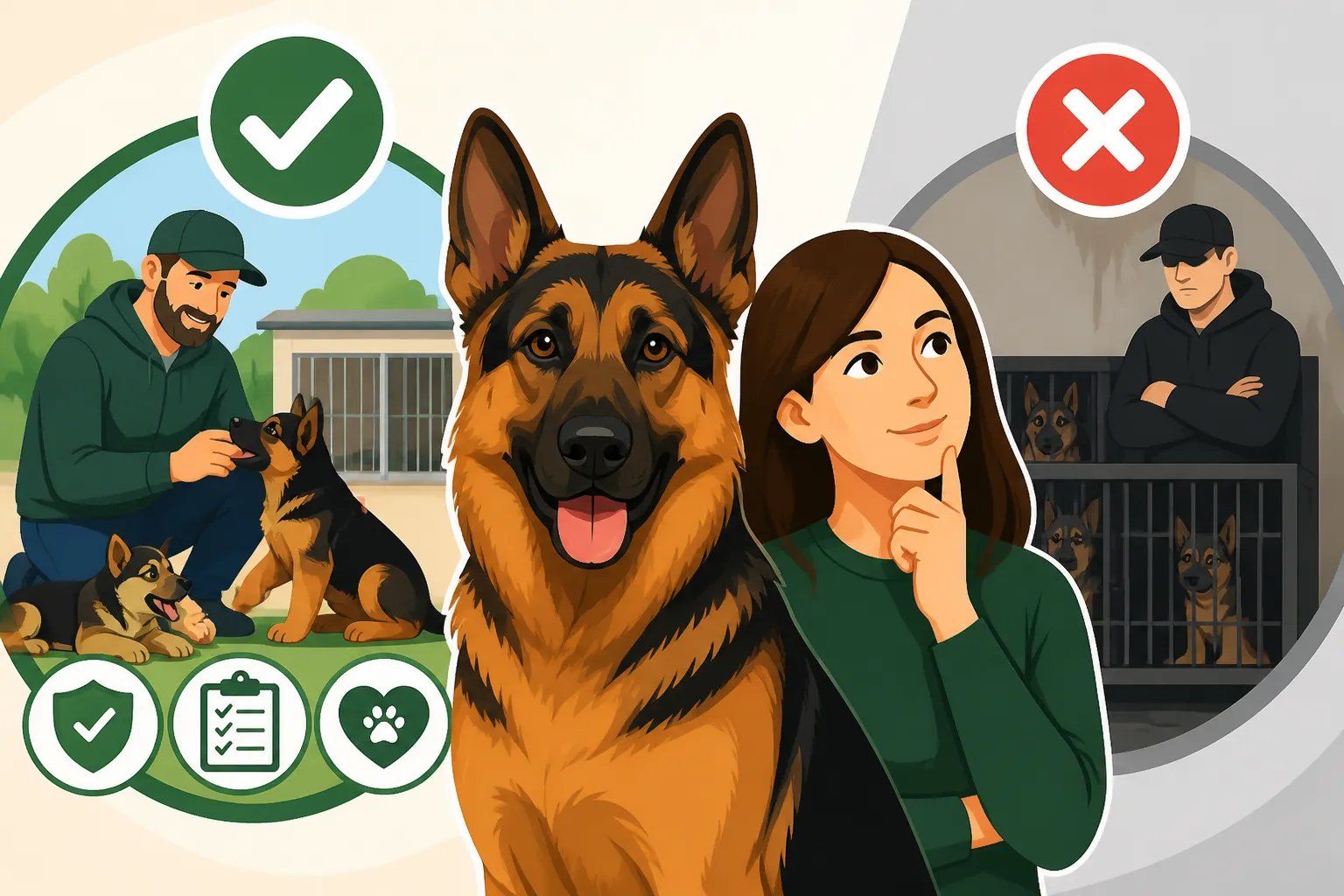
How to Choose a German Shepherd Breeder
Finding the right German Shepherd puppy can feel like navigating a minefield, full of overwhelming choices, conflicting advice, and the constant worry of making the wrong decision that could affect your new family member's health and temperament for years to come. It’s a huge responsibility to bring a loyal, intelligent, and strong German Shepherd into your home, and starting with a reputable breeder is the absolute best foundation you can provide. This comprehensive guide will walk you through every critical step, offering practical advice and clear indicators to help you confidently choose a German Shepherd breeder who genuinely prioritizes the well-being of their dogs.
Understanding What Makes a Good Breeder
When you're looking for a German Shepherd, it's easy to get caught up in the excitement of cute puppies. However, the most crucial step is understanding what truly defines a good breeder. This isn't just about someone who has puppies available; it's about someone who dedicates their life to the breed's improvement, health, and welfare. A reputable breeder is a resource, a mentor, and a responsible steward of the German Shepherd line.
Passion and Dedication Beyond Profit
A truly dedicated German Shepherd breeder isn't in it for the money. If you encounter a breeder who seems more interested in getting your payment than in learning about your living situation or your experience with dogs, that's a major red flag. Ethical breeders pour countless hours, emotional energy, and significant financial resources into their breeding programs. They invest in high-quality breeding stock, extensive health testing, proper nutrition, and early socialization for their puppies. This commitment often means that the "profit" is minimal, if it exists at all, when considering all their expenses.
Their passion shines through in their willingness to talk endlessly about their dogs, the breed standard, and their breeding philosophy. They’re keen to educate you, answer all your questions, and even ask you probing questions to ensure their puppies are going to suitable homes. They see each puppy as a lifelong commitment, not just a transaction, and want to make sure their dogs thrive in their new environments.
Knowledge and Experience with the Breed
Experience and deep knowledge of the German Shepherd breed are invaluable assets for a breeder. This isn't just about knowing the basic care; it encompasses understanding the breed's history, specific health predispositions, temperament nuances, and the genetic lines they work with. A knowledgeable breeder will be able to articulate why they chose a particular pairing, what traits they aim to preserve or improve, and how their dogs align with the German Shepherd breed standard.
They should also be well-versed in proper puppy development, from early neurological stimulation to age-appropriate socialization. Their expertise extends to nutrition, training basics, and common behavioral tendencies. When you're ready to learn more about a puppy's development, you might find valuable insights in our article on German Shepherd Puppy Training Guide. This extensive knowledge allows them to offer invaluable advice and support to puppy buyers, often for the lifetime of the dog.
Ethical Breeding Practices Defined
Ethical breeding is the bedrock of responsible dog ownership. This means a breeder prioritizes the health and temperament of their breeding dogs above all else. They only breed dogs that are physically and mentally sound, free from hereditary conditions as much as possible, and have excellent temperaments. They won't breed a female dog too young, too old, or too frequently, recognizing the toll breeding takes on the mother's body. They also conduct extensive health screenings on both parents, which we'll dive into more deeply soon.
Furthermore, ethical breeders maintain impeccable living conditions for their dogs and puppies. Their facilities should be clean, safe, and stimulating, providing ample space for exercise and mental enrichment. They provide proper nutrition, regular veterinary care, and ensure that each puppy receives individual attention and early socialization. They're not just producing puppies; they're raising future companions.
Health Clearances: The Non-Negotiable Standard
One of the biggest reasons to choose a reputable breeder for your German Shepherd is the assurance of proper health clearances. German Shepherds are prone to several hereditary conditions, and responsible breeders go to great lengths to minimize the risk of passing these on to their puppies. Never compromise on this aspect; it's an investment in your dog's future well-being and your peace of mind. To understand the full scope of potential issues, you might want to read our detailed German Shepherd Health Problems Guide.
Understanding OFA and PennHIP Evaluations
For German Shepherds, hip and elbow dysplasia are significant concerns. These conditions can cause pain, lameness, and debilitating arthritis, often leading to expensive treatments or surgeries down the line. Reputable breeders will have both parent dogs evaluated by recognized organizations like the Orthopedic Foundation for Animals (OFA) or through PennHIP.
OFA certifies hips as Excellent, Good, Fair, Borderline, or Dysplastic, and elbows as Normal or Dysplastic. PennHIP provides a quantitative measurement of hip laxity, giving a distraction index (DI) score. Both methods are designed to assess the likelihood of a dog developing or passing on hip and elbow dysplasia. A breeder should readily provide you with copies of these certifications for both the mother and father, and ideally, their grandparents too. Don't just take their word for it; ask to see the official paperwork or verify it online through the OFA database. A deeper dive into these methods can be found in our article OFA vs PennHIP Hip Scoring Explained.
Genetic Testing for DM and Other Conditions
Beyond hip and elbow evaluations, responsible German Shepherd breeders also conduct genetic testing for other breed-specific conditions. Degenerative Myelopathy (DM) is a progressive neurological disease that affects the spinal cord, leading to paralysis. While not all dogs with the genetic markers will develop DM, breeding two carriers significantly increases the risk for their offspring. A good breeder will test for DM and aim to only breed dogs that are clear or carriers paired with clear dogs, avoiding breeding two carriers together. Our resource on German Shepherd DM DNA Testing Explained offers more specific details.
Other important genetic tests might include those for Von Willebrand Disease (a blood clotting disorder) or Exocrine Pancreatic Insufficiency (EPI). The specific tests a breeder performs will depend on the lines they are working with and the prevalence of certain conditions within those lines. Always ask to see the results of these genetic tests and understand what they mean for the puppy's health. For a full picture of preventative measures, our article on German Shepherd Genetic Health Testing is a must-read.
Interpreting Health Certificates and Pedigrees
When a breeder presents you with health certificates and pedigrees, it can feel like looking at a foreign language. However, understanding these documents is vital. Health certificates, like OFA or PennHIP results, confirm that the parent dogs have been screened for specific conditions. A clean certificate means a lower risk of those conditions being passed down.
The pedigree, on the other hand, is essentially the dog's family tree. It lists the ancestors, often going back multiple generations, and can sometimes indicate titles (like championships in conformation or performance events) and health certifications for previous generations. A responsible breeder will use the pedigree not just for bragging rights, but to understand the health history and genetic strengths and weaknesses of their lines. They should be able to explain the significance of the dogs on the pedigree and how they contribute to the quality of the litter. Don't hesitate to ask for help interpreting these documents; a good breeder will be happy to guide you. For further reading, our guide on How to Verify German Shepherd Health Testing can help you navigate these documents.
Temperament and Socialization: Raising Well-Adjusted Pups
Beyond health, the temperament of your German Shepherd is paramount. These are intelligent, powerful dogs, and a stable, well-socialized temperament is critical for them to be loving family members rather than a challenge. A good breeder plays an enormous role in shaping a puppy's early personality.
The Importance of Early Socialization Protocols
The first few weeks of a puppy's life are a critical window for development, and a responsible breeder understands this deeply. They will implement an early socialization protocol that exposes puppies to a variety of sights, sounds, textures, and gentle human interactions. This might include introducing them to different surfaces, playing with various toys, experiencing common household noises (like vacuums or doorbells), and having controlled, positive interactions with different people (men, women, children).
This early exposure helps puppies develop resilience and confidence, making them better equipped to handle new situations and environments once they go to their forever homes. Without proper early socialization, puppies can become fearful, anxious, or reactive, which can be challenging to overcome later. Ask the breeder what their socialization program entails and if you can see it in action during your visit. You'll find more insights in our article on German Shepherd Temperament and Personality.
Assessing the Temperament of Parent Dogs
A puppy's temperament is a blend of genetics and early environment. While socialization helps, genetics lay the foundation. This is why meeting the parent dogs, especially the mother, is incredibly important. The mother dog should be calm, friendly, and confident, not shy, fearful, or aggressive. Observe how she interacts with the breeder, with you, and with her puppies. A good mother will be nurturing but also set boundaries.
While you might not always meet the father (he might live with another breeder), the breeder should be able to tell you all about his temperament, show you videos, and provide references. A responsible breeder will only breed dogs with sound, stable temperaments, as these traits are highly heritable. They avoid breeding overly shy or aggressive dogs, no matter how beautiful or titled they might be.
Matching Puppies to the Right Homes
A truly ethical breeder won't let you pick just any puppy from the litter. Instead, they will carefully assess each puppy's individual personality and energy level, then match them with the right family. They understand that a high-drive, dominant puppy might not be suitable for a first-time owner or a quiet household, while a more laid-back puppy might not thrive in an active working home.
They've spent weeks observing these puppies, noting their quirks, confidence levels, and responses to stimuli. They'll use this knowledge, combined with the information they've gathered about your lifestyle and expectations, to suggest the best match for you. This thoughtful matching process increases the likelihood of a successful, lifelong partnership between you and your German Shepherd.
Questions to Ask and Red Flags to Watch For
Choosing a German Shepherd breeder is like conducting an in-depth interview. You need to be prepared with a list of thoughtful questions, and just as importantly, you need to know what signs indicate you should walk away. Don't be shy about asking; a good breeder welcomes your scrutiny.
Key Questions to Vet a German Shepherd Breeder
Here's a comprehensive list of questions you should ask any potential breeder:
- "What health clearances do the parents have, and can I see the documentation?" (As discussed, OFA, PennHIP, DM, etc. — this is non-negotiable).
- "What is your philosophy on breeding, and what traits do you aim to produce?" This helps you understand their goals and if they align with yours.
- "How often do you breed your females, and at what age do you start/stop?" Responsible breeders typically don't breed females on every heat cycle and allow them to mature sufficiently.
- "What is your puppy socialization protocol?" Ask for specifics on what they expose the puppies to.
- "Can I meet the mother dog and see where the puppies are raised?" This allows you to observe temperament and living conditions.
- "What kind of food do you feed your puppies and the adult dogs?" This gives insight into their nutritional standards, and you can plan your puppy's diet, perhaps even looking into brands like Chewy for supplies or Ollie for fresh food options.
- "What is included in the puppy price (vaccinations, deworming, microchip, etc.)?" Get a clear breakdown of what you're paying for.
- "What is your policy if a puppy develops a health issue later on?" This addresses their health guarantee, which we'll cover soon.
- "Do you require a spay/neuter contract?" Most reputable breeders do, for pet-quality puppies.
- "Can you provide references from previous puppy buyers or your veterinarian?" Good breeders will have a network of satisfied owners and a trusted vet.
- "What kind of ongoing support do you offer?" A good breeder is a lifelong resource.
- "What is your German Shepherd Vaccination Schedule?" Ensure they follow a standard, vet-approved protocol.
Common Red Flags of Unreputable Breeders
Just as important as knowing what to ask is knowing what to look out for. These are definite red flags that should make you reconsider:
- No health clearances for the parents: This is the biggest red flag. If they can't or won't provide proof of OFA/PennHIP, DM testing, etc., walk away.
- Pups available from multiple litters or breeds: This often indicates a puppy mill or a high-volume breeder more interested in profit than welfare.
- Can't meet the mother dog or see where the puppies are raised: If they insist on meeting in a neutral location or won't let you see the living conditions, it’s a huge warning sign.
- Puppies are priced significantly lower or higher than the average: While prices vary (check out German Shepherd Puppy Price Explained for more context), suspiciously low prices often mean corners were cut on health or care, while excessively high prices for no clear reason are also questionable.
- Breeder has no questions for you: A responsible breeder will vet you just as much as you vet them.
- Puppies are too young to go home: Puppies should ideally stay with their mother and littermates until at least 8 weeks of age for crucial socialization and development.
- Selling puppies on a first-come, first-served basis with no matching process: This indicates a lack of care for finding appropriate homes.
- Lack of knowledge about the breed's specific health issues or temperament: If they can't answer your detailed questions, they might not have the expertise.
- Pressure to buy immediately: A good breeder will encourage you to take your time and make an informed decision.
Why a Waiting List Can Be a Good Sign
It might seem counterintuitive when you're eager to bring a puppy home, but a reputable German Shepherd breeder often has a waiting list. This isn't a sign of elitism; it's a strong indicator of their quality and demand. A waiting list means:
- They breed thoughtfully and sparingly: They don't just churn out puppies. They plan litters carefully, ensuring optimal health and temperament of the parents, and often only breed when they have confirmed homes waiting.
- They have an established reputation: People are willing to wait because they trust the breeder's ethics, the quality of their dogs, and the support they provide.
- They prioritize matching: A waiting list allows them to get to know prospective buyers over time, making the puppy-matching process even more effective.
Don't be discouraged by a waiting list; embrace it as a positive sign that you've likely found a breeder who truly cares. It also gives you more time to prepare for your puppy's arrival, from gathering supplies on Chewy to researching the best German Shepherd Feeding Guide.
Visiting the Breeder and Meeting the Parents
Once you've narrowed down your choices and asked your initial questions, the next crucial step is an in-person visit. This isn't just a chance to cuddle puppies; it's an opportunity for critical observation. This visit confirms everything the breeder has told you and gives you an invaluable first impression of the environment your puppy came from.
What to Observe During a Home Visit
During your visit, pay close attention to the overall atmosphere. Does the breeder's home or facility feel calm and well-managed, or chaotic and overwhelming? A responsible breeder's setup will reflect their dedication. The puppies should appear healthy, clean, and well-fed, not skinny or dirty. Their eyes should be bright and clear, noses moist, and coats shiny. They should be active, curious, and playful, not lethargic or excessively shy, though a little initial shyness is normal.
Observe how the breeder interacts with the dogs. Are they gentle and loving? Do the dogs respond positively to them? This gives you insight into the daily care and handling the puppies receive. You should also gauge your own comfort level with the breeder. Can you imagine contacting them for advice years down the line? If the breeder seems hesitant or rushes you, that's a sign to reconsider.
Evaluating the Living Conditions
The living conditions for the parent dogs and puppies are paramount. They don't need to live in a mansion, but they do need clean, safe, and stimulating environments. Puppies should be raised indoors, at least initially, exposed to household sounds and activity. This isn't just for comfort; it's a vital part of their early socialization. They should have access to clean bedding, fresh water, and age-appropriate toys.
Outdoor areas, if any, should be secure and clean, providing space for exercise. Be wary of breeders who keep dogs in outdoor kennels exclusively, especially puppies. While adult working German Shepherds may spend time outdoors, puppies require consistent human interaction and warmth. If the environment seems unsanitary, cramped, or otherwise neglects the dogs' welfare, it's a clear signal to look elsewhere.
Interacting with the Mother Dog and Litter
Meeting the mother dog (the "dam") is a non-negotiable part of the process. Her temperament is a strong indicator of what you can expect from her offspring. She should be calm, friendly, and comfortable with your presence. She might be a bit protective of her puppies, which is natural, but she shouldn't be overly aggressive or fearful. Ask to interact with her, observe her body language, and see how she responds to the breeder. If the mother is absent or seems unwell or overtly nervous, it’s a significant cause for concern.
Interacting with the litter itself should be a positive experience. The puppies should be curious and playful. Some might be bolder, others a bit more reserved, but none should be consistently hiding or showing aggression. Spend time observing them, picking them up gently, and letting them interact with you. This is also a good opportunity for the breeder to observe the puppies' individual personalities and further confirm their ideal match for your family.
Contracts, Guarantees, and Post-Sale Support
A responsible breeder's commitment doesn't end when you take your puppy home. They provide comprehensive contracts, health guarantees, and ongoing support, acting as a valuable resource for the lifetime of your German Shepherd. This is a partnership, not just a purchase.
Understanding Health Guarantees and Return Policies
A well-drafted puppy contract will include a health guarantee, typically covering hereditary conditions like hip and elbow dysplasia, or genetic diseases like DM, for a specified period (e.g., 1-2 years). This guarantee often states that if a serious, hereditary health issue arises, the breeder will offer a replacement puppy or a partial refund, often requiring an independent veterinary diagnosis. It's important to read this section carefully and understand the terms and conditions.
Additionally, a reputable breeder will always have a "take-back" clause in their contract. This means that if for any reason you are unable to keep your German Shepherd at any point in its life, the breeder will take the dog back, no questions asked. This ensures that their dogs never end up in shelters or rescues, demonstrating their lifelong commitment to the well-being of the puppies they bring into the world. This is a sign of immense responsibility.
The Importance of a Spay/Neuter Contract
For German Shepherds purchased as pets, most reputable breeders will require a spay/neuter contract. This legally binding agreement states that you commit to spaying or neutering your puppy by a certain age (often around 12-18 months, aligning with current research on optimal timing for large breeds). This helps prevent accidental litters and ensures that only dogs specifically chosen for breeding, based on health, temperament, and conformation, contribute to the gene pool.
This contract often includes penalties if not adhered to, but its primary purpose is to maintain responsible breeding practices and prevent backyard breeding. If a breeder doesn't require a spay/neuter contract for pet puppies, it's a serious red flag, suggesting they are less concerned with the future welfare of the breed. Considerations around spaying and neutering timing are further explored in our guide on German Shepherd Spay and Neuter Timing.
Ongoing Breeder Support and Mentorship
Perhaps one of the most underrated benefits of a good breeder is the ongoing support and mentorship they offer. They should be your first point of contact for questions about training, behavior, health concerns, or anything related to your German Shepherd, from puppyhood through its senior years. They've likely dealt with similar situations countless times and can offer experienced advice or refer you to appropriate professionals.
This support can be invaluable, especially for first-time German Shepherd owners or anyone navigating challenging phases like the "teenage" period. They often build a community among their puppy buyers, sometimes through social media groups or newsletters, fostering a network of support. This relationship can last for the entire German Shepherd Lifespan: How Long They Live, and having a knowledgeable partner on that journey makes all the difference. While pet insurance companies like Healthy Paws can help with unexpected veterinary costs, your breeder's experienced advice can sometimes prevent issues before they become major problems.
Disclaimer
Please remember that the information provided in this guide is for informational purposes only and should not be considered a substitute for professional veterinary advice. Always consult with a qualified veterinarian for any health concerns or before making decisions about your German Shepherd's care.