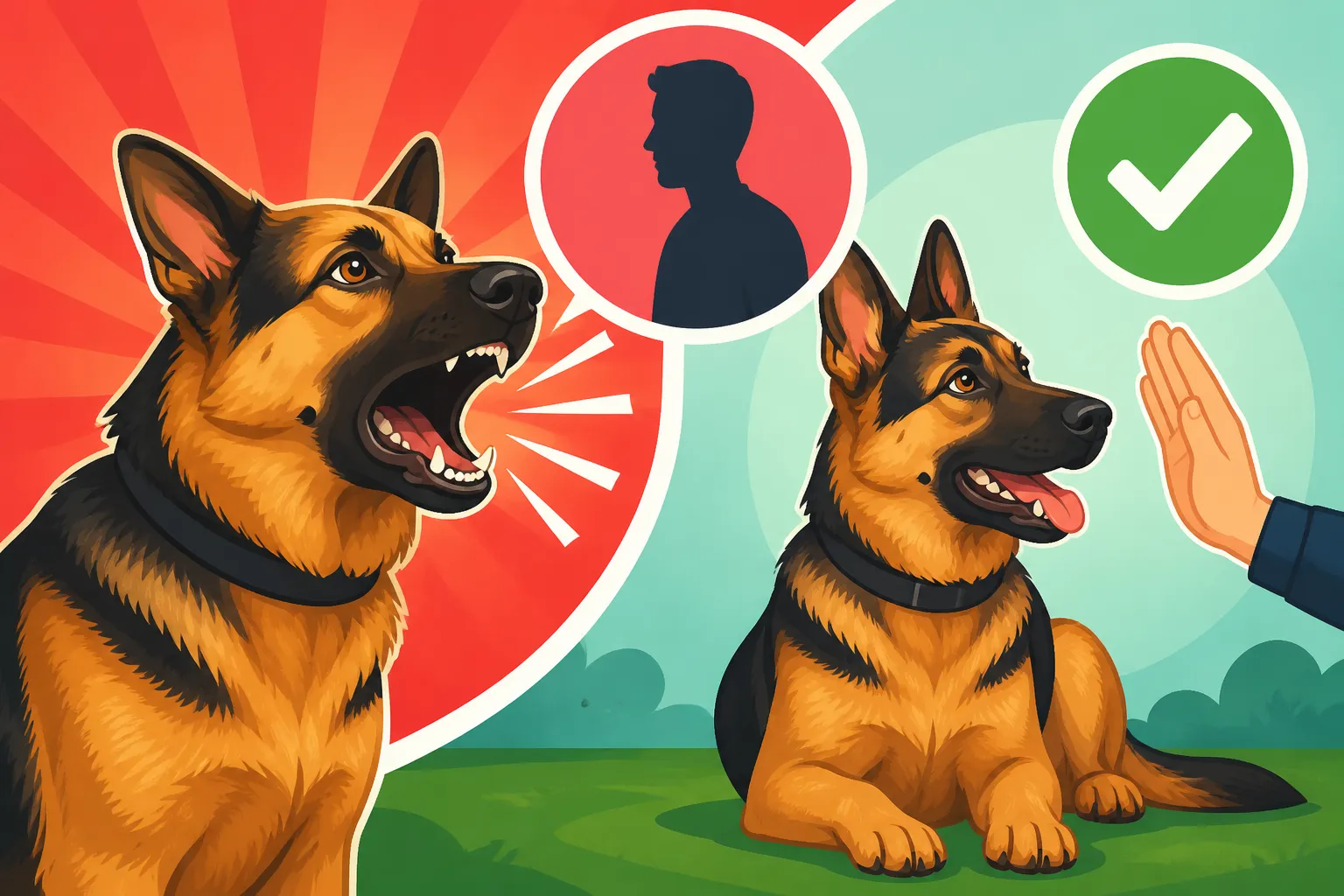
How to Stop German Shepherd Excessive Barking at Strangers
It’s a familiar scenario for many German Shepherd owners: you’re out for a peaceful walk, enjoying the crisp air, when suddenly a stranger appears a block away. Before you can even react, your magnificent German Shepherd transforms into a barking, lunging, and vocal protector, leaving you red-faced and apologizing profusely. This kind of excessive barking at strangers isn't just embarrassing; it can be incredibly stressful for both you and your dog, leading to fear, frustration, and a reluctance to enjoy public spaces together. This guide aims to unpack why your loyal companion might be exhibiting this behavior and provide you with actionable, empathetic strategies to manage and reduce it, helping you both reclaim your peace.
Understanding Why German Shepherds Bark at Strangers
German Shepherds are incredible dogs, known for their intelligence, loyalty, and protective instincts. But these very traits, when not properly channeled or understood, can manifest as excessive barking at strangers. It's rarely about pure aggression; more often, it's a complex mix of genetics, lack of socialization, fear, or simply not understanding how to react appropriately. Trying to fix the barking without addressing the root cause is like patching a leaky roof during a storm – it might work for a moment, but the underlying issue remains.
Natural Guardian Instincts
Let's be honest, German Shepherds were bred for a purpose: guarding and herding. This means they have an innate drive to protect their pack and territory. When they see a stranger, especially one approaching "their" person or "their" space, their instinct kicks in. They're not being malicious; they're simply doing what generations of their ancestors were bred to do – alert, deter, and potentially defend. It’s a powerful, primal urge that needs guidance, not punishment.
Think about it from their perspective. A new person, with unfamiliar smells, movements, and perhaps even a different gait, enters what your German Shepherd considers their sphere of influence. Their job, in their mind, is to assess, communicate, and ensure everyone in their charge is safe. For some GSDs, this means a low growl or a watchful eye. For others, especially those with stronger protective drives or heightened sensitivity, it can quickly escalate to loud, persistent barking, signaling "Danger! Stay away!" or "I'm here, I'm watching you!" It's important to differentiate this from purely offensive aggression, though it can certainly be perceived as such by an unsuspecting passerby.
Lack of Socialization
One of the biggest culprits behind stranger-directed barking is often a lack of proper, consistent socialization during their critical developmental periods. Puppies need to be exposed to a wide variety of sights, sounds, smells, people, and environments in a positive way. Without this crucial foundation, a German Shepherd might view anything new or different as a potential threat. They haven't learned that most strangers are benign, and their default reaction becomes alarm.
Imagine growing up in a quiet, isolated village and then suddenly being dropped into Times Square. You'd likely feel overwhelmed, anxious, and perhaps even threatened by the sheer volume of new stimuli and unknown faces. It's a similar experience for an undersocialized German Shepherd. They haven't built up the "mental rolodex" of what's normal and safe in the big, wide world. Every new person is an unknown variable, and their protective or fearful instincts take over, manifesting as barking. It’s not necessarily that they’re aggressive; they’re often just deeply unsure and trying to create distance. If you're looking for guidance on this, our article on How to Socialize a German Shepherd provides a detailed roadmap.
Fear or Insecurity
While German Shepherds often project an image of brave protectors, many instances of excessive barking at strangers stem from underlying fear or insecurity. A fearful dog might bark to make the "threat" go away, creating distance between themselves and the perceived danger. They might feel vulnerable, especially if they haven't learned to trust their owner's judgment in new situations, or if they've had a negative experience with a stranger in the past.
This can be incredibly subtle. A dog might shy away, try to hide behind you, or exhibit appeasement behaviors, but when those don't work, barking becomes their last resort. It's their way of saying, "Please, don't come closer!" rather than "I'm going to get you!" They might also feel insecure if they don't have clear boundaries or a strong, consistent leader in their life. A dog needs to feel safe and understand that their human will handle unfamiliar situations. If that trust isn't there, they may feel compelled to take matters into their own paws. This is particularly relevant when considering topics like How to Build Confidence in a Shy German Shepherd.
Lack of Training and Boundaries
Finally, sometimes the barking is simply a result of a German Shepherd not understanding appropriate behavior or a lack of clear boundaries from their owner. If barking has worked in the past to make strangers retreat (even if the stranger was just passing by), the dog learns that barking is an effective strategy. Without consistent training to teach an alternative, more desirable behavior, the barking cycle continues.
It's easy to inadvertently reinforce the barking. For example, if your GSD barks at a stranger and you immediately pull them away or offer comforting words, the dog might interpret this as "My barking made the scary thing go away!" or "My owner is nervous too, so I must be right to bark!" What they need is clear, consistent direction and the understanding that you, their owner, have things under control. This is where foundational obedience, as discussed in our German Shepherd Obedience Training Basics article, becomes incredibly important. They need to know what you do want them to do, not just what you don't want them to do.
Establishing Foundational Training and Socialization
Addressing excessive barking at strangers isn't about silencing your German Shepherd; it's about helping them feel more comfortable, confident, and understanding that you have the situation handled. This journey starts with a rock-solid foundation of training and socialization, ideally from puppyhood, but it's never too late to start reinforcing these principles. Consistency is truly the secret ingredient here.
Early and Ongoing Socialization
The single most impactful step you can take is to provide your German Shepherd with extensive, positive socialization experiences, both as a puppy and throughout their life. This doesn't mean letting them run wild with every dog and person they meet. Instead, it means controlled, positive exposures that teach them that new things are generally safe and don't require an alarm.
From the moment you bring your German Shepherd puppy home, expose them to different sights, sounds, surfaces, and a variety of people – men, women, children, people with hats, people on bikes, people with umbrellas, people in uniform, people of different ethnicities. Do this from a safe distance, rewarding calm curiosity. Take them to bustling parks, quiet streets, dog-friendly stores, and even just sit on a bench watching the world go by. The key is to keep these experiences positive and avoid overwhelming them. If you adopted an adult German Shepherd, this process requires even more patience and careful management, ensuring every new interaction is a positive one. Our detailed German Shepherd Socialization Checklist can be a huge help here.
Obedience Training Basics
Solid obedience training isn't just about showing off tricks; it's about building communication, trust, and a clear hierarchy where your German Shepherd understands you are the leader and will guide them. Commands like "Sit," "Stay," "Come," "Leave It," and especially a reliable "Quiet" command are absolutely vital in managing barking at strangers.
Think of these commands as your dog's safety net and your communication tools. If your German Shepherd knows "Look at Me," you can redirect their attention away from an approaching stranger. If they know "Leave It," you can teach them to ignore the trigger. A strong "Come" means you can call them back to you before a situation escalates. The "Quiet" command, taught by rewarding silence after a bark, helps them understand when enough is enough. Practice these commands in low-distraction environments first, then gradually introduce distractions, including people. Repetition, positive reinforcement, and patience will be your best friends. For a comprehensive overview, check out our guide on How to Train a German Shepherd.
Building a Strong Bond and Trust
At the heart of any good relationship with a German Shepherd is a deep bond built on trust, respect, and consistent leadership. When your dog trusts you implicitly, they are less likely to feel the need to take matters into their own paws (or mouth, in this case). They'll look to you for guidance when a stranger approaches, rather than reacting instinctively.
Spend quality time with your German Shepherd – not just physical exercise, but mental stimulation, training sessions, and calm cuddles. Be a consistent and fair leader, establishing clear rules and boundaries without resorting to harsh punishment. When you encounter a stranger, project confidence and calmness. Your dog picks up on your emotional state. If you tense up, clutch the leash, or get anxious, your German Shepherd will interpret that as a sign that there is something to be worried about. Trust that you can handle the situation, and your dog will learn to trust you too. This connection is fundamental for addressing many German Shepherd Behavior Problems and Solutions.
Practical Strategies for Managing and Reducing Barking
Once you have the foundational elements in place, you can start implementing specific strategies to actively manage and reduce your German Shepherd's barking at strangers. This is where you get proactive, anticipating triggers and teaching your dog alternative, more acceptable behaviors.
Desensitization and Counter-Conditioning
These are powerful, scientifically-backed training techniques that aim to change your dog's emotional response to a trigger (strangers).
- Desensitization involves gradually exposing your dog to the trigger at a distance or intensity where they don't react, slowly decreasing the distance or increasing the intensity over time.
- Counter-conditioning means changing a negative association (stranger = scary/bark-worthy) into a positive one (stranger = yummy treats/good things happen).
Here's how it works: Find a distance from strangers where your German Shepherd notices them but doesn't start barking. This might be across a park, or even looking out a window. As soon as a stranger appears in that safe zone, immediately reward your dog with high-value treats (like small pieces of cooked chicken or cheese). The stranger passes, the treats stop. Repeat this hundreds of times. Your dog will start to associate strangers with good things. Slowly, very slowly, decrease the distance. If your dog barks, you've moved too fast; increase the distance again. This isn't about distracting them; it's about changing their core emotional response. Many excellent resources, including online platforms like BAXTER & Bella, offer structured programs for desensitization.
Management Techniques and Tools
While you're working on changing your German Shepherd's emotional response, you also need practical ways to manage the barking in real-time. This prevents the barking from becoming a self-rewarding habit and keeps everyone safe and comfortable.
- Leash Control: A well-fitting, comfortable harness (like a front-clip harness) or head halter can give you better control without causing pain, making walks less stressful. Avoid retractable leashes, as they offer no real control.
- Avoidance: In the initial stages, it’s perfectly okay to manage your environment. If you know a particular street or park is very busy, choose quieter times or alternative routes. This isn't giving up; it's setting your dog up for success.
- Barrier Use: When in the home, if your GSD barks at people walking by the window, use frosted window film, blinds, or even a baby gate to block their view. "Out of sight, out of mind" can be very effective in reducing the practice of barking.
- Muzzles: For some German Shepherds, especially those whose barking is accompanied by lunging or aggressive displays, muzzle training can be a responsible and humane tool. A well-fitted basket muzzle (easily found on Amazon) allows them to pant, drink, and take treats, while providing peace of mind and preventing accidental nips. Always introduce a muzzle positively and gradually.
The Power of Redirection and Alternative Behaviors
Instead of just trying to stop the barking, teach your German Shepherd what you want them to do instead. This proactive approach gives them a job and a clear alternative behavior when they see a stranger.
When you spot a stranger before your German Shepherd does, immediately ask for a "Sit" or "Down." Reward them heavily for maintaining that position, especially if they make eye contact with you instead of the stranger. You can also teach them to "Touch" your hand or "Look at Me" as a default response to a trigger. This redirects their focus from the potential "threat" to you and a rewarding interaction. Another great strategy is to teach them to carry a toy or stick when walking; it's hard to bark with a toy in your mouth! This approach is often key for German Shepherds with German Shepherd Reactivity on Walks.
Consistent Routine and Environment
Dogs, especially intelligent breeds like German Shepherds, thrive on routine and predictability. A consistent daily schedule can significantly reduce anxiety, which is often an underlying factor in excessive barking.
Ensure your German Shepherd gets adequate physical exercise and mental stimulation appropriate for their age and energy level. A bored German Shepherd with pent-up energy is much more likely to find "entertainment" in barking at passersby. A mentally stimulated German Shepherd, challenged with puzzle toys (also available on Amazon), scent work, or regular training sessions, will be calmer and more focused. Providing a consistent schedule for feeding, walks, training, and rest helps create a sense of security, reducing the need for them to be constantly "on guard." Our article on German Shepherd Energy Level Explained can help you determine the right amount of activity for your dog.
| Barking Trigger | Possible Underlying Cause | Immediate Management Strategy | Long-Term Training Focus |
|---|---|---|---|
| Doorbell/Knock | Protective instinct, Excitement, Lack of impulse control | "Quiet" command, "Place" command, Mute doorbell | Desensitization to doorbell sound, practicing calm greetings |
| People Outside Window | Territoriality, Boredom, Fear/Anxiety | Block view (blinds/film), "Look at Me" command | Counter-conditioning (treats for calm observation), increased mental enrichment |
| Approaching Strangers on Walk | Fear, Protective instinct, Lack of socialization | Increase distance, Redirect attention to owner ("Look"), "Treat bomb" | Desensitization/Counter-conditioning at threshold, focused heel work |
| Strangers Entering Home | Territoriality, Lack of trust, Over-arousal | Crate/separate dog, "Place" command, Leash control | Controlled introductions, teaching polite greeting behaviors |
| Sudden Noises (e.g., mail carrier) | Startle reflex, Anxiety | Identify and avoid triggers, "Quiet" command | Noise desensitization (play sound recordings quietly), calm exposure |
When to Seek Professional Help
While many German Shepherd barking issues can be managed with consistent home training, there are times when professional intervention is not just helpful, but necessary. Recognizing these signs early can prevent escalation and ensure your dog gets the support they need.
Recognizing Escalating Behavior
It's one thing for a German Shepherd to bark loudly; it's another if that barking is accompanied by other concerning behaviors. If the barking turns into true aggression—snapping, growling, lunging with intent to bite, or even actual biting—it's time to call in the pros. Similarly, if your dog is exhibiting extreme fear, showing signs of panic attacks, or becoming inconsolably anxious around strangers, a professional can help unravel the complexity.
Other red flags include if the barking is interfering significantly with your daily life, causing harm to your relationship with your dog, or leading to complaints from neighbors. If your attempts at training are met with increased resistance or if the behavior is getting worse despite your efforts, this indicates a need for expert guidance. Remember, you don't have to tackle severe behavioral challenges alone. Knowing when to get help is a sign of a responsible owner. Our article When to Hire a Trainer for a German Shepherd gives more insights into this decision.
Benefits of a Certified Professional Dog Trainer or Behaviorist
A certified professional dog trainer or a veterinary behaviorist brings a wealth of knowledge and experience to the table. They can accurately assess your German Shepherd's specific triggers, body language, and the underlying motivation for the barking. This individualized assessment is crucial because what works for one dog might not work for another.
They can design a tailored training plan that addresses your dog's unique needs, using humane, force-free methods. They can teach you advanced handling skills, demonstrate techniques like desensitization and counter-conditioning, and provide ongoing support and adjustments to the plan. For complex cases involving deep-seated fear or aggression, a veterinary behaviorist (a veterinarian with specialized training in animal behavior) can even evaluate if medication might be a helpful component of a comprehensive behavior modification plan, alongside training. They don't just train your dog; they train you to understand and communicate with your dog more effectively.
Considering Online Training Programs
In today's connected world, access to professional training resources extends beyond in-person classes. Online training programs can be an excellent supplement or even a primary resource for German Shepherd owners looking for guidance, especially if local trainers are scarce or budgets are tight.
Many reputable online platforms offer structured courses, video tutorials, and even virtual coaching sessions with certified trainers. For instance, programs like those offered by BAXTER & Bella provide comprehensive, step-by-step guides on various training topics, including reactivity and socialization. They allow you to learn at your own pace, in the comfort of your home, and often provide access to a community of fellow dog owners and trainers for support. While not a replacement for a hands-on behaviorist in severe cases, these platforms can empower you with knowledge and tools, making them a valuable part of your German Shepherd's training journey.
Disclaimer
The information provided in this guide is for general informational purposes only and is not a substitute for professional veterinary advice, diagnosis, or treatment. Always seek the advice of your veterinarian or other qualified animal health provider with any questions you may have regarding a medical condition or behavior issue.