How to Tell If a German Shepherd Is Overweight
It’s a common worry for German Shepherd owners, isn't it? You look at your majestic companion, perhaps with their thick double coat, and you start to wonder: are they carrying a little too much weight? It can be surprisingly tricky to tell, especially when their fur hides some of the more obvious visual cues. We want our dogs to be healthy and happy, living their longest, best lives, and maintaining a proper weight is a huge part of that. This guide is here to walk you through exactly how to assess your German Shepherd's physique, interpret behavioral signs, and understand when it's time to seek professional advice to ensure they stay in prime condition.
The Silent Strain: Why German Shepherd Weight Matters So Much
You might think a little extra fluff is harmless, but for a breed as active and prone to certain health conditions as the German Shepherd, even a few extra pounds can lead to significant problems down the line. We love our dogs like family, and seeing them struggle with their health is heartbreaking. Understanding why weight management is so critical is the first step toward proactive care.
The Hidden Dangers of Excess Weight
When a German Shepherd carries extra weight, it’s not just a cosmetic issue; it's a silent strain on their entire system. Their skeletal structure, already under considerable load, bears the brunt of it. We often talk about German Shepherd Hip Dysplasia Explained and elbow dysplasia in this breed, and frankly, excess weight is like adding insult to injury. It exacerbates these conditions, causing more pain and accelerating joint degeneration, often leading to issues like German Shepherd Arthritis in Senior Dogs much earlier than they might otherwise experience. Imagine walking around with a weighted vest all day, every day – that's what it feels like for an overweight dog.
Beyond joint problems, obesity significantly increases the risk for a host of other serious health concerns. Overweight dogs are more susceptible to diabetes, heart disease, and high blood pressure, much like humans. Their respiratory system has to work harder, making them less tolerant to exercise and heat. Even conditions like How to Prevent Bloat (GDV) in German Shepherds, a terrifying and life-threatening emergency, can be indirectly influenced by overall health and diet, where maintaining an ideal weight plays a supportive role. This isn't about vanity; it's about protecting their long-term well-being and preventing unnecessary suffering.
The German Shepherd Physique: What's Normal
A healthy German Shepherd is a picture of athletic elegance. They are built for strength, agility, and endurance, not bulk. When you look at a healthy German Shepherd, you should see a strong, well-muscled body with a noticeable waistline and a distinct abdominal tuck. Their rib cage should be prominent but not jutting out, and their muscles should feel firm and well-defined, especially over the hindquarters.
Their double coat can certainly make things challenging, acting like a furry blanket that hides the underlying physique. This is why a hands-on approach is so crucial, as we’ll discuss. What might look like a "big boned" dog could actually be an overweight one. It’s important to distinguish between a robust, muscular build and a body carrying excess fat. A good reference point is usually a German Shepherd at the peak of its working condition, whether that's in sport or a demanding job, where lean muscle mass is prioritized.
Hands-On Assessment: The Rib Test and Body Shape
When you’re trying to figure out if your German Shepherd is carrying extra pounds, looking alone isn't always enough. Their gorgeous, thick fur can be a master of disguise! That’s why you need to get hands-on and combine it with visual inspection from different angles. This tactile assessment, often called the "rib test," is one of the most reliable methods.
The Rib Check: Feeling for Those Ribs
The rib check is simple, but it requires a bit of practice. Gently run the palms of your hands along your German Shepherd's sides, just behind their shoulder blades, feeling along their rib cage.
What you should feel in a healthy German Shepherd is the individual ribs without having to press hard. It should feel like running your hand over a washboard covered by a thin layer of skin and muscle, with perhaps a very slight layer of fat. You should feel definition between each rib. If you can easily count each rib without much effort, your dog might be a little on the lean side, which isn't necessarily bad if they're otherwise healthy and active, but worth noting.
Now, what you shouldn't feel if they're overweight is a significant cushion or padding over the ribs. If you have to press firmly to feel the ribs, or if you can't distinguish individual ribs at all and it feels more like a smooth, unbroken surface, then your German Shepherd is likely carrying too much excess body fat. This is the clearest indication that they’ve packed on more than just muscle. Don't be shy; really get in there and feel. Their coat can be thick, so ensure you're feeling their body, not just the fur.
Observing from Above and the Side
Once you've done the rib test, it's time to step back and take a good look. Visual cues, even if subtle, can provide valuable information when combined with the tactile exam.
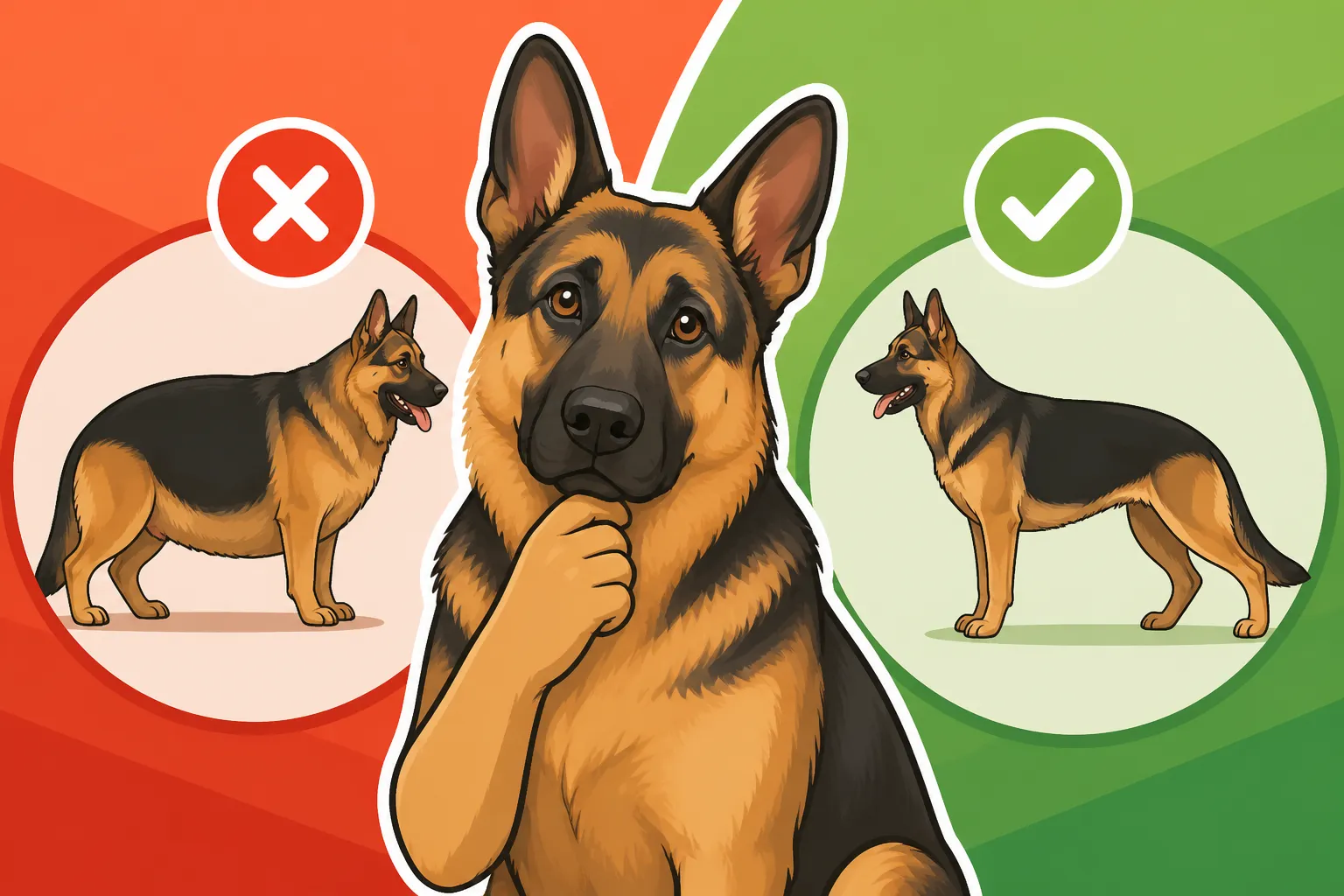
When you look at your German Shepherd from directly above, they should have what's often described as an "hourglass figure." Their body should narrow noticeably behind the rib cage, forming a distinct waist, and then slightly widen again over the hips. This tuck should be visible, even under a thick coat, though it might be less dramatic than on a short-haired breed. If your German Shepherd looks more like a sausage or a straight line from their chest to their tail, without any narrowing, they are likely overweight. There's no distinct waist, just a continuous, often rounded, silhouette.
Now, shift your perspective and look at them from the side. A healthy German Shepherd should have a clear "abdominal tuck." This means their belly should slope upwards from their chest to their hind legs, not hang low or be parallel to the ground. It’s an athletic, streamlined look. If their abdomen sags, hangs low, or appears rounded and full, that’s another strong indicator of excess weight. Think of it as the difference between a sleek athlete and someone who's let themselves go a bit – the belly tells a big part of the story. You want to see that lean, powerful shape, not a bulky, rounded one.
Beyond the Visual: Behavioral and Lifestyle Clues
Sometimes, the most telling signs of a German Shepherd being overweight aren't just what you see or feel, but what you observe in their daily life. Our dogs communicate with us through their actions, and changes in their behavior or physical capabilities can be a huge red flag that something is off, especially concerning their weight.
Changes in Activity Levels and Stamina
One of the first things you might notice if your German Shepherd is carrying extra weight is a general slowing down. These are active, intelligent dogs, built for work and play. If your once-enthusiastic companion is less eager for walks, seems to lag behind, or tires out much faster than usual during playtime, it's worth paying attention. Maybe they used to bound up the stairs or jump into the car with ease, but now they hesitate, or even struggle. These subtle shifts can indicate that their body is finding movement more strenuous.
A healthy German Shepherd should be ready for a good romp, whether it's a long walk around the neighborhood, a session of fetch in the park, or training exercises. If they're suddenly uninterested in these activities, or can only sustain them for shorter periods, their weight might be a contributing factor. Remember, German Shepherd Exercise Requirements are pretty substantial, and if they're not meeting them without quickly becoming winded, it's a sign that their fitness, and possibly their weight, needs addressing. This isn't just about them getting older; even middle-aged dogs can show these signs if they've gained too much weight.
Breathing and Movement Difficulties
Beyond just a general decrease in activity, you might observe more specific difficulties in their breathing and movement. An overweight German Shepherd might pant excessively, even after minimal exertion or in cooler temperatures. Their lungs and heart have to work harder to supply oxygen to a larger, less efficient body. This labored breathing can be particularly noticeable after a short burst of activity or even just walking up a slight incline.
You might also see them struggling with movements that used to be second nature. Jumping into the back of an SUV, clearing a low fence, or even getting up from a lying position might become an obvious effort. Their gait might change, appearing more stiff or wobbly, as their joints protest the added burden. While some of these signs can also point to other health issues, like developing arthritis or muscle soreness, ruling out weight as a primary contributor is crucial, especially when combined with the physical assessment. Paying close attention to these everyday struggles can provide powerful insights into your German Shepherd's overall condition.
Appetite and Eating Habits
Sometimes, the culprit for weight gain is right there in the food bowl, or in the extra treats that find their way to your dog. If your German Shepherd seems constantly hungry, always begging for food, or consumes their meals with excessive speed, it might be an indicator that their current diet isn't satisfying them or that they're getting too many calories. It's easy to fall into the trap of giving extra snacks, especially when they look up at you with those pleading eyes.
It’s worth reviewing your German Shepherd's German Shepherd Feeding Guide to ensure you're providing the correct amount for their age, activity level, and current weight. Many owners inadvertently overfeed, especially with larger breed-specific kibbles that have large serving sizes. Even small treats add up quickly. If you've been lax with portion control or frequently share human food, this could be the root of the problem. Sometimes, a dog that acts ravenous is actually not getting enough fiber or the right kind of nutrients, leading them to feel unsatisfied even when consuming excess calories.
Consulting the Scale and Your Vet: The Professional Perspective
While your observations and hands-on checks are incredibly valuable, sometimes you need the cold hard facts from a scale, and always, always the expert eye of your veterinarian. They have the tools and the knowledge to give you a definitive answer and help you craft a plan forward.
Understanding Ideal Weight Ranges
It's tempting to look at a chart and say, "My male German Shepherd should weigh X pounds!" But the truth is, ideal weight ranges are just that – ranges, not strict targets. A healthy adult male German Shepherd can typically weigh anywhere from 65 to 90 pounds, while females usually fall between 50 and 70 pounds. However, these numbers can vary quite a bit depending on their specific lineage, build, and overall body condition. A working line dog, for instance, might naturally be leaner and more compact than a show line dog, even if both are perfectly healthy.
The number on the scale is less important than what that number means for your individual dog's body. What's crucial is how that weight translates to their Body Condition Score (BCS), which is what veterinarians use. A German Shepherd could be at the higher end of the weight range but be all muscle, while another at the lower end could still be carrying too much fat. This is why the visual and tactile assessments we discussed earlier are so important – they provide the context for the number on the scale. Trying to hit a specific number without considering your dog's unique build can be misleading.
| Body Condition Score | Visual Assessment | Palpation (Ribs) | Abdominal Tuck | Waistline |
|---|---|---|---|---|
| Emaciated | Ribs, spine, pelvic bones visible from a distance | Easily visible, no fat, muscle loss | Severe | Severe |
| Underweight | Ribs, spine, pelvic bones easily visible, minimal fat | Easily felt, minimal fat | Marked | Marked |
| Ideal | Ribs easily felt, slight fat covering; waist observed from above, tuck from side | Easily felt with slight fat covering | Evident | Clearly visible |
| Overweight | Ribs felt with difficulty, noticeable fat covering; no waist, rounded appearance | Difficult to feel, moderate fat covering | Absent or slight | Absent or slight |
| Obese | Ribs not felt; obvious fat deposits over loin, tail base; no waist or tuck | Cannot be felt, excessive fat covering | Bulging, often hangs low | Absent or bulging |
Partnering with Your Veterinarian
When in doubt, your veterinarian is your most valuable resource. They can perform a thorough physical examination, including a professional Body Condition Score assessment, which is much more precise than what we can do at home. They’ll take into account your German Shepherd's age, breed, and activity level to determine their ideal weight range and identify any underlying health issues that might be contributing to weight gain or making weight loss more challenging.
Your vet can also rule out medical causes for weight gain, such as thyroid issues, and help you develop a safe and effective weight management plan. This plan might involve dietary adjustments, recommending specific foods (brands like Purina Pro Plan Veterinary Diets or Hill's Science Diet often have excellent weight management formulas), adjusting portion sizes (which you can easily find on platforms like Chewy or Amazon), or increasing activity levels. They can also advise on appropriate German Shepherd Joint Health Supplements if joint issues are a concern. Remember, starting a new diet or exercise regimen should always be discussed with your vet first to ensure it’s healthy and appropriate for your individual dog. For those considering fresh food options, services like Ollie provide pre-portioned, vet-formulated meals that could also be part of a weight management strategy, if approved by your vet. Regular check-ups are key to not only identifying problems but also monitoring progress and making adjustments as needed. This ongoing partnership is essential for keeping your German Shepherd healthy throughout their life, especially as they enter their senior years, which you can learn more about in our German Shepherd Senior Care Guide.
Disclaimer
The information provided in this article is for general informational purposes only and is not a substitute for professional veterinary advice. Always consult with a qualified veterinarian for any health concerns or before making any decisions related to your pet's care, diet, or exercise regimen.