Working Line vs Show Line German Shepherd
One of the biggest hurdles many aspiring German Shepherd owners face is understanding the distinct differences between a "working line" and a "show line" dog. It's a common point of confusion that can lead to unexpected challenges if you pick the wrong type for your lifestyle, often resulting in frustration for both dog and owner. This comprehensive guide aims to demystify these two prominent lines, exploring their unique histories, physical traits, temperaments, and specific needs, helping you make the most informed decision for your family and future canine companion.
Understanding the Origins: A Tale of Two Paths
To truly appreciate the differences between working line and show line German Shepherds, we need to take a quick trip back to the breed's very beginnings. Understanding their foundational purpose and how human preferences steered their development helps paint a clear picture of why they are so distinct today.
The Foundation of the Breed
The German Shepherd Dog, as envisioned by Captain Max von Stephanitz in the late 19th century, was intended to be the ultimate working dog. He sought to create a breed with exceptional intelligence, unwavering courage, and impressive physical prowess, primarily for herding sheep. Every aspect of his breeding program focused on utility and temperament, ensuring that only dogs demonstrating superior working ability were allowed to contribute to the gene pool. This commitment to purpose over pure aesthetics laid the groundwork for the incredible versatility we see in German Shepherds today.
Von Stephanitz's famous mantra, "Utility is the true criterion of beauty," profoundly shaped the early development of the breed. Dogs were rigorously tested for their mental stability, physical endurance, and ability to perform demanding tasks. This wasn't about winning ribbons in a ring; it was about producing reliable, capable partners for demanding jobs. This strong foundation meant that early German Shepherds, regardless of their eventual lineage, carried a powerful genetic legacy of intelligence and drive.
The Divergence of Lines
Over time, as the German Shepherd's popularity grew worldwide, different breeding philosophies began to emerge. In Germany, the breed was carefully maintained by strict regulations under the SV (Verein für Deutsche Schäferhunde), ensuring that working ability remained paramount for breeding certification. However, in other parts of the world, particularly North America, the focus gradually shifted more towards aesthetic qualities for dog shows, often at the expense of working aptitude. This divergence created the two main pathways we now refer to as working lines and show lines.
This wasn't a sudden split but a gradual evolution driven by differing cultural priorities in dog ownership. While the original German standard always maintained a strong emphasis on working ability, the American Kennel Club (AKC) standard, for instance, began to favor a particular look and gait that, while beautiful, didn't necessarily correlate with the functional requirements of a herding or protection dog. This led to distinct physical and temperamental traits becoming more pronounced in each line, making the choice for prospective owners increasingly complex.
Working Line Philosophy
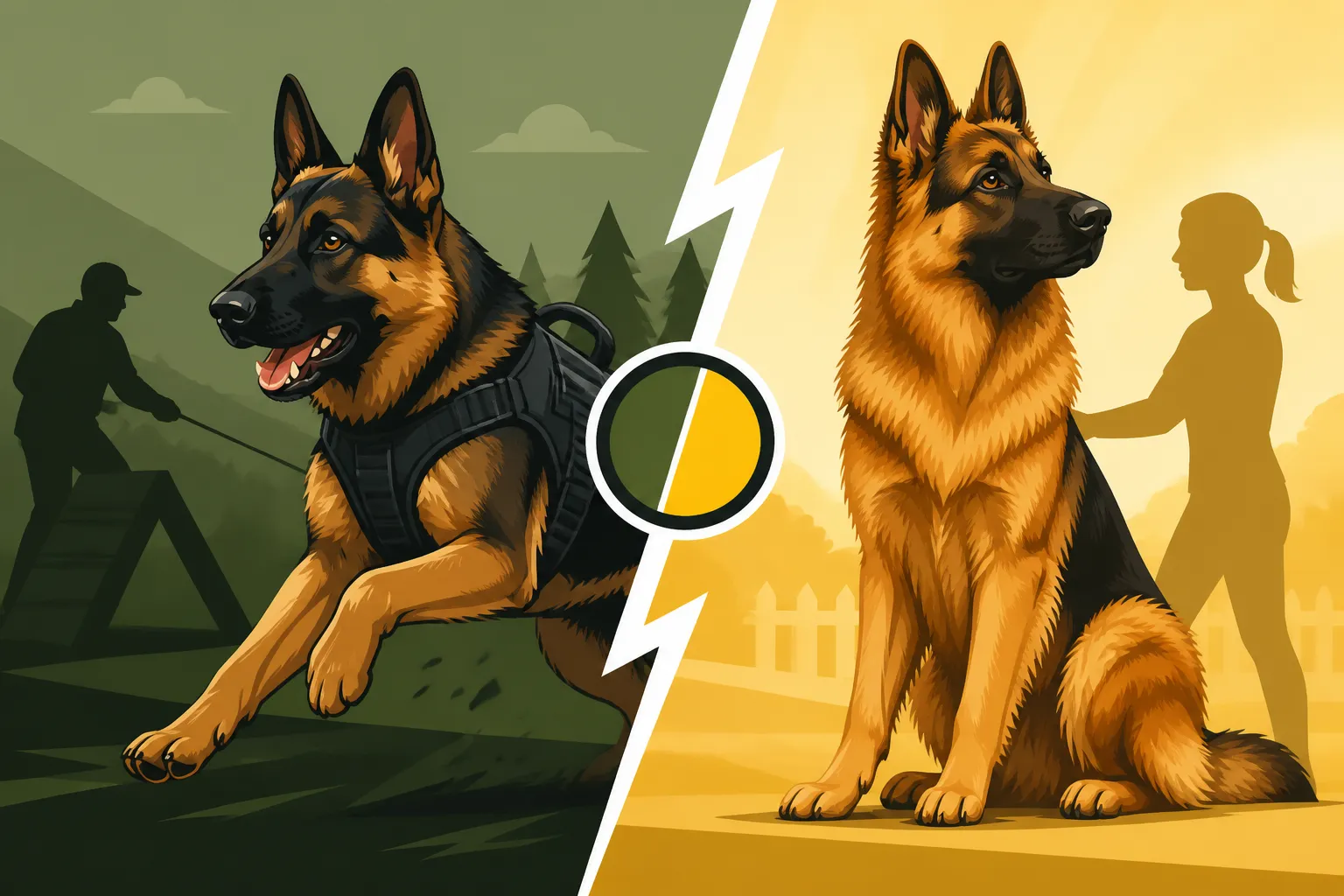
Working line German Shepherds are bred with a singular focus: performance. Their breeders prioritize traits like high drive, trainability, strong nerves, physical endurance, and a robust, confident temperament. These dogs are descendants of lines specifically selected for careers in police work, military service, search and rescue, competitive dog sports like Schutzhund (now IGP), and herding. Their conformation, while still adhering to breed standards, is secondary to their ability to perform strenuous tasks for extended periods.
For a working line German Shepherd to be considered suitable for breeding in Germany, it typically must pass rigorous working titles (like IPO/IGP), have certified hips and elbows, and display impeccable temperament. This ensures that the intense drive and mental fortitude that define these dogs are continually preserved. Owners often seek these dogs for their unparalleled work ethic and trainability, understanding that this high drive translates into significant exercise and mental stimulation requirements. If you're looking into competitive sports or professional work, understanding German Shepherd IGP Sport Explained can be very helpful.
Show Line Philosophy
Show line German Shepherds, especially those bred primarily for conformation shows in North America, are selected for their adherence to a specific aesthetic standard. This often includes a sloped back, exaggerated angulation, and a particular flowing gait that is rewarded in the show ring. While temperament and general health are still considered, the emphasis tends to be more on appearance and less on intense working drive. European show lines (often called West German Show Lines) maintain a stronger connection to working aptitude, requiring working titles and health clearances for breeding, unlike many American show lines.
The aim of show line breeders is to produce dogs that excel in the conformation ring. This means focusing on elements like coat color, size, ear set, and the characteristic silhouette. While these dogs can still be wonderful companions and certainly possess intelligence, their genetic predisposition leans more towards a calmer demeanor, less intense drive, and a physical structure optimized for presentation rather than endurance work. For many families seeking a beautiful, devoted companion without the extreme demands of a working dog, a show line German Shepherd might be a perfect fit.
Physical Characteristics: More Than Just Looks
When you look at a German Shepherd, you might not immediately notice the subtle physical cues that differentiate a working line from a show line. However, these differences are quite significant and are directly tied to their breeding purposes. It’s not just about a pretty face; it’s about a body designed for a specific function.
The Working Line Physique
Working line German Shepherds typically exhibit a more traditional, "old-fashioned" look. They often have a straighter back, with less dramatic angulation in their rear legs. Their build is robust, muscular, and athletic, designed for endurance, agility, and power. You'll see strong bones, solid musculature, and a general impression of ruggedness and durability. Their proportions are balanced to allow for efficient movement over varied terrain and sustained physical activity.
Their heads are usually strong and masculine, with powerful jaws. The overall impression is one of strength and functionality. They aren't bred for a flashy, high-stepping gait, but rather for a ground-covering, efficient trot that can be maintained for hours. Think of a marathon runner compared to a ballet dancer – both athletes, but built for different types of performance. When considering German Shepherd Size and Weight Guide, you'll notice that while both lines fall within the standard, working lines tend to be more compact and powerful, less prone to excessive weight, and more about functional muscle.
The Show Line Silhouette
American show line German Shepherds are renowned for their distinctive, often more exaggerated, silhouette. They typically feature a significant slope from the shoulders to the hips, a characteristic often referred to as a "roach back" or "sloped back." Their rear angulation is much more pronounced, designed to create a dramatic, extended gait that is highly prized in the show ring. This structure, while visually striking, has been a point of debate regarding its impact on long-term joint health and functional movement.
European show lines, particularly those from West Germany, tend to have a less exaggerated slope and angulation than their American counterparts, still reflecting the SV's emphasis on soundness and movement that can perform a working task. However, even these European show lines will have a more refined, elegant look than pure working lines. For those interested in the specific anatomical nuances, a deeper dive into topics like Straight Back vs Sloped Back German Shepherd can reveal more about how these structural differences influence movement and health.
Coat and Color Variations
Both working and show lines can come in a variety of colors, but certain patterns and shades might be more prevalent in one line over another. Common colors include black and tan, sable, bi-color, and solid black. Working lines frequently exhibit sable coats, which are excellent camouflage for outdoor work, and solid black coats, often favored for their striking appearance in police and military K9 units. They tend to have a dense double coat that provides excellent protection against the elements.
Show lines, particularly American ones, often feature the classic black and tan or black and red saddle patterns. While sable and solid black are also seen, the emphasis in show lines is generally on vibrant, rich pigmentation that stands out in the ring. Both lines can have long or short coats, though the traditional short double coat is most common. Long-haired German Shepherds exist in both lines but are generally considered a fault in the conformation ring for traditional show lines.
Here's a quick comparison of physical traits:
| Feature | Working Line German Shepherd | Show Line German Shepherd (American) | Show Line German Shepherd (European/West German) |
|---|---|---|---|
| Back Structure | Straighter back, level topline | Significantly sloped back, often described as "roach back" | Slight slope, less exaggerated than American lines |
| Rear Angulation | Moderate angulation, balanced for endurance | Exaggerated angulation, designed for dramatic gait | Moderate to strong angulation, still functional |
| Overall Build | Robust, powerful, athletic, sturdy bone structure | More refined, sometimes appearing lighter-boned | Strong, athletic, balanced; a blend of form and function |
| Movement | Efficient, ground-covering, purposeful trot | Showy, extended, flowing gait | Powerful, fluid, still capable of sustained work |
| Head | Strong, masculine, powerful jaws | Can be slightly more refined, still strong | Strong and proportionate |
| Coat Colors | Often sable, solid black, bi-color (functional camouflage) | Predominantly black & tan/red, vibrant pigmentation | Wide range, including black & tan/red, sable, bi-color |
Temperament and Drive: What Motivates Them
Beyond their looks, the most profound differences between working line and show line German Shepherds lie in their temperament and inherent drive. These psychological traits dictate how they interact with the world, how they learn, and how much stimulation they truly need to thrive.
The Working Line Psyche
Working line German Shepherds are characterized by their intense drive, sharp intelligence, and high energy levels. They possess a strong "work ethic" and thrive on having a job to do. This translates into a dog that needs significant mental and physical stimulation daily. They are often described as having "harder" temperaments, meaning they are more resilient, persistent, and less easily deterred by environmental stressors. This makes them ideal for demanding roles where courage, focus, and tenacity are paramount.
These dogs typically exhibit strong prey drive, defense drive, and a natural guarding instinct. They are often highly protective of their families and territory. While incredibly loyal, their intensity means they require experienced handlers who understand how to channel their energy and drive constructively. Early and extensive German Shepherd Socialization Checklist is crucial to ensure their powerful instincts are properly managed, preventing potential issues with strangers or other animals. Without adequate mental and physical outlets, a working line German Shepherd can become bored, destructive, or develop behavioral problems.
The Show Line Disposition
American show line German Shepherds generally have a softer, more laid-back temperament compared to their working counterparts. They are often bred to be excellent family companions, exhibiting a calmer disposition that makes them easier to integrate into less active households. While still intelligent and trainable, their drive for intense work is typically much lower. They are often more outwardly friendly and less overtly protective, though they retain the breed's natural alert qualities.
European show lines, as mentioned, fall somewhat in the middle. They are bred to be beautiful and functional, often requiring basic working titles for breeding. Therefore, their temperament tends to be more balanced – still confident and capable, but perhaps with less explosive drive than a pure working line. They can make fantastic family dogs who enjoy activities but don't necessarily need a demanding "job" every single day. For many owners, a well-bred show line German Shepherd offers the classic look and loyal personality without the extreme exercise demands.
Socialization and Instincts
Regardless of the line, proper socialization is non-negotiable for a German Shepherd. From a young age, exposure to a wide variety of people, places, sounds, and other animals is critical. For a working line dog with its inherent protective instincts and high drive, this early exposure helps shape a confident, stable adult who understands appropriate responses to novel situations. Without it, their natural wariness can easily tip into reactivity or fear-based aggression.
Show line dogs, while often having a more genial disposition, still benefit immensely from comprehensive socialization. It helps them develop into well-adjusted individuals, comfortable and calm in diverse environments. Both lines will typically display a strong bond with their family, but the manifestation of this bond can differ. Working lines might exhibit a more intense, 'always-on-guard' presence, while show lines might be more content to simply be near their loved ones, observing calmly. Understanding German Shepherd Temperament and Personality will highlight that while there are line differences, core breed traits like loyalty and intelligence remain.
Health Considerations: Line-Specific Tendencies
Health is a paramount concern for any dog owner, and German Shepherds, unfortunately, are prone to several genetic conditions. The different breeding priorities in working and show lines have led to some variations in the prevalence and severity of certain health issues.
Common Ailments in Each Line
Both lines are susceptible to classic German Shepherd health problems, most notably hip and elbow dysplasia. However, the severity and prevalence can sometimes differ. American show lines, with their emphasis on extreme rear angulation, have faced criticism for potentially increasing the risk of hip and elbow dysplasia, as this structure can place undue stress on joints. Conversely, responsible working line breeders have historically placed a very high priority on sound structure and official health clearances, meaning that while dysplasia can still occur, it might be less prevalent or severe in carefully selected lines. Learning about German Shepherd Hip Dysplasia Explained is crucial for any potential owner.
Beyond joint issues, working lines might be more prone to certain sport-related injuries due to their high activity levels, such as muscle strains or cruciate ligament tears. Show lines, particularly those with more exaggerated features, may sometimes experience issues related to their specific conformation, though these are less common than joint problems. Bloat (GDV) is a concern for all deep-chested breeds, including both German Shepherd lines, and German Shepherd Bloat: Signs and Prevention is a must-read for all owners.
Genetic Testing and Responsible Breeding
A reputable breeder, regardless of whether they breed working or show lines, will perform extensive health testing on their breeding stock. This includes OFA (Orthopedic Foundation for Animals) or PennHIP evaluations for hips and elbows, and increasingly, DNA testing for conditions like Degenerative Myelopathy (DM) and Von Willebrand Disease (vWD). For anyone considering a German Shepherd, verifying these health clearances is non-negotiable. Don't be afraid to ask for documentation; a good breeder will be transparent and proud to share it. You can explore topics like German Shepherd Genetic Health Testing to understand the full scope of screenings available.
It's important to remember that a "show line" or "working line" designation alone doesn't guarantee health. There are poorly bred dogs in both categories, and exceptionally healthy dogs in both. The key is to find a breeder who prioritizes the overall health and longevity of their dogs, actively screens for genetic conditions, and makes informed breeding decisions. This dedication to health helps in ensuring a long and happy life for your German Shepherd, which is vital when considering their typical German Shepherd Lifespan: How Long They Live.
Lifespan Expectations
The average lifespan for a German Shepherd is generally between 9 to 13 years. There isn't a significant, inherent difference in lifespan directly between working and show lines if both are bred responsibly and receive proper care. However, lifestyle and health management play a huge role. Working line dogs, due to their high activity levels, might be more prone to injuries if not properly conditioned or if pushed too hard. Show line dogs, if carrying excess weight or with structural predispositions, could experience earlier onset or more severe joint issues.
Ultimately, how you care for your German Shepherd, including providing a high-quality diet, appropriate exercise, regular veterinary care, and mental stimulation, will have a greater impact on their longevity than their line designation. Proactive health management and early intervention for any issues are key to helping your German Shepherd live a full and vibrant life. For more tips on maximizing your dog's health, check out How to Keep a German Shepherd Healthy.
Training and Exercise Needs: Matching Energy with Expectations
This is perhaps where the most practical distinction between working and show lines truly shines. Mismatched expectations regarding a German Shepherd's energy and training requirements are a primary reason dogs end up in shelters. Knowing what you're getting into beforehand is crucial.
Working Line Activity Requirements
Working line German Shepherds are not for the faint of heart, nor for couch potatoes. They possess incredibly high energy levels and an insatiable need for physical and mental stimulation. We're talking multiple hours of vigorous exercise daily, not just a leisurely stroll around the block. This might include running, hiking, biking, intense fetch sessions, agility training, or participating in dog sports. Their minds are equally active, requiring consistent training, puzzle toys, and challenging tasks to prevent boredom and destructive behaviors.
Without sufficient outlets, a working line dog can become a handful, manifesting their pent-up energy in ways you won't appreciate: excessive barking, chewing, digging, or even aggression due to frustration. They thrive on having a "job" – whether it's formal protection work, obedience trials, or even complex scent games you set up in your yard. For these dogs, training is an ongoing, lifelong commitment, not a one-time class. Resources like German Shepherd Exercise Requirements delve deeper into the specific needs of these active dogs.
Show Line Activity Requirements
Show line German Shepherds, while still active dogs that need daily exercise, typically have lower overall energy levels than their working line cousins. They generally do well with a good walk or two each day, along with some playtime in a securely fenced yard. They still require mental stimulation, but it might not need to be as intense or constant. They are often content to be by their owner's side, enjoying a less structured routine once their basic exercise needs are met.
This doesn't mean they are lazy! German Shepherds, regardless of line, are intelligent and active animals. A show line German Shepherd will still need engaging activities, basic obedience training, and opportunities to run and play. However, they are often a better fit for families who enjoy an active lifestyle but don't intend to devote their lives to dog sports or advanced working tasks. They can adapt more easily to varied schedules and might be more tolerant of an occasional missed day of intense activity.
Training Approaches and Challenges
Both lines are highly intelligent and excel in training, but their drives will influence the approach. Working lines often respond exceptionally well to motivational training methods that tap into their prey or food drive, thriving on consistency and clear expectations. They are eager to please and quick to learn, but their intensity means that mistakes in training can be harder to correct. They require a confident, fair, and consistent handler who can channel their strong will effectively. Exploring How to Train a German Shepherd will offer foundational advice applicable to both lines, but specific nuances will apply.
Show lines are also highly trainable and respond well to positive reinforcement. They might be slightly less intense, making them a bit more forgiving for novice trainers. However, consistency is still key. They benefit from structured obedience classes and can enjoy activities like canine good citizen tests or even less strenuous dog sports like rally obedience. The primary challenge with show lines might be their tendency to be less driven, meaning you might need more patience and a wider variety of rewards to keep them engaged over long training sessions compared to a hyper-focused working line dog. For any German Shepherd puppy, early training and socialization are vital, and resources like German Shepherd Puppy Training Guide are invaluable. Many owners find useful training tools, treats, and interactive toys on sites like Chewy to keep their dogs engaged.
Suitability for Different Lifestyles: Finding Your Perfect Match
Choosing between a working line and a show line German Shepherd ultimately comes down to an honest assessment of your lifestyle, experience, and expectations. It's about finding a dog whose needs align with what you can genuinely provide.
Ideal Working Line Owners
An ideal owner for a working line German Shepherd is someone experienced with high-drive dogs, committed to an active lifestyle, and prepared for a significant time commitment to training and exercise. This individual or family typically enjoys outdoor activities like running, hiking, or biking, and is interested in participating in dog sports such as IGP, agility, or obedience trials. They must have a deep understanding of dog behavior, especially powerful breeds, and be able to provide consistent, firm, and positive leadership.
Working line dogs thrive in homes where they have a "job" – whether it's formal protection work, competitive sports, or even an active hobby like search and rescue. They are not suited for apartment living unless their owners are incredibly dedicated to daily, intense outdoor activity. A working line German Shepherd owner often sees their dog as a partner in crime, ready for any adventure and a constant source of challenge and reward.
Ideal Show Line Owners
Show line German Shepherds are generally better suited for families or individuals seeking a devoted, intelligent companion without the extreme demands of a working dog. An ideal owner for a show line German Shepherd is active enough to provide daily walks, playtime, and basic training, but isn't necessarily looking for a dog to compete in high-level sports. They appreciate a calm demeanor indoors while still enjoying outdoor adventures.
These dogs often integrate well into family life, including homes with children and other pets, provided they are properly socialized from a young age. While they still need structure and consistent training, their lower drive makes them more adaptable to varied schedules and less intense lifestyles. Many show line German Shepherds excel as therapy dogs or well-behaved family guardians, offering loyalty and companionship without requiring an entire overhaul of an owner's routine.
Family Dynamics and Compatibility
Both lines of German Shepherds, when properly raised and socialized, can be excellent family dogs. They are known for their loyalty, protectiveness, and intelligence. However, the intensity of a working line dog might be overwhelming for very young children or those unfamiliar with strong dog personalities. Their herding instincts and mouthiness as puppies can be more pronounced. Careful supervision and early training are even more critical in homes with children. For these dogs, understanding German Shepherds with Kids and Other Pets becomes even more vital.
Show line German Shepherds, often having a softer nature, might naturally be more patient and tolerant with children and other pets, assuming they have been exposed to them appropriately. Their calmer disposition can make them a more straightforward fit for a bustling family environment. Regardless of the line, teaching children how to interact respectfully with a dog, and teaching the dog appropriate manners around children, is fundamental for a harmonious household.
Making an Informed Choice: Questions to Ask
Once you understand the fundamental differences, the next step is to honestly evaluate your own situation and thoroughly research prospective breeders. This diligent approach will save you potential heartache and ensure a good match.
Evaluating Your Lifestyle
Before you even start looking at puppies, sit down and have a serious conversation with yourself and your family.
- How much time can you realistically dedicate to exercise daily? Be honest. If you work long hours and prefer quiet evenings, a working line is not for you.
- What is your experience level with dog training? Are you a first-time owner, or do you have experience with demanding breeds?
- What are your goals for the dog? Are you looking for a couch companion, a jogging partner, a show dog, or a serious sport competitor?
- What kind of living environment do you have? Do you have a large, securely fenced yard, or are you in an apartment?
- What is your budget for dog care? High-drive dogs can incur more costs for specialized training, equipment, and sometimes even medical care due to higher injury risks.
- Are you prepared for a 10+ year commitment? This isn't just a puppy stage; it's a lifetime.
Being realistic about these factors is the most important step in preventing a mismatch.
Researching Breeders and Lines
Once you have a clear idea of what type of German Shepherd would best suit your lifestyle, it's time to research breeders. This is paramount. Look for breeders who specialize in either working lines or show lines, rather than those who claim to do both equally, as this can sometimes indicate a lack of clear breeding goals. A good breeder will be passionate and knowledgeable about their specific line and its purpose.
Look for transparency regarding health testing, temperament, and the individual traits of their breeding dogs. Don't just pick the first breeder you find online. Read reviews, seek recommendations, and if possible, visit their facility. Always check their affiliations with reputable clubs like the SV, the German Shepherd Dog Club of America (GSDCA), or local working dog clubs. This research is critical to understanding How to Find a Reputable German Shepherd Breeder.
Important Questions for Breeders
When you contact a breeder, be prepared with a list of questions. A responsible breeder will also have many questions for you, as they want to ensure their puppies go to the right homes.
Here are some essential questions to ask:
- What are the specific health clearances for both parents (hips, elbows, DM, vWD)? Ask to see the official certificates, not just a verbal confirmation.
- What is the temperament of the sire and dam? Can you meet them?
- What are the parents' working titles or show records? This tells you about their inherent drive and conformation.
- What is your philosophy for breeding this particular line? What traits are you trying to achieve?
- How do you socialize your puppies? Early exposure is crucial.
- What is included with the puppy (e.g., health guarantee, registration papers, microchip, initial vaccinations)?
- What is the return policy if the dog doesn't work out? A good breeder will always take their dogs back.
- Can you provide references from previous puppy buyers?
- What kind of support do you offer after I take the puppy home?
A transparent and ethical breeder will welcome these questions and be eager to educate you. They may even recommend specific products on sites like Chewy for your puppy's initial needs.
Where to Find Your German Shepherd: Responsible Breeding and Adoption
The decision to bring a German Shepherd into your life is a big one, and where you acquire your dog is just as important as which line you choose. Responsible sourcing ensures you're supporting ethical practices and increases your chances of a healthy, well-adjusted companion.
Reputable Working Line Breeders
Finding a reputable working line breeder means looking for individuals who are actively involved in working dog sports (like IGP/Schutzhund, K9 Nosework, Agility, competitive obedience) or who breed for specific professional working roles (police, military, search & rescue). These breeders are typically focused on maintaining the strong drives, stable nerves, and physical soundness essential for these demanding activities. They will often emphasize strict breeding criteria, including certified health clearances and proven working titles for their breeding stock.
Expect extensive interviews, health guarantees, and a strong commitment from the breeder to the lifetime well-being of their dogs. Many working line breeders may have waiting lists, as they breed for quality, not quantity. They'll be able to tell you about the specific working aptitudes of different puppies in a litter and help match you to the one that best fits your experience and goals. The price for a puppy from a top working line breeder will reflect the significant investment in health testing, training, and careful breeding selection. Understanding German Shepherd Puppy Price Explained can help set your expectations.
Reputable Show Line Breeders
For show line German Shepherds, reputable breeders will be active in conformation shows (AKC, UKC, or equivalent international kennel clubs). They will be breeding for dogs that meet the specific breed standard for appearance, gait, and temperament, while also prioritizing health. For European show lines, this often still includes working titles and rigorous health certifications through the SV or similar organizations.
Just like with working lines, a good show line breeder will be transparent about health clearances, allow you to meet the parents, and have a clear breeding philosophy. They will also be looking for responsible owners who understand the breed's needs, even if those needs are less intense than a working line. They will likely provide a health guarantee and be a resource for you throughout your dog's life. Be wary of breeders who breed solely for "rare" colors or exaggerated features without focusing on health or temperament.
German Shepherd Rescues and Adoption
Don't overlook the option of adoption! German Shepherd rescues across the country are often brimming with wonderful dogs, both purebred and mixes, looking for their forever homes. These dogs may be former working dogs, show line retirees, or simply family pets whose owners could no longer care for them. While you might not always get a detailed lineage, rescues often provide extensive behavioral assessments and veterinary care, including spaying/neutering and vaccinations.
Adopting a German Shepherd from a rescue can be incredibly rewarding. Many adult German Shepherds, even high-drive ones, can thrive in a new home with the right structure and commitment from their new family. Organizations like the German Shepherd Dog Rescue of America or local breed-specific rescues are excellent places to start. The adoption fees are typically much lower than breeder prices and include a lot of veterinary work. Always be honest with the rescue about your experience and lifestyle, as they want to ensure a perfect match for both you and the dog. When considering a rescue, especially an adult, learning How to Train an Adult German Shepherd can be particularly useful.
Disclaimer
This article is for general informational purposes only and does not constitute professional advice. Laws, prices and regulations vary by location and change over time. Consult a qualified professional for guidance on your specific situation.