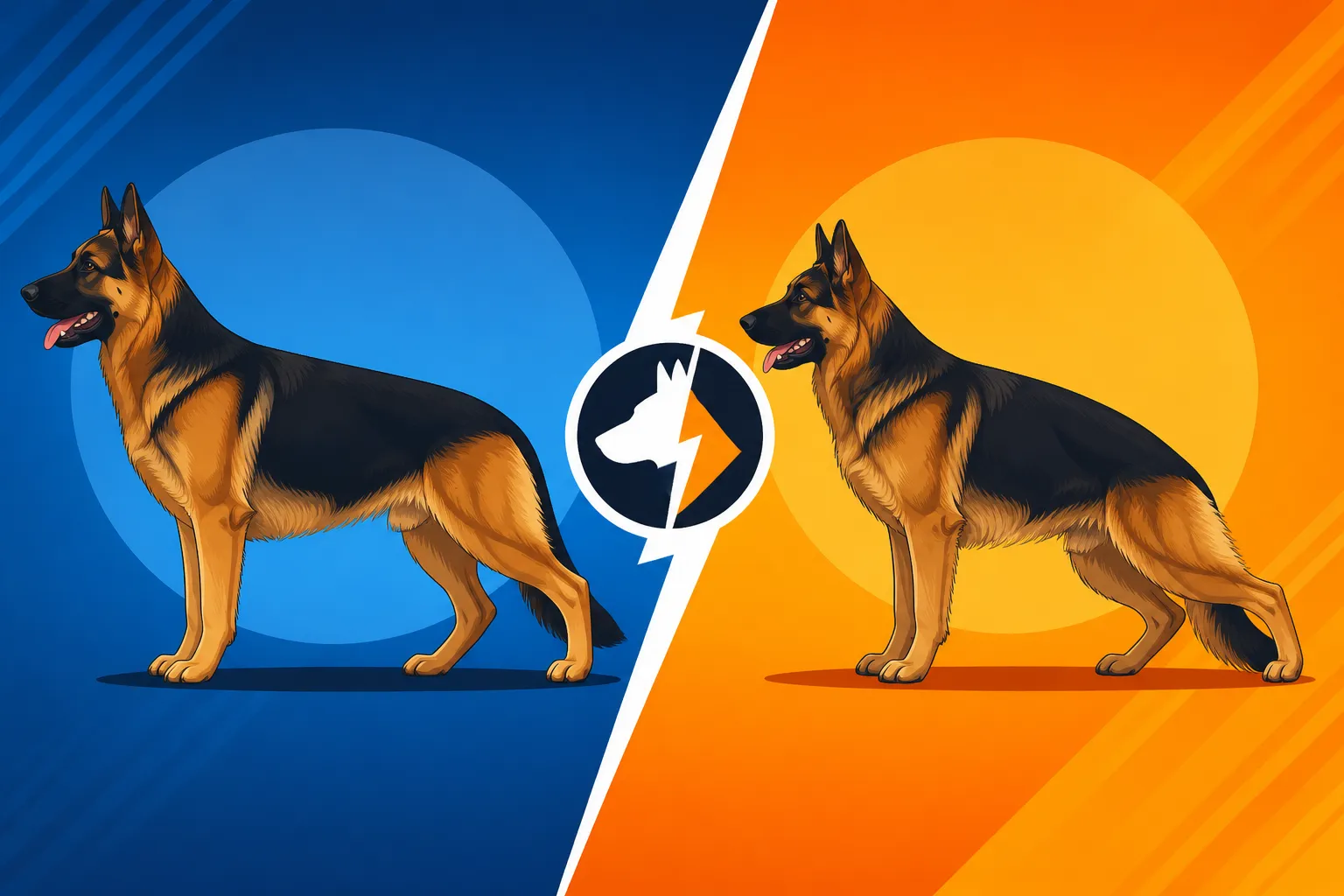
Straight Back vs Sloped Back German Shepherd
One of the most passionate and often confusing debates within the German Shepherd community revolves around their physical conformation, specifically the appearance of their backline. For prospective owners and seasoned enthusiasts alike, trying to understand the differences between a "straight back" and a "sloped back" German Shepherd can feel like navigating a minefield of conflicting opinions, health claims, and aesthetic preferences. This comprehensive guide aims to cut through the noise, providing a clear, empathetic, and factual look at both types, their origins, characteristics, and what these differences truly mean for your beloved canine companion.
Understanding the German Shepherd Breed Standard
Before we dive into the specific aesthetics, it's crucial to understand the foundational principles that guided the creation and development of the German Shepherd Dog. This breed wasn't just designed to look good; it was engineered for a very specific purpose.
The Original German Shepherd Ideal
The German Shepherd breed was established by Captain Max von Stephanitz in Germany in the late 19th and early 20th centuries. His vision was clear: to create the ultimate working dog. This meant a dog of exceptional intelligence, unwavering loyalty, robust health, and incredible physical endurance, capable of herding sheep all day, every day. He famously stated, "The German Shepherd Dog is a working dog, and a working dog must be sound in body and mind."
Von Stephanitz’s ideal German Shepherd possessed a strong, powerful build with moderate angulation in the front and rear. The backline was firm and level, allowing for an efficient, ground-covering gait that could sustain long hours of work without undue stress on the joints. The focus was entirely on functionality and the ability to perform demanding tasks, with aesthetics being secondary to working capability. This original ideal laid the groundwork for what many now refer to as the "straight back" German Shepherd.
The American Kennel Club and Other Registries
Over time, as the German Shepherd Dog gained popularity worldwide, different kennel clubs and breeding philosophies emerged, leading to variations in interpretation of the original standard. The American Kennel Club (AKC), for instance, along with many Western European show lines, developed a distinct look for the breed, often emphasizing certain aesthetic traits that became favored in the show ring.
While the fundamental elements of strength, agility, and intelligence remain, the emphasis on a particular type of movement—often described as a "flying trot"—led to a conformational shift. This preference for a highly animated gait, where the dog appears to glide effortlessly, encouraged breeders to select for increased angulation in the hindquarters. This, in turn, often resulted in a backline that appears less level and more "sloped" when viewed in profile, especially when standing. It's a subtle but significant divergence from the initial blueprint, sparking much of the debate we see today. Different countries and clubs continue to refine and interpret the standard, but the underlying drive for either extreme aesthetics or pure working capability generally defines the "type" of German Shepherd you'll encounter.
The "Sloped Back" German Shepherd: Show Line Characteristics
When people talk about a "sloped back" German Shepherd, they're typically referring to the dogs bred for the American and some Western European conformation show rings. This is a very specific aesthetic that has evolved over decades.
Defining the Sloped Back Appearance
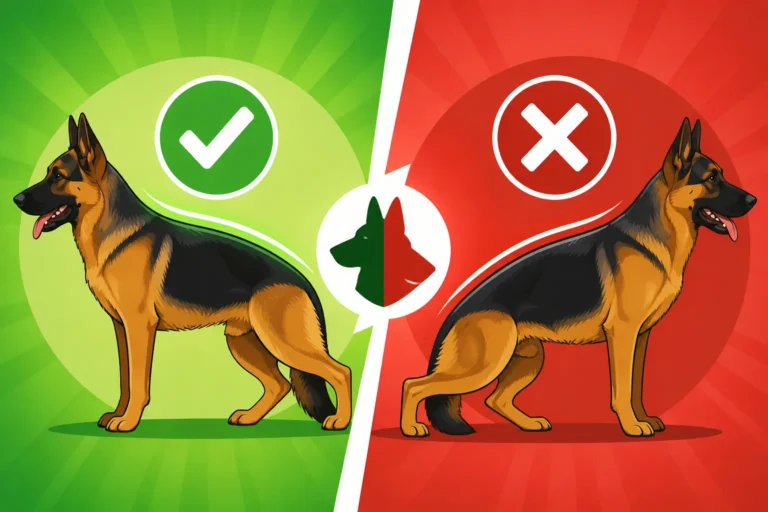
The defining characteristic of a show line German Shepherd, often termed "sloped back," is the noticeable downward angle from the Withers (the highest point of the shoulder blades) to the croup (the area just before the tail). This isn't a "broken" back, as some misinformed critics might suggest, but rather a result of exaggerated rear angulation. These dogs often present with a significant bend in their stifles (knees) and hocks (ankles), giving them a distinctly "squatted" appearance in their rear when standing.
In motion, this angulation allows for the impressive "flying trot" that is highly prized in the show ring. The dog's rear legs extend far behind the body, and the front legs reach forward, creating an illusion of effortless power and grace. This exaggerated movement, however, often comes with a specific anatomical structure: a longer lower thigh bone and a more sloping pelvis, which contributes to the overall sloped appearance of the topline. It’s an intentional breeding choice, aiming for a visual dynamism that scores well in competition.
Breeding for Aesthetics vs. Function
The evolution of the "sloped back" German Shepherd is a direct consequence of breeding primarily for aesthetic appeal within the conformation ring. Judges and breeders in these circuits often prioritize a dog's ability to exhibit a specific, flashy gait and a profile that matches their interpretation of the breed standard. This means that characteristics like extreme rear angulation and a pronounced topline slope become highly desirable traits.
While these dogs are undeniably beautiful and can perform wonderfully as companions, the emphasis has shifted away from the rugged, all-day endurance worker that von Stephanitz envisioned. The concern, voiced by many traditionalists, is that prioritizing such aesthetics can, in extreme cases, lead to a loss of the functional soundness that defines the breed. The balance between form and function becomes a delicate tightrope walk, and sometimes, breeders might inadvertently push the boundaries of what is anatomically sound for the sake of a winning look. However, it's important to remember that responsible show breeders still prioritize health and temperament, conducting thorough German Shepherd Genetic Health Testing and striving for balanced dogs. Even so, the physical demands and selection criteria for a show dog are inherently different from those for a working dog.
The "Straight Back" German Shepherd: Working Line and Traditional Structure
In stark contrast to the show lines, the "straight back" German Shepherd maintains a structure much closer to the original breed standard set by Max von Stephanitz. These dogs are primarily bred for their working capabilities and robust health.
Defining the Straight Back Appearance
A straight back German Shepherd, commonly found in working lines, exhibits a more level and firm topline that runs smoothly from the Withers to the croup. While there is still a slight slope (no dog has a perfectly flat back), it is far less pronounced than in the show-line counterparts. These dogs possess moderate angulation in both their front and rear assemblies, meaning their legs appear less "bent" when standing. Their posture is more upright, giving them a powerful, athletic, and balanced appearance.
This structure allows for a strong, efficient, and durable gait, often described as a ground-covering trot. The focus here is on stamina and the ability to perform demanding tasks over extended periods, whether it's police work, search and rescue, or competitive dog sports like Schutzhund or IGP. The straight back conformation ensures that the dog's weight is distributed evenly, reducing strain on the joints and spine during rigorous activity. It’s the physique of an athlete, built for practical, sustained exertion.
Emphasis on Functionality and Health
For breeders of straight back German Shepherds, especially those involved in true working lines like the DDR (East German) or Czech lines, functionality is king. Every aspect of the dog's conformation, temperament, and drive is evaluated for its contribution to working ability. This means selecting for dogs that not only have the correct physical structure but also possess the mental fortitude, courage, and trainability required for high-level tasks. You can often see the distinct differences between these and show lines, as detailed in our guide on Working Line vs Show Line German Shepherd.
Health and soundness are paramount because a working dog cannot perform if it is constantly plagued by physical ailments. Breeders rigorously test their dogs for common breed specific issues like German Shepherd Hip Dysplasia Explained and German Shepherd Elbow Dysplasia: Symptoms and Treatment, placing a strong emphasis on achieving excellent scores. The moderate angulation and sturdy bone structure of the straight back German Shepherd are believed to contribute to a longer working life and a reduced risk of joint problems over time. The goal is to produce dogs that are not only capable of impressive feats today but will remain healthy and able to work for many years, directly influencing their German Shepherd Lifespan: How Long They Live. This breeding philosophy ensures that the historical purpose of the German Shepherd remains at the forefront.
Common Misconceptions and Debates
The topic of German Shepherd backlines is rife with misunderstanding and strong opinions. It's easy to get caught up in the emotional arguments, but separating fact from fiction is crucial.
The "Myth" of the Severely Crippled Show Dog
One of the most persistent and damaging misconceptions is that all "sloped back" German Shepherds are inherently crippled, suffering from debilitating pain, or destined for early retirement due to their conformation. While it's true that extreme angulation, particularly in poorly bred individuals, can lead to orthopedic issues and discomfort, it's a vast oversimplification to paint all show line dogs with the same brush. Many reputable show line breeders prioritize health and soundness, producing dogs with moderate slopes and excellent temperaments that live long, active lives. They are often subject to the same rigorous health testing as working lines.
The critical distinction lies in the degree of angulation. A well-bred show line German Shepherd will have angulation that allows for a characteristic fluid gait without causing undue stress on its joints. The problems arise when breeders chase an overly exaggerated aesthetic, pushing the limits of what is anatomically sound. This isn't a problem unique to show lines; irresponsible breeding can occur in any line, leading to unhealthy animals. It's always about the individual breeder's ethics and knowledge, not a blanket condemnation of an entire type.
The "Purebred" Argument and Breed Integrity
Another point of contention often heard is the idea that one type of German Shepherd is "more purebred" or "more authentic" than the other. This simply isn't true. Both "straight back" and "sloped back" German Shepherds are purebred, registered German Shepherds, descended from the same foundational stock. They represent different interpretations and evolutions of the breed standard, developed under varying breeding philosophies and goals.
The breed itself has a complex history, and its appearance has changed over time in response to human selection. The working line often strives to adhere more closely to von Stephanitz's original functional blueprint, while the show line has evolved to meet the demands of conformation events. Neither is inherently "wrong," but they cater to different preferences and purposes. The integrity of the breed lies in responsible breeding practices, health, temperament, and adherence to a standard, whether that standard prioritizes working ability or a specific show ring aesthetic. Ultimately, a German Shepherd Breed Guide will explain that the breed is diverse, but both types fall under the same umbrella.
Health Implications and Movement Differences
The structural differences between straight back and sloped back German Shepherds are not merely cosmetic; they can have tangible impacts on a dog's health, mobility, and overall quality of life. Understanding these implications is crucial for any potential owner.
Impact on Joints and Mobility
The most significant health debate surrounding the sloped back conformation centers on its potential impact on joint health, particularly the hips and elbows. The exaggerated rear angulation seen in many show lines can place increased stress on the hip and knee joints. Imagine if your own legs were permanently bent more acutely than designed; it would undoubtedly affect your long-term joint health. This increased angulation means the bones in the rear legs are often not perfectly aligned or supported in the same way as a dog with more moderate angulation.
While many show line dogs live without severe issues, studies and anecdotal evidence suggest a higher prevalence of orthopedic problems like German Shepherd Hip Dysplasia: Symptoms and Treatment and elbow dysplasia in lines where extreme angulation has been prioritized over structural soundness. In contrast, the moderate angulation and sturdy, balanced build of the straight back German Shepherd often lead to better long-term joint stability and less wear and tear over a dog's lifetime. Their structure is intrinsically designed to withstand repetitive, high-impact movements, which can be a key factor in how to keep a German Shepherd healthy throughout their life.
Gait and Endurance
The way a German Shepherd moves is a direct reflection of its underlying structure. The "flying trot" characteristic of show line German Shepherds, with their extended reach and drive, is undeniably impressive in the show ring. This gait is designed for maximum visual impact, creating an illusion of boundless energy and effortless movement. However, this exaggerated motion can sometimes come at the cost of endurance. While beautiful to observe, maintaining such a dramatic gait for extended periods can be less energy-efficient and more demanding on the dog's body.
Conversely, the gait of a straight back, working line German Shepherd is all about efficiency and stamina. Their ground-covering trot is powerful, purposeful, and designed for sustained work. Their moderate angulation allows for a natural, flowing stride that conserves energy, making them capable of long hours of activity without quickly fatiguing. This isn't about flash; it's about pure, unadulterated capability. For tasks like herding, tracking, or protection work, a dog needs to be able to move powerfully and efficiently for hours, not just for a few minutes in a ring. This difference in gait directly translates to their suitability for various activities and their overall physical resilience.
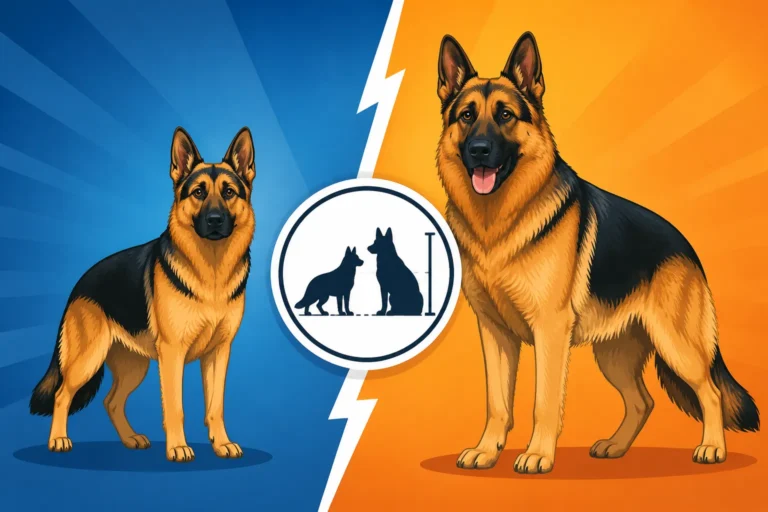
| Feature | Straight Back German Shepherd (Working Line/Traditional) | Sloped Back German Shepherd (Show Line/Modern) |
|---|---|---|
| Topline Appearance | Relatively level, firm, smoothly blending into croup. | Noticeable downward slope from Withers to croup. |
| Rear Angulation | Moderate, legs appear more upright. | Exaggerated, legs appear more bent/squatted. |
| Primary Breeding Goal | Functionality, working ability, endurance, health. | Conformation ring aesthetics, specific "flying trot" gait. |
| Typical Temperament | High drive, intense, confident, protective. | Often calmer, more suitable for family companions, still alert. |
| Movement/Gait | Efficient, ground-covering, powerful trot for stamina. | Flashy, extended "flying trot" for visual impact. |
| Health Concerns | Focus on genetic health testing; generally robust. | Potential for increased stress on joints (hips, elbows) with extreme angulation. |
| Common Lines | DDR, Czech, some West German Working Line. | American Show Line, some West German Show Line. |
| Energy Level | High; requires significant mental & physical exercise. | Moderate to high; still needs good exercise, but often less intense. |
Choosing the Right German Shepherd for You
Deciding between a straight back and a sloped back German Shepherd isn't just about aesthetics; it's about finding a dog that truly fits your lifestyle, your goals, and your ability to provide for its needs. Both types are incredible animals, but they have distinct differences.
Assessing Your Lifestyle and Goals
Before you even start looking at puppies or rescue dogs, take a hard, honest look at your own life. Do you envision a dog that will be a constant companion on challenging hikes, participate in dog sports, or perhaps even perform protection work? Or are you looking for a devoted family pet who enjoys walks, playtime in the yard, and cozy evenings on the couch? Your answers will heavily influence which type of German Shepherd is best suited for you.
If you're an active individual or family with experience in dog training and a desire for a dog with a strong work ethic, a straight back working line German Shepherd might be an excellent fit. These dogs typically have high drive and boundless energy, thriving when given a job to do, be it obedience, agility, or tracking. They need consistent training, mental stimulation, and plenty of exercise to prevent boredom and destructive behaviors. Their German Shepherd Temperament and Personality often includes a more intense focus and protective instincts.
Conversely, if you're looking for a loyal family companion who is still active but perhaps less demanding in terms of intense daily "work," a well-bred sloped back show line German Shepherd could be perfect. While still highly intelligent and active, they generally have a slightly lower drive than their working line counterparts, making them potentially more manageable for first-time owners or those with less experience in high-drive breeds. They still need ample exercise and training, but perhaps not the same level of rigorous engagement a working line dog would demand. Remember that a dog's size and energy also play a role, so considering a German Shepherd Size and Weight Guide and German Shepherd Exercise Requirements is also very important. Whether you plan to buy dog food from your local pet store or order online through a retailer like Chewy, making sure you have the right provisions for either type is important.
Finding a Reputable Breeder for Either Type
Regardless of whether you lean towards a straight back or a sloped back German Shepherd, the single most critical factor in bringing a healthy, well-adjusted dog into your home is finding a reputable breeder. This cannot be stressed enough. A good breeder, whether their focus is on show or working lines, will always prioritize health, temperament, and the well-being of their dogs. They will be transparent about their breeding practices, eager to answer your questions, and just as keen to vet you as you are to vet them.
Look for breeders who perform comprehensive health testing on their breeding stock, including evaluations for hip and elbow dysplasia, as well as genetic tests for conditions like degenerative myelopathy. They should be able to provide verifiable documentation for these tests. Ask about their puppies' socialization processes, how they raise them, and what kind of support they offer post-purchase. A reputable breeder will also be honest about the typical temperament and energy levels of their lines, helping you ensure a good match for your lifestyle. Don't be swayed by breeders who focus solely on appearance or price; prioritize health and temperament above all else. Doing thorough research on How to Find a Reputable German Shepherd Breeder can save you immense heartache and expense down the line. You can even find reputable breeders who ensure their puppies are started on high-quality nutrition, perhaps from brands available at a convenient place like Chewy.
Disclaimer
This article is intended for informational purposes only and does not constitute professional veterinary advice. Always consult with a qualified veterinarian for any health concerns or before making decisions about your German Shepherd's care or treatment. The information provided here is based on general knowledge and should not replace personalized professional guidance.