German Shepherd Breed Standard Explained
Bringing home a German Shepherd is an exciting journey, but sometimes wading through all the information about what makes a "good" German Shepherd can feel overwhelming. You might hear terms like "breed standard" and wonder if your beloved companion measures up, or more importantly, what it even means for their health and well-being. This comprehensive guide is here to demystify the German Shepherd breed standard, breaking down its importance and what it truly entails for this magnificent breed.
Understanding the Essence of a Breed Standard
When we talk about a "breed standard," it's not just a fancy term used by dog show enthusiasts. It's a meticulously crafted blueprint that describes the ideal characteristics of a purebred dog, encompassing everything from physical appearance to temperament. For German Shepherds, this standard is a critical document that helps preserve the breed's unique qualities and ensures its future health and integrity.
What Exactly is a Breed Standard?
Imagine a detailed instruction manual for what a perfect German Shepherd should look, act, and even move like. That's essentially what a breed standard is. It's a set of guidelines developed by parent clubs, like the German Shepherd Dog Club of America (GSDCA) in the US, or the Verein für Deutsche Schäferhunde (SV) in Germany, which is the original club for the breed. These standards cover a dog's general appearance, size, proportions, head, body, coat, color, gait, and — crucially — temperament. They are designed to reflect the breed's historical purpose, which for the German Shepherd, was a working herding dog.
The breed standard isn't about creating "designer dogs" or favoring superficial traits. Instead, it aims to maintain the breed's functional capabilities. For instance, the specified angulation of a German Shepherd's hindquarters isn't just for aesthetics; it directly impacts their powerful, ground-covering gait, which was essential for herding sheep all day long. Deviation from the standard often means a deviation from optimal health or working ability, making it far more than just a beauty contest rulebook.
These standards are living documents, periodically reviewed and updated to ensure they remain relevant to the breed's health and function. They serve as a guide for breeders striving to produce healthy, sound dogs, and for judges evaluating them in conformation events. Understanding these foundational principles can help any owner appreciate the careful thought and dedication that goes into preserving the German Shepherd as we know and love them.
Why the German Shepherd Standard Matters
The German Shepherd breed standard is far more than an arbitrary set of rules; it's the foundation for the breed's longevity, health, and characteristic temperament. Without a clear standard, breeders would lack a consistent goal, potentially leading to widespread health issues, loss of distinct breed traits, and unpredictable temperaments. This document acts as a safeguard, ensuring that German Shepherds remain true to their heritage as versatile, intelligent working dogs.
For example, the emphasis on a strong, level back and proper angulation in the standard directly combats structural weaknesses that can lead to debilitating conditions like German Shepherd Hip Dysplasia Explained. A well-bred German Shepherd, conforming to the standard, should possess the physical attributes necessary for a long, active life without undue strain on their joints. It’s about form following function – a dog built correctly is less prone to injury and disease.
Beyond physical traits, the standard explicitly outlines the desired temperament: confident, stable, poised, and approachable, but with a protective instinct. This is vital because a German Shepherd's impressive physical presence must be matched by a sound mind. A dog that deviates significantly from this temperament might struggle in family life, public settings, or training, undermining the very essence of what makes a German Shepherd such a cherished companion and working partner. Breeders who prioritize the standard are not just aiming for a pretty dog; they are striving for a complete package of health, temperament, and functionality that ensures the breed's continued excellence.
The German Shepherd's General Appearance
When you first lay eyes on a German Shepherd, certain characteristics immediately stand out: their noble bearing, powerful presence, and intelligent gaze. The breed standard meticulously outlines these visual aspects, ensuring that each generation maintains the distinctive look that makes a German Shepherd instantly recognizable and perfectly suited for its various roles. It’s not just about aesthetics, but about how these physical traits contribute to the dog's overall functionality and health.
Overall Build and Proportions
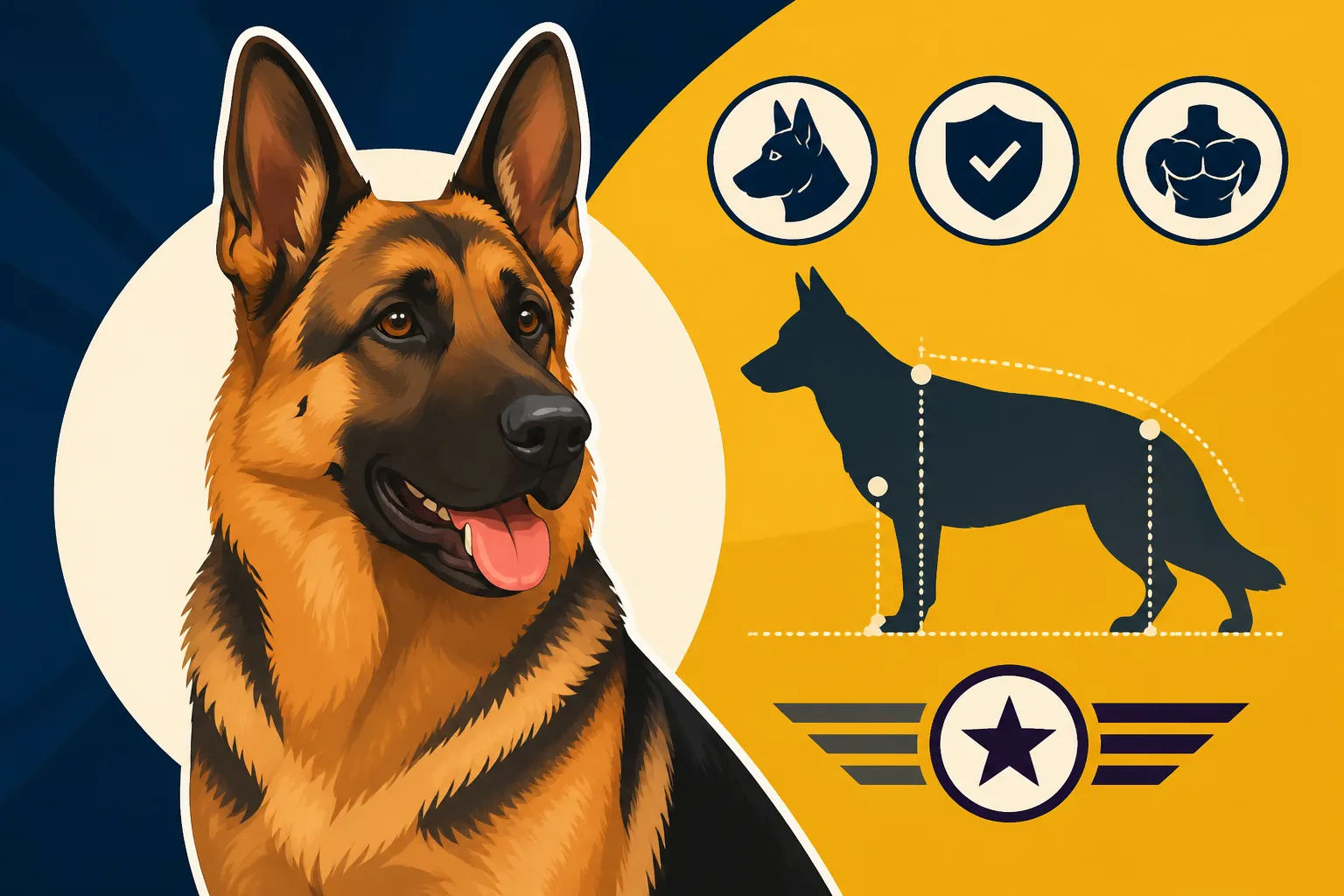
The breed standard emphasizes a German Shepherd's balanced, powerful, and athletic build. They should be strong, flexible, and well-muscled, without appearing bulky or frail. Imagine an athlete – powerful yet agile. For males, the ideal height at the withers is typically 24-26 inches (60-65 cm), and for females, it's 22-24 inches (55-60 cm). Weight should be proportionate to height and build, generally ranging from 65-90 pounds for males and 50-70 pounds for females. These dimensions are crucial for ensuring the dog has the stamina and strength required for demanding tasks. You can learn more about specific expectations by checking out our German Shepherd Size and Weight Guide.
Proportionally, the German Shepherd should be slightly longer than tall. This means that when measured from the point of the prosternum to the rear of the pelvis, the body length should exceed the height at the withers by about 10-12%. This longer-than-tall ratio is fundamental to their powerful, ground-covering trot, allowing for efficient movement without wasted energy. A short-backed dog might appear more compact, but it often sacrifices the flexibility and reach needed for their characteristic gait. Conversely, an overly long back can lead to weakness. The depth of chest is also critical, needing to be approximately 45-48% of the height at the withers, providing ample room for lung and heart capacity – vital for endurance.
The entire structure should convey an impression of effortless motion and agility. Each part of the body is designed to work in harmony, contributing to the dog's ability to perform its original herding duties or any modern working role. When you look at a truly well-built German Shepherd, you see a dog that is ready for action, a testament to decades of careful breeding guided by this precise standard.
Coat Types and Colors
The German Shepherd is renowned for its dense, weather-resistant double coat, a vital feature for a dog originally bred to work outdoors in varying climates. The standard recognizes a distinct structure for this coat: a strong, coarse, medium-length outer coat that lies close to the body, coupled with a dense, softer undercoat. This combination provides excellent insulation against cold, heat, and precipitation, keeping the dog comfortable and protected. It's also why they are known for shedding, especially during their "blow coat" seasons, something many owners manage with products from retailers like Chewy.
When it comes to colors, the German Shepherd breed standard is quite specific. The most common and widely accepted colors include black and tan, black and red, sable, solid black, and bi-color. These colors are often rich and distinct, with sable dogs showing variations from light to dark with black tipping on individual hairs. The standard typically allows for various shades of tan, ranging from light fawn to deep red. A small white mark on the chest or very light markings on the inner legs are sometimes tolerated, but usually not preferred.
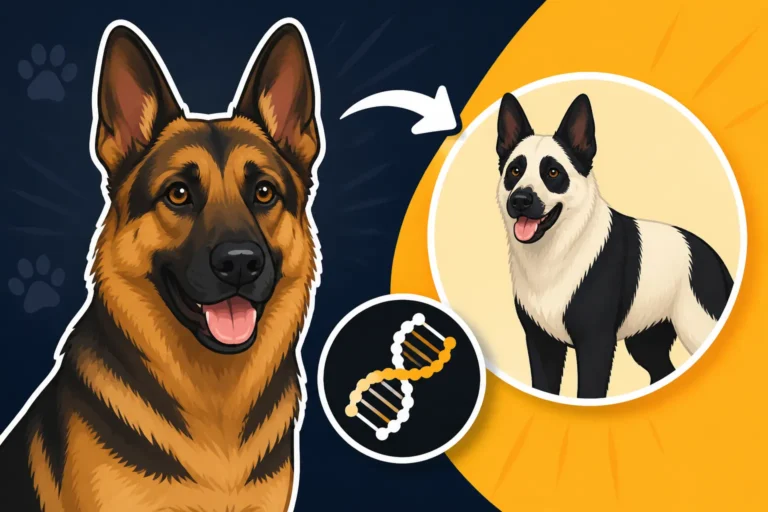
However, certain colors and coat types are considered faults or even disqualifications. For instance, solid white, blue, or liver coats are considered disqualifying faults in the American Kennel Club (AKC) standard, as they are genetic deviations from the established breed type. Long-haired German Shepherds, while beautiful, are also typically considered a fault in conformation shows under some standards because their coat lacks the desired close-lying, weather-resistant properties of the standard double coat. Understanding these distinctions helps appreciate the historical and functional significance behind the standard's specific color and coat descriptions, which you can explore further in our article on German Shepherd Colors and Coat Types.
Head, Expression, and Dentition
The German Shepherd's head is often described as noble, proportionate to the body, and sculpted with strength and intelligence. It's not just a canvas for pretty features; every aspect, from the shape of the skull to the placement of the ears, contributes to the breed's distinct expression and its capacity for alert, focused work. A proper head structure is crucial for accurate bite, clear vision, and efficient hearing—all essential for a capable working dog.
Cranial Features and Muzzle
The head of a German Shepherd should be cleanly chiseled, strong, and dry, meaning free from loose skin or wrinkles. The skull, when viewed from above, should be broad at its widest point and taper gradually to the muzzle. The length of the skull and the length of the muzzle should be roughly equal. There should be a moderate stop (the indentation between the skull and the muzzle), neither too abrupt nor too shallow, which creates a harmonious transition. The eyes should be almond-shaped, medium-sized, and as dark as possible, conveying an intelligent and self-confident expression. Light eyes can give a soft or timid appearance, which is not desired in the standard.
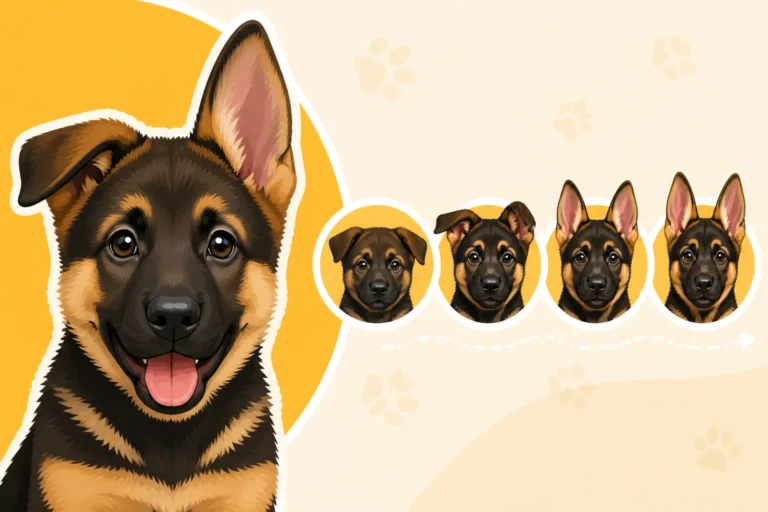
The ears are a hallmark of the German Shepherd: they should be moderately pointed, open towards the front, and carried erect when the dog is attentive. In puppies, the ears typically stand up between 8 weeks and 6 months, and sometimes a little longer. Dropped or cropped ears are a serious fault. The muzzle itself should be strong and deep, tapering only slightly towards the nose. A weak, pointed, or dished muzzle can be a structural fault, as it might compromise the strength of the bite, which is essential for a dog bred for protection and herding. A well-proportioned head completes the picture of an alert, capable, and intelligent canine.
The nose must always be black, regardless of the coat color. Any other color, like liver or grey, is considered a disqualifying fault. This specific detail highlights the meticulous nature of the breed standard, where even small features contribute to the overall picture of a purebred German Shepherd. It underscores the breed's functional aesthetic, where every aspect has a purpose and contributes to the dog's ability to excel in its historical working roles.
Bite and Teeth
A correct bite and full dentition are absolutely fundamental to the German Shepherd breed standard, not merely for show, but for the dog's ability to perform its working duties effectively. The standard calls for a "scissor bite," which means that the outer surface of the lower incisors touches the inner surface of the upper incisors, forming a clean, interlocking grip. This bite is considered the strongest and most efficient for grasping and holding, essential for herding or protection work. Any deviation from this, such as an overshot (upper jaw extends too far) or undershot (lower jaw extends too far) bite, is a serious fault, as it compromises the jaw's strength and functionality.
Beyond the type of bite, the presence of a complete set of 42 teeth is equally important. German Shepherds should have robust, well-placed teeth that are strong and healthy. Missing teeth, especially premolars, are considered a serious fault and can even be a disqualification in some show rings. This isn't just about appearance; a full complement of strong teeth is necessary for proper chewing, grasping, and defense. It reflects the overall health and genetic soundness of the dog.
Breeders committed to the standard perform German Shepherd Genetic Health Testing to ensure healthy dentition and proper jaw structure are passed down. Regular dental care, including routine brushing and appropriate dental chews (which you can find at places like Chewy), is also vital to maintain this aspect of the standard throughout a dog's life. A strong, healthy mouth is a clear indicator of a robust and well-bred German Shepherd, allowing them to lead a full and comfortable life.
Body, Movement, and Tail
The German Shepherd's body is a marvel of engineering, designed for endurance, power, and agility. Every curve and angle plays a role in their signature movement, a long, effortless trot that covers ground with minimal exertion. Understanding these physical attributes as outlined by the breed standard helps us appreciate the functional beauty of this magnificent dog.
Neck, Topline, and Underline
The German Shepherd's neck should be strong and muscular, setting into the shoulders at a pleasing angle. It should be relatively long, allowing for proud carriage and a wide field of vision, which was important for spotting sheep or potential threats while herding. This strength in the neck also contributes to their powerful presence and ability to maintain control during various tasks. A weak or short neck can restrict movement and convey a less imposing stature.
Perhaps one of the most discussed features of the German Shepherd is its topline. The standard describes it as a smooth, unbroken line running from the tip of the ears (when erect), over the neck, a high and long wither, and a strong, firm back that gently slopes down to a slightly sloping croup. This "slight slope" is often misinterpreted, leading to exaggerations, but the intent is to facilitate the powerful rear drive needed for their gait. A truly level back is actually less common than many might assume, with a subtle decline from the withers to the croup being characteristic. The underline should be taut, with a definite tuck-up at the flank, but not exaggerated, indicating good musculature and conditioning.
The overall impression of the topline and underline together should be one of athleticism and efficiency. A firm back is essential for transmitting power from the hindquarters through the body, while a deep, well-sprung chest provides ample room for vital organs. Any signs of weakness, sway, or roaching in the back are serious faults, as they impair efficiency of movement and can indicate structural weakness that might lead to future problems.
Forequarters and Hindquarters
The angulation of both the forequarters and hindquarters is absolutely critical to the German Shepherd's distinctive gait and overall functionality. In the forequarters, the shoulder blade and the upper arm should be roughly equal in length and form an angle of approximately 90 degrees when viewed from the side. This allows for excellent reach and a powerful forward stride. The forelegs themselves should be straight when viewed from all sides, with strong, springy pasterns (the equivalent of a dog's wrists) that angle slightly forward. Weak or upright pasterns can lead to unsoundness and fatigue.
The hindquarters are the German Shepherd's engine, providing the powerful drive. They should be broad and muscular, with the upper thigh and lower thigh being roughly equal in length, forming a moderate angle at the stifle (knee). The hock joint should be strong and firm, with the rear pasterns (metatarsus) being short and strong, perpendicular to the ground. The key is balance: both front and rear angulation should be proportionate to each other, allowing the dog to move smoothly and efficiently. Over-angulation or under-angulation, particularly in the rear, can lead to an inefficient gait, poor endurance, and potential orthopedic issues, linking directly to concerns like German Shepherd Hip Dysplasia Prevention.
Properly structured limbs are essential for the breed's health and ability to perform. Dogs with poor angulation might move with a choppy stride, lack powerful drive, or suffer from increased wear and tear on their joints. Breeders meticulously study pedigrees and perform health clearances, such as OFA or PennHIP evaluations, to ensure sound structure. This emphasis on correct skeletal formation is a cornerstone of responsible German Shepherd breeding, aiming to produce dogs that are not only beautiful but also capable and resilient throughout their lives.
Gait and Tail Placement
The German Shepherd's gait is arguably its most defining characteristic, epitomizing efficiency and grace in motion. The breed standard describes it as a "flowing, ground-covering trot," where the dog moves with powerful, elastic steps that cover maximum ground with minimal effort. At a trot, the dog’s back should remain firm and level, with the head carried slightly forward, giving the impression of an untiring, tireless worker. The legs should converge towards the centerline of the body as speed increases, a phenomenon known as "single tracking," which maintains balance and efficiency.
A correct gait showcases the harmonious interaction of the dog's entire structure—strong angulation, powerful musculature, and a firm back all working in unison. A German Shepherd should exhibit an impressive "reach and drive," meaning the front legs extend forward with good reach, and the hind legs push off powerfully, driving the dog forward. Any short, choppy, or stilted movement, or a tendency to "pace" (moving both legs on the same side together), indicates a fault in structure or conditioning. This movement wasn't just for show; it was vital for a herding dog that needed to cover vast distances efficiently over varied terrain.
The tail of the German Shepherd should complete this picture of balance and power. It is typically bushy and reaches at least to the hock joint, but not beyond the midpoint of the hock. When the dog is relaxed, the tail should hang in a slight curve, resembling a saber. When the dog is excited or moving, it may be raised, but ideally, it should not curl over the back much beyond the level of the back. A tail carried too high or curled too tightly over the back is considered a fault. The tail acts as a natural rudder for balance, especially during turns and rapid changes in direction, highlighting once again how every physical detail specified in the breed standard serves a functional purpose.
Temperament: The Cornerstone of the German Shepherd
While physical attributes are important, the temperament of a German Shepherd is arguably the most crucial aspect of the breed standard. Without the right disposition, even the most physically perfect dog would fail to embody the true essence of the German Shepherd. This breed was developed to be an intelligent, loyal, and confident partner, capable of complex tasks and steadfast companionship. A stable temperament is what makes them such a versatile and beloved breed worldwide.
Ideal Character Traits
The German Shepherd breed standard calls for a character that is unwavering in confidence, stable in nerve, and poised in its demeanor. An ideal German Shepherd is approachable, eager to please, and self-assured, never exhibiting shyness or nervousness. They possess a high degree of intelligence, making them incredibly trainable and adaptable to various roles, from family protectors to service dogs, something you'll notice quickly if you delve into German Shepherd Obedience Training Basics. This inherent intelligence and willingness to learn are what allow them to excel in almost any endeavor their human partners set before them.
Beyond their intelligence, German Shepherds are known for their profound loyalty and protective instincts towards their family. They form deep bonds and, when properly socialized and trained, are excellent companions for children and other pets. However, this protective nature means they can be reserved with strangers, observing new people with an alert, questioning expression rather than immediate exuberance. This reservation is a desirable trait, as it indicates a discerning nature rather than fear or aggression. They are watchful without being overly suspicious, and brave without being reckless.
This combination of intelligence, courage, loyalty, and a stable disposition is what makes the German Shepherd truly unique. They thrive on having a job to do, whether it's formal obedience, agility, or simply being a vigilant family member. A well-bred German Shepherd will carry themselves with an air of quiet confidence, always aware of their surroundings, and always ready to engage with their loved ones.
Disqualifying Temperament Faults
Just as the breed standard outlines ideal character traits, it also clearly defines disqualifying temperament faults that go against the very core of what a German Shepherd should be. The most serious faults include shyness, nervousness, and outright aggression. A dog that is fearful or timid, cowering from human interaction or reacting with fear-based aggression, is considered fundamentally unsound according to the standard. This type of temperament makes a dog unpredictable and unsuitable for the varied roles the breed is known for.
Excessive timidity can manifest as fear-biting, bolting, or extreme submissiveness, none of which align with the confident and stable nature expected of the breed. Conversely, unprovoked aggression, whether towards humans or other animals, is equally unacceptable. While German Shepherds possess protective instincts, they should be well-controlled and expressed only when truly necessary. An unstable German Shepherd who is quick to snap or displays uncontrollable rage poses a significant safety risk and is a clear indicator of a breeding problem. This is why understanding How to Stop German Shepherd Aggression is so important if you ever encounter issues.
Breeders committed to the standard meticulously screen their breeding dogs for these temperament faults. They prioritize stable nerves, sound minds, and balanced drives. When selecting a German Shepherd puppy, observing the parents' temperament and asking about their genetic background is crucial. A German Shepherd with a disqualifying temperament fault, regardless of how physically perfect they might appear, does not represent the breed as intended and should not be used for breeding. The preservation of the breed's renowned stable and courageous temperament rests squarely on adhering to these strict guidelines.
Disqualifications and Serious Faults
The German Shepherd breed standard isn't just a wish list; it's a critical tool for maintaining the health, structure, and temperament of the breed. While minor deviations might be considered "faults," there are specific characteristics deemed so detrimental to the breed's integrity that they are classified as "serious faults" or even "disqualifications." These are typically traits that compromise the dog's ability to perform its function, indicate poor health, or suggest a significant departure from the established breed type.
Major Structural Deviations
Major structural deviations are aspects of a German Shepherd's physical conformation that significantly impair its ability to move, work, or live comfortably. For instance, severe angulation issues, either overly straight or excessively angled hindquarters, can lead to an inefficient gait, placing undue stress on joints. This can predispose a dog to orthopedic conditions beyond just hip dysplasia, impacting their overall quality of life and potentially leading to a shorter lifespan. A roached or swayback, or a tail that is excessively short or curled tightly over the back, are also considered serious structural faults, as they affect balance and movement.
Another critical structural deviation relates to dentition. As mentioned earlier, a full complement of 42 teeth and a correct scissor bite are essential. Missing teeth, especially certain premolars, or an incorrect bite (overshot or undershot) are serious faults. These issues can affect a dog's ability to eat properly and, more importantly for a working breed, to grasp and hold. While some of these issues might not be immediately obvious, a thorough examination by a knowledgeable veterinarian or experienced breeder can uncover them. When considering a puppy, it's wise to ensure the breeder performs necessary health screenings and is transparent about the parents' history, tying back to the importance of How to Choose a German Shepherd Breeder.
Even the development of the ears is important. While puppies may have floppy ears for a time, a German Shepherd adult whose ears do not stand erect (unless folded back voluntarily) is considered to have a structural fault. This can be due to weak cartilage or incorrect ear set. These aren't just cosmetic issues; they impact the dog's ability to hear effectively, which is vital for a working and alert breed. A discerning eye for these details ensures the preservation of a sound, functional German Shepherd.
Color and Coat Faults
Beyond structure, certain color and coat types are clearly defined as faults or disqualifications within the breed standard. The German Shepherd's double coat is paramount for protection and insulation. A coat that is overly long, silky, or lacks the dense undercoat required for weather resistance is considered a fault. While many people admire the look of a long-haired German Shepherd, in many breed standards, this is a deviation from the functional requirements of the original working dog and is therefore penalized in the show ring.
When it comes to color, specific deviations are disqualifying because they are considered outside the genetic makeup of the true German Shepherd breed type. For example, solid white German Shepherds, while striking and beautiful, are typically a disqualifying fault in the AKC standard for conformation. Similarly, blue or liver-colored German Shepherds are also disqualifications. These colors are not simply "rare"; they indicate the presence of recessive genes that are not part of the standard for the breed. This distinction is crucial for maintaining breed integrity and differentiating German Shepherds from other breeds or mixed breeds that might carry these color genes.
It's important to understand that a "fault" or "disqualification" in the show ring doesn't mean a dog can't be a wonderful pet. A German Shepherd with a fault, such as a slightly crooked tail or a longer coat, can still be a healthy, loving companion. The standard's purpose is to guide breeders in perpetuating the ideal German Shepherd for working purposes and breed preservation. However, serious disqualifications, especially those related to temperament or severe structural issues, should always be a concern for potential owners, as they can directly impact the dog's well-being and suitability for a family environment.
Summary of Key German Shepherd Breed Standard Points
To summarize some of the key elements that define the German Shepherd breed standard, here's a quick reference table:
| Feature | Ideal Standard | Serious Faults/Disqualifications |
|---|---|---|
| Temperament | Confident, stable, intelligent, fearless, approachable but reserved | Shyness, nervousness, unprovoked aggression |
| Size (Males) | 24-26 inches at withers | Outside standard range |
| Size (Females) | 22-24 inches at withers | Outside standard range |
| Proportions | Longer than tall (length:height ratio 10:8.5 approx.) | Square or overly long body |
| Head | Strong, clean, proportionate; moderate stop; dark, almond eyes; erect ears | Weak, fine head; round/light eyes; dropped/cropped ears (adult) |
| Muzzle | Strong, deep, equal length to skull | Weak, pointed, dished muzzle |
| Nose | Black | Liver, blue, or any non-black color |
| Bite/Dentition | Scissor bite; full 42 teeth | Overshot/undershot bite; missing teeth (especially premolars) |
| Topline | High withers, firm back, gently sloping croup | Roached back, swayback |
| Chest | Deep (45-48% height), well-sprung ribs | Barrel chest, shallow chest |
| Angulation | Balanced, good reach & drive in front and rear | Over/under angulation (straight shoulders, steep croup) |
| Gait | Flowing, ground-covering trot; firm back, converging legs | Choppy, stilted, pacing, sidewinding |
| Coat | Double coat, medium length, coarse outer coat, dense undercoat | Long, silky, woolly, open coat; lack of undercoat |
| Color | Black & tan, black & red, sable, solid black, bi-color | Solid white, blue, liver (disqualifying in AKC for conformation) |
| Tail | Bushy, saber-like; reaching hock; low carriage when relaxed | Carried too high over back, curled tightly, docked, or kinked |
This table offers a snapshot, but truly understanding the standard requires deeper study and observation of well-bred German Shepherds.
Disclaimer
This article is for general informational purposes only and does not constitute professional advice. Laws, prices and regulations vary by location and change over time. Consult a qualified professional for guidance on your specific situation.