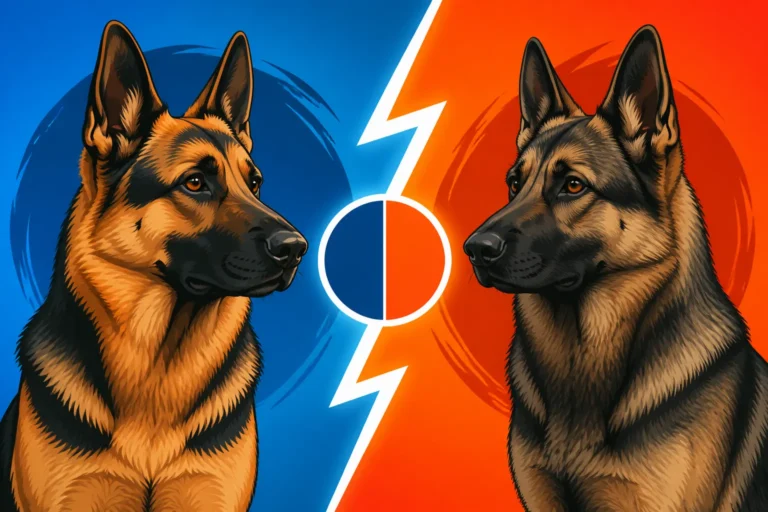
Is a Panda German Shepherd a Real German Shepherd
It’s a common scenario: you’re scrolling through adorable German Shepherd pictures online, and suddenly, a dog pops up with striking white patches, a stark contrast to the familiar black and tan. Your first thought might be, "Is that really a German Shepherd?" The confusion surrounding the "Panda German Shepherd" is widespread, often leaving prospective owners wondering if these uniquely colored dogs are purebred or some kind of mix. This guide is here to unravel the mystery, diving deep into the genetics, breed standards, and what it truly means to be a Panda German Shepherd, so you can understand if this distinct variation is the right companion for your home.
What Exactly is a Panda German Shepherd?
The term "Panda German Shepherd" refers to a German Shepherd Dog that exhibits a distinctive piebald (or parti-color) pattern, characterized by white markings on a typically black and tan, black and red, or sable coat. These aren't just a few stray white hairs; these are pronounced patches, often around the face, chest, collar, legs, and tail tip. This unique appearance often leads to questions about their lineage, but the truth is rooted in a specific genetic event.
The Origin Story of the Panda Pattern
The story of the Panda German Shepherd begins in 2000, with a dog named Lewcinka's Franka von Phenom. This particular female German Shepherd puppy, born in a litter with two standard black and tan siblings, had unmistakable white markings. Her owner, concerned about the unusual coloration, performed DNA testing to confirm her purebred status. The results were clear: Franka was indeed a 100% purebred German Shepherd. The scientific explanation for her unique coat pattern was a spontaneous, dominant gene mutation for piebaldism, which had never before been documented in the German Shepherd breed. This wasn't the result of cross-breeding; it was a natural genetic anomaly.
Think of it like a birthmark that's suddenly very prominent. While German Shepherds traditionally have a solid, sable, or black and tan/red coat, and white markings beyond a small chest patch are usually considered a fault, this particular mutation changed the game. It showed that the genetic potential for such markings existed within the breed, even if it had lain dormant or been so rare it was unnoticed for generations. Since Franka, more Panda German Shepherds have appeared, all tracing their lineage back to this foundational dog, proving that it's a genuine, albeit rare, genetic expression within the breed.
Distinctive Appearance and Markings
What makes a Panda German Shepherd so visually striking is the precise pattern of their white patches. Unlike an all-white German Shepherd, which is a recognized, though separate, color variation, the Panda GSD has a tri-color appearance. They typically feature:
- White markings: These are often concentrated on the face (a blaze or mask), a complete or partial white collar around the neck, a broad white chest, and white 'socks' or full white legs. The tip of the tail might also be white.
- Black and Tan/Red/Sable: The remaining portions of their coat display the traditional German Shepherd colors. You'll see the classic black saddle, tan or red points on their legs and face, or the mottled sable pattern.
This combination creates a visually stunning dog that stands out in a crowd of traditionally colored German Shepherds. It's not just a subtle splash of white; it’s a distinct, high-contrast pattern that is truly eye-catching. Owners often love the unique aesthetic, finding their Panda GSD to be a walking work of art. While their looks might be non-standard, their underlying German Shepherd traits remain the same.
The "Real German Shepherd" Debate: AKC and Breed Standards
The question of whether a Panda German Shepherd is a "real" German Shepherd largely hinges on how one defines "real." Is it genetic purity, or adherence to official breed standards for show and conformation? This distinction is crucial in understanding the ongoing debate.
The German Shepherd Breed Standard
When we talk about official breed standards, we're usually referring to organizations like the American Kennel Club (AKC) or the German Shepherd Dog Club of America. These clubs establish detailed guidelines for what constitutes an ideal German Shepherd, covering everything from ear set and gait to temperament and, yes, coat color.
The breed standard for German Shepherds typically allows for a range of colors including black and tan, black and red, sable, solid black, and bi-color. However, the standard is quite specific about white markings. For instance, the AKC breed standard explicitly states that "Dogs with white coats must be disqualified." While it differentiates between an all-white coat and the piebald pattern, any white markings beyond a very small white spot on the chest are generally considered a "disqualifying fault" in the show ring. This means that while a Panda German Shepherd is genetically a German Shepherd, its coat pattern would prevent it from competing in traditional conformation events sanctioned by most major kennel clubs. This is often the root of the "not real" misconception – if it can't be shown, some people assume it's not a purebred, which simply isn't true from a genetic standpoint. The standard is an ideal for appearance, not a definition of genetic purity.
Genetic Reality vs. Appearance Standards
Here's where it gets interesting: a Panda German Shepherd is genetically a German Shepherd. The piebald mutation is a spontaneous event within the German Shepherd genome, meaning the dog inherits two copies of the German Shepherd DNA, plus this one unique gene that dictates its specific coat pattern. It is not the result of cross-breeding with another piebald breed. If you were to perform a DNA test on a Panda German Shepherd, the results would confirm 100% German Shepherd ancestry.
This is a critical point that often gets overlooked in discussions about breed authenticity. Just because a dog's appearance deviates from a long-established standard doesn't make it any less of the breed it originates from. Many breeds have recessive genes or spontaneous mutations that can produce "non-standard" colors or markings. For example, some breeds might carry a long-coat gene, even if the short coat is preferred in the show ring. These dogs are still genetically purebred, they just don't conform to the aesthetic ideals set by humans. Therefore, while a Panda German Shepherd may not conform to the visual strictures of many breed clubs for showing, it is, in every genetic sense, a German Shepherd. The uniqueness of their coat is a testament to genetic diversity, not a sign of mixed heritage.
Understanding the Health and Temperament of Panda German Shepherds
Beyond their striking appearance, many prospective owners naturally wonder if the unique genetics of a Panda German Shepherd impact their health or temperament. It's a valid concern, as some specific coat patterns in other breeds can be linked to health issues. However, for Panda German Shepherds, the situation is generally straightforward.
Health Considerations Unique to the Piebald Gene
The good news is that the piebald gene itself, which gives Panda German Shepherds their distinctive white markings, has not been directly linked to any specific health problems unique to this coloration within the German Shepherd breed. Unlike some other breeds where extensive white patterning can be associated with deafness (like in Dalmatians or certain collies), there's no widespread evidence or scientific consensus suggesting that Panda German Shepherds are inherently more prone to deafness or other conditions because of their piebald gene.
This means that a Panda German Shepherd is, for all intents and purposes, subject to the same health considerations as any other German Shepherd. They can still be susceptible to common breed-specific issues like German Shepherd Hip Dysplasia Explained, elbow dysplasia, Degenerative Myelopathy in German Shepherds, bloat (German Shepherd Bloat: Signs and Prevention), and certain allergies. Therefore, when looking for a Panda German Shepherd, the focus should remain on responsible breeding practices that prioritize overall health, thorough German Shepherd Genetic Health Testing, and proper care, rather than worrying about specific health risks tied to their color. A responsible breeder will screen their dogs for these common ailments, ensuring that they are producing healthy puppies regardless of coat pattern.
To ensure you're getting a healthy puppy, whether Panda or standard, always look for a breeder who:
- Provides verifiable health clearances for the parents.
- Is transparent about their breeding practices.
- Allows you to visit their facility and meet the puppy's parents.
You can often find good quality food and supplements for supporting overall How to Keep a German Shepherd Healthy through online retailers like Chewy, which can be a valuable resource for owners.
Temperament and Trainability
One of the most reassuring aspects of the Panda German Shepherd is that their temperament and trainability are entirely consistent with that of any other German Shepherd. These dogs are intelligent, loyal, confident, and possess the same high energy levels and protective instincts that the breed is renowned for. Their unique coat color does not alter their inherent German Shepherd personality.
You can expect a Panda German Shepherd to be:
- Highly Intelligent: They pick up commands quickly and thrive on mental stimulation. This makes them highly trainable, whether for basic obedience, advanced tasks, or even dog sports.
- Loyal and Protective: They form strong bonds with their families and are naturally protective, making them excellent watchdogs.
- Energetic: German Shepherds, regardless of color, need significant exercise and mental engagement to prevent boredom and destructive behaviors. Daily walks, playtime, and training sessions are crucial. For more on their nature, check out German Shepherd Temperament and Personality.
- Affectionate: While they can be reserved with strangers, they are typically very loving and affectionate with their family members.
Just like standard German Shepherds, proper German Shepherd Puppy Training Guide and How to Socialize a German Shepherd from a young age are absolutely vital. Exposure to various people, places, sounds, and other dogs will help them grow into well-adjusted adults. A Panda German Shepherd will benefit from consistent training and early socialization just as much as a black and tan or sable one, proving that their genetic purity as a German Shepherd extends to their core behavioral traits.
Should You Consider a Panda German Shepherd?
Deciding to bring any dog into your home is a big commitment, and when it comes to a Panda German Shepherd, there are a few unique considerations to weigh. While they are undoubtedly "real" German Shepherds in every genetic sense, their non-standard appearance can influence certain aspects of ownership.
The Pros and Cons of Non-Standard Breeds
Choosing a non-standard colored German Shepherd like the Panda comes with its own set of advantages and potential drawbacks. Understanding these can help you make an informed decision:
Pros:
- Unique Appearance: Without a doubt, the most significant draw for many owners is their striking and distinctive look. A Panda German Shepherd is guaranteed to turn heads and spark conversations, making them a truly unique companion.
- Purebred Temperament and Health: You get all the beloved qualities of a German Shepherd – intelligence, loyalty, trainability, and energy – without the worry that the unique color comes from a mixed breed. As discussed, the piebald gene itself doesn't typically introduce new health issues.
- Availability (Sometimes): Because they don't conform to show standards, breeders might not command the same premium prices as top show-line dogs, though their rarity can also make them sought after. However, prices can still be substantial, so it's good to research German Shepherd Puppy Price Explained.
Cons:
- Not Recognized in Conformation Shows: If your dream is to compete in AKC (or similar kennel club) conformation events, a Panda German Shepherd will be disqualified due to its white markings. This isn't a reflection of the dog's quality or genetic purity, but rather adherence to a specific aesthetic standard.
- Potential for Misconceptions: You might encounter people who mistakenly believe your dog is a mix or "not a real German Shepherd" due to their color. This can lead to some awkward conversations or unwarranted judgment.
- Finding a Reputable Breeder: Because of their rarity and unique appeal, there can be a temptation for less scrupulous breeders to prioritize color over health and temperament. It's crucial to be extra diligent in your search.
Ultimately, if your primary goal is a loving, intelligent, and active companion with all the classic German Shepherd traits, and you appreciate a unique aesthetic, a Panda German Shepherd can be an excellent choice. If showring glory in traditional conformation is your aim, then a standard-colored GSD would be more appropriate.
Finding a Responsible Breeder for a Panda German Shepherd
Finding a reputable breeder is always paramount, but it's especially critical when dealing with a non-standard color like the Panda. The allure of a rare color can sometimes overshadow the more important aspects of breeding: health, temperament, and genetic soundness.
Here's what to look for when seeking a Panda German Shepherd breeder:
- Health Clearances: Insist on seeing documented health clearances for both parent dogs. This should include certifications for hips and elbows (OFA or PennHIP), and ideally, DNA testing for German Shepherd Degenerative Myelopathy: Symptoms and Treatment and other genetic diseases common to the breed. A breeder prioritizing health will have these readily available.
- Transparency: A good breeder will be open about their breeding practices, their facility, and the lineage of their dogs. They should be willing to answer all your questions thoroughly, without hesitation.
- Focus on Temperament: A responsible breeder will breed for stable, sound temperaments first and foremost. They should be able to tell you about the personalities of the parents and the puppies, and how they socialize their litters. Ask about German Shepherd Temperament and Personality and how they ensure puppies are well-adjusted.
- Support and Contract: They should offer ongoing support for the life of your dog and provide a clear contract that outlines health guarantees and return policies.
- Limited Litters: Be wary of breeders who have multiple litters constantly. Responsible breeders typically breed less frequently and with purpose.
- Knowledge of the Piebald Gene: They should understand the genetics of the piebald trait and be able to explain it to you.
Do not choose a breeder simply because they offer "rare" colors. Always prioritize health, temperament, and ethical breeding practices. Online resources like Chewy can be a great place to start stocking up on quality food, toys, and grooming supplies, but for the puppy itself, do your homework diligently. Remember, a cheap puppy often comes with expensive problems down the road.
Here's a quick comparison of key aspects between a Standard and Panda German Shepherd:
| Feature | Standard German Shepherd | Panda German Shepherd |
|---|---|---|
| Coat Color | Black & tan/red, sable, solid black, bi-color | Black & tan/red/sable with distinctive white (piebald) patches |
| Genetic Basis | Multiple genes for traditional coat colors | Spontaneous dominant piebald gene mutation + traditional coat genes |
| Show Recognition | Fully recognized and can compete in conformation events | Disqualified in conformation due to white markings |
| Health Risks | Susceptible to common GSD health issues (hips, elbows, DM, bloat) | Same susceptibility to common GSD health issues; piebald gene not linked to unique issues |
| Temperament | Intelligent, loyal, protective, energetic | Identical to standard German Shepherds |
| Trainability | Highly trainable, thrives on mental stimulation | Equally highly trainable, responds well to consistent training |
| Rarity | Common | Rare |
In conclusion, the Panda German Shepherd is, without a doubt, a real German Shepherd. Their striking piebald coat is a genetic marvel, a spontaneous mutation that emerged within the breed, not a result of cross-breeding. While they may not fit the traditional aesthetic standards for the show ring, their intelligence, loyalty, and health considerations are entirely consistent with any other German Shepherd. If you're looking for a devoted companion with a unique look, and you're committed to responsible ownership and finding an ethical breeder, a Panda German Shepherd could be a wonderful addition to your family.
Disclaimer
This article is for general informational purposes only and does not constitute professional advice. Laws, prices and regulations vary by location and change over time. Consult a qualified professional for guidance on your specific situation.