German Shepherd Panda Gene Explained
The world of German Shepherds is full of incredible diversity, yet sometimes, a truly unique coat pattern emerges that leaves even seasoned enthusiasts scratching their heads. If you've ever seen a German Shepherd with distinct white markings, almost like a cow or a badger, and wondered if it was a mix or something else entirely, you're not alone. This guide is here to unravel the mystery of the "Panda Gene" in German Shepherds, explaining what it is, how it occurs, and what it means for these beautiful dogs and their families.
Unraveling the Mystery of the German Shepherd Panda Gene
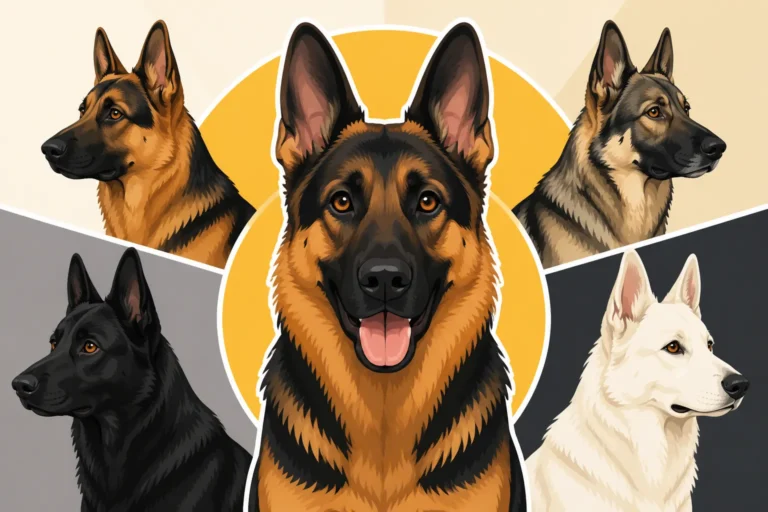
When we talk about German Shepherds, most people picture the classic black and tan, or maybe a solid black or sable. But then you see a picture of a "Panda German Shepherd," and it's a completely different story. These dogs showcase a striking pattern of white, black, and sometimes tan, which is quite rare and often misunderstood. It’s not a common color in the breed, and for good reason—it comes from a specific genetic mutation that creates these unique markings.
What Exactly is the Panda Gene?
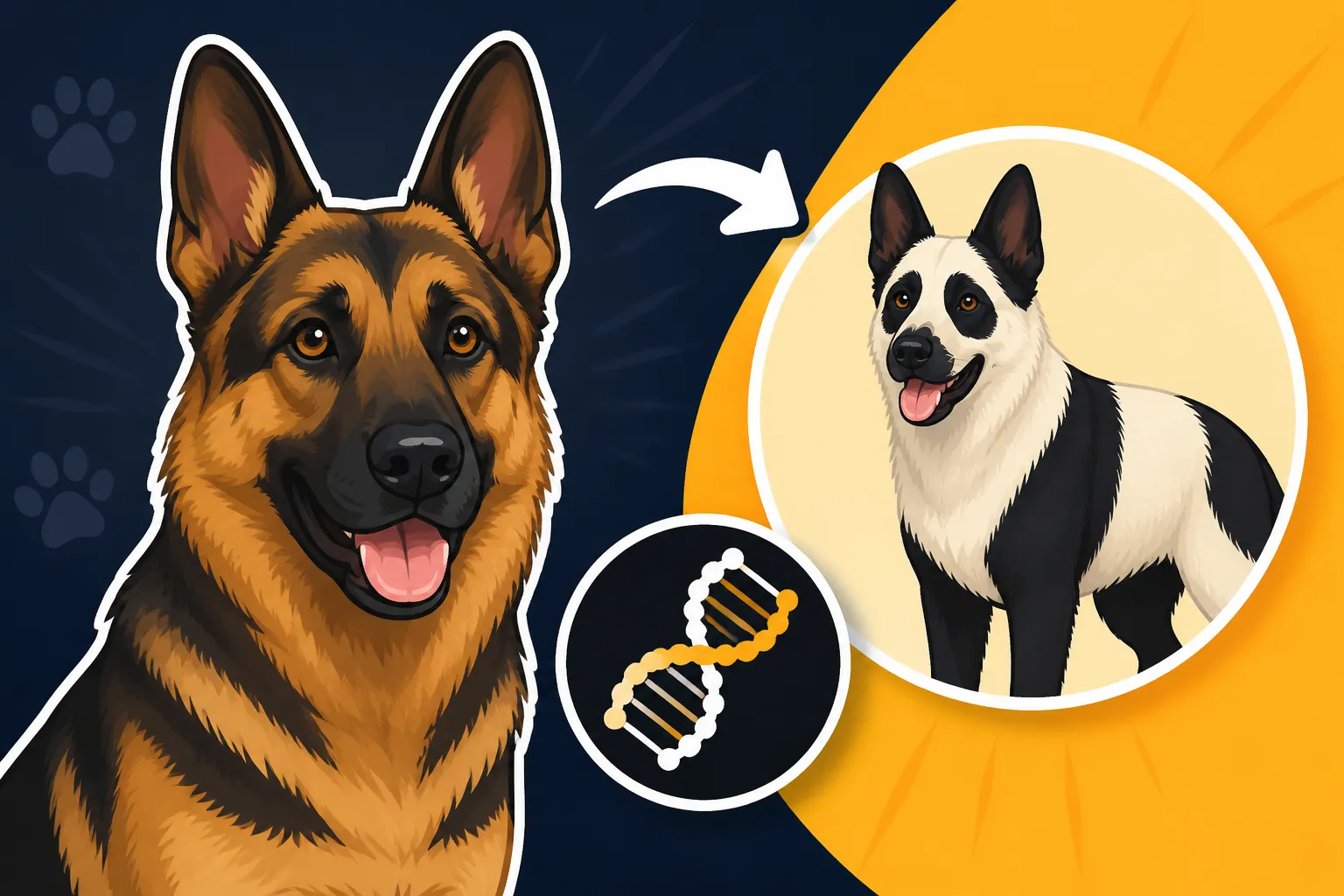
The "Panda Gene" isn't actually a specific gene called "Panda." Rather, it's a layman's term for a very specific type of piebald or "white spotting" gene mutation that affects the KIT gene in German Shepherds. This mutation is believed to have originated spontaneously in a single German Shepherd, and from there, it's been carefully bred for by those who appreciate the distinctive look. Think of it as a genetic anomaly that creates areas where pigment cells simply don't develop, resulting in stark white patches on an otherwise colored dog. It's a bit like an artistic splash of white paint on a canvas, completely changing the dog's appearance.
For many years, there was a lot of confusion and even skepticism about whether a truly piebald German Shepherd could exist without being a mixed breed. The assumption was always that such extensive white markings had to come from another breed in the lineage. However, genetic testing has confirmed that dogs exhibiting this "Panda" pattern are, in fact, purebred German Shepherds. This discovery shifted the conversation from skepticism to understanding the unique genetics at play. It's a fascinating example of how genetic mutations can introduce stunning new variations within a breed.
The Distinctive Look of a Panda German Shepherd
A Panda German Shepherd is unmistakable once you know what to look for. The most defining characteristic is the presence of at least 30% white markings, typically concentrated on the face, chest, belly, and paws, often with a white collar. This white is usually very bright and sharply defined against the dog's traditional black and tan, or sable coloring. Imagine a German Shepherd wearing white socks, a white vest, and a white mask – that’s the general idea. The head often features a prominent white blaze, sometimes extending to create a full white mask.
Beyond the stark white, the remaining colored portions of their coat will display typical German Shepherd colors, like black and tan, or sable. This creates a beautiful, high-contrast appearance that really makes them stand out. It’s important to note that these markings are not symmetrical or uniform in shape; they are irregular patches, which is characteristic of the piebald pattern. If you see two Panda German Shepherds, their white markings will almost certainly be unique to each dog, making every one a truly individual work of art.
The Genetic Blueprint Behind the Piebald Pattern
Understanding the Panda gene requires a little peek into the world of canine genetics. It’s not just about a pretty coat; it’s about a specific gene mutation that dictates where and how pigment develops in the dog’s skin and fur. This makes it a truly scientific phenomenon, far more than just a rare color.
Understanding the KIT Gene Mutation
The "Panda" pattern in German Shepherds is attributed to a mutation on the KIT gene. This gene plays a crucial role in the migration and survival of melanoblasts, which are the precursor cells to pigment-producing cells. When there's a specific mutation in the KIT gene, it disrupts this process, preventing melanoblasts from reaching certain areas of the skin during embryonic development. The result? Those areas end up without any pigment, appearing stark white. This is the genetic basis for all piebald patterns across many different animal species, including dogs.
This mutation is a spontaneous one, meaning it wasn't intentionally bred into the line from the start, nor was it present in the original German Shepherd breed standard. It arose naturally, similar to how other rare color variations can emerge over time. The original German Shepherd believed to carry this mutation was named Lewcinka's Franka. All true Panda German Shepherds can trace their lineage back to this dog, confirming the single source of this unique genetic trait. It’s a remarkable testament to the power of genetics and how a small change can lead to such a dramatic visual difference.
How is the Panda Gene Inherited?
The Panda gene is inherited as a dominant, autosomal trait, which is both interesting and a little complex to grasp at first. What "dominant" means in this context is that a dog only needs one copy of the mutated KIT gene to express the piebald pattern. If a German Shepherd inherits the Panda gene from just one parent, it will display the white markings. If it inherits two copies, it would theoretically be completely white, but this is a very rare and largely unobserved occurrence as the single copy already expresses significant white.
This dominant inheritance pattern also means that if a Panda German Shepherd is bred with a non-Panda German Shepherd (one that doesn't carry the mutation), there's a 50% chance that each puppy in the litter will inherit the gene and therefore display the Panda pattern. This is why, despite its rarity, once the gene appeared, it could be propagated within the breed. Reputable breeders interested in this pattern conduct German Shepherd Genetic Health Testing to confirm the presence of the KIT gene mutation, ensuring they are indeed working with purebred German Shepherds and not accidentally mixing breeds. Understanding this inheritance is crucial for breeders aiming to produce these unique dogs responsibly.
Panda German Shepherds vs. Other Color Variations
The distinctive white markings of a Panda German Shepherd often lead to confusion with other German Shepherd coat types, particularly white German Shepherds or those with merle patterns. Clearing up these distinctions is important for appreciating the true uniqueness of the Panda.
Separating Panda from White German Shepherds
This is one of the biggest points of confusion, and it’s easy to see why. Both Panda German Shepherds and White German Shepherds have significant amounts of white fur. However, the genetic mechanisms and visual presentations are entirely different. A White German Shepherd is solid white across its entire body, due to a recessive gene that completely suppresses pigment production in the fur. Their skin and nose usually remain pigmented (black). This is akin to albinism but specifically for fur color, without the health implications often associated with true albinism.
In contrast, a Panda German Shepherd has patches of white on a colored coat. They are not entirely white; rather, they have distinct areas of pigmented fur (black, tan, sable) interspersed with stark white patches. The white areas on a Panda are due to the KIT gene mutation, which prevents any pigment from developing in those specific areas. This is a critical difference: one is an overall dilution/suppression of color (white), and the other is a pattern of unpigmented areas (piebald). You can learn more about these other variations in our guide on German Shepherd Colors and Coat Types and specifically for the all-white variety, check out White German Shepherd: What to Know.
Distinguishing Piebald from Merle Patterns
Another common mix-up arises when people encounter other spotted dog breeds, particularly those with merle patterns. It's vital to understand that the piebald pattern of a Panda German Shepherd is fundamentally different from a merle pattern. Merle is characterized by irregular patches of diluted pigment, creating a mottled or "marbled" effect on the coat, often accompanied by blue or partially blue eyes. The edges of merle patches are typically blurred, and the underlying color is faded.
Piebald, on the other hand, means distinct, sharply defined white patches on an otherwise solid or patterned coat. There is no dilution of the underlying color in the pigmented areas, and the white patches are completely devoid of pigment. The merle gene and the piebald gene (KIT mutation) are entirely different genetic mutations that create vastly different visual effects. You won't see the dappled, faded look of merle on a Panda German Shepherd; instead, you'll see clean lines between the colored and unpigmented areas. Confusing the two could lead to incorrect assumptions about potential health issues, as the merle gene can carry specific health risks, especially if two merle dogs are bred together.
Why Breed Standards Matter for Unique Colors
When it comes to unique coat patterns like the Panda, the topic of breed standards inevitably comes up. Most breed clubs and organizations, including the American Kennel Club (AKC) and the German Shepherd Dog Club of America, do not recognize the piebald (Panda) pattern as a standard color for German Shepherds. This means Panda German Shepherds, while purebred, cannot be shown in conformation events under these organizations. The traditional German Shepherd breed standard prioritizes specific colors and patterns, and anything outside of that is considered a "non-standard" color.
This doesn't mean Panda German Shepherds are any less healthy, intelligent, or loving. It simply means their appearance deviates from the established visual ideal for the breed. For potential owners, this is important to understand if showing is a goal. However, if you're looking for a loving companion, the breed standard is largely irrelevant. It's more about preserving a historical look than defining a dog's inherent quality or suitability as a pet. Knowing How to Tell if a German Shepherd Is Purebred through parentage and genetic testing, regardless of coat color, is far more important.
Health, Temperament, and Breeding Ethics
Beyond the striking appearance, prospective owners naturally wonder about the health and temperament of Panda German Shepherds. Are they prone to specific ailments? Do their unique genetics impact their personality? And what about the ethics of breeding for such a distinct trait?
Common Health Perceptions vs. Reality
One of the biggest concerns with any "designer" or rare color dog is whether the unique genetics come with associated health problems. For the Panda German Shepherd, it's a common misconception that their white markings might lead to deafness or blindness, as is sometimes seen with excessive white in other breeds (like double merles). However, with the KIT gene mutation that causes the Panda pattern, there is currently no scientific evidence linking it to inherent health issues like deafness, blindness, or other breed-specific problems. This is a huge relief for anyone drawn to their unique look.
The health risks a Panda German Shepherd faces are largely the same as any other German Shepherd. This means they are still susceptible to common German Shepherd Health Problems Guide, such as hip and elbow dysplasia, bloat, and degenerative myelopathy. A responsible breeder will still perform all recommended health screenings for these issues, regardless of coat color. So, while their coat pattern is rare, their fundamental health profile should be that of a robust, well-bred German Shepherd. Always inquire about the parents' health clearances, just as you would for any German Shepherd puppy.
Temperamental Traits of Panda German Shepherds
When it comes to temperament, the Panda gene mutation affects coat color, not personality or working drive. Therefore, a Panda German Shepherd should exhibit the same core temperament traits as any other German Shepherd. This means they are typically intelligent, loyal, confident, and protective dogs. They possess a strong desire to please their owners and are highly trainable. Their energetic nature means they need plenty of exercise and mental stimulation to thrive.
Like all German Shepherds, proper socialization from a young age is crucial to ensure they grow into well-adjusted adults. Without adequate exposure to various people, places, sounds, and other animals, any German Shepherd, regardless of color, can develop fear or reactivity. A Panda German Shepherd is no different. They will require consistent training and a dedicated owner who understands the breed's needs. You can learn more about what to expect in terms of personality in our article on German Shepherd Temperament and Personality. They are just as capable of being wonderful family pets, working dogs, or performance athletes as their more traditionally colored counterparts.
The Ethical Breeder's Approach to the Panda Gene
The existence of a unique genetic trait like the Panda gene raises questions about ethical breeding practices. Because the pattern is not recognized by major breed standards, some purists believe that breeding for it deviates from the core goals of preserving the breed's traditional characteristics. However, other reputable breeders see it as an opportunity to responsibly explore genetic diversity while maintaining strict health and temperament standards. An ethical breeder will prioritize the overall health, temperament, and structural soundness of their dogs above all else, including color.
They will conduct extensive German Shepherd Genetic Health Testing on all breeding dogs, regardless of color, and will be transparent about their dogs' pedigrees and any potential health concerns. They will never breed solely for color at the expense of health. If you are seeking a Panda German Shepherd, it is absolutely paramount to find a breeder who focuses on these ethical principles. Avoid any breeder who markets "rare" colors at inflated prices without evidence of health clearances or a genuine commitment to the breed's well-being. A responsible breeder will also educate prospective owners about the lack of breed standard recognition, so there are no surprises down the road.
Bringing a Panda German Shepherd Home: What to Expect
Deciding to welcome a German Shepherd, especially one as unique as a Panda, is a big commitment. Knowing what to expect in terms of finding a puppy and providing daily care can make the transition much smoother.
Finding a Responsible Breeder
Finding a reputable breeder for any German Shepherd is crucial, but it's especially important when looking for a rare variation like the Panda. Because the Panda gene is less common and not part of the standard, there might be fewer breeders specializing in them, and unfortunately, this can attract unscrupulous breeders looking to cash in on the "rare" factor. Your priority should always be health and temperament over color. Look for breeders who are open about their practices, welcome visits, and can provide extensive documentation.
A good breeder will:
- Show you the puppy's parents and their living conditions.
- Provide health clearances for hips, elbows, and other common German Shepherd ailments.
- Be transparent about the puppy's pedigree and genetic testing for the KIT gene mutation.
- Ask you many questions to ensure you're a good fit for one of their puppies.
- Offer a health guarantee and a clear contract.
- Be willing to educate you about the breed and its specific needs.
Don't be afraid to ask about German Shepherd Puppy Price Explained and how it relates to the health testing and care invested in the puppies. Be wary of anyone who offers a "deal" without proper documentation or health information. It's a red flag if they focus solely on the "rare" aspect without discussing health or temperament.
Daily Care and Management
The day-to-day care of a Panda German Shepherd will be identical to that of any other German Shepherd. These are high-energy, intelligent dogs that require consistent training, ample exercise, and a balanced diet. Just like other GSDs, they thrive on having a job to do, whether it's obedience training, agility, or simply being a vigilant family protector. Regular exercise, such as daily walks, playtime, and mental stimulation through puzzle toys, is non-negotiable. Our guide on German Shepherd Exercise Requirements can provide further insights into keeping them fit and happy.
Grooming will also be standard for the breed. German Shepherds are known for their double coats and shedding, and a Panda German Shepherd is no exception. Regular brushing will be key to managing their coat and keeping it healthy. You can find essential tips in our German Shepherd Care and Grooming Routine. For their nutritional needs, look for high-quality dog food suitable for large breeds. Many owners find great selections for food, toys, and grooming supplies readily available from online retailers like Chewy, making it easy to keep your GSD happy and healthy. Ensuring proper dental care, ear cleaning, and regular vet check-ups will contribute significantly to their overall well-being. Ultimately, their unique coat doesn't add any extra burden to their care; it just adds to their charm.
Disclaimer
This article is for general informational purposes only and does not constitute professional advice. Laws, prices and regulations vary by location and change over time. Consult a qualified professional for guidance on your specific situation.