German Shepherd Physical Characteristics
Bringing a German Shepherd into your life means welcoming a magnificent, powerful, and intelligent companion. But understanding their physical characteristics goes beyond just appreciating their striking looks; it's about recognizing what makes them truly unique, how to spot signs of health, and appreciating the nuances between different lines. This guide dives deep into the distinct physical traits that define the German Shepherd, helping you understand their formidable build, iconic features, and the slight variations that make each dog special.
The Iconic Silhouette: Overall Appearance and Build
There's a reason why the German Shepherd is one of the most recognizable dog breeds in the world. Their powerful, noble, and somewhat imposing presence is undeniable, rooted in a history of working alongside humans. When you see a well-conditioned German Shepherd, you're looking at a dog built for both strength and agility, with every part of their body contributing to an efficient, purposeful movement.
General Impression: More Than Just a Pretty Face
From the moment you lay eyes on a German Shepherd, you're struck by their proud bearing and intelligent gaze. They exude an air of confidence and alertness that speaks volumes about their heritage as herders and protectors. This isn't just about their size; it's about their overall harmonious build. A German Shepherd should appear strong, well-muscled, and capable, never gangly or delicate. Their appearance should immediately convey their athleticism and keenness, reflecting their active minds and bodies. You’ll notice their eagerness to observe their surroundings, often with their ears perked and eyes following every movement, ready to engage. This inherent attentiveness is a key part of their general impression.
Body Proportions and Structure: A Symphony of Strength
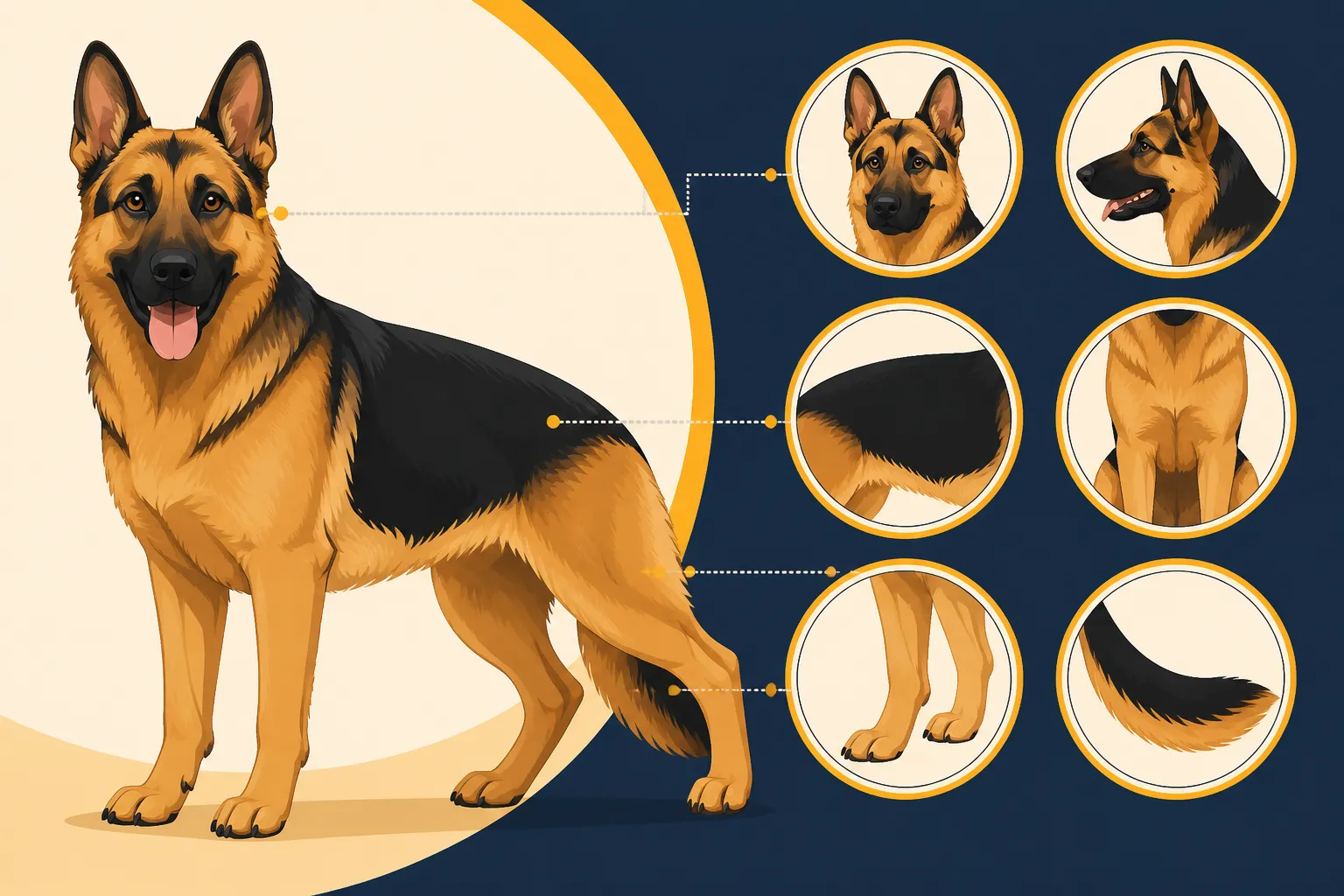
The German Shepherd’s body is a marvel of engineering, designed for endurance and efficiency. They have a slightly elongated body, meaning they are longer than they are tall, which contributes to their powerful stride. Their back should be firm, broad, and well-muscled, blending smoothly from the withers to the slightly sloping croup. A strong, deep chest provides ample room for healthy heart and lung function, which is crucial for a breed with such high energy and working drive. The rib cage is well-sprung, neither barrel-shaped nor flat, tucking up slightly towards the loin. This specific structure allows for powerful propulsion and agile turns, whether they are herding sheep, tracking scents, or running alongside their human companions. When we talk about German Shepherd Breed Standard Explained, these proportions are at the core of what makes a GSD true to form.
Musculature and Bone Structure: Built for Work
Underneath that impressive coat, a German Shepherd possesses a robust bone structure and powerful, well-defined muscles. Their bones are sturdy, providing a solid framework without being overly heavy or coarse. This balance is critical for speed, agility, and stamina. The muscles are taut and firm, particularly noticeable in their hindquarters, which are the engine of their powerful gait. Think of a seasoned athlete: every muscle group works in concert. Their shoulders are well laid back, allowing for a long reach, while strong hocks provide the drive. This musculature isn't just for show; it's what enables them to perform demanding tasks, from intricate obedience routines to navigating challenging terrain. A healthy diet, often sourced from reputable pet supply retailers like Chewy, is essential for maintaining this strong physique, providing the necessary protein and nutrients for muscle development and maintenance.
Understanding Size, Weight, and Growth
German Shepherds are undeniably large dogs, but their size and weight can vary significantly based on genetics, gender, and individual growth patterns. It’s important for owners to understand what constitutes a healthy size and how their dog’s body develops from a clumsy puppy into a majestic adult.
Typical Size and Weight Ranges: Males vs. Females
While both male and female German Shepherds are impressive, there are distinct differences in their size and weight. Males generally stand taller and are more heavily built than females. An adult male typically stands between 24 to 26 inches (60-65 cm) at the shoulder and can weigh anywhere from 65 to 90 pounds (29.5-40.8 kg). Females are usually a bit smaller, measuring between 22 to 24 inches (55-60 cm) at the shoulder and weighing between 50 to 70 pounds (22.7-31.8 kg). These are general guidelines, of course, and variations exist. Knowing these ranges helps you assess your dog's growth and ensures they're developing properly. If you're looking for more detailed information, our article on the German Shepherd Size and Weight Guide offers a comprehensive breakdown.
Growth and Development Stages: From Puppy to Adult
A German Shepherd puppy undergoes rapid growth, especially in their first year. They typically reach most of their height by 8-12 months, but they continue to fill out and gain muscle mass until they are about 18-24 months old. This extended development period means careful attention to nutrition and exercise is paramount to prevent joint issues later in life. Over-exercising a young puppy, for instance, can put undue stress on developing joints. As they grow, you'll see their puppy fat give way to more defined musculature, and their initially soft, floppy ears will eventually stand erect, usually between 8 weeks and 6 months of age, as discussed in German Shepherd Puppy Ear Stages. This transition period is fascinating to observe, watching them mature both physically and mentally.
Healthy Weight and Condition: A Lifelong Goal
Maintaining a healthy weight is critical for a German Shepherd’s longevity and overall well-being. An overweight German Shepherd is at a higher risk for numerous health issues, including joint problems like hip and elbow dysplasia, heart disease, and diabetes. You should be able to feel your dog's ribs easily without seeing them protruding, and they should have a discernible waist when viewed from above. Their tummy should also tuck up slightly when viewed from the side. Regular weigh-ins at home or during vet visits, combined with a balanced diet and appropriate exercise, are key. If you're concerned about your dog's weight, or want to understand potential risks, check out our guide on German Shepherd Weight and Obesity Risks. High-quality food and treats, available from retailers like Chewy, can support a healthy weight management plan.
The Distinctive Head, Face, and Sensory Organs
The German Shepherd’s head and face are perhaps their most expressive features, conveying intelligence, alertness, and sometimes a hint of mischief. Each component—from their strong muzzle to their watchful eyes and erect ears—plays a role in their overall functionality and iconic appearance.
Head Shape and Muzzle: A Noble Profile
A German Shepherd’s head should be proportionate to their body, strong and clean-cut, without being too bulky or too refined. It's often described as a noble, wedge-shaped head. When viewed from the top and front, it tapers evenly from the ears to the black nose. The stop, the indentation between the eyes, should be moderate and well-defined, not abrupt or absent. Their muzzle should be long and strong, neither pointed nor short, allowing for a powerful bite and excellent scenting capabilities. A strong jawline is evident, supporting their powerful teeth. This robust head structure is essential for a dog bred for gripping and protection work, showcasing their inherent strength and purpose.
Eyes and Expression: The Window to Their Soul
The eyes of a German Shepherd are a profound aspect of their character. They are typically medium-sized, almond-shaped, and set slightly obliquely, never bulging or sunken. The preferred color is as dark as possible, contributing to their keen and intelligent expression. Lighter colored eyes can sometimes give a "hard" or "staring" look, which is not ideal according to breed standards. Their expression should be one of alertness, intelligence, and self-confidence, radiating an almost human-like understanding. This attentive gaze is a hallmark of the breed, reflecting their innate ability to observe and respond to their environment, always aware of what's happening around them.
Ears: Always on Alert
The German Shepherd's ears are one of their most defining and recognizable features. They should be moderately pointed, open towards the front, and carried erect, parallel to each other, when the dog is alert. In puppies, it's common for their ears to flop, stand at different angles, or go up and down like little radars during their growth period. This process, as covered in German Shepherd Ear Types and Development, is completely normal. However, by the time they reach adulthood, typically between 4-6 months, healthy ears should be firmly erect. Floppy or soft ears in an adult German Shepherd can be a disqualifying fault in the show ring, but for a family pet, it simply adds character. The ears are not merely aesthetic; their highly mobile nature allows them to pinpoint sounds, critical for their working roles.
Teeth and Bite: Formidable and Functional
Beneath that strong muzzle lies a formidable set of teeth designed for function. A German Shepherd should possess a full complement of 42 teeth, strong and healthy. The ideal bite is a scissors bite, where the upper incisors slightly overlap the lower incisors in a clean, tight fit. Any deviation from this, such as an overshot or undershot bite, is considered a fault. These powerful teeth, combined with strong jaw muscles, allow them to grip firmly and maintain control, whether they are carrying a retrieve item or performing protection work. Regular dental care, including brushing and appropriate dental chews, is vital for maintaining their oral health throughout their lives, preventing issues that could impact their ability to eat or work.
Exploring German Shepherd Coat Types and Colors
The German Shepherd’s coat is more than just beautiful; it's a functional double coat designed to protect them from various weather conditions. Understanding the different coat types and colors is part of appreciating the breed's diversity. Our guide on German Shepherd Colors and Coat Types provides even more detail.
Standard Coat Types: Protection and Practicality
The German Shepherd primarily comes in two accepted coat types: the stock coat and the long stock coat.
- Stock Coat (Standard Coat): This is the most common and historically preferred coat type. It's a double coat, meaning it has a harsh, dense outer coat that lies close to the body, and a softer, thick undercoat. The outer coat is waterproof and protects against dirt, while the undercoat provides insulation against both cold and heat. This type of coat is extremely functional, keeping the dog comfortable in diverse climates. Regular brushing is essential for managing shedding, especially during seasonal "blow outs."
- Long Stock Coat (Long-Haired with Undercoat): This coat type features longer guard hairs, especially noticeable behind the ears, on the back of the legs, and on the tail. Critically, it still possesses a dense undercoat, which distinguishes it from the true long-haired German Shepherd (without an undercoat), which is generally considered a fault. The long stock coat offers similar protection to the standard stock coat but requires even more diligent grooming to prevent matting. Regardless of coat type, maintaining a healthy coat through proper nutrition and regular grooming with tools from Chewy is crucial, especially during times of heavy shedding, often referred to as "blow coat season." For those dealing with excessive shedding, understanding the German Shepherd Double Coat Explained can offer valuable insights.
Common and Acceptable Colors: A Rich Palette
German Shepherds boast a wide array of beautiful colors, most of which are acceptable within breed standards. The most common and classic colors include:
- Black and Tan: This is arguably the most iconic German Shepherd color. It features a black saddle or blanket pattern over a tan, gold, or cream base.
- Sable: Often described as "agouti," sable dogs have individual hairs that are banded with different colors (typically black, red, and tan), giving them a unique, grizzled appearance that can range from light to very dark. This is often the color of working lines.
- Black: Solid black German Shepherds are striking and powerful in appearance. Their coat is uniformly black with no tan or lighter markings.
- Bicolor: Similar to black and tan, but with significantly more black, often covering the entire back, sides, and legs, with only small tan markings on the paws or under the tail.
- Black and Red: A more intense version of black and tan, where the tan markings are a rich, deep red.
These colors are not just visually appealing; they often reflect the genetic lines and specific traits bred into the dog. Each color carries its own distinct beauty and character.
"Rare" or Non-Standard Colors: Unique Beauties
While the common colors are widely accepted, some German Shepherds exhibit colors that are considered "non-standard" or "rare" within certain breed clubs, though they are still purebred German Shepherds. These colors include:
- White: White German Shepherds possess a recessive gene that causes their coat to be entirely white. They are often stunningly beautiful but historically were disqualified from standard show rings. Today, some registries recognize them, or they are recognized as a separate breed, the White Swiss Shepherd.
- Blue: This dilute color gives the black pigment a smoky, grayish-blue hue. It's a genetic dilution of black.
- Liver: Another dilute color, liver lightens black pigment to a reddish-brown.
- Isabella: A very rare dilute combination of blue and liver, resulting in a pale fawn or brownish-gray color.
It's important to remember that these "rare" colors do not indicate a health problem or impure breeding, but rather a genetic variation. However, sometimes unethical breeders will market these colors at exorbitant prices, so always research your breeder carefully, as highlighted in our guide on How to Find a Reputable German Shepherd Breeder.
Tail Carriage and Signature Gait
The way a German Shepherd carries its tail and moves is incredibly distinctive, offering insights into its temperament and demonstrating its athletic prowess. These elements are integral to the breed's standard and functionality.
Tail Carriage and Appearance: A Natural Extension
A German Shepherd's tail should be set rather low, following the line of the croup. When the dog is relaxed, the tail hangs in a slight curve, like a saber. When the dog is excited or moving, the tail may lift, but it should never curl over the back or be carried too high. A tail that is carried too high or curled can indicate excitement, but consistently doing so can be a structural fault in the show ring. The tail itself should be bushy, well-covered with dense hair, and reach at least to the hocks. It acts as a counterbalance, helping with stability and steering, particularly during quick turns or changes in speed. It's also a crucial communication tool, wagging or twitching to express a range of emotions, from happiness to cautious observation.
Signature Gait: The Powerful, Ground-Covering Trot
The German Shepherd is renowned for its signature gait: a powerful, flowing trot that covers ground with minimal effort. This is often described as a "flying trot" because of the way the dog seems to glide. During this gait, the back remains firm and level, with the limbs moving in parallel planes, almost as if the dog is moving on a single track. The hind legs drive powerfully forward, pushing the dog ahead, while the front legs reach out, covering a lot of ground. This gait is efficient and tireless, allowing the German Shepherd to work for extended periods without fatigue, which was crucial for their original herding duties. This powerful movement is a testament to their balanced structure and strong musculature. Proper exercise, as detailed in our article on How Much Exercise Does a German Shepherd Need, is vital for maintaining this athletic ability.
Movement and Agility: Grace in Motion
Beyond the trot, a well-built German Shepherd possesses incredible agility and coordination. Their balanced proportions and strong musculature enable them to make quick directional changes, jump, and navigate challenging obstacles with ease. Whether they're weaving through a complex agility course or darting through a field, their movements are fluid and purposeful. This blend of power and grace is a hallmark of the breed and a direct result of decades of breeding for working ability. It’s truly a joy to watch a German Shepherd in full stride, demonstrating the athleticism encoded in their very DNA.
Variations: Working Line vs. Show Line Physicals
The German Shepherd breed has diverged into distinct lines, primarily "working lines" and "show lines," each with subtle but noticeable physical differences that reflect their breeding priorities. Understanding these distinctions is key, especially if you're considering a German Shepherd puppy, as these physical traits often correlate with temperament and drive. Our comprehensive article on Working Line vs Show Line German Shepherd offers a deeper dive into these fascinating differences.
Differences in Body Structure: Form Follows Function
One of the most talked-about physical differences between working and show lines is the back and angulation.
- Show Line German Shepherds: Especially those from American and some West German show lines, often exhibit a more pronounced slope in their back, with more extreme angulation in their hindquarters. This angulation is emphasized to create a very fluid, "flashy" movement in the show ring. While beautiful to some, this extreme angulation can sometimes lead to discussions about potential impacts on long-term joint health, a concern for many owners. The chest might appear deeper, and the overall look can be very elegant and refined. For a deeper discussion, explore Straight Back vs Sloped Back German Shepherd.
- Working Line German Shepherds: These dogs, including those from East German (DDR) and Czech lines, tend to have a straighter back and less exaggerated angulation in their hindquarters. Their build is often more utilitarian and rugged, emphasizing durability and endurance over extreme show ring aesthetics. Their musculature is typically dense and powerful, designed for sustained physical activity and resilience. The focus is on a functional, robust structure that can withstand the rigors of Schutzhund, IPO, herding, or police work.
Head and Muzzle Differences: Subtle Nuances
While both lines adhere to the general breed standard for head shape, there can be subtle variations:
- Show Line Heads: May sometimes appear a bit more refined or "pretty" with a slightly longer muzzle and a more pronounced stop, emphasizing a noble, elegant profile. Their expression is typically very intelligent and alert.
- Working Line Heads: Often present a slightly more robust or "rugged" appearance. The muzzle might be a touch broader and stronger, and the overall head structure might convey a more powerful, purposeful look. Their expression is intense and focused, reflecting their high drive and concentration. These differences are often very subtle and might only be obvious to an experienced eye, but they contribute to the overall impression of the dog.
Overall Physique and Purpose: A Living Legacy
Ultimately, the physical differences between working and show lines are a testament to their intended purpose. Show lines are bred to excel in the conformation ring, where aesthetics and a specific type of movement are prioritized. Their physique is tailored for elegance and an impressive appearance. Working lines, on the other hand, are bred for performance in demanding tasks. Their physique emphasizes strength, stamina, and resilience, ensuring they can perform their jobs effectively and reliably. Both types are incredible dogs, but their physical forms reflect the specific heritage and goals of their breeding. Understanding these nuances is crucial for any potential owner to ensure they choose a German Shepherd whose physical attributes align with their lifestyle and expectations. It's not uncommon to find a wide variety of supplies for both types of GSDs, from high-energy kibble to durable toys, at pet retailers like Chewy.
Disclaimer
This article is for general informational purposes only and does not constitute professional advice. Laws, prices and regulations vary by location and change over time. Consult a qualified professional for guidance on your specific situation.