How to Do Leash Training with a German Shepherd
It's a familiar scenario for many German Shepherd owners: you step out for a walk, full of good intentions, only for your powerful companion to transform into a locomotive, dragging you down the street. That pulling can be not just frustrating, but genuinely painful and even dangerous for both you and your dog, making what should be a pleasant outing a dreaded chore. This comprehensive guide will walk you through everything you need to know about how to do leash training with a German Shepherd, transforming those chaotic tug-of-war sessions into enjoyable, controlled strolls.
Understanding Why German Shepherds Pull on Leash
Before we dive into the "how-to," it's incredibly helpful to understand the "why." German Shepherds are magnificent, powerful dogs, and their natural instincts and high energy levels often contribute to their pulling behavior. It's rarely out of malice; it's usually just a combination of their breed traits and a lack of clear communication from us, their human companions. When you understand the root causes, you can approach training with more patience and a tailored strategy.
Natural Instincts and High Energy Levels
German Shepherds were originally bred for herding and protection, roles that require immense stamina, alertness, and a strong drive to investigate their surroundings. When you open that door for a walk, your GSD is often overwhelmed by a sensory explosion – new smells, sights, and sounds. Their instincts kick in, urging them to explore, chase, or guard. This inherent drive, coupled with their often boundless energy, means that simply walking calmly beside you isn't always their natural inclination. They want to go, and they're built to pull. If they've learned that pulling gets them where they want to go faster, they'll continue to do it.
Think about it from their perspective: the world is a fascinating place, full of squirrels to chase, new scents to sniff, and other dogs to observe. If you're holding them back from all these exciting stimuli, their strong desire to reach them translates into pulling. They don't inherently understand that a loose leash is the goal; they just know that a tight leash means they're moving forward, even if it's uncomfortable for you. Providing ample mental and physical exercise can help manage some of this underlying energy, making leash training more effective. You might find our guide on how much exercise a German Shepherd needs to be a helpful resource.
Lack of Early Training and Reinforcement
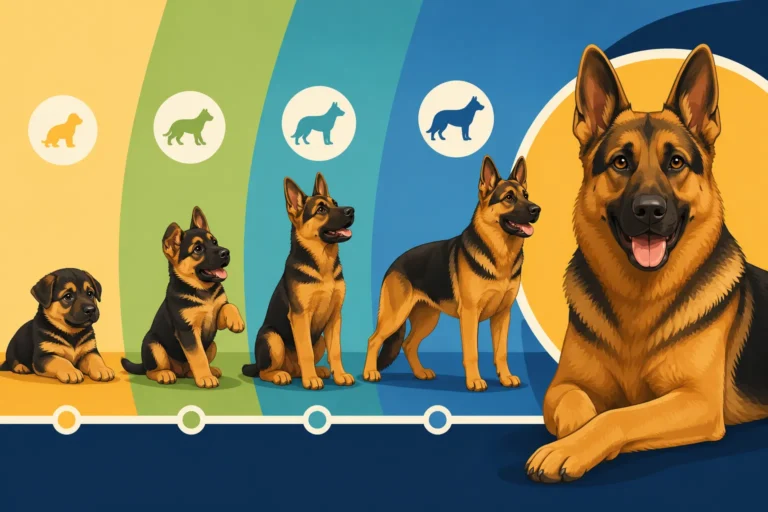
Many pulling issues stem from a lack of consistent, positive reinforcement training during a German Shepherd's crucial developmental stages. Puppyhood is the ideal time to introduce a leash and collar and teach the fundamentals of loose-leash walking. If a puppy is allowed to pull from a young age, it quickly becomes a deeply ingrained habit. Their powerful necks and shoulders mean they can exert a surprising amount of force, even as juveniles.
Without clear communication about what is acceptable behavior on a leash, dogs will naturally do what works for them. If pulling gets them to the patch of grass they want to sniff, or to greet another dog, they've been inadvertently rewarded for that behavior. This isn't about blaming the dog; it's about recognizing that we, as owners, need to be proactive and consistent in setting expectations. The good news is that even adult German Shepherds can learn new habits, but it requires dedication and the right techniques. For foundational learning, check out our comprehensive German Shepherd puppy training guide.
Essential Leash Training Gear for German Shepherds
Choosing the right equipment is a critical first step in effective German Shepherd leash training. The market is flooded with options, and it can feel overwhelming trying to figure out what's best for your powerful and intelligent companion. The goal isn't just to stop pulling, but to ensure comfort and safety for your dog while giving you the control you need to teach them.
Collars and Harnesses for Control and Comfort
When it comes to collars and harnesses, what works for one dog might not work for another, and German Shepherds, with their strong build and potential for enthusiasm, often benefit from specific types of gear.
- Flat Collars: A basic flat buckle collar is essential for holding identification tags, but it offers very little control for a strong German Shepherd who pulls. When a dog pulls on a flat collar, the pressure is exerted directly on their trachea, which can be uncomfortable, potentially damaging, and does little to deter pulling. It's generally not recommended as the primary tool for leash training a GSD who is a consistent puller.
- Martingale Collars: These collars are designed to tighten slightly when your dog pulls, preventing them from slipping out (especially useful for breeds with necks larger than their heads, though less common with GSDs) and providing a gentle, self-correcting pressure around the neck. Unlike choke chains, they only tighten to a certain point, preventing excessive pressure. They can be a good option for dogs who pull moderately or as a transition tool, offering more control than a flat collar without the harshness of a full choke chain.
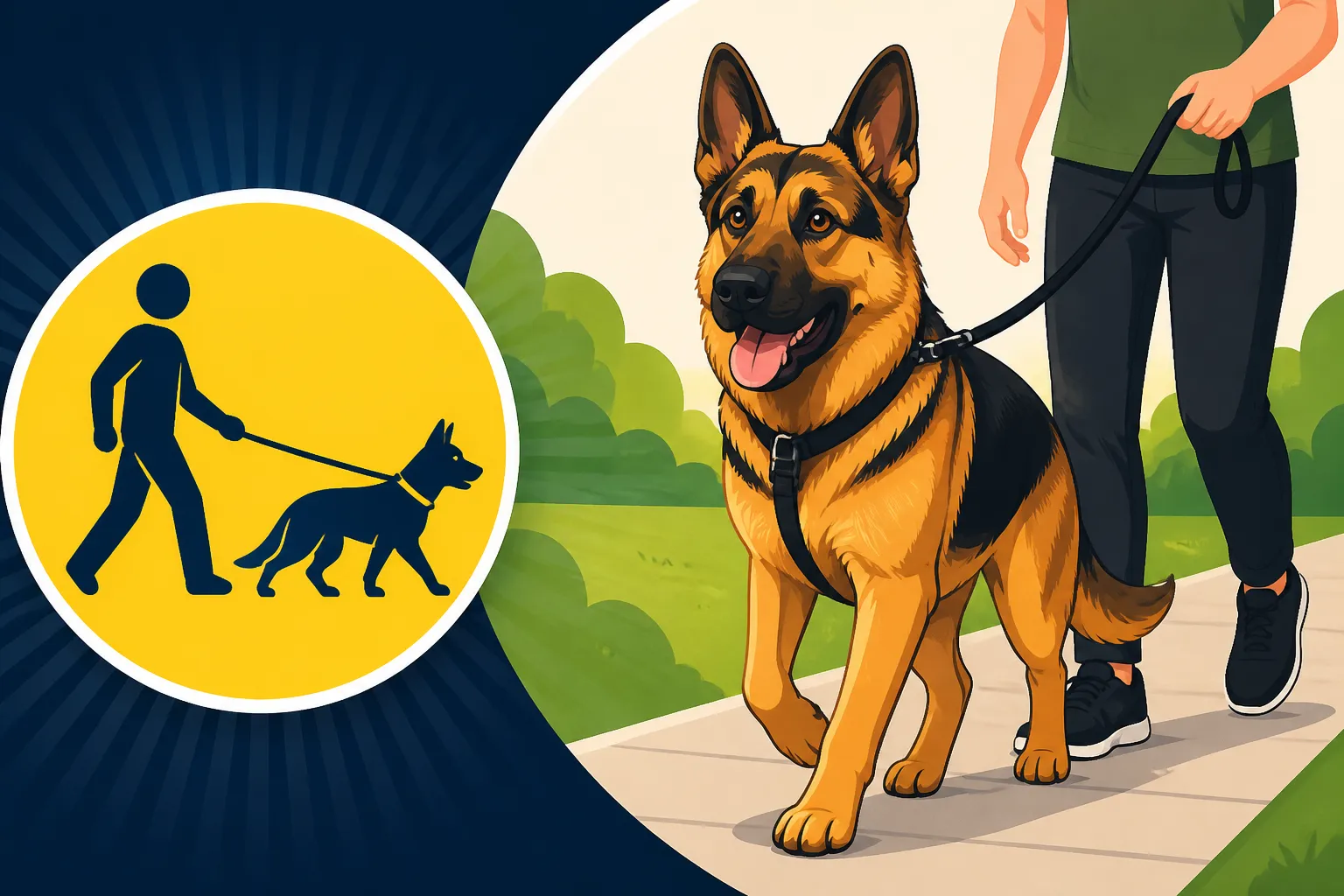
- Front-Clip Harnesses: Many trainers swear by front-clip harnesses for powerful pullers. Instead of clipping the leash on the back, the leash attaches at the dog's chest. When your German Shepherd pulls, the harness gently redirects their body towards you, making it physically difficult for them to continue pulling forward. Brands like the Easy Walk Harness or the Freedom No-Pull Harness are popular and widely available on platforms like Amazon. This redirection is often very effective without causing discomfort or pain to your dog's neck or throat. It teaches them that pulling changes their direction, rather than getting them where they want to go.
- Head Halters: Also known as head collars or gentle leaders, these resemble a muzzle but function more like a bridle on a horse. They give you control over your dog's head, and where the head goes, the body follows. When your GSD tries to pull, their head is gently turned to the side, making it uncomfortable to pull straight ahead. While highly effective for strong pullers, some dogs initially resist head halters, requiring a gradual and positive introduction to ensure they accept it comfortably. The Gentle Leader is a well-known brand in this category. They are excellent for providing immediate control and are often recommended for dogs with reactivity or those who lunge.
Leash Types and Training Aids
Just as important as the collar or harness is the leash itself. The right leash can make a significant difference in your training efforts and overall safety.
- Standard Leashes: A 4 to 6-foot nylon or leather leash is the go-to for most leash training. Leather leashes offer a comfortable grip and durability, while nylon is often more affordable and comes in various colors. Avoid retractable leashes for training purposes, especially with a German Shepherd. Retractables teach dogs that pulling extends their range, which is the exact opposite of what we want for loose-leash walking. They also offer minimal control and can snap back, causing injuries.
- Long Lines: For practicing recall and giving your German Shepherd a bit more freedom in a safe, enclosed area before they've mastered off-leash commands, a long line (15-30 feet) can be invaluable. This isn't for everyday walks but rather for specific training sessions to reinforce coming when called and to give them a sense of space while still being securely attached.
- Training Aids: Some owners find clickers useful for marking desired behaviors during training. A clicker, paired with high-value treats, can clearly communicate to your German Shepherd exactly when they've done something right, like walking with a loose leash. Training pouches, also readily available on Amazon, are perfect for keeping treats easily accessible during training sessions.
When choosing equipment, prioritize fit and comfort. A poorly fitting harness can chafe, and a collar that's too loose can allow escapes. Always check for signs of rubbing or discomfort, and ensure you can fit two fingers comfortably under any collar.
| Equipment Type | Best For | Pros | Cons |
|---|---|---|---|
| Flat Collar | ID tags, minimal pullers | Simple, comfortable for non-pullers | No control for pullers, pressure on trachea |
| Martingale Collar | Moderate pullers, preventing escapes | Gentle tightening, prevents slipping, more control than flat | Still applies pressure to the neck if pulling is consistent |
| Front-Clip Harness | Strong pullers, puppies | Redirects dog's momentum, no neck pressure, effective for pulling | Can sometimes tangle legs, requires proper fit |
| Head Halter | Strong pullers, reactive dogs | Excellent immediate control over head, no neck pressure, redirects | Some dogs dislike it initially, requires positive introduction |
| Standard Leash | All training, everyday walks (4-6 ft) | Good control, clear communication | None, when used correctly |
| Retractable Leash | Avoid for training | Gives dog more room (misleadingly) | Teaches pulling, poor control, safety hazard for dog and owner |
Laying the Foundation for Leash Training
Successful leash training isn't just about strapping on a piece of gear and hoping for the best. It's about building a strong foundation of communication, trust, and positive association. For a German Shepherd, this means starting early, being consistent, and making the entire experience a positive one. This initial phase is crucial for setting the stage for calm, enjoyable walks throughout their life.
Introducing the Collar and Leash Positively
For many German Shepherds, especially puppies, the first introduction to a collar and leash can be a bit bewildering. The goal here is to create positive associations, so your dog views these items as gateways to good things, not restrictive annoyances.
Start with just the collar. Let your puppy wear it for short periods inside the house, supervised. Distract them with treats, praise, or a favorite toy. If they try to scratch it off, distract them again. Never make it a negative experience. Once they're comfortable with the collar, attach the leash. Let them drag the leash around the house (again, supervised, so they don't get tangled or chew it). Associate the leash with fun playtime or feeding. For instance, put the leash on, play for a few minutes, then take it off. Gradually increase the duration. The key is never to use the leash as a punishment or to yank them around. You want them to think, "Oh, the leash is on! Something fun is about to happen!" This positive conditioning is paramount, especially for a breed like the German Shepherd, which thrives on understanding and trust.
Basic Obedience Commands as Building Blocks
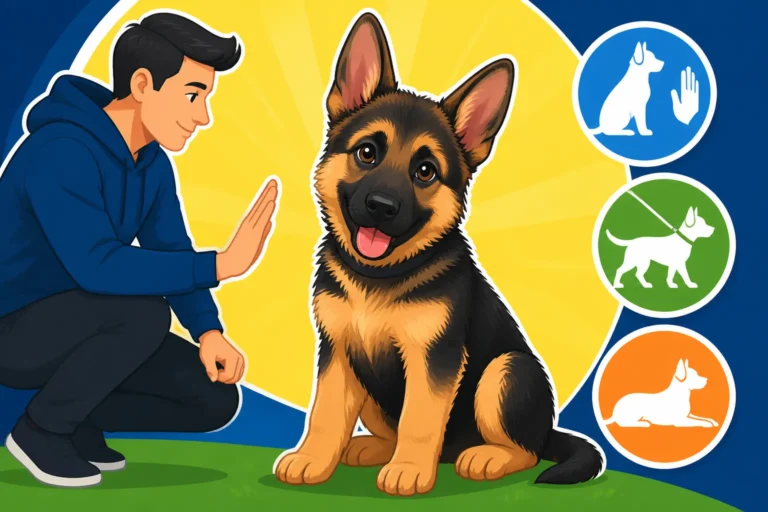
Before you even step out the door for a serious leash training session, your German Shepherd should have a solid grasp of a few fundamental obedience commands. These commands aren't just parlor tricks; they are vital tools for communication and control, both on and off the leash.
- "Sit": This simple command is incredibly powerful. If your German Shepherd is about to pull, asking them to "sit" momentarily breaks their focus, calms them, and gives you a chance to reset. It teaches impulse control, which is essential for a good loose-leash walk. Practice "sit" in various environments, gradually adding distractions.
- "Stay": A reliable "stay" command is another game-changer. It allows you to open the door without your dog bolting, to pause safely at a crosswalk, or to maintain distance from another dog or person if needed. Start with short durations and distances, slowly building up as your GSD gains confidence.
- "Come" (Recall): While primarily an off-leash command, a strong recall is a safety net. If your leash slips or your dog gets loose, "come" can literally be a lifesaver. It also reinforces the idea that coming to you is always more rewarding than anything else. Practice "come" frequently, making it an exciting, high-reward exercise. Our guide on How to Teach a German Shepherd to Come offers more in-depth advice.
- "Watch Me" / Focus: Teaching your German Shepherd to make eye contact with you on command is invaluable for redirecting their attention away from distractions (like that tempting squirrel across the street or another dog). Start in a quiet environment, holding a treat near your nose. When your dog looks at you, mark the behavior (with a clicker or a verbal "yes!") and reward them. Gradually increase the time they hold eye contact and introduce minor distractions. This focus is the cornerstone of keeping their attention on you during a walk, rather than on every enticing scent or movement.
Integrating these commands into short, fun daily training sessions inside and outside the house will make leash training significantly easier and more enjoyable for both of you. Consistency and patience are your best friends here.
Step-by-Step Leash Training Techniques
Once your German Shepherd is comfortable with their gear and understands basic commands, it's time to put those skills to the test with actual leash training. The goal is "loose-leash walking"—meaning your dog walks beside you without tension on the leash, allowing the leash to hang in a gentle curve. This isn't just about stopping pulling; it's about establishing a harmonious partnership where you and your German Shepherd move as a team.
The "Stop-and-Go" Method
This is a classic and highly effective method for teaching your German Shepherd that pulling doesn't get them anywhere, but a loose leash does. It's all about making the consequence of pulling immediately clear and the reward for loose-leash walking equally apparent.
- Start in a Low-Distraction Environment: Begin in your backyard or a quiet park where there are minimal things to pull towards. Put your German Shepherd on their leash (using your chosen harness or head halter).
- Take a Step: Start walking. The moment your dog puts tension on the leash, stop immediately. Don't say anything, don't yank the leash back – just become a tree.
- Wait for Slack: Wait patiently for your German Shepherd to release the tension on the leash. This might mean they turn to look at you, sit down, or simply ease up the pressure. The instant the leash goes slack, even for a second, mark the behavior (e.g., with a verbal "yes!" or a clicker) and resume walking.
- Reward Loose Leash: As you walk, if the leash remains loose, offer quiet praise and small, high-value treats frequently. You want your dog to associate the feeling of a loose leash with good things happening.
- Repeat, Repeat, Repeat: This method requires immense consistency. Every single time your GSD pulls, you stop. Every single time they release tension, you move forward and reward. They will quickly learn that pulling brings the walk to a halt, while a loose leash keeps the adventure going. This method might feel slow at first, especially with a strong German Shepherd, but patience will pay off in the long run.
Changing Directions and Speed
Varying your pace and direction is another excellent way to keep your German Shepherd's attention on you and prevent them from forging ahead. It makes you unpredictable (in a good way!) and teaches them that they need to pay attention to where you're going, not just where they want to go.
- The Unexpected Turn: As you walk, if your German Shepherd starts to pull or gets too far ahead, change direction abruptly. Turn 90 degrees in either direction or even do a complete about-face. Don't announce it; just do it.
- Follow My Lead: When you turn, your GSD will inevitably be caught off guard. As they readjust and catch up to you, and the leash goes slack, immediately praise them and reward them with a treat. This teaches them that staying close and paying attention to your movements is beneficial.
- Varying Speed: Incorporate changes in speed. Walk normally, then suddenly pick up the pace, then slow down to a crawl. The goal is to keep your German Shepherd guessing and looking to you for cues. If they adapt to your speed changes with a loose leash, reward them. If they pull when you speed up or slow down, use the "stop-and-go" method in conjunction with the direction change. This dynamic approach helps build focus and responsiveness, which are crucial for enjoyable walks.
The "Heel" Command
While loose-leash walking focuses on not pulling, the "heel" command teaches your German Shepherd to walk precisely beside you, usually with their shoulder aligned with your leg. This is a more formal command, invaluable for crowded areas, competitive obedience, or when you need absolute control.
- Start in a Quiet Area: With your GSD on a leash, hold a high-value treat in your hand near your side where you want them to heel (typically your left side).
- Lure into Position: Lure your dog into the heel position beside you. As soon as they are in the correct spot, say "Heel!" and take one step.
- Reward and Release: If they stay in position for that one step, immediately reward them with the treat and praise. Then, release them with a command like "Free!" or "Okay!" and let them move out of position.
- Increase Steps and Distractions: Gradually increase the number of steps you take while they are in heel. Once they can heel for several steps in a quiet environment, start introducing very mild distractions.
- Practice Short Bursts: "Heel" is demanding, so keep initial sessions short and positive. Don't expect your German Shepherd to heel for an entire walk. Practice it for short bursts, then allow them to walk on a loose leash for a bit, before returning to heel. The key is to make "heel" a focused, rewarding exercise. Our article on How to Teach a German Shepherd to Heel can provide more detailed instructions. This command is a powerful tool for building a strong working relationship with your German Shepherd.
Troubleshooting Common Leash Problems
Even with consistent training, German Shepherds can present a variety of challenges on the leash. Their intelligence and protective instincts, combined with high energy, mean that you might encounter issues like lunging, barking, or general reactivity. These behaviors aren't failures; they're opportunities to refine your training and deepen your understanding of your dog.
Dealing with Lunging and Barking
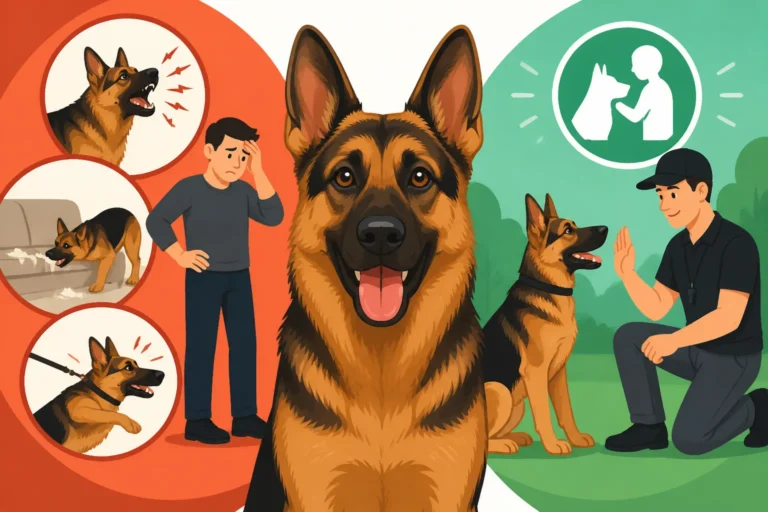
Lunging and barking on leash are incredibly frustrating and often embarrassing for owners. These behaviors typically stem from excitement, frustration, fear, or a desire to protect. For a powerful German Shepherd, a lunge can easily pull you off balance, and persistent barking can be disruptive to others.
- Identify the Trigger: First, pinpoint what causes the lunging and barking. Is it other dogs? Strangers? Cyclists? Squirrels? Understanding the trigger is crucial for addressing the behavior effectively. Keep a mental note or even a small journal of what happened before the lunge.
- Increase Distance (Management): The immediate solution is management. As soon as you spot a trigger, increase the distance between your German Shepherd and the trigger. If you see another dog approaching, cross the street, duck behind a car, or find a wide path. The goal is to keep your dog under their threshold—the point at which they react. If they're too close to the trigger, they're already overstimulated and unlikely to learn.
- Counter-Conditioning and Desensitization: This is the long-term solution. When you are at a safe distance where your German Shepherd notices the trigger but doesn't react, start feeding them high-value treats. The moment the trigger appears, "PUPPY PARTY!" with treats and praise. The moment the trigger disappears, the treats stop. You want to change their emotional response from "OMG, that thing!" to "Oh, that thing means treats!" Slowly, over many, many sessions, you can decrease the distance to the trigger, always staying under their threshold.
- "Watch Me" / Focus Command: Reinforce your "watch me" command. If your GSD is focusing on you for a reward instead of the approaching trigger, you're making progress. This command is a vital tool for redirecting their attention. For more guidance on this, our post on How to Stop German Shepherd Reactivity might be helpful.
Managing Leash Reactivity and Distractions
Leash reactivity is a common term for dogs who overreact to stimuli while on leash. This can manifest as barking, lunging, growling, or even frantic pulling. German Shepherds, with their inherent protective nature and strong prey drive, are often prone to reactivity if not properly socialized and trained. Distractions are simply anything that takes your dog's attention away from you.
- Prevention and Management: The first step, as with lunging, is to prevent reactive outbursts. If you know certain areas or times are highly distracting (e.g., peak dog-walking hours at the park), adjust your walking schedule or route. Use your front-clip harness or head halter for maximum control.
- Engage and Reward: Before your German Shepherd even has a chance to fixate on a distraction, engage them. Call their name, ask for a "sit," or practice "watch me." The moment they respond to you before they react to the distraction, reward them heavily. You want them to choose to engage with you over reacting to the environment.
- "Look at That" Game: This is a variant of counter-conditioning. When your German Shepherd sees a distraction, instead of reacting, you say "Look at that!" (in a cheerful tone) and then immediately reward them for looking at the distraction and then looking back at you. This teaches them that seeing a distraction is a cue to check in with you for a reward, rather than reacting negatively.
- Gradual Exposure and Socialization: Controlled, positive exposure to various environments and stimuli is key. This is where proper How to Socialize a German Shepherd comes in. Start with very low-level distractions and slowly build up. For example, if dogs are a trigger, practice walking across the street from a dog park, rewarding your GSD for calm behavior, before even considering walking closer. Professional guidance from a certified dog trainer can be incredibly beneficial for severe reactivity issues.
Remember, addressing these issues takes time, patience, and consistency. There's no quick fix. Celebrate small successes and understand that setbacks are part of the journey.
Advanced Leash Skills and Real-World Scenarios
Once your German Shepherd has a solid grasp of loose-leash walking and you're getting better at managing common issues, it's time to level up. Taking your well-behaved GSD into busier environments and introducing more complex scenarios will solidify their training and build your confidence as a handler. This is where your investment in foundational training truly shines.
Mastering Loose-Leash Walking in Busy Environments
Walking calmly in a quiet park is one thing; navigating a bustling city street or a crowded outdoor market is quite another. The key to mastering loose-leash walking in busy environments is gradual exposure and reinforcing your dog's ability to focus on you amidst chaos.
- Gradual Increase in Distractions: Don't go from your quiet neighborhood directly to downtown during rush hour. Start by adding one or two new, mild distractions to your usual route. Perhaps walk past a school during dismissal (from a distance), or near a construction site when work has temporarily paused. Observe your German Shepherd's reaction. If they remain calm and attentive, reward heavily.
- Short, Successful Sessions: Keep initial sessions in busy areas very short. Aim for 5-10 minutes of success rather than an hour of frustration. End on a high note, returning to a quieter area before your German Shepherd becomes overwhelmed or starts to react. This builds positive association with these challenging environments.
- High-Value Rewards: In highly distracting environments, your everyday kibble might not cut it. Bring out the "jackpot" treats – small pieces of cooked chicken, cheese, or hot dogs. These higher-value rewards are crucial for maintaining your German Shepherd's focus when there's so much competing for their attention.
- Practice "Engage/Disengage": This is an advanced version of the "look at that" game. When your German Shepherd chooses to look at a distraction (another dog, a person, a pigeon) and then chooses to look back at you without you prompting them, mark that incredible decision with a massive reward. This teaches them self-control and encourages them to actively check in with you in distracting situations.
Incorporating Duration, Distance, and Distractions (The 3 D's)
The 3 D's are a framework trainers use to systematically challenge a dog and proof their understanding of a command. You've likely been doing this intuitively, but approaching it intentionally helps you build mastery.
- Duration: How long can your German Shepherd maintain a loose leash? Start with a few steps, then aim for 10 seconds, then a minute. Increase the duration slowly, always rewarding for a continuous loose leash.
- Distance: How far can you walk with a loose leash? Begin with short stretches around the block, then expand to longer walks. The combination of duration and distance will build endurance in their good habits.
- Distractions: This is the most challenging "D" for most German Shepherds. We've touched on this, but it's important to be methodical. Introduce distractions one at a time, and only increase the intensity of one "D" at a time. For example, if you're increasing distractions, keep the duration and distance relatively short.
A common scenario: You're walking your German Shepherd on a loose leash through a park (good duration, good distance). Suddenly, a group of kids on skateboards zooms by (high distraction!). Instead of getting frustrated if your GSD pulls or barks, this is your cue to practice. Ask for a "sit" and "watch me," reward them for looking at you as the skateboarders pass, then resume your walk. If they can't handle it, increase your distance from the trigger next time. This systematic approach, as discussed in German Shepherd Obedience Training Basics, ensures your GSD is learning, not just being overwhelmed.
Maintaining Consistency and Continuing Education
Leash training isn't a one-and-done event; it's an ongoing process, especially with an intelligent and energetic breed like the German Shepherd. Even well-trained dogs can have off days or regress if training isn't maintained.
- Every Walk is a Training Opportunity: Treat every walk, whether it's a quick potty break or a long hike, as a chance to reinforce good leash manners. Don't let your German Shepherd pull "just this once" because you're in a hurry. Consistency is the bedrock of success.
- Stay Positive and Patient: There will be days when your German Shepherd tests your patience. Remember that frustration on your part will only confuse or discourage your dog. Keep your tone calm, your body language relaxed, and your rewards enthusiastic.
- Consider Advanced Training: If you're passionate about your German Shepherd's training, consider taking an advanced obedience class or working with a professional trainer for specific challenges. Organizations like BAXTER & Bella offer online resources and courses that can provide structured support for continued education, helping you master even more complex skills. This can be especially beneficial if you're interested in IGP training with a German Shepherd or other dog sports.
- Regular Equipment Checks: Always ensure your German Shepherd's collar, harness, and leash are in good condition and fit properly. A worn leash or a harness that has become too tight can cause discomfort or even fail, leading to accidents.
By consistently applying these techniques and continuing your dog's education, you'll not only enjoy peaceful walks but also strengthen the incredible bond you share with your German Shepherd.
Disclaimer
The information provided in this guide is for general educational purposes only and should not be considered a substitute for professional veterinary advice or professional dog training consultation. Every German Shepherd is an individual, and training methods may need to be adjusted based on their specific temperament, age, and health status. Always consult with a qualified veterinarian for any health concerns and a certified professional dog trainer for personalized training plans, especially when dealing with aggression or severe behavioral issues.