How to Do Obedience Training with a German Shepherd
Bringing a German Shepherd into your life is an incredible experience, but the reality is that their powerful presence and boundless energy can quickly turn into a household challenge if not properly channeled. Many owners struggle with their German Shepherd pulling on the leash, ignoring commands in distracting environments, or simply not understanding how to communicate effectively with such an intelligent and driven breed. This comprehensive guide is designed to walk you through the nuances of effective obedience training, helping you build a strong bond and a well-behaved companion.
Understanding the German Shepherd Mindset for Obedience Training
German Shepherds aren't just pets; they're partners. Their history as working dogs means they come hardwired with a unique set of drives and an incredible capacity for learning. To truly excel at obedience training, we first need to appreciate what makes them tick.
Natural Drives and Instincts
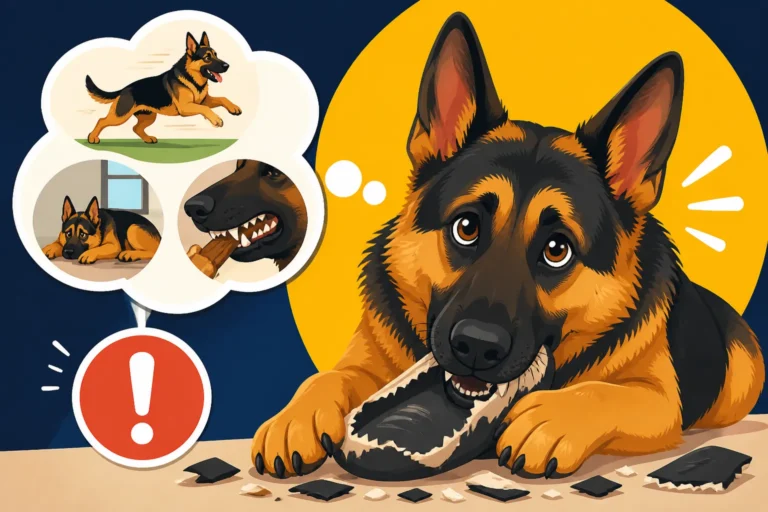
German Shepherds possess an extraordinary blend of intelligence, strong prey drive, protective instincts, and an inherent desire to work and please their handlers. These traits, while fantastic for their traditional roles, can present challenges in a typical family setting if not understood and managed. For instance, their high intelligence means they can learn quickly, but it also means they can get bored easily and develop their own, sometimes undesirable, problem-solving strategies if not mentally stimulated.
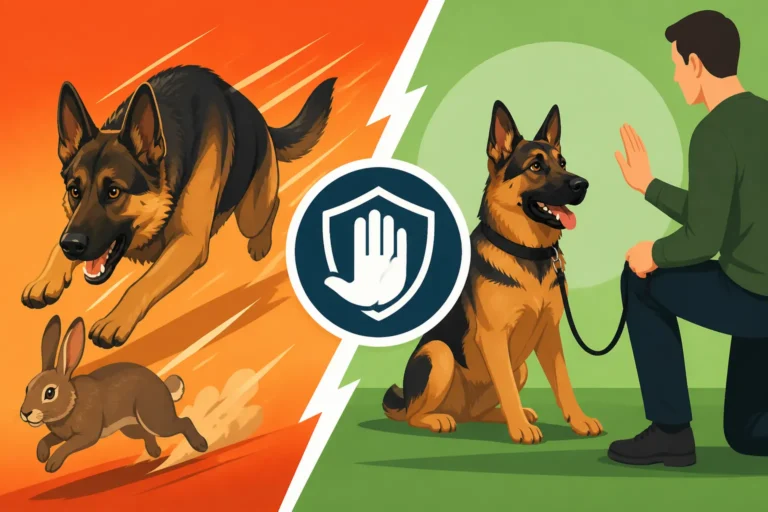
Their strong prey drive, an instinct to chase and capture, is why a squirrel darting across the park can suddenly transform your polite leash-walker into a surging locomotive. This isn't naughtiness; it's instinct. Similarly, their protective nature, while wonderful for guarding, can manifest as reactivity towards strangers or other dogs if not properly guided. Understanding these underlying drives helps us approach training with empathy and strategy, rather than just frustration. We need to tap into their desire to work and give them appropriate outlets for these powerful instincts, which often translates into more focused and enthusiastic participation in training.
The Importance of Early Socialization and Foundation
The foundation for a well-behaved German Shepherd is laid long before you start formal obedience commands. Early socialization, ideally within the critical window of 3 to 16 weeks of age, is paramount. This isn't just about letting your puppy play with other dogs; it’s about carefully exposing them to a wide variety of sights, sounds, people, textures, and environments in a positive and controlled manner. Think about introducing them to children, people in hats, someone on a skateboard, or the sound of traffic. Each positive experience helps them develop confidence and resilience, making them less likely to react fearfully or aggressively to new stimuli later in life.
A German Shepherd that has been well-socialized is more likely to be calm and adaptable, which directly impacts their ability to focus during obedience sessions. Without this crucial early exposure, a German Shepherd can become anxious or reactive, turning a simple walk in the park or a training class into a stressful event for both dog and owner. Laying this strong foundation prevents many future behavioral issues that can actively hinder effective obedience training. For more in-depth guidance on this critical period, you might find our article on "How to Socialize a German Shepherd" incredibly useful.
Establishing Leadership and Trust
When we talk about "leadership" with a German Shepherd, it's not about being harsh, dominant, or intimidating. Modern, effective dog training emphasizes building a relationship based on trust, clear communication, and consistent boundaries. Your German Shepherd needs to see you as a reliable guide who can keep them safe and provide structure in their world. This means being consistent with rules, following through on commands, and always being fair.
For example, if you ask your dog to "sit" before getting their dinner, ensure they always sit, every single time. Inconsistent expectations create confusion and can lead to your dog selectively obeying. Trust is built when your dog knows what to expect from you and that you will reward their efforts. When your German Shepherd trusts your leadership, they are more willing to follow your commands, even when faced with high distractions. This deep bond and mutual respect are the cornerstones of successful obedience training, fostering a dog who wants to work with you, not just has to. Our guide on "How to Establish Leadership with a German Shepherd" offers further insights into this vital aspect of dog ownership.
Essential Tools and Preparation for Obedience Training
Before you even begin to teach specific commands, having the right tools and setting yourself up for success is critical. The quality of your equipment and your strategy for motivation will significantly impact your training outcomes.
Choosing the Right Training Equipment
Selecting appropriate training equipment can make a world of difference in your daily walks and training sessions. For German Shepherds, known for their strength and enthusiasm, durability and comfort are key. A standard 6-foot nylon or leather leash is a versatile choice for everyday walks and basic obedience. Look for a sturdy clip and comfortable handle. For more control, especially with a strong puller, a front-clip harness can be incredibly effective, redirecting their momentum back towards you when they pull. You can find a wide range of durable and comfortable options on Amazon, from brands like Blue-9 or PetSafe, which offer harnesses designed to discourage pulling without causing discomfort.
Avoid retractable leashes, as they offer little control and can be dangerous. For dogs that are still learning to walk politely, a head halter can also provide excellent control, guiding the head means the body will follow. While often mistaken for muzzles, head halters simply offer gentle guidance. Always choose equipment that is comfortable for your dog and provides you with the necessary control without causing pain or fear. The right gear helps ensure both your safety and your German Shepherd's enjoyment during training.
High-Value Rewards and Motivation
German Shepherds are highly motivated, but what motivates one dog might not motivate another. Identifying your dog's "high-value" rewards is crucial for effective training. These are the treats, toys, or praise that your dog finds irresistible. For many German Shepherds, small, soft, smelly treats like bits of cooked chicken, cheese, hot dogs, or liverwurst are far more motivating than dry kibble. Commercial training treats from brands like Zuke's Mini Naturals or Wellness Soft Puppy Bites can also be excellent options.
Beyond food, consider toys. A favorite squeaky ball or a tug toy can be a powerful reward, especially for a breed with a strong play drive. Verbal praise, delivered with an enthusiastic tone, and a gentle scratch behind the ears, can also reinforce good behavior. The key is to vary your rewards and to use the highest value rewards for the most challenging behaviors or in the most distracting environments. This keeps your dog engaged and excited to work with you. Remember, the reward isn't just a bribe; it's a "paycheck" for a job well done, strengthening the association between the desired behavior and a positive outcome.
Creating an Ideal Training Environment
Think about where you start your training. You wouldn't try to learn calculus in the middle of a rock concert, right? The same principle applies to your German Shepherd. Begin your training sessions in a low-distraction environment, such as your quiet living room or a fenced backyard, where your dog can focus solely on you. Once your dog reliably performs a command in this calm setting, gradually introduce mild distractions. This might mean moving to a different room, then your front yard, then a quiet park.
The progression should always be incremental. If your dog struggles, you’ve increased the difficulty too quickly, and it's time to take a step back. Keep your training sessions short and frequent – typically 5-10 minutes, 2-3 times a day – to maintain your dog's interest and prevent mental fatigue. German Shepherds thrive on routine, so consistency in your training schedule and location (at least initially) will also help them understand when it’s time to focus. A structured environment sets the stage for success, helping your German Shepherd build confidence before tackling the chaotic real world.
Core Obedience Commands Every German Shepherd Should Master
Mastering basic obedience commands isn't just about showing off; it's about safety, clear communication, and building a harmonious relationship with your German Shepherd. These commands form the bedrock of a well-mannered dog.
Sit, Stay, and Down
These three commands are fundamental for impulse control and polite behavior in various situations. Teaching them effectively requires patience and clear cues.
-
Sit:
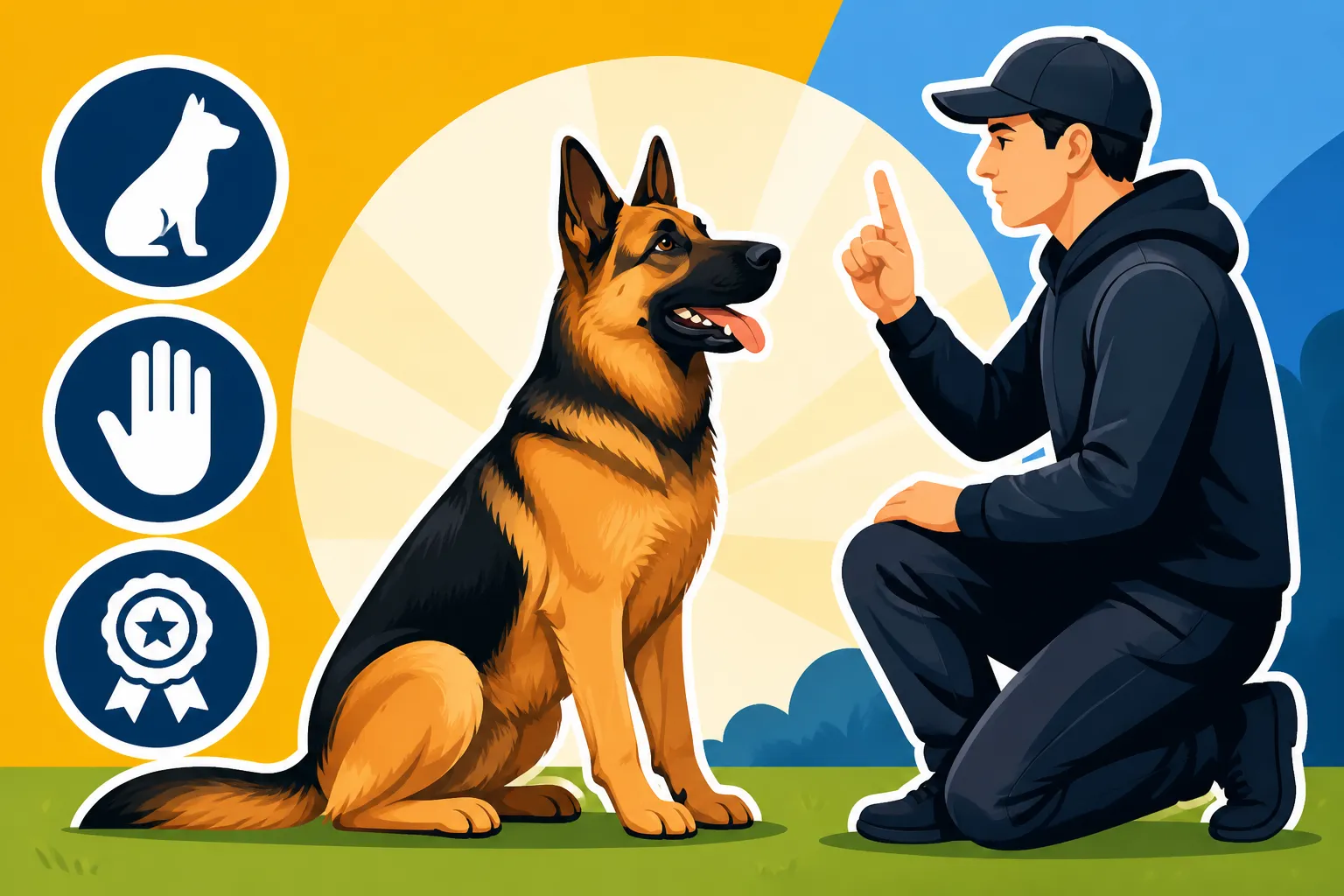
- How to teach: Hold a high-value treat near your dog's nose. Slowly move the treat up and back over their head, towards their tail. As their nose follows the treat, their rear end will naturally lower into a sit. As soon as their bottom touches the ground, say "Sit!" and immediately give the treat and praise. Repeat this many times.
- Troubleshooting: If your dog jumps up, move the treat slower or slightly further back. If they back up, try moving into a corner. Practice in short bursts. Once they reliably sit with the lure, start adding the verbal cue before you lure, and gradually fade the lure, replacing it with a hand signal.
- Real-life application: Sitting politely for greetings, before meals, or at crosswalks.
-
Down:
- How to teach: Start with your dog in a "sit." Hold a treat at their nose and slowly lower it straight down to the floor, then slide it away from them, towards their front paws. As their nose follows, they'll usually lie down. As soon as their elbows hit the ground, say "Down!" and immediately reward.
- Troubleshooting: Some dogs struggle with "down" because it's a more submissive posture. Keep the energy positive and rewarding. If they stand up, reset them into a sit and try again. Again, fade the lure and introduce the verbal cue and hand signal.
- Real-life application: Settling calmly in public, waiting patiently, or allowing for examinations.
-
Stay:
- How to teach: Once your dog can reliably "sit" or "down," ask for the command. Then, give the "Stay!" command with an open palm hand signal. Take one step back, count to one, then step back to your dog and reward them in the stayed position. Slowly increase the distance and duration.
- Troubleshooting: If your dog breaks the stay, calmly lead them back to their original spot and start over. Don't scold them, just reset. The goal is success. Only reward if they maintain the stay.
- Real-life application: Waiting at an open door, holding a position while you answer the doorbell, or maintaining composure in a crowded area.
Come and Heel
These are arguably two of the most important commands for a large, active breed like the German Shepherd, directly impacting their safety and your control in various situations.
-
Come (Recall):
- How to teach: Start in a quiet, enclosed area. Get down to your dog's level, make exciting noises, and say "Come!" in a happy voice. As they approach, enthusiastically praise and reward them with a high-value treat or a favorite toy. Make coming to you the most rewarding thing they can do. Never use "come" to punish them or do something unpleasant (like nail trims) initially.
- Troubleshooting: If your dog isn't responding, make yourself more interesting. Run away from them, use a squeaky toy, or have someone hold them gently while you call, then release them. Practice in increasingly distracting environments using a long line to ensure safety. A reliable recall is a life-saving skill, essential for a breed with a strong prey drive.
- Real-life application: Calling your dog away from danger, bringing them inside, or maintaining control in off-leash areas. Our guide "How to Teach a German Shepherd to Come" offers more detailed steps.
-
Heel (Loose-Leash Walking):
- How to teach: Start with your dog on your left side (or right, consistently). Hold a treat at your side, just above your dog's nose, luring them into position. Take a step forward, saying "Heel," and if they walk nicely beside you, immediately reward. The goal is for the leash to be slack, not taut.
- Troubleshooting: If your German Shepherd pulls, immediately stop walking. Only resume once the leash goes slack. This teaches them that pulling gets them nowhere. If they lag behind, gently encourage them forward with your voice and a lure. Consistency is key here; every walk is a training opportunity. Consider a front-clip harness to help manage pulling, especially during the initial stages.
- Real-life application: Enjoyable walks in public, navigating crowded areas, and demonstrating polite manners around other people and dogs. You can find more targeted advice on "How to Leash Train a German Shepherd Puppy" if you're starting with a youngster.
Leave It and Drop It
These commands are vital for impulse control, protecting your German Shepherd from potentially harmful items, and managing resource guarding.
-
Leave It:
- How to teach: Place a low-value treat on the floor, cover it with your hand, and say "Leave it!" The moment your dog looks away from the treat, praise them and reward them with a different, high-value treat from your other hand. Gradually increase the temptation (e.g., leaving the treat uncovered, using a higher-value item) while still rewarding for looking away.
- Troubleshooting: Start with low-value items your dog isn't obsessed with. If they try to grab it, immediately cover it again. The idea is that ignoring the tempting item leads to a better reward. Practice with various items, from socks to dropped food.
- Real-life application: Preventing your dog from eating harmful things off the ground, ignoring dropped food at the dinner table, or passing by distracting items on a walk.
-
Drop It:
- How to teach: Have your dog hold a toy they like but aren't obsessed with. Present a high-value treat to their nose. As they open their mouth to take the treat, say "Drop it!" and take the toy. Reward them with the treat. Repeat this, gradually phasing out the treat as a lure, and simply rewarding them for dropping the toy on command.
- Troubleshooting: If your dog holds onto the toy, try a squeaky sound or a higher-value treat to entice them. Never chase your dog for an item, as this can turn it into a game of keep-away. This command is about exchanging an item for something better, building positive associations with letting go.
- Real-life application: Safely removing items from your dog's mouth, retrieving toys during play, or preventing them from chewing on inappropriate objects.
Advanced Obedience and Problem-Solving
Once your German Shepherd has a solid grasp of basic commands, it's time to elevate their skills. This involves "proofing" behaviors and proactively addressing any lingering challenges, all while keeping them mentally stimulated.
Proofing Commands in Real-World Scenarios
It's one thing for your German Shepherd to "sit" perfectly in your quiet living room, but quite another for them to do it at a bustling park with other dogs, children, and enticing smells everywhere. This is where "proofing" comes in – teaching your dog to generalize their learned behaviors across different environments, distances, durations, and with various distractions.
The key is a gradual increase in difficulty. Start by practicing commands in different rooms of your house, then your backyard, then a quiet street, then a slightly busier park, and so on. Introduce distractions incrementally: a toy rolling by, someone walking past, another dog at a distance. Always set your dog up for success; if they fail a command, you've likely asked for too much too soon. Go back to an easier step, rebuild their confidence, and then try again. This process builds a resilient obedience foundation, ensuring your German Shepherd responds reliably no matter the circumstances. This is also where you'll find great value in online programs like those offered by BAXTER & Bella, which often provide structured approaches to proofing commands in various simulated environments before tackling real-world scenarios.
Addressing Common Obedience Challenges
Even with the best intentions and training, German Shepherds can present specific challenges due to their breed traits. Issues like excessive barking, jumping on guests, selective hearing, or reactivity on walks are common.
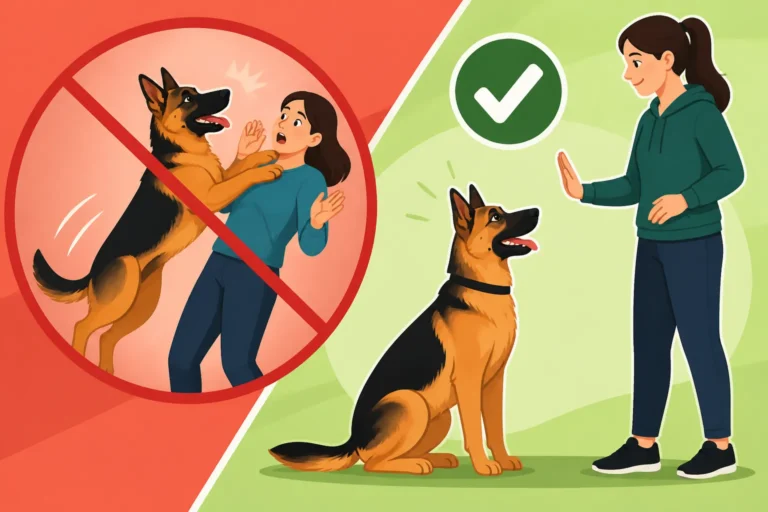
For excessive barking, identify the trigger (e.g., doorbell, squirrels, other dogs). Once identified, you can train a "quiet" command by rewarding silence, or redirect their attention to an appropriate toy or command when the trigger appears. For jumping, practice "sit" greetings. When a guest approaches, ask your dog to sit. If they jump, the guest turns their back. Only engage when all four paws are on the floor. Selective hearing often means you're asking for too much too soon, or your rewards aren't high enough value in a distracting environment. Go back to basics in a quieter spot and increase your rewards. Reactivity on walks, often stemming from protective instincts or poor socialization, requires desensitization and counter-conditioning. This means exposing your dog to the trigger (e.g., another dog) at a distance where they remain calm, and then rewarding that calm behavior. Slowly decrease the distance over time. Patience, consistency, and often professional guidance are crucial for these more ingrained behaviors. Our article on "German Shepherd Behavior Problems and Solutions" delves deeper into these common hurdles.
Continuing Education and Dog Sports
German Shepherds are incredibly intelligent and thrive on having a "job" to do. Obedience training shouldn't stop once they know the basics; it's a lifelong journey of learning and engagement. Continuing education keeps their minds sharp and strengthens your bond. Consider exploring dog sports like IGP (Internationale Gebrauchshunde Prüfung), formerly known as Schutzhund, which involves tracking, obedience, and protection phases. This sport is tailor-made for the German Shepherd's natural abilities and drives.
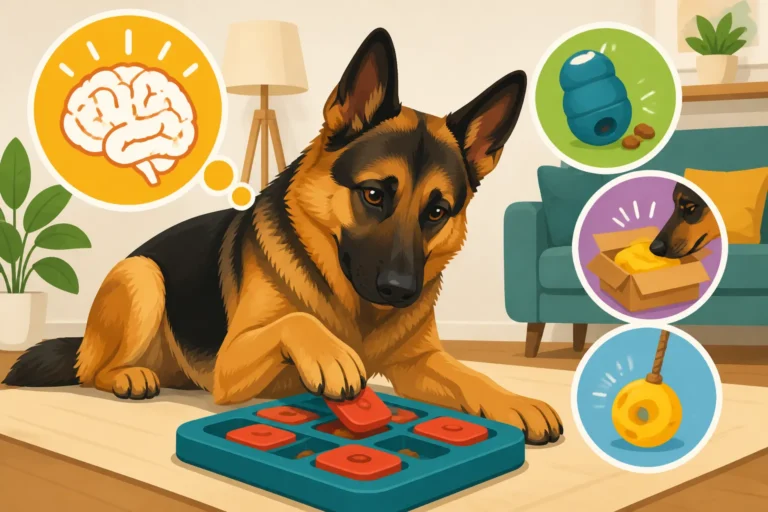
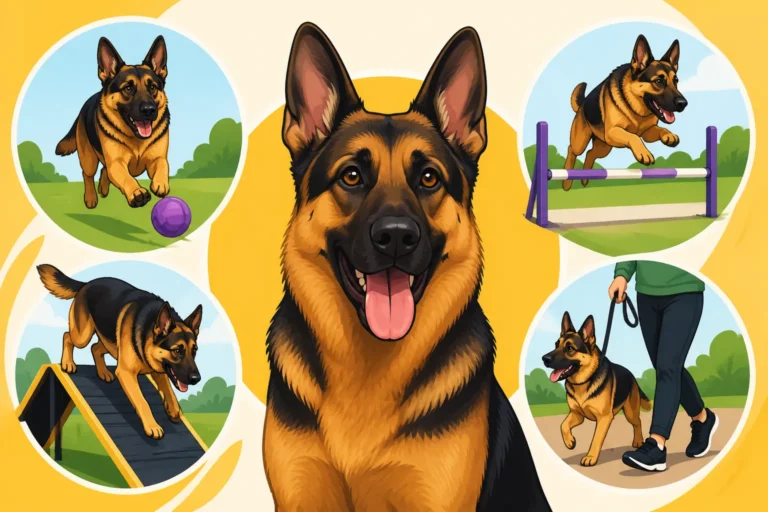
Other excellent options include agility, where they navigate obstacle courses, canine good citizen (CGC) programs, scent work, or competitive obedience trials. These activities provide mental and physical challenges, giving them an outlet for their energy and intelligence, preventing boredom, and further solidifying their obedience skills in exciting new contexts. Engaging in these sports can also be a fantastic way to socialize your German Shepherd in a structured environment and connect with other dedicated German Shepherd owners. For more ideas on how to keep your GSD mentally stimulated, check out "Best Mental Stimulation for German Shepherds".
The Role of Professional Guidance and Resources
While you can achieve a great deal through self-study and consistent effort, there are times when professional help can be invaluable, especially with a powerful and intelligent breed like the German Shepherd.
When to Seek Professional Trainers
Knowing when to call in a professional isn't a sign of failure; it's a sign of responsible pet ownership. If you're struggling with severe behavioral issues such as aggression (towards people or other animals), extreme fear, separation anxiety, or persistent issues that aren't responding to your efforts, a certified professional dog trainer or a veterinary behaviorist is essential. These experts have the knowledge and experience to diagnose complex behaviors, develop tailored training plans, and ensure both your safety and your dog's well-being.
Different trainers use different methodologies, so look for a trainer who uses positive reinforcement, force-free methods, and has experience with German Shepherds. A good trainer will teach you how to train your dog, empowering you with the skills to continue their education long after the classes end. Don't hesitate to seek help; early intervention can prevent minor issues from escalating into major problems. For guidance on finding the right expert, our article on "When to Hire a Trainer for a German Shepherd" is a great resource.
Online Resources and Community Support
In today's digital age, there's a wealth of online resources available to German Shepherd owners, but it's crucial to choose reputable sources. Online training platforms, like the popular BAXTER & Bella online puppy school, offer structured courses, video tutorials, and live support, which can be incredibly helpful for new owners or those looking to expand their knowledge from home. These programs often break down complex behaviors into manageable steps, making training accessible and understandable.
Beyond formal courses, online forums, social media groups dedicated to German Shepherds, and breed-specific clubs can provide invaluable community support. You can connect with experienced owners, share challenges, and get advice from people who truly understand the breed. Always cross-reference advice and remember that every dog is an individual. While online resources are fantastic, they should supplement, not replace, hands-on training and, if needed, professional guidance.
The Long-Term Commitment to Training
Obedience training with a German Shepherd isn't a one-time fix or a checkbox to tick off. It's an ongoing, lifelong commitment that deepens your bond and ensures your dog remains a well-mannered and happy member of your family. German Shepherds thrive on routine, structure, and mental engagement, so regular training sessions, even short refreshers, are vital to keep their skills sharp and prevent regression.
As your German Shepherd matures, their physical and mental needs will evolve. Continuing to engage them in new learning experiences, whether it's learning new tricks, participating in dog sports, or simply practicing commands in new environments, keeps them fulfilled and prevents boredom, which can often lead to destructive behaviors. Think of training as continuous communication – it allows you to understand each other better, navigate life's challenges, and enjoy countless adventures together. This commitment is a testament to the love and dedication you have for your loyal companion, ensuring they live their best, most enriched life. For a deeper dive into the starting point, consider reading our "German Shepherd Puppy Training Guide".
Comparing Common Training Tools
| Tool Type | Description | Pros | Cons | Best Use Case |
|---|---|---|---|---|
| Flat Buckle Collar | Standard collar, typically nylon or leather, for ID tags and light leash work. | Comfortable, common, good for identification. | Little control for strong pullers, can cause throat strain if pulling. | Well-behaved dogs, holding ID tags, short supervised walks. |
| Martingale Collar | Slip-on collar that tightens slightly under pressure, prevents slipping off. | Prevents escape, gentle correction, good for dogs with narrow heads. | Can still allow pulling, requires proper fit to avoid discomfort. | Dogs who back out of collars, training gentle leash pressure. |
| Front-Clip Harness | Leash clips at the chest, redirects dog's momentum back towards the handler. | Reduces pulling significantly, no pressure on the neck. | Can sometimes restrict shoulder movement if ill-fitting, dog can chew. | German Shepherds that pull heavily, puppies learning leash manners. |
| Head Halter | Fits over the muzzle and behind the ears, provides head control. | Excellent control over the head, thus the body; gentle and humane. | Some dogs dislike the feel on their muzzle initially, requires acclimation. | Strong pullers, reactive dogs, precise handling for training. |
| Long Line (15-30 ft) | Lightweight, extra-long leash, typically nylon. | Allows safe practice of recall in open areas, more freedom to roam. | Can tangle easily, requires careful handling to avoid trips. | Recall training, practicing distance commands, supervised exploration. |
Disclaimer
The information provided in this guide is for general informational purposes only and does not constitute professional veterinary advice. Always consult with a qualified veterinarian or certified professional dog trainer for any health concerns or before implementing any new training techniques, especially for severe behavioral issues. Every dog is an individual, and what works for one may not work for another.