How to Mentally Stimulate a German Shepherd Indoors
It's a frustrating, all-too-common scenario: you’ve walked your German Shepherd, played fetch in the yard, and yet, as soon as you step inside, they're pacing, whining, or worse, finding creative new ways to chew up your furniture. Many German Shepherd owners mistakenly believe that physical exercise alone is enough to keep these intelligent dogs content, especially when stuck indoors due to weather, injury, or simply apartment living. This guide will walk you through actionable, in-depth strategies to provide the crucial mental stimulation your German Shepherd craves, turning destructive energy into calm, focused engagement, even without ever leaving the house.
Understanding Your German Shepherd’s Mental Needs Indoors
When we think about exercising our dogs, our minds often jump straight to physical activity – long walks, running, fetch. And yes, German Shepherds absolutely need plenty of that. But what often gets overlooked, especially when outdoor opportunities are limited, is the immense need for mental stimulation. These aren't just pretty faces; they're canine Einsteins with an insatiable desire to work their brains.
The Brain of a Working Dog
German Shepherds were not bred to be couch potatoes. Their lineage traces back to German herding dogs, refined for their intelligence, trainability, and unwavering loyalty. They were, and still are, highly valued for roles in police work, search and rescue, military operations, and service assistance. This means they are inherently driven by purpose, problem-solving, and continuous learning. Their minds are wired for complex tasks, observing patterns, and making decisions. A well-bred German Shepherd comes with a high IQ and an equally high desire to use it. If you have a German Shepherd, you have a dog that truly thrives on having a "job," even if that job is simply figuring out how to get a treat out of a puzzle. Ignoring this fundamental aspect of their breed can lead to a host of behavioral issues that are often mistaken for naughtiness or stubbornness, when in reality, it's just a sign of a bored, understimulated brain.
When their powerful brains aren't adequately challenged, all that intelligence and drive don't just disappear; they get redirected. Unfortunately, this redirection often manifests in ways that are far from ideal for coexistence in a human home. Think of it like a human being with a brilliant mind forced into a monotonous, unchallenging existence. They might become restless, anxious, or even destructive. For a German Shepherd, this internal frustration can be amplified tenfold due to their innate drive and physical capabilities. It’s not enough to simply wear them out physically; you have to tire them out mentally too. For a deeper dive into their natural capabilities, you might find our article on German Shepherd Intelligence and Trainability particularly insightful.
Signs of Insufficient Mental Stimulation
It's easy to spot a physically tired German Shepherd – they're usually sacked out on the floor, breathing heavily after a vigorous play session. But how do you know if your German Shepherd isn't getting enough mental exercise? The signs can be subtle at first, then escalate into behaviors that drive even the most patient owner up the wall.
One of the most common indicators is destructive chewing. If your German Shepherd is gnawing on furniture legs, shoes, or anything they can get their paws on, it's often not out of malice, but pure boredom. They're trying to occupy their minds and mouths. Another huge clue is excessive barking or whining. A German Shepherd might bark at every perceived sound outside, or whine incessantly for attention, simply because they have nothing else engaging their brain. Pacing, circling, or general restlessness are also red flags. They might follow you from room to room, nudging you with their nose, looking for something to do. Some dogs will even develop obsessive behaviors, like tail chasing or licking paws, as an outlet for their pent-up mental energy. Conversely, some understimulated German Shepherds might become withdrawn or lethargic, seeming "lazy" or depressed, when in fact, their lack of engagement is a form of learned helplessness. These behaviors aren't fun for anyone, and they certainly don't make for a happy dog. Recognizing these signs early is the first step in addressing the problem, and a sign that it’s time to ramp up their indoor mental enrichment. You can also learn more about how to tackle some of these issues in our guide to German Shepherd Behavior Problems and Solutions.
Engaging Their Minds with Interactive Toys and Puzzles
Once you recognize the need for mental exercise, the good news is there's a huge world of interactive toys and puzzles designed specifically to challenge intelligent breeds like German Shepherds. These aren't just glorified chew toys; they are tools that require thought, strategy, and perseverance, turning mealtime or snack time into a stimulating brain workout.
Food Dispensing Toys for Problem Solvers
Food-dispensing toys are a fantastic starting point for mental stimulation. They tap into a dog's natural foraging instincts, turning a quick gobble of kibble into a rewarding challenge. The concept is simple: your dog has to manipulate the toy in some way – rolling it, nudging it, shaking it – to get kibble or treats to fall out. This not only engages their brain but also slows down their eating, which can be beneficial for digestion and even help prevent serious conditions like bloat, as discussed in our article on German Shepherd Bloat Prevention Feeding Tips.
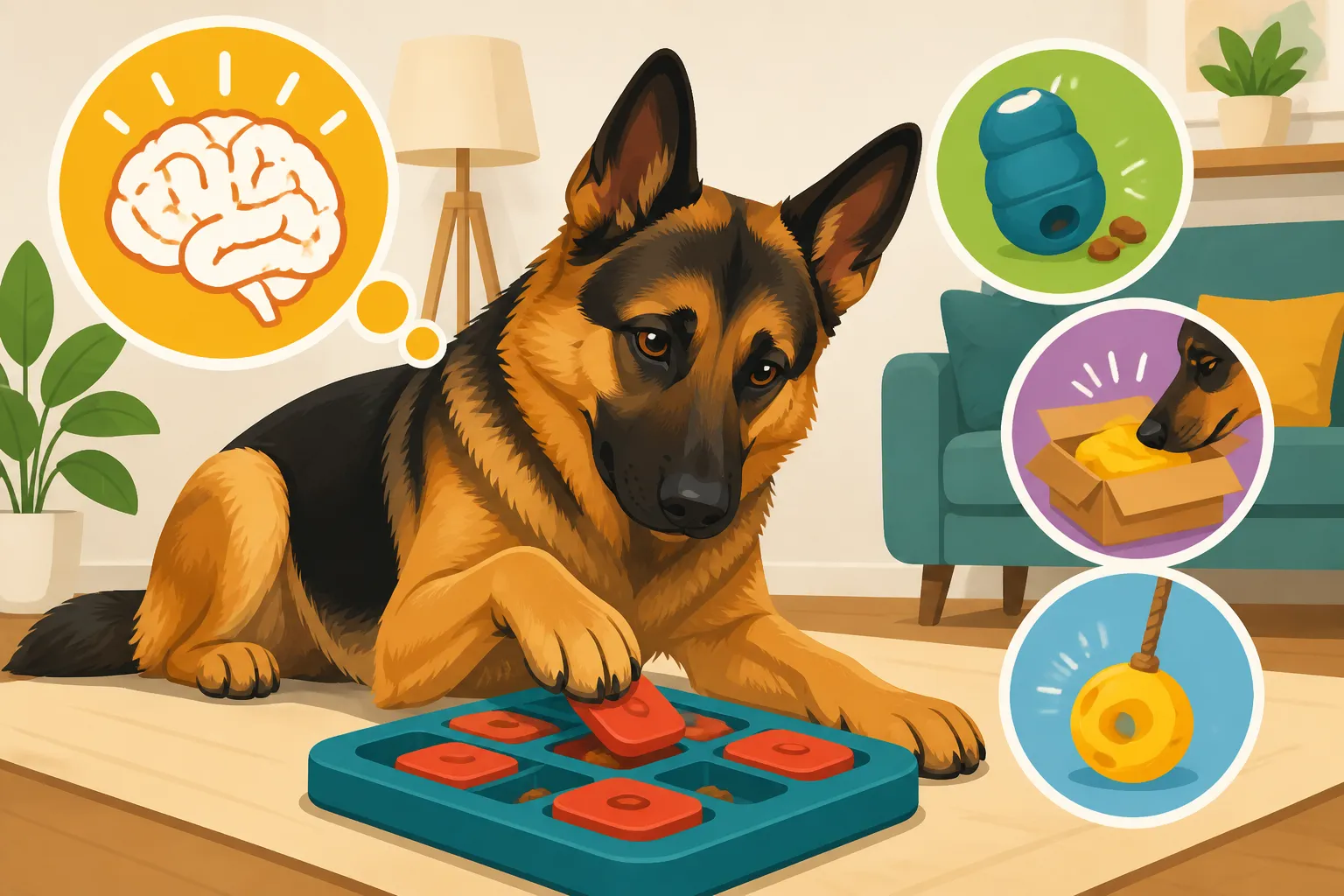
Classic options like a Kong are incredibly versatile. You can stuff them with peanut butter, yogurt, canned pumpkin, or even a mix of their regular kibble and a little wet food, then freeze it to make the challenge last even longer. Other popular choices include the West Paw Toppl, which has a unique shape perfect for stuffing and freezing, and snuffle mats, where dogs use their noses to dig out hidden treats among fabric strips. For more advanced "foragers," toys like the KONG Wobbler or Bob-A-Lot dispense food as your dog nudges them around. A quick search on Amazon will reveal an endless array of these types of toys, from beginner-friendly options to those designed for seasoned puzzle solvers. Just be sure to choose durable options that can stand up to a German Shepherd's strong jaws.
Here's a quick comparison of some popular food-dispensing toys:
| Toy Type | Description | Challenge Level | Durability | Best For |
|---|---|---|---|---|
| KONG Classic | Rubber toy that can be stuffed with treats and frozen. | Easy to Medium | High | All dogs, great for LickiMats, slow feeding |
| West Paw Toppl | Open-ended cup shape, great for stuffing and freezing, can connect two sizes. | Easy to Medium | High | All dogs, especially those who chew harder |
| Snuffle Mat | Fabric mat with various hiding spots for kibble or treats. | Easy | Medium (fabric) | Nose work, slowing down mealtime |
| KONG Wobbler | Weighted, hard plastic toy that wobbles and dispenses kibble when pushed. | Medium | High | Dogs who enjoy pushing and nudging toys |
| Bob-A-Lot | Adjustable opening allows for different kibble sizes and challenge levels. | Medium to Hard | High | Dogs needing a longer-lasting challenge |
| Pet Zone IQ Ball | Plastic ball that dispenses treats as it rolls. | Easy to Medium | Medium to High | Beginners, encouraging movement |
Puzzle Toys Requiring Dexterity and Strategy
Beyond simple food dispensers, there's a whole category of puzzle toys that demand more complex problem-solving skills, requiring your German Shepherd to manipulate various parts to get their reward. Think of these as the next level up, perfect for a dog that has mastered the basics and is ready for a real brain teaser.
Brands like Nina Ottosson (now part of Outward Hound) are renowned for their multi-stage puzzle toys. These often involve sliding panels, lifting blocks, or rotating compartments that hide treats. For example, the "Dog Smart" requires your dog to lift blocks, while the "Dog Brick" has sliding covers and removable bone pieces. The beauty of these toys is their tiered difficulty. You can start with an easier setup, leaving some compartments open, and gradually increase the complexity as your German Shepherd learns. This progression keeps them engaged and prevents frustration, building their confidence with each successful solve. These toys not only keep them busy but also encourage fine motor skills and strategic thinking, truly exhausting their mental energy. They learn cause-and-effect, object permanence, and persistence, all while having fun and earning tasty rewards. When choosing one, consider your dog's current skill level and always supervise them, especially when introducing a new puzzle, to ensure they don't try to chew the pieces instead of solving the puzzle.
Brain Games and Training for Indoor Enrichment
Formal toys are great, but some of the most effective mental stimulation comes from interactive games and training sessions that you initiate. These activities strengthen your bond, build your dog's confidence, and tap into their natural instincts in a constructive way.
Scent Work and Hide-and-Seek
German Shepherds have incredible noses, making scent work one of the most natural and rewarding forms of mental exercise. You don't need fancy equipment to get started; your home offers endless possibilities for a thrilling "hunt." The simplest game is "find it." Start by showing your dog a high-value treat, then place it just a few feet away while they watch. Say "find it!" and let them eat it. Gradually, increase the distance and eventually hide the treat when they aren't looking, perhaps in another room. Slowly, you can make the hides more challenging – under a blanket, behind a cushion, inside a cardboard box.
This activity is fantastic because it allows your German Shepherd to use their most powerful sense in a purposeful way, which is incredibly tiring for their brain. Imagine how much mental processing goes into sifting through household smells to pinpoint that tiny piece of cheese! You can also play hide-and-seek with yourself. Have your dog stay in one room while you hide in another. Call their name once, and when they find you, reward them with praise and a treat. This game reinforces recall while providing mental engagement. Scent work is low-impact, perfect for days when physical exercise needs to be limited, and can be easily adapted to any living space.
Learning New Tricks and Advanced Commands
German Shepherds thrive on learning, and teaching them new tricks or refining existing commands offers incredible mental enrichment. This isn't just about showing off; it's about giving their intelligent minds a constant stream of new problems to solve and behaviors to master. Think beyond "sit" and "stay." Can your German Shepherd learn to "wave"? To "bow"? To "spin"? Or even more complex tasks like "fetch your leash" or "put your toys away" into a designated basket?
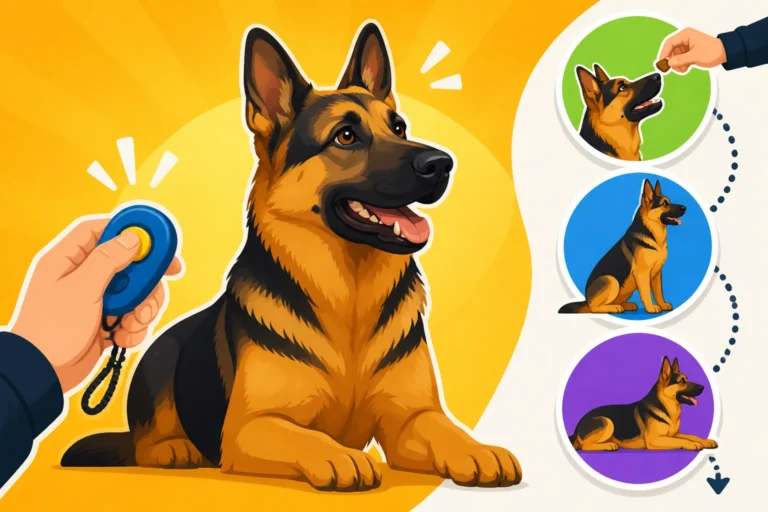
Consistent, short training sessions throughout the day are far more effective than one long, tedious one. Aim for 5-10 minutes a few times a day. Break down complex tricks into tiny, achievable steps and use positive reinforcement with treats and praise. Not only does this challenge their cognitive abilities, but it also strengthens your communication and bond. Online training platforms can be an invaluable resource here. For instance, BAXTER & Bella offers comprehensive online puppy and dog training programs, including guides for teaching a vast array of tricks and advanced obedience. Their structured approach can provide the guidance you need to keep your German Shepherd's brain actively engaged and continually learning new skills. These programs can be a game-changer for owners looking for structured ways to mentally stimulate their dogs. For foundational training, you might also refer to our article on German Shepherd Obedience Training Basics.
Indoor Agility and Obstacle Courses
Who says agility is only for outdoor arenas? You can create a stimulating, low-impact indoor agility course using everyday household items. This activity combines mental focus with controlled physical movement, which is perfect for days when outdoor romps aren't possible or for puppies whose growth plates are still developing. Remember, the goal isn't speed or competition, but engagement and fun.
Start simple. Drape a blanket over two low chairs to create a tunnel for your German Shepherd to crawl through. Use a broomstick placed across two shoeboxes as a low jump (ensure it's easily knocked over to prevent injury). Arrange pillows or cushions in a zigzag pattern to encourage weaving. You can even use a hula hoop held low for them to jump through. Guide your dog with treats and praise through each obstacle. Keep sessions short, positive, and safe. The mental effort of understanding each obstacle, remembering the sequence, and following your cues is immensely tiring. Plus, it builds confidence and body awareness. Always prioritize safety: ensure surfaces aren't slippery, and all "obstacles" are stable and won't harm your dog if knocked over. This type of play is excellent for channeling their energy and building focus.
Structured Play and Calming Activities
Mental stimulation isn't always about high-energy problem-solving. Sometimes, it's about channeling their natural drives in a structured way or providing calming activities that satisfy their innate needs while engaging their minds.
Controlled Play Sessions with Purpose
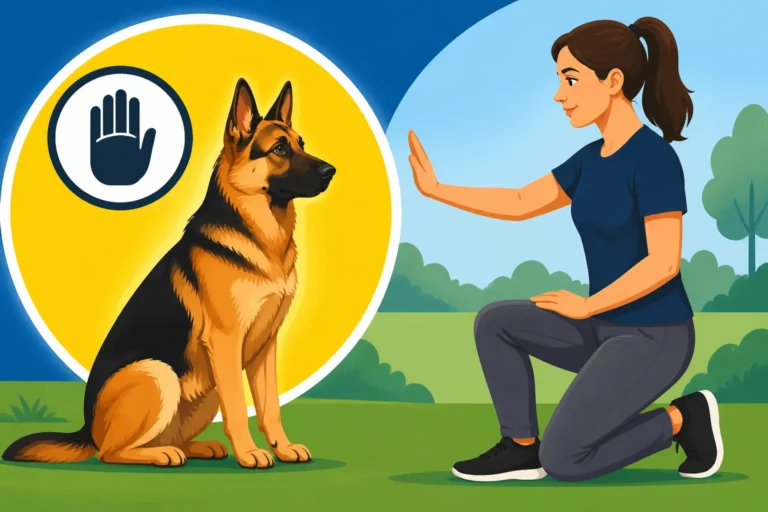
Simply tossing a toy for your German Shepherd to chase isn't always enough to mentally tire them out. Adding structure and rules to playtime elevates it into a brain game. Take a game of fetch in a long hallway, for instance. Instead of just throwing the ball repeatedly, incorporate commands like "sit," "stay," and "wait" before releasing them to retrieve. You can also teach them to "drop it" directly into your hand, rather than dropping it wherever they please.
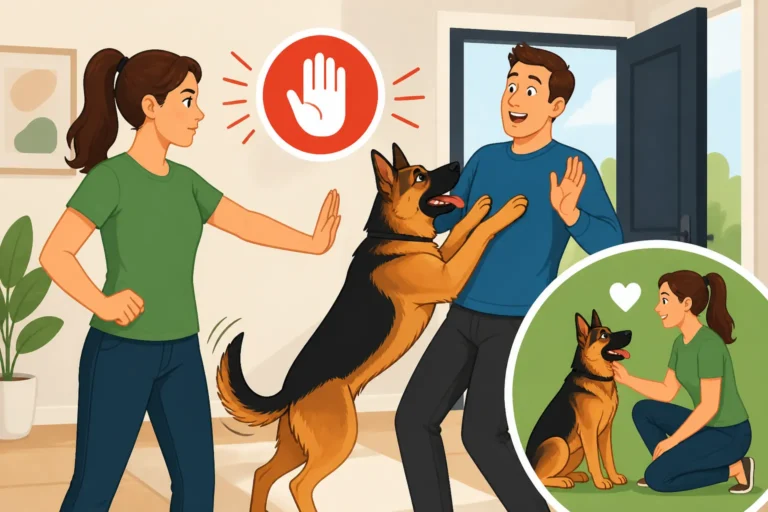
Tug-of-war is another excellent interactive game, but it needs rules. Teach your German Shepherd that the game starts and stops on your command. Use a sturdy tug toy, let them win occasionally to build confidence, but always ensure they release the toy when you say "drop it." This teaches impulse control, strengthens the "drop it" command, and provides a powerful physical and mental outlet. The back-and-forth engagement with you, combined with the rules, turns what could be a chaotic game into a valuable training and bonding opportunity. Remember, these play sessions should be on your terms, reinforcing your leadership and their listening skills. When choosing toys, opt for durable, high-quality options suitable for a powerful breed. For ideas on suitable toys, our guide on Best Toys for a German Shepherd's Energy offers excellent recommendations.
Chewing and Licking as Mental Outlets
Don't underestimate the power of a good chew or a satisfying lick. Chewing and licking are inherently calming activities for dogs. The repetitive motion releases endorphins, helping to reduce stress and anxiety, while also providing a form of mental engagement. For a German Shepherd, whose jaws are built for strong chewing, providing appropriate outlets is crucial.
Long-lasting chews like bully sticks, dental chews specifically designed for large breeds, or even safe, raw bones (under supervision) can keep them occupied for extended periods. Always choose products appropriate for your dog's size and chewing intensity. Ensure they are digestible and won't splinter. Lick mats are another fantastic tool for calming. You can smear them with plain yogurt, pureed pumpkin, or dog-safe peanut butter and freeze them for an even longer-lasting activity. This simple act of licking requires concentration and provides a soothing, focused activity that can help settle an overstimulated or anxious German Shepherd, especially when you need them to settle down indoors. It's a low-effort, high-reward activity for both you and your dog.
Interactive Story Time or “Watch Me” Games
Sometimes, mental stimulation is less about physical activity or puzzles and more about focused attention and quiet engagement. Believe it or not, simply talking to your German Shepherd, or engaging them in calm, attentive "watch me" games, can be incredibly enriching for their minds. Reading aloud to your dog, for example, can be a surprisingly effective way to engage them. They listen to the rhythm of your voice, pick up on your mood, and enjoy the undivided attention. It's a low-pressure way to build connection and offer quiet companionship.
"Watch Me" is a simple yet powerful command that teaches your dog to make eye contact on cue, building focus and self-control. Start by holding a treat near your nose and saying "watch me." The moment your dog makes eye contact, even for a second, mark it with a verbal cue ("yes!") and reward them. Gradually increase the duration of eye contact before rewarding. This game is fantastic for building focus, which is essential for all other training, and it can be practiced anywhere, anytime, without any special equipment. It provides a valuable mental workout by requiring them to concentrate and ignore distractions, ultimately helping them become more attentive and well-behaved companions indoors.
Integrating Mental Stimulation into Daily Routines
The key to a mentally stimulated German Shepherd isn't necessarily hours of dedicated "brain games" every day, but rather seamlessly integrating mental challenges into their daily lives. By making small adjustments to their routine, you can ensure their minds are consistently engaged, leading to a calmer, happier, and better-behaved companion.
Mealtime as an Opportunity
One of the easiest and most impactful ways to provide daily mental stimulation is to rethink how you feed your German Shepherd. Instead of simply pouring kibble into a bowl for them to devour in seconds, turn mealtime into a mental treasure hunt. Puzzle feeders, slow feeder bowls, and even scattering their kibble are excellent ways to make eating more engaging.
Using a puzzle feeder or a snuffle mat for their regular meals forces them to work for their food, slowing down ingestion and making the process last longer. This taps into their natural foraging instincts and provides a daily cognitive challenge. If you don't have a puzzle feeder, simply scatter their kibble across a clean floor or hide small portions in different rooms, letting them use their incredible nose to find each bite. This engages their sense of smell and makes mealtime an active, brain-working event rather than a passive one. This approach can also be a proactive measure against certain health issues. For more details on safe feeding practices, especially concerning rapid eating, check out our guide on German Shepherd Bloat Prevention Feeding Tips.
Short Bursts of Engagement
You don't need to dedicate huge blocks of time to mental stimulation. German Shepherds, like humans, can benefit from short, frequent bursts of mental activity throughout the day. Think of it like a series of mini-brain breaks. A 5-10 minute training session where you practice a few known commands or teach a new trick can be incredibly effective. A quick game of "find it" with a few treats or a rotation of a different puzzle toy for a few minutes can also break up monotony.
These short bursts prevent boredom from building up and keep their minds limber. Instead of waiting for your German Shepherd to become restless or destructive, proactively offer these mental challenges. For example, while you're making coffee, ask them to "stay" for a minute, then release them with a treat. Or, before you sit down to work, give them a new puzzle toy to tackle. These intermittent engagements satisfy their need for mental work without requiring a massive time commitment from you. They also contribute to overall good behavior and focus. For a comprehensive approach to their development, consider reviewing our German Shepherd Training Timeline by Age.
Rotation of Toys and Challenges
German Shepherds are smart, and they can quickly figure out a puzzle or grow bored with the same old toys. To keep them mentally engaged and prevent them from losing interest, it’s crucial to rotate their toys and introduce new challenges regularly. Don't leave all their toys out all the time. Instead, have a selection of 3-5 toys available, and swap them out every few days or once a week. When a "new" toy appears, it reignites their interest and makes it feel like a novel experience.
This principle applies to puzzle toys as well. Once your German Shepherd has mastered a particular puzzle, either increase its difficulty level or introduce a different type of puzzle altogether. Consider having a few different puzzle styles on hand – a LickiMat one day, a Nina Ottosson slider the next, a stuffed Kong the day after that. The novelty of a new challenge keeps their brains buzzing and prevents them from becoming complacent. Remember, a mentally stimulated German Shepherd is a happier, calmer German Shepherd, and variety truly is the spice of life for these intelligent companions. This consistent novelty is a fantastic way to offer continuous Best Mental Stimulation for German Shepherds.
Disclaimer
Please remember that the information provided in this article is for educational and informational purposes only and does not constitute veterinary advice. Always consult with a qualified veterinarian for any health concerns or before making any decisions about your pet’s health or treatment.