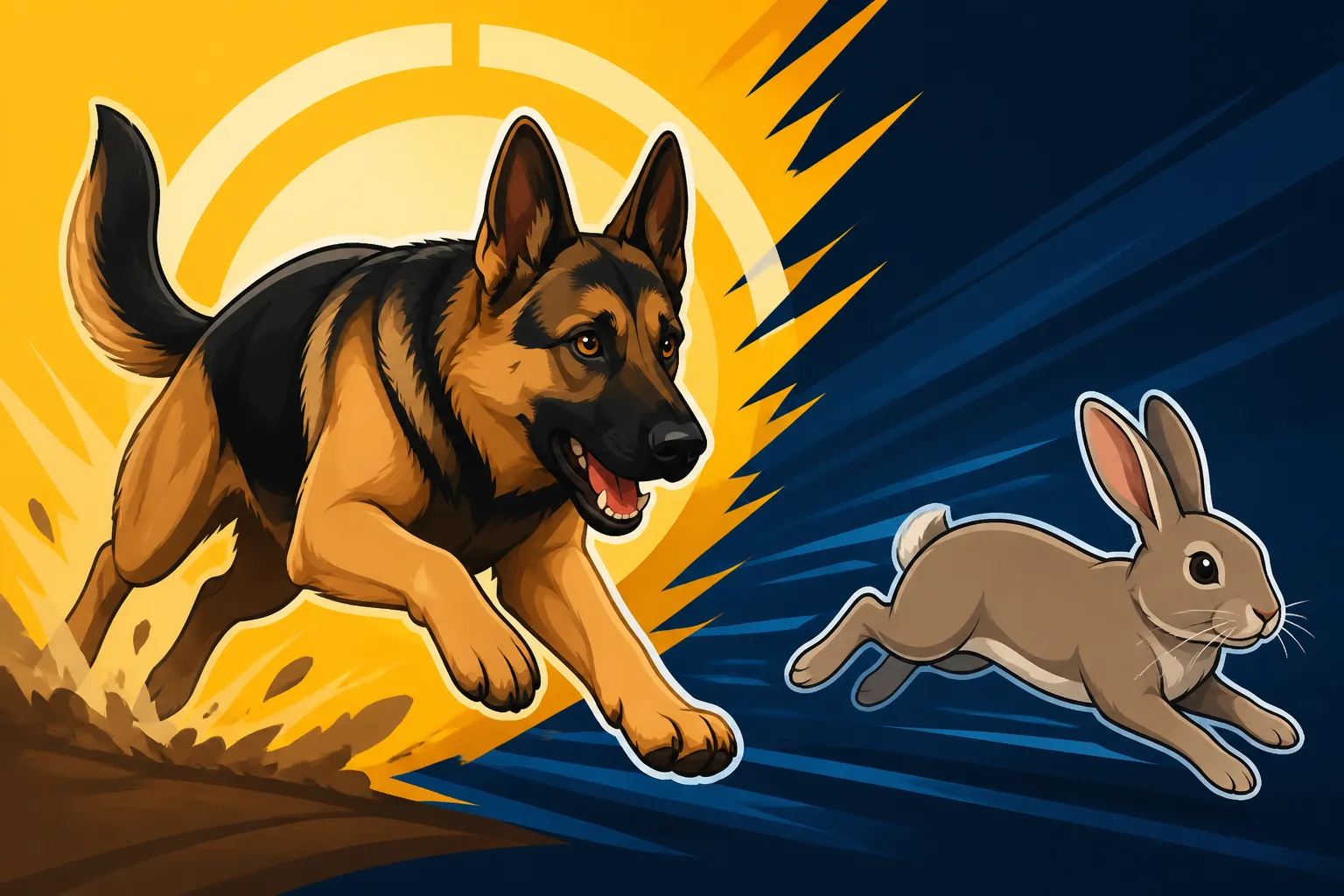
German Shepherd Prey Drive Explained
It can be truly unsettling, even frightening, when your beloved German Shepherd suddenly locks onto a squirrel or a passing jogger with an intense stare, muscles tensed, and then bolts with a single-minded focus you can't break. This powerful, innate instinct, known as prey drive, is deeply ingrained in the breed, and understanding its nuances is key to safely and happily coexisting with your loyal companion. This comprehensive guide will explain what prey drive is, why German Shepherds possess it so strongly, and how you can effectively manage and train around it to ensure a harmonious life for everyone.
Understanding German Shepherd Prey Drive
Prey drive is one of those primal instincts that really sets certain dog breeds apart, and German Shepherds are definitely in that category. It’s not just a fancy term; it's a deeply ingrained behavioral sequence that involves searching, stalking, chasing, biting to catch, and then biting to kill. While most modern German Shepherds aren't out hunting deer, this sequence, or parts of it, is what kicks in when they see a small animal dart, a bicycle whiz by, or even a child run past.
What is Prey Drive? The Instinct Explained
Imagine your German Shepherd out in the yard, suddenly their head snaps up, ears swivel, and their gaze fixes on something in the distance – perhaps a rabbit hopping across the lawn. That initial alert, the intense focus, the sudden burst of speed to pursue, and the sheer joy in the chase are all components of prey drive. It's not about malice or aggression; it's a hardwired response to movement, sound, and scent that mimics the hunting behaviors of their wild ancestors. For German Shepherds, a breed originally developed for herding and protection, this instinct was crucial for controlling livestock and identifying potential threats, demanding an inherent vigilance and reactive speed.
This drive manifests differently in individual dogs. Some might have an incredibly high drive, reacting to almost anything that moves, while others might be more selective. It's a spectrum, not a switch that's simply on or off. The strength of this drive can also be influenced by genetics, early socialization, and environmental exposure. It's important to remember that this isn't a "bad" behavior your dog chooses to exhibit; it's a powerful, natural inclination that, if unmanaged, can lead to challenging situations or even danger.
The Genetic Roots of the German Shepherd's High Drive
German Shepherds were bred for specific tasks that demanded intelligence, athleticism, and a strong work ethic. Their lineage as herding dogs meant they needed to be attentive, quick to respond, and capable of driving livestock. While herding drive is distinct from prey drive, there's often an overlap in the underlying traits: keen observation, swift movement, and an intense focus on a moving target. These traits were refined over generations, leading to the highly capable and driven dogs we know today.
Furthermore, the working lines of German Shepherds, in particular, were selectively bred for traits like courage, tenacity, and a strong "will to please" through focused work, often involving bite work or protection sports. These activities harness and channel aspects of prey drive into controlled, productive outlets. When you adopt a German Shepherd, especially from lines bred for performance, you're getting a dog with generations of selective breeding behind them, which means a naturally elevated prey drive is often part of the package. It's simply who they are, woven into their very DNA, and understanding this helps us approach their training and management with empathy and realism.
Recognizing the Signs of Strong Prey Drive
Identifying when your German Shepherd's prey drive is kicking in is the first crucial step to managing it effectively. It's not always a full-blown chase; often, there are subtle cues that signal their internal alarm has been tripped. Learning to read these signs can help you intervene early and redirect their focus before the situation escalates.
Common Behaviors That Indicate Prey Drive
When a German Shepherd's prey drive is activated, you'll observe a distinct shift in their demeanor and focus. The first thing you might notice is an intense stare, often referred to as "locking on." Their body language will become rigid, low to the ground, or slightly forward-leaning, with ears perked and often swiveling to pinpoint the source of their interest. Their tail might be low and stiff, or perhaps wagging in a short, rapid motion, not out of happiness but anticipation.
Then comes the "stalk" – a slow, deliberate movement, sometimes creeping, sometimes a low crouch, as they try to get closer without being detected. This is often followed by a sudden burst of speed – the "chase." If they manage to catch their target (whether it's a toy, a leaf, or, unfortunately, a small animal), you'll see the "shake" or "bite to kill" instinct, even if it's just a vigorous play with a stuffed animal. These behaviors are deeply satisfying to a dog with high prey drive, making them inherently rewarding and thus difficult to extinguish.
Differentiating Prey Drive from Aggression
It's vital for German Shepherd owners to understand the difference between prey drive and aggression, as they are often confused. While both can lead to biting, the motivation behind the behavior is entirely different. Prey drive is about the pursuit and capture of a moving object, often culminating in a "kill bite" which is swift and definitive, driven by an instinct to hunt. The dog isn't angry or fearful; they are simply fulfilling a natural predatory sequence.
Aggression, on the other hand, is typically driven by fear, territoriality, resource guarding, or pain. An aggressive dog might growl, snarl, show teeth, bark defensively, or lunge with the intent to deter or harm, often with more warning signals. When a German Shepherd exhibits aggression, their body language usually communicates tension and a desire to create distance or defend. For instance, a German Shepherd chasing a rabbit is displaying prey drive, but a German Shepherd lunging and barking at a stranger passing by, especially if they are retreating, is likely displaying aggression. It's crucial to correctly identify the underlying motivation because the training and management strategies for each are vastly different. If you're concerned about your dog's behavior, especially aggression, seeking guidance from a professional trainer is highly recommended.
Managing and Training German Shepherd Prey Drive
Effectively managing your German Shepherd's prey drive isn't about eliminating it – that's impossible, as it's part of their genetic makeup. Instead, it's about channeling it into appropriate outlets and teaching your dog impulse control and obedience, even when highly stimulated. This takes consistency, patience, and a deep understanding of your dog's instincts.
Early Socialization and Puppy Training
The foundation for managing prey drive starts early, ideally during puppyhood. Exposing your German Shepherd puppy to a variety of sights, sounds, people, and safe environments is crucial for building a well-adjusted dog. Early socialization helps them learn what is and isn't a threat or a target. During this critical period, you can introduce them to different animals from a safe distance, teach them polite greetings, and establish a strong recall.
Puppy training classes are invaluable for building basic obedience commands like "sit," "stay," and "come" in distracting environments. The stronger these foundational commands are, the better your chances of redirecting your dog when their prey drive kicks in. Remember that a young German Shepherd puppy's brain is like a sponge, and consistent, positive reinforcement during this time will lay the groundwork for a dog that respects boundaries and looks to you for guidance, even when their instincts are screaming otherwise. This early investment in training and socialization can drastically impact how well your dog handles their natural drives throughout their life.
Essential Obedience Commands for Control
A robust set of obedience commands is your best friend when dealing with a high-prey-drive German Shepherd. The "recall" command, often "come," is arguably the most important. A rock-solid recall means your dog will return to you instantly, regardless of distractions, which can be a lifesaver if they spot something interesting off-leash. Practice this in increasingly distracting environments, rewarding heavily for success. Another vital command is "leave it." This teaches your dog to disengage from an object or stimulus they are interested in. Start with low-value items and gradually increase the difficulty, practicing with toys, food, and eventually, moving objects from a distance.
The "watch me" or "look" command is also incredibly useful, teaching your German Shepherd to make eye contact with you and focus, breaking their intense stare at a potential "prey" item. Combining these commands with a strong "stay" or "down-stay" can give you the tools to manage their impulses. Consistency is key here; every time you use a command, ensure your dog follows through, even if it means gently guiding them. The goal is to build a habit of immediate response.
Channeling Prey Drive with Appropriate Activities
Since you can't eliminate prey drive, the smartest approach is to channel it into acceptable and enjoyable activities. This satisfies your German Shepherd's innate instincts while keeping everyone safe. Think about activities that mimic the hunting sequence in a controlled way. Flirt poles, for example, are fantastic for the chase and "capture" sequence. They involve a lure on a string attached to a pole, allowing you to control the speed and direction of the "prey" and teach your dog to release it on command. Many reputable pet supply retailers like Chewy offer various flirt poles and other interactive toys.
Tug-of-war is another excellent outlet, engaging the "bite and hold" aspect of prey drive. Just ensure you teach a strong "drop it" command so the game remains fun and controlled. Scent work, tracking, and even competitive sports like IGP (formerly Schutzhund) or dock diving can provide incredible mental and physical stimulation that taps into their natural drives. These activities not only provide a healthy outlet but also strengthen your bond and improve your German Shepherd's overall focus and obedience. It's about giving them a job to do that satisfies their inner hunter. You can learn more about specific training techniques in our guide on How to Train a German Shepherd.
Living with a German Shepherd and Prey Drive
Living with a German Shepherd that has a strong prey drive requires ongoing vigilance, smart management, and a commitment to keeping both your dog and others safe. It’s a marathon, not a sprint, and being proactive is always better than reacting in a stressful situation.
Safe Walking and Outdoor Management
Off-leash privileges are a big discussion point for German Shepherds with high prey drive, and for many, it's just not a safe option in unfenced or public areas, regardless of how good their recall seems. One squirrel or rabbit can make even the most obedient dog forget everything they've learned in an instant. For walks, a secure, well-fitting harness or head halter can provide better control than a standard collar, reducing the chance of them pulling free or causing injury to their neck if they lunge. A long leash, perhaps 15-30 feet, can offer a sense of freedom in safe, open spaces while still maintaining a physical connection and control.
Always be aware of your surroundings. Scan ahead for potential triggers like squirrels, birds, joggers, or cyclists. If you spot one, either change direction, create distance, or distract your dog with a favorite treat or toy before their prey drive fully engages. Remember, a moment of vigilance can prevent a dangerous chase or an embarrassing situation. Even in seemingly safe areas, it’s often best to keep your German Shepherd on a leash. For more insights on leash manners, check out our article on How to Do Leash Training with a German Shepherd.
Coexisting with Other Pets: Dogs, Cats, and Small Animals
Introducing a German Shepherd with a high prey drive into a household with other pets, especially small ones like cats, rabbits, or even small dogs, requires extreme caution and careful, supervised introductions. The instinct to chase and capture can be overwhelming for them. Never leave a German Shepherd unsupervised with a smaller, vulnerable pet, especially early on. Use crates, baby gates, and separate rooms to ensure physical separation when you cannot actively supervise.
For existing pets, slow and controlled introductions are paramount. Keep your German Shepherd on a leash, use positive reinforcement for calm behavior, and ensure the smaller pet has escape routes. For cats, provide vertical spaces they can easily access. Over time, some German Shepherds can learn to coexist peacefully with cats or other dogs, particularly if they are introduced as puppies and taught from day one that these animals are part of the "pack" and not prey. However, the risk with small, fast-moving animals like rabbits or guinea pigs is often too high to overcome for a dog with a strong prey drive, and completely separate living arrangements might be the only safe solution.
Addressing Prey Drive Around Children and Joggers
This is a particularly sensitive area, as a German Shepherd's prey drive can sometimes be triggered by the fast, erratic movements of children or joggers. While German Shepherds can be wonderful family dogs, especially if raised with children, it's crucial to teach both the dog and the children how to interact safely. Never allow children to run screaming directly away from a high-prey-drive German Shepherd, as this can inadvertently activate the chase instinct. Teach children to move calmly and respectfully around dogs.
For joggers, cyclists, or anyone moving quickly, it’s important to always keep your German Shepherd on a leash and under control. If you anticipate a trigger, practice your "leave it" or "watch me" commands, rewarding heavily when your dog calmly ignores the distraction. Early German Shepherd Socialization Checklist can help in acclimating your dog to various human activities. Training your German Shepherd to sit and stay calmly as these "triggers" pass can be a powerful management tool. Constant supervision and proactive management are key to preventing any incidents and ensuring public safety.
Tools and Resources for Training and Management
Having the right tools and knowing where to turn for help can make all the difference in successfully managing your German Shepherd's prey drive. There's a wide world of equipment and expertise out there to support you.
Recommended Training Equipment
When it comes to managing a German Shepherd with a strong prey drive, the right equipment isn't just helpful, it's essential for safety and effective training. A sturdy, well-fitting harness that provides control from the chest or front clip can be invaluable, as it redirects their pulling power and discourages lunging. Options like the Ruffwear Front Range Harness are often recommended for strong pullers. For dogs with an exceptionally strong drive and pull, a head halter, such as a Gentle Leader, can offer even more control by guiding their head, which in turn steers their body. Always introduce these tools gradually and positively.
Beyond harnesses, consider a long line (a lightweight, durable leash typically 15-30 feet long) for practicing recall in open, safe areas while maintaining a connection to your dog. For mental stimulation and channeling that drive, puzzle toys and interactive feeders can be a godsend, keeping their minds engaged. You can find a huge variety of these products, from durable chew toys to intricate puzzle feeders, on sites like Chewy. Having a variety of high-value treats (think cooked chicken or cheese) in your pocket is also crucial for rewarding successful redirection and obedience in distracting environments.
Here's a quick overview of useful equipment:
| Equipment Type | Purpose | Key Benefit | Considerations |
|---|---|---|---|
| Front-Clip Harness | Reduces pulling, better control on walks | Redirects pulling power, less strain on neck | Must fit well to prevent chafing |
| Head Halter | Maximum control for strong pullers and lungers | Guides head, thus controlling body direction | Requires positive introduction and conditioning |
| Long Line (15-30ft) | Safe recall practice in open spaces, supervised freedom | Allows distance without off-leash risk | Can tangle, requires open space, supervision critical |
| Flirt Pole | Controlled chasing, exercise, 'capture' outlet | Channels prey drive into play, good for recall practice | Requires space, dog must learn to release lure |
| High-Value Treats | Rewards for recall, "leave it," "watch me" in distracting scenarios | Motivates compliance in high-stress situations | Keep varied, use sparingly to maintain value |
| Puzzle Toys | Mental stimulation, slow feeding | Engages intellect, reduces boredom, channels energy | Choose durable, appropriate difficulty for your dog |
Professional Training and Support
Sometimes, despite your best efforts, managing a strong prey drive can feel overwhelming. That's when professional help becomes an invaluable resource. A certified professional dog trainer or a behaviorist specializing in German Shepherds or working breeds can provide tailored strategies and hands-on guidance. They can help you assess the specific triggers for your dog's prey drive, refine your obedience commands, and teach you advanced techniques for impulse control. They can also differentiate between pure prey drive and other behavioral issues that might be at play, such as fear reactivity or barrier frustration, which require different approaches.
Don't hesitate to reach out for support if you're struggling. Finding a trainer who uses positive reinforcement methods and understands the nuances of German Shepherd behavior is crucial. They can help you build confidence in your ability to manage your dog and ensure a safer, more enjoyable life for both of you. Organizations like the Association of Professional Dog Trainers (APDT) or the Certification Council for Professional Dog Trainers (CCPDT) can help you locate qualified professionals in your area. For more general advice, our guide on German Shepherd Behavior Problems and Solutions might offer further insights.
Consistency and Patience are Key
Managing a German Shepherd's prey drive is an ongoing journey that requires immense patience and unwavering consistency. This isn't a problem you solve once and then forget about. Every walk, every interaction, and every training session is an opportunity to reinforce the behaviors you want to see. Your dog isn't trying to be difficult; they are simply acting on powerful, deeply ingrained instincts. It's up to you to be their guide, their teacher, and their advocate.
Consistency in your commands, your boundaries, and your daily routine will help your German Shepherd understand what is expected of them. Celebrate small victories, like a successful "leave it" when a squirrel darts by or a quick recall despite a tempting smell. There will be setbacks, moments of frustration, and times when you feel like you're not making progress. But stick with it. Your German Shepherd is a loyal, intelligent, and capable companion, and with your consistent guidance, they can learn to navigate the world safely and happily, even with a strong prey drive. Remember, building that trust and understanding takes time, but it's incredibly rewarding.
Final Thoughts on Prey Drive in German Shepherds
Embracing the reality of your German Shepherd's prey drive is a testament to your commitment as an owner. It's a powerful part of what makes them such intelligent, athletic, and capable dogs. While it presents unique challenges, it also opens doors to incredibly rewarding training opportunities and a deeper understanding of your canine companion. By focusing on early socialization, consistent obedience training, and providing appropriate outlets for their natural instincts, you can transform a potential challenge into a manageable trait.
Remember, every German Shepherd is an individual, and the strength of their prey drive will vary. Some might require lifelong, rigorous management, while others might develop excellent impulse control with consistent effort. The goal is not to suppress who they are, but to guide them safely through a human world that isn't always prepared for their intense natural abilities. Keep learning, keep training, and keep loving your incredible German Shepherd for all their wonderful, driven qualities. For those embarking on the journey with a new puppy, our German Shepherd Puppy Training Guide can provide an excellent starting point. And for general wellness, understanding How to Keep a German Shepherd Healthy will always be beneficial.
Disclaimer
This article is for general informational purposes only and does not constitute professional advice. Laws, prices and regulations vary by location and change over time. Consult a qualified professional for guidance on your specific situation.