German Shepherd vs Belgian Malinois
Deciding between a German Shepherd and a Belgian Malinois can feel like a monumental task, especially when you're dreaming of a loyal, intelligent, and capable canine companion. Many prospective owners find themselves torn, grappling with the similar-yet-distinct reputations of these two formidable breeds. This comprehensive guide aims to unravel the complexities, shed light on their unique traits, and help you determine which of these magnificent dogs is the ideal fit for your life and family.
Understanding the German Shepherd Breed
The German Shepherd Dog, often simply called a GSD, is a truly iconic breed recognized worldwide for its intelligence, loyalty, and versatility. For decades, they’ve been beloved family pets, diligent working dogs, and brave service animals. Their noble appearance and confident demeanor are instantly recognizable, but there's so much more to them than meets the eye.
Origin and History
The story of the German Shepherd began in Germany in the late 19th century, specifically with Captain Max von Stephanitz, who envisioned creating the ultimate herding dog. His goal was to develop a stable, intelligent, and athletic breed capable of both herding sheep and serving as a loyal companion. The first registered German Shepherd, Horand von Grafrath, was acquired by von Stephanitz in 1899 and became the foundation sire of the breed. What many people don't realize is that early German Shepherds weren't just about herding; their adaptability quickly saw them transition into police and military work during the early 20th century. This shift cemented their reputation as exceptional working dogs, a role they continue to excel in today, from search and rescue to bomb detection.
After World War I, American soldiers brought German Shepherds back to the United States, popularizing the breed due to their intelligence and stoicism. However, with this popularity came some challenges. Rapid breeding, sometimes without careful selection, led to a divergence in lines, with some focusing more on aesthetics (show lines) and others on pure working ability (working lines). Today, you can find a variety of lines, each with slightly different characteristics, but all tracing back to that initial vision of a noble and intelligent canine.
Key Physical Characteristics
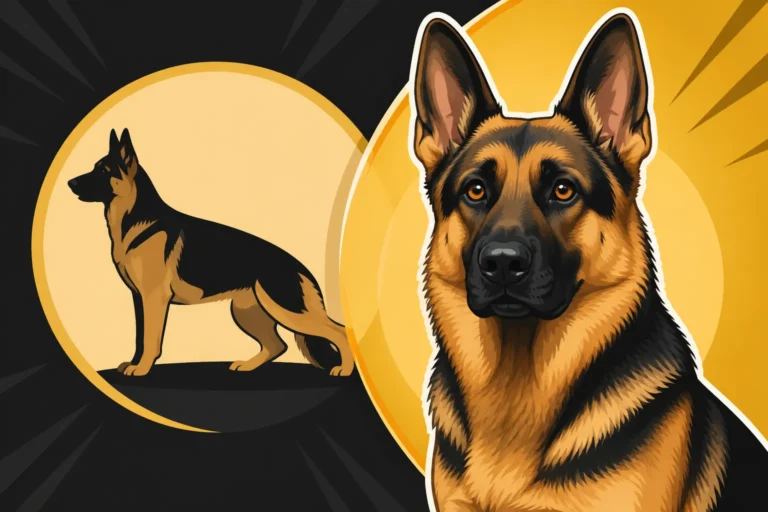
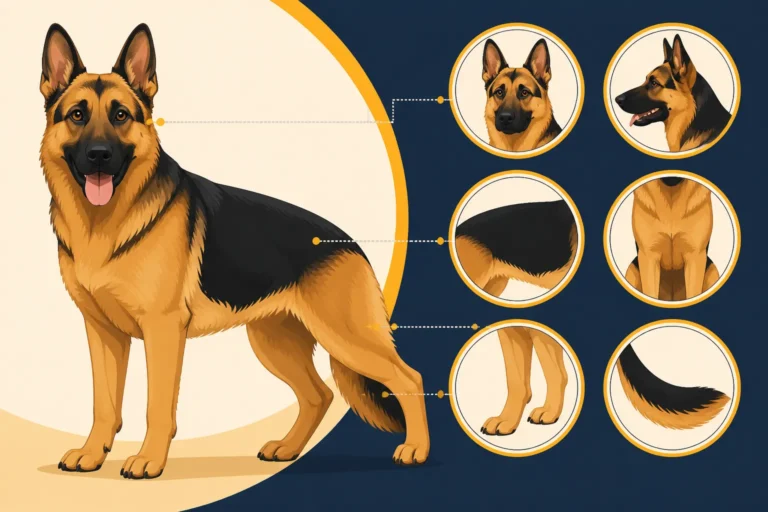
German Shepherds are undeniably striking dogs, known for their powerful, agile, and well-muscled physique. Males typically stand between 24 and 26 inches at the shoulder and can weigh anywhere from 65 to 90 pounds, while females are usually a bit smaller, ranging from 22 to 24 inches and 50 to 70 pounds. Their gait is often described as fluid and effortless, a testament to their strong, coordinated movements. You can learn more about their expected development in our guide on the German Shepherd Size and Weight Guide.
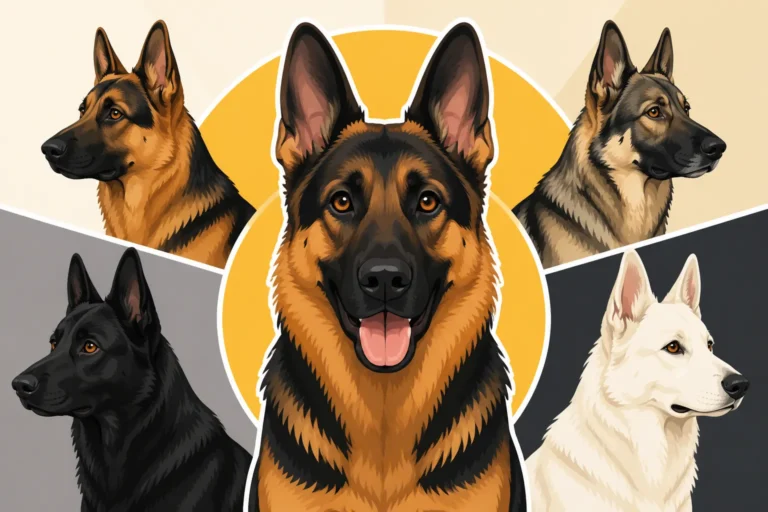
Their double coat is another defining feature, offering protection against various weather conditions. Most commonly, you'll see them in the classic black and tan or black and red patterns, but other colors like sable, all black, and bi-color exist. While the standard coat is medium length, there are also long-haired German Shepherds, which are beautiful but require a bit more grooming. Their expressive, intelligent eyes and erect ears contribute to their alert and watchful appearance, often hinting at the deep thinking happening behind them.
Temperament and Personality
When it comes to temperament, German Shepherds are a complex mix of loyalty, courage, and intelligence. They are renowned for their unwavering devotion to their families, often forming incredibly strong bonds. This loyalty, however, can sometimes translate into a reserved or aloof demeanor around strangers, a trait that makes them excellent guard dogs but also necessitates early and consistent socialization. Without proper exposure to various people, places, and situations, a GSD can become overly protective or fearful, which is something every owner wants to avoid.
Their intelligence is off the charts, making them highly trainable and eager to please. They thrive on having a "job" to do, whether it's obedience training, agility, or simply being a vigilant family protector. A bored German Shepherd is often a destructive German Shepherd, so mental stimulation is just as important as physical exercise. You can explore this further in our detailed article on German Shepherd Temperament and Personality. They are often described as having a serious, thoughtful nature, which makes them such reliable working partners, but they also have a playful, goofy side that often surprises first-time owners.
Exploring the Belgian Malinois Breed
The Belgian Malinois, often mistaken for a German Shepherd, is a breed that has surged in popularity, particularly in recent years, largely due to its exceptional abilities in military, police, and sport dog roles. They are intense, driven, and possess an almost boundless energy that commands respect and requires a very specific type of owner.
Origin and History
Hailing from Belgium, the Malinois is one of four Belgian Shepherd varieties, named after the city of Malines. Unlike the German Shepherd, which was specifically bred by one individual, the Malinois evolved more naturally as a utility farm dog in the late 19th century, primarily used for herding sheep and guarding livestock. They were developed for hard work and durability, capable of enduring the harsh Belgian climate. Their recognition as a distinct breed came a bit later than the German Shepherd, with the first Malinois registered in Belgium in 1891.
Early Malinois were known for their tireless work ethic, extreme intelligence, and protective instincts. They quickly gained recognition beyond the pastures, proving invaluable in military and police roles during both World Wars. In the United States, their presence was initially overshadowed by the German Shepherd, but their remarkable drive and agility eventually brought them to the forefront of working dog disciplines. Today, the Belgian Malinois is the preferred choice for many elite K9 units and competitive dog sports due to its unparalleled drive and focus.
Key Physical Characteristics
At first glance, a Belgian Malinois might appear quite similar to a German Shepherd, but there are distinct differences. Malinois are generally slightly smaller and more finely boned than German Shepherds, giving them a more athletic and lean appearance. Males typically stand 24 to 26 inches at the shoulder and weigh 60 to 80 pounds, while females are 22 to 24 inches and 40 to 60 pounds. Their build is often described as square and elegant, showcasing incredible agility and speed.
Their coat is short, straight, and hard, with a dense undercoat, providing protection without the bulk of a GSD's longer hair. The most common color is a rich fawn to mahogany, with a black mask and ears, which is a signature trait. Unlike the German Shepherd's varied color palette, the Malinois has a more uniform appearance, always featuring that distinctive black facial mask. Their ears are erect and triangular, and their eyes are typically dark and almond-shaped, conveying an intense, watchful gaze that rarely misses a thing.
Temperament and Personality
The temperament of a Belgian Malinois is characterized by an almost unmatched intensity, confidence, and high drive. They are incredibly smart and eager to work, often possessing a strong prey drive and an unwavering focus when engaged in a task. This makes them absolute superstars in obedience, agility, protection sports, and any other discipline that requires precision and dedication. However, this high drive means they are not a dog for the faint of heart or an inexperienced owner.
Malinois thrive on activity and purpose. They need constant mental and physical stimulation to prevent boredom and destructive behaviors. Unlike some German Shepherds who might be content with a good walk and some playtime, a Malinois often requires hours of challenging exercise and training every single day. They are fiercely loyal to their families, often exhibiting a pronounced protective instinct. While they can be affectionate with their loved ones, they are generally not cuddly lap dogs. Their bond is often expressed through their desire to work and be near their handler, always ready for the next command. Their guarding instincts are strong, and like German Shepherds, early and thorough socialization is critical to channel these traits positively.
Head-to-Head Comparison: Physical Traits
While both the German Shepherd and the Belgian Malinois are large, athletic breeds with a striking resemblance at first glance, a closer look reveals several key physical distinctions. Understanding these differences can help you appreciate their unique attributes and determine which aesthetic and build aligns more with your preferences and lifestyle needs.
Size and Build Differences
The most noticeable difference between these two breeds is often their overall build. German Shepherds tend to have a more substantial, robust, and often heavier bone structure. They are built for endurance and power, giving them a powerful, commanding presence. When you see a well-bred German Shepherd, you'll often notice a deep chest, a strong back, and a powerful hindquarters that contribute to their characteristic "trotting" gait. Some lines, particularly certain show lines, might have a more pronounced sloped back, a feature that has been debated within the breed standard for its potential impact on health and movement.
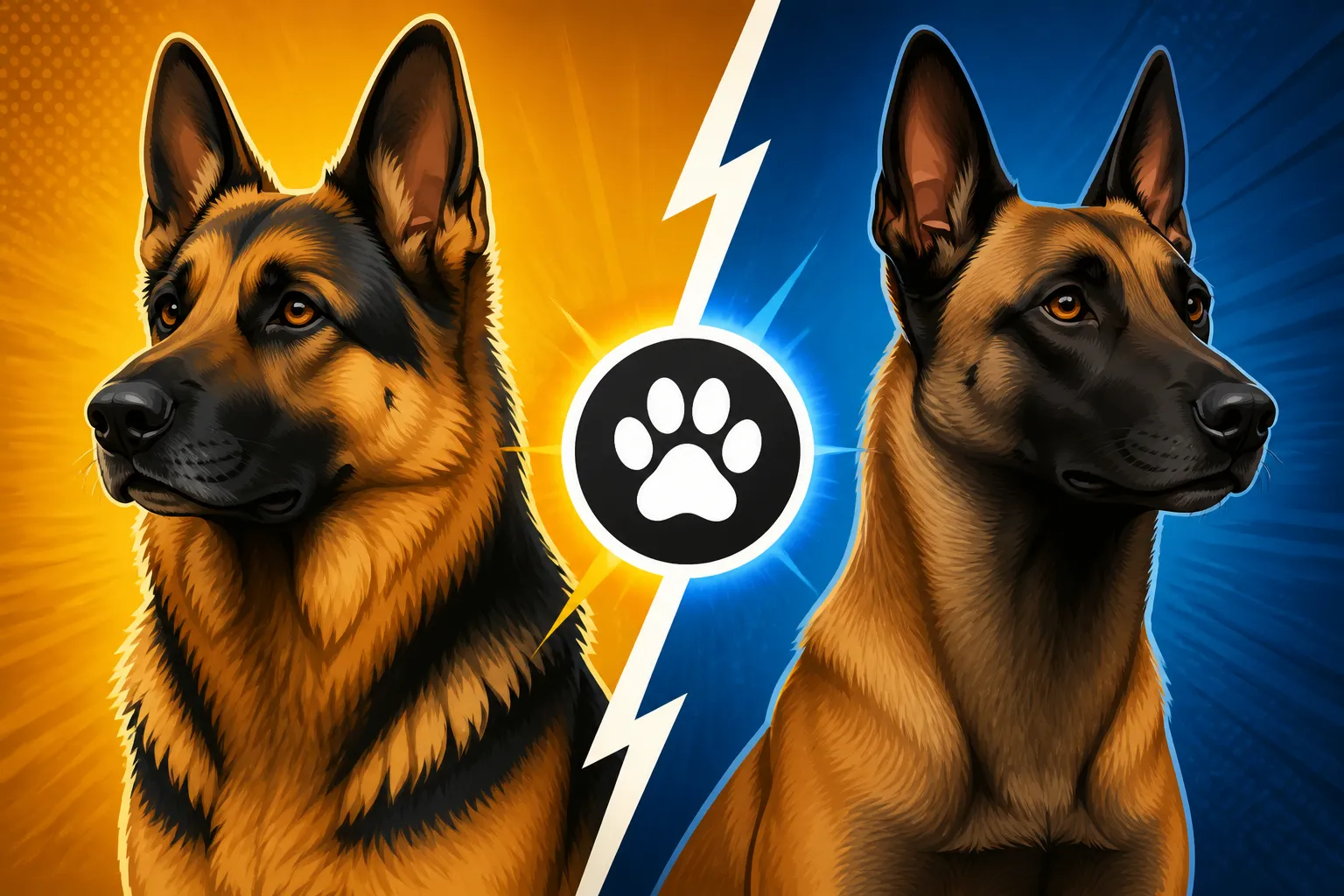
In contrast, the Belgian Malinois has a more athletic, leaner, and often more agile build. They are typically lighter-boned and appear more square and compact, built for speed, agility, and quick changes in direction. Their musculature is tight and well-defined, rather than bulky. This streamlined physique allows them to excel in activities requiring explosive power and nimbleness, such as jumping, climbing, and intricate obedience routines. If you put them side-by-side, the Malinois often looks like a high-performance athlete, while the German Shepherd embodies a powerful, all-purpose workhorse.
Coat Types and Colors
The coat is another clear differentiator. German Shepherds sport a double coat that can range from medium to long, with a dense, harsh outer coat and a softer undercoat. This coat provides excellent insulation against both heat and cold, but it also means significant shedding, particularly during seasonal "blows." Common colors include the classic black and tan, black and red, sable, solid black, and bi-color. Less common but recognized colors like liver and blue exist, although they are often faults in show lines. Managing their shedding is a serious commitment, as discussed in our guide to German Shepherd Shedding: How to Manage It.
Belgian Malinois, on the other hand, have a short, straight, hard double coat with a dense undercoat. This coat is lower maintenance in terms of brushing and shedding compared to the GSD, though they still shed. The Malinois coat is typically a rich fawn to mahogany color, always accompanied by a distinctive black mask on the face and black ears. The uniformity in their coloration is a hallmark of the breed, and variations outside this standard are rare or considered undesirable. This concise coat helps highlight their athletic build.
Distinctive Facial Features
While both breeds have alert, intelligent expressions and erect ears, their facial features offer subtle distinctions. German Shepherds typically have a more substantial head, with a strong, well-defined muzzle and a noble, often serious expression. Their eyes are usually dark and almond-shaped, conveying depth and intelligence. The overall impression is one of gravitas and wisdom.
The Belgian Malinois, reflecting its leaner build, tends to have a more refined head proportionate to its body. Their muzzle is typically slightly more tapered, and their eyes, also dark and almond-shaped, often convey a more intense, almost piercing gaze, indicative of their high drive and constant readiness. The prominent black mask on a Malinois face further accentuates their features and adds to their sharp, alert appearance. When observing their faces, the German Shepherd often looks like a seasoned commander, while the Malinois appears as an elite, focused operative.
Here's a quick comparison table:
| Feature | German Shepherd | Belgian Malinois |
|---|---|---|
| Size (Males) | 24-26 inches, 65-90 lbs | 24-26 inches, 60-80 lbs |
| Build | More robust, powerful, heavier bone structure | Leaner, more athletic, finer bone structure |
| Coat Type | Medium to long double coat, dense undercoat | Short, straight, hard double coat, dense undercoat |
| Common Colors | Black & Tan, Black & Red, Sable, Solid Black, Bi-color | Fawn to Mahogany with black mask and ears |
| Shedding | Significant, especially during seasonal "blows" | Moderate, less than GSD |
| Facial Feature | Noble, serious expression; strong muzzle | Intense, sharp gaze; prominent black mask |
Temperament and Training Dynamics
This is where the rubber truly meets the road, as the temperament and training requirements are often the deciding factors for potential owners. Both breeds are incredibly intelligent and capable, but their inherent drives and needs vary significantly, impacting how they integrate into a family and what kind of commitment they demand.
Energy Levels and Exercise Needs
Here’s a crucial point: both German Shepherds and Belgian Malinois are high-energy dogs, but the intensity and type of exercise they require differ. A German Shepherd needs substantial daily exercise – typically an hour or two of vigorous activity, like long walks, runs, hikes, or engaging playtime. They enjoy having a job, and structured activities like obedience training, agility, or even carrying a backpack on a walk can fulfill their physical and mental needs. A well-exercised GSD is usually a calm and contented housemate, happy to relax with their family. For more guidance, check out our piece on German Shepherd Exercise Requirements.
The Belgian Malinois takes "high energy" to an entirely different level. They are an unstoppable force, often described as having an "off" switch that's rarely engaged. They need at least two hours of intense, structured physical activity daily, and often more. This isn't just a casual stroll; this means running, agility courses, high-level obedience drills, protection work, or long sessions of fetch with a purpose. A Malinois thrives on having a full-time job. If their immense energy isn't channeled appropriately, they can become incredibly destructive, anxious, and even neurotic. They are not dogs that are content to simply hang out in the backyard; they need to do things. A Malinois isn't just energetic; it’s perpetually driven.
Trainability and Intelligence
Both breeds are celebrated for their sharp minds and remarkable trainability. German Shepherds are highly intelligent and eager to please, making them relatively easy to train for experienced owners. They respond very well to positive reinforcement and consistent, firm guidance. Their intelligence means they pick up commands quickly and can master complex tasks. They excel in various dog sports and working roles, from obedience to search and rescue. A German Shepherd loves to learn and engage their brain, so consistent training sessions, even short daily ones, are vital. Our guide, How to Train a German Shepherd, offers a great starting point.
The Belgian Malinois is also incredibly intelligent, but their trainability is coupled with an unparalleled drive and intensity. They are often described as living to work and are exceptionally quick learners. This means they can be molded into incredibly precise and capable working dogs, excelling in high-stakes environments like police or military K9 units. However, this intensity requires an equally intense and experienced trainer. A Malinois will push boundaries, and if not given clear, consistent direction, they can quickly take over. They are not forgiving of handler mistakes or inconsistencies. While they learn commands rapidly, their high drive can sometimes make them prone to anticipating commands or becoming overly focused, requiring a handler who can channel and manage that laser focus. They require a confident leader who understands how to leverage their intense working drive.
Socialization and Family Life
Socialization is paramount for both German Shepherds and Belgian Malinois, but the potential challenges and outcomes differ. German Shepherds are known for their loyalty to their family and can be very good with children and other pets if raised with them and properly socialized from a young age. They tend to be reserved with strangers, often observing new people before accepting them. This protective instinct is natural, but without proper socialization, it can turn into fear or aggression. Early exposure to diverse environments, sounds, people, and other well-behaved dogs is critical to ensure they become well-adjusted family members. Our article on How to Socialize a German Shepherd provides in-depth advice.
Belgian Malinois are also deeply loyal to their families and possess strong protective instincts. However, their intensity and high prey drive mean that socialization needs to be even more rigorous and constant. They can be good with children and other pets, but their interactions often need more supervision due to their boundless energy and tendency to play rough. Their high drive means they might be more prone to herding or chasing smaller animals. They are typically less tolerant of strangers than a well-socialized GSD and are always on high alert. For a Malinois, every new person or situation is a potential "threat" or a "job," requiring careful management. They are not dogs that easily adapt to casual social gatherings or crowded public spaces without extensive conditioning. Their bond with their primary handler is often incredibly strong, sometimes to the exclusion of others if not carefully managed.
Health and Lifespan Considerations
Choosing a dog isn't just about temperament and looks; it's also about understanding the long-term commitment to their health and well-being. Both German Shepherds and Belgian Malinois are generally robust breeds, but like all purebreds, they are prone to certain genetic and acquired health conditions that prospective owners should be aware of.
Common Health Issues for Each Breed
German Shepherds are unfortunately predisposed to several significant health issues. Hip and elbow dysplasia are perhaps the most well-known, causing painful joint degradation. Responsible breeders perform extensive health testing (like OFA or PennHIP evaluations) to try and minimize the risk of these conditions. Another serious concern is Degenerative Myelopathy (DM), a progressive neurological disease that affects the spinal cord, leading to hind leg weakness and paralysis. Bloat (Gastric Dilatation-Volvulus or GDV), a life-threatening condition where the stomach twists, is also a concern for deep-chested breeds like the GSD. Other potential issues include certain cancers, allergies, and Exocrine Pancreatic Insufficiency (EPI). Understanding these risks is part of being a responsible German Shepherd owner, and resources like our German Shepherd Health Problems Guide can be invaluable.
Belgian Malinois are generally considered a healthier breed with fewer known genetic predispositions compared to German Shepherds. However, they are not entirely free from health concerns. Hip and elbow dysplasia can occur, though at a lower incidence rate than in GSDs, making health clearances from parents still essential. Eye conditions, such as progressive retinal atrophy (PRA), are also seen in the breed. Malinois can also be prone to certain cancers and occasionally hypothyroidism. Due to their incredibly active lifestyle, they can be susceptible to injuries like ligament tears or strains if not conditioned properly or if over-exercised at a young age before their growth plates are closed. While their health profile is generally favorable, regular veterinary check-ups and a keen eye for any changes are still important.
Grooming Requirements and Shedding
When it comes to grooming, both breeds require regular care, but the type and frequency differ due to their coat types. German Shepherds, with their medium to long double coats, are notoriously heavy shedders year-round, with two major "blow out" seasons where they lose massive amounts of undercoat. Daily brushing with a slicker brush and an undercoat rake is often necessary to manage shedding and prevent matting. Regular bathing, about once every 1-2 months, helps keep their coat healthy and clean. Professional de-shedding services can also be a godsend during peak shedding times. Neglecting grooming can lead to uncomfortable mats, skin issues, and a house covered in fur.
Belgian Malinois have a short, dense coat, which makes them much lower maintenance in comparison. They shed moderately year-round and may have a slightly heavier shed once or twice a year. Weekly brushing with a rubber curry brush or a shedding blade is usually sufficient to remove loose hair and keep their coat healthy. They typically don't require frequent bathing, perhaps every 2-3 months or as needed if they get particularly dirty. The biggest "grooming" challenge with a Malinois isn't their coat, but keeping their nails trimmed, as their high activity levels might naturally wear them down, but regular checks are still needed. Their short coat means less hair around the house, which can be a relief for some owners.
Average Lifespan and Senior Care
The average lifespan for German Shepherds is typically 9 to 13 years. As they age, GSDs often face a range of age-related issues, including arthritis, further progression of hip or elbow dysplasia, and cognitive decline. Senior German Shepherds require a comfortable, warm place to rest, a diet tailored to their changing metabolic needs, and continued veterinary oversight to manage any chronic conditions. Supplements for joint health can be particularly beneficial. Understanding and planning for German Shepherd Senior Care Guide is crucial for extending their golden years comfortably.
Belgian Malinois generally have a slightly longer average lifespan, typically 12 to 14 years, and often maintain their high energy and drive well into their senior years. While they are known for their robust health, older Malinois can still develop arthritis or experience a slowing down in activity. Maintaining their muscle mass through controlled exercise is important. Their diet might need adjustments to support joint health and provide adequate energy without leading to weight gain. Owners should continue to provide mental stimulation to keep their sharp minds engaged, even if physical activity decreases. Regular vet checks are essential for both breeds to catch any age-related issues early and ensure a good quality of life.
Suitability for Different Lifestyles
Choosing between a German Shepherd and a Belgian Malinois isn't just about which dog you like more, but which dog is genuinely a good fit for your current lifestyle, experience level, and living situation. These are not "set it and forget it" dogs; they require significant commitment, and their needs can be quite specific.
First-Time Owners and Experience Needed
This is perhaps the most critical distinction. For first-time dog owners, or those with limited experience with large, strong, and intelligent breeds, a German Shepherd can be a challenging but ultimately rewarding choice. Their eagerness to please and high intelligence make them trainable, but their size, protective instincts, and need for structured socialization and exercise demand a confident and consistent leader. A GSD needs an owner who is committed to consistent training, socialization, and providing plenty of physical and mental engagement. Without this, a GSD can become unruly, anxious, or overly protective. They require an owner who understands breed-specific traits and is prepared to dedicate time to continued education.
A Belgian Malinois is almost universally not recommended for first-time dog owners. Their extreme drive, high energy, intense focus, and potential for demanding behaviors require an owner with significant experience in dog training, particularly with high-drive working breeds. A Malinois needs an owner who is not only confident and consistent but also understands advanced dog behavior, is prepared for relentless training, and has the time and energy to dedicate multiple hours a day to their physical and mental stimulation. They thrive with active, hands-on handlers who can channel their instincts into productive outlets like competitive dog sports (agility, IGP, flyball) or actual working roles. An inexperienced owner will quickly find themselves overwhelmed and potentially dealing with a dog exhibiting destructive behaviors, anxiety, or reactivity due to unmet needs.
Living Environments: Apartment vs. House
Both breeds are large and active, making them generally better suited to homes with secure, spacious yards. However, the degree to which this is true varies. A German Shepherd can, theoretically, adapt to apartment living if their owners are absolutely committed to providing ample outdoor exercise and mental stimulation daily. This means multiple long walks, trips to the dog park, and dedicated training sessions outside the apartment walls. A yard, while not strictly necessary for every GSD, makes life significantly easier for both dog and owner, offering a safe space for play and potty breaks.
A Belgian Malinois in an apartment is an exceptionally rare and challenging scenario. While they are primarily focused on their handler rather than space, their sheer volume of energy and drive makes apartment living incredibly difficult. They need space to run, sprint, and perform intense physical activity. Even with dedicated outdoor time, the lack of immediate access to a secure outdoor area for energy expenditure can lead to significant frustration and problematic behaviors in an apartment setting. A large, securely fenced yard is almost a non-negotiable requirement for a Malinois, providing an essential outlet for their constant need to move and investigate. Even then, a yard is merely an extension of their intense exercise routine, not a replacement for active engagement with their handler.
Working Roles and Activities
Both German Shepherds and Belgian Malinois excel in various working roles, which speaks to their intelligence, trainability, and devotion. German Shepherds are renowned for their versatility, serving with distinction in police K9 units, military roles, search and rescue, therapy work, assistance for people with disabilities, and competitive dog sports like obedience, agility, and protection work (Schutzhund/IGP). Their balanced temperament often makes them adaptable to diverse tasks, combining their protective instincts with a steady, reliable demeanor. They love having a purpose and genuinely thrive when they feel they are contributing.
Belgian Malinois are often considered the elite athletes of the canine world, particularly favored for high-level police, military, and protection work. Their speed, agility, intense prey drive, and unwavering focus make them exceptional in roles requiring precision, explosive power, and sustained effort, such as narcotics detection, explosive detection, bite work, and competitive IGP/Mondioring. They are often seen as dogs that operate at a higher, more intense frequency. While they can participate in agility and obedience, their sheer drive often pushes them towards the more demanding and high-stakes disciplines. If you're looking for a dog to compete at the highest levels of protection sports or to serve in demanding K9 capacities, the Malinois often takes the lead.
Making the Right Choice for Your Family
The decision between a German Shepherd and a Belgian Malinois is not one to be taken lightly. Both breeds are incredible, loyal, and capable, but their needs are substantial and very different. It truly comes down to an honest assessment of your lifestyle, experience, and the commitment you're prepared to make.
Assessing Your Lifestyle and Commitment
Before you even start looking at puppies or adult dogs, sit down and have a serious conversation with yourself and your family. How much time can you realistically dedicate every single day to exercise, training, and mental stimulation?
If you're an active individual or family who enjoys daily walks, runs, and some structured training, and you're prepared for consistent socialization and grooming, a German Shepherd could be an excellent fit. They thrive in environments where they are integrated into family life, given clear boundaries, and provided with a good balance of activity and affection. They want to be part of your daily routine and protect their loved ones. If you're thinking about adding a new companion to your home, understanding the Cost of Owning a German Shepherd Per Year can help you budget appropriately for all their needs.
If your lifestyle involves an extreme dedication to dog sports, professional K9 work, or if you are an incredibly active, experienced handler with hours upon hours to dedicate to intense physical and mental exercise daily, then a Belgian Malinois might be for you. They are not pets in the traditional sense; they are partners in highly demanding activities. Their commitment to you will be unwavering, but they demand an equally unwavering commitment in return, often bordering on obsession. If you lead a quieter, less active lifestyle, or if you're looking for a dog that's content with moderate activity, a Malinois will quickly become an unmanageable handful. They are not couch potatoes; they are canine athletes with a perpetual need for a challenge.
Considering a Puppy vs. Adult Dog
The choice between a puppy and an adult dog is significant for both breeds, but perhaps even more so with the Malinois. A German Shepherd puppy requires extensive socialization, training, and patience. You'll go through all the typical puppy challenges, from potty training to teething, but you also have the opportunity to shape their development from the very beginning. For a GSD, this foundational period is critical for developing a stable, well-adjusted adult. Finding a reputable breeder for a healthy puppy is important, but there are also many wonderful German Shepherds in rescue organizations that need loving homes.
With a Belgian Malinois, taking on a puppy means you are committing to 12-14+ years of relentless dedication to channeling their immense drive. Malinois puppies are incredibly intense from day one, often referred to as "land sharks" due to their strong biting and nipping tendencies during puppyhood. These behaviors need to be managed with expertise and consistency. Adopting an adult Malinois, especially one from a rescue or with a known history, can sometimes be a better option for those seeking a Malinois but without the experience to manage a puppy. An adult might already have some training or a better-understood temperament. However, any adult Malinois will still demand an experienced handler. This also applies to a German Shepherd; many adult German Shepherds are in shelters because owners were unprepared for their needs. Regardless of age, understanding the breed's needs is paramount. Websites like Chewy, for example, offer a wide range of training tools and enrichment toys that can be helpful for both puppies and adults of either breed, allowing you to easily stock up on essentials needed for their training journey.
Finding a Reputable Breeder or Rescue
Regardless of which breed you choose, the importance of sourcing your dog from a reputable breeder or rescue organization cannot be overstated. A good breeder will prioritize health, temperament, and adherence to breed standards. They will conduct extensive health clearances on their breeding dogs for conditions common to the breed (like hip/elbow dysplasia for both, DM for GSDs). They will also be transparent about their dogs' lineage and temperament, and they will interview you thoroughly to ensure you're a good fit for one of their puppies. They won't just sell you a puppy; they'll offer lifelong support and guidance. You can learn more about this in our guide on How to Find a Reputable German Shepherd Breeder.
If you're considering a Belgian Malinois, finding a reputable breeder is even more critical due to the breed's intensity. Look for breeders who specifically breed for working lines and who are honest about the demanding nature of their dogs. Avoid any breeder who downplays the Malinois's needs or focuses solely on selling puppies quickly. Similarly, reputable breed-specific rescues for both German Shepherds and Belgian Malinois are excellent resources. They often have dogs of various ages whose temperaments are already known, allowing the rescue to match them with the most suitable home. Rescues also provide crucial support and often cover initial veterinary care. Choosing to adopt a German Shepherd from a rescue, for example, can be a deeply rewarding experience, giving a deserving dog a second chance.
Ultimately, both the German Shepherd and the Belgian Malinois are extraordinary dogs, capable of forming deep bonds and achieving incredible feats. But they are not interchangeable. The German Shepherd offers a powerful, intelligent, and loyal companion for an active, committed owner. The Belgian Malinois offers an intense, highly driven, and athletic partner for the most experienced and dedicated handlers. Be honest with yourself about what you can truly offer, and you'll find the perfect canine companion to enrich your life.
Disclaimer
Please remember that this article provides general information and guidance. Every dog is an individual, and while breed characteristics offer a good framework, individual temperaments and needs can vary. Always consult with a qualified veterinarian or professional dog trainer for personalized advice regarding your specific pet.