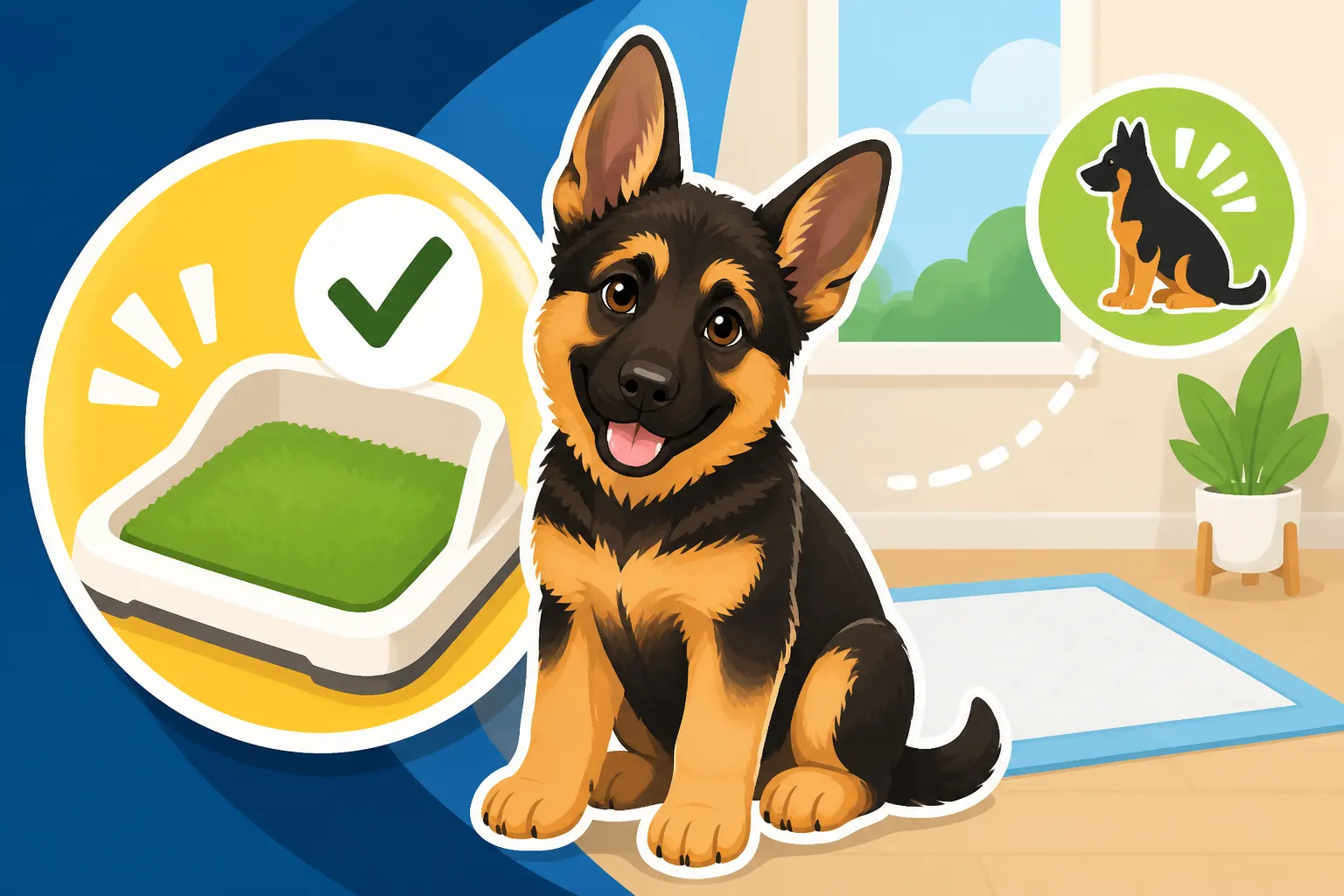
How to Potty Train a German Shepherd Puppy
Bringing a German Shepherd puppy home is an incredible joy, but let's be real: the excitement can quickly be overshadowed by the sheer amount of pee puddles and little "surprises" you find around the house. It's a frustrating, messy, and often overwhelming part of puppy ownership that makes you question if you're doing anything right. This comprehensive guide is here to walk you through the precise steps and patient strategies you need to successfully potty train your German Shepherd puppy, turning those frustrating accidents into distant memories.
Understanding Your German Shepherd Puppy’s Potty Habits
Potty training isn’t just about showing your puppy where to go; it’s about understanding their natural rhythms and helping them develop the physical control and mental association needed. German Shepherds are intelligent, but they’re still puppies, and puppies have very specific biological needs and learning curves when it comes to bladder and bowel control.
Puppy Bladder Control Development
Imagine trying to hold it when your bladder is tiny and your muscles aren’t fully developed – that’s your German Shepherd puppy’s reality. A young puppy, especially under 12 weeks, simply doesn’t have the physical capacity to hold their bladder for long periods. Their little bladders are small, and their sphincter muscles are still maturing. This is why you’ll often hear that puppies can generally hold it for about one hour per month of age. So, an 8-week-old puppy (2 months) might only be able to hold it for two hours, maximum. Pushing them beyond this limit is setting them up for failure and will only lead to more accidents indoors, which can be incredibly disheartening for both of you.
This biological reality means that frequent trips outside are non-negotiable in the early stages. It's not that your puppy is being defiant; it's purely a matter of physical limitation. As they grow, their bladder capacity increases, and their muscle control improves, allowing them to hold it for longer. Patience during this developmental phase is absolutely key, and understanding that they are still developing physically will help manage your expectations.
Recognizing Potty Cues
Your German Shepherd puppy will almost always give you signs that they need to go, but it’s up to us, their human companions, to learn their language. These cues can be subtle at first, especially if you’re not used to watching for them. Common signs include sniffing the ground intently, circling, whining, pacing, or suddenly stopping what they’re doing and looking restless. Some puppies might even walk towards the door, though this often develops after they’ve made the connection between the door and going outside to potty.
It’s crucial to be a diligent observer during these early weeks. If your puppy starts to exhibit any of these behaviors, it's time to act immediately, not wait a few minutes. Scoop them up (if they're small enough) or leash them quickly and rush them to their designated potty spot outside. The more quickly you respond to these cues, the faster your puppy will learn that signaling you leads to the desired outcome: an outdoor potty break. Learning to read your puppy's cues accurately will significantly reduce indoor accidents and reinforce positive associations with going outside.
Setting Up for Potty Training Success
Effective potty training is as much about setting up the right environment and routine as it is about teaching your puppy. Without the right tools and a well-thought-out plan, you’re going to be swimming upstream. Getting organized from day one will make the entire process smoother for everyone involved.
Choosing the Right Potty Spot
Designating a specific outdoor potty spot is incredibly helpful for consistency. Choose an area in your yard that’s easily accessible and relatively quiet. The idea is to create a predictable environment where your puppy knows exactly what they’re supposed to do when they get there. Always take your German Shepherd puppy to this *exact same spot* every single time you go out for a potty break. The consistency helps them build a strong association: “When I go to this spot, I need to empty my bladder and bowels.”
Avoid making the potty spot also a play area during potty breaks. While it might be tempting to toss a ball while you're out there, separate playtime from potty time initially. Your puppy needs to focus on the task at hand. Once they've successfully pottied, then you can reward them with a short play session or continue your walk. This clear distinction helps reinforce the purpose of the designated area, making the training much more efficient.
Essential Potty Training Supplies
Having the right gear ready before your German Shepherd puppy even sets a paw in your home can save you a lot of headaches. Firstly, a good quality enzymatic cleaner is non-negotiable. Standard cleaners might mask the odor for us, but a puppy’s keen nose can still detect lingering scent, which encourages them to potty in the same “accident” spot again. Brands like Nature’s Miracle or Rocco & Roxie are highly recommended and can be easily found on Amazon. These cleaners break down the urine at a molecular level, truly eliminating the odor and discouraging repeat accidents.
Beyond cleaners, consider a good leash and collar or harness for those frequent trips outside, especially when learning to Leash Train a German Shepherd Puppy. High-value treats are also crucial for rewarding successful potty breaks. These aren't just any treats; these are the super yummy, irresistible kind that your puppy only gets for doing something truly amazing, like going potty outside. Finally, puppy pads can be a useful tool if used correctly for containment areas or emergencies, but be cautious not to rely on them too heavily, as you want to transition your puppy to outdoor-only potty breaks as soon as possible.
Crate Training as a Potty Tool
Crate training is one of the most effective potty training aids you can employ with your German Shepherd puppy. The fundamental principle is that dogs naturally don’t like to soil their sleeping area. So, if their crate is appropriately sized – just big enough for them to stand up, turn around, and lie down comfortably, without extra space to potty in one corner and sleep in another – they will instinctively try to hold their bladder and bowels. This makes the crate a powerful tool for developing bladder control.
When your puppy is in their crate, you know they are likely holding it. This allows you to control when they have the opportunity to potty. The moment they come out of the crate, the very first thing you do is take them straight to their designated outdoor potty spot. This creates a strong positive association: "Crate time means holding it, and getting out of the crate means immediately going outside to potty." For a detailed guide, you can refer to our article on How to Crate Train a German Shepherd. Remember, a crate should never be used for punishment; it should be a safe, comfortable den for your puppy.
The Step-by-Step Potty Training Process
Consistency, patience, and positive reinforcement are the pillars of successful potty training. It’s not a race, and every puppy learns at their own pace. Following a clear, consistent routine will give your German Shepherd puppy the best chance at success.
Establishing a Consistent Schedule
The single most important element in potty training a German Shepherd puppy is a predictable schedule. Puppies thrive on routine, and a consistent schedule helps them understand when and where they’re expected to relieve themselves. Your schedule should include potty breaks immediately upon waking up, after every meal, after playing, before and after crating, and right before bedtime.
Here’s a sample schedule, keeping in mind that an 8-week-old puppy may need to go out every 1-2 hours while awake:
| Time | Activity | Potty Break? |
|---|---|---|
| 7:00 AM | Wake Up | YES |
| 7:15 AM | Breakfast | NO |
| 7:30 AM | Potty Break | YES |
| 7:45 AM – 8:30 AM | Playtime/Supervised Free Time | NO |
| 8:30 AM | Potty Break | YES |
| 8:45 AM | Crate Time/Nap | NO |
| 10:45 AM | Wake Up from Nap | YES |
| 11:00 AM | Playtime/Supervised Free Time | NO |
| 11:45 AM | Potty Break | YES |
| 12:00 PM | Lunch (for younger puppies) | NO |
| 12:15 PM | Potty Break | YES |
| 12:30 PM | Crate Time/Nap | NO |
| … (Continue every 1.5-2 hours) … | … | … |
| 9:00 PM | Last Meal/Water (stop water an hour before bed) | NO |
| 9:15 PM | Potty Break | YES |
| 10:00 PM | Final Potty Break/Before Bed | YES |
| 10:15 PM | Bedtime in Crate | NO |
Remember, this is a starting point, and you'll adjust as your puppy grows and gains more control. Sticking to a German Shepherd Puppy Feeding Schedule also helps regulate their bowel movements, making potty times more predictable.
Rewarding Successful Potty Breaks
Positive reinforcement is your best friend in potty training. When your German Shepherd puppy potties outside in the designated spot, it’s time for a party! Immediately, enthusiastically praise them with a happy tone (“Good potty!”), offer a high-value treat, and perhaps a quick, exciting play session if they’re up for it. The timing of this reward is critical: it must happen within a few seconds of them finishing their business. If you wait too long, your puppy won’t associate the reward with the act of going potty outside.
Avoid distractions during these crucial moments. Don't check your phone or chat with a neighbor. Your full attention should be on your puppy to ensure you catch them in the act and reward them promptly. This strong positive association teaches your puppy that going potty outside is incredibly rewarding and makes you happy, which in turn makes them more likely to repeat the desired behavior. Over time, the routine itself and the feeling of relief will become the reward, but those initial treats and praise are essential for building that foundation.
What to Do During an Accident
Accidents will happen, especially when you’re first learning How to Train a German Shepherd Puppy Week by Week. It’s inevitable. The crucial thing is how you react. If you catch your German Shepherd puppy in the act of having an accident indoors, immediately interrupt them with a sharp clap or a firm “No!” (without yelling or scaring them). Then, quickly but calmly, pick them up and carry them outside to their designated potty spot. The goal is to interrupt the behavior and redirect them to the correct location.
If they finish going potty outside, praise and reward them lavishly. If they don't, simply bring them back inside and watch them closely. If you discover an accident after the fact – say, you walk into a room and find a puddle – do not punish your puppy. They will not understand why you're upset; they won't connect your anger to an accident that happened five minutes ago. Punishment after the fact only teaches them to fear you or to hide their accidents, making training much harder. Simply clean the mess thoroughly with an enzymatic cleaner and resolve to supervise more closely next time.
Dealing with Potty Training Setbacks and Accidents
Even with the best intentions and a consistent routine, potty training can feel like two steps forward, one step back. Setbacks are a normal part of the process, but understanding how to address them effectively will keep you on track.
Cleaning Accidents Effectively
When an accident happens indoors, your response is critical not just for cleanliness but for preventing future mishaps. As mentioned, an enzymatic cleaner is your best friend. These cleaners contain enzymes that break down the uric acid crystals in urine, which are responsible for the lingering odor. If these crystals aren’t fully neutralized, your German Shepherd puppy’s powerful sense of smell can detect them, signaling to them that this spot is an acceptable place to potty again.
Start by blotting up as much of the urine as possible with paper towels or an old rag. Avoid rubbing, as this can spread the urine and push it deeper into carpets. Once the area is as dry as you can get it, liberally apply the enzymatic cleaner, making sure to saturate the area completely, as urine can spread further than what's visible on the surface. Let it sit according to the product's instructions, then blot it up or vacuum as directed. For hard surfaces, ensure the area is completely dry before your puppy has access to it again. Thorough cleaning removes the "scent marker" and helps break the cycle of repeat accidents.
Identifying Underlying Issues
If your German Shepherd puppy is having a lot of accidents despite your consistent efforts, it’s worth taking a step back to consider if there’s an underlying cause. First, rule out medical issues. A sudden increase in accidents, especially if accompanied by other symptoms like excessive drinking, straining, or lethargy, warrants a vet visit. Urinary tract infections (UTIs) are common in puppies and can make it difficult for them to hold their bladder. Other potential health issues like German Shepherd Pancreatitis Symptoms to Watch or even parasites can disrupt their digestive system and cause more frequent bowel movements.
If health issues are ruled out, look at your routine. Are you truly taking them out frequently enough? Is your supervision diligent enough? Are you rewarding enthusiastically enough? Sometimes, owners unconsciously give too much freedom too soon. Reassess your schedule and supervision; you might need to revert to a more intensive, frequent potty break schedule and even closer supervision, perhaps keeping your puppy on a leash attached to you (umbilical cord method) when not crated. This close supervision helps you catch cues and prevent accidents before they happen.
When to Seek Professional Help
Sometimes, despite all your best efforts, you might feel stuck or overwhelmed. This is perfectly normal, and there’s no shame in seeking professional help. A certified professional dog trainer or a canine behaviorist can observe your German Shepherd puppy’s behavior and your routine, identify specific challenges, and offer tailored advice. They can provide new strategies, help refine your timing, and give you the confidence boost you need to get through the tougher phases.
For instance, if your puppy develops specific anxieties around going outside, or if house-soiling becomes intertwined with other behavioral issues like German Shepherd Separation Anxiety Solutions, a professional can offer targeted interventions. Resources like online training programs, such as those offered by BAXTER & Bella, can also provide structured guidance and access to expert trainers, which can be invaluable for continuous support from the comfort of your home. Don't wait until you're completely frustrated; an early intervention can often make a significant difference.
Common Potty Training Mistakes to Avoid
Potty training can feel like a minefield of potential errors, but being aware of common pitfalls can help you steer clear of them. Avoiding these mistakes is just as important as implementing the correct strategies.
Punishing Accidents
This is perhaps the biggest and most damaging mistake you can make. Punishing your German Shepherd puppy for an indoor accident, especially if you find it after the fact, is counterproductive and harmful. Yelling, rubbing their nose in it, or hitting them only teaches them to fear you and to associate your presence with punishment. It does *not* teach them that going potty indoors is wrong. Instead, it teaches them to hide their bodily functions from you. They might start sneaking off to potty in hidden corners or behind furniture, making it even harder for you to catch them and redirect them.
Furthermore, punishment can damage the bond of trust you're trying to build with your puppy. They need to see you as their safe, guiding figure, not a source of unpredictable anger. Focus on positive reinforcement for desired behaviors (going outside) and proactive prevention (frequent trips, close supervision) rather than reactive punishment for mistakes. Remember, your puppy is still learning and physically developing; they're not trying to spite you.
Inconsistent Routines
Puppies, especially German Shepherds, thrive on routine and predictability. One of the quickest ways to derail potty training is through inconsistency. If you take your puppy out at different times each day, forget to take them out after a meal, or let them roam unsupervised for too long without a potty break, you’re sending mixed signals. Your puppy won’t be able to establish a clear pattern or understand what’s expected of them.
This means everyone in the household needs to be on the same page. If one family member is diligent with the schedule and rewards, but another is lax, the puppy will become confused. Make sure all family members understand the potty schedule, the cues to watch for, and the importance of prompt rewards. Write the schedule down, put it on the fridge, and stick to it as rigidly as possible, especially in the early weeks. This consistency helps to solidify the connection between the schedule, going outside, and the act of relieving themselves.
Rushing the Process
It’s easy to get frustrated and want your German Shepherd puppy to be perfectly potty trained overnight, but rushing the process is a common mistake. Potty training takes time, sometimes weeks or even months, especially for full reliability. Expecting too much too soon, such as leaving your puppy alone for hours, or giving them full run of the house before they’re reliably house-trained, will almost certainly lead to accidents. These setbacks can then prolong the training process and create bad habits.
Instead, embrace the journey. Gradually increase the time between potty breaks as your puppy demonstrates improved bladder control. Slowly expand their supervised access to different areas of the house, but only after they've consistently pottied outside for an extended period. Don't be afraid to take a step back if accidents start to increase. A slower, more methodical approach built on success will ultimately lead to a more reliably house-trained German Shepherd. Patience is truly a virtue here.
Advanced Tips for a Smooth Transition
Once your German Shepherd puppy is showing signs of reliability, it’s time to start thinking about cementing those good habits and preparing them for life as a fully house-trained adult.
Transitioning to Outdoor Only
If you’ve been using puppy pads as an intermediary step, the goal is to gradually phase them out. Start by moving the puppy pad closer and closer to the door over several days. Once it’s right by the door, you can try placing it just outside. Eventually, you’ll remove the pad entirely, relying solely on outdoor potty breaks. This transition needs to be gradual to avoid confusing your puppy.
For puppies that were initially trained with pads, be prepared for a period where they might still look for an indoor spot. Close supervision and immediate redirection to the outdoors, along with lavish praise for outdoor successes, will be vital. Remember that the ultimate goal is for your German Shepherd to understand that all potty business happens outside, regardless of whether there's a specific pad there or not.
Potty Training in Different Environments
A common challenge is when a German Shepherd is perfectly potty trained at home but has accidents when visiting new places, like a friend’s house or a hotel. New environments can be exciting and distracting, leading your puppy to forget their training or not recognize their usual cues. To prevent this, actively work on generalizing their potty training.
When you take your puppy to a new place, treat them like an un-potty-trained puppy again. Take them out very frequently, on a leash, directly to an appropriate outdoor spot. Praise and reward heavily for success. Watch their cues even more intently in unfamiliar surroundings. The more positive experiences they have going potty successfully in various locations, the more reliable they will become, understanding that the rule applies everywhere, not just in your backyard. This also applies when teaching them How to Train a German Shepherd Off-Leash in varied environments, ensuring they stay focused on you for cues.
Maintaining the Routine
Even after your German Shepherd puppy is reliably house-trained, it’s a good idea to maintain some semblance of a routine, especially concerning meal times and morning/evening potty breaks. While they won’t need to go out every couple of hours, a consistent morning and evening walk or yard visit for pottying helps regulate their system and prevents accidental slip-ups. As your German Shepherd grows, their needs will change, and understanding their typical German Shepherd Exercise Requirements will help integrate potty breaks into their daily activities.
Be mindful of changes in your dog's behavior. If your adult German Shepherd suddenly starts having accidents, it's usually a red flag that something is off, whether it's a health issue or a disruption in their routine. Never assume they are acting out of spite. Revisit your basics if necessary, and ensure that their physical and mental stimulation needs are being met, as stress or boredom can sometimes manifest as behavioral issues, including indoor accidents. Consistent care helps ensure a healthy, happy, and well-behaved German Shepherd for years to come.
Disclaimer
This article provides general information and recommendations for potty training German Shepherd puppies. Every puppy is an individual, and results may vary. Always consult with a qualified veterinarian or professional dog trainer for personalized advice regarding your specific dog’s health and training needs.