How to Trim German Shepherd Nails at Home
Let's be honest, trying to trim your German Shepherd's nails can feel like you're wrestling a small bear while simultaneously attempting intricate surgery. Many of us have experienced the sheer terror of hearing that infamous snip that was just a little too close, or the frustration of a dog who views a simple nail trim as the ultimate betrayal. This comprehensive guide is here to demystify the process, equip you with the right knowledge and tools, and help you establish a routine that keeps your German Shepherd comfortable and healthy, making nail care less of a battle and more of a bonding experience.
Understanding Why German Shepherd Nail Trimming is So Crucial
It's easy to overlook nail trimming or put it off, especially when your German Shepherd turns into a squirming, unhappy mess at the sight of the clippers. However, neglecting nail care is more than just an aesthetic issue; it can lead to significant pain, mobility problems, and even long-term health complications for your beloved companion. Their paws are their foundation, and keeping them in good condition is paramount.
The Dangers of Overgrown Nails
Imagine trying to walk around all day with shoes that are several sizes too small, constantly pushing your toes back. That's a bit like what an overgrown nail feels like for a German Shepherd. When nails grow too long, they start to curve under, putting unnatural pressure on the nail bed and the toe joints. This pressure can cause considerable discomfort and pain with every step, making walking, running, and playing less enjoyable and more of a chore.
Over time, chronically long nails can actually change your German Shepherd's gait. To avoid the pain, they might shift their weight, splaying their toes or walking on the backs of their paws more. This unnatural posture doesn't just look awkward; it can put immense strain on their ligaments, tendons, and joints, potentially exacerbating or even leading to conditions like arthritis or problems with their hips and elbows. For a breed already prone to issues like German Shepherd Hip Dysplasia Explained and German Shepherd Elbow Dysplasia: Symptoms and Treatment, maintaining proper paw health is an absolute must to prevent further strain. In severe cases, overgrown nails can even grow so long that they curl back into the paw pad, causing painful infections and making every step agonizing. This is why regular trimming is not just about looks, but about preserving their quality of life and preventing unnecessary suffering.
Anatomy of a German Shepherd's Nail
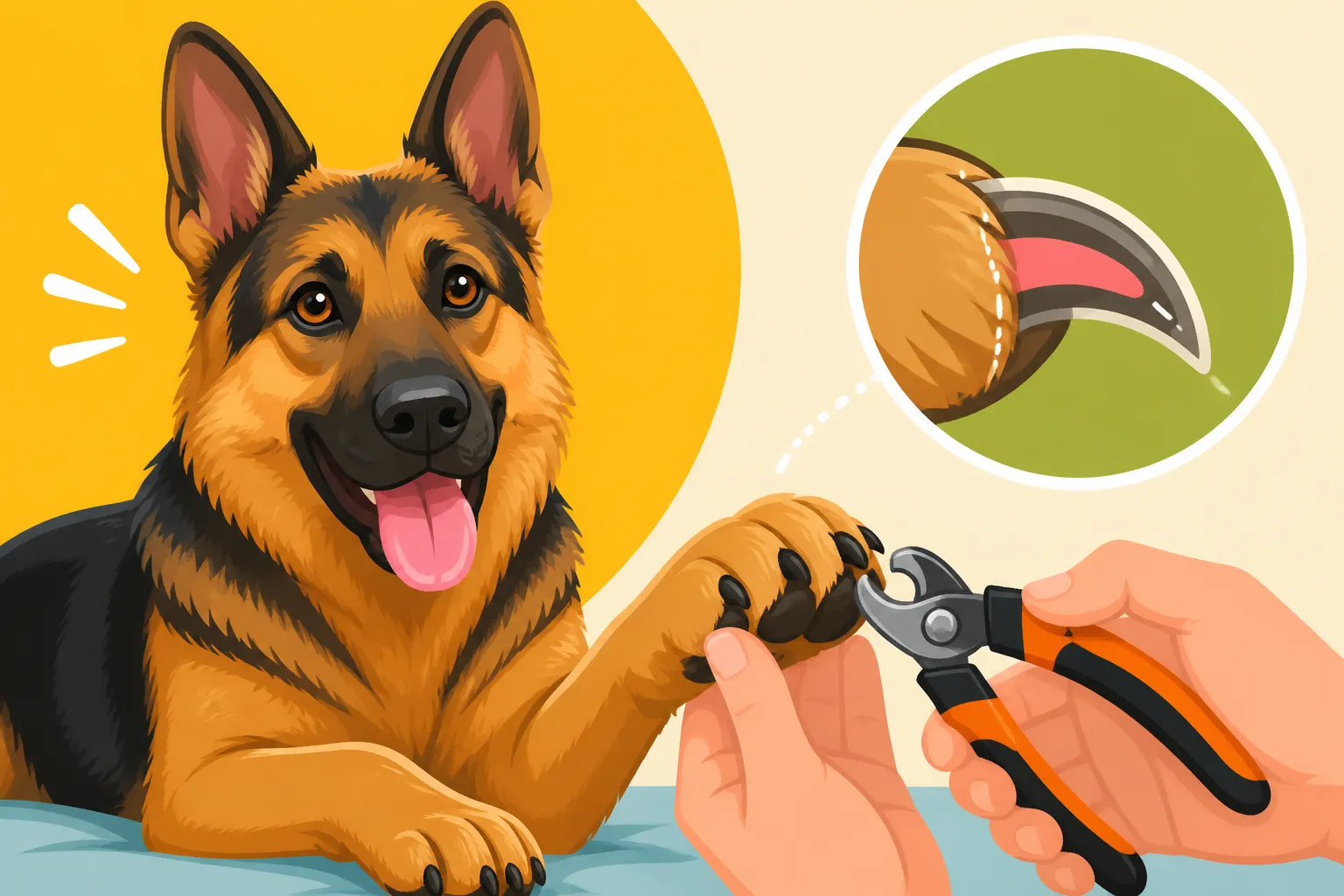
Before you even pick up the clippers, it’s essential to understand what you're working with. A German Shepherd’s nail isn't just a hard, keratinized shell; it's a complex structure. The outer part is the hard nail itself, but inside, there's a sensitive area called the "quick." The quick contains blood vessels and nerves, which is why it bleeds and hurts if cut. Think of it as the nail's living core.
The challenge, especially for many German Shepherds who have dark or black nails, is that the quick isn't easily visible. This can be incredibly intimidating, even for experienced owners. In lighter nails, you might see a pinkish area, indicating the quick. But with dark nails, it's often a guessing game, which is where many owners become hesitant. The quick grows with the nail, so if you rarely trim, the quick will lengthen, making it even harder to cut the nail back without hitting it. The goal with regular trimming is to gradually encourage the quick to recede, allowing you to cut the nail shorter over time without causing discomfort or bleeding.
Essential Tools for a Stress-Free Nail Trimming Session
Having the right equipment can make all the difference between a successful, calm trim and a wrestling match ending in frustration (for both of you!). Don't just grab the first clippers you see; consider what will work best for your German Shepherd's size, nail thickness, and temperament.
Choosing the Right Nail Trimmers
There are a few main types of nail trimmers, and each has its pros and cons for a robust breed like the German Shepherd.
- Guillotine-Style Clippers: These clippers have a small hole you insert the nail into, and a blade slices down. They are often popular for their ease of use, but they can be cumbersome for very thick German Shepherd nails and may not give the cleanest cut on all angles. Brands like Millers Forge offer reliable guillotine clippers.
- Scissor-Style Clippers (Resco or Plier-Style): These are often the preferred choice for German Shepherds because they resemble a sturdy pair of scissors, offering more leverage and control, which is essential for thick, strong nails. They come in various sizes, so make sure to get a large, heavy-duty pair suitable for a big dog. The scissor-style clippers from Safari or Epica are well-regarded options you can easily find on Amazon or Chewy. They allow you to see the exact angle of your cut more clearly than guillotine types.
- Nail Grinders (Dremel Tools): Many owners swear by grinders, especially if their German Shepherd is fearful of clippers or has dark nails where the quick is hard to see. Grinders file the nail down slowly, allowing you to remove small amounts at a time and avoid the quick. This method also smooths the nail, preventing sharp edges. The downside is the noise and vibration, which can scare some dogs initially, and the process generally takes longer than clipping. However, for a dog with German Shepherd Fearfulness or general anxiety about clipping, a quiet, cordless grinder can be a lifesaver. Dremel's own pet-specific grinders are a popular choice, and you can often find them at major online pet retailers.
Experiment to find what works best for you and your dog. Some owners even use a combination – clipping the bulk off with scissor-style clippers, then smoothing and refining with a grinder.
Quick-Stop Powder and Other Aids
No matter how careful you are, hitting the quick can happen, especially when you're just starting or if your German Shepherd suddenly pulls away. This is why quick-stop powder (also known as styptic powder) is an absolute non-negotiable item to have on hand every single time you trim nails.
Quick-stop powder contains agents that constrict blood vessels and clot blood quickly. If you accidentally nick the quick, immediately apply a pinch of the powder directly to the bleeding nail and apply pressure for a few seconds. It might sting a little, but it stops the bleeding effectively and prevents a messy, stressful situation. You can find brands like Kwik Stop or Miracle Care at any pet store or online. Having it ready means you can handle an oopsie calmly, which is crucial for not making your German Shepherd even more nervous about future trims.
Beyond styptic powder, consider other aids for a more positive experience:
- High-Value Treats: Think pieces of cooked chicken, cheese, or even a specialized treat like those from Ollie. These aren't just bribes; they are positive reinforcement that helps your German Shepherd associate nail trims with good things.
- Lick Mats: Smear some peanut butter (xylitol-free!) or plain yogurt on a lick mat and let your dog focus on that while you work. It's a great distraction technique.
- Muzzle: For dogs who are prone to nipping or are genuinely fearful and may try to bite, a properly fitted muzzle (like a basket muzzle that allows panting and treat-taking) can ensure everyone's safety without causing undue stress to the dog if introduced correctly.
- Non-Slip Surface: A rubber mat or a rug on a hard floor can help your German Shepherd feel more stable and secure, reducing anxiety.
Step-by-Step Guide to Trimming Your German Shepherd's Nails at Home
Now that you're armed with knowledge and the right tools, let's walk through the process itself. Patience, consistency, and positive reinforcement are your best allies here. Remember, your German Shepherd is intelligent and sensitive, so approach this with a calm demeanor.
Preparing for the Trim: Desensitization and Positive Reinforcement
This is arguably the most important step, especially for German Shepherds who are already wary of nail trims. You can't just spring the clippers on them and expect cooperation. Desensitization means gradually introducing the tools and the process in a non-threatening way, associating them with positive experiences.
Start small. For several days or even weeks before you attempt a full trim, simply handle your German Shepherd’s paws. Gently touch their toes, rub between their paw pads, and hold each individual nail. Do this for a few seconds, then immediately reward them with a high-value treat and verbal praise. Don't try to clip anything yet. Just get them used to having their paws manipulated.
Next, introduce the clippers or grinder. Don't use them, just let your dog see and sniff them. Place them on the floor near your dog while you give treats. Then, touch the clippers to their paws without actually clipping. If using a grinder, turn it on away from your dog so they hear the sound, then slowly bring it closer, rewarding them for remaining calm. The key is to go at your German Shepherd's pace. If they show signs of stress (tensing, pulling away, panting), back off and try again later with a less intense approach. This foundational work is crucial for building trust and making future trims easier. Consistency in this positive association will lay the groundwork for a lifetime of easier nail care, much like the gentle approach needed for German Shepherd Puppy Training Guide.
The Actual Trimming Process: Where and How to Cut
Once your German Shepherd is reasonably comfortable with having their paws handled and the tools present, you can begin the actual trimming. Find a quiet, well-lit area where you both feel relaxed. Having a helper can be invaluable, with one person holding and distracting the dog, and the other doing the trimming.
- Positioning: Have your German Shepherd lie down or stand, whichever is more comfortable for them and gives you better access. For front paws, gently lift one paw and stabilize it. For back paws, it can sometimes be easier if they are lying down or standing with their leg extended slightly backward.
- Identify the Quick (if possible): If your German Shepherd has clear or light-colored nails, you'll see the pinkish quick. You want to cut the white part of the nail, just before the quick begins. Aim for a 45-degree angle, with the cutting edge slightly higher than the bottom of the nail, following the natural curve of the paw.
- Small Snips: Don't try to take off too much at once, especially if you're unsure. It's always better to take off tiny slivers every few days than to risk cutting too deep. Make small, quick snips. If your dog has very long nails, you might only be able to take off the very tip initially. This is perfectly fine; consistency is key.
- Repeat for All Nails: Work through one paw at a time. If your dog gets stressed, take a break. You don't have to do all four paws in one session. Sometimes, just doing one nail per day, or one paw per day, can be more effective for a nervous dog. Remember to offer plenty of praise and treats throughout.
- Dewclaws: Don't forget the dewclaws (the "thumb" nails usually on the inside of the front legs). These don't touch the ground and don't wear down naturally, so they are particularly prone to growing too long and curling into the leg, which can be incredibly painful.
Dealing with Dark Nails: The "Flashlight Trick" and Grinding
Dark nails are the bane of many German Shepherd owners. Since you can't see the quick, the fear of causing pain is real. Here are some strategies:
- The "Flashlight Trick": For some dark-nailed dogs, if you shine a bright flashlight directly up through the underside of the nail, you might be able to see the shadowy outline of the quick. This isn't foolproof, but it can provide some guidance.
- "Clipping to the Curve": If you can't see the quick, look at the underside of the nail. As the nail grows, the quick will appear somewhat solid, but as you approach the end, the nail will thin out and become hollow or powdery-looking. Trim only to the point where the nail starts to thin and curl. Always err on the side of caution, taking off very small pieces.
- The "Sound Test" with Clippers: When clipping, listen to the sound. A crisp, clean snip usually means you're in the dead nail. If you hear a softer, more muffled sound, you're getting close to the quick.
- Grinding as a Primary Method: For dark-nailed German Shepherds, a nail grinder is often the safest and least stressful option. You remove tiny bits at a time. As you grind, watch the center of the cut nail. You'll initially see a whitish ring, then a darker circle as you get closer to the quick, and finally a tiny black dot (the actual quick). Stop before you see the black dot. Grind a little, check, grind a little, check. This allows the quick to recede over time.
- Frequency is Key: The more frequently you trim or grind (even if it's just tiny amounts every few days), the faster the quick will recede, making future trims easier and less risky. This also falls in line with general German Shepherd Dental Care Explained, where regular maintenance prevents bigger issues.
Common Challenges and Troubleshooting During Nail Trims
It’s unrealistic to expect every nail trim to go perfectly, especially with a strong-willed German Shepherd. You’re bound to encounter some resistance or accidents. Knowing how to troubleshoot these common issues can prevent them from snowballing into bigger problems.
My German Shepherd Hates Having Their Paws Touched
This is a very common scenario, and it can be incredibly frustrating. A dog that pulls their paw away, growls, or tries to nip is telling you they are uncomfortable or even fearful. The solution here isn't to force the issue, but to go back to basics with desensitization and counter-conditioning.
First, identify the root cause. Is it fear of the clippers? A previous bad experience? Or just a general aversion to paw handling? If it's the latter, you need to slowly rebuild trust. Start by just touching their shoulder, then moving down their leg, rewarding every step of the way. Don't even think about the nails yet. Focus on making any touch on their legs and paws a positive experience. This might take days, weeks, or even months of consistent, positive effort. Incorporate paw handling into your daily petting routine. While you're watching TV, gently massage their paws, give a treat, and release.
If the issue is specifically the clippers or grinder, introduce them gradually, just as outlined in the preparation section. Let the clippers be visible, then touch them to their body, then to their leg, then to a paw, all while showering them with treats and praise. Never force or punish your German Shepherd for their reaction. This will only reinforce their fear. Consider using high-value treats like freeze-dried liver or a lick mat smeared with peanut butter to distract them. For extremely anxious dogs, consulting with a professional dog trainer or veterinary behaviorist might be necessary. They can help you implement a tailored plan and possibly use tools like a calming wrap or prescribed anti-anxiety medication in severe cases. Remember, building confidence and trust is an ongoing process, much like effective How to Socialize a German Shepherd.
Accidentally Cutting the Quick: What to Do
The dreaded quicking incident. It happens to the best of us, and while it's certainly upsetting, it’s manageable. The immediate goal is to stop the bleeding and then manage your dog's emotional response.
If you cut the quick:
- Stay Calm: Your German Shepherd will react to your stress. Take a deep breath. A calm owner helps keep a dog calm.
- Apply Quick-Stop Powder: Immediately grab your quick-stop powder. Take a pinch between your fingers, apply it firmly to the bleeding nail tip, and hold it there for 10-15 seconds. The pressure helps, and the powder accelerates clotting. If you don't have quick-stop powder, cornstarch or flour can work as a temporary substitute, but they aren't as effective.
- Reassure Your Dog: Once the bleeding stops, gently praise your German Shepherd. Don't make a big fuss about the cut itself, but do offer comfort. A high-value treat can help associate even this unpleasant experience with a positive outcome, preventing lasting fear.
- Take a Break: Don't try to continue trimming immediately after a quicking incident. Give your German Shepherd a break, or even end the session entirely for the day. You can always try again later or the next day, focusing on positive, short sessions.
- Monitor: Keep an eye on the nail for the next day to ensure it doesn't start bleeding again or show signs of infection. Typically, a quicked nail heals quickly without issue.
Repeated quicking can make your German Shepherd extremely fearful of nail trims, turning it into a battle every time. By having your quick-stop powder ready and reacting calmly, you minimize the trauma for your dog and make it easier to resume regular nail care in the future. It's a key part of maintaining overall How to Keep a German Shepherd Healthy and managing their comfort.
Comparing Nail Trimming Tools for German Shepherds
Choosing the right tool is a personal preference, but this table can help you weigh the pros and cons of the most common options for German Shepherd owners.
| Tool Type | Pros | Cons | Best For | Common Brands |
|---|---|---|---|---|
| Scissor-Style Clippers | Excellent leverage for thick nails; good visibility for cutting angle; relatively quick. | Can accidentally quick if not careful; requires good technique; blade can dull over time. | Owners confident in their technique; dogs with thick nails that tolerate quick snips. | Safari, Epica, Resco, Andis |
| Guillotine Clippers | Easy to use for many; relatively affordable. | Less leverage for very thick GSD nails; may not give the cleanest cut; can be harder to see the quick. | Smaller dogs or GSDs with less dense nails; beginners with very calm dogs. | Millers Forge, Four Paws |
| Nail Grinder (Dremel) | Reduces risk of quicking; smooths nails; great for dark nails. | Noise and vibration can scare some dogs; slower process; needs desensitization; requires power source/batteries. | Fearful dogs; dark-nailed GSDs; owners seeking precision and smoothness. | Dremel (Pet Grooming Kit), Casfuy, LuckyTail |
Maintaining a Consistent Nail Care Routine
The biggest secret to stress-free German Shepherd nail trims isn't a magical tool or trick; it's consistency. Frequent, short sessions are far more effective than infrequent, long, and stressful ones. Aim to check your German Shepherd's nails weekly and trim or grind them every 2-4 weeks, depending on how quickly they grow and how active your dog is. If you hear their nails clicking on hard floors, it's definitely time for a trim!
A regular routine not only keeps the nails short and the quick receded, but it also reinforces positive associations with paw handling and the grooming tools. Integrating nail trims into a broader grooming and health routine, alongside practices like German Shepherd Ear Cleaning Guide or regular brushing, makes it feel less like a standalone ordeal. Think of it as another vital component of How to Keep a German Shepherd Healthy, right up there with exercise and a balanced diet. By making nail care a normal, positive part of your life together, you'll ensure your German Shepherd remains comfortable, healthy, and happy on all four paws for years to come.
Disclaimer
This guide provides general information and recommendations for trimming German Shepherd nails at home. Every dog is an individual, and what works for one may not work for another. Always prioritize your dog's safety and comfort. If you are unsure about any aspect of nail trimming, or if your German Shepherd shows extreme fear or aggression, please consult with your veterinarian or a professional dog groomer. They can provide personalized advice and demonstrations tailored to your dog's specific needs.