German Shepherd Schutzhund: Step-by-Step
Thinking about getting your German Shepherd involved in Schutzhund, or what's now officially known as IGP, can feel incredibly daunting. It's a sport steeped in tradition, demanding immense dedication, precision, and a deep understanding of your dog. Many aspiring owners feel overwhelmed by the sheer complexity and intensity of it all, wondering where to even begin with such specialized training. This comprehensive guide will meticulously walk you through the step-by-step journey of German Shepherd Schutzhund training, demystifying the process and equipping you with the knowledge to embark on this rewarding path with your canine partner.
Understanding Schutzhund (Now IGP): More Than Just a Dog Sport
When people hear "Schutzhund," images of powerful German Shepherds biting sleeves often come to mind. While that's certainly a part of it, the sport is so much more than just protection work. It's a comprehensive evaluation of a dog's intelligence, trainability, physical prowess, and stable temperament, demonstrating their utility and companionship.
What Exactly is IGP/Schutzhund?
Originally developed in Germany in the early 1900s, Schutzhund, which literally means "protection dog," was created as a breed suitability test for German Shepherds. The goal was to ensure that dogs used for breeding possessed not only physical soundness but also the mental fortitude, courage, and workability that define the breed. Over the years, the sport evolved, and in 2019, its official name was changed to IGP (Internationale Gebrauchshunde Prüfungsordnung), which translates to "International Utility Dog Trials." This change reflected a broader inclusion of working breeds beyond just German Shepherds, although GSDs remain its most prominent participants.
The essence of IGP lies in testing three distinct phases: tracking (Phase A), obedience (Phase B), and protection (Phase C). A dog must demonstrate proficiency in all three areas to earn a title. It's a true testament to the handler-dog bond, requiring both to work as a cohesive team. Think of it as a canine triathlon, where your dog needs to excel in various disciplines under pressure, all while maintaining absolute control and enthusiasm. It's not just about raw power; it's about intelligence, nerve, and unwavering loyalty.
Why German Shepherds Excel in This Sport
It's no accident that German Shepherds are the poster children for IGP. The breed was literally designed for this kind of work. Their inherent intelligence, coupled with a strong desire to please and a powerful prey drive, makes them exceptionally suited. A well-bred German Shepherd has a natural inclination towards tasks that involve problem-solving (like tracking), precision (like obedience), and a controlled display of protective instincts. They possess the physical strength and endurance to handle the demanding nature of the sport, and their keen senses are invaluable for tracking.
Beyond their physical and mental attributes, German Shepherds often exhibit a deep bond with their handlers, which is crucial for the high level of teamwork required. They thrive on having a "job" and excel when challenged. While other breeds like Belgian Malinois, Rottweilers, and Doberman Pinschers also participate and excel, the German Shepherd's balanced temperament, biddability, and iconic presence in the sport make them a perennial favorite. This is why when you look into the German Shepherd Breed Guide, you'll often see their working capabilities highlighted.
The Commitment Required
Let's be real – IGP training is not for the faint of heart, nor for those with limited free time or budget. It demands a significant commitment of both time and financial resources. You'll be spending many hours each week at the training field, often in all weather conditions, practicing and refining every minute detail. Early mornings for tracking, evenings for obedience and protection, and weekends for club training sessions are the norm.
Financially, the costs can add up. There are club membership fees, equipment (tracking lines, collars, leashes, chew toys, bite sleeves), potential travel expenses for trials or seminars, and the cost of high-quality food to fuel your working dog. Beyond that, you need a strong personal commitment to consistency and patience. There will be frustrating days, plateaus, and moments where you feel like you're not making progress. This isn't just a casual hobby; it's a lifestyle, and it requires a deep, unwavering passion for working with your German Shepherd. Understanding the Cost of Owning a German Shepherd Per Year will help you budget for the added expenses of specialized training.
Essential Foundations and Preparations for Your GSD
Before you even think about putting a tracking harness on your German Shepherd or having them engage with a bite sleeve, there are crucial foundational elements that need to be firmly established. Skipping these steps is like trying to build a house without a proper foundation – it's destined to crumble.
Health and Temperament: Non-Negotiables
First and foremost, your German Shepherd needs to be in peak physical condition and possess a stable, confident temperament. IGP is physically demanding, especially on joints. Reputable breeders will conduct German Shepherd Genetic Health Testing for conditions like hip and elbow dysplasia. You'll want to ensure your dog has clear health certifications like OFA (Orthopedic Foundation for Animals) or PennHIP. A veterinarian check-up before starting any strenuous training is non-negotiable.
Equally important is temperament. A dog for IGP needs to be confident, resilient, social, and possess strong nerves. They should not be fearful, overly shy, or overtly aggressive in an uncontrolled manner. While the protection phase utilizes a dog's natural drives, it must be controlled aggression, not fear-based reactivity. A good IGP dog is a pleasure to be around, both on and off the field, exhibiting a solid German Shepherd Temperament and Personality. If your dog shows signs of instability or fear, this sport is likely not suitable for them and could exacerbate existing issues.
Basic Obedience: The Stepping Stones
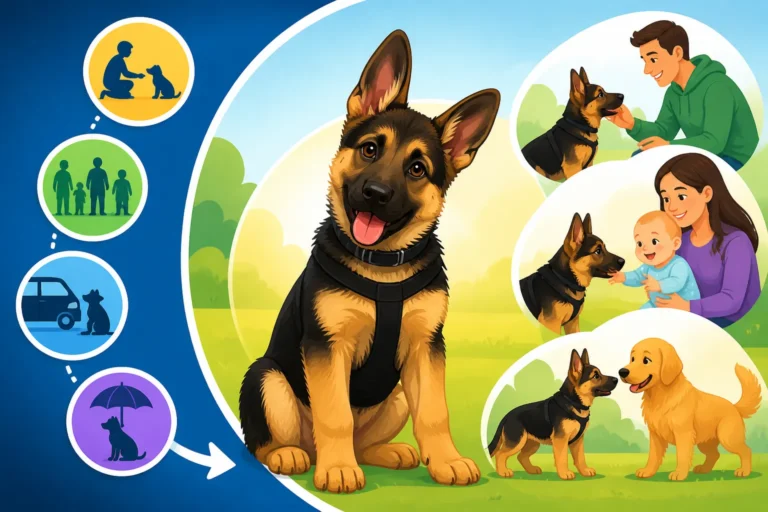
You wouldn't expect a child to run a marathon before they can walk, right? The same applies here. Before tackling the intricacies of IGP, your German Shepherd needs to have a rock-solid foundation in basic obedience. This means a reliable recall (coming when called), consistent leash manners, a focused "sit," "down," and "stay," and the ability to work calmly around distractions. These commands form the bedrock upon which all advanced IGP training is built.
Many aspiring IGP handlers start with a solid puppy training program, focusing on socialization and basic commands. Programs like those offered by BAXTER & Bella can provide an excellent online foundation for these critical early stages, setting your puppy up for success. Mastering these basics isn't just about passing a test; it's about building communication and control, which are absolutely essential when you introduce higher drives in protection work or complex tracking patterns. Think of it as developing a common language with your dog, one that will be vital as you progress through more challenging exercises. For a detailed start, check out our guide on German Shepherd Obedience Training Basics.
Finding the Right Training Club and Mentor
This is arguably the most critical step. IGP is not something you can effectively self-teach from YouTube videos. You need experienced mentorship. Look for an IGP club in your area. You can often find these through national organizations like the United Schutzhund Clubs of America (USCA) or local kennel club listings. Don't just show up; observe a few training sessions without your dog first. Watch how the trainers interact with the dogs and handlers. Are they patient? Do they use positive reinforcement methods, even when correcting? Is the atmosphere supportive and educational?
A good club will have experienced trainers who understand the nuances of the sport, can read dogs effectively, and provide structured, consistent guidance. They should also prioritize safety for both dogs and humans. Be wary of clubs or individuals that promise quick results, use harsh or abusive methods, or don't emphasize the importance of control and temperament. Your mentor should be someone who guides you patiently, celebrates your successes, and helps you navigate the inevitable challenges. This is a long-term commitment, and your club becomes your second family.
A Step-by-Step Breakdown of the Three Phases
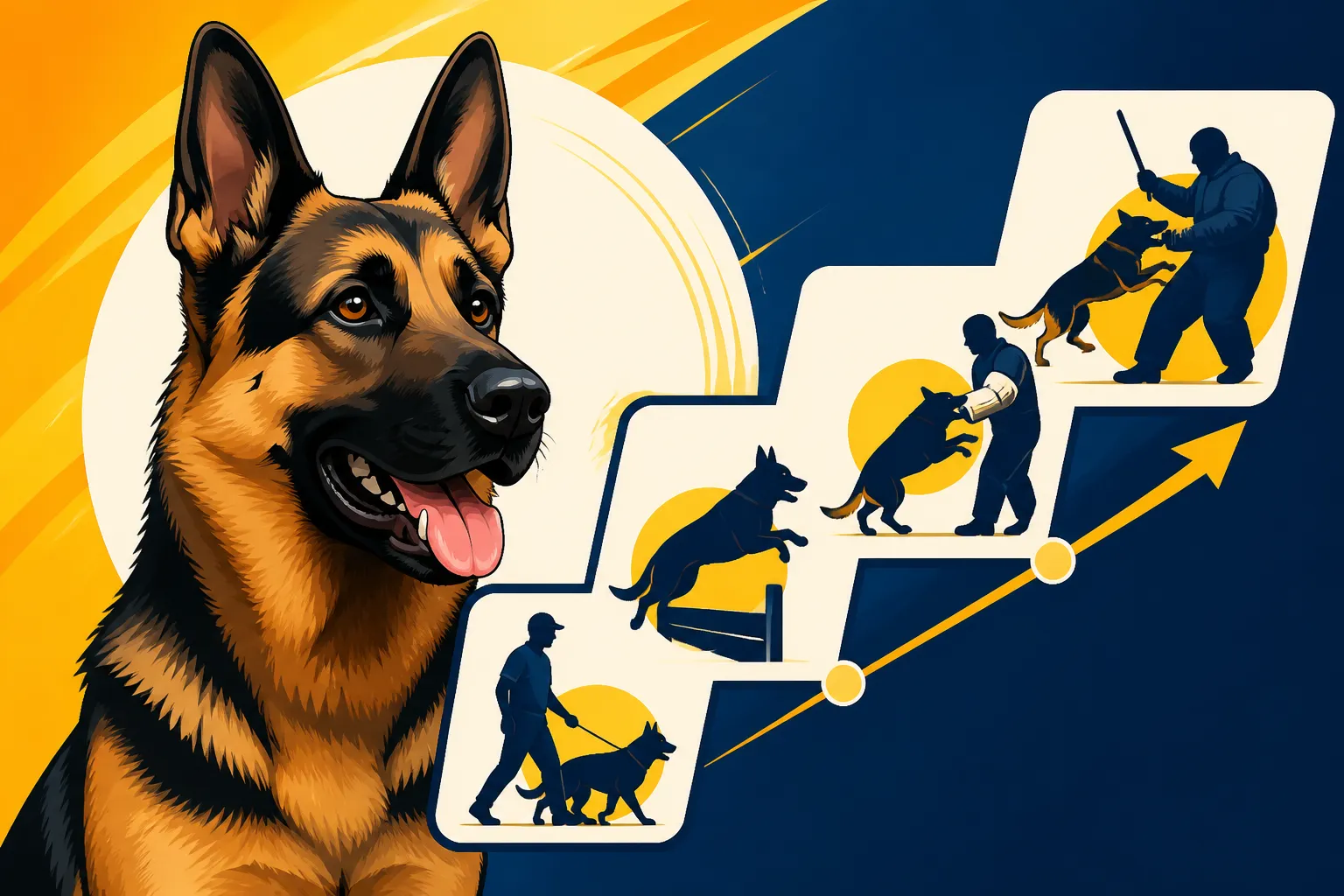
Once you've established the foundational health, temperament, and basic obedience, and found a reputable training club, you're ready to dive into the core of IGP training: the three phases. These are typically taught concurrently, with different focuses throughout the week, building skills progressively.
Phase A: Tracking – Following the Scent
Tracking is often the first phase introduced to young dogs because it taps into their natural instincts. It requires a dog to follow a human scent trail precisely and indicate articles (small, handler-placed objects) found along the way.
Step-by-Step Tracking Progression:
- Imprinting the Scent: Start with short, straight tracks, often just 10-15 steps, laid by the handler. The handler wears special tracking boots and places a favorite, high-value food reward at each footprint and at the end of the track. The dog is encouraged to put their nose down and eat the food, associating the handler's scent with a positive reward. This might sound simple, but it's about building a strong positive association.
- Introducing the Tracking Harness and Line: Once the dog understands the concept, introduce a tracking harness and a long, non-restrictive line (often 30-40 feet long). This equipment signals to the dog that it's "tracking time." The handler remains silent, letting the dog focus on the scent. Initially, the handler stays close behind, offering gentle guidance. You can find excellent quality tracking lines on Amazon to get started.
- Increasing Track Length and Age: Gradually, the length of the track is increased, and the "age" of the track (how long it sits before the dog tracks it) is extended. From minutes to hours. This teaches the dog to follow a fainter scent. Turns are introduced, slowly transitioning from soft curves to sharper 90-degree angles.
- Introducing Articles: Small, scent-impregnated articles (like pieces of leather, wood, or felt) are placed on the track. The dog is taught to "indicate" these articles by lying down or sitting directly over them. This is practiced consistently, ensuring the dog understands the importance of these finds.
- Adding Different Track Layers and Terrain: As the dog progresses, tracks are laid by different people (strangers), on various surfaces (grass, dirt, gravel), and through different environments, simulating real-world conditions. The goal is for the dog to follow any human scent, not just their handler's, and to maintain focus despite distractions.
- Preparing for Trials: For a BH-VT (Begleithund-Vorbereitungsprüfung), the preliminary tracking test, the dog follows a simple track laid by a stranger. For higher IGP titles, tracks become much longer, older, contain more articles, and have more turns. The dog is judged on their precision, diligence, and indication of articles. This is truly a beautiful demonstration of a dog's natural abilities and focus.
Phase B: Obedience – Precision and Control
The obedience phase is where your German Shepherd's precise responsiveness and willingness to work are truly tested. It goes far beyond basic commands, demanding unwavering attention, perfect execution, and enthusiastic performance, all off-leash and under intense scrutiny.
Step-by-Step Obedience Progression:
- Foundation with Leash and Motivation: Begin by perfecting all commands on a short leash, using positive reinforcement with high-value treats and toys. Build extreme value for the reward and the act of working with you. This is where a strong "come" (recall) is vital, as covered in How to Teach a German Shepherd to Come.
- Heeling Off-Leash (Free Heeling): This is the cornerstone. The dog must heel precisely by the handler's left side, shoulder parallel to the handler's knee, attentive to the handler's movements, without being prompted. This involves straight lines, turns, stops, and changes of pace. It's drilled endlessly, often with the help of a food lure initially, then fading to verbal praise and toy rewards.
- Sit, Down, and Stand in Motion: The dog must perform these commands quickly and precisely while the handler is moving, then remain in position as the handler walks away. The reliability of these commands is paramount, especially the long down-stay under distraction.
- Retrieve on Flat, Over Obstacle, and A-Frame: The dog learns to retrieve specific dumbbells (wood, metal) on command. This progresses from a flat retrieve to retrieving over a 1-meter hurdle and then over a 1.8-meter A-frame. This isn't just about bringing the object back; it's about a clean pick-up, immediate return, and a proper "out" (release) on command.
- Send Out: The dog is sent straight away from the handler for a significant distance (often 30-50 paces) and commanded to lie down immediately. This demonstrates control at a distance and the dog's ability to work independently yet responsively.
- Long Down Stay Under Distraction: This is often the most challenging part for many dogs. The dog must lie down and remain in position, completely still, while another dog performs its entire obedience routine just meters away. This tests nerves, focus, and unwavering control.
- Proofing and Generalization: All exercises are practiced in various environments, with increasing distractions (other dogs, people, sounds). The goal is for the dog to perform perfectly regardless of the external stimuli. Judges are looking for precision, enthusiasm, and a strong, joyful working relationship between dog and handler.
Phase C: Protection – Controlled Bravery
This is the most visually dramatic phase and often the most misunderstood. It's not about training an aggressive dog; it's about channeling a dog's natural drives (prey, fight, defense) into a controlled, sport-specific manner. The dog must demonstrate courage, strength, and confidence, coupled with absolute handler control.
Step-by-Step Protection Progression:
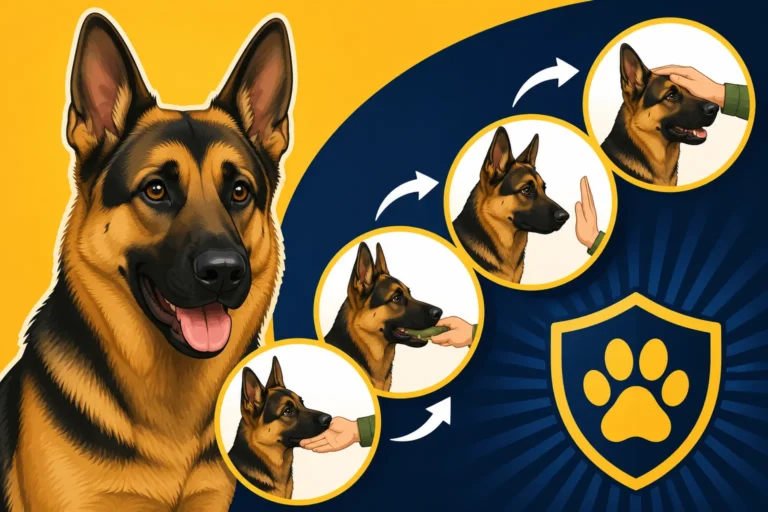
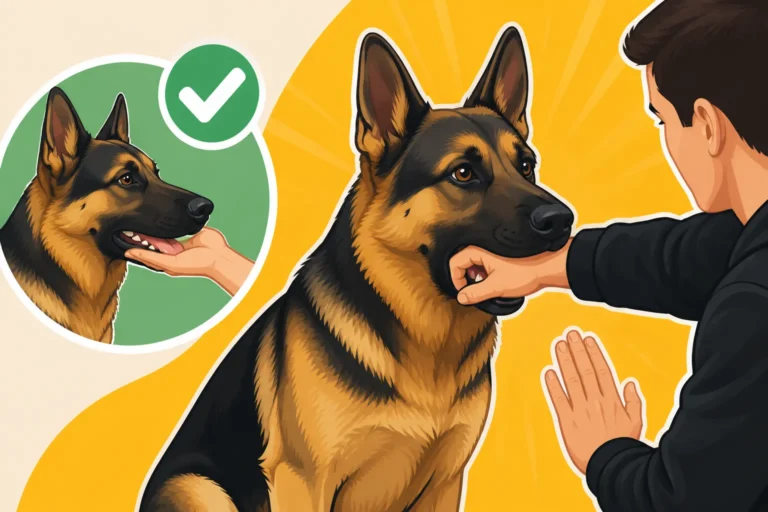
- Building Prey Drive with a Rag/Puppy Sleeve: Training starts with puppies, using a soft rag or small puppy sleeve. The goal is to build intense prey drive and confidence in biting. The "decoy" (the person wearing the bite equipment) plays with the dog, allowing them to bite and win the rag, building confidence and a love for the "game." This is critical for shaping safe and effective bite work, reinforcing German Shepherd Bite Inhibition: Step-by-Step early on.
- Transitioning to a Full Sleeve and Controlled Biting: As the dog matures and gains confidence, they transition to a full bite sleeve. The decoy teaches the dog where to bite (the sleeve, not the person), how to bite (full, firm grip), and, most importantly, when to let go on the handler's "out" command. The "out" command is paramount and practiced thousands of times.
- Courage Test (Attack on Handler): The dog protects the handler from a "threat" (the decoy). The decoy charges the handler, and the dog is sent to engage. This tests the dog's courage and defensive instincts.
- Send Out and Barking on Command: The dog is sent to locate the decoy hidden in a blind (a small, tent-like structure). Upon finding the decoy, the dog must "hold" them by barking actively, without biting, until the handler arrives. This tests discernment and controlled drive.
- Escorts and Transport: The dog escorts the decoy, walking closely and vigilantly, ensuring they don't escape. If the decoy attempts to escape or attack, the dog must intervene decisively and then release on command. This shows intense control and situational awareness.
- Long Attack (Courage Test): The most intense part for many. The decoy runs from a distance, and the dog is sent to intercept and engage. This tests the dog's speed, power, and courage under pressure. Again, the "out" command is crucial at the end of the engagement.
- Precision and Control: Throughout all protection exercises, the dog must be precise, powerful, and respond instantly to the handler's commands. There should be no uncontrolled aggression, no re-biting after an "out," and no hesitation when commanded to engage. This phase exemplifies the German Shepherd's incredible balance of power and control.
Advancing Through the Levels and Competition
The journey through Schutzhund/IGP is a progressive one, marked by various titles that demonstrate increasing levels of proficiency. It’s a marathon, not a sprint, and each step builds on the last.
The Various Titles and What They Mean
The first significant step for any German Shepherd aspiring to IGP is the BH-VT (Begleithund-Vorbereitungsprüfung), often simply called the BH. This is a foundational temperament and obedience test that all dogs must pass before moving on to higher IGP titles. It includes basic on-leash and off-leash obedience exercises, a long down-stay under distraction, and a public neutrality test where the dog must remain calm around crowds, traffic, and other dogs. Passing the BH is a significant achievement and shows your dog has the temperament and basic skills for more advanced work.
From there, the main IGP titles are IGP1, IGP2, and IGP3. Each number signifies an increasing level of difficulty and precision in all three phases (tracking, obedience, protection).
- IGP1: The entry-level title, requiring a specific number of points in each phase.
- IGP2: More complex tracking, longer obedience routines, and more challenging protection scenarios.
- IGP3: The highest and most demanding title, requiring mastery of all three phases, often with more difficult tracks, longer send-outs, and more intense protection work.
There are also other specialized titles, such as AD (Ausdauerprüfung), an endurance test where the dog must trot alongside a bicycle for a specific distance to prove its physical fitness. These titles are not just accolades; they are benchmarks of your dog's training and a testament to the strength of your partnership.
The Journey to Competition
Competing in IGP trials is the culmination of countless hours of training. Trials are held regularly by local clubs and are judged by certified judges who meticulously score each exercise. Every movement, every command, every response is under scrutiny. The scoring system is strict, with points deducted for imperfections, slow responses, or lack of enthusiasm.
Before entering a trial, your club mentor will guide you on when your dog is ready. It's not about perfection every single time, but consistency and a high level of reliability under pressure. The atmosphere at a trial can be intense, with other competitors, spectators, and the judges all creating a challenging environment. It's a test of both dog and handler nerves. Preparing for a trial involves not just physical training but also mental preparation – for both of you. You learn to manage your own stress and focus entirely on your dog. This journey is as much about personal growth and resilience as it is about your dog's performance.
Beyond the Title: Continued Growth and Bonding
Earning an IGP title, especially an IGP3, is an incredible accomplishment. But the journey doesn't necessarily end there. Many handlers continue to train and compete, striving for even higher scores, participating in regional or national championships, or even pursuing advanced levels of judging or decoy work. The beauty of IGP is that it's a lifelong sport. It offers a continuous path for learning, growth, and deepening the bond with your German Shepherd.
Even if you don't aim for the highest titles, the process of IGP training itself provides immense benefits. It gives your German Shepherd a purpose, fulfilling their innate desire to work and problem-solve. It provides essential physical and mental stimulation, contributing to a longer, healthier, and happier life, which is a key part of How to Keep a German Shepherd Healthy. The discipline, focus, and strong bond fostered through IGP training will translate into a wonderfully well-behaved and responsive companion in everyday life. It's a commitment, yes, but one that pays dividends in the form of an extraordinary partnership with your incredible German Shepherd.
IGP/Schutzhund Training Phases at a Glance
| Phase | Primary Focus | Key Exercises | Equipment | Evaluation Criteria |
|---|---|---|---|---|
| Phase A: Tracking | Scent discrimination, focus, precision | Following human scent, indicating articles | Tracking harness, long line, articles, tracking boots | Precision, diligence, scenting ability, article indication |
| Phase B: Obedience | Handler control, precision, enthusiasm | Heel work, sits/downs in motion, retrieves, send-out | Training collar, leash, dumbbells, hurdle, A-frame | Accuracy, speed, enthusiasm, handler-dog bond, response to commands |
| Phase C: Protection | Controlled aggression, courage, defense | Bark & hold, courage test, escorts, retrieve, out command | Bite sleeve, decoy, blind, flat collar | Courage, drive, control, grip, response to commands |
Disclaimer
The information provided in this article is for educational purposes only and is not a substitute for professional veterinary advice or certified dog training instruction. Always consult with a qualified veterinarian regarding your German Shepherd's health and with experienced, certified IGP trainers before beginning any Schutzhund/IGP training program. This sport is demanding and requires expert guidance to ensure the safety and well-being of both dog and handler.