How to Stop a German Shepherd Puppy from Biting
There's nothing quite like the boundless joy and affection of a German Shepherd puppy. Their floppy ears, clumsy paws, and unwavering loyalty capture our hearts from day one. But let's be honest, there's also the "land shark" phase – those needle-sharp puppy teeth that seem to find every bit of exposed skin, every pant leg, every piece of furniture. It’s frustrating, it hurts, and it can leave you wondering if you've brought home a tiny, adorable piranha. If you’re nodding along, feeling that familiar pang of bitten-finger pain, then this comprehensive guide is for you. We’re going to dive deep into understanding why your GSD puppy is biting and, more importantly, equip you with practical, empathetic, and effective strategies to gently teach them proper bite inhibition and stop the incessant nipping.
Understanding Why Your German Shepherd Puppy Bites
Before we can effectively address the problem, we need to understand its roots. Your German Shepherd puppy isn't biting to be malicious; they're simply acting on instinct and exploring their world in the only way they know how. It's crucial to approach this with patience and understanding, recognizing that their nipping is a natural, albeit uncomfortable, part of their development.
Natural Puppy Exploration and Teething
Imagine a baby, exploring everything by putting it in their mouth. Puppies are no different. From the moment they're born, their mouths are their primary tool for investigation. They use their mouths to interact with their littermates, their mother, and eventually, their human family and environment. This oral exploration is a fundamental part of learning about textures, pressure, and the world around them.
Adding to this natural exploratory behavior is the challenging phase of teething. Just like human babies, puppies experience discomfort as their baby teeth fall out and their permanent teeth erupt. This process typically starts around 3-4 months of age and can last until they're 6-7 months old. During this time, the urge to chew and bite becomes incredibly strong as it helps to relieve the pressure and soreness in their gums. They're seeking relief, and unfortunately, your hands and ankles might just be the most convenient chewing targets.
Play Biting and Communication
Puppies learn a great deal about bite inhibition from their littermates and mother. When puppies play together, they nip and mouth each other. If one puppy bites another too hard, the bitten puppy will yelp, stop playing, or even retaliate. This immediate feedback teaches the offending puppy to moderate the force of their bite – a crucial lesson known as bite inhibition. Their mother also plays a vital role, correcting overly enthusiastic biters with a growl or a gentle but firm nudge.
However, when puppies are separated from their littermates too early (before 8 weeks of age), or if they don't have enough appropriate play interaction with other puppies, they might miss out on these essential lessons. They simply haven't learned what constitutes "too hard" for a bite. They perceive your hands as just another playful object, not realizing that their sharp nips cause pain. It's our job as their guardians to step in and replicate those early lessons, teaching them that human skin is fragile and not a toy.
Overstimulation and Tiredness
Sometimes, your German Shepherd puppy's biting isn't purely about play or teething; it can be a clear signal that they are overtired or overstimulated. Think of a human toddler having a meltdown – they might lash out, get whiny, or become unusually difficult. Puppies exhibit similar behaviors. A sudden burst of "zoomies" followed by intense nipping often indicates that their little brains are overwhelmed and they need a break.
When they reach this point, their ability to self-regulate diminishes, and they may resort to instinctual behaviors like biting to cope. It's a common mistake for owners to try and "play it out" of them, but often, the opposite is needed. Recognizing these signs early can prevent escalation and help you guide your puppy towards a much-needed nap or a calm, quiet activity. Understanding these triggers is the first step in effective behavior modification.
Immediate Responses to Stop Puppy Biting in the Moment
When your German Shepherd puppy's needle teeth clamp down, your first instinct might be to pull away quickly or even yelp. While pulling away can sometimes make them bite harder because it mimics a chase game, a controlled "ouch" method can be incredibly effective. The key is consistency and ensuring every member of the household reacts the same way.
Teaching Bite Inhibition with the "Ouch!" Method
This method directly mimics how puppies learn from their littermates. When your puppy bites too hard, react immediately with a high-pitched "Ouch!" or "Yip!" – make it sound genuine, like you've been hurt. The crucial next step is to instantly withdraw your hand or body part and cease all interaction for a brief moment. Turn away, stand up, or even leave the room for 10-20 seconds. This teaches your puppy that hard bites make the fun stop.
The goal isn't to punish but to communicate. Your puppy wants to play and interact with you, and by removing yourself from the interaction, you're sending a clear message: "That bite was too hard, and now playtime is over." When you return, if they mouth you gently, praise them. If they bite hard again, repeat the "Ouch!" and disengage. Consistency is paramount. Every single time those teeth press too hard, the fun must stop. This teaches them to moderate their bite pressure, also known as their bite inhibition, which is a vital skill for a large breed like a German Shepherd. For more on handling puppy behavior, you might find our guide on German Shepherd Puppy Training Guide helpful.
Redirection with Appropriate Chew Toys
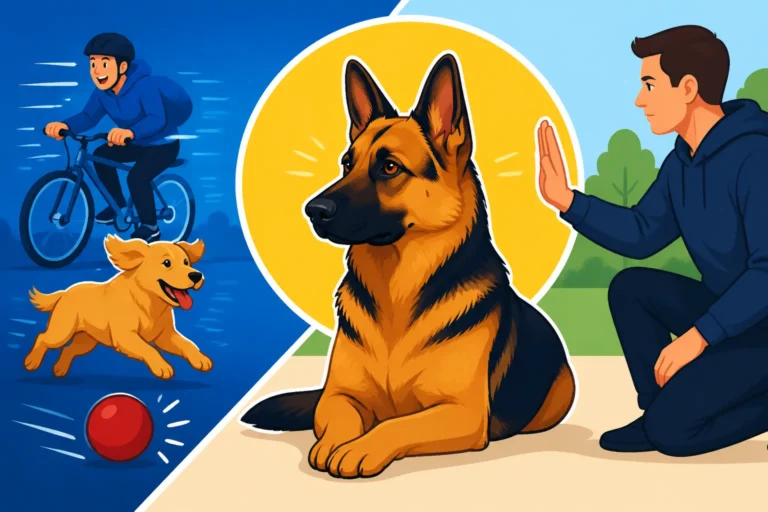
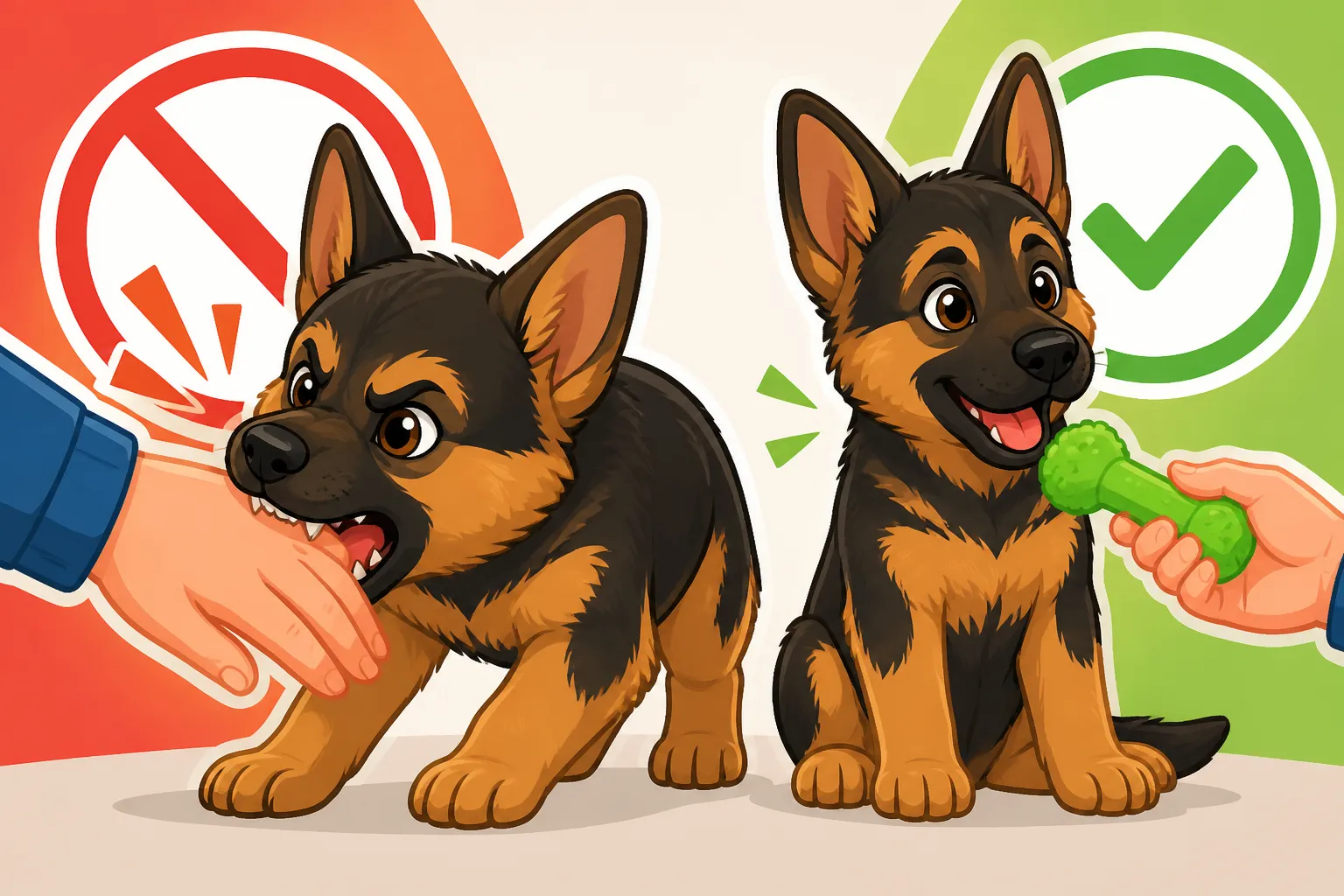
One of the most powerful tools in your arsenal against puppy biting is redirection. Your German Shepherd puppy has a natural, inherent need to chew, especially during teething. Instead of fighting this instinct, channel it towards appropriate outlets. Always have a variety of sturdy, puppy-safe chew toys readily available. When your puppy starts to mouth or nip at your hands, immediately offer them an acceptable chew toy.
Say "No bite!" in a firm but not angry tone, then immediately present the toy. As soon as their teeth connect with the toy, lavish them with praise ("Good chew!"). This teaches them what is acceptable to chew on. Different textures can be appealing, so rotate toys to keep them interesting. Durable rubber toys like KONGs (which can be stuffed with treats to increase their appeal) or hard nylon chew toys from brands like Nylabone are often great choices. You can easily find a wide selection of these on Amazon to satisfy your GSD's chewing needs. Remember, a puppy chewing on a toy isn't biting you, and that's a win!
Enforced Naps and Calm Spaces
As mentioned earlier, biting often escalates when a German Shepherd puppy is overtired or overstimulated. If your puppy is getting nippy, refusing redirection, and displaying other signs of being overly wound up – like intense zoomies, frantic play, or incessant barking – it's time for an enforced nap or a quiet period. Trying to train or correct a puppy in this state is often futile, as they're too tired to absorb lessons.
Lead them to their crate or a designated quiet, safe space. Provide them with a comforting chew toy or a lick mat, and allow them to settle down. A dark, quiet crate can often work wonders. Think of it as putting a cranky child down for a nap. After a good rest, they'll often emerge calmer, happier, and much more receptive to training and gentle play. Creating this positive association with their crate from an early age is also crucial, and our article on How to Crate Train a German Shepherd Puppy Fast offers valuable insights.
Proactive Training Methods for Bite Inhibition
Beyond immediate reactions, building a foundation of structured training and consistent rules will significantly help in curbing puppy biting. These methods aim to teach your German Shepherd puppy appropriate behavior and reinforce your role as their calm, consistent leader.
Incorporating Time-Outs and Reverse Time-Outs
When the "ouch!" method combined with redirection isn't quite cutting it, or if your puppy's biting is particularly persistent and enthusiastic, it’s time to escalate to time-outs. A time-out isn't a punishment in the harsh sense, but rather a consequence that removes what your puppy values most: your attention and interaction.
A reverse time-out is often more effective than trying to put the puppy in a time-out. When your puppy bites too hard, give your "Ouch!" signal, and then immediately remove yourself from the situation. Step over a baby gate, walk into another room, or simply turn your back and cross your arms. Wait for 10-20 seconds of calm, then return. If the biting resumes, repeat. This teaches your puppy that hard biting makes their favorite person disappear. For a traditional time-out, you'd calmly lead your puppy to their crate or a playpen for a very brief (20-60 second) cooling-off period after a hard bite, then release them once they are calm. The key is consistency and brevity; long time-outs lose their effectiveness.
Using Leash Training Indoors for Control
A simple house line or a lightweight leash attached to your puppy’s collar can be an invaluable tool for managing biting without resorting to physical force. This isn't for punishment, but for gentle guidance and control. If your German Shepherd puppy starts to get nippy while playing, you can gently use the leash to guide them away from your hands, redirect them to a chew toy, or lead them to their crate for a brief time-out.
Having a leash on in the house means you don't have to grab their collar or try to physically restrain them, which can sometimes escalate the biting. Instead, you have a safe, hands-off way to manage their movements. It's particularly useful when you're moving around the house and they decide your ankles are fair game. A quick, gentle lead away from the action, coupled with a firm "No bite" and redirection, can work wonders. This also lays the groundwork for more formal German Shepherd Leash Training: Step-by-Step down the line.
Seeking Professional Guidance or Online Training Programs
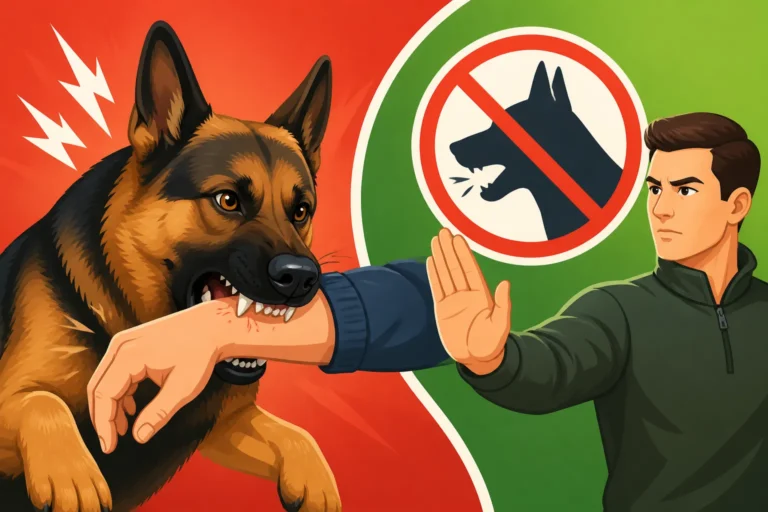
There are times when despite your best efforts, a German Shepherd puppy's biting can feel overwhelming or even concerning. If the biting seems excessively aggressive, if your puppy is drawing blood frequently, or if you're struggling to make progress, it’s absolutely okay to seek professional help. A certified professional dog trainer or a veterinary behaviorist can assess your puppy's specific situation, identify underlying causes, and provide tailored strategies.
Don't wait until the problem becomes severe, especially with a strong breed like a German Shepherd. Early intervention is always best. Many excellent online resources are also available. For instance, programs like those offered by BAXTER & Bella provide structured, step-by-step guidance through all aspects of puppy training, including bite inhibition, from the comfort of your home. They can be a fantastic resource for new owners looking for expert support and a community.
Managing Overstimulation and Environment for a Nipping Puppy
Sometimes, the solution isn't just about what you do when your puppy bites, but how you manage their environment and energy levels to prevent the biting from happening in the first place. A well-managed puppy is a less nippy puppy.
Consistent Training and Socialization
A well-trained puppy is generally a happier, more confident, and less prone to destructive behaviors like excessive biting. Consistent positive reinforcement training builds a strong bond between you and your German Shepherd and teaches them impulse control. Work on basic commands like "sit," "stay," "leave it," and "down." These commands help them learn to control their body and defer to your guidance.
Equally important is appropriate and varied socialization. Exposure to different sights, sounds, people, and other calm, vaccinated dogs helps your German Shepherd puppy develop into a well-adjusted adult. A puppy who is fearful or insecure may resort to nipping or biting as a defense mechanism. Positive experiences help build confidence and reduce anxiety, making them less likely to bite out of fear. Our guide on How to Socialize a German Shepherd provides a detailed roadmap for this crucial step.
Proper Exercise and Mental Stimulation
German Shepherds are intelligent, high-energy dogs. A bored or under-exercised German Shepherd puppy is a recipe for destructive behavior, and often, that includes biting. If their physical and mental needs aren't met, they will find their own ways to release that pent-up energy, and your hands might just become their impromptu wrestling opponent.
Ensure your puppy gets appropriate amounts of exercise for their age. For young puppies, this means multiple short play sessions and walks, rather than long, strenuous hikes that can harm developing joints. Equally important is mental stimulation. Puzzle toys, short training sessions, scent games, and learning new tricks can tire out a GSD's mind as much as physical activity. Check out our articles on German Shepherd Exercise Requirements and Best Mental Stimulation for German Shepherds for detailed ideas. A tired puppy is often a good puppy – and a less nippy one!
Avoiding Games that Encourage Biting
While playful roughhousing might seem harmless, certain games can inadvertently encourage your German Shepherd puppy to use their mouth on you. Tug-of-war is fine if played with rules (they must release on command, and their teeth should never touch your hand), but games like wrestling with your hands, letting them "mouth" your arm, or allowing them to playfully nip your clothing can quickly teach them that human body parts are acceptable targets for their teeth.
Always ensure that any game involving your puppy's mouth is directed towards an appropriate toy. If you're playing and their teeth accidentally (or purposefully) touch your skin, the game stops immediately. This clear boundary-setting is essential. Remember, what's cute and manageable in a small puppy can become a significant problem in an adult German Shepherd, a powerful breed that needs clear guidance.
Preventing Future Biting Issues
Stopping puppy biting is a journey, not a destination. The habits you instill now will shape your German Shepherd's behavior for their entire life. Continued vigilance and consistent reinforcement are key.
Continued Reinforcement and Generalization
Once your German Shepherd puppy has a good grasp of bite inhibition, don't stop reinforcing it. Continue to reward gentle mouthing with praise and attention, and consistently disengage if they revert to hard biting. The goal is to generalize this lesson so they understand that human skin is always off-limits for hard biting, regardless of the situation or who they are interacting with.
Practice polite greetings with guests, making sure your puppy approaches calmly without jumping up and nipping. Encourage gentle play with other dogs and introduce new people gradually. Every positive interaction reinforces good habits. Remember, consistency across all family members and visitors is crucial for your puppy to fully understand the rules. For more general training tips, see our guide on German Shepherd Basic Commands Every Owner Should Teach.
Understanding Development Stages and Potential Regression
Puppies go through various developmental stages, and sometimes, you might experience a bit of regression. Around the "teenage" phase (roughly 6-18 months), your German Shepherd might test boundaries, including their biting behavior. This is normal, but it's vital to stay consistent with your training and not let old habits resurface.
Just as they master one skill, they might temporarily forget another as their brain develops and they experience new hormones and social dynamics. Remain patient, reiterate the rules, and lean back on the techniques that worked during their younger puppy days. This is a time when reinforcing good behavior is more critical than ever. Being prepared for these phases can prevent frustration and keep you on track.
Creating a Safe and Stimulating Home Environment
A home environment that actively supports good behavior is fundamental to preventing future biting issues. Ensure your German Shepherd always has access to a variety of safe, appropriate chew toys. Regularly inspect toys for damage and replace them when necessary to prevent choking hazards. Keep valuable items, electrical cords, and anything else you don't want chewed out of reach. Puppy-proofing your home reduces opportunities for them to practice undesirable chewing behaviors.
Beyond physical items, create a predictable routine. Dogs thrive on routine, which provides a sense of security and reduces anxiety. Regular feeding times, potty breaks, exercise, and training sessions help create a balanced and calm dog. A well-adjusted German Shepherd puppy with appropriate outlets for their energy and instincts is far less likely to resort to biting out of boredom, frustration, or confusion.
Here’s a quick overview of biting solutions:
| Problem Type | Primary Solution | Secondary Solutions | Key Takeaway |
|---|---|---|---|
| Exploratory/Teething | Redirection to appropriate chews | Provide varied textures, frozen treats | Satisfy the natural urge to chew on right items. |
| Hard Play Biting | "Ouch!" & Disengage (Time-out) | Reverse time-out, short leash for control | Hard bites make the fun stop immediately. |
| Overstimulation | Enforced nap in quiet space | Provide comfort chew, gentle massage, quiet play | Learn puppy's signals for tiredness/overwhelm. |
| Boredom/Lack of Outlets | Increase mental/physical exercise | Puzzle toys, training sessions, varied walks | A tired, engaged puppy is a good puppy. |
| Fear/Insecurity | Positive socialization | Professional guidance, build confidence slowly | Address underlying fear, don't force interaction. |
Disclaimer
The information provided in this article is for general informational purposes only and is not a substitute for professional veterinary advice, diagnosis, or treatment. Always seek the advice of your veterinarian or other qualified animal health provider with any questions you may have regarding a medical condition or behavior issue.