German Shepherd Fear Aggression Explained
It's absolutely heartbreaking and incredibly frustrating to witness your beloved German Shepherd, a breed known for its courage and loyalty, suddenly displaying aggression rooted in fear. You might feel confused, maybe even a little scared, wondering where you went wrong or if your dog is somehow broken. Rest assured, you're not alone in this; fear aggression is a complex but manageable issue, and this guide is here to help you understand its origins and how to approach it with empathy and effective strategies.
Understanding German Shepherd Fear Aggression
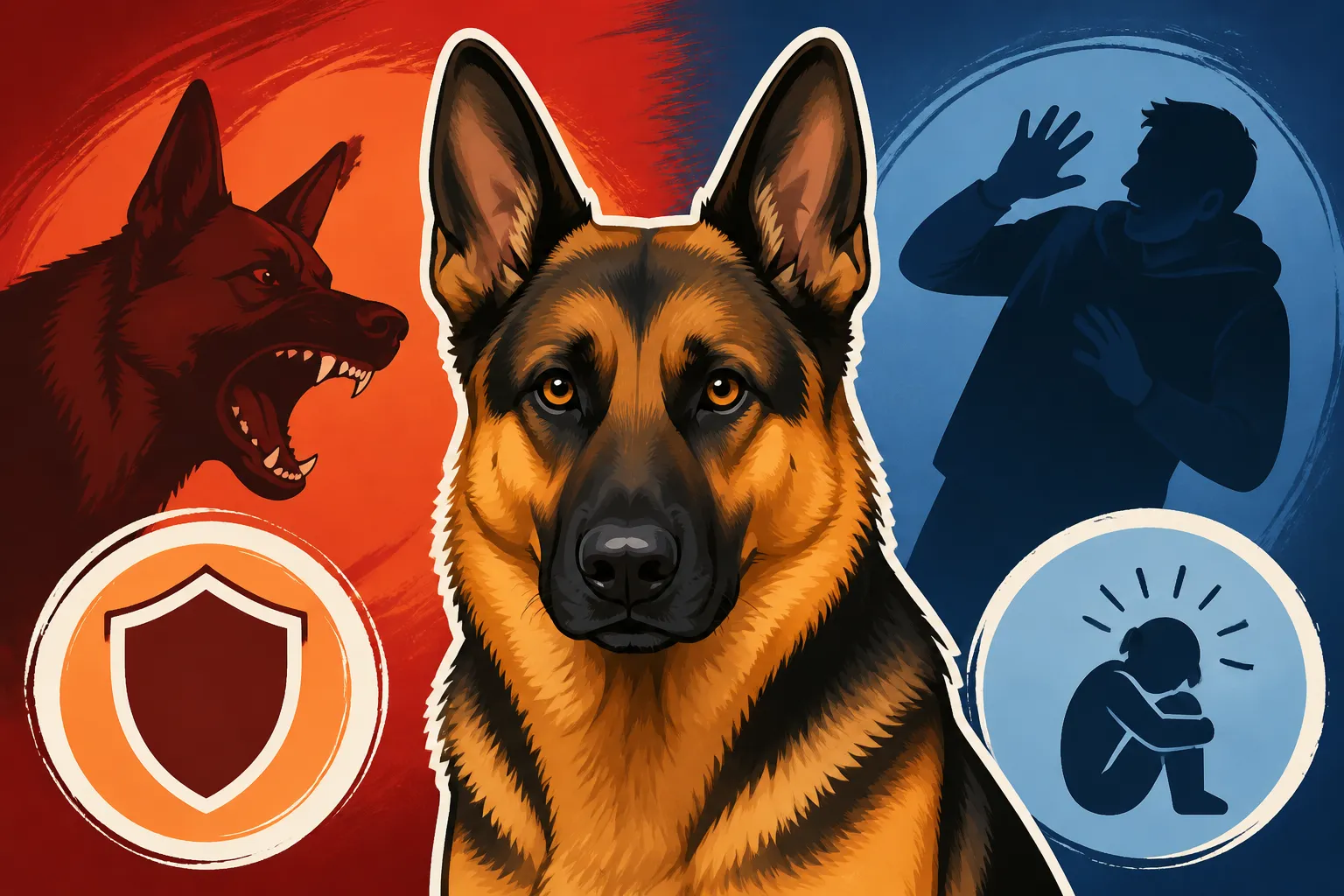
When we talk about fear aggression in German Shepherds, we're not just talking about a dog being "mean" or "dominant." This is a profound behavioral response where a dog perceives a threat and reacts aggressively because they genuinely feel cornered or unsafe. It’s a survival mechanism, really, often a last resort when a dog believes their other warning signals have gone unnoticed or ignored. For a breed as sensitive and intelligent as the German Shepherd, understanding this distinction is crucial to helping them overcome it.
What Fear Aggression Looks Like
Fear aggression isn't always a dramatic lunge and a bite. It often starts much more subtly, building up as the dog’s anxiety escalates. Imagine a scenario: your German Shepherd is walking in a park, and another dog, off-leash, comes bounding over. Your dog might first try to avoid eye contact, tuck their tail slightly, perhaps even try to move behind your legs. If the other dog continues to approach without your dog having an escape route, those subtle signals can quickly escalate to growling, barking, lunging, snapping, or even a bite. It's their way of saying, "Please go away! I'm scared!" because they don't feel they have any other option.
It’s important to differentiate this from other types of aggression. For instance, a German Shepherd might display territorial aggression if someone approaches their home, or possessive aggression over a toy. While these are also challenging, fear aggression stems from a fundamental feeling of vulnerability, not from a desire to control resources or space. Recognizing the underlying emotion – fear – is the first step toward effective intervention.
Why Fear Aggression Develops in German Shepherds
Pinpointing the exact cause of fear aggression can be like untangling a complex knot, as it’s often a combination of factors rather than a single trigger. However, understanding the common culprits can shed light on your own dog’s situation and guide your approach.
Genetic Predisposition and Early Experiences
Genetics play a significant role in a German Shepherd's temperament. If a dog comes from a lineage where parents or grandparents exhibited nervousness, anxiety, or reactivity, there’s a higher chance those traits could be passed down. This isn't to say a fearful pup is doomed, but it means they might require more careful, consistent socialization and confidence-building from an early age.
Beyond genetics, a German Shepherd puppy's early experiences are incredibly formative. Puppies who miss out on critical early socialization during their sensitive periods (roughly 3 to 16 weeks of age) are much more prone to developing fear-based issues. This includes exposure to a wide variety of sights, sounds, people, and other dogs in a positive and controlled way. A pup confined to a kennel or backyard, or one exposed to traumatic events early on, may develop a deeply ingrained fear of the world around them. This is why a thorough German Shepherd Puppy Training Guide and careful socialization are so paramount.
Traumatic Events and Ongoing Stressors
Even a well-socialized German Shepherd can develop fear aggression if they experience a significant trauma. This could be something as obvious as being attacked by another dog, being hit by a car, or even a series of less dramatic but consistently negative interactions. Imagine a German Shepherd who is repeatedly startled by loud noises or who has had multiple uncomfortable experiences at the vet's office; these can chip away at their confidence and build up into a fear response.
Ongoing stressors also contribute. A dog living in a chaotic household, experiencing frequent changes, or not getting adequate physical and mental stimulation might exist in a perpetual state of low-level anxiety. For a breed like the German Shepherd, who thrives on routine, purpose, and strong leadership, chronic stress can exacerbate any underlying fearfulness and eventually manifest as aggression. This highlights the importance of meeting their German Shepherd Exercise Requirements and providing Best Mental Stimulation for German Shepherds.
Recognizing the Early Signs of Fear Aggression
One of the most crucial aspects of managing fear aggression is learning to read your German Shepherd's body language. Dogs communicate constantly, but humans often miss the subtle signals, only noticing when the behavior has escalated to a growl or a snap. By understanding these earlier cues, you can intervene before your dog feels compelled to resort to aggression.
Subtle Cues and Escalating Signals
A dog's body language is a spectrum, not an on-off switch. Before a full-blown aggressive display, your German Shepherd will likely give off a series of "calming signals" or signs of discomfort. These can include:
- Lip licking: Not after food, but seemingly out of context.
- Yawning: Also out of context, not because they’re tired.
- Head turning or looking away: An attempt to disengage or avoid confrontation.
- Panting (without exertion): A sign of stress.
- Tail tucked: Especially between the legs.
- Ears flattened or pinned back: Indicates anxiety or fear.
- Stiffening of the body: A tense posture, often preceding a lunge.
- Hackles raised: Hair standing up along the spine, a clear sign of arousal and often fear.
- Whale eye: When the whites of their eyes are visible, indicating stress.
- Cowering or trying to hide: Seeking refuge from the perceived threat.
If these early signals are ignored, the dog may escalate to growling, barking, showing teeth, snapping, and eventually biting. The key is to recognize these signs and act immediately to remove your dog from the stressful situation or to create more distance from the trigger. The more you understand Understanding German Shepherd Behavior, the better you can read these cues.
| Fear Signal (Early) | Behavior | Interpretation |
|---|---|---|
| Avert Gaze / Head Turn | Dog turns head away, avoids eye contact. | "I don't want conflict; I'm trying to be non-threatening." |
| Lip Licking | Quick lick of the nose/mouth, often when no food. | "I'm feeling anxious or uncomfortable." |
| Yawning | Slow, deliberate yawn, not sleepy. | "I'm stressed, trying to self-soothe or signal appeasement." |
| Cowering / Retreating | Body lowered, tail tucked, trying to move away. | "I want to escape; I'm feeling vulnerable." |
| Trembling / Shaking | Visible shaking, especially in new or loud environments. | "I'm highly anxious or frightened." |
| Panting (no exercise) | Rapid, shallow breathing when not hot or active. | "My stress levels are elevated." |
| Stiff Body / Freezing | Motionless, tense posture, sometimes with wide eyes. | "I'm highly uncomfortable, preparing for a fight or flight." |
| Whale Eye | Whites of eyes visible at the corners. | "I'm stressed and potentially feeling threatened." |
It's also worth noting that some German Shepherds might have a history of being punished for growling or barking. While these behaviors can be startling, they are crucial communication tools. A dog that has been punished for growling might skip these warning signals entirely and go straight to a bite, which is far more dangerous. It’s vital to understand that your dog isn't trying to be "bad"; they're trying to communicate their distress.
Managing and Modifying Fear Aggression
Addressing fear aggression in your German Shepherd requires a multi-faceted approach, patience, and often, professional guidance. There's no quick fix, but with consistent, positive methods, you can significantly improve your dog's confidence and quality of life.
The Importance of Professional Guidance
Let's be very clear: if your German Shepherd is displaying fear aggression, especially if it involves lunging or biting, your very first step should be to consult with a qualified professional. This isn't a problem to tackle alone. Look for a certified professional dog trainer or a veterinary behaviorist who specializes in aggression. They can accurately assess your dog's specific triggers, develop a tailored modification plan, and ensure you're implementing techniques safely and effectively. Trying to "fix" aggression with outdated or punishment-based methods can make the problem much, much worse, reinforcing your dog's fear and potentially making them more dangerous. When searching, prioritize those who use positive reinforcement and force-free methods. Finding a good professional is as important as choosing a good vet for routine care; you might find resources on how to choose a qualified professional by researching topics like How to Choose a Vet for a German Shepherd.
Safety Protocols and Management Strategies
Before you even begin behavior modification, safety is paramount for everyone involved – your dog, your family, other animals, and the public.
- Avoid Triggers: The most immediate step is to identify your dog’s triggers (e.g., strangers, children, other dogs, certain sounds) and meticulously avoid them as much as possible. This means no dog parks, no crowded public places, and carefully managed interactions at home.
- Leash and Muzzle Training: A well-fitting muzzle is not a punishment; it's a vital safety tool for dogs with bite histories or those prone to aggression. Start muzzle training positively, associating it with treats and praise, long before you need it in a stressful situation. You can find comfortable, high-quality muzzles on platforms like Amazon. Always use a strong, secure leash and harness, preferably a front-clip harness, for better control.
- Creating a Safe Space: Ensure your German Shepherd has a designated safe space in your home, like a crate or a quiet room, where they can retreat and feel secure. This is particularly important if your home environment itself can be a trigger for stress.
Behavior Modification Techniques
Once safety is managed, the real work of behavior modification can begin. The goal is to change your dog's emotional response to their triggers from fear to neutrality or even positive anticipation.
Desensitization and Counter-Conditioning
This is the cornerstone of fear aggression treatment.
- Desensitization: Gradually exposing your dog to the trigger at a distance or intensity where they don't react fearfully. If their trigger is other dogs, you might start by simply watching dogs from afar, where your German Shepherd is calm and relaxed.
- Counter-Conditioning: Changing your dog's emotional response by associating the trigger with something highly positive. Every time the trigger appears (at a safe distance), immediately give your dog high-value treats or praise. The goal is for your dog to eventually see the trigger and think, "Yay! Good things happen when that appears!" This process takes time and consistency. For example, if your dog is fearful of strangers, you might start with a specific "stranger" (a friend they don't know well) standing far away, and you reward your dog calmly. Slowly, gradually, over weeks or months, the distance can be reduced. For more general behavior issues, you can learn more by looking into German Shepherd Behavior Problems and Solutions.
Building Confidence
A confident dog is less likely to be a fearful one.
- Obedience Training: Basic obedience commands build structure and confidence. A dog who understands what's expected of them feels more secure. Consistent, positive reinforcement training for commands like "sit," "stay," and a solid "recall" can be incredibly empowering for both you and your dog. You can explore a German Shepherd Obedience Training Basics guide for detailed steps.
- Enrichment: Providing plenty of mental stimulation through puzzle toys, scent work, and varied walks can significantly reduce overall stress and anxiety. Engaging their intelligent minds helps them focus on positive activities rather than their fears.
- Positive Experiences: Deliberately seek out opportunities for your dog to have positive, low-stress experiences. This might mean quiet walks in secluded areas, playing fetch in your yard, or controlled, positive interactions with one very calm, dog-friendly dog (only if appropriate and guided by a professional).
Remember, consistency is absolutely key. Every interaction is a training opportunity, and every step, no matter how small, is progress. It’s a marathon, not a sprint, but the bond you build through this process, and the peace of mind of having a more confident companion, is truly priceless. If you have a puppy, even exploring online programs like BAXTER & Bella can help establish a strong foundation of positive reinforcement and early confidence building that can help prevent fear aggression from developing.
Disclaimer
This article is for general informational purposes only and does not constitute professional advice. Laws, prices and regulations vary by location and change over time. Consult a qualified professional for guidance on your specific situation.