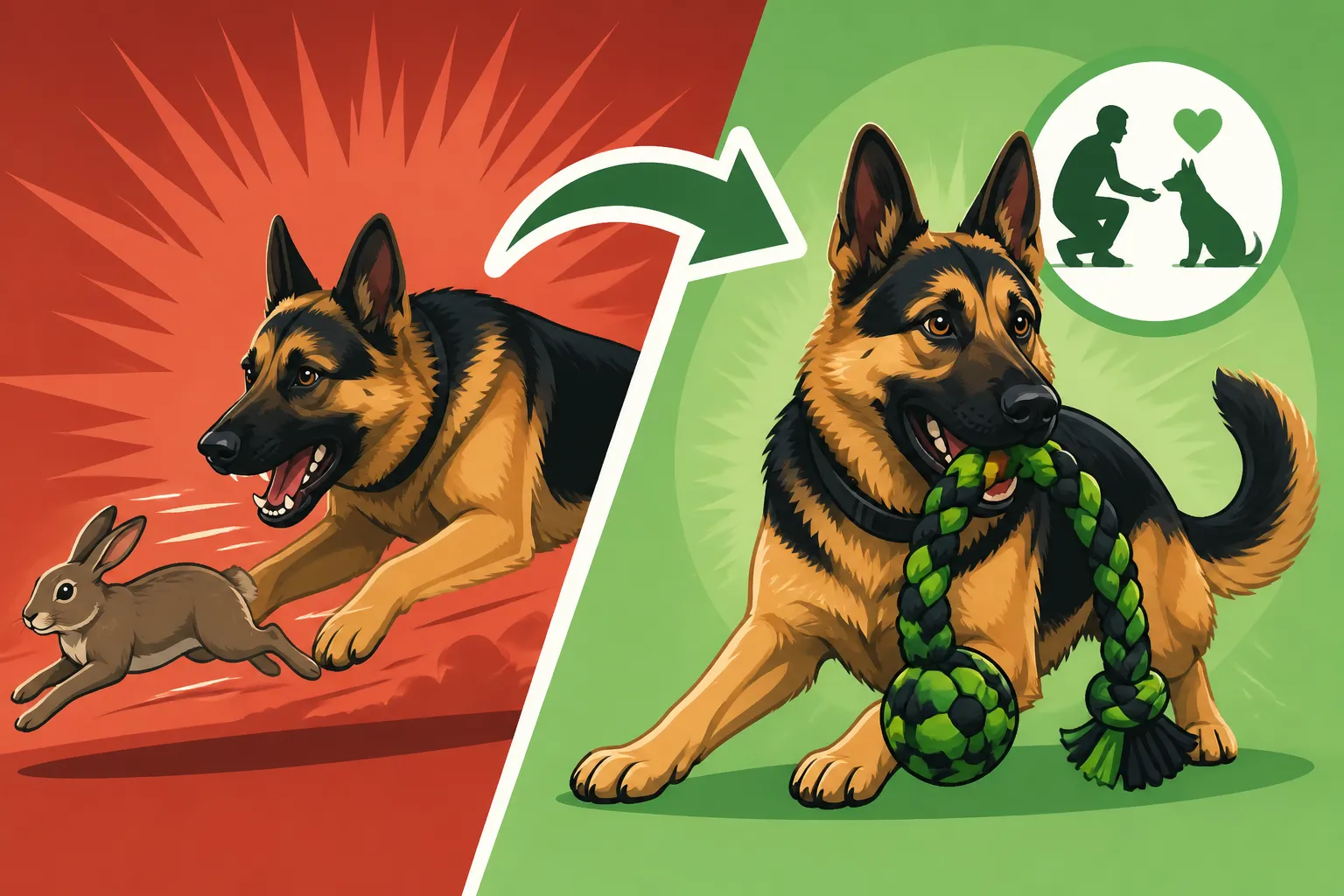
How to Redirect German Shepherd Prey Drive
Living with a German Shepherd who has a strong prey drive can feel like a constant battle against their instincts. You're out for a peaceful walk, and suddenly a squirrel darts across the path, or a neighborhood cat appears, and your calm companion transforms into a lunging, barking, uncontrollable force. It's frustrating, often embarrassing, and sometimes even dangerous for your dog and others. This comprehensive guide is here to help you understand your German Shepherd's prey drive and, more importantly, equip you with the practical strategies and training techniques needed to safely and effectively redirect that powerful instinct into acceptable outlets.
Understanding the German Shepherd Prey Drive
First things first, let's acknowledge that prey drive isn't a "bad" thing. It's a deeply ingrained, natural instinct for many dog breeds, especially working breeds like the German Shepherd. These dogs were bred for herding, protection, and police work, all of which require a keen sense of observation, swift pursuit, and a strong drive to engage. Their ancestors hunted for survival, and while our modern companions don't need to, the instinct remains.
What Exactly is Prey Drive?
Prey drive is a sequence of behaviors that dogs exhibit when encountering something they perceive as prey. This sequence typically includes orienting (spotting the "prey"), eye-stalking (focusing intently), chasing, grabbing/biting, and potentially dissecting/consuming. For many German Shepherds, this sequence might stop at the chase, or they might try to grab and shake a toy or an animal, but the core components are there. It's not about malice; it's about instinctual responses to movement, sound, and scent.
Think about it this way: your German Shepherd sees a rabbit bolt across the yard. The rabbit's sudden movement triggers an immediate, almost involuntary surge of adrenaline and focus. They might go from calmly sniffing a bush to a full-on sprint in a fraction of a second. This isn't them being disobedient; it's their biology taking over. Understanding this helps us approach the issue with empathy and the right training mindset, rather than simply trying to "punish" an instinct. You can learn more about this natural inclination in our detailed guide on the topic, specifically about German Shepherd Prey Drive Explained.
Why German Shepherds Have a Strong Prey Drive
The German Shepherd breed was developed in Germany in the late 19th century by Max von Stephanitz with the explicit goal of creating a versatile working dog. Their original purpose was herding sheep, which demanded vigilance, intelligence, and the ability to control livestock through a strong presence and chase drive. Over time, their utility expanded to military, police, and service work, all roles that capitalize on their innate drives, including prey drive.
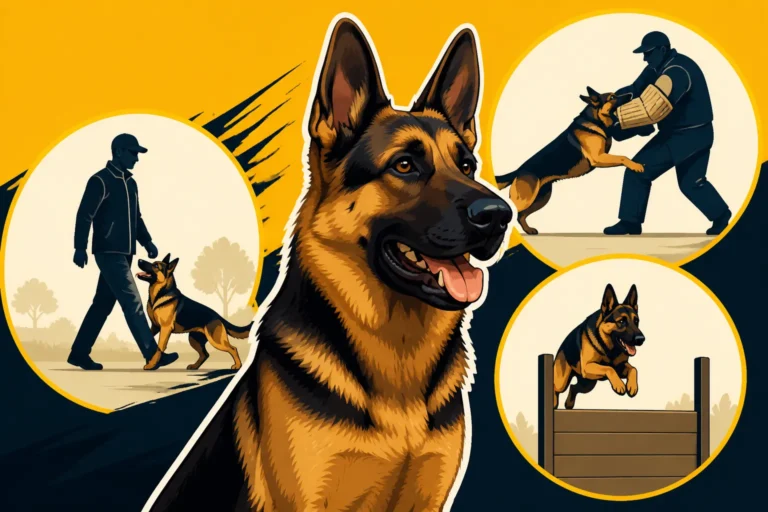
For example, a German Shepherd working in Schutzhund or IGP sports is actively trained to engage in bite work, which taps directly into their prey drive in a controlled environment. Even in everyday life, this drive manifests. A rustling bush, a bike whizzing by, or a child running can all trigger that ingrained chase response. It's not a flaw in their character; it's a testament to their heritage and genetic programming. Recognizing this strong genetic component is crucial for managing expectations and developing realistic training goals. It's why many German Shepherd owners ask, "Is a Working Line German Shepherd Worth the Price?" because these lines often have very pronounced drives.
Effective Management Strategies for Prey Drive
While you can't eliminate prey drive, you absolutely can manage it effectively. Management is about preventing your dog from practicing undesirable behaviors and keeping them safe. It's the first line of defense before diving deep into training.
Leash Management and Equipment
One of the most immediate and impactful ways to manage a German Shepherd's prey drive, especially outside, is through proper leash management and the right equipment. A standard flat collar often isn't enough when your powerful dog decides to lunge after a squirrel or a cat.
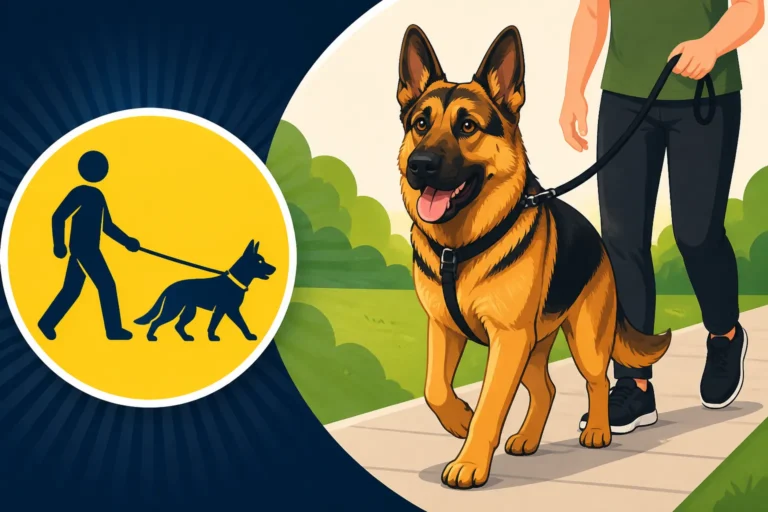
For walking, consider equipment that gives you more control and distributes pressure safely. A well-fitting front-clip harness, like those from popular brands available on Amazon, can be incredibly helpful. These harnesses redirect your dog's forward momentum back towards you when they pull, making lunging less effective and uncomfortable for them. Another excellent option, especially for stronger dogs or those in active training, is a head halter (like a Halti or Gentle Leader). This gives you control over their head, and where the head goes, the body often follows. Always ensure any equipment is fitted correctly to avoid discomfort or injury. A long line (15-30 feet) can also be invaluable for practicing recall in a safe, open area, giving your dog the sensation of freedom while you maintain control. When you are doing your German Shepherd Leash Training Step-by-Step consider what works best for your dog.
Environmental Control and Avoidance
Prevention is always better than reaction, especially when dealing with a strong instinct like prey drive. Environmental control means strategically planning your walks and activities to minimize exposure to known triggers. If you know a particular park trail is crawling with squirrels at dawn, perhaps choose a different route or time. If your backyard fence isn't secure enough to keep the neighborhood cat out, take steps to reinforce it.
This also extends to indoor environments. If your German Shepherd is constantly fixated on movement outside a window, consider using privacy film, closing blinds, or creating a designated "safe zone" away from windows where they can relax. The goal is to reduce the number of times your dog practices the undesirable behavior. Every time they successfully chase something, the behavior is reinforced, making it harder to break. By controlling their environment, you reduce the opportunities for that instinct to take over uncontrolled.
Training for Redirection and Impulse Control
Once you have management in place, the real work begins with training. This isn't about suppressing the drive but teaching your German Shepherd to channel that energy and focus into appropriate behaviors or objects. This requires consistency, patience, and positive reinforcement.
Building a Bomb-Proof "Leave It" and "Look at Me"
These two commands are absolute lifesavers when it comes to managing prey drive. "Leave It" teaches your dog to ignore a tempting distraction, and "Look at Me" teaches them to break focus from the distraction and re-engage with you.
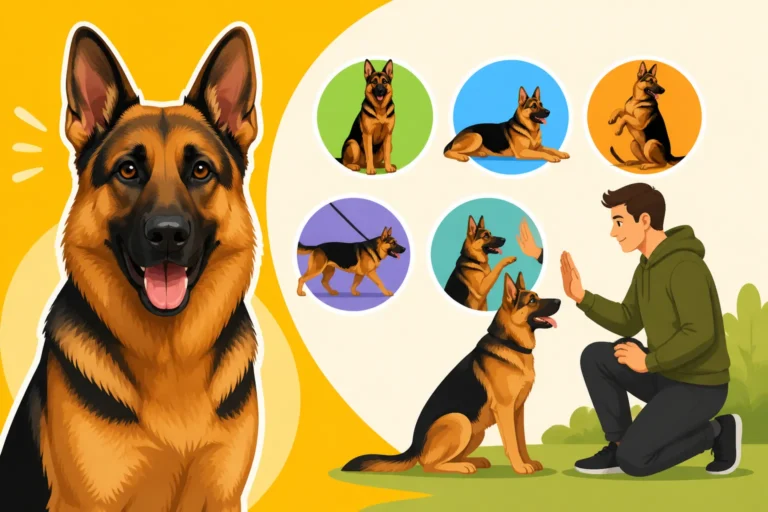
"Leave It" Training: Start in a low-distraction environment. Place a low-value treat on the floor and cover it with your hand. When your dog tries to get it, say "Leave it!" As soon as they back away or look at you, mark the behavior (with a "yes!" or a clicker) and reward them with a different, higher-value treat from your other hand. Gradually increase the difficulty: uncover the treat, then place it on the floor, then have them "leave" a toy, and finally, practice around mild distractions. The key is that the reward for leaving the item is always better than the item itself.
"Look at Me" Training: Hold a treat near your eye. When your dog makes eye contact, say "Yes!" and reward them. Repeat this many times. Once they consistently look at you, add the verbal cue "Look at Me!" before presenting the treat. Practice this in various environments, gradually increasing distractions. This command teaches your dog that you are the most interesting thing in the environment, even when faced with high-value distractions. BAXTER & Bella, an online puppy school, offers excellent step-by-step modules that can guide you through these foundational commands, even for adult dogs. Learning how to Teach a German Shepherd to Come or to "Look at Me" are core skills.
High-Value Rewards and Engagement
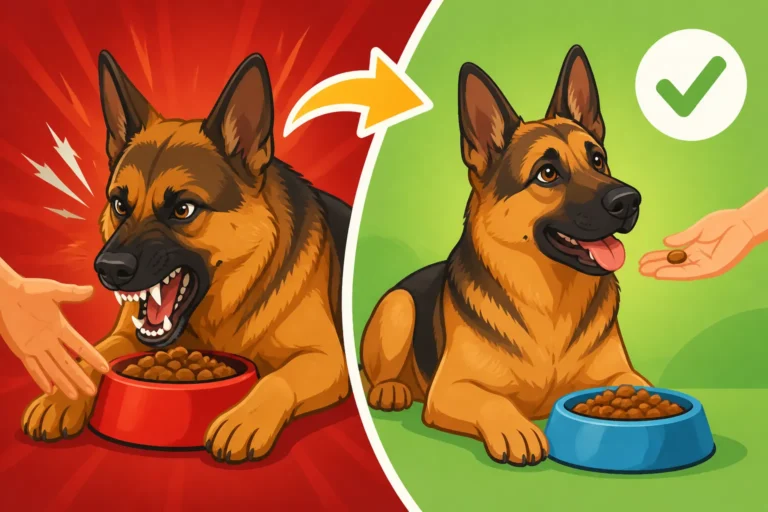
When you're trying to redirect a dog with a strong prey drive, your rewards need to be exceptionally good. A dry kibble might work for a "sit" in the living room, but it won't stand a chance against a fleeing rabbit. Think high-value treats: boiled chicken, hot dogs, cheese, or specialized training treats.
Equally important is building a strong bond and engagement with your German Shepherd. If you're boring, they'll always choose the squirrel. Incorporate exciting play into your routine. Use squeaky toys, tug toys, and flirt poles as acceptable outlets for their chase and grab instincts. Make yourself the source of all good things and exciting games. If your dog loves tug, a quick game of tug can be a fantastic reward for disengaging from a potential trigger. Building a strong bond makes you more appealing than external distractions, and a structured German Shepherd puppy training guide often highlights this from the very beginning.
| Redirection Technique | Primary Use Case | Required Equipment | Key Benefits |
|---|---|---|---|
| "Leave It" Command | Ignoring stationary or slow-moving distractions (e.g., dropped food, distant animal) | High-value treats, possibly a clicker | Builds impulse control, teaches self-restraint |
| "Look at Me" Command | Breaking focus from high-value moving distractions (e.g., squirrels, bikes) | High-value treats, strong handler engagement | Reinforces handler as focus, quick attention grab |
| High-Value Toy Play | Channeling chase/grab drive into appropriate objects | Tug toys, squeaky toys, flirt pole | Provides acceptable outlet, builds handler-dog bond |
| Emergency Recall | Urgent need to return to handler in high-distraction situations | Long line (initially), high-value rewards | Safety, reliability in critical moments |
| Scent Work/Tracking | Engaging natural hunting/seeking behaviors in a controlled way | Scent articles, treats, hidden toys | Mental stimulation, fulfills innate drive |
Structured Training and Professional Guidance
Sometimes, a strong prey drive can feel overwhelming, especially if it leads to reactive behavior or difficulty controlling your German Shepherd in public. This is where structured training, either through classes or with a professional dog trainer, can be invaluable. A good trainer can observe your dog's specific triggers and reactions, and help you tailor a redirection program. They can also teach you advanced leash handling techniques and build your confidence.
Don't hesitate to seek help if you're struggling. Many trainers specialize in working with powerful breeds and addressing prey drive issues. An online resource like BAXTER & Bella can provide structured courses to follow at home, but for more severe cases, one-on-one professional guidance is highly recommended. It’s worth exploring How to Train a German Shepherd with expert guidance.
Providing Appropriate Outlets and Enrichment
Redirection isn't just about stopping undesirable behaviors; it's also about fulfilling your German Shepherd's natural drives in healthy, constructive ways. If you don't provide an outlet for that powerful energy and instinct, they'll find their own, and it might not be what you want.
Canine Sports and Activities
German Shepherds thrive when they have a "job." Many canine sports are excellent for channeling prey drive and providing immense physical and mental stimulation.
- Lure Coursing/Fast CAT: These sports specifically tap into a dog's chase instinct. A mechanical lure (often a plastic bag) is run across a field, and dogs chase it. It's a safe, controlled environment for them to run full-out and satisfy that chase drive.
- Agility: While not directly prey-drive focused, agility courses require intense focus, quick movements, and problem-solving. The handler acts as a guide, and the dog's drive to complete the course and earn rewards can redirect that high energy.
- Scent Work/Tracking: This is fantastic for engaging their incredible noses and hunting instincts. Instead of chasing a visual "prey," they're tracking a hidden scent or object. This is mentally exhausting and incredibly rewarding for them. You might be surprised at how much calmer a dog is after a good scent work session compared to a simple walk.
- Tug and Fetch: These classic games are wonderful. A strong game of tug, where rules are clear (e.g., "leave it" on command, no teeth on skin), allows them to use their mouths and bodies in a powerful, acceptable way. Fetch, especially with a high-speed launcher, lets them run and "catch." Make sure to use durable toys that can withstand their powerful jaws, many great options are available on Amazon.
Mental Stimulation and Puzzle Toys
Physical exercise is essential, but mental exercise is equally, if not more, important for German Shepherds. A bored German Shepherd is often a destructive German Shepherd. Mental stimulation engages their problem-solving skills and can be a fantastic way to redirect energy and focus away from unwanted behaviors.
- Food Puzzles: Toys like Kongs, snuffle mats, or puzzle feeders make your dog "work" for their food. This simulates foraging and takes time and mental effort.
- Interactive Toys: Some toys dispense treats when manipulated a certain way. These can keep your dog engaged independently.
- Training Games: Beyond formal obedience, teach your German Shepherd fun tricks, hide-and-seek with toys, or "find it" games where they have to locate a hidden treat or toy using their nose. These activities strengthen your bond and tap into their natural intelligence. Our article on Best Mental Stimulation for German Shepherds offers a wealth of ideas.
Structured Exercise
It almost goes without saying, but a German Shepherd with a strong prey drive also needs ample, appropriate physical exercise. This doesn't just mean letting them out in the backyard. It means structured walks, runs, and play sessions that burn off their physical energy.
A tired German Shepherd is a good German Shepherd, and they'll be less likely to be overstimulated by triggers if they've had their needs met. Be mindful of their age and growth plates, especially with puppies, to prevent injury. Too much exercise for a young puppy can cause problems, as discussed in How Much Exercise Is Too Much for a Puppy. However, adult German Shepherds generally require a significant amount of daily activity to stay balanced and happy.
Remember, redirecting prey drive is an ongoing process, not a quick fix. It requires consistency, patience, and a deep understanding of your German Shepherd's natural instincts. By combining smart management, consistent training, and enriching outlets, you can help your powerful companion thrive and enjoy a much calmer, happier life together.
Disclaimer
This article is for general informational purposes only and does not constitute professional advice. Laws, prices and regulations vary by location and change over time. Consult a qualified professional for guidance on your specific situation.