How Much Exercise Is Too Much for a Puppy
Bringing a German Shepherd puppy home is such an exciting time, full of wiggles and boundless energy! But, as rewarding as it is, many new owners find themselves caught in a real bind: how much exercise is enough, and how much is too much? It’s a common, legitimate worry because you want your little land shark to grow up strong and healthy, but you also know that their growing bodies are delicate. This comprehensive guide is here to walk you through the nuances of safe, age-appropriate exercise for your German Shepherd puppy, ensuring they develop into a robust adult without the risk of injury.
The Delicate Balance: Why Puppy Exercise Needs Care
It's completely understandable to want your German Shepherd puppy to run, jump, and play to their heart's content. After all, they’re a high-energy breed! But when they’re still growing, their bodies are incredibly vulnerable, and pushing them too hard can have serious, lasting consequences. It's a tricky tightrope to walk, balancing their need for activity with the crucial need to protect their developing skeletal system.
Understanding Growth Plates
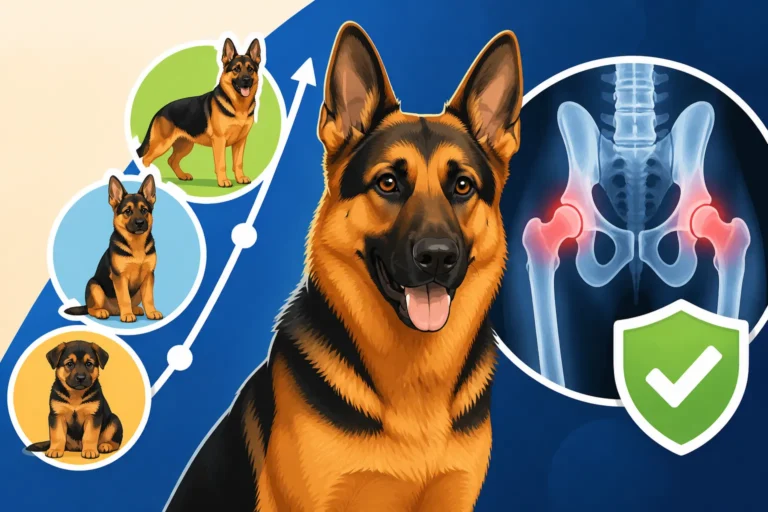
The key to understanding why puppy exercise needs such careful consideration lies in something called "growth plates." These are soft, cartilaginous areas located near the ends of long bones in puppies and young dogs. Think of them as the "construction zones" of the bone, where new bone tissue is produced, allowing the bones to lengthen as your puppy grows. They remain open and soft until your dog reaches skeletal maturity, which, for a large breed like a German Shepherd, can be anywhere from 12 to 24 months of age, sometimes even longer for the largest males.
Because these plates are not yet fully hardened bone, they are incredibly susceptible to injury. A hard jolt, a sudden stop, an awkward jump, or repetitive high-impact activities can easily damage these delicate areas. If a growth plate is injured, it can disrupt normal bone growth, potentially leading to limb deformities, uneven limb lengths, or even long-term lameness. Imagine a building under construction where the foundation gets cracked – it can affect the entire structure. That’s why we need to be so mindful of how we let our puppies exert themselves during this critical development period.
Risks of Over-Exercising a German Shepherd Puppy
The risks of over-exercising a German Shepherd puppy extend far beyond just immediate limping or soreness. The most significant and heartbreaking concerns often involve the development of orthopedic conditions that are unfortunately already prevalent in the breed. Conditions like German Shepherd Hip Dysplasia Explained and German Shepherd Elbow Dysplasia: Symptoms and Treatment are complex, with genetic components playing a huge role, but environmental factors, especially improper exercise during puppyhood, can exacerbate or trigger their manifestation.
For instance, excessive running on hard surfaces, prolonged forced exercise (like keeping up with a bicycle), or repeated jumping off high objects can place undue stress on immature joints. This constant pressure and impact can damage the developing cartilage and bone, leading to inflammation and abnormal joint formation. Even if your puppy is genetically predisposed to hip or elbow dysplasia, careful, controlled exercise can help mitigate the severity. Conversely, pushing them too hard can significantly worsen the outcome. Beyond these debilitating joint issues, overexertion can also lead to muscle strains, ligament tears, or even more subtle, chronic pain that affects their quality of life as they age.
Immediate signs of overexertion include excessive panting, lagging behind on walks, refusing to walk, obvious lameness or limping, and even collapsing in extreme cases. If you notice your puppy consistently doing any of these, it's a huge red flag that you're pushing them beyond their current capacity.
Age-Appropriate Exercise Guidelines for German Shepherd Puppies
So, how do you provide enough exercise for a German Shepherd puppy without putting them at risk? It’s a common conundrum, and the answer isn't a one-size-fits-all, hard-and-fast rule, but rather a set of guidelines that prioritizes safe development over intense activity.
The 5-Minute Rule and Beyond
One of the most widely accepted and safest guidelines for structured exercise for puppies is the "5-minute rule." This rule suggests that a puppy should receive roughly 5 minutes of structured exercise per day for every month of their age, up to twice a day. This means for a 4-month-old German Shepherd puppy, you'd aim for two 20-minute structured walks per day (4 months x 5 minutes = 20 minutes). This might sound incredibly short for such an active breed, but remember, this rule applies to forced, structured activities like leash walks.
Let's break it down by age:
- 8 weeks (2 months): Two 10-minute leash walks per day.
- 12 weeks (3 months): Two 15-minute leash walks per day.
- 16 weeks (4 months): Two 20-minute leash walks per day.
- 20 weeks (5 months): Two 25-minute leash walks per day.
- 24 weeks (6 months): Two 30-minute leash walks per day.
This approach ensures that while your puppy is getting out and exploring the world, their joints aren't subjected to prolonged, repetitive stress. These walks should be on varied, softer terrain when possible, like grass or dirt paths, rather than long stretches of concrete. Remember, this is a baseline; always observe your puppy for signs of tiredness and adjust accordingly. As your German Shepherd grows, their needs will change, and you'll eventually want to understand When Do German Shepherds Stop Growing to know when their growth plates have fused.
Structured vs. Unstructured Play
Understanding the difference between structured and unstructured play is crucial for German Shepherd puppy owners.
Unstructured play, often called "free play," is arguably the best type of physical activity for a growing puppy. This includes romping around in a securely fenced yard, sniffing and exploring at their own pace, or playing tug-of-war or fetch in short bursts. The beauty of unstructured play is that the puppy is in control. They can start, stop, change direction, and rest whenever they need to, instinctively protecting their own bodies. This type of play helps develop coordination, balance, and muscle strength in a natural, low-impact way. It’s ideal to let them do this on a forgiving surface like grass.
Structured exercise, as covered by the 5-minute rule, includes leash walks, formal training sessions that involve movement, or any activity where you dictate the pace and duration. While necessary for socialization and training, it needs to be carefully managed.
Here’s a look at activities to avoid or heavily limit during puppyhood:
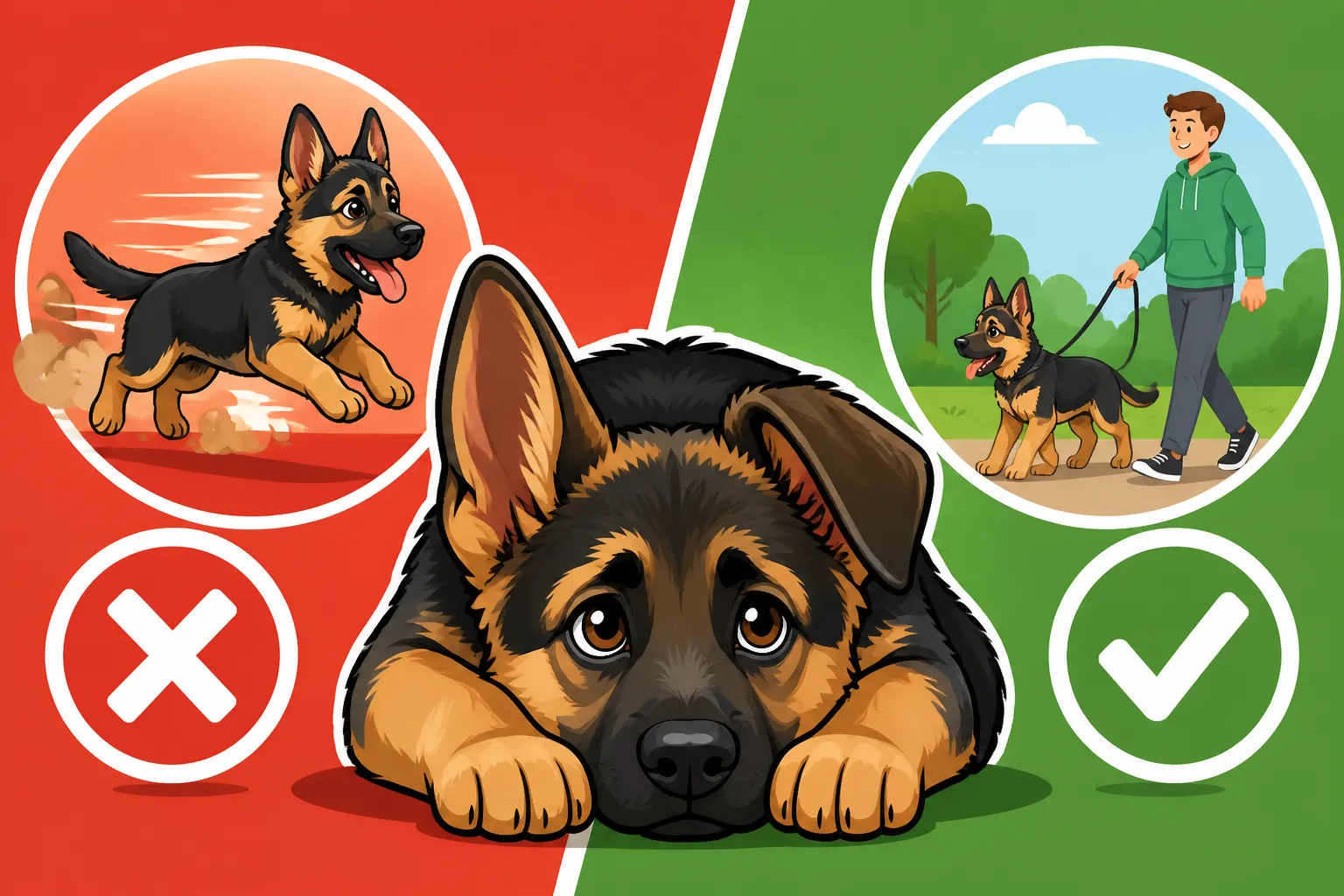
- No forced running: Never take your puppy jogging with you or make them run long distances. This includes treadmills.
- No high-impact jumping: Avoid repeated jumping on or off furniture, playing intense frisbee where they leap high, or jumping over obstacles.
- Limit stair climbing: Especially for very young puppies, excessive stair climbing can be hard on their joints. Carry them when possible, or limit access.
- No intense, repetitive fetching: While short games are fine, don't throw a ball continuously for 30 minutes, especially on hard ground.
- Rough play with adult dogs: While socialization is important, ensure play with older, larger dogs is supervised and doesn't become too rough or involve constant pinning and wrestling that could injure a puppy's delicate frame.
Incorporating Mental Stimulation
For a German Shepherd, especially during the stages where physical exercise is limited, mental stimulation is absolutely vital. This breed is renowned for its intelligence and strong drive to work, which means their brains need just as much, if not more, exercise than their bodies. If their minds aren't engaged, that pent-up mental energy can quickly translate into destructive behaviors, incessant barking, or anxiety.
Think of mental exercise as a way to "tire them out" without putting any stress on their growing joints. Short, positive reinforcement-based training sessions are fantastic. Teaching basic commands like "sit," "stay," "down," and "come" not only builds a strong bond but also makes them think. You can even try simple games like "find it" with treats hidden around the room. Puzzle toys, like those from Kong or Nina Ottosson, are excellent for keeping them occupied and challenging their problem-solving skills. Scent work, where they use their powerful noses to locate hidden treats, is another low-impact, highly engaging activity. Even just exposing them to new sights, sounds, and smells on a short, calm walk provides valuable mental input. For more ideas, you might find our guide on Best Mental Stimulation for German Shepherds particularly helpful.
Incorporating several short mental games throughout the day can make a huge difference in your puppy's overall well-being and help them feel fulfilled, even when their physical activity is restricted.
Recognizing Signs of Too Much Exercise
Even with the best intentions and adherence to guidelines, sometimes puppies can overdo it. Maybe they had an extra burst of zoomies in the yard, or perhaps a playdate got a little too exuberant. It's crucial to be vigilant and know the signs that your German Shepherd puppy has had too much exercise. Catching these cues early can prevent minor issues from escalating into more serious problems.
Physical Indicators
Your puppy's body will often tell you directly if they're struggling. Pay close attention to these physical red flags:
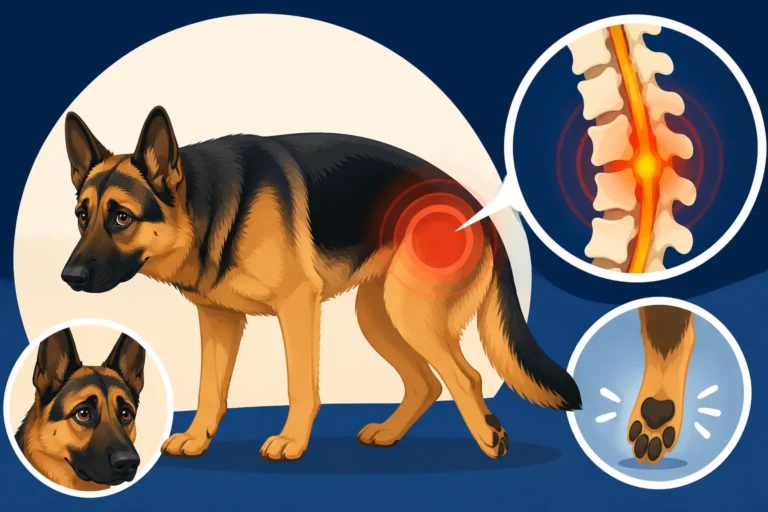
- Limping or favoring a limb: This is probably the most obvious sign. If your puppy is limping, even subtly, after exercise, it’s a clear indication that something is causing discomfort. This could be anything from a simple muscle strain to something more serious involving their growth plates or joints.
- Stiffness or reluctance to move: After resting, does your puppy seem stiff or unwilling to get up? Do they move awkwardly, like an old dog? This might be noticeable when they first wake up or after a longer period of inactivity following play.
- Excessive panting or difficulty breathing: While some panting is normal after activity, if it's prolonged, extremely heavy, or accompanied by labored breathing (gasping, wheezing), it could mean they are overheated or overexerted.
- Lagging behind or refusing to walk: On a walk, if your puppy suddenly starts dragging their feet, falling behind, or plops down and refuses to budge, they are signaling they've had enough.
- Collapsing or weakness: In severe cases of overexertion or heatstroke, a puppy might collapse, appear weak, disoriented, or even lose consciousness. This is an emergency and requires immediate veterinary attention.
- Dragging paws or scuffing: Sometimes, when extremely tired, puppies might start to drag their back paws, leading to scuffing of their nails or knuckles. This can be a subtle sign of fatigue.
If you observe any of these signs, especially persistent limping, stiffness, or signs of pain, it's always best to err on the side of caution and consult your veterinarian. Our article, How to Tell If a German Shepherd Is in Pain, offers more detailed information on recognizing discomfort in your furry friend.
Behavioral Changes
Physical signs aren’t the only indicators. Your puppy's behavior can also give you clues that they've pushed themselves too far:
- Increased irritability or grumpiness: An overtired puppy, much like an overtired toddler, can become cranky and less tolerant. They might snap more easily, be less patient during training, or shy away from interaction.
- Excessive sleeping: While puppies sleep a lot, if your German Shepherd puppy seems unusually lethargic, sleeping much more than usual, and hard to rouse, it could be a sign of needing to recover from overexertion.
- Loss of appetite or thirst: A sudden disinterest in food or water after exercise can indicate stress on their system.
- Reluctance to play: A German Shepherd puppy who suddenly loses interest in their favorite toys or refuses to engage in play, even after a good rest, might be trying to tell you they're in pain or too tired.
- Hiding or seeking solitude: Some puppies might retreat to a quiet, solitary spot if they're feeling unwell or sore.
It's important to differentiate between a normally tired puppy who settles down for a nap after a good play session and a puppy who is consistently exhausted or exhibiting these negative behavioral changes. Consistency is key; if these behaviors are unusual for your pup and follow a period of activity, it's time to re-evaluate their exercise routine.
When to Consult Your Vet
You know your German Shepherd puppy best, and your intuition is your most valuable tool. If you notice any persistent physical symptoms (limping, stiffness, pain) or concerning behavioral changes that last more than a day or two, it’s absolutely time to call your veterinarian. Don't wait hoping it will just "get better." Early intervention can make a significant difference in outcomes for many conditions.
Your vet can perform a thorough examination, assess your puppy's joints, and recommend diagnostics like X-rays if necessary to rule out growth plate injuries, early signs of dysplasia, or other orthopedic issues. They can also provide guidance on pain management and appropriate rest.
Dealing with unexpected vet visits can be stressful, both emotionally and financially. This is where investing in pet insurance, like Healthy Paws, can be a real lifeline. Companies like Healthy Paws help cover unexpected illness and injury costs, which can quickly add up, especially for breeds prone to orthopedic issues. Knowing you have that safety net can give you peace of mind, allowing you to focus on your puppy's health without the added burden of worrying about large medical bills. This kind of planning can make a huge difference over your German Shepherd’s lifetime, especially if you're looking at potential costs down the line, such as outlined in German Shepherd Vet Costs Per Year.
Creating a Safe Exercise Routine
Building a safe and effective exercise routine for your German Shepherd puppy is an ongoing process that adapts as they grow. It's about setting them up for a lifetime of healthy activity, not just getting their zoomies out today.
Gradual Progression and Warm-ups/Cool-downs
The golden rule of puppy exercise is gradual progression. You wouldn't expect a human baby to run a marathon, and the same principle applies to your puppy. Start with very short, low-intensity activities and slowly increase the duration and intensity as they mature. This means sticking strictly to the 5-minute rule initially and only extending walks or adding new activities once your vet confirms their skeletal development is on track.
Think about it like training an athlete:
- Warm-ups: Before any structured play or walk, allow a few minutes of gentle, loose leash walking or slow sniffing around. This helps get their muscles and joints ready for activity. For example, before heading out for your 15-minute walk, let them wander in the yard for 3-5 minutes, stretching and exploring at their own pace.
- Cool-downs: After any more intense (though still puppy-appropriate) play, allow a few minutes of slow walking or quiet sniffing. This helps their heart rate return to normal and prevents muscles from stiffening up too quickly. A short, calm walk on a soft surface like grass is perfect for winding down.
This mindful approach helps prevent strains, sprains, and protects those precious growth plates from sudden shock.
Choosing Appropriate Environments
Where your German Shepherd puppy exercises is almost as important as how much they exercise. The surface they play on can significantly impact their developing joints.
- Avoid prolonged exercise on hard surfaces: Concrete, asphalt, and even hard-packed dirt can be very jarring on immature joints. While short potty breaks on these surfaces are unavoidable, long walks or intense play sessions should ideally take place elsewhere.
- Opt for soft, yielding surfaces: Grass, sand, soft dirt trails, and even wood chips are far kinder to a puppy's body. These surfaces absorb impact, reducing stress on their joints and muscles.
- Ensure safe, enclosed spaces: For off-leash free play, a securely fenced yard or a designated, safe dog park area is essential. This allows them to explore and run naturally without the risk of darting into danger or getting lost. Be mindful of potential hazards like hidden holes, sharp objects, or toxic plants.
Remember, even on ideal surfaces, moderation is key. A German Shepherd puppy playing fetch for an hour on the beach will likely be just as overexerted as one on concrete.
The Role of Nutrition and Hydration
While not directly exercise, proper nutrition and hydration are critical supporting pillars for healthy growth and development, which in turn influences how well your puppy can handle physical activity.
- Balanced Diet: A high-quality large-breed puppy food formulated specifically for large breeds like German Shepherds is essential. These foods are designed to support a slower, more controlled growth rate, which is crucial for preventing orthopedic issues. Look for formulas that don't have excessive protein or calcium, as these can actually contribute to rapid growth and skeletal problems. Our German Shepherd Feeding Guide and German Shepherd Puppy Feeding Schedule can offer more insights into selecting the best diet.
- Consistent Hydration: Always ensure your puppy has access to fresh, clean water, especially before, during, and after play. German Shepherds can overheat easily, and proper hydration is key to regulating their body temperature and ensuring all their bodily functions are running smoothly. Carry water with you on walks, even short ones, especially on warmer days.
Feeding your German Shepherd puppy the right food in the right amounts ensures their bones, muscles, and connective tissues have all the necessary building blocks to grow strong and healthy, supporting their active lifestyle.
Long-Term Joint Health Considerations
The exercise habits you instill during your German Shepherd puppy's formative months have profound implications for their joint health throughout their entire life. Think of puppyhood as the foundation for their future well-being.
Early Prevention Strategies
One of the best "treatments" for joint issues is prevention, and it starts long before your puppy even comes home. Choosing a responsible breeder who performs genetic health testing on their breeding dogs for conditions like hip and elbow dysplasia is paramount. While genetics don't guarantee freedom from these issues, they significantly reduce the risk. Our guide on German Shepherd Genetic Health Testing dives deeper into what to look for in a breeder.
Once your puppy is home, sticking to the age-appropriate exercise guidelines is your most powerful tool. By protecting those vulnerable growth plates and developing joints, you're actively working to How to Prevent Hip Dysplasia in German Shepherds and How to Prevent Elbow Dysplasia in German Shepherds. This isn't just about avoiding injury, but about promoting healthy, symmetrical joint development. Avoid overfeeding, too, as excess weight places additional strain on developing joints. A lean puppy is a healthier puppy.
Supplements and Lifestyle Choices
As your German Shepherd matures into adulthood, maintaining their joint health becomes a continuous effort. While puppies generally don't need joint supplements if they're on a high-quality large-breed puppy food and exercised appropriately, your veterinarian might recommend them for adult dogs, especially those engaged in working activities or as they approach their senior years. Common ingredients in joint supplements include glucosamine, chondroitin, and MSM, which aim to support cartilage health. However, always consult your vet before introducing any supplements to your puppy or adult dog.
Beyond supplements, crucial lifestyle choices include:
- Weight Management: Keeping your German Shepherd at a healthy, lean weight throughout their life is perhaps the single most important factor in preserving joint health. Every extra pound places additional stress on their hips, elbows, and spine.
- Consistent, Moderate Exercise: Once fully grown, German Shepherds need regular, vigorous exercise, but it should still be appropriate for their individual fitness level and health. A combination of walks, jogs, swimming (excellent low-impact exercise), and structured playtime is ideal. Avoid extreme, high-impact activities in favor of consistent, balanced routines.
- Soft Bedding: Provide comfortable, orthopedic bedding to support their joints during rest, especially as they age.
By being proactive in these areas, you're not just hoping for a healthy dog; you're actively building a solid foundation for their long-term health and mobility. Exploring topics like German Shepherd Joint Health Supplements can become relevant as your pup transitions to adulthood.
German Shepherd Puppy Exercise Guidelines by Age
Here's a quick overview of general exercise guidelines for your German Shepherd puppy, keeping the 5-minute rule in mind:
| Puppy Age | Structured Exercise (per session, twice daily) | Total Daily Structured Exercise | Unstructured Play (Free Play) | Activities to Avoid/Limit |
|---|---|---|---|---|
| 8-12 Weeks | 10-15 minutes (gentle leash walks) | 20-30 minutes | Short bursts of free play (5-10 min) in a safe, soft area | Long walks, forced running, jumping, stairs (carry when possible), rough play with large dogs |
| 3-4 Months | 15-20 minutes (gentle leash walks) | 30-40 minutes | More frequent, slightly longer free play (10-15 min sessions) | Continued avoidance of high-impact activities, prolonged fetching on hard surfaces |
| 5-6 Months | 25-30 minutes (leash walks, varied terrain) | 50-60 minutes | Supervised free play, gentle short fetch on grass | Still avoid forced running, high jumping, long periods of strenuous activity |
| 7-12 Months | 35-45 minutes (longer walks, light hiking) | 70-90 minutes | Increased duration of free play, introducing light jogging | High-impact sports, agility jumps until growth plates are confirmed closed by vet (usually 18-24 months) |
| 12-18 Months | 45-60 minutes (more vigorous walks, jogging) | 90-120 minutes | Active free play, longer fetch sessions, light running on soft | Can start more challenging activities gradually if vet confirms growth plates are closed. |
Remember, these are guidelines. Always observe your puppy for signs of fatigue and adjust as needed. Every puppy is an individual!
Disclaimer
The information provided in this article is for general informational purposes only and is not intended as a substitute for professional veterinary advice, diagnosis, or treatment. Always seek the advice of your veterinarian or other qualified health provider with any questions you may have regarding a medical condition or the health and welfare of your pet. Never disregard professional veterinary advice or delay in seeking it because of something you have read in this article.