Types of German Shepherds Explained
It can be incredibly confusing when you start researching German Shepherds and keep hearing about "different types." You'll hear terms like "working line," "show line," "DDR," "Czech," and even talk of various colors and coat lengths, leaving you wondering if you're looking at a dozen different breeds! This guide is here to untangle that confusion, explain the true distinctions, and help you understand what each "type" really means for the dog's temperament, appearance, and suitability for your home.
Understanding the Core German Shepherd Breed Standard
At its heart, there is only one German Shepherd Dog breed. This might come as a surprise given all the different "types" people discuss, but it's an important foundational truth. The variations we talk about aren't separate breeds, but rather different lines that have been selectively bred over generations to emphasize certain traits – whether that's working ability, specific physical characteristics, or a particular temperament. All true German Shepherds should, in theory, conform to the breed standard, which is a detailed description of the ideal dog, outlining everything from their head shape to their tail set.
The Vision of Max von Stephanitz
The German Shepherd breed was officially established in Germany by Captain Max von Stephanitz in the late 19th and early 20th centuries. His primary vision was to create the ultimate working dog: intelligent, loyal, courageous, and versatile. He sought a dog that could herd sheep, assist police, serve in the military, and be a devoted companion. His famous mantra, "Utility and intelligence," guided his breeding program. He believed that beauty was secondary to function, and any physical trait that hindered a dog's working ability was undesirable. This foundational philosophy is crucial to understanding why the breed evolved the way it did, and why the "working line" ideal remains so strong for many enthusiasts. Von Stephanitz's influence means that even today, a true German Shepherd should possess a keen mind and a strong desire to work.
The German Shepherd Dog Club of America and FCI Standards
Breed standards are the blueprints for purebred dogs, ensuring that breeders strive for consistency and preserve the core characteristics of a breed. The Fédération Cynologique Internationale (FCI) sets the international standard for the German Shepherd Dog, which many countries, including Germany itself, adhere to. In the United States, the American Kennel Club (AKC) has its own standard, though it is largely derived from the original German standard. These standards outline everything from the dog's ideal height and weight to its gait, coat color, and temperament. For example, the standard typically describes a dog that is "self-confident," "poised," and "eager to serve." Deviations from these standards, whether in physical appearance or temperament, are considered faults. It's important to remember that while the core characteristics remain, interpretations and breeding priorities can lead to subtle but noticeable differences between lines recognized by various kennel clubs or specific breeders. This is where the distinctions between show lines and working lines begin to emerge.
The Primary Distinction: Working Line vs. Show Line German Shepherds
When people talk about different "types" of German Shepherds, the most common and significant distinction they're usually referring to is between working lines and show lines. This isn't just a casual term; it reflects fundamental differences in breeding philosophies, genetic priorities, and, consequently, the dogs themselves. Understanding this split is key to appreciating the diversity within the single German Shepherd breed and making an informed decision about which kind of dog might be right for your family and lifestyle. You might find more detailed information on this topic in our article on Working Line vs Show Line German Shepherd.
Working Line German Shepherds
Working line German Shepherds are bred first and foremost for their utility, intelligence, and working drives. Their physical appearance is important, but only insofar as it supports their ability to perform demanding tasks. These dogs typically have strong, athletic builds, robust health, and a keen, intense expression. They are often less exaggerated in their angulation (the slope of their back and hindquarters) compared to some show lines, allowing for a more efficient and powerful stride.
Their temperament is characterized by high energy, strong prey drive, and an innate desire to engage in mentally and physically challenging activities. These are the dogs you'll see excelling in protection sports like IGP (formerly Schutzhund), search and rescue, police work, and military roles. They need a job to do and thrive on consistent training and boundaries. Without adequate outlets for their energy and intelligence, a working line German Shepherd can easily become bored, destructive, or even develop behavioral problems. They require experienced handlers who understand how to channel their intense drives constructively. If you're considering one of these dogs, be prepared for a significant commitment to training and exercise.
Show Line German Shepherds
Show line German Shepherds, particularly those from certain competitive lineages, are bred primarily for their conformation to the breed standard as judged in dog shows. While temperament is still a component of the standard, the emphasis often leans heavily towards physical aesthetics, such as coat color, head shape, and overall structure that is deemed beautiful by judges. Within show lines, there can be further distinctions, with some focusing on the traditional German standard and others evolving into more distinct styles.
A notable characteristic of many modern show line German Shepherds, especially those from American show lines, is a more dramatic angulation in the rear. This creates a sloped back appearance that is highly prized in the show ring for its perceived elegance in movement. Their temperaments tend to be calmer and less driven than their working line counterparts, making them generally more suitable for family pets, although they still retain the intelligence and loyalty inherent to the breed. They require exercise and training like any German Shepherd, but typically not to the same intense degree as a working line dog. It's crucial, however, to differentiate between show lines that still prioritize overall health and stable temperament and those where extreme physical traits might lead to potential health concerns down the line. To learn more about common health issues, check out our German Shepherd Health Problems Guide.
Key Differences in Temperament and Drive
The divergence in breeding focus between working lines and show lines leads to distinct differences in temperament and drive that are important for prospective owners to understand.
Working line German Shepherds possess an almost insatiable drive to work. This manifests as high energy, a powerful prey drive (their instinct to chase and "catch" moving objects), and a deep desire to please their handler through task completion. They are often more assertive, confident, and have a higher tolerance for stress and environmental pressure, making them ideal for demanding roles. However, this intensity also means they require a structured environment, consistent training, and ample mental and physical stimulation. They are not content to be couch potatoes and will find their own "jobs" if you don't provide them, which can include chewing furniture, excessive barking, or digging.
Show line German Shepherds, particularly those bred in North America, generally exhibit a more relaxed temperament. While still intelligent and trainable, their drives are typically lower. They are often more focused on companionship and can adapt more readily to a family environment without the intense pressure for a "job." Their loyalty is profound, and they are often excellent with children and other pets when properly socialized. However, it's a generalization, and individual temperaments can vary widely. It’s always important to meet the parents of a puppy and discuss temperament with the breeder. Understanding German Shepherd Temperament and Personality can help you determine what to expect.
Here’s a quick overview of some of the key differences:
| Feature | Working Line German Shepherd | Show Line German Shepherd |
|---|---|---|
| Primary Focus | Working ability, temperament, health, structure supporting work | Conformation to show ring standards, aesthetics, movement |
| Build | Strong, athletic, muscular, less exaggerated angulation | More refined, often with more sloped back (especially American lines) |
| Energy Level | Very High; needs constant mental & physical stimulation | Moderate to High; adaptable to family life, still needs good exercise |
| Drive | High prey, defense, and retrieve drives; intense focus | Moderate; more focused on companionship, less intense work ethic |
| Temperament | Confident, assertive, resilient, requires experienced handler | Often calmer, more docile, good family companions, still protective |
| Training Needs | Intensive, consistent, task-oriented; excels in dog sports | Regular, consistent; thrives on positive reinforcement; adaptable |
| Coat Colors | Often sable, black, bi-color | Wider variety, including black and tan, black and red, solid black |
Exploring the Major Show Lines
Within the broad category of "show lines," there are further distinctions, primarily influenced by the breeding practices and standards of different regions. These regional preferences have led to German Shepherds that, while still recognizably the same breed, possess unique looks and, to some extent, temperaments.
West German Show Line
The West German Show Line German Shepherds are arguably the most iconic and recognizable type for many people who appreciate the classic German Shepherd look. These dogs are bred primarily in Germany and are judged according to the rigorous standards set by the Verein für Deutsche Schäferhunde (SV), the original German Shepherd Dog Club. The SV standard emphasizes not just physical conformation but also temperament, courage, and working ability, making it a "working-show" hybrid in many ways. To earn a top title like the Sieger or Siegerin (male and female national champions), a dog must pass a working title, hip and elbow certifications, and a temperament test, in addition to excelling in the conformation ring.
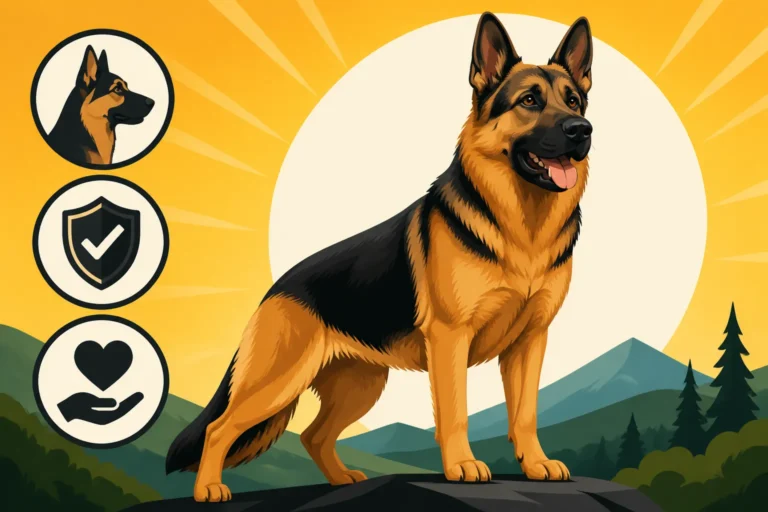
Physically, West German show lines are known for their striking black and red or black and tan pigmentation, strong bone structure, and powerful, fluid movement. While they do have some angulation, it is generally less exaggerated than in American show lines, giving them a more balanced and athletic appearance that allows for sustained, ground-covering trot. Their temperament is typically confident, intelligent, and stable, possessing a good balance of drive that makes them capable of both competitive work and being wonderful family companions. They still require ample exercise and training, but their drives are usually more manageable than those of dedicated working lines. When considering such a dog, it's wise to look into German Shepherd Genetic Health Testing to ensure you're getting a healthy puppy from a reputable breeder.
American Show Line
The American Show Line German Shepherds have evolved with a distinct look over the decades, primarily due to different interpretations of the breed standard within the American Kennel Club (AKC) show ring. These dogs are bred specifically to excel in U.S. conformation shows, where judges often favor a highly stylized appearance and exaggerated movement.
The most distinctive physical characteristic of many American show line German Shepherds is their significantly sloped back and pronounced rear angulation. This structure allows for a very specific, sweeping gait often seen in the show ring, but it has also been a point of controversy, with concerns raised about potential impacts on long-term joint health and soundness. You can delve deeper into joint health issues like German Shepherd Hip Dysplasia Explained. In terms of appearance, they typically have rich black and tan or black and cream coats. Their temperaments are generally considered to be softer and more laid-back than their German counterparts, making them well-suited for family life and companionship. While they are intelligent and loyal, they usually do not possess the intense working drives of either the German show lines or true working lines. They are generally easier to manage for first-time German Shepherd owners who are looking for a devoted pet rather than a high-performance working dog.
Canadian Show Line
Canadian Show Line German Shepherds often share many similarities with their American Show Line counterparts, given the close proximity and intertwined breeding programs between the two countries. The Canadian Kennel Club (CKC) breed standard is very similar to the AKC's, leading to preferences for similar physical traits in the show ring.
Like American show lines, Canadian show line German Shepherds may also exhibit a pronounced rear angulation and a sloped topline, prized for their aesthetics in conformation events. They are generally bred for a calm, agreeable temperament, making them suitable family dogs. While they embody the intelligence and loyalty characteristic of the breed, their working drives are typically minimized compared to European lines. Prospective owners should understand that while these dogs are beautiful and loving, their breeding focus has often prioritized a specific show ring aesthetic, which can sometimes come at the expense of the robust structure and intense working drive found in German-bred dogs. As with any line, finding a breeder who prioritizes overall health and stable temperament, even within the show ring focus, is paramount. You can find excellent pet supplies for any German Shepherd type on sites like Chewy, which offers a wide range of foods and accessories.
Delving into the Major Working Lines
Beyond the show ring, German Shepherds have been meticulously bred for generations to maintain and enhance their working capabilities. These "working lines" represent the purest expression of Max von Stephanitz's original vision, prioritizing drive, courage, and physical prowess above all else. There are several distinct working lines, each with its own history and specialized characteristics, often influenced by the geographical regions where they were developed.
West German Working Line
The West German Working Line German Shepherds are highly prized for their balanced drives and exceptional trainability. Unlike their show line counterparts, these dogs are bred for performance in IGP (formerly Schutzhund) and other protection sports, as well as for police and military K9 work. Their breeding emphasizes temperament, courage, and natural working ability, with physical conformation valued for its contribution to athletic performance rather than pure aesthetics.
Physically, these dogs typically have strong, substantial bone structure, deep pigmentation (often sable, or dark black and tan), and a powerful, level gait. Their angulation is moderate and functional, allowing for incredible endurance and agility. Mentally, they possess a strong prey drive, defense drive, and retrieve drive, making them highly motivated for training. They are known for their confident demeanor, clear-headedness under pressure, and intense focus. While they are highly intelligent and eager to please, their strong drives mean they require an experienced handler who can provide consistent structure, extensive training, and ample mental and physical challenges. They are not suitable for novice owners or those looking for a low-maintenance pet. If you're ready for the commitment, a West German Working Line can be an incredibly rewarding partner in various dog sports or professional roles. Learning about German Shepherd Exercise Requirements is crucial for these dogs.
East German DDR German Shepherds
The East German DDR (Deutsche Demokratische Republik) German Shepherds have a fascinating and somewhat stark history. After World War II, when Germany was divided, a separate breeding program emerged in East Germany, isolated from the Western influences. The objective was to breed robust, resilient, and highly trainable dogs for border patrol, military, and police work in a challenging environment. This often meant enduring harsh weather conditions and demanding duties.
DDR German Shepherds are characterized by their strong, substantial build, dark pigmentation (often solid black or very dark sable), and a physically imposing presence. They tend to have straight backs, deep chests, and large heads. Health and durability were paramount, as dogs that couldn't withstand the rigors of their work were not bred. Their temperaments are typically very stable, with high courage, exceptional endurance, and a relentless work ethic. They are known for their strong nerves, high trainability, and deep commitment to their handlers. DDR lines generally have a strong pack drive and are highly protective. While incredibly loyal, their intensity and resilience mean they need firm, consistent leadership and extensive mental and physical stimulation. They are true working dogs, demanding a purpose and active involvement from their owners. You can read more about specific health considerations in the German Shepherd Health Problems Guide.
Czech Working Line
The Czech Working Line German Shepherds originated from the breeding programs of the Pohraniční Stráž, the Czechoslovakian Border Patrol, which began in 1955. Like the DDR dogs, they were bred for very specific, demanding roles in border protection and military service, requiring immense physical toughness and unwavering mental fortitude. These dogs were selected for extreme working ability, often in harsh conditions, with little emphasis on conformation to show standards.
Czech working lines are known for their high drive, incredible stamina, and strong prey and defense instincts. Physically, they are typically medium to large, with strong bones, athletic builds, and often darker coats, including solid black or sable. They tend to have straight backs and powerful, efficient gaits. Temperamentally, they are characterized by their intensity, sharp intelligence, and remarkable resilience. They are highly protective and can be aloof with strangers, but deeply loyal and bonded to their families. Because of their inherent intensity and high genetic drives, Czech Working Line German Shepherds are best suited for experienced dog handlers who are committed to advanced training, such as IGP, tracking, or police work. They thrive on challenges and consistent, clear guidance. Without proper outlets, their drive can become destructive or difficult to manage, making them unsuitable for pet homes seeking a casual companion. Chewy offers a variety of durable toys that can stand up to the rigorous play of a Czech Working Line German Shepherd, perfect for mental and physical stimulation.
Understanding German Shepherd Coat Types and Colors
Beyond the structural and temperamental differences of show and working lines, German Shepherds also come in a fascinating array of coat types and colors. While these don't technically define "types" of German Shepherds in the same way breeding lines do, they are distinct characteristics that many prospective owners consider.
Standard Coat Types
The German Shepherd breed typically comes in three recognized coat lengths, though acceptance can vary slightly between kennel clubs. All German Shepherds possess a double coat, which consists of a dense, soft undercoat for insulation and a coarser, weather-resistant outer coat. This double coat is what helps them adapt to various climates and gives them their distinctive plush feel.
- Short-Haired (Stock Coat): This is the most common and historically recognized coat type. The outer coat is dense, hard, and lies close to the body. It offers excellent protection from the elements. Dogs with this coat type are generally less prone to matting and are easier to maintain, though they still shed significantly, especially during "blowing coat" seasons.
- Plush Coat (Medium Coat): Often seen as an intermediate length, the plush coat has longer hair on the neck (forming a slight ruff), behind the ears, on the back of the legs, and on the tail. It’s thicker and softer than the stock coat but not as long as the true long coat. The plush coat is accepted by many kennel clubs but might be considered a fault in some stringent German show lines.
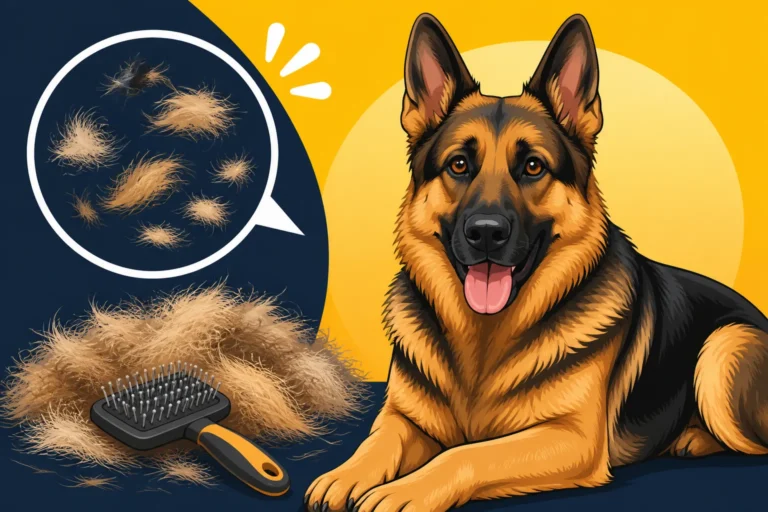
- Long-Haired: This coat type features long, flowing hair all over the body, including a prominent ruff around the neck, feathering on the legs, and a heavily plumed tail. While beautiful, the long coat requires more extensive grooming to prevent mats and tangles. Historically, the long coat was considered a fault in the German breed standard, but some clubs, like the FCI, now recognize a long-haired variety (without undercoat) as a distinct, showable type, while others, like the AKC, still consider excessive length a fault. Regardless of coat length, all German Shepherds shed, and you can learn how to manage it in our German Shepherd Shedding: How to Manage It article.
Common and Rare Coat Colors
German Shepherds are known for their striking variety of coat colors, some of which are standard and highly desirable, while others are rarer or considered disqualifying faults in the show ring, though they can still make wonderful pets. Our German Shepherd Coat Colors Explained provides more comprehensive details.
Common and Accepted Colors:
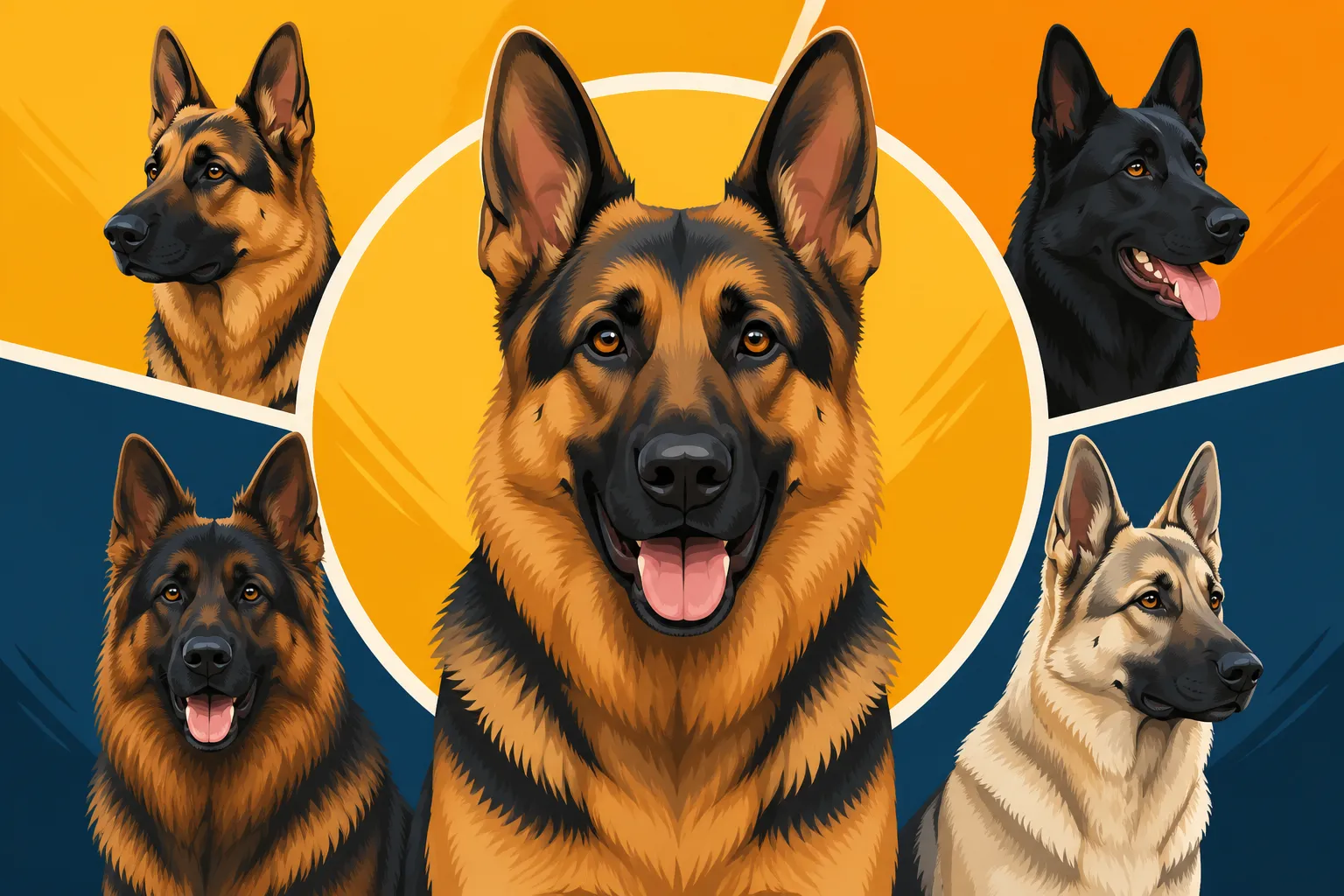
- Black and Tan: The most classic and widely recognized color, featuring a black saddle over a tan base.
- Black and Red: Similar to black and tan, but with a richer, more vibrant red pigmentation. This is highly prized in German show lines.
- Sable: Often described as "agouti," sable dogs have individual hairs that are banded with different colors, giving them a grizzled, wild-like appearance. This is a very common color in working lines.
- Solid Black: A beautiful, intense black coat. Solid black German Shepherds are accepted by most kennel clubs and are quite striking.
- Bi-Color: These dogs are predominantly black with small tan markings on their legs, chest, and face, almost appearing solid black at first glance.
Rare or Disqualifying Colors (for show, but not for pet quality):
- Solid White: While historically present in the breed, solid white German Shepherds are disqualified from conformation shows by most major kennel clubs (like the AKC and SV). They are otherwise healthy German Shepherds and are recognized as a separate breed, the White Swiss Shepherd, in some parts of the world.
- Blue: A dilute black, resulting in a slate-gray or bluish-gray coat. Blue is a recessive gene and is a disqualifying fault in most show rings.
- Liver: A dilute brown color, appearing as a chocolatey brown. Also a recessive gene and a disqualifying fault.
- Isabella: An extremely rare dilution of both black and liver, resulting in a pale, fawn-like color.
- Panda: This is a very rare and controversial color pattern, characterized by white markings on an otherwise colored German Shepherd. It's caused by a piebald gene mutation and is not accepted in any major breed standard.
It's important to remember that coat color does not affect a German Shepherd's temperament, health, or ability to be a loving companion. While certain colors might be favored in the show ring, a dog's suitability as a pet or working partner is determined by its lineage, health, and individual personality, not its hue.
Addressing "Non-Standard" or Misunderstood "Types"
Beyond the established show and working lines, you'll often encounter discussions about other "types" of German Shepherds that can add to the confusion. It's crucial to clarify these, as some are distinct breeds, some are merely genetic variations within the German Shepherd, and others refer to historical breeding preferences.
King Shepherds and Shiloh Shepherds
It's a common misconception that King Shepherds and Shiloh Shepherds are simply "types" of German Shepherds. In reality, both are entirely separate breeds, developed from German Shepherd lineage but distinct enough to have their own breed standards and registries.
King Shepherds: These magnificent dogs are a relatively new breed, developed in the United States in the 1990s. The goal was to create a larger, calmer, and healthier companion dog by crossing German Shepherds with Alaskan Malamutes and Great Pyrenees. King Shepherds are notably larger and heavier-boned than German Shepherds, often weighing well over 100 pounds. They have a dense, long coat and a more laid-back, gentle temperament, making them better suited for family life than the high-drive German Shepherd. While they share some German Shepherd traits like intelligence and loyalty, they are not German Shepherds.
Shiloh Shepherds: Also originating in the United States in the 1970s, Shiloh Shepherds were developed with the explicit aim of creating a dog with superior health, intelligence, and a calmer, gentler temperament than typical German Shepherds. They were bred from select German Shepherds, with some lineage from Alaskan Malamutes or Sarplaninac. Shiloh Shepherds are large, often with long, soft coats, and are known for their gentle disposition and strong bond with their families. They are particularly favored for therapy work due to their stable and loving nature. Again, while their ancestry is rooted in the German Shepherd, they are recognized as a distinct breed.
White German Shepherds and Panda German Shepherds
These are specific color variations within the German Shepherd breed, and while they might look distinct, they are not separate "types" in the sense of breeding lines.
White German Shepherds: As mentioned earlier, white German Shepherds are simply German Shepherds that carry a recessive gene for white coat color. They are genetically identical to any other colored German Shepherd in every other aspect. Historically, white was a color found in the original shepherd dogs that contributed to the breed's foundation. However, the German Shepherd Dog Club of America (AKC) and the SV (Germany's parent club) consider the white coat a disqualifying fault in the show ring, primarily due to concerns about albinism (though white German Shepherds are not albinos) and a perceived lack of the breed's typical "wolf-like" appearance. Despite this, white German Shepherds are healthy, intelligent, and possess the same temperament traits as their colored counterparts, making them wonderful pets. They are recognized as a separate breed, the White Swiss Shepherd (Berger Blanc Suisse), in many parts of the world, including by the FCI.
Panda German Shepherds: The Panda German Shepherd is an extremely rare and relatively recent genetic mutation within the German Shepherd breed. It is characterized by distinct white markings on an otherwise colored dog, often with white on the chest, paws, and tip of the tail, along with partial blue eyes. This piebald pattern is caused by a dominant gene mutation, not by cross-breeding, and it is not recognized by any major kennel club's breed standard. Panda German Shepherds are otherwise typical German Shepherds in terms of health and temperament. They are simply a unique color variation that some breeders have selectively propagated, but they are very controversial within the purebred German Shepherd community.
Old-Fashioned and Straight-Backed German Shepherds
These terms often refer to a preference for a more traditional physique, harking back to an earlier era of German Shepherd breeding, before some of the more extreme conformational trends emerged.
Old-Fashioned German Shepherds: This term isn't a recognized "line" but rather a descriptive phrase used by some breeders and enthusiasts to distinguish dogs that retain a more classic, robust appearance and temperament from the more modern, highly angulated show lines. They typically have strong, well-muscled bodies, powerful heads, and a confident, stable temperament that reflects the breed's original purpose. They are often less dramatically sloped in the back and have moderate angulation, reflecting a focus on functionality and overall soundness. These dogs can come from either working lines or from show lines that prioritize a more traditional German standard.
Straight-Backed German Shepherds: This term directly addresses the concern about the extreme rear angulation seen in some American show lines. A "straight-backed" German Shepherd typically refers to a dog whose topline (from the shoulders to the tail) is relatively level or only gently sloped, rather than having a dramatic downward curve. This structure is often associated with better long-term joint health and a more efficient, less taxing gait, making it a desired trait for many working line enthusiasts and those seeking a healthier, more traditional conformation. Most working lines, including the DDR and Czech lines, will exhibit this straighter back, as will many West German show lines. It's a key indicator for many owners concerned about issues like German Shepherd Hip Dysplasia Prevention.
Choosing the Right German Shepherd "Type" for Your Lifestyle
Deciding which "type" of German Shepherd is right for you can feel like a monumental task, but it really boils down to honest self-assessment about your lifestyle, experience, and what you're truly looking for in a canine companion. There's a German Shepherd out there for almost everyone, but finding the right fit is crucial for a happy partnership. Consider reading Is a German Shepherd Right for You for a broader perspective.
Assessing Your Home and Energy Levels
The first and most important step is to be brutally honest about your living situation and your personal energy levels. German Shepherds, regardless of their "type," are not low-maintenance dogs. They are intelligent, active, and require significant engagement from their owners.
- For High-Energy Individuals/Families: If you're an active person who enjoys hiking, running, dog sports, or you're looking for a dog to train for a specific purpose (like protection, agility, or competitive obedience), a working line German Shepherd (West German Working, DDR, or Czech) might be a fantastic match. These dogs thrive on having a "job" and require rigorous daily exercise and mental stimulation. They excel with experienced handlers who can provide consistent training and leadership. Be prepared for a dog that will demand your time and energy every single day, often for several hours. Without this outlet, they can become destructive or anxious.
- For Active but Less Intense Households: A West German Show Line German Shepherd could be a great choice. They offer a wonderful balance of trainability, loyalty, and a slightly more moderate drive compared to dedicated working lines. They still need significant exercise – daily walks, playtime, and mental challenges – but might be more forgiving if you miss a day or two of intense activity. They often make excellent family dogs due to their stable temperaments.
- For Families Seeking a Loyal Companion with Moderate Activity: An American or Canadian Show Line German Shepherd might be suitable. These dogs tend to have a calmer disposition, making them generally easier to integrate into a typical family home. They still require daily walks, playtime, and basic obedience training, but their need for intense "work" is usually much lower. They often bond deeply with their families and are known for their loving nature. However, it's still vital to ensure they come from healthy lines and have stable temperaments. For those considering a family pet, our article Are German Shepherds Good Family Dogs offers valuable insights.
Regardless of the line, never underestimate a German Shepherd's need for mental stimulation. Puzzle toys, training sessions, and interactive games are just as important as physical exercise to keep their intelligent minds engaged and prevent boredom-related behavior issues. You might find some excellent tools for mental stimulation on Chewy.
Importance of Reputable Breeders and Health Testing
Once you've narrowed down the "type" that best fits your lifestyle, the absolute most critical step is to find a reputable breeder. This cannot be stressed enough, as a good breeder is your best defense against temperament issues, inherited health problems, and supporting unethical practices. You can learn more about finding a good breeder in How to Find a Reputable German Shepherd Breeder.
- Health Testing: A reputable breeder will perform extensive health testing on their breeding stock for common German Shepherd ailments, especially hip and elbow dysplasia, which can be devastating. They should be able to show you certifications like OFA (Orthopedic Foundation for Animals) or PennHIP scores. For working lines, you might also see testing for degenerative myelopathy (DM) and other genetic conditions. Don't just take their word for it; ask to see the official documentation. Our guide on German Shepherd Genetic Health Testing can help you understand what to look for.
- Temperament and Socialization: A good breeder focuses not just on physical traits but also on sound temperament. They will be transparent about the temperaments of the parent dogs and will begin early socialization with their puppies. They'll welcome questions, allow you to visit their facility (or at least provide extensive video/photos), and be genuinely interested in matching you with the right puppy for your home, not just making a sale.
- Support and Guarantees: Reputable breeders offer ongoing support and will typically have a health guarantee or a contract that outlines their responsibilities and yours. They will also be willing to take the dog back at any point in its life if you can no longer care for it.
Avoid breeders who offer "rare" colors at exorbitant prices without proper health testing, or those who breed solely for extreme physical traits (like overly sloped backs) without considering functionality and health. These practices often lead to unhealthy or temperamentally unsound dogs. Remember, the initial cost of a puppy from a reputable breeder is an investment in a healthier, happier dog and can save you thousands in vet bills and behavioral training down the line. To put things in perspective, you can also consider German Shepherd Lifespan: How Long They Live as a factor in your long-term commitment.
Disclaimer
Please remember that the information provided in this guide is for educational purposes only and should not be considered a substitute for professional veterinary advice. Always consult with a qualified veterinarian or certified dog trainer for any health or behavior concerns regarding your German Shepherd. Individual dogs may vary in temperament and health, and this guide offers general insights into the breed.