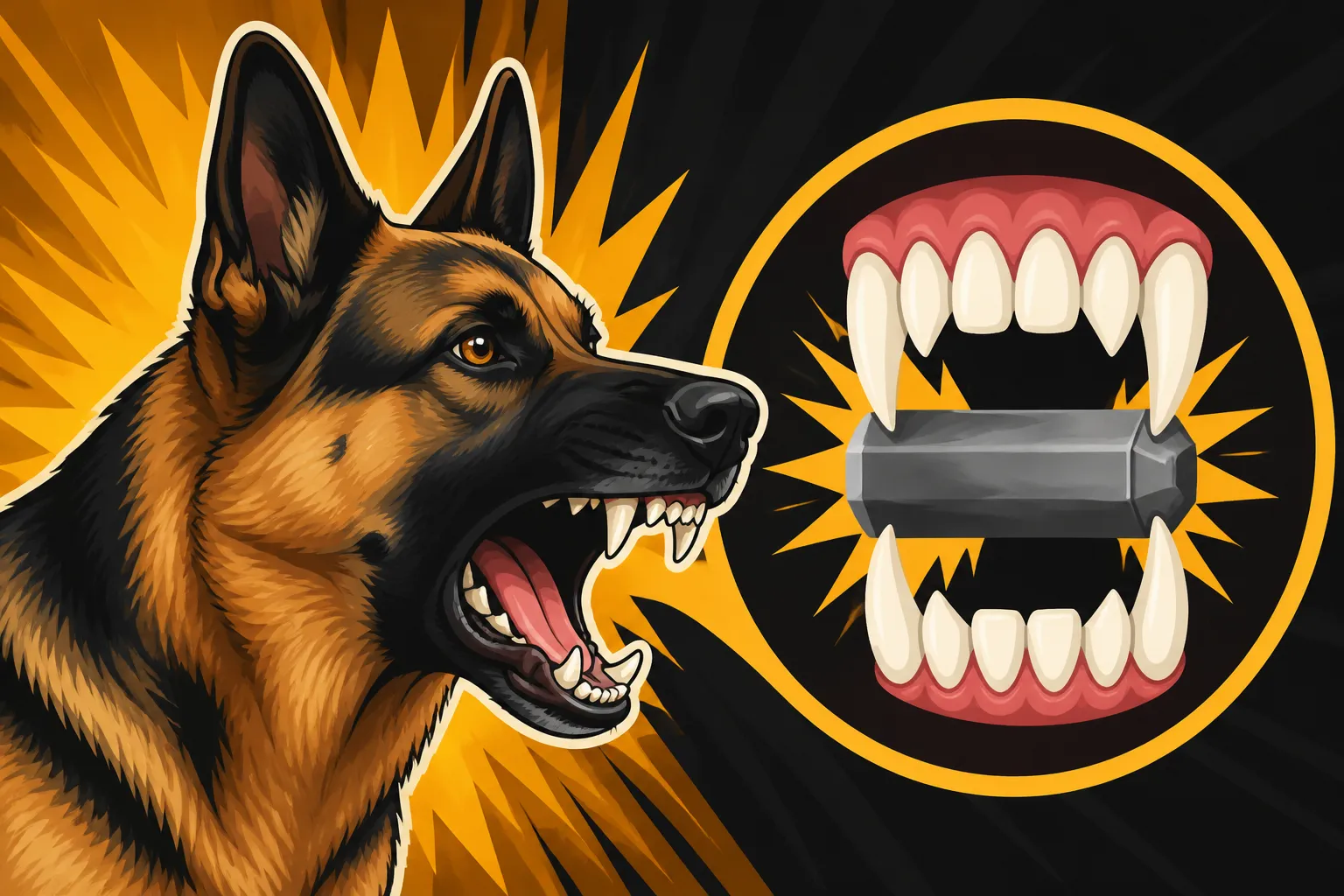
German Shepherd Bite Force Explained
Many people are captivated by the sheer power and presence of a German Shepherd. Their reputation as formidable guardians and loyal companions often comes with an underlying question, or perhaps a slight apprehension: "Just how strong is a German Shepherd's bite?" It's a question rooted in both respect for the breed's capabilities and a natural concern for safety. This comprehensive guide will peel back the layers of myth and fact to explain what bite force truly means for these magnificent dogs, how it's measured, and, most importantly, how responsible ownership and training translate into a safe and loving relationship with your powerful companion.
What Exactly Is "Bite Force"?
When we talk about a dog's "bite force," we're delving into a concept that often gets sensationalized and misunderstood. It's not just about how big their teeth are, but a complex interplay of anatomy, muscle, and physics. Understanding the basics helps us appreciate the true strength of a German Shepherd's jaws without falling prey to exaggerated claims.
Defining PSI and How It Applies to Dogs
Bite force is typically measured in pounds per square inch (PSI). Imagine pressing a certain number of pounds onto a single square inch of surface area – that's essentially what PSI represents. In a controlled laboratory environment, scientists use specialized sensors to measure the force exerted when a dog bites down. These sensors are designed to capture the pressure applied, giving us a numerical value for their bite strength. However, it's crucial to remember that these are often averages, and a dog's bite can vary greatly depending on the situation and how they engage their jaws.
A common human bite, for comparison, might range from 120 to 160 PSI for an average person. This baseline helps put canine bite forces into perspective. For German Shepherds, while various studies might yield slightly different results, the numbers generally indicate a powerful bite. It’s a testament to their robust build and functional design, traits that are highlighted in a comprehensive German Shepherd Breed Guide.
The Anatomy of a Powerful Bite
A German Shepherd's formidable bite isn't just a random attribute; it's a product of carefully evolved anatomy. Their skulls are designed to house powerful jaw muscles, primarily the masseter and temporalis muscles, which are incredibly strong and efficient at closing the jaw with considerable force. These muscles work in concert, allowing them to exert significant pressure on whatever they're biting.
Beyond the muscles, the structure of their jawbones themselves contributes to their biting prowess. The way their upper and lower jaws align, coupled with the strength of the bones, creates a highly effective leverage system. This makes their bite more than just a quick snap; it's a powerful clamp, designed for gripping and holding with remarkable tenacity.
Then there are their teeth, which are perfectly adapted for their roles. German Shepherds possess large, sharp canines designed for tearing and gripping, making them excellent at holding onto objects – or, unfortunately, flesh, if provoked. Behind these, their premolars and molars are strong and capable of crushing, aiding in processing food or in more aggressive defensive actions. This combination of powerful muscles, sturdy bone structure, and specialized dentition is what gives the German Shepherd its impressive bite strength.
German Shepherd Bite Force: The Numbers and Nuances
The topic of German Shepherd bite force is often clouded by sensationalism and a lack of accurate information. It's easy to find internet anecdotes citing wildly exaggerated numbers, which only serve to heighten fears or misconceptions about the breed. Let's delve into what the actual data suggests and separate fact from fiction.
Debunking Common Myths and Exaggerations
One of the most persistent myths you'll encounter is the idea that German Shepherds have a bite force of 1,000 PSI or even more, sometimes reaching into the thousands. While these figures sound impressive and certainly contribute to the breed's intimidating image, they are largely unsubstantiated and highly exaggerated. These numbers often stem from misinterpretations, outdated studies, or simply urban legends that get passed around. Real scientific measurements tell a different, more nuanced story.
It's also important to distinguish between a dog's maximum potential bite force in a laboratory setting and the force applied in a real-world scenario. A dog might theoretically be capable of a certain PSI, but a defensive or fear-based bite in a chaotic situation might not engage their full muscle potential. Moreover, the type of bite – a warning nip, a quick snap, or a sustained clamp – will also drastically affect the actual force delivered.
Reported Averages and What They Mean
Based on various studies, the average bite force for a German Shepherd typically falls within the range of approximately 200-300 PSI. Some sources might put it slightly higher, sometimes up to 350-400 PSI, but these are generally maximums under ideal conditions. To put this in perspective, an average human bite is around 120-160 PSI. So, while a German Shepherd's bite is indeed significantly more powerful than a human's, it's not in the range of, say, an alligator or a grizzly bear, which can exert forces well into the thousands of PSI.
These reported averages are derived from scientific testing, often involving specialized bite sleeves or pressure plates designed to measure the impact. It's not always easy to get a dog to deliver a full-force bite on demand in a non-threatening situation, which is why these numbers should be viewed as estimates within a range. The key takeaway is that German Shepherds possess a strong and capable bite, which is a natural aspect of their physiology and something any owner should respect and understand. For more on their natural inclinations, consider reading up on Understanding German Shepherd Behavior.
Factors That Influence a German Shepherd's Bite Strength
While we have established a general range for a German Shepherd's bite force, it's not a static number. Several dynamic factors can influence just how much pressure these powerful dogs can exert. It's a combination of nature, nurture, and circumstance that dictates the strength of any individual dog's bite.
Genetics and Breed Lineage
Just like in humans, genetics play a significant role in determining physical traits, and bite strength is no exception. Within the German Shepherd breed, there are different lines, such as working lines and show lines, which have been bred for specific characteristics. Working line German Shepherds, often selected for demanding tasks like protection, police work, or military service, may exhibit more pronounced jaw strength and musculature due to generations of selective breeding for functional robustness.
The overall bone structure and muscle mass, which are heavily influenced by genetics, directly impact bite force. A dog with a naturally broader skull and more developed jaw muscles will inherently have the potential for a stronger bite. This is a foundational aspect of their physical makeup, something that is largely predetermined from birth, although it can be developed through proper care and exercise. Understanding these nuances is part of appreciating the distinct traits of, for example, a Working Line vs Show Line German Shepherd.
Age, Size, and Physical Condition
A German Shepherd's bite force isn't consistent throughout its life. A puppy, with its developing bones and muscles, will naturally have a much weaker bite than a fully grown adult. As they mature, their skull fuses, jaw muscles strengthen, and permanent teeth fully erupt, all contributing to an increase in bite strength. This developmental process is a critical time for teaching bite inhibition and proper mouth manners.
Beyond age, the sheer size and physical condition of an adult German Shepherd are also significant contributors. A larger, more muscular dog will generally have the physical capacity to exert more force than a smaller, less developed one. Nutrition plays a vital role here; a well-fed dog with adequate protein and a balanced diet will develop stronger muscles and bones. Regular exercise that builds overall strength and maintains a healthy weight also supports optimal physical conditioning, which includes jaw strength. You might find durable chew toys that can help maintain strong jaws and healthy teeth at retailers like Chewy, offering a wide array of options for dogs of all ages and sizes.
Motivation and Emotional State
Perhaps the most critical factor influencing a German Shepherd's bite is their motivation and emotional state. A bite is rarely unprovoked; it's often a response to fear, pain, stress, or a perceived threat. The intent behind the bite dramatically impacts the force applied. A dog nipping in play might use minimal force, whereas a dog biting out of intense fear or defense of its territory could deliver a full-force, sustained bite.
For example, a German Shepherd that is startled and snaps might deliver a quick, shallow bite, often more of a warning than an attack. In contrast, a dog defending its home from what it perceives as an intruder, or protecting its puppies, might engage with maximum force and tenacity. Understanding these nuances is vital for owners. Recognizing the signs of fear, anxiety, or escalating aggression in your dog can help you intervene before a bite occurs, illustrating that training and behavioral understanding are just as important as knowing the raw numbers of bite force.
German Shepherd Bite Force Compared to Other Breeds
When considering a German Shepherd's bite force, it's helpful to put it in context with other breeds. While their power is undeniable, they don't necessarily hold the top spot among all canine species. This comparison helps to provide a balanced perspective on their capabilities.
A Look at Other Powerful Breeds
Many large breeds are known for their formidable bite forces, and the German Shepherd stands proudly among them, though not always at the very peak. Breeds frequently cited for having exceptionally strong bites include Rottweilers, often measured in the 300-330 PSI range, and various Mastiff breeds (like the Cane Corso or English Mastiff) which can also exceed 500 PSI due to their sheer size and jaw structure. Pit Bull-type dogs, while often unfairly maligned, also possess strong bites, typically in a similar range to German Shepherds, around 235-300 PSI.
The German Shepherd's bite, usually in the 200-300 PSI bracket, places them firmly in the category of powerful biters. They are certainly stronger than many smaller or medium-sized breeds, but they are not the absolute strongest among all dogs. This spectrum highlights that while they have the capacity for a powerful bite, it's a feature shared by many larger, sturdier working breeds.
Here's a simplified table comparing approximate average bite forces of some popular breeds. Keep in mind these are averages and individual dogs can vary:
| Dog Breed | Approximate Average Bite Force (PSI) |
|---|---|
| Human (Average) | 120-160 |
| German Shepherd | 200-300 |
| Pit Bull (Various types) | 235-300 |
| Doberman Pinscher | 245-300 |
| Labrador Retriever | 200-250 |
| Rottweiler | 300-330 |
| Mastiff (Various types) | 500+ |
The Importance of Temperament Over Raw Power
While bite force numbers are interesting, they tell only a small part of the story. Far more important than raw power is a dog's temperament, training, and socialization. A dog with a higher PSI but a stable, well-trained, and socialized personality is significantly safer and more predictable than a dog with a lower PSI but a fearful, aggressive, or unsocialized disposition. It’s the likelihood of a bite, and the reason for it, that truly matters.
A German Shepherd, renowned for its intelligence and trainability, has the potential to be an incredibly well-behaved and safe companion, despite its physical capabilities. Their protective instincts, when properly channeled through training and early socialization, make them excellent guardians without being a threat to innocent individuals. Understanding and nurturing their German Shepherd Temperament and Personality is paramount. It’s the responsible owner, not the bite force, that determines whether a powerful dog becomes a beloved family member or a potential liability.
Mitigating Risks: Training, Socialization, and Responsible Ownership
Owning a German Shepherd comes with the responsibility of managing their powerful instincts and physical capabilities. While their bite force is impressive, it's a tool that can be safely managed and redirected through consistent training and dedicated socialization. These practices are the cornerstone of preventing unwanted incidents and fostering a well-adjusted companion.
Early Socialization and Bite Inhibition Training
One of the most critical aspects of raising a German Shepherd, particularly a puppy, is instilling strong bite inhibition. This isn't about preventing them from ever biting anything, which is unrealistic for a canine, but rather teaching them to control the pressure of their bite. Puppies naturally explore the world with their mouths and learn bite inhibition through play with littermates. When they bite too hard, another puppy yelps and stops playing, teaching them that painful bites end the fun.
As owners, we can replicate this by yelping and withdrawing attention when our puppy bites too hard during play. Consistently teaching them that human skin is sensitive helps them learn to be gentle. Beyond bite inhibition, early and extensive socialization is non-negotiable. Exposing your German Shepherd puppy to a wide variety of people, sounds, sights, places, and other friendly, vaccinated dogs from a young age helps them develop into confident, well-adjusted adults who are less likely to react with fear or aggression. This process is fully explored in guides like How to Socialize a German Shepherd and detailed in any good German Shepherd Puppy Training Guide.
Consistent Obedience and Behavior Management
A strong foundation in obedience training is indispensable for any German Shepherd owner. Commands like "sit," "stay," "come," and especially "leave it" or "drop it," are not just tricks; they are vital safety tools that allow you to manage your dog in various situations. A dog that reliably responds to commands is a dog that can be effectively controlled, even when faced with distractions or potential stressors. Consistent daily training sessions, even short ones, reinforce these behaviors and strengthen your bond.
Behavior management also involves proactively addressing any problematic behaviors as soon as they emerge. Nipping, excessive barking, resource guarding, or reactivity on leash should not be ignored, as they can escalate if left unaddressed. Seeking guidance from a professional trainer or behaviorist can be invaluable if you encounter challenges you can't resolve on your own. Resources like How to Train a German Shepherd and German Shepherd Behavior Problems and Solutions offer excellent starting points for maintaining a well-mannered companion. Retailers such as Chewy can provide many helpful training aids, from durable leashes and harnesses to clickers and high-value treats that can make training more effective and enjoyable.
Understanding and Preventing Aggression
While German Shepherds are not inherently aggressive, their powerful build and protective instincts mean that any signs of aggression must be taken extremely seriously. Preventing aggression starts with understanding its root causes, which often include fear, anxiety, pain, lack of socialization, or guarding instincts. Learning to read your dog's body language is crucial: stiff posture, lip licking, yawning, whale eye, growling, or raised hackles are all warning signs that a dog is uncomfortable and might escalate to a bite if ignored.
If you observe any escalating aggression, whether towards other animals or people, it's imperative to seek professional help from a certified dog trainer or veterinary behaviorist. Attempting to "fix" aggression yourself without expert guidance can often make the problem worse or put you and others at risk. Addressing aggression often involves a multi-faceted approach, including behavior modification, environmental management, and sometimes even medication if underlying anxiety or fear is severe. Articles like How to Stop German Shepherd Aggression and How to Stop a German Shepherd from Biting provide insights into recognizing and dealing with these serious issues.
Living Responsibly with a Powerful Breed
Owning a German Shepherd is a commitment to providing not just love, but also structure, exercise, and mental stimulation. Their inherent power requires a responsible approach to daily life, ensuring their needs are met to prevent potential issues and promote a harmonious household.
Exercise and Mental Stimulation
A German Shepherd is a high-energy, intelligent breed that thrives on having a purpose. A bored or under-exercised German Shepherd is a recipe for destructive behaviors, anxiety, and potential aggression. They need more than just a quick walk around the block; they require vigorous physical activity like long hikes, extended games of fetch, or structured runs. This helps burn off their abundant energy and keeps their bodies in peak condition. For detailed guidance on their activity needs, see German Shepherd Exercise Requirements.
Beyond physical exercise, mental stimulation is equally vital. German Shepherds are smart dogs who need to use their brains. This can come in the form of training sessions, puzzle toys, scent work, or even participating in dog sports like agility or obedience trials. Engaging their minds helps prevent boredom and gives them a healthy outlet for their intelligence, reducing the likelihood of them inventing their own, less desirable "jobs" around the house. Chewy offers a vast selection of puzzle toys and durable chew toys that can keep even the most energetic German Shepherds mentally stimulated and their jaws happy.
Secure Containment and Supervision
Given their size, strength, and protective instincts, secure containment is non-negotiable for German Shepherds. A sturdy, appropriately sized fence is essential for any yard, preventing them from wandering or engaging in unauthorized "guarding" of passersby. When out in public, a strong leash and harness (or collar) are not just polite, but absolutely necessary for control. Even the best-trained dog can be unpredictable in certain situations, and physical control is your last line of defense.
Supervision is equally important, especially when a German Shepherd is around children or unfamiliar people and pets. While many GSDs are wonderful family dogs, their size and play style can sometimes be overwhelming for small children, and their prey drive might be triggered by smaller animals. Always supervise interactions, teach children how to behave around dogs, and understand your dog's comfort levels. This proactive approach helps prevent incidents before they start.
Regular Vet Check-ups and Health
A healthy dog is generally a happy and well-behaved dog. Regular veterinary check-ups are crucial for catching any underlying health issues that could contribute to behavioral changes. Pain, for instance, can make even the most docile dog irritable or prone to snapping. Dental pain, joint discomfort (such as from conditions like hip or elbow dysplasia, which can be common in the breed), or other illnesses can all manifest as unexpected aggression or a lowered tolerance for handling.
Ensuring your German Shepherd maintains good overall health, including proper nutrition and dental care, is a vital part of responsible ownership. Keep an eye out for Signs of a Healthy German Shepherd and address any concerns with your vet promptly. A dog free from pain and discomfort is more likely to maintain a stable temperament, making it easier to live safely and happily with your powerful companion. Ultimately, deciding Is a German Shepherd Right for You involves understanding and committing to all these aspects of their care.
Disclaimer
This article is for general informational purposes only and does not constitute professional advice. Laws, prices and regulations vary by location and change over time. Consult a qualified professional for guidance on your specific situation.