Best Brush for a German Shepherd Double Coat
If you're a German Shepherd parent, you know the struggle is real when it comes to shedding. That magnificent double coat, while beautiful, is a force of nature, especially during "blow coat" season! Finding the right tools to manage all that fur isn't just about keeping your house cleaner; it's vital for your dog's skin health and comfort. This comprehensive guide will walk you through understanding your German Shepherd's unique coat and exactly which brushes will make grooming a breeze, not a battle.
Understanding Your German Shepherd's Double Coat
Before we dive into specific brushes, it’s crucial to truly appreciate what makes a German Shepherd's coat so special, and why it requires specialized care. This isn’t just any dog coat; it's a marvel of canine engineering, designed for protection and insulation.
The Anatomy of a German Shepherd's Coat
Your German Shepherd’s coat isn't just one layer; it’s a sophisticated dual-layer system. First, there's the outer coat, often called the guard coat. These hairs are typically coarser, longer, and more robust. They're designed to protect your dog from the elements—think rain, snow, and harsh sun. The guard hairs repel water and dirt, and they give your German Shepherd that iconic sleek or plush appearance. They also provide a barrier against minor scrapes and insect bites.
Beneath this protective shield lies the real secret weapon: the undercoat. This layer consists of softer, denser, and shorter hairs. The undercoat's primary job is insulation. In cold weather, it traps warm air close to the body, keeping your dog toasty. In hot weather, a healthy, well-maintained undercoat actually helps regulate body temperature by preventing the skin from overheating. This dual functionality is why you absolutely should never shave a German Shepherd, despite how tempting it might be during summer months. Shaving disrupts this natural system and can lead to skin problems and an inability to properly regulate their temperature.
Why a Double Coat Requires Specific Brushes
Because of this intricate two-layer design, you can't just grab any old brush and expect it to do the job. A brush designed for a single-coated breed, like a Boxer or a Greyhound, will simply skim over the top, barely touching that dense undercoat. This is where many owners get frustrated, feeling like they're brushing endlessly with no real impact. The undercoat, if not regularly brushed, can become matted and compacted.
When the undercoat mats, it pulls on the skin, causing discomfort and potential skin infections because air can't circulate properly. It also traps loose hair, which contributes to the infamous German Shepherd "tumbleweeds" around your home. Regular, proper brushing with the right tools ensures that dead undercoat is removed, allowing new, healthy hair to grow in, promoting good air circulation, and significantly reducing shedding. This is also where you'll find great tips on How to Manage German Shepherd Shedding Year-Round.
The Essential Brushes for German Shepherd Grooming
Now that we understand the "why," let's talk about the "what." Having the right arsenal of grooming tools is paramount for maintaining a healthy and happy German Shepherd. You won't need just one brush; a combination of tools will be your best friends in the battle against loose fur and mats.
Deshedding Tools
When people think of reducing German Shepherd shedding, a good deshedding tool often comes to mind first. These tools are specifically designed to reach through the topcoat and effectively remove loose, dead undercoat without cutting the guard hairs. This is particularly crucial during "blow coat" seasons, which typically happen twice a year, usually in spring and fall.
A quality deshedding tool features fine, short teeth that are tightly spaced. When used correctly, it pulls out an astonishing amount of dead fur that would otherwise end up on your furniture and floors. Brands like Furminator are well-known in this category, and you can find them readily available on sites like Amazon or Chewy. It's important to use these tools carefully, though. Over-using a deshedding tool or pressing too hard can irritate your dog's skin, so always follow the manufacturer's instructions and pay attention to your dog's comfort. For more detailed advice on this, check out our guide on How to Deshed a German Shepherd.
Slicker Brushes
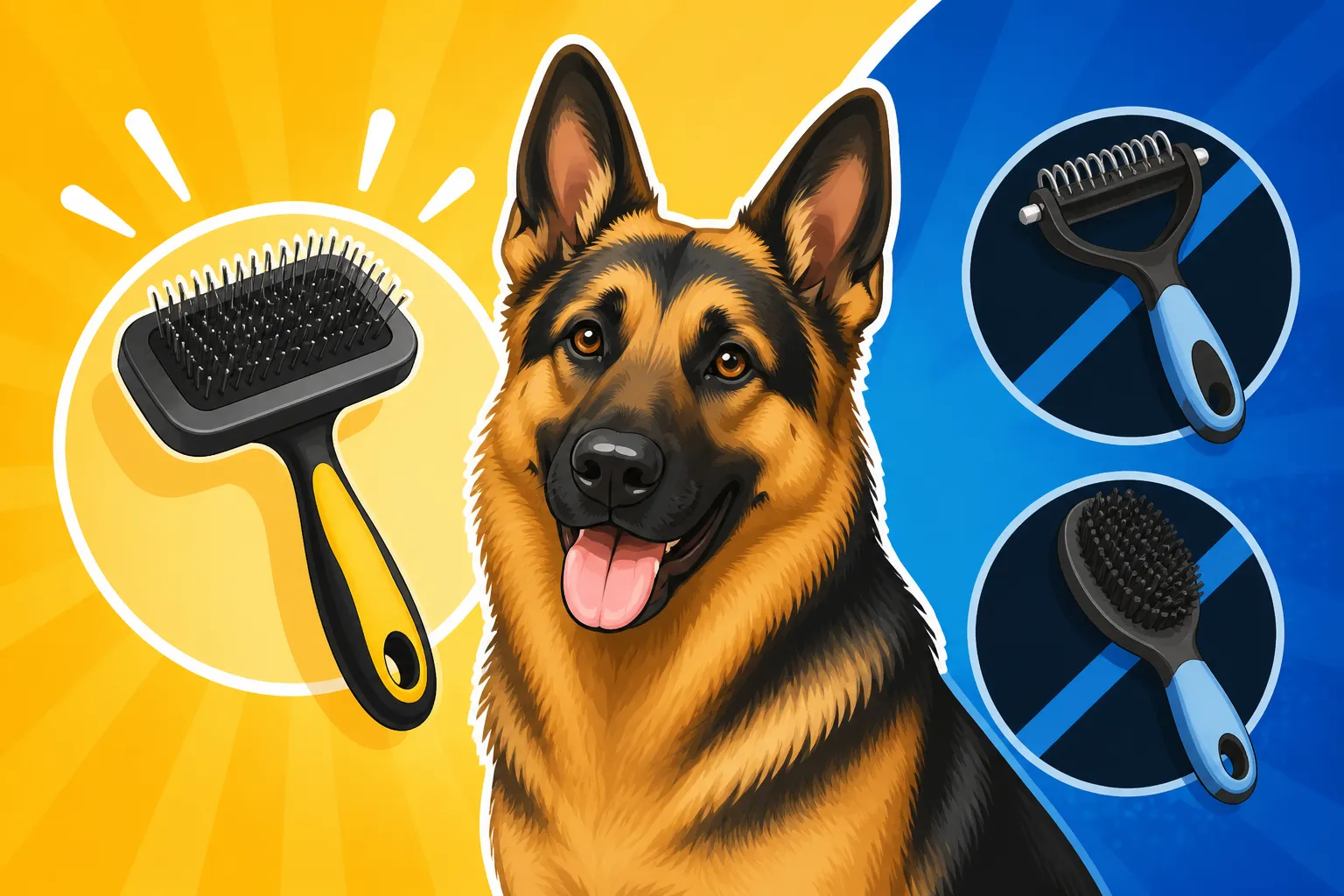
Slicker brushes are another indispensable tool in your German Shepherd grooming kit. These brushes are easily recognizable by their rectangular or square heads covered with fine, short wires bent at an angle. They’re excellent for removing surface mats, tangles, and loose hair from both the topcoat and some of the undercoat.
For German Shepherds, a large slicker brush with sturdy pins is usually best to cover more surface area efficiently. They are particularly useful for breaking up smaller tangles before they become major mats, especially in areas like behind the ears, under the legs, and the tail, where the fur can be a bit longer and more prone to knotting. Slicker brushes also help to smooth the coat, distributing natural oils and leaving your German Shepherd looking neat and tidy. Regular use of a slicker brush can really enhance your dog's overall coat health and shine.
Undercoat Rakes
The undercoat rake is arguably the most important tool for a German Shepherd, especially if your dog has a very dense undercoat or during heavy shedding periods. Unlike deshedding tools that have very fine, close-set teeth, undercoat rakes have widely spaced, longer teeth, often with rounded ends to prevent scratching the skin.
Their purpose is right in their name: to rake through the thick undercoat, gently pulling out large quantities of loose, dead fur that might be missed by other brushes. They are designed to penetrate deep into the coat without snagging the guard hairs. Using an undercoat rake can dramatically reduce shedding and prevent matting. It’s also much more comfortable for your dog than trying to force a less suitable brush through a thick undercoat. When you’re looking to purchase grooming supplies, consider checking out Ollie for high-quality pet products, including grooming essentials. You'll find that using an undercoat rake is a core part of effective How to Groom a German Shepherd.
Pin Brushes
A pin brush looks a lot like a human hairbrush, featuring widely spaced, wire pins with protective tips. While it doesn't do the heavy lifting of deshedding or de-matting, a pin brush is fantastic for everyday grooming, particularly for German Shepherds with longer or thicker guard hairs.
These brushes are excellent for general coat maintenance, removing loose hairs that are closer to the surface, and smoothing the topcoat. They also help stimulate the skin and distribute natural oils, which contribute to a healthy, shiny coat. A pin brush is a gentle option for dogs who might be sensitive to the more aggressive deshedding tools, making it a good starting point for puppies or for daily, light grooming sessions. It’s also a great way to finish a grooming session, leaving your German Shepherd looking polished and feeling pampered.
Bristle Brushes
Bristle brushes typically feature natural or synthetic bristles set closely together. They are not designed for deep penetration into a double coat but are superb for finishing touches. A bristle brush helps to remove fine dust and loose hair from the surface, smooth the coat, and enhance its natural shine by distributing oils evenly.
For a German Shepherd, a bristle brush is best used after you've thoroughly worked through the undercoat with other tools. It's like the final polish for their magnificent coat, giving it that lustrous, healthy appearance. It's a gentle and pleasant experience for most dogs and can be a nice way to end a grooming session, reinforcing the positive association with being brushed.
Here's a quick summary of the best brushes and their uses:
| Brush Type | Primary Function | Ideal Use Case |
|---|---|---|
| Undercoat Rake | Deep undercoat removal, preventing mats | Heavy shedding seasons, dense undercoats, weekly maintenance |
| Deshedding Tool | Removes loose undercoat from deep within the fur | During "blow coat" season, reducing overall shedding |
| Slicker Brush | Detangles, removes surface mats and loose hair | General grooming, areas prone to tangles (ears, legs, tail) |
| Pin Brush | General grooming, stimulates skin, distributes oils | Daily light brushing, longer topcoats, sensitive dogs, finishing |
| Bristle Brush | Smoothes coat, adds shine, removes fine debris | Finishing touch after detangling/deshedding, light daily touch-ups |
How to Effectively Brush Your German Shepherd
Now that you've got your arsenal of brushes ready, let's talk about the technique. Having the right tools is only half the battle; knowing how to use them effectively and consistently is what will truly make a difference in managing your German Shepherd's coat.
Establishing a Grooming Routine
Consistency is key when it comes to grooming a German Shepherd. It's far better to do shorter, regular brushing sessions than infrequent, marathon struggles. Aim for at least 2-3 times a week, and daily during heavy shedding periods like German Shepherd Blow Coat Season Explained. This not only keeps shedding under control but also helps your dog get accustomed to the process, making it a more positive experience for both of you.
Start grooming early, even when they're puppies. Make it a calm, positive experience with lots of praise and treats. Choose a quiet time when your German Shepherd is relaxed. A sturdy grooming table can be helpful, or simply a comfortable spot on the floor where you can easily reach all parts of their body. Having a routine helps to prevent mats from forming and keeps their skin and coat healthy. Regular grooming also gives you an opportunity to check for any skin issues, lumps, or parasites that might go unnoticed otherwise. Don't forget their German Shepherd Dental Care Explained as part of a comprehensive routine!
Step-by-Step Brushing Techniques
A systematic approach will ensure you cover all areas and maximize effectiveness. Always start with the least invasive tools and progress to the more intensive ones as needed.
- Start with a Pin or Slicker Brush: Begin by gently going over your German Shepherd's entire coat with a pin or slicker brush. This helps to remove any loose debris, surface tangles, and provides a gentle warm-up for deeper brushing. Work in small sections, always brushing in the direction of hair growth. This stage helps to identify any larger mats that need special attention.
- Move to the Undercoat Rake: Once the surface is clear, pick up your undercoat rake. Starting from the neck and working your way down the body, use long, gentle strokes. Ensure the rake's teeth are penetrating through the topcoat and into the undercoat. You'll likely pull out significant amounts of dead undercoat. Pay extra attention to the dense areas like the ruff, haunches, and the "pants" on their hind legs. Be careful around sensitive areas like the belly and armpits.
- Use a Deshedding Tool (Sparsely): If your German Shepherd is actively shedding heavily, now is the time for the deshedding tool. Use it after the undercoat rake has removed the bulk of the loose fur. Again, work in sections, using short, deliberate strokes that pull from the base of the hair to the tip. Remember the rule: if you’re getting a lot of hair with a deshedding tool, that’s great. If you’re not, or if it seems to be pulling healthy hair, you might be over-doing it or need to switch back to the rake. Don't overdo it, as excessive use can damage the topcoat or irritate the skin.
- Finish with a Bristle Brush: Once you've removed all the loose undercoat and tangles, grab your bristle brush. Use it to smooth down the coat, distribute natural oils, and give your German Shepherd a shiny, polished look. This final step also feels good to most dogs, ending the session on a positive note.
Dealing with Mats and Tangles
Mats and tangles are an inevitable part of owning a German Shepherd, especially if their grooming routine lapses or if they get particularly dirty or wet. Addressing them promptly is crucial.
For small tangles, a slicker brush can often work them out. Hold the hair at the base near the skin and gently brush out the tangle from the ends inward, slowly working your way up. For more stubborn mats, you might need a mat splitter or a dematting comb. These tools are designed to carefully cut through the mat without damaging too much surrounding hair. If you encounter a particularly large or tight mat, do not try to rip it out – this is extremely painful for your dog. Instead, use blunt-nosed scissors to carefully cut into the mat, parallel to the skin, to break it into smaller, more manageable sections.
If a mat is very close to the skin or covers a large area, it's always best to consult a professional groomer or your vet. They have the tools and expertise to remove severe matting safely and comfortably for your German Shepherd. Remember, preventing mats through regular brushing is much easier and less stressful for everyone involved!
Common Brushing Mistakes to Avoid
Even with the right tools, it's easy to fall into habits that aren't ideal for your German Shepherd's coat health. Being aware of these common pitfalls can save you a lot of frustration and keep your furry friend comfortable and looking their best.
Using the Wrong Tools
This is perhaps the biggest mistake German Shepherd owners make. As we've discussed, a German Shepherd's double coat is unique. Using brushes designed for short-haired breeds or single-coated dogs will be largely ineffective. For example, a soft bristle brush used primarily for short-haired dogs will glide over the topcoat of a German Shepherd, doing absolutely nothing for the dense undercoat or the deep shedding that occurs. You'll spend ages brushing, feel like you're accomplishing nothing, and still have fur bunnies rolling across your floor.
Similarly, trying to de-mat a heavily tangled German Shepherd with just a pin brush will be a futile and painful exercise for your dog. Each tool has a specific purpose, and understanding those purposes, as outlined above, is fundamental to effective grooming. Investing in the correct undercoat rake, deshedding tool, and slicker brush is an investment in your dog's health and your sanity. You can usually find great starter kits for German Shepherd grooming on reputable pet supply sites. To avoid further mistakes, make sure you're also following proper guidance on German Shepherd Coat and Skin Care.
Over-Brushing or Under-Brushing
It might sound contradictory, but both too much and too little brushing can cause issues.
Under-brushing: This is the more common problem. Infrequent brushing allows the dead undercoat to accumulate, leading to severe matting, compacted fur, and an overwhelming amount of shedding. Compacted undercoat can prevent air circulation, leading to skin irritation, hot spots, and even infections, especially in humid weather. When mats form, they pull on the skin, causing constant discomfort. Under-brushing also means you miss opportunities to check for skin problems, fleas, or ticks. For guidance on how often to brush, take a look at our article on How Often to Brush a German Shepherd.
Over-brushing: While less common with the right tools, over-brushing, especially with a deshedding tool, can irritate your German Shepherd's skin. Repeated, aggressive strokes in the same area can cause brush burn or make the skin sensitive. It can also strip the coat of healthy oils, leading to dry skin and a dull coat. The key is gentle, thorough strokes and knowing when enough is enough. If you’re getting very little hair with a deshedding tool, it's probably time to switch to a different brush or conclude the session. Always observe your dog's reactions. If they start to show signs of discomfort or pain, lighten your touch or stop. The goal is a clean, healthy coat, not a raw skin. Also, be mindful that during German Shepherd Blow Coat Season Explained, you will be brushing more, but even then, gentleness is paramount.
Disclaimer
The information provided in this guide is intended for general educational purposes only and should not be considered a substitute for professional veterinary advice. Always consult with a qualified veterinarian or professional groomer regarding any specific concerns about your German Shepherd's health or grooming needs.