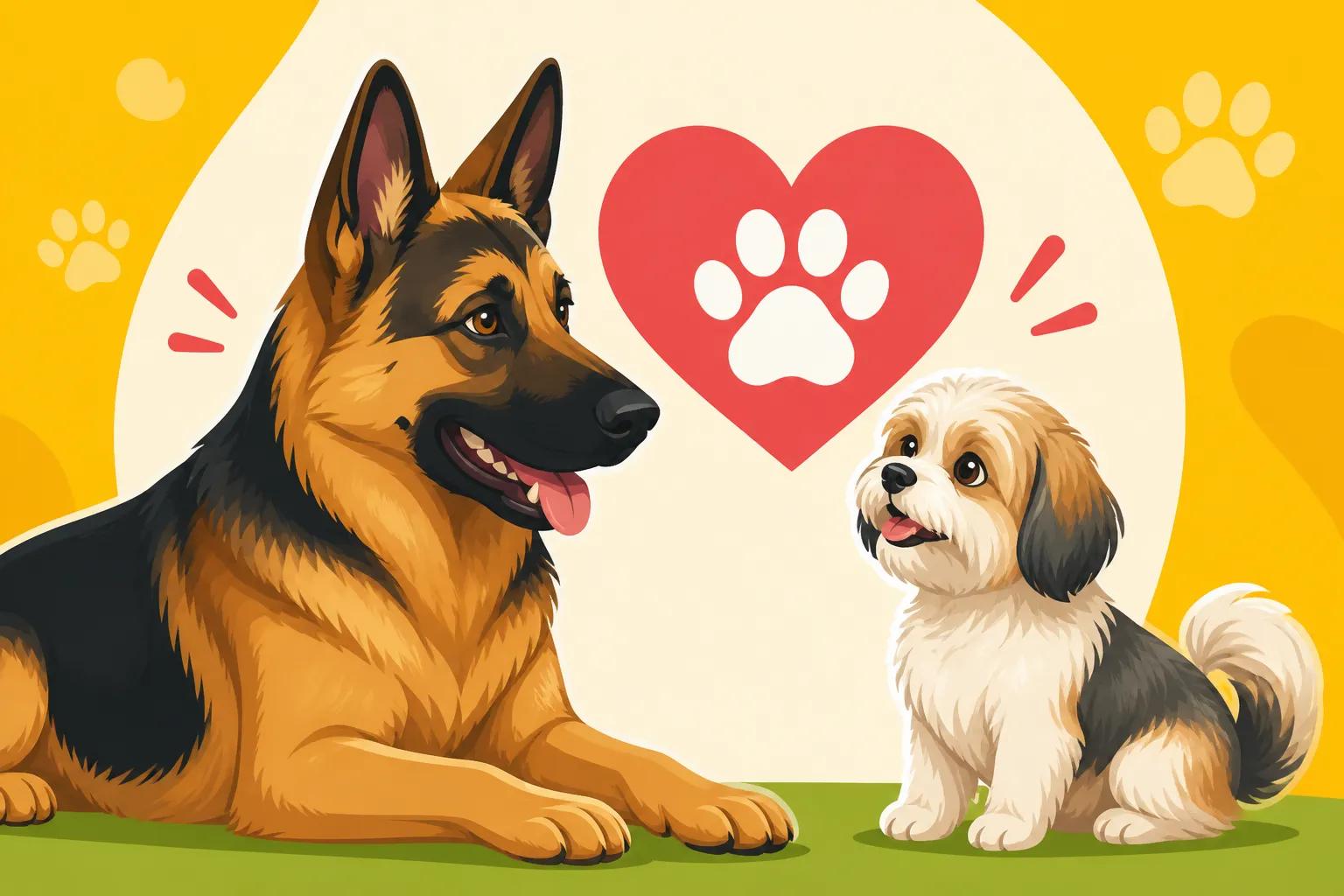
Do German Shepherds Get Along with Small Dogs
One of the biggest worries for German Shepherd owners, or those considering bringing one into their home, is how they'll fare with smaller, more delicate companions. It's a completely valid concern – these magnificent dogs are powerful, often possessing a strong prey drive, and the thought of a tiny chihuahua sharing space with a large German Shepherd can certainly bring on some anxiety. This guide is here to tackle that head-on, offering a realistic look at German Shepherd compatibility with small dogs and providing actionable strategies to foster a peaceful, safe multi-dog household.
Understanding German Shepherd Instincts and Temperament
German Shepherds are incredible dogs, known for their intelligence, loyalty, and protective instincts. But understanding their inherent traits is the first step in managing their interactions with smaller pets. It's not about judgment; it's about knowledge and proactive management.
Prey Drive and Herding Instincts
Many German Shepherds possess a natural prey drive. This isn't them being "mean" or "aggressive" – it's a deeply ingrained instinct passed down from their working heritage. This drive can be triggered by fast-moving objects, high-pitched noises, or even just the sight of a smaller animal darting across a room. A small dog's quick movements and size can inadvertently activate this instinct. Think about a squirrel in the yard; a German Shepherd might chase it not because they want to harm it maliciously, but because their instincts tell them to pursue. When that "squirrel" is a small dog, the situation becomes far more dangerous.
Beyond prey drive, German Shepherds also have strong herding instincts. They were bred to control and move livestock, and sometimes this can manifest as trying to "herd" smaller dogs. While this might seem less threatening than prey drive, it can still involve nipping, pushing, or body-slamming, which can easily injure a fragile small dog. Imagine your GSD gently nudging a sheep into place; now imagine that "gentle nudge" applied to a teacup poodle. It's clear why even well-intentioned herding can be problematic. Understanding German Shepherd Prey Drive Explained is crucial for any owner.
Protective Nature and Territory
German Shepherds are renowned for their protective nature. They form strong bonds with their families and can be fiercely territorial, viewing their home and family members as something to guard. While this is often a desirable trait, it can become an issue when introducing a new, smaller dog into the established territory. The GSD might perceive the small dog as an intruder or a threat to their resources – be it food, toys, or even your attention. This protective instinct, if not properly managed, can lead to aggressive displays towards the newcomer.
Furthermore, a German Shepherd might also extend their protective instincts to you when a small dog is around. They might see the small dog as a potential threat to your safety or their relationship with you, leading to tension or conflict. It's a complex dynamic, and recognizing the nuances of their protective behavior is key to managing it effectively.
Socialization's Critical Role
I cannot stress this enough: early and consistent socialization is absolutely fundamental for a German Shepherd, especially if they're going to live with smaller dogs. A well-socialized German Shepherd learns appropriate behavior around different sizes and species from a young age. This means exposing them to a wide variety of sights, sounds, people, and, yes, other appropriate dogs from puppyhood.
If a German Shepherd puppy is raised with a small dog from the beginning, they are much more likely to develop an accepting and even protective bond. They learn that the small dog is part of their "pack" and not a prey item or intruder. Without this crucial early exposure, a GSD might view small dogs as something unfamiliar, scary, or even tempting to chase. This is where many owners run into trouble later on. A solid German Shepherd Puppy Training Guide will always emphasize early socialization.
Factors Influencing Compatibility
Even with a strong understanding of GSD instincts, successful coexistence isn't guaranteed. Several factors come into play, and recognizing these can help you set your dogs up for success.
Age and Socialization History
The age at which dogs are introduced plays a massive role. A German Shepherd puppy, especially one between 8 and 16 weeks, is in a critical socialization window. If they are gently and positively exposed to a well-behaved small dog during this time, they are far more likely to accept and coexist peacefully with small dogs throughout their lives. The little puppy brain is like a sponge, soaking up experiences and forming associations. If those associations with small dogs are positive, you're off to a great start.
However, introducing an adult German Shepherd with an unknown or poor socialization history to a small dog is a different ball game entirely. An adult GSD who hasn't been properly socialized may have a heightened prey drive, fear, or protective tendencies towards small dogs. Their ingrained behaviors are much harder to change. Similarly, a small dog's own temperament and past experiences matter. A timid small dog might be overwhelmed by a large GSD, while an overly yappy or dominant small dog could inadvertently provoke the GSD. It's a two-way street when it comes to How to Socialize a German Shepherd.
Individual Temperament
Just like people, not all German Shepherds are the same. While the breed as a whole shares certain traits, individual personalities vary greatly. You might encounter a German Shepherd who is naturally calm, gentle, and utterly disinterested in small, fast-moving objects. On the other hand, some GSDs might be more high-strung, easily excitable, or have an extremely strong prey drive that makes living with a small dog genuinely unsafe.
The same goes for the small dog. Some small dogs are confident, assertive, and have grown up around large dogs without an issue. Others are fearful, reactive, or prone to nipping, which could easily trigger an unwanted reaction from a German Shepherd. Before any introduction, take an honest assessment of both dogs' individual temperaments. Do you have a mellow GSD and a confident little buddy, or a high-drive GSD and a nervous chihuahua? The combination will heavily dictate your success.
Training and Leadership
Your role as the human leader is paramount. Proper training establishes clear boundaries, expectations, and reliable obedience commands that are absolutely non-negotiable when managing a large dog around a small one. A German Shepherd that responds reliably to commands like "leave it," "stay," "come," and "drop it" is much safer than one who doesn't. These commands allow you to intervene and redirect your GSD's attention if they start to show too much interest in the small dog.
Consistent training reinforces your leadership and teaches your GSD to look to you for guidance, rather than acting solely on instinct. This isn't about dominance; it's about clear communication and trust. If your GSD understands that you are in control of the situation, they are more likely to defer to your judgment. Consider enrolling in German Shepherd Obedience Training Basics to strengthen this bond and control.
Supervision and Safe Spaces
Even with the best training and temperament, constant, vigilant supervision is essential, especially in the initial stages and whenever you can't guarantee safety. This means never leaving your German Shepherd and small dog unsupervised, even for a moment, until you are absolutely certain of their compatibility. A quick trip to the bathroom could be all it takes for an accident to happen.
Creating safe spaces for both dogs is also critical. The small dog needs a place where they can retreat and feel completely secure, away from the GSD. This could be a crate, a room with a baby gate that the small dog can easily pass through (but the GSD cannot), or even a raised bed that only the small dog can access. These safe zones reduce stress for the small dog and prevent the GSD from being able to continuously pester or accidentally injure them. You can find many useful gates and crates on sites like Chewy that can help create these segregated spaces effectively.
Strategies for Successful Introductions and Coexistence
So, you've assessed the situation, understand the risks, and are ready to make this work. Great! Here are some practical steps for fostering a harmonious household.
Controlled Introductions
The first few introductions are crucial and should be managed with extreme care. This isn't a "throw them in together and see what happens" scenario.
- Neutral Territory First: Whenever possible, introduce the dogs on neutral ground, like a park or a friend's fenced yard, rather than immediately bringing the new dog into your German Shepherd's established territory. Keep both dogs on leashes, handled by separate people.
- Parallel Walks: Start with parallel walks, maintaining enough distance so they can see each other but not interact closely. This allows them to get used to each other's presence without direct pressure. Reward calm behavior.
- Scent Swapping: Before they even meet, swap blankets or toys between the dogs' sleeping areas. This lets them get accustomed to each other's scent, a crucial part of canine communication, in a non-threatening way.
- Brief, Supervised Meetings: Once they seem comfortable with parallel walks, allow very brief, controlled, leashed greetings in a safe, contained area. Keep these interactions short and positive, ending on a good note. Look for relaxed body language: loose tails, soft eyes, sniffing. Immediately separate if you see any signs of tension, stiffness, or over-excitement.
- Reinforce Positive Behavior: During these meetings, heavily reward calm and appropriate behavior from both dogs with high-value treats and praise. Make the presence of the other dog a positive experience.
Ongoing Management and Training
Even after successful introductions, the work isn't over. Maintaining a peaceful environment requires ongoing effort.
- Consistent Training: Continue reinforcing obedience commands daily. Commands like "leave it" are vital if your GSD becomes fixated on the small dog. Practice impulse control exercises with your GSD, like waiting for food or toys.
- Separate Feeding: Always feed your German Shepherd and small dog in separate areas to prevent resource guarding issues. This can be in different rooms or in their respective crates.
- Designated Playtime: Ensure both dogs get adequate exercise and mental stimulation individually. For your GSD, this might mean intense fetch or a long hike. For the small dog, it might be a gentle walk or indoor games. Avoid rough play between the GSD and the small dog, as even accidental injuries can happen.
- Crate Training and Gates: Utilize crates for downtime and baby gates to create safe zones where the small dog can escape or just relax without the GSD's presence. This gives both dogs a mental break from each other. Products from Chewy, for instance, offer a wide range of reliable crates and gates to help manage these boundaries effectively. How to Crate Train a German Shepherd provides excellent guidance.
- Equal Attention: Make sure both dogs receive individual attention and affection from you. Don't let one dog monopolize your time, as this can lead to jealousy or resource guarding of your attention.
Providing Individual Needs
Remember that these are two different dogs with different needs.
- Exercise: A German Shepherd needs significant physical and mental exercise daily. If they are under-exercised, they can become bored, destructive, and potentially more prone to misdirected energy or prey drive. Your small dog might need far less, or different types of exercise. Tailor activities to each dog. Check out German Shepherd Exercise Requirements for detailed information.
- Mental Stimulation: German Shepherds are highly intelligent and thrive on mental challenges. Puzzle toys, training sessions, and interactive games can help satisfy this need and burn energy in a constructive way. Again, your small dog might prefer simpler games or just cuddle time. Meeting these individual needs prevents frustration and fosters a calmer environment overall.
- Safe Retreats: Always ensure the small dog has easy access to elevated spaces or secure areas the German Shepherd cannot reach. This empowers the small dog to remove themselves from any potentially overwhelming situation and reduces stress. A cozy bed on a tall perch or a small dog gate can make all the difference.
| Factor | German Shepherd Considerations | Small Dog Considerations | Strategy for Coexistence |
|---|---|---|---|
| Prey Drive | Strong natural instinct, easily triggered by quick movements. | Can trigger prey drive with quick movements and small size. | Strict "leave it" training, constant supervision, separate play. |
| Protective Instincts | May guard resources (food, toys, owner) or territory. | Can feel threatened or overwhelmed by a GSD's guarding behavior. | Separate feeding, individual attention, designated safe spaces. |
| Physical Size/Power | Large and powerful, even accidental bumps can cause injury. | Fragile, susceptible to injury from rough play or accidental contact. | Supervised interactions, no roughhousing, create size-appropriate play zones. |
| Socialization | Crucial for learning appropriate interactions with all sizes. | Needs to be confident and comfortable around larger dogs. | Early, positive, and ongoing exposure to diverse dogs for both. |
| Training | Requires consistent obedience and impulse control. | Benefits from confidence-building and basic manners. | Establish strong leadership, reliable commands for the GSD. |
Recognizing Warning Signs and When to Seek Professional Help
Even with the best intentions and strategies, it’s vital to be vigilant and know when to call in the cavalry.
Subtle Cues of Discomfort
Dogs communicate primarily through body language, and it's essential to become fluent in recognizing subtle signs of discomfort or escalating tension, especially when a German Shepherd is interacting with a smaller dog. Don't wait for a full-blown fight to intervene.
Here's what to watch for:
- Stiff Body Language: A rigid posture, tail held high and stiff, or a "hard stare" from the GSD are all red flags. The small dog might also become very still, tuck its tail, or try to hide.
- Lip Licking or Yawning (Out of Context): These are often appeasement signals, indicating stress or an attempt to de-escalate a perceived threat. If your GSD is repeatedly lip-licking or yawning when the small dog is near, they're uncomfortable.
- Whale Eye: This is when you can see the whites of a dog's eyes. It signals high stress or fear.
- Growling or Snarling: These are obvious warning signs. While some dogs play-growl, learn the difference. A low, rumbling growl, especially with other tense body language, means "back off."
- Mounting or Herding Attempts: While not always aggressive, persistent mounting or overly enthusiastic herding attempts from the GSD can be intimidating and potentially physically harmful to a small dog.
- Resource Guarding: If the GSD starts guarding toys, food, or even their bed more intently when the small dog is around, it's a sign of underlying tension. This is a common German Shepherd Behavior Problems and Solutions area.
- Excessive Barking or Lunging: These are clear indicators that one or both dogs are not comfortable with the interaction.
If you observe any of these signs, immediately and calmly separate the dogs and re-evaluate your strategy. Sometimes, just giving them a break in separate rooms is enough to reset the dynamic.
When Professional Intervention is Necessary
There are times when despite your best efforts, you might feel out of your depth, or the situation simply isn't improving. That's not a failure on your part; it's a recognition that some behaviors require expert guidance.
You should seriously consider bringing in a professional dog trainer or a certified veterinary behaviorist if:
- Aggression is Present: Any actual bites, even minor ones, or clear attempts to bite (snapping, lunging with intent) between your German Shepherd and the small dog. This is critical. How to Stop German Shepherd Aggression is a complex issue requiring careful handling.
- Constant Tension: You can never relax when the dogs are together, constantly worried about what might happen. If the dogs are always stiff, avoiding each other, or displaying frequent low-level stress signals.
- Fear or Injury: The small dog is showing extreme fear (cowering, urinating, yelping) or has sustained any injuries, even minor scratches.
- Uncontrollable Prey Drive: Your German Shepherd's prey drive towards the small dog seems uncontrollable and you cannot reliably interrupt or redirect it.
- Your Safety is at Risk: You feel unsafe intervening in their interactions, or the GSD is showing aggression towards you when you try to separate them.
A professional can observe the interactions, identify specific triggers, and develop a tailored training and management plan. They can teach you techniques for behavior modification and help ensure the safety of both your dogs. Finding a qualified, experienced professional is an investment in the long-term well-being of your entire household. They often have insights and tools that an owner, even a seasoned one, might overlook.
Ultimately, German Shepherds and small dogs can absolutely get along and even form incredibly strong bonds. It requires careful consideration of their individual temperaments, diligent training, proactive management, and an unwavering commitment from you, the owner. It's not a path for the faint of heart, but the reward of seeing your beloved GSD gently interact with a tiny companion is truly priceless.
Disclaimer
This article is for general informational purposes only and does not constitute professional advice. Laws, prices and regulations vary by location and change over time. Consult a qualified professional for guidance on your specific situation.