German Shepherd Clicker Training: Step-by-Step
Trying to train your German Shepherd can feel like a constant battle, especially when they just don't seem to grasp what you're asking, leading to frustration for both of you. It's tough when you pour your heart into teaching, only for your dog to look confused or simply ignore you. This comprehensive guide will walk you through the precise, step-by-step process of German Shepherd clicker training, transforming communication and building a stronger, more positive bond with your intelligent canine companion.
Understanding Clicker Training for Your German Shepherd
Clicker training is far more than just a little plastic device; it's a powerful communication tool rooted in behavioral science that can dramatically enhance how you train your German Shepherd. These intelligent dogs thrive on clarity and consistency, and clicker training delivers exactly that, making it an ideal method for unlocking their full potential.
What is Clicker Training and Why it Works
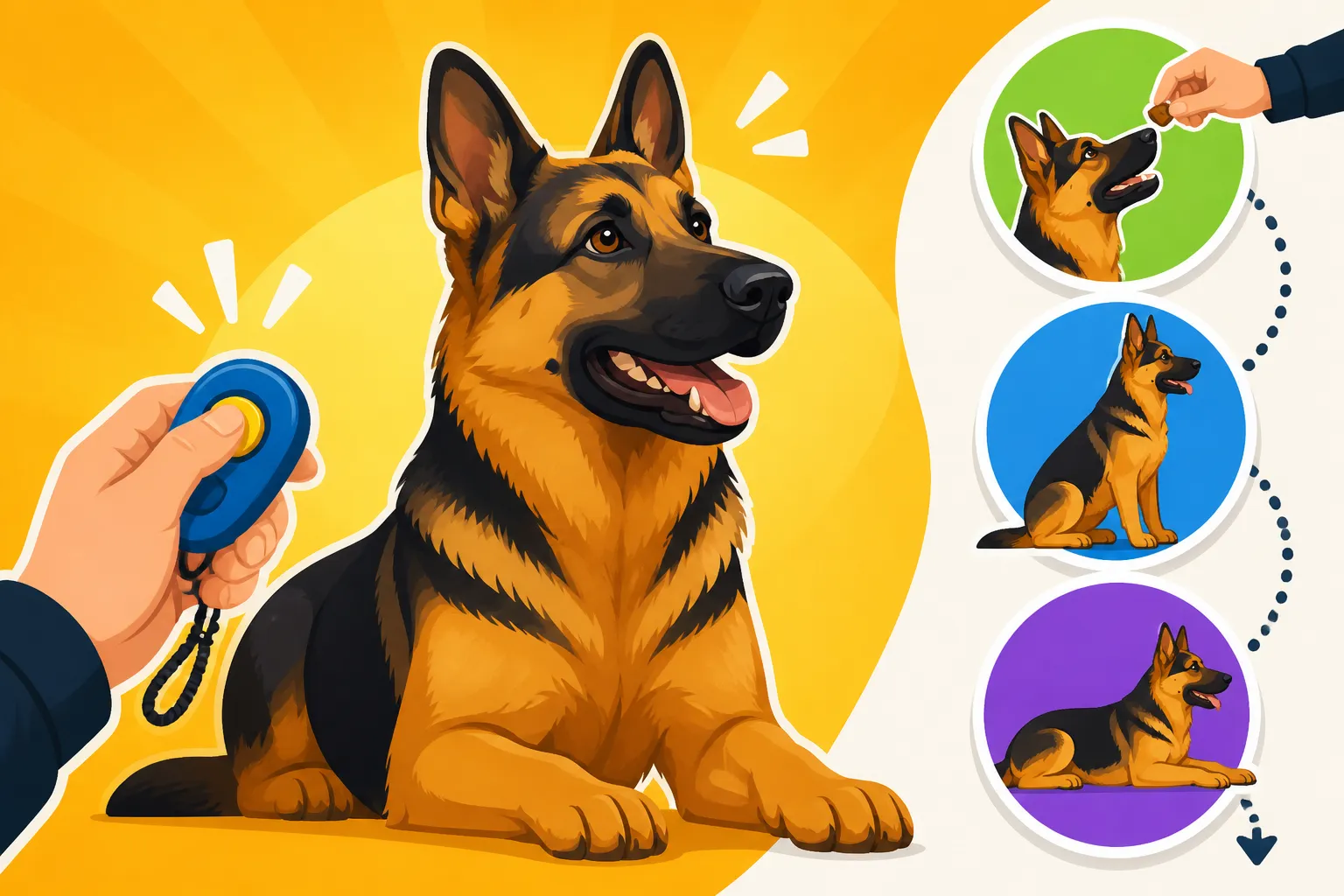
At its core, clicker training is a form of positive reinforcement that uses a distinct sound (the click) to mark the exact moment your dog performs a desired behavior. Think of the click as a "snapshot" – it precisely tells your German Shepherd, "YES! That's exactly what I wanted you to do!" This immediate, unambiguous feedback is crucial because dogs live in the moment. A treat given even a few seconds after the desired action can inadvertently reinforce something else entirely. For a breed as smart and observant as the German Shepherd, this clarity accelerates learning incredibly.
The science behind it is simple yet profound. It leverages classical conditioning, similar to Pavlov's famous experiment. By consistently pairing the unique sound of the clicker with a high-value treat, the clicker becomes a secondary reinforcer. Soon, your dog associates the click with good things, making it a powerful motivator. German Shepherds are known for their working drive and eagerness to please, but they can also be sensitive. The positive, force-free nature of clicker training builds confidence and trust, making them enthusiastic participants rather than reluctant learners. It minimizes confusion and avoids the need for physical corrections, which can damage their spirit and your relationship.
Essential Supplies for Clicker Training
Before you dive into the exciting world of clicker training, gathering the right tools will set you up for success. You don't need much, but what you do need is important for ensuring the process is smooth and effective for both you and your German Shepherd.
First and foremost, you'll need a clicker. There are various types available, from the classic box clicker with a metal strip that makes a crisp "click-clack" sound to more ergonomic designs like the i-Click, which is easier to press for those with dexterity issues. You can find a wide array of these on platforms like Amazon, making it easy to choose one that fits your hand comfortably. The key is a consistent, distinct sound. It should be loud enough for your dog to hear clearly but not so jarring that it startles them.
Next, and arguably just as important, are high-value treats. These aren't your everyday kibble! For clicker training, you need something truly irresistible to your German Shepherd – small, soft, smelly, and easy to chew quickly. Think tiny pieces of cooked chicken, cheese, hot dogs, or store-bought training treats like Zuke's Mini Naturals. The goal is for your dog to gobble it down instantly, so they're ready for the next repetition. Having a variety of high-value treats can also keep things exciting and prevent your dog from getting bored.
Lastly, a training pouch that clips to your waist is incredibly handy. This allows you to keep treats readily accessible, so you can deliver them immediately after the click without fumbling. A standard leash and collar or harness are also essential for managing your German Shepherd, especially when training in new environments or practicing commands like "How to Do Leash Training with a German Shepherd". Ensure your gear is comfortable and secure for your dog.
Getting Started: Priming the Clicker and Basic Commands
Once you have your supplies ready, the journey into clicker training begins! The first and most critical step is to "charge" the clicker, making it meaningful to your German Shepherd, before moving on to basic commands that lay the foundation for more complex behaviors.
Charging the Clicker (Making it Meaningful)
Before your German Shepherd can understand what the click means, you need to teach them that the sound predicts something wonderful – a treat! This process is called "charging the clicker" or "loading the clicker." It’s incredibly simple but vital for the success of all future training.
Find a quiet spot with minimal distractions. Hold your clicker in one hand and a handful of your high-value treats in the other (preferably in your training pouch for quick access). Without asking for any behavior, simply click the clicker, and immediately (within one second!) give your German Shepherd a treat. Repeat this sequence about 10-20 times. Click, then treat. Click, then treat. Don't say anything, just click and treat. Your German Shepherd might look a little confused at first, but soon you'll see a lightbulb go off. They'll start to associate the sound with the arrival of a tasty reward.
Do this in short sessions, 2-3 times a day, for a day or two. You'll know the clicker is charged when, as soon as you click, your German Shepherd's ears perk up, and they look at you expectantly, often with a happy anticipation for the treat. This is the moment the clicker has become a powerful positive marker, and you've established a clear communication channel. It's a fantastic first step in your overall journey to How to Train a German Shepherd.
Teaching "Sit" and "Down" with the Clicker
With a charged clicker, you're ready to teach some fundamental commands. "Sit" and "Down" are excellent starting points because they are natural behaviors that can be easily lured and marked. Remember, the key is precise timing: click the instant your German Shepherd performs the desired action, then deliver the treat.
Let's start with "Sit." Hold a high-value treat near your German Shepherd's nose. Slowly move the treat in an arc over their head, towards their tail. As their nose follows the treat, their rear end will naturally lower to the ground. The very second their rear touches the floor, click the clicker, then give them the treat. Repeat this process multiple times. Once your dog is consistently sitting with the lure, you can start adding the verbal cue "Sit" as they are moving into position, right before the click and treat. Gradually, you'll be able to fade the lure, and your German Shepherd will sit on the verbal cue alone.
Teaching "Down" follows a similar principle. With your German Shepherd in a sit position, hold a treat near their nose and slowly move it straight down towards the floor, then slightly away from them. As their nose follows the treat to the floor, their body will naturally stretch out into a down position. Again, click the instant their elbows touch the ground, then reward them with the treat. Just like with "Sit," once they reliably go into a down with the lure, start adding the verbal cue "Down" as they're moving into position. Practice these commands in short, fun sessions, especially if you have a German Shepherd puppy, keeping in mind their German Shepherd Puppy Training Guide needs.
Introducing the "Stay" Command
Once your German Shepherd has mastered "Sit" and "Down" reliably, teaching "Stay" is the next logical step in building their obedience. This command is crucial for safety and control, but it requires patience and a gradual increase in difficulty.
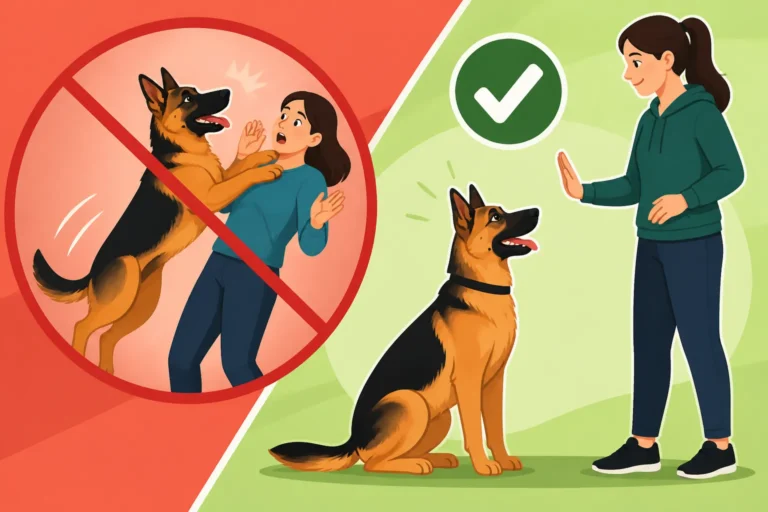
Begin with your German Shepherd in a "Sit" or "Down" position. Give your verbal cue, "Stay," and hold out your open palm towards them as a hand signal. Take one small step back. If your dog remains in position for even a second, immediately step back to them, click, and give them a treat. The trick here is to click before they break the stay, and always return to them to deliver the treat, not call them to you initially. This prevents them from associating breaking the stay with getting a reward.
Gradually increase your distance and the duration of the stay. Take two steps back, then three, clicking and treating for success. Then, try staying one step away for two seconds, then three seconds, and so on. If your German Shepherd breaks the stay, simply restart the exercise without punishment. Avoid using harsh tones; just calmly reset. When you're ready to release them from the stay, use a clear release word like "Okay!" or "Free!" and reward them with praise or a final treat. This teaches them that the stay is over and they can move. This systematic approach is a hallmark of German Shepherd Obedience Training Basics.
Advanced Clicker Training Techniques for German Shepherds
Once your German Shepherd is proficient with basic commands using the clicker, you can start exploring more advanced techniques. These methods leverage your dog's intelligence and desire to learn, enabling you to teach complex behaviors, useful tasks, and even fun tricks.
Shaping Complex Behaviors
Shaping is a powerful clicker training technique that involves rewarding successive approximations of a desired behavior. Instead of waiting for your German Shepherd to perform the entire action, you break the behavior down into tiny, achievable steps and click and reward each step that gets them closer to the final goal.
For example, imagine you want to teach your German Shepherd to put their toys away in a basket. This is a complex behavior. You wouldn't wait for them to do it all at once. Instead, you'd start by clicking and treating them for just looking at the basket. Then, you'd only click when they take a step towards it. Next, only when they put their nose in the basket, then when they pick up a toy, then when they move towards the basket with a toy, and finally, when they drop the toy into the basket. Each successful step is marked with a click and treat, building their confidence and guiding them to the ultimate behavior.
This method requires patience and keen observation on your part, but it’s incredibly rewarding. It allows your German Shepherd to "figure out" the behavior, which is a fantastic mental exercise for this intelligent breed. This can even be applied to more practical behaviors like teaching your dog to close a door or retrieve a specific item from an Amazon purchase. Remember, consistency in your clicks and rewards is paramount for shaping to be effective.
Targeting and Chain Behaviors
Targeting is another valuable clicker training technique where you teach your German Shepherd to touch a specific object or your hand with their nose or paw. This might seem simple, but it opens up a world of possibilities for teaching more intricate "chain behaviors" – sequences of actions.
To teach nose targeting, hold your open palm out a few inches from your German Shepherd's nose. The moment their nose touches your hand, click and treat. Repeat this until they reliably touch your hand. You can then add a verbal cue like "Touch" or "Target." Once they understand this, you can move your hand to different locations (e.g., higher, lower, further away) to get them to move their body. Want your dog to close a door? Target their nose to the door, then to the door handle, then eventually to pushing the door shut.
Chain behaviors involve linking several learned behaviors together into a smooth sequence. For instance, if your German Shepherd knows "Sit," "Stay," and "Come" (a crucial command, learn How to Teach a German Shepherd to Come), you could combine them. Ask for a "Sit," then "Stay," then walk a short distance, call "Come," and reward the successful completion of the entire sequence. With the clicker, you can mark the successful transition from one behavior to the next, reinforcing the entire chain. Many online training programs, such as BAXTER & Bella, utilize these principles to guide owners through comprehensive curriculum.
Fading the Clicker and Hand Signals
While the clicker is an invaluable tool for teaching new behaviors, it's not meant to be used forever. The goal is for your German Shepherd to perform commands reliably on verbal cues and/or hand signals, without needing the clicker present. This process is called "fading the clicker."
As your German Shepherd consistently performs a behavior on cue (e.g., "Sit" with a hand signal), you'll gradually start to use the clicker less frequently. Instead of clicking every single time, you might click every two or three successful repetitions, then every four or five. Eventually, you'll phase out the clicker altogether, and the treat itself (or verbal praise) will become the primary reinforcer. Your dog will still perform the behavior because they associate it with positive outcomes, even without the click.
Simultaneously, you should be pairing verbal cues and hand signals with the actions from the very beginning. For instance, when luring your German Shepherd into a "Sit," say "Sit" and use an upward hand motion as their bottom touches the ground, then click and treat. Over time, your dog will associate the verbal cue and hand signal with the behavior. This ensures that the commands are understood independently of the clicker sound. This transition makes the trained behaviors much more practical for everyday life and is a key part of developing a well-behaved companion, and can be crucial for addressing issues like "How to Stop German Shepherd Nipping" when redirecting behavior.
Troubleshooting Common Clicker Training Challenges
Even with the best intentions and techniques, you might encounter some bumps in the road during your clicker training journey. German Shepherds are intelligent, but like all dogs, they have their off days, get distracted, or sometimes you might accidentally send mixed signals. Understanding and addressing these common challenges will help you stay on track and ensure a positive experience for both of you.
Dog Not Responding or Distracted
One of the most frequent frustrations is when your German Shepherd just isn't paying attention or seems completely uninterested in training. This often happens in environments with too many competing stimuli, or if the rewards aren't compelling enough.
If your dog is easily distracted, the first step is to manage the environment. Start training in a quiet, familiar space, like your living room or a secluded backyard. Gradually introduce minor distractions as your dog gains proficiency, slowly building up their ability to focus in busier settings. For a breed with high energy and an active mind, ensuring they've had sufficient German Shepherd Exercise Requirements before training can also help them settle and concentrate better. A tired dog is often a more attentive learner.
Secondly, evaluate your treat value. Are your treats truly "high-value"? If your German Shepherd is ignoring them, they might not be exciting enough. Try different types of treats – some dogs go wild for cheese, others for cooked meat, and some for specific commercially prepared training treats. Remember, it needs to be their definition of high-value, not yours. Also, ensure your training sessions are short (5-10 minutes tops, especially for puppies or new learners) and end on a positive note, leaving them wanting more.
Timing Issues and Over-Clicking
The effectiveness of clicker training hinges almost entirely on precise timing. If your clicks are off, you can inadvertently reinforce the wrong behavior, leading to confusion for your German Shepherd. This is a common hurdle, especially for beginners.
An "over-click" happens when you click too many times or click for a behavior that wasn't quite what you wanted. For example, if you're teaching "sit" and your dog's rear end just starts to dip, but they don't fully sit before you click, they might learn that any slight dip earns a reward. This can make the final behavior inconsistent. The click must occur at the peak of the desired action – the very instant your German Shepherd's bottom touches the floor for "sit," or when their nose just touches the target. Practice your timing by clicking exactly when a ball hits the ground, or a light comes on, to build muscle memory.
Another timing issue is delayed clicking. If there's a significant pause between the desired behavior and the click, your German Shepherd won't make the connection. They might have moved, sniffed the ground, or looked away in the interim, and that will be what gets reinforced. The click acts as an instantaneous marker; it needs to be immediate. If you find yourself fumbling with the clicker or treats, practice with an empty clicker first, or use a training pouch that allows for quick treat delivery. Remember, the treat should follow the click within one second. Sometimes, simply taking a moment to refine your own mechanical skills makes a world of difference.
When to Seek Professional Help
While clicker training is highly effective and accessible for most owners, there are times when seeking guidance from a professional trainer or an organized online program can be incredibly beneficial. This isn't a sign of failure; it's a smart choice for ensuring your German Shepherd receives the best possible training and support.
If you're consistently running into roadblocks, feeling frustrated, or your German Shepherd is showing behaviors that are difficult to manage (such as significant leash reactivity, excessive barking, or aggression), a professional can provide tailored advice. A certified professional dog trainer can observe your interactions, identify subtle cues you might be missing, and offer personalized strategies for your specific dog. They can help you refine your timing, suggest new approaches for stubborn behaviors, or even guide you through complex issues like those discussed in German Shepherd Behavior Problems and Solutions.
Additionally, many excellent online platforms offer structured programs that incorporate clicker training into a comprehensive curriculum. For instance, the BAXTER & Bella Online Puppy School offers a systematic approach to training that utilizes positive reinforcement techniques, including clicker training, making it easy for owners to follow along at their own pace. Such resources can be particularly helpful for new puppy owners navigating their German Shepherd Puppy Training Guide, or for those looking to expand beyond basic obedience. Utilizing professional resources can accelerate your German Shepherd's learning and strengthen your bond.
| Command | Step-by-Step Clicker Training Guide |
|---|---|
| Sit | 1. Hold a high-value treat near your GSD's nose. 2. Move the treat in an arc over their head, towards their tail. 3. As their rear end touches the ground, click immediately. 4. Give the treat. 5. Repeat, adding the verbal cue "Sit" as they move into position. |
| Down | 1. Start with your GSD in a Sit. 2. Hold a treat at their nose and slowly move it straight down to the floor, then slightly away. 3. As their elbows touch the ground, click immediately. 4. Give the treat. 5. Repeat, adding the verbal cue "Down" as they move into position. |
| Stay | 1. Get your GSD in a Sit or Down. 2. Say "Stay" and give a hand signal. 3. Take one small step back. If they hold position, return to them, click, and treat. 4. Gradually increase distance and duration. 5. Use a release word ("Okay!") when the stay is over. |
| Come | 1. Start in a quiet area, with your GSD a short distance away. 2. Get their attention excitedly and say "Come!". 3. As they take a step towards you, click. 4. Reward when they reach you. 5. Gradually increase distance and distractions, clicking earlier as they start moving towards you. See "How to Teach a German Shepherd to Come". |
| Crate Train | 1. Lure your GSD into the crate with treats. 2. As they step inside, click. 3. Reward. 4. Increase duration inside, clicking for calm behavior. 5. Build up to closing the door briefly, clicking for quietness. Check out "How to Crate Train a German Shepherd" for more. |
| Targeting | 1. Hold out your open palm. 2. The instant your GSD's nose touches your hand, click. 3. Give a treat. 4. Repeat, adding a verbal cue like "Touch". 5. Move your hand to various positions to encourage movement. |
Disclaimer
This article is intended for informational purposes only and does not constitute professional veterinary advice. Always consult with a qualified veterinarian or certified professional dog trainer for any health or behavior concerns regarding your German Shepherd.