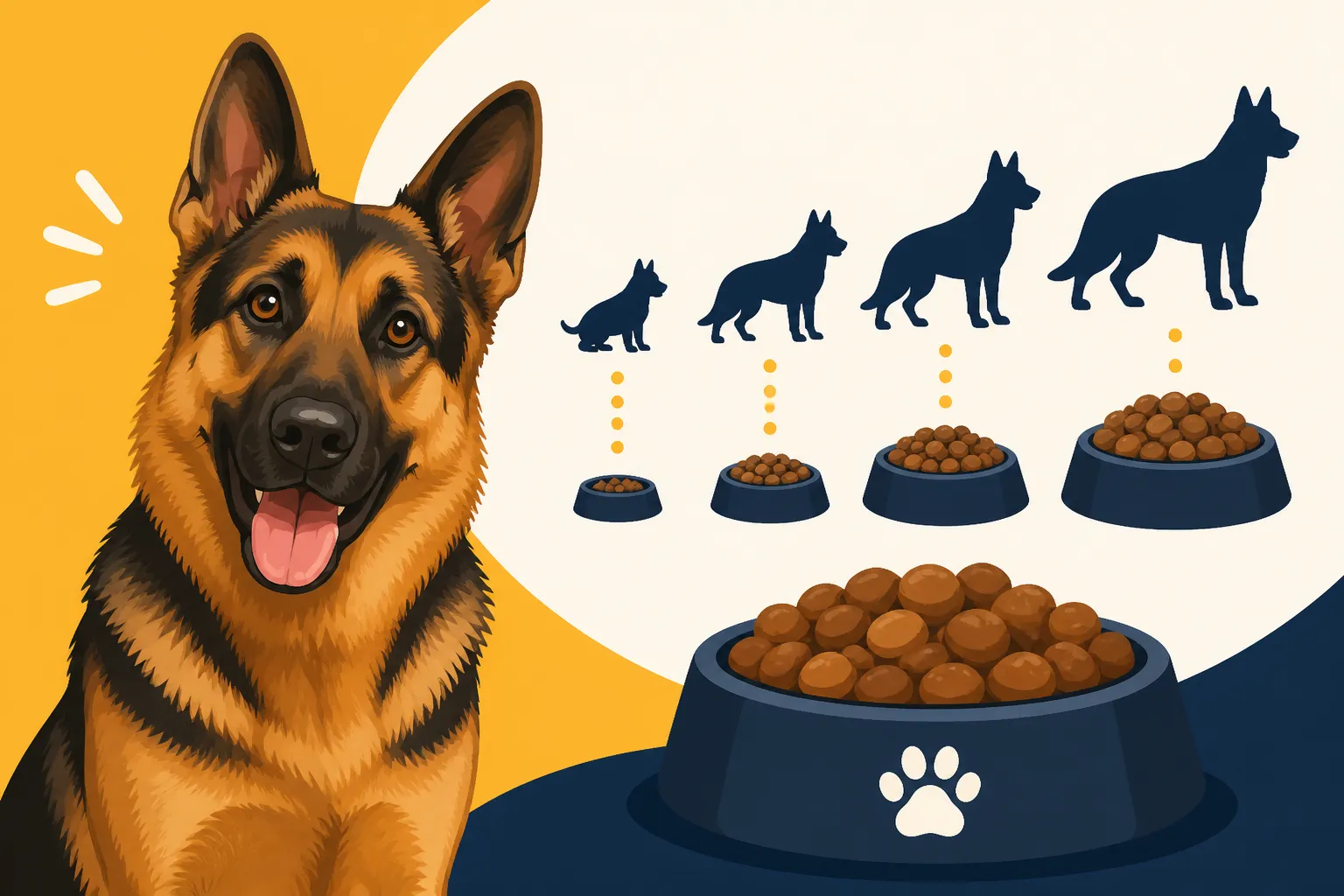
How Much Food for a German Shepherd by Weight
It can feel like a guessing game sometimes, standing in front of your German Shepherd's food bowl, holding that scoop, wondering if you're giving them too much, too little, or just right. Every bag seems to have different advice, and your dog's activity level changes daily! This guide is here to cut through the confusion and help you figure out exactly how much food your German Shepherd needs, tailored specifically to their weight, age, and lifestyle, so you can feed them with confidence.
Understanding Your German Shepherd's Unique Nutritional Needs
When it comes to feeding our beloved German Shepherds, it’s not as simple as pouring kibble into a bowl. These magnificent dogs are an active, intelligent, and often large breed, and their dietary requirements are anything but one-size-fits-all. You might find yourself frustrated by generic feeding charts on dog food bags that give a broad range, leaving you to wonder where your particular dog fits in. This frustration is completely valid because a German Shepherd's caloric needs are highly individual.
Their robust size and high energy levels mean they typically burn more calories than smaller, less active breeds. But even within the German Shepherd breed, there's a huge spectrum. A lean, high-drive working line German Shepherd that spends hours training for Schutzhund or IGP will have vastly different caloric demands than a more laid-back companion dog who enjoys leisurely walks and couch cuddles. Their metabolism, genetic predisposition to certain conditions like bloat, and their natural desire to guard and protect, all influence how their body uses and requires energy from food.
It's also important to remember that German Shepherds, especially those from reputable breeders, are often predisposed to specific health concerns like hip and elbow dysplasia. Maintaining a healthy weight is paramount in managing and mitigating the progression of these conditions, as excess weight puts undue stress on their joints. So, understanding their unique needs isn't just about keeping them energetic; it's a critical component of their overall German Shepherd Health Problems Guide.
Decoding Dog Food Labels and General Feeding Guidelines by Weight
Navigating the world of dog food labels can feel like trying to solve a puzzle written in another language. Each brand seems to calculate its recommendations differently, based on varying calorie densities. While these labels offer a starting point, they are just that—a starting point. The real work begins when you learn to translate those numbers into what your unique German Shepherd needs.
Most dog food bags will provide a feeding chart based on your dog's weight. For example, a bag might say "Feed 3-4 cups for a 70 lb dog." But what kind of cups? Are they standard measuring cups? What if your dog is 85 lbs? And what if your specific kibble is incredibly calorie-dense compared to another? This is where many owners get lost, feeling overwhelmed by the ambiguity.
A crucial piece of information to look for on any dog food label is the "kcal/cup" or "calories per cup" — this tells you the actual energy content of the food. Without this, a "cup" means very little. A cup of one kibble might have 350 calories, while a cup of another might have 450 calories, leading to significant differences in the actual amount of nutrition your dog is getting. Once you know the calorie count, you can then align it with the general caloric needs of a German Shepherd based on their weight and activity level.
Let's look at some general guidelines, keeping in mind that these are approximations. These figures are for typical adult German Shepherds with moderate activity levels. Highly active dogs will need more, and less active dogs will need less. Always start with these as a base and then observe your dog's body condition.
| German Shepherd Weight (lbs) | Approximate Daily Calories | Cups/Day (350 kcal/cup) | Cups/Day (450 kcal/cup) |
|---|---|---|---|
| 50 | 1200 – 1500 | 3.4 – 4.3 | 2.7 – 3.4 |
| 60 | 1400 – 1750 | 4.0 – 5.0 | 3.1 – 3.9 |
| 70 | 1600 – 2000 | 4.6 – 5.7 | 3.5 – 4.4 |
| 80 | 1800 – 2250 | 5.1 – 6.4 | 4.0 – 5.0 |
| 90 | 2000 – 2500 | 5.7 – 7.1 | 4.4 – 5.6 |
| 100 | 2200 – 2750 | 6.3 – 7.9 | 4.9 – 6.1 |
Please note: These are general estimates. Individual needs vary greatly. Always use a standard 8-ounce measuring cup, not a random plastic scoop that came with a bag of food, as these can vary wildly in volume.
For owners exploring different dietary approaches, brands like Ollie offer fresh, human-grade food that comes with precise portioning based on your dog's profile (weight, age, activity level). This can take a lot of the guesswork out of feeding, as they tailor the meals and provide specific amounts. Many conventional kibble brands are also widely available on platforms like Chewy, making it easy to compare nutrition facts and read reviews from other German Shepherd owners.
Remember, the goal isn't just to feed enough food, but to feed the right kind of food. Take a look at our guide on the Best Dog Food for German Shepherds for a deeper dive into quality nutrition.
Adjusting Feeding Amounts for Life Stages and Activity Levels
Your German Shepherd's journey through life involves several distinct stages, and their nutritional requirements shift significantly with each one. What works for a bustling puppy certainly won't be adequate for a wise senior dog, and vice-versa. Understanding these changes is key to maintaining their health and vitality.
The Puppy Powerhouse: Growth and Development
German Shepherd puppies are little bundles of intense growth and boundless energy. From 8 weeks to around 18-24 months, their bodies are rapidly developing bones, muscles, and organs. This intense growth spurt demands a diet rich in calories, protein, and essential nutrients, but delivered in a way that doesn't promote overly rapid growth, which can contribute to orthopedic issues like German Shepherd Hip Dysplasia Explained.
For puppies, you'll generally feed more frequently throughout the day—typically 3-4 meals when they're very young, gradually reducing to 2 meals as they approach adulthood. The caloric intake per pound of body weight is significantly higher for a puppy than an adult. For example, a young German Shepherd puppy might need closer to 2000-2500 calories per day, even if their current weight only suggests an adult intake of 1200-1500. It’s a common mistake to underfeed puppies, which can hinder proper development, or overfeed, leading to excessive weight gain that stresses developing joints. Always refer to a specific German Shepherd Puppy Feeding Schedule to ensure you're meeting their demanding needs during this critical time.
The Adult Athlete: Maintaining Peak Performance
Once your German Shepherd reaches maturity, usually between 18-24 months, their growth plates have closed, and their energy needs stabilize. However, "adult" is still a broad category. A working German Shepherd engaged in police work, advanced obedience, or regular strenuous exercise will require a substantially higher caloric intake than a beloved family pet who enjoys daily walks and yard play.
A highly active adult German Shepherd might need 2,500 to 3,000+ calories per day, sometimes even more if they are actively working in very cold climates or during high-intensity periods. On the other hand, a more sedentary adult might thrive on 1,800 to 2,200 calories daily. It’s not just about the amount of food, but also the timing. Many working dog owners split meals into smaller, more frequent portions to optimize digestion and energy release throughout the day, which can also be a strategy to help prevent serious conditions like German Shepherd Bloat Signs and Prevention.
The Golden Years: Gentle Care for Senior Shepherds
As German Shepherds transition into their senior years, typically around 7-8 years old, their metabolism naturally slows down, and their activity levels often decrease. This means their caloric needs will drop significantly. Continuing to feed a senior German Shepherd the same amount of food they ate as an active adult can quickly lead to weight gain, which exacerbates age-related conditions like arthritis.
A senior German Shepherd might only need 1,500-1,800 calories per day, depending on their health and mobility. It's not just about reducing calories, but also about adjusting the nutrient profile. Senior diets often contain higher levels of joint-supporting supplements like glucosamine and chondroitin, and sometimes lower protein levels if kidney function is a concern, or higher if maintaining muscle mass is key. Always consult your veterinarian when making significant dietary changes for your senior dog. We have a dedicated guide on German Shepherd Senior Diet Adjustments that goes into more detail.
Beyond the Bag: Recognizing When to Adjust Your German Shepherd's Food Intake
Relying solely on the feeding chart on a bag of kibble is like trying to drive across the country with only a map of your starting city. It gives you a sense of direction, but it doesn't account for all the detours, traffic, or changes in terrain. Your German Shepherd's dietary needs are dynamic, shifting with their environment, health, and age. Truly feeding them correctly means constantly observing, assessing, and making adjustments. This ongoing evaluation is perhaps the most crucial part of their German Shepherd Nutrition Essentials.
The Body Condition Score: Your Best Tool
The most effective way to determine if your German Shepherd is receiving the right amount of food isn't just a number on a scale, but rather their body condition. Veterinarians use a Body Condition Scoring (BCS) system, typically on a scale of 1 to 9, where 1 is emaciated and 9 is morbidly obese. The ideal score for a German Shepherd is generally a 4 or 5.
Here's how to check your German Shepherd's BCS:
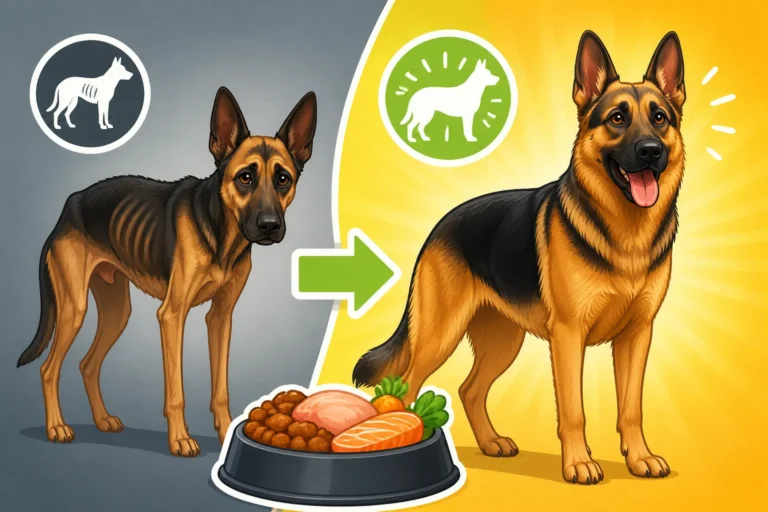
- Ribs: Gently run your hands along their sides. You should be able to easily feel their ribs, but not see them protruding. If you can't feel them without pressing, they might be overweight. If they are visibly prominent, they might be too thin.
- Waist: Look at your dog from above. They should have a distinct waistline tucked in behind their ribs. It shouldn't be a straight line from chest to hips, nor should their belly be wider than their chest.
- Abdominal Tuck: Look at your dog from the side. Their abdomen should tuck up, not hang low.
- Spine and Hips: You should be able to feel the tops of their vertebrae and hip bones without them being sharply prominent.
Learning to accurately assess your dog's BCS is a skill that empowers you to be their best advocate. Regular monitoring can catch weight fluctuations early, preventing both German Shepherd Weight and Obesity Risks and unhealthy thinness.
Signs of Overfeeding or Underfeeding
Your German Shepherd will often give you subtle (or not-so-subtle) clues if their diet isn't quite right.
Signs of Overfeeding:
- Weight Gain: The most obvious sign. Their ribs become harder to feel, their waist disappears, and their belly starts to sag.
- Lethargy: While some German Shepherds are naturally calmer, a sudden decrease in energy or reluctance to play might indicate they're carrying too much weight.
- Excessive Thirst/Urination: Though this can be a sign of many things, it's worth noting with other symptoms.
- Flatulence or Loose Stools: Sometimes too much food, or too rich of a food, can upset their digestive system.
Signs of Underfeeding:
- Weight Loss: Ribs, hip bones, and spine become easily visible and prominent.
- Low Energy: They may seem unusually tired, weak, or disinterested in activities they once enjoyed.
- Dull Coat: A lack of sufficient nutrients can lead to a dry, flaky skin and a dull, coarse coat.
- Constipation: In some cases, too little bulk or nutrients can lead to digestive issues.
- Excessive Hunger: They might constantly act ravenous, begging for food even after meals, or trying to eat non-food items.
If you notice any of these signs, it's time to re-evaluate their food intake and potentially consult with your veterinarian. Your vet can rule out underlying medical conditions that might mimic these symptoms, such as thyroid issues or malabsorption syndromes like Exocrine Pancreatic Insufficiency (EPI), which is more common in German Shepherds and requires specific dietary management as covered in our German Shepherd EPI Diet and Management article.
Platforms like Amazon offer a wide array of food scales and precise measuring cups, which can be invaluable tools for ensuring consistent and accurate portion control. Don't underestimate the impact of even a small deviation daily. Over a year, an extra quarter-cup of kibble each day can lead to several pounds of unwanted weight gain. Being meticulous with measurements is a simple but powerful step in managing your German Shepherd’s weight.
Ultimately, feeding your German Shepherd the correct amount by weight is an ongoing conversation between you, your dog, and your veterinarian. It requires attention, flexibility, and a deep understanding of their individual needs, but the payoff is a healthy, happy, and vibrant companion by your side for years to come.
Disclaimer
The information provided in this article is for general informational purposes only and does not constitute veterinary advice. Always consult with a qualified veterinarian for any health concerns or before making any changes to your German Shepherd's diet or healthcare routine.